





Email: sales3@zhefanjewelry.com

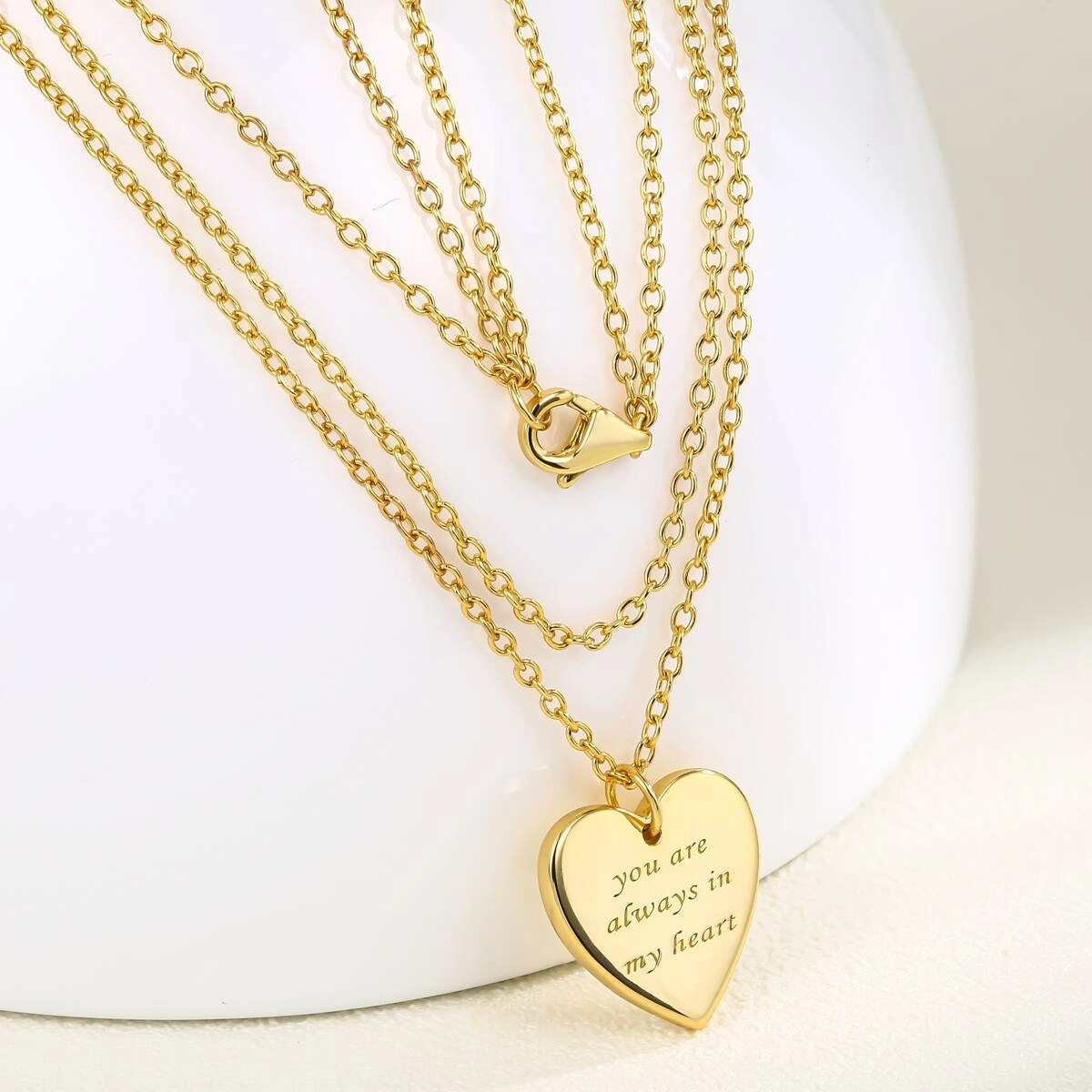
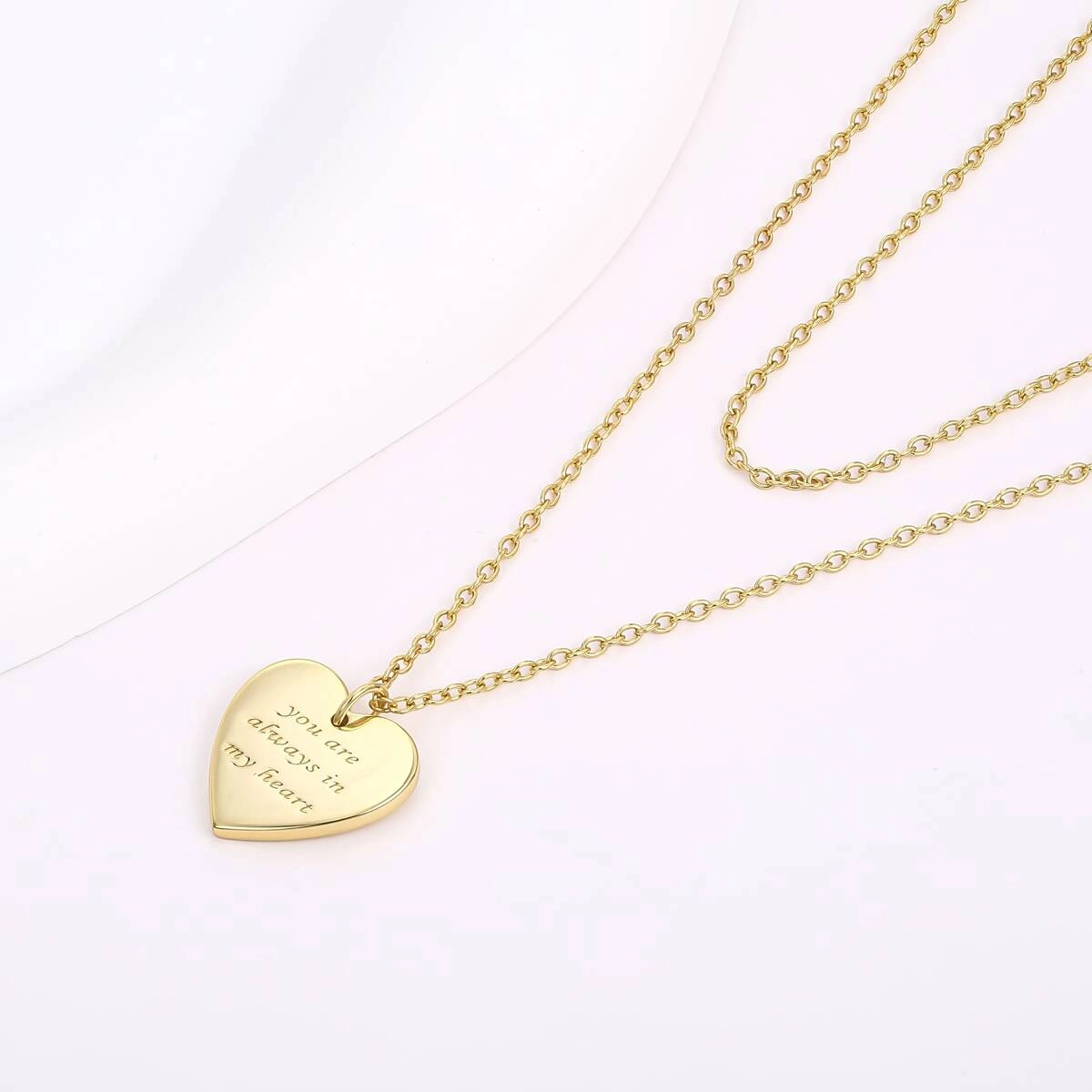
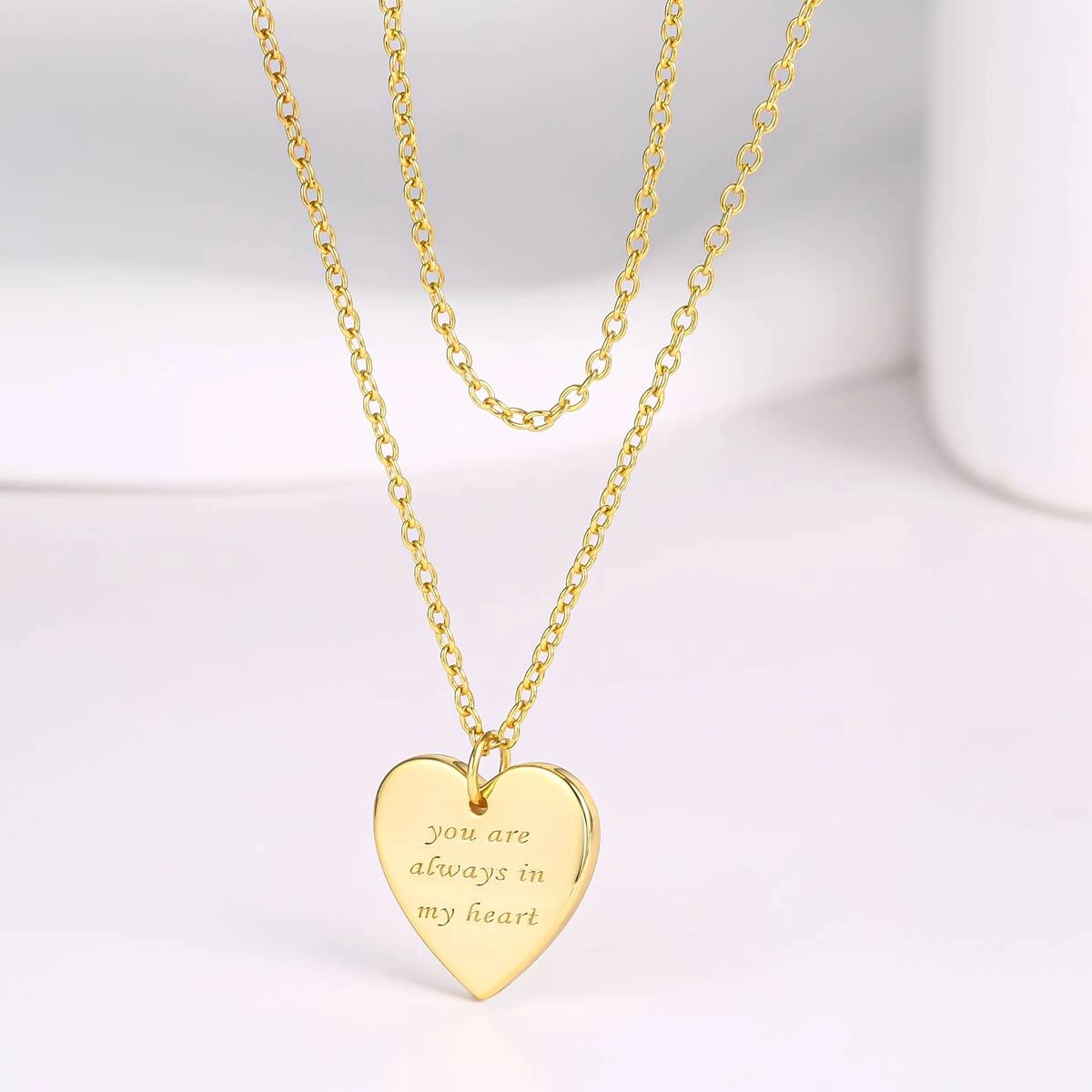
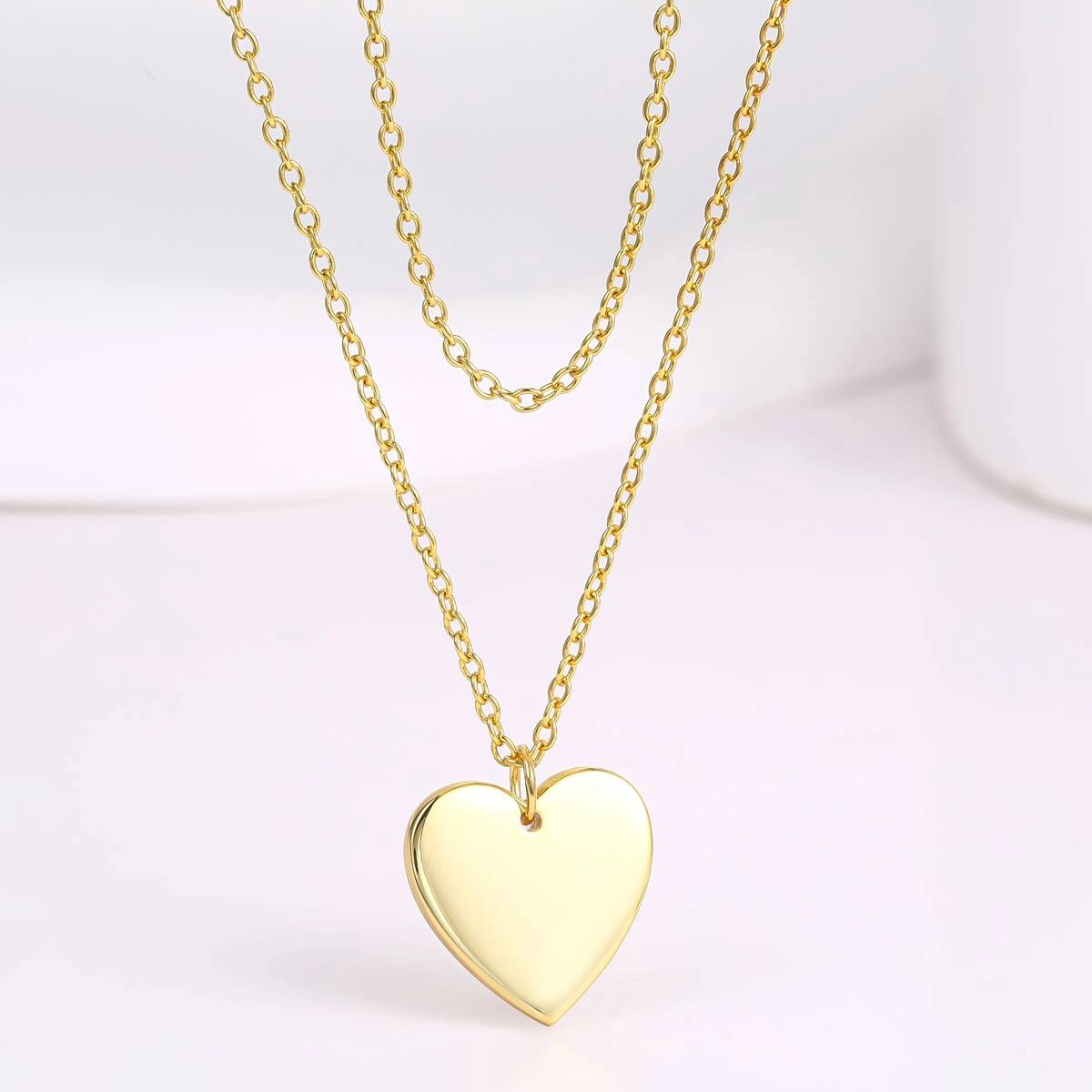
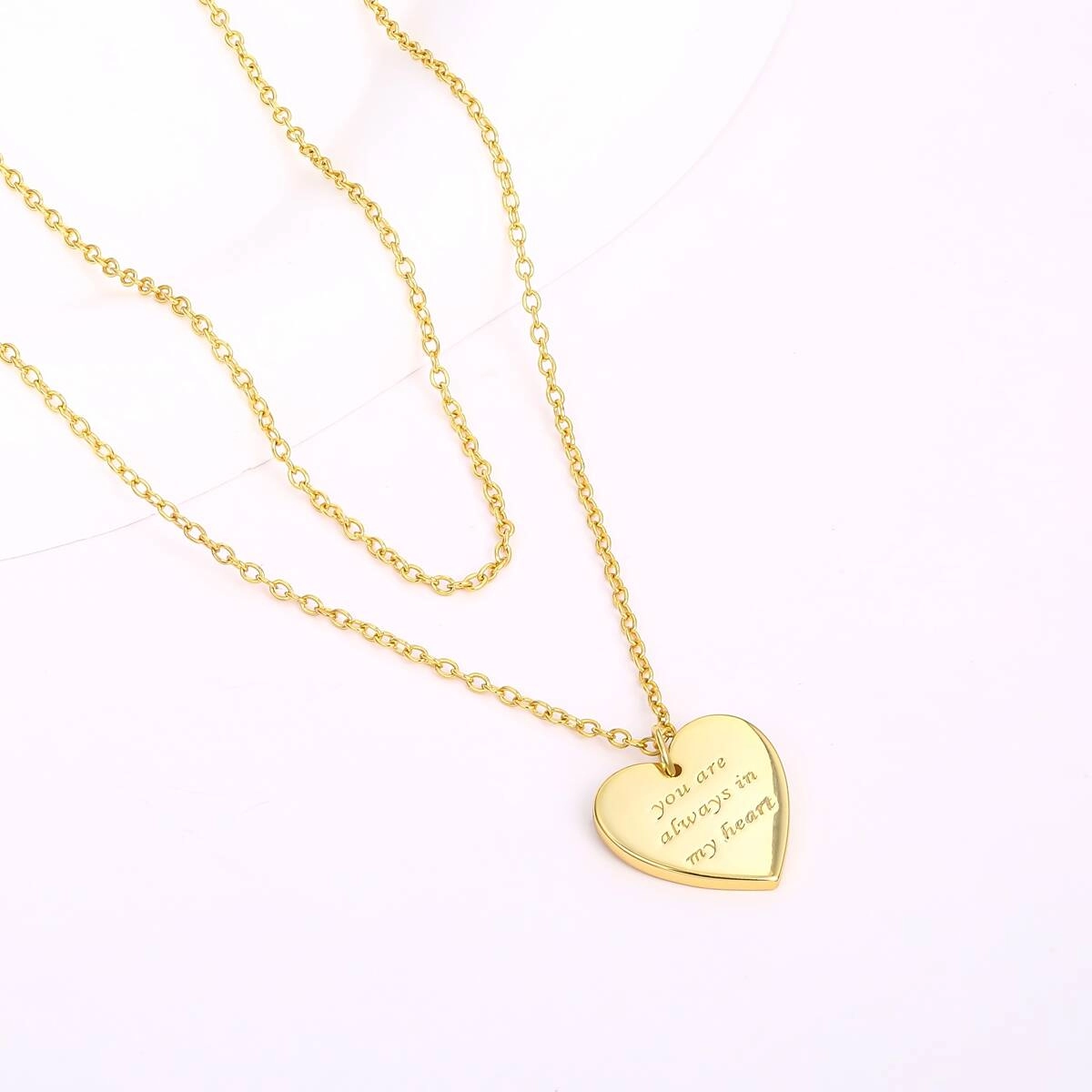
Engraved Layer Chain Heart Necklace - Brass
Custom Engraved 18K Gold-Plated Brass Layered Heart Necklace for OEM, ODM, and Private Label Collections
Elevate your style with our brass expanding heart necklace, plated with 18k gold for a luxurious finish. This exquisite piece features a customizable heart pendant that can be engraved with your chosen message or design. The perfect accessory to add a touch of elegance and personalization to any outfit.
Product Code:
JWP0940A
OEM:
Available
Sample:
Available
Port:
Guangzhou/Shenzhen, Port
Payment:
Western Union, T/T, D/P, D/A, PayPal
Place of Origin:
China
Shipping:
Sea freight · Land freight · Air freight
Supply Ability:
600000 pieces per Month
Product Detail
Product Name
Glossy Pendant Necklaces
Shaped
Heart-Shaped
Material
Brass
Plating
18K Gold Plated
Chain
O Chain
Customized
OEM/ODM
Style
Fashion Necklace
Elevate your style and make a statement with our high-quality brass heart pendant necklace in a luxurious 18k gold plating. This exquisite piece is perfect for adding a touch of sophistication and individuality to any outfit. Wear it to a formal event for a touch of elegance or pair it with a casual ensemble for a trendy and chic look. The customizable heart pendant allows you to engrave your logo or design, making it a perfect accessory for business events or promotional purposes. Stand out from the crowd and express your unique style with this versatile and eye-catching necklace.
- Engraved Heart Pendant Necklace
- Brass
- Custom Logo and Custom Design
- White Gold Plated/18K Gold Plated
FAQ
What specifications should buyers confirm before approving a custom engraved layered heart necklace for bulk production?
Buyers should convert every visible, movable, and functional part of a custom engraved heart necklace into a controlled written specification before quotation, sampling, or bulk-production release. A reference image and the general description “heart chain necklace” do not define the pendant dimensions, number of layers, opening mechanism, engraving artwork, chain structure, plating system, or component materials. The specification should record the brass heart necklace pendant’s width, height, thickness, layer quantity, edge profile, front and back finish, connection points, and whether the layered components are fixed, expandable, rotating, or otherwise movable. The engraving requirement should identify the exact wording or artwork, font, size, line width, depth, orientation, position, and whether it appears on the front, back, inner layer, or both sides. Buyers should separately confirm the chain style, link width, total length, extender length, clasp type, jump-ring dimensions, bail, logo tag, and the materials used for each major component. The 18K gold-plated brass necklace specification should also define the approved gold-color direction, finish, project-specific thickness, underlayers where applicable, and component coverage. Logo placement, packaging, labeling, and personalization mapping should be included in the same approval package. Zhefan Jewelry can develop an engraved layered heart necklace from drawings, product references, samples, or confirmed project requirements. CAD development can be used to review the pendant proportions, layered structure, movement clearance, engraving area, dimensions, and connection points before mold development. A representative physical sample should then be linked to the final specification and retained as the reference for bulk production and repeat orders. Sample development is typically around 7–10 days, depending on the pendant structure, engraving method, plating, chain assembly, and revision requirements.
How should buyers specify and approve the engraving method, font, depth, position, and artwork for a brass heart pendant?
“Custom engraving” is not a complete manufacturing instruction because different marking methods can produce different depth, clarity, edge quality, cost, and repeatability on a brass heart pendant. Buyers should first confirm whether the engraved heart necklace will use laser engraving, molded or cast lettering, stamping, mechanical engraving, or another agreed process. Laser engraving may be suitable for detailed or variable artwork, while molded or stamped markings may be evaluated for fixed repeat designs, but the final method should depend on the pendant size, brass construction, artwork complexity, required effect, and order quantity. The buyer should provide the exact wording, vector artwork where possible, font name or font file, artwork dimensions, line thickness, engraving position, orientation, and required depth. The specification should also clarify whether the marking appears on the front, back, inner layer, both sides, or a separate logo tag, and whether every necklace uses the same engraving or unit-level personalization. Small text, narrow spacing, and fine lines may become unclear when reduced to fit a custom necklace pendant, especially after polishing or plating. A digital layout should therefore be approved before the physical sample is produced. The finished sample should then be reviewed for legibility, alignment, depth, contrast, surface damage, and edge quality, because a screen proof cannot reproduce the exact appearance of engraved plated metal. Zhefan Jewelry can review engraving files before sampling and identify risks involving limited engraving areas, curved surfaces, small characters, or closely spaced lines. The approved artwork, layout, and engraving settings can be linked to the design number and physical sample. For personalized heart pendant orders, files can also be organized by SKU, order reference, or individual production record to reduce file-matching errors.
What material details should buyers verify for the brass heart pendant, chain, clasp, jump rings, solder, and logo tag?
Buyers should verify the materials of every major and skin-contact component because the term “brass jewelry” may describe the heart pendant without identifying the complete construction of the finished necklace. A component-level BOM should separately record the pendant body, each visible or movable heart layer, chain, clasp, extender, jump rings, bail, logo tag, solder, and welded or assembled joints. One heart chain necklace may contain multiple metals, and these differences can affect structural strength, movement, plating color, skin-contact claims, compliance scope, and repeat-order consistency. The pendant specification should confirm the agreed brass material and construction, while the chain record should state its material, link style, width, and length. Clasp, extender, rings, bail, and logo-tag materials should also be identified rather than grouped together as generic “findings.” Buyers should clarify which components directly contact the wearer and which declarations or test documents apply to those components. Nickel-free, lead-free, cadmium-free, and hypoallergenic are separate claims and should not be treated as interchangeable. The phrase “high-quality brass” also does not establish a precise alloy, component composition, or compliance result. Supporting reports should be reviewed against the actual SKU, tested sample, relevant component scope, and target market. Written approval should be required before any component or material substitution. Zhefan Jewelry can prepare a project-specific specification covering the brass heart necklace pendant, layers, chain, clasp, extender, rings, solder, and logo tag. Relevant stages of Zhefan Jewelry’s proprietary 6-polishing & 6-inspection process include raw-material inspection, wax-model inspection, inspection after machine polishing, inspection after hand polishing, and final inspection after plating. Project-specific documentation or testing requirements can also be discussed according to the SKU, component structure, product claim, and target market.
Should the heart pendant be engraved before or after polishing and 18K gold plating?
Both pre-plating and post-plating engraving are possible, but they create different visual and technical results, so the sequence should be selected according to the approved sample rather than a universal rule. When an engraved heart necklace is marked before plating, the engraving is completed on the prepared brass surface and subsequently covered by the plating system. This can create a more integrated and uniform finish, although excessive polishing before plating may soften fine lines, narrow lettering, or shallow details. When engraving is completed after plating, the mark may show stronger contrast because the engraving cuts through or disturbs the plated surface. However, deeper post-plating engraving can expose the brass base, affect the corrosion resistance of the engraved area, and create a different color from the surrounding 18K gold-plated brass necklace finish. Buyers should therefore confirm whether exposed brass is acceptable and whether the engraved area requires an additional project-specific protective treatment. The complete process should define the order of casting, dimensional correction, polishing, engraving, cleaning, plating, assembly, and final inspection. The specification should also state the engraving depth, expected contrast, plating coverage, and acceptable appearance of recessed areas. A representative sample should be reviewed for engraving clarity, line consistency, exposed metal, plating scratches, color uniformity, and pendant-edge smoothness. Zhefan Jewelry can evaluate the artwork, pendant structure, layer movement, engraving depth, and plating requirement before recommending the production sequence. Relevant stages of Zhefan Jewelry’s proprietary 6-polishing & 6-inspection process support machine grinding, secondary polishing for pinholes and pitting, detailed polishing around layered edges, final polishing before plating, and final inspection after plating. The selected sequence can then be recorded and retained for bulk production and repeat orders.
How can an approved engraved heart necklace sample remain the production standard across bulk and repeat orders?
An approved physical sample remains an effective production standard only when it is connected to a complete controlled approval package. A product photograph alone cannot control engraving depth, letter spacing, pendant dimensions, layer movement, chain length, clasp function, component materials, plating shade, or packaging. The package should include the physical master sample, confirmed CAD or drawing, engraving artwork, BOM, measurement record, plating specification, logo requirement, and packaging proof. It should identify the design number, revision, approval date, pendant width, height and thickness, number of layers, movement structure, connection points, approved engraving file, font, size, depth, position, chain style and length, extender, clasp, jump rings, plating color and finish, and packaging version. The approved necklace should also be photographed from the front, back, side, engraved area, pendant connection point, chain, clasp, and packaged condition. Buyers and manufacturers should distinguish measurable characteristics, such as dimensions and chain length, from visual characteristics, such as engraving contrast and plating shade, and functional characteristics, such as layer movement and clasp operation. Production and QC teams should use the master sample during pre-production review, in-process inspection, final inspection, and repeat-order confirmation. Any material, component, artwork, process, or supplier substitution should require written approval. Zhefan Jewelry can link the approved sample to the CAD, engraving file, BOM, chain and clasp specification, plating direction, and packaging proof. Zhefan Jewelry’s Proprietary 6-Polishing & 6-Inspection Process provides defined production and inspection stages where this standard can be referenced. Bulk production is typically around 2–4 weeks after project confirmation, depending on quantity, engraving requirements, pendant complexity, plating, packaging, testing, and revisions.
Why can repeat orders of an engraved heart necklace drift in engraving clarity, pendant dimensions, chain length, plating shade, or clasp quality?
An unchanged product image does not guarantee unchanged production inputs, which is why an engraved heart necklace repeat order can vary even when the design appears identical. Engraving variation may result from using the wrong artwork revision, changing the font or line width, altering the engraving depth, using different machine settings, recalibrating the equipment, changing the subcontractor, or positioning the pendant inconsistently during marking. Pendant variation may arise from brass casting shrinkage, tooling wear, polishing loss, layer misalignment, dimensional drift, or deformation of movable components. Chain and clasp differences may result from a new component supplier, changed link dimensions, incorrect chain length, substituted clasps, different jump rings, or revised logo tags. The plating shade of an 18K gold-plated brass necklace may also change when the surface preparation, underlayer, plating facility, bath conditions, gold-color reference, thickness, or component coverage is different. Governance failures such as a missing master sample, incomplete BOM, rushed production, unrecorded substitution, or weak change notification can allow these variations to reach bulk production. Prevention requires controlled engraving artwork, a labeled master sample, complete component specifications, plating records, production settings, and supplier or lot references. Zhefan Jewelry can use the approved engraving file, physical sample, and written specification as the repeat-order baseline and reconfirm the pendant structure, chain, clasp, plating, and packaging before replenishment. Relevant 6P6Q checkpoints can help detect changes in surface smoothness, pendant dimensions, layer alignment, plating color, scratches, and final appearance. Necklace-specific checks can additionally verify chain length, jump-ring closure, clasp function, engraving alignment, and pendant movement. This approach supports repeatability through documented standards and inspection rather than claiming that production variation is impossible.
How should buyers evaluate a brass jewelry factory or brass jewelry wholesaler in China for long-term engraved necklace production?
Buyers should first determine whether the potential supplier is a brass jewelry factory, wholesaler, trading company, or mixed-service provider and identify which party is responsible for development, engraving, production, plating, assembly, and final quality control. Qualification should begin with the exact program requirements: pendant structure, engraving method, brass material, dimensions, chain and clasp configuration, plating, quantity, packaging, target market, and repeat-order expectations. Buyers should verify the supplier’s legal identity, CAD and mold-development capability, sample revision process, brass casting and polishing experience, engraving equipment or subcontractor control, and ability to manage controlled artwork files. Engraving assessment should cover file version, alignment, depth, legibility, equipment settings, and repeatability. Metal-production review should include casting quality, dimensional control, layer movement, soldering, connection points, polishing, and pre-plating preparation. Buyers should also evaluate plating specifications, responsibility for external processing, incoming reinspection, chain and finding consistency, approved-sample governance, production records, packaging support, capacity, lead-time planning, and repeat-order readiness. Defect handling should include root-cause analysis, corrective and preventive action, replacement responsibility, and formal supplier-change notification. Selection should not be based only on the lowest price, catalog images, or one acceptable sample. A controlled representative SKU should be completed before the buyer expands into multiple engraving versions, chain lengths, plating colors, or packaging options. Zhefan Jewelry has more than 28 years of jewelry manufacturing experience supporting B2B OEM, ODM, wholesale, private label, and repeat-production projects. Customization can include pendant structure, engraving, chain, clasp, plating, logo, and packaging. MOQ is normally confirmed according to the design and process, with 60 pieces per design used as the standard direction where applicable.
When should changes to the engraving file, brass alloy, chain, clasp, plating house, or packaging trigger a new sample and reapproval?
Reapproval is required whenever a proposed change may affect a controlled characteristic such as engraving clarity, pendant dimensions, layer movement, component strength, plating appearance, product claims, labeling, packaging, or repeat-order consistency. Relevant triggers include revised wording or artwork, a changed font, line width or engraving depth, new engraving equipment or subcontractor, a different brass alloy or supplier, modified pendant dimensions, a revised layered or movable structure, a new chain supplier, changed chain width or length, substituted clasps or jump rings, changed solder, a new plating underlayer or plating house, revised gold-color direction or thickness, an added or removed protective coating, a changed logo, or revised cards, pouches, boxes, labels, or barcodes. A new target market, changed product claim, recurring complaint, or field failure should also trigger formal review. Not every brass necklace supplier change requires complete redevelopment. The verification level should reflect the introduced risk and may include document review, updated artwork approval, BOM approval, a digital engraving proof, component approval, comparison sample, pre-production sample, plating-thickness verification, functional testing, or complete SKU reapproval. Updated artwork, CAD, BOM, plating specification, and packaging proof should be compared with the physical master sample. The change should then be approved or rejected in writing, assigned a new revision, added to the repeat-order record, and subjected to increased inspection during the first changed production batch. Zhefan Jewelry can review proposed changes against the approved CAD, engraving artwork, physical master sample, BOM, chain and clasp specification, plating direction, and packaging proof. A revised sample can be developed when a change affects visible, structural, functional, or packaging characteristics. Zhefan Jewelry’s Proprietary 6-Polishing & 6-Inspection Process also provides relevant checkpoints before and after polishing, engraving, plating, assembly, and final inspection.
Tags
heart chain necklace
heart chain necklace
brass jewelry wholesalers china
brass jewelry wholesalers china
brass jewelry factory
brass jewelry factory
Request a Quote to Brand this as Private Label Jewelry
We provide personalized jewelry customization services for clients worldwide.
Rest assured that your privacy is important to us, and all information provided will be handled with the utmost confidentiality.
By clicking 'Send Inquiry Now' I agree to ZHEFAN JEWELRY processing my personal data.
To see how to withdraw your consent, how to control your personal data and how we process it, please see our Privacy Policy and Terms of use.
You May Also Like

Brass Mother of Pearl Compass Huggie Drop Earrings | 14K 18K Gold Plated Hypoallergenic Jewelry
Read More
From design to production, ZHEFAN JEWELRY offers a one-stop solution to help you enhance your brand value and market competitiveness.
Get A Quote
Contact
Tel: (+86) 188 1927 7817
© 2026 Zhefan Jewelry. All Rights Reserved.
Facebook
Instagram
YouTube
Whatsapp: +8618819277817