







Email: sales3@zhefanjewelry.com
How to Compare Private Label Jewelry Manufacturer Pricing and Cost Structures
A practical B2B guide to comparing jewelry manufacturing quotations, including material costs, labor, tooling, plating, quality control, packaging, logistics, minimum order quantities, payment terms, and total landed cost. The article explains how buyers can normalize supplier quotes, identify hidden charges, assess quality-adjusted value, and evaluate Zhefan Jewelry as an OEM/ODM production partner for brass, 925 silver, sterling silver, gold vermeil, and pearl jewelry.
- How to Normalize Jewelry Manufacturing Quotes
- Separate the quoted price into visible cost layers
- Distinguish one-time costs from recurring costs
- Compare commercial terms on an equal basis
- Cost Drivers That Change the True Price
- Material, weight, and construction complexity
- Tooling, sampling, and design ownership
- Finishing, plating, stones, and packaging
- How to Assess Quality-Adjusted Value and Supplier Risk
- Use total cost of ownership instead of unit price
- Verify regulatory and social-compliance exposure
- Build a weighted supplier scorecard
- Why Zhefan Jewelry Can Support Scalable Private-Label Programs
- Integrated manufacturing for multiple jewelry categories
- Quality controls that protect cost and brand value
- OEM and ODM support for market-responsive collections
- How to request a comparable quotation
- Frequently Asked Questions
Comparing a private label jewelry manufacturer requires more than selecting the lowest unit price. Buyers should evaluate the complete cost structure, including base metal or sterling silver content, mold development, labor, surface finishing, plating, stones, packaging, inspection, freight, duties, payment terms, minimum order quantities, and the financial impact of defects or delays. A reliable comparison converts every quotation into a standardized landed-cost model, verifies the specifications behind each number, and measures quality-adjusted value rather than nominal price alone. This approach helps fashion brands, retailers, distributors, and e-commerce operators select a Custom Jewelry Manufacturer that can protect margins while meeting design, compliance, delivery, and scalability requirements.
How to Normalize Jewelry Manufacturing Quotes
Separate the quoted price into visible cost layers
A factory quotation is only useful when its scope is clear. The stated unit price may include a finished product, or it may exclude tooling, sampling, plating, branded packaging, inspection, and export preparation. Buyers should request a line-by-line breakdown for each style and identify whether prices are based on brass, 925 silver, sterling silver, gold vermeil, stainless steel, or another material. Metal weight, alloy composition, stone type, plating thickness, clasp construction, and product dimensions can materially change the cost of a similar-looking design.
The most useful purchasing sheet contains the product code, approved drawing, material specification, net weight, finish, stone details, packaging configuration, order quantity, delivery term, currency, validity period, and excluded charges. Without these fields, two apparently comparable offers may describe different products. For example, one supplier may quote gold-color plated brass with a standard finish, while another may quote gold vermeil over sterling silver with more expensive material and compliance requirements.
Distinguish one-time costs from recurring costs
Tooling, wax models, 3D files, master molds, sampling, and engineering setup are usually one-time or project-based expenses. Unit manufacturing cost, plating, assembly, packaging, and inspection are recurring expenses. A buyer should calculate tooling amortization across the expected production volume rather than treating the mold charge as either irrelevant or permanently recurring.
A simple model is: landed cost per unit equals product cost plus allocated tooling, packaging, quality costs, freight, insurance, duties, and payment-related charges. If a mold costs 300 dollars and the expected purchase volume is 1,000 pieces, the initial tooling allocation is 0.30 dollars per piece. At 10,000 pieces, the same charge contributes only 0.03 dollars per piece. This calculation clarifies why a supplier with a slightly higher unit price may become more economical at scale if the tooling is durable and the rejection rate is lower.
Compare commercial terms on an equal basis
Incoterms determine which party pays for transportation, export clearance, insurance, import clearance, and duties. Quotations using EXW, FOB, CIF, or DDP should not be compared as if they represent the same commercial responsibility. The ICC Incoterms 2020 rules provide the recognized framework for allocating these responsibilities, but buyers still need written confirmation of the named place and included services.
Payment structure also changes working-capital exposure. A deposit before production, a balance before shipment, documentary payment, or approved credit arrangement each affects cash flow and risk. Buyers should record the deposit percentage, balance trigger, sample approval requirement, currency, bank charges, late-change fees, and cancellation terms. A lower unit price can lose its advantage if it requires excessive inventory, creates high currency exposure, or provides little protection when delivery milestones are missed.
Cost Drivers That Change the True Price
Material, weight, and construction complexity
Metal consumption is one of the most important drivers in jewelry costing. A heavier cuff, thick pendant, substantial chain, or multi-layer earring naturally requires more material and more finishing time than a lightweight design. Precious-metal products also require a clear distinction between total product weight and fine-metal content. In sterling silver jewelry, buyers should confirm the alloy specification, silver stamp policy, and whether stones, plating, solder, or findings are included in the stated weight.
Construction complexity affects labor and yield. Hinges, articulated links, soldered components, hidden settings, movable parts, hand-set stones, and intricate filigree typically require more operations and greater inspection effort. A cost comparison should therefore examine the bill of materials and routing steps, not only the final appearance. A supplier that uses a simplified construction method may offer a lower price but create weaker joints, inconsistent movement, or higher returns.
Tooling, sampling, and design ownership
Custom development requires a commercial agreement covering CAD files, revisions, prototype charges, mold ownership, and permitted reuse. Buyers should ask how many design revisions are included, what happens when a sample fails approval, and whether the manufacturer can reproduce the approved dimensions consistently. The contract should also address confidentiality, unauthorized copying, and ownership of buyer-supplied artwork.
Sampling cost is not merely an administrative fee. It can expose problems in proportion, comfort, stone security, clasp performance, plating color, or packaging fit before mass production. A disciplined approval process should include a signed or digitally documented golden sample, a specification sheet, approved color references, and a tolerance standard. The ISO 2859-1 sampling standard is a recognized reference for attribute-based inspection plans, although the buyer and supplier must agree on the applicable inspection level and acceptance criteria.
Finishing, plating, stones, and packaging
Surface treatment is frequently under-specified in low quotations. Buyers should confirm polishing stages, electroplating material, color, thickness or performance requirement, anti-tarnish treatment, and testing method. Gold vermeil jewelry requires special attention because its commercial value depends on a sterling silver base and a defined gold layer rather than a simple gold-color coating. Packaging can also include several cost layers: branded cards, pouches, boxes, barcodes, inserts, protective film, carton labeling, and master-carton configuration.
Stone pricing depends on material, size, cut, color consistency, matching requirements, setting method, and replacement policy. Pearl jewelry requires additional specification for pearl type, luster, shape, surface quality, drilling, and matching. Buyers should obtain approval samples and define acceptable variation because natural or cultured materials may not be visually identical from piece to piece.
| Cost category | Questions for supplier comparison | Evidence to request | Commercial impact |
|---|---|---|---|
| Materials | What alloy, weight, grade, and component specification are included? | Material declaration, product drawing, weight record | Changes unit cost, durability, compliance, and perceived value |
| Tooling and development | Are molds, CAD revisions, and samples included or charged separately? | Tooling quotation, revision policy, approved sample | Primarily affects launch investment and small-order economics |
| Finishing | What polishing, plating, coating, and anti-tarnish processes are used? | Finish specification, test report, production sample | Influences appearance, wear resistance, and return rates |
| Quality control | Who inspects, at which stages, and under what acceptance criteria? | Inspection plan, AQL agreement, inspection records | Controls defect cost, rework, and customer complaints |
| Packaging | Does the price include branded retail and export packaging? | Packaging dieline, packing list, carton details | Changes unit economics, presentation, and freight volume |
| Logistics | Which Incoterm, destination, freight mode, and charges apply? | Freight quote, named place, customs documents | Determines landed cost and delivery risk |
| Capacity | Can the facility meet forecast volume and replenishment timing? | Production plan, lead-time schedule, capacity statement | Protects launch timing and reduces stockout risk |
How to Assess Quality-Adjusted Value and Supplier Risk
Use total cost of ownership instead of unit price
Total cost of ownership includes preventable expenses after production: rejected pieces, rework, relabeling, replacement shipments, customer refunds, lost advertising momentum, and missed seasonal demand. A supplier quoting 0.20 dollars less per piece may be more expensive if the defect rate creates 5 percent rework and a delayed launch. Buyers should track first-pass yield, on-time delivery, sample-to-production consistency, complaint rate, and corrective-action speed alongside price.
Quality requirements should be measurable. A purchase specification can define dimensions and tolerances, plating appearance, solder quality, stone security, clasp function, sharp-edge limits, color variation, tarnish expectations, and packaging condition. The ISO 9001 quality management principles emphasize controlled processes, documented information, performance evaluation, and continual improvement. Certification alone does not guarantee a perfect product, but a documented quality system provides a stronger basis for supplier evaluation than a verbal promise.
Verify regulatory and social-compliance exposure
International jewelry buyers should identify the legal requirements of every destination market. Restrictions may apply to lead, cadmium, nickel release, chemical substances, labeling, packaging materials, and product claims. The European Commission REACH regulation information explains the European Union framework for the registration, evaluation, authorization, and restriction of chemicals. RoHS may also be relevant when products or packaging include electrical or electronic components, while destination-specific consumer-product rules can differ.
Request current declarations, laboratory reports, material statements, and traceability records that match the actual production specification. A report for a different alloy, plating batch, or supplier does not prove compliance for the order being purchased. Buyers should also assess factory working conditions, subcontracting controls, environmental management, and the ability to provide corrective actions. These factors protect brand reputation and reduce the risk of shipment holds or marketplace suspension.
Build a weighted supplier scorecard
A practical scorecard can assign separate weights to price, quality, lead time, design capability, minimum order quantity, communication, compliance, capacity, and payment terms. The correct weighting depends on the business model. A trend-led online brand may prioritize speed and small-batch flexibility, while a department-store program may prioritize consistency, audit readiness, packaging accuracy, and replenishment capacity.
Before awarding production, buyers should request a sample, a detailed quote, a factory profile, relevant compliance documents, references or customer evidence where available, and a proposed production schedule. A video audit or third-party inspection can supplement documents. The goal is not to collect the largest number of certificates; it is to confirm that the stated process can repeatedly deliver the approved product at the required commercial volume.
Why Zhefan Jewelry Can Support Scalable Private-Label Programs
Integrated manufacturing for multiple jewelry categories
We are Guangzhou Zhefan Jewelry, a fashion jewelry manufacturer established in 2002 with a legacy dating back to 1997. Founded by a master mold craftsman, our manufacturing DNA is built on more than two decades of continuous refinement in mold development, product construction, finishing, and production coordination. Our capabilities cover brass jewelry, 925 silver jewelry, sterling silver jewelry, gold vermeil jewelry, and pearl jewelry for brands, retailers, distributors, and e-commerce operators.
Our two factories in Guangzhou and Meizhou cover 800 square meters and are supported by more than 80 skilled artisans and 20 sales professionals. Monthly output can reach 600,000 pieces, enabling us to support both product launches and replenishment programs. This structure helps buyers compare costs against realistic capacity rather than relying on a quotation from a trading office with limited production control.
Quality controls that protect cost and brand value
Our process includes six rounds of precision polishing and six strict quality inspections. These controls are designed to improve surface consistency, reduce visible defects, and identify problems before products reach packing and shipment. We use RoHS- and REACH-compliant eco-friendly materials where applicable to the product specification and destination-market requirements, with documentation discussed as part of the project quotation and approval process.
For buyers, the value of these controls extends beyond appearance. Consistent finishing can reduce sorting, rework, replacement shipments, marketplace complaints, and retailer chargebacks. Our team works from approved samples and production specifications so that cost discussions remain connected to measurable quality expectations. This is particularly important for plated brass, sterling silver, vermeil, stone-set, and pearl styles where small process differences can affect the final retail experience.
OEM and ODM support for market-responsive collections
Our professional design team launches more than 500 original styles monthly, giving partners access to a broad and continuously refreshed design pipeline. Buyers can use this capability for ODM assortment development, while brands with proprietary concepts can request OEM execution based on supplied drawings, references, or approved prototypes. The objective is to balance design speed with manufacturability, target cost, packaging requirements, and launch timing.
Our experience serving Amazon top-three sellers and global retailers such as Macy's supports structured communication across development, sampling, production, inspection, and delivery. Each program still requires product-specific confirmation; however, our scale and dedicated sales structure help reduce communication gaps as collections expand. Buyers evaluating a long-term sourcing partner should consider this operational continuity alongside the initial quotation.
How to request a comparable quotation
To receive a useful commercial proposal, send the target quantity, product images or CAD files, material and plating requirements, stone or pearl specifications, packaging needs, destination country, target delivery date, and preferred trade term. Our team can then separate development charges, recurring unit costs, packaging, inspection, and logistics assumptions so that the proposal can be compared with other suppliers on an equivalent basis.
A well-prepared RFQ also allows our engineering and production teams to identify design changes that may improve yield or reduce unnecessary operations without weakening the product. Cost engineering should never mean removing essential quality; it should mean selecting the most efficient construction, material usage, tooling approach, and process sequence for the brand's intended price position.
Frequently Asked Questions
What should a jewelry manufacturing quotation include?
A useful quotation should identify the product code, approved design, material, net weight, finish, stones, packaging, order quantity, delivery term, currency, validity period, and excluded charges. Tooling, sampling, plating, inspection, freight, and duties should be shown separately when they are not included in the unit price.
How can buyers compare quotes using different Incoterms?
Buyers should convert EXW, FOB, CIF, and DDP offers into a common landed-cost basis by adding the relevant freight, insurance, customs, duties, taxes, and clearance charges. The named place and included services should be confirmed in writing using the ICC Incoterms 2020 framework.
Why is the lowest unit price not always the lowest total cost?
A low unit price can create higher total cost when it is linked to weak finishing, higher defect rates, rework, delayed delivery, inadequate packaging, or replacement shipments. Buyers should evaluate quality-adjusted value using first-pass yield, on-time delivery, complaint rate, and corrective-action performance.
What quality documents should a jewelry buyer request?
Buyers should request the approved product specification, material declaration, relevant laboratory reports, inspection plan, acceptance criteria, and production inspection records. Documents should match the actual alloy, plating, components, and destination-market requirements rather than a different product or batch.
How are tooling costs calculated in a jewelry project?
Tooling costs are generally one-time or project-based charges for molds, CAD development, master models, and sampling. Buyers can allocate the tooling charge across expected production volume to understand its effect on per-unit economics, while also confirming mold ownership, revision terms, and permitted reuse.
What information should be included in an RFQ for custom jewelry?
An RFQ should include target quantity, product images or CAD files, material and plating requirements, stone or pearl specifications, packaging needs, destination country, target delivery date, and preferred trade term. Providing these details helps suppliers produce comparable quotations and identify cost-saving design improvements.
Tags
certified 925 bracelet suppliers
certified 925 bracelet suppliers
fashion brass jewelry wholesaler
fashion brass jewelry wholesaler
brass earrings wholesale
brass earrings wholesale
brass chunky hoops for men
brass chunky hoops for men
tennis jewellery manufacturer
tennis jewellery manufacturer
custom dangle 925 silver earrings
custom dangle 925 silver earrings
Recommended for you
Quality Control Checklist for 925 Sterling Silver Bracelets
ODM Jewelry Manufacturer vs In-House Production: A Cost and Efficiency Breakdown
Plating & Finishes: Options for Silver Bracelets
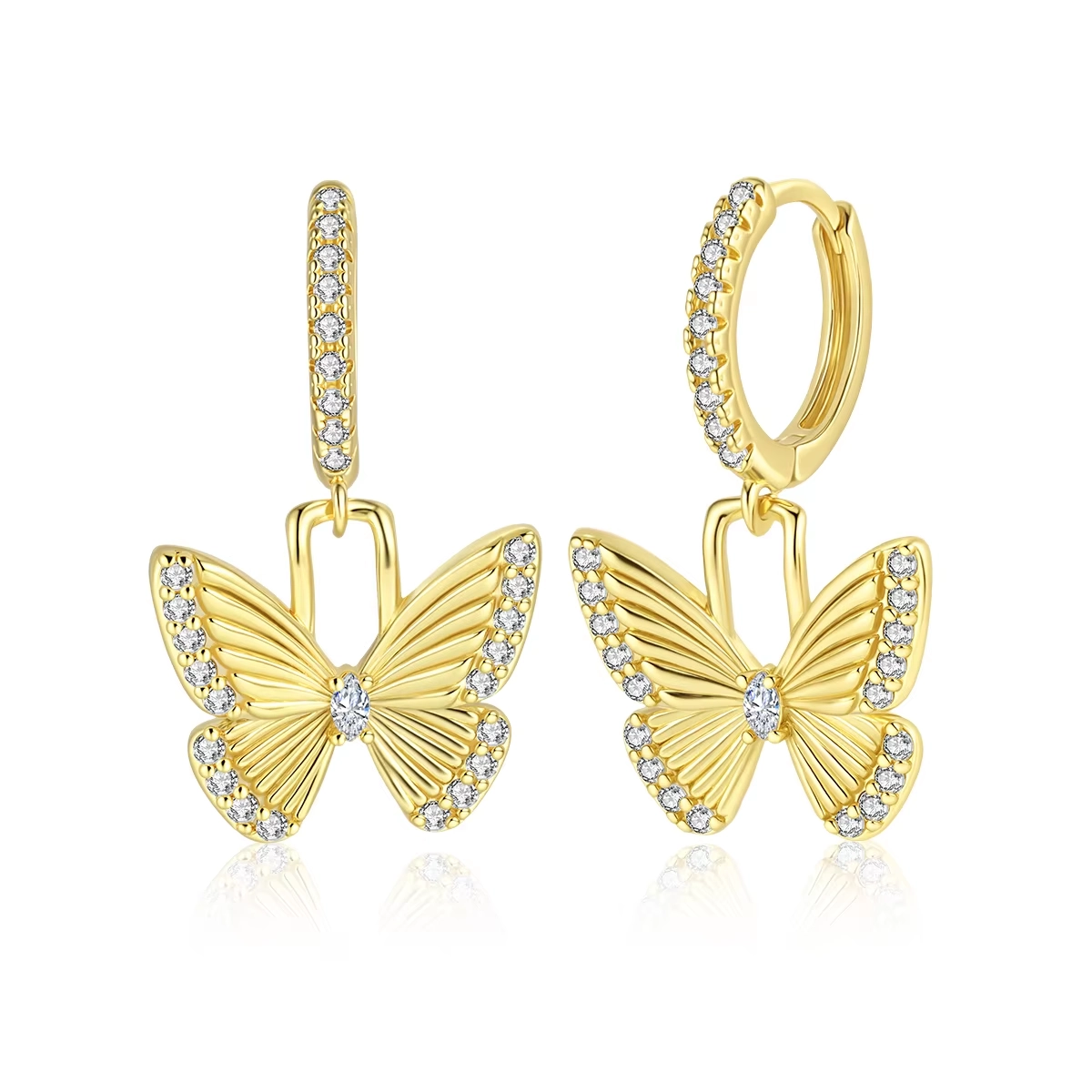
Custom Butterfly Hoop Earrings with Cubic Zirconia - 18k Gold Plated | Zhefan Jewelry
Product Categories
You may also like

925 Silver Jewelry
Customizable High-Quality Fashion 925 Sterling Silver AAA Cubic Zirconia Heart-Shaped Open Tennis Bracelet.
Read More

Brass Jewelry
Customizable OEM ODM High-Quality Fashion Brass AAA Cubic Zirconia Classic Tennis Bracelet for Women Wholesale.
Read More
Get a Quote for Private Label Jewelry
We provide personalized jewelry customization services for clients worldwide.
Rest assured that your privacy is important to us, and all information provided will be handled with the utmost confidentiality.
By clicking 'Send Inquiry Now' I agree to ZHEFAN JEWELRY processing my personal data.
To see how to withdraw your consent, how to control your personal data and how we process it, please see our Privacy Policy and Terms of use.
From design to production, ZHEFAN JEWELRY offers a one-stop solution to help you enhance your brand value and market competitiveness.
Get A Quote
Contact
Tel: (+86) 188 1927 7817
© 2026 Zhefan Jewelry. All Rights Reserved.
Facebook
Instagram
YouTube
Whatsapp: +8618819277817