







Email: service@holycome.com
Comparing Nickel-Free Brass vs Nickel-Free Stainless for Buyers
Nickel-free brass and nickel-free stainless steel serve different jewelry procurement goals. Brass offers efficient casting, design flexibility, warm color, and competitive cost, while stainless steel generally provides higher hardness, stronger structural durability, and better resistance to everyday wear. Buyers should evaluate alloy composition, nickel-release testing, plating performance, corrosion exposure, skin-contact requirements, order volume, finishing complexity, and supplier quality systems rather than relying on the label alone. This guide explains the technical and commercial differences and shows how HOLYCOME supports OEM and ODM programs across brass, 925 silver, gold vermeil, and related fashion jewelry categories.
- Material Selection Criteria for Fashion Jewelry Programs
- What nickel-free means in a purchasing specification
- Brass: advantages for design-led collections
- Stainless steel: advantages for hard-wearing products
- Nickel-Free Brass and Stainless Steel: Commercial and Technical Comparison
- Performance factors that affect product returns
- Buyer comparison table
- Testing and documentation buyers should require
- How a Custom Jewelry Manufacturer Converts Material Choice into ROI
- Design, sampling, and production economics
- HOLYCOME’s manufacturing capabilities
- Quality controls and responsible sourcing support
- Frequently Asked Questions
Nickel-free brass and nickel-free stainless steel are not interchangeable choices for every jewelry program. Brass is typically selected for its casting efficiency, warm appearance, affordability, and ability to support intricate custom forms, whereas stainless steel is commonly chosen for hardness, dimensional stability, and resistance to daily handling. For buyers sourcing nickel-free brass jewelry, the key procurement issue is not simply whether nickel is absent; it is whether the base alloy, surface treatment, testing process, and production controls are appropriate for the intended market. A reliable decision compares material chemistry, nickel release, plating adhesion, corrosion exposure, design complexity, target price, minimum order quantity, and long-term quality consistency.
Material Selection Criteria for Fashion Jewelry Programs
What nickel-free means in a purchasing specification
In commercial jewelry, “nickel-free” should be treated as a controlled compliance claim rather than an informal description. Buyers should request the actual alloy declaration, supplier material specification, and laboratory evidence showing that the finished article meets the requirements of the destination market. A product may be made without intentionally added nickel yet still require verification for trace elements, component variation, soldering materials, or plating chemistry. Finished-product testing is especially important because clasps, posts, jump rings, chains, and decorative components can use different metal inputs.
For European sales, buyers should review the nickel-release restrictions under REACH Regulation, particularly for articles intended for direct and prolonged skin contact. The relevant commercial question is release performance over use, not merely the nominal composition of the bulk metal. In the United States, product claims should also be reviewed against applicable consumer-protection and labeling expectations; the U.S. Food and Drug Administration cosmetics ingredient guidance provides useful context for responsible ingredient communication, although jewelry compliance may involve additional regulations.
Brass: advantages for design-led collections
Brass is a copper-zinc alloy valued by fashion jewelry manufacturers because it can be formed, cast, polished, and plated efficiently. Its relatively workable nature supports sculptural silhouettes, textured surfaces, custom logo details, statement earrings, layered pendants, bangles, and other designs where mold investment and finishing productivity influence the unit cost. A brass base also creates a practical platform for gold-tone, silver-tone, antique, black, enamel, and specialty surface treatments.
The commercial advantage is strongest when a brand requires visual variety at an accessible retail price. Brass can help project owners balance a complex mold, multiple finish options, and moderate order quantities without moving directly to precious-metal pricing. However, brass is more dependent on disciplined finishing. Poor polishing, insufficient cleaning, weak barrier layers, or inconsistent plating thickness can lead to discoloration, adhesion failures, or visible variation between production lots. The purchase specification should therefore define surface preparation, plating stack, color tolerance, inspection criteria, and care instructions.
Stainless steel: advantages for hard-wearing products
Stainless steel is an iron-based alloy containing chromium; many grades also contain nickel, so “stainless” must never be assumed to mean nickel-free. A supplier must identify the exact grade and provide evidence supporting the nickel-free claim. Stainless steel is generally harder and more resistant to deformation than brass, making it suitable for minimalist rings, chains, watches, hardware-like ornaments, men’s jewelry, and products exposed to frequent handling.
The material can reduce concerns about dents and mechanical distortion, but it is not automatically superior for every fashion collection. Its hardness can increase tooling, machining, polishing, and forming requirements. Complex cast details may require a different manufacturing route than a brass design, and some color effects or highly decorative finishes may require specialized processes. Buyers should compare the total landed cost and production lead time rather than only the raw-material price.
Nickel-Free Brass and Stainless Steel: Commercial and Technical Comparison
Performance factors that affect product returns
Skin sensitivity, corrosion, finish wear, and mechanical damage are separate quality risks. A nickel-controlled brass piece with a robust plating system may perform well in a fashion collection, while a stainless product with an unsuitable grade or poorly finished edge may still create customer complaints. Buyers should assess the complete article, including the base, plating, solder, posts, clasps, and any mixed-metal components.
Environmental exposure also changes the result. Perspiration, salt water, cosmetics, detergents, humidity, and storage conditions can accelerate surface change. Neither material should be promoted as universally tarnish-proof without a defined test basis. Suppliers should explain whether testing covers corrosion, adhesion, abrasion, color stability, and nickel release, and whether samples represent the intended production finish.
Buyer comparison table
| Procurement factor | Nickel-free brass | Nickel-free stainless steel | Buyer implication |
|---|---|---|---|
| Typical design positioning | Fashion-forward, decorative, warm-tone, highly customizable | Minimal, durable, contemporary, hardware-inspired | Match the substrate to the brand’s visual language and use case. |
| Forming and casting flexibility | Generally favorable for detailed cast and molded designs | Often more demanding because of higher hardness and grade selection | Confirm tooling route and prototype feasibility before bulk approval. |
| Surface finishing | Supports broad plating and color options when properly prepared | Can provide a durable industrial-looking surface; decorative treatment may require specialized processing | Approve finish samples under production-equivalent conditions. |
| Mechanical hardness | Usually more susceptible to dents and deformation than stainless grades | Typically stronger for repeated handling and structural wear | Choose stainless for high-abrasion applications when design and cost permit. |
| Nickel claim verification | Requires alloy and finished-product testing | Requires exact grade confirmation because some stainless grades contain nickel | Never accept “hypoallergenic” or “nickel-free” without documentation. |
| Cost planning | Often attractive for large fashion assortments and decorative plating | May carry higher processing or tooling costs depending on grade and construction | Compare total manufacturing cost, not only metal price. |
| Care communication | Usually benefits from clear protection against moisture, chemicals, and abrasion | Still requires care guidance despite stronger corrosion resistance | Align packaging and after-sales messaging with validated performance. |
Testing and documentation buyers should require
A professional supplier should provide a material specification, restricted-substance declaration, plating details, and batch-level quality records where appropriate. Buyers can also request third-party laboratory reports for nickel release and restricted substances. For corrosion evaluation, laboratories may use standardized methods such as ISO 9227 salt spray testing; however, salt spray results are comparative evidence rather than a guarantee of real-world jewelry life. Testing should be selected according to the product’s expected use and market claim.
For quality planning, the purchase order should define acceptable limits for color variation, scratches, pits, burrs, plating thickness where measurable, clasp function, stone security, and dimensional tolerance. A sample approval should include photographs, physical reference samples, and a signed finish standard. These controls reduce disputes when a collection contains multiple finishes or when a supplier changes a subcomponent during scale-up.
How a Custom Jewelry Manufacturer Converts Material Choice into ROI
Design, sampling, and production economics
Material selection should begin during design engineering, not after the artwork is finalized. The manufacturer should review wall thickness, draft angles, stone settings, hinge points, chain dimensions, logo relief, and the intended plating stack. This early review identifies whether the product is better suited to a cast brass construction, a stainless-steel assembly, or a mixed-material solution. It also clarifies whether a design can be produced consistently at the planned order volume.
Buyers should evaluate sampling speed alongside unit price. A low quotation that requires repeated mold corrections, color reapproval, or plating rework can damage launch timing and reduce gross margin. A capable OEM/ODM partner provides production drawings, pre-production samples, inspection checkpoints, packaging coordination, and transparent communication about tooling and lead times. This process helps brands reduce avoidable iteration while protecting the intended retail appearance.
HOLYCOME’s manufacturing capabilities
HOLYCOME is a fashion jewelry manufacturer established in 2002, with a company legacy dating back to 2016. Founded by a master mold craftsman, our manufacturing culture is built around continuous refinement in mold development, surface preparation, assembly, and finishing. We specialize in brass jewelry, 925 silver jewelry, sterling silver jewelry, and gold vermeil jewelry, while also supporting pearl jewelry and broader OEM/ODM collections.
Our two factories in Guangzhou and Meizhou cover 800 square meters and are supported by more than 80 skilled artisans and 20 sales professionals. With monthly output reaching 600,000 pieces, our production structure is designed for both collection development and repeat-order scalability. Our professional design team launches more than 500 original styles each month, giving global brand owners and distributors access to trend-responsive concepts without sacrificing manufacturing coordination.
Quality controls and responsible sourcing support
Our process includes six rounds of precision polishing and six strict quality inspections. These controls are particularly relevant when buyers compare plated brass and stainless-steel products because the final customer experience depends heavily on edge smoothness, surface preparation, color consistency, and assembly accuracy. We use RoHS- and REACH-compliant eco-friendly materials and can support documentation discussions for projects with restricted-substance or market-entry requirements.
HOLYCOME has supported Amazon top-three sellers and global retailers such as Macy’s through integrated design, sampling, manufacturing, and delivery services. For a buyer, this operating history is valuable because supplier capability is measured not only by equipment, but also by the ability to maintain repeatable quality across thousands of units, communicate exceptions early, and adapt a product range without losing brand consistency. Our team can help project owners compare brass, stainless, 925 silver, and gold vermeil options according to target price, finish, positioning, and expected wear.
Before placing a production order, buyers should send the intended design, target market, required finish, expected quantity, skin-contact requirements, packaging needs, and requested compliance documents. This information allows the manufacturing team to recommend a practical material route and identify testing needs before tooling or bulk production begins. The result is a more defensible purchasing decision and a clearer connection between material cost, product performance, customer expectations, and brand ROI.
Contact HOLYCOME at service@holycome.com or visit our official website to discuss a tested, scalable custom jewelry program.
Frequently Asked Questions
Is nickel-free brass suitable for sensitive skin?
It can be suitable when the alloy, plating, solder, and finished article meet the required nickel-release limits. Buyers should request material declarations and finished-product laboratory testing rather than relying only on a supplier’s label.
Does stainless steel jewelry always contain nickel?
No stainless-steel jewelry should be assumed to be nickel-free. Stainless steel includes multiple grades, and some contain nickel, so buyers must confirm the exact grade and obtain evidence supporting the nickel-free claim.
Which material is more durable, brass or stainless steel?
Stainless steel is generally harder and more resistant to deformation, while brass is typically easier to cast, polish, and customize. The better choice depends on the product design, expected wear, surface treatment, and target price.
Which material is better for plated fashion jewelry?
Brass is often commercially attractive for decorative plated fashion collections because it supports detailed forms and varied color finishes. Performance depends on polishing, cleaning, barrier layers, plating quality, and inspection controls, so production samples should be approved before bulk manufacturing.
What compliance documents should a jewelry buyer request?
Buyers should request the exact alloy specification, restricted-substance declaration, plating details, and relevant laboratory reports, including nickel-release testing where required. The documentation should correspond to the finished product and its components.
Can a custom jewelry manufacturer recommend the right material?
Yes. A capable manufacturer can assess the design geometry, intended finish, wear conditions, target cost, order volume, and market requirements before recommending brass, stainless steel, 925 silver, gold vermeil, or another construction.
Tags
handmade brass jewelry manufacturer
handmade brass jewelry manufacturer
brass jewelry packaging supplier
brass jewelry packaging supplier
personalized brass necklaces
personalized brass necklaces
custom minimalist brass earrings
custom minimalist brass earrings
925 silver bracelet manufacturer
925 silver bracelet manufacturer
cubic zirconia brass bracelets wholesale
cubic zirconia brass bracelets wholesale
Recommended for you
Top suppliers for wholesale brass tennis bracelet buyers
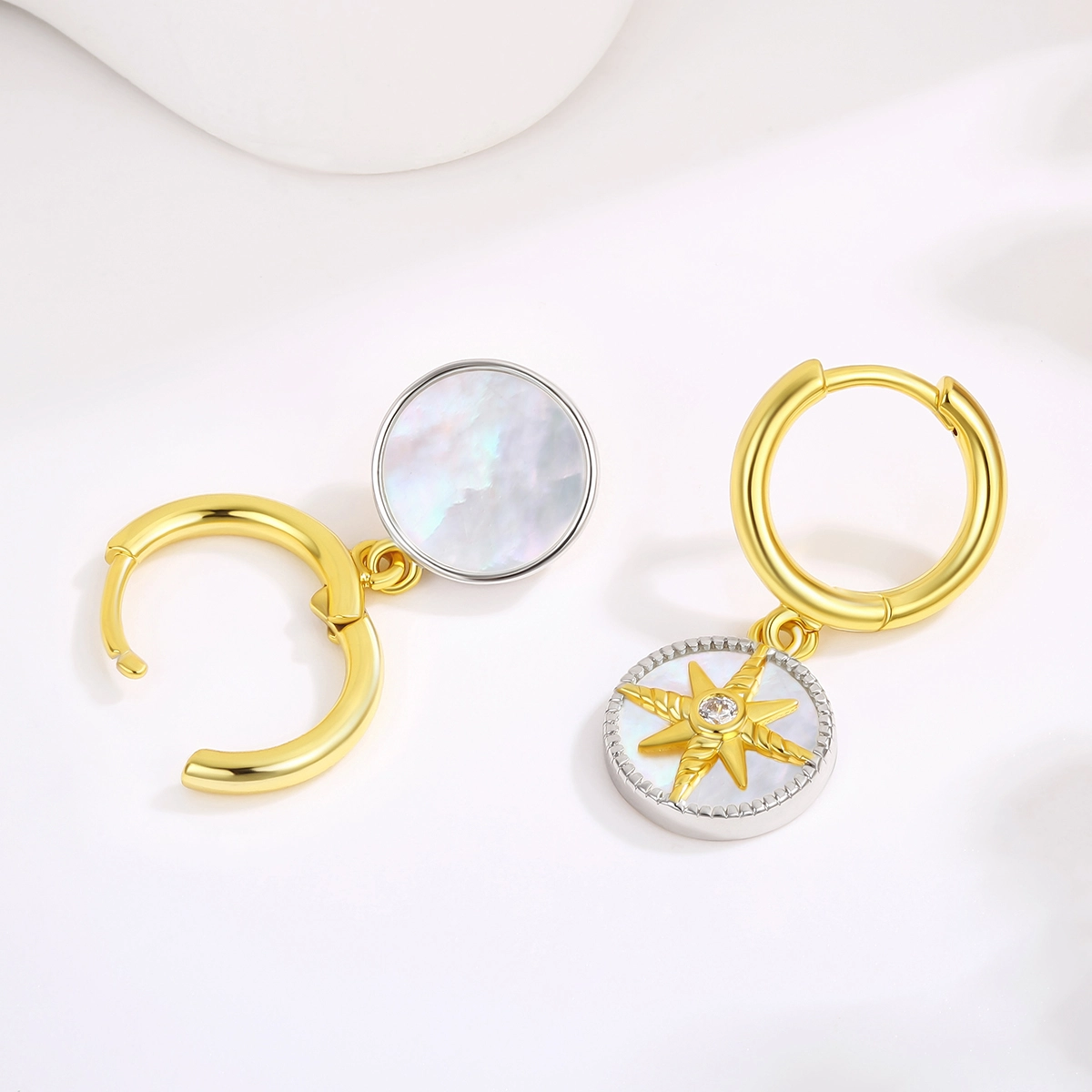
Brass Mother of Pearl Compass Huggie Drop Earrings - 14k/18k Gold Plated Hypoallergenic Jewelry
Testing & Durability Standards for custom brass jewelry
Packaging Sustainability: Eco Options for Silver Earrings
Product Categories
You may also like

925 Silver Jewelry
Customizable High-Quality Fashion 925 Sterling Silver AAA Cubic Zirconia Heart-Shaped Open Tennis Bracelet.
Read More

Brass Jewelry
Customizable OEM ODM High-Quality Fashion Brass AAA Cubic Zirconia Classic Tennis Bracelet for Women Wholesale.
Read More
Get a Quote for Private Label Jewelry
We provide personalized jewelry customization services for clients worldwide.
Rest assured that your privacy is important to us, and all information provided will be handled with the utmost confidentiality.
By clicking 'Send Inquiry Now' I agree to HOLYCOME processing my personal data.
To see how to withdraw your consent, how to control your personal data and how we process it, please see our Privacy Policy and Terms of use.
From design to production, HOLYCOME offers a one-stop solution to help you enhance your brand value and market competitiveness.
Get A Quote
Contact
Tel: (+86) 188 1927 7817
© 2026 HOLYCOME. All Rights Reserved.
Facebook
Instagram
YouTube
Whatsapp: +8618078079070