







Email: sales3@zhefanjewelry.com
Gold Vermeil Jewelry Manufacturer Certifications and Compliance Standards to Look For
A reliable gold vermeil jewelry manufacturer should provide verifiable evidence of material composition, plating thickness, responsible sourcing, product safety, quality management, and environmental controls. Buyers should review ISO 9001 or equivalent quality systems, independent precious-metal testing, REACH and nickel-release compliance where applicable, Responsible Jewellery Council participation or equivalent sourcing controls, and documented inspection procedures before approving a supplier for sterling silver, brass, pearl, or vermeil collections.
- How to Evaluate Compliance in Vermeil and Precious-Metal Jewelry Production
- Start with the legal material definition
- Separate certification from a test report
- Check the scope and authenticity of certificates
- Core Standards and Evidence Procurement Teams Should Request
- Quality management and production control
- Environmental, occupational, and chemical controls
- Responsible sourcing and supply-chain transparency
- Testing, Inspection, and Commercial Risk Controls
- Verify coating thickness and durability
- Control skin-contact and restricted substances
- Use a risk-based inspection plan
- How Our Manufacturing Program Supports Brand and Wholesale Buyers
- Build compliance into product development
- Combine flexible customization with documented controls
- Evaluate our documentation as part of supplier approval
- Frequently Asked Questions
- What certification should a vermeil jewelry supplier have?
- How can buyers verify that jewelry is genuine vermeil?
- Is an ISO 9001 certificate proof of jewelry quality?
- Which chemical tests are important for jewelry sold in Europe?
- How often should gold-plating thickness be tested?
- Can a supplier use one compliance report for an entire jewelry collection?
A reliable gold vermeil jewelry manufacturer should provide verifiable evidence of material composition, plating thickness, responsible sourcing, product safety, quality management, and environmental controls. Buyers should review ISO 9001 or equivalent quality systems, independent precious-metal testing, REACH and nickel-release compliance where applicable, Responsible Jewellery Council participation or equivalent sourcing controls, and documented inspection procedures before approving a supplier for sterling silver, brass, pearl, or vermeil collections. Certification alone is not sufficient: procurement teams should confirm the certificate holder, facility address, scope, validity period, testing laboratory, and connection between the documented system and the actual production line.
How to Evaluate Compliance in Vermeil and Precious-Metal Jewelry Production
Start with the legal material definition
Vermeil is not simply a gold-colored finish. In the United States, the Federal Trade Commission’s Jewelry Guides describe vermeil as sterling silver coated or plated with gold or a gold alloy. The applicable legal framework should be checked through the U.S. Code of Federal Regulations Jewelry Guides, while destination-market rules may impose additional requirements. Buyers should ensure that the supplier’s specification identifies the silver base, gold karat, plating method, minimum coating thickness, surface preparation, and acceptable color tolerance.
A commercial specification should distinguish 925 sterling silver from silver-plated base metal. It should also state whether components such as posts, clasps, jump rings, and chains use the same alloy as the main body. For international sales, the contract should define how fineness is verified and which laboratory method is accepted. This prevents disputes caused by vague descriptions such as “real gold finish,” “silver tone,” or “High Quality plating.”
Separate certification from a test report
A certification normally demonstrates that a management system, facility, material chain, or product category meets a defined standard. A laboratory report, by contrast, records the result of a specific test on a defined sample. Both are important. An ISO 9001 certificate may show that a factory operates a quality management system, but it does not prove that every necklace contains 925 silver or that every bracelet reaches the contracted gold-plating thickness.
For each production order, buyers should request batch-level evidence such as alloy analysis, plating-thickness results, nickel-release testing where required, gemstone or pearl declarations, and final inspection records. Reports should identify the sample number, test method, date, laboratory, and result. Independent laboratories accredited to ISO/IEC 17025 provide stronger evidence of technical competence than undocumented internal measurements, although internal controls remain valuable for daily process management.
Check the scope and authenticity of certificates
Supplier documentation requires the same diligence applied to financial or engineering records. The legal entity on the certificate should match the invoicing and manufacturing entity, not only a trading company. The address should correspond to the facility producing the collection. The scope should cover jewelry manufacturing, electroplating, assembly, or relevant processes rather than an unrelated office function.
Buyers should verify certificate numbers through the issuing certification body whenever possible. Expired documents, cropped screenshots, certificates issued to another factory, and certificates covering only a head office are warning signs. A responsible supplier should provide controlled copies, renewal status, corrective-action records when relevant, and a clear explanation of which processes are outsourced.
Core Standards and Evidence Procurement Teams Should Request
Quality management and production control
ISO 9001 is a useful baseline for evaluating process discipline. It can indicate that a manufacturer maintains documented procedures for purchasing, incoming inspection, production controls, nonconforming products, corrective actions, and continual improvement. The standard does not certify a specific jewelry design, so buyers should connect the management system to practical controls such as master samples, approved color panels, first-article approval, plating-bath monitoring, torque checks, solder-joint inspection, and pre-shipment sampling.
Quality documentation should show how a factory manages revisions. A change in silver supplier, plating chemistry, clasp design, polishing compound, or protective coating can alter tarnish resistance and skin-contact performance. Buyers should require written change notification and reapproval rules, particularly for private-label collections where repeatability across seasons is commercially important.
Environmental, occupational, and chemical controls
ISO 14001 can help buyers assess whether a facility has a structured environmental management system covering waste, chemical handling, wastewater, energy use, and regulatory obligations. ISO 45001 addresses occupational health and safety management. These standards do not replace local permits or laboratory testing, but they provide useful evidence that chemical-intensive operations such as electroplating and polishing are managed systematically.
Material compliance should be mapped to the intended sales markets. The European Union’s REACH Regulation controls the registration, evaluation, authorization, and restriction of chemicals. Jewelry suppliers may need to evaluate restricted substances including nickel release, lead, cadmium, and certain substances in coatings or accessories. Requirements vary by product construction and market, so a buyer should request a restricted-substance declaration supported by current test reports rather than accepting a generic “REACH certified” statement.
Responsible sourcing and supply-chain transparency
Precious-metal sourcing creates commercial, ethical, and reputational exposure. The Responsible Jewellery Council Code of Practices provides a recognized framework covering business ethics, human rights, labor conditions, environmental performance, and responsible supply chains. RJC membership or certification can be helpful, but it should be evaluated in relation to the supplier’s actual scope and the source of silver and gold inputs.
Buyers should ask whether the supplier uses recycled metal, newly mined material, or a blend; how chain-of-custody records are maintained; and whether refiners or plating providers are separately controlled. Claims such as “eco gold” or “ethical silver” should be supported by defined terminology, supplier declarations, transaction documents, and an audit trail. This approach improves marketing accuracy and reduces the risk of unsupported sustainability claims.
| Compliance area | Evidence to request | Procurement value |
|---|---|---|
| Product composition | Alloy declaration, XRF or fire-assay report, batch identification | Confirms silver fineness and reduces mislabeling risk |
| Gold coating | Contracted karat, minimum thickness, measurement method, sample results | Controls wear performance, appearance, and customer expectations |
| Quality management | Valid ISO 9001 certificate and production inspection records | Demonstrates repeatable process controls |
| Chemical safety | REACH-related declaration, nickel-release and restricted-substance reports | Supports market access and skin-contact risk management |
| Responsible sourcing | RJC evidence or equivalent supplier-chain documentation | Improves ESG credibility and traceability |
| Environmental and worker protection | ISO 14001 or ISO 45001 evidence, permits, chemical procedures | Helps evaluate operational resilience and compliance maturity |
Testing, Inspection, and Commercial Risk Controls
Verify coating thickness and durability
Gold-plating thickness is a major cost and performance variable. A supplier quotation should state the minimum thickness at defined measurement locations rather than only describing the finish as “heavy gold plating.” X-ray fluorescence can provide rapid non-destructive analysis when properly calibrated, while cross-section testing or other laboratory methods may be appropriate for dispute resolution. The purchase order should define sampling frequency, measurement tolerance, exposed-edge treatment, and the remedy for results below specification.
Durability testing should reflect the product’s use. Abrasion, perspiration, humidity, salt-spray, and adhesion tests may be relevant depending on the design, coating system, and target market. No test guarantees unlimited wear because skin chemistry, cosmetics, friction, and storage conditions vary. However, a controlled test plan allows buyers to compare suppliers on consistent evidence instead of relying on visual samples alone.
Control skin-contact and restricted substances
Nickel release is particularly important for earrings, rings, bracelets, and other items that remain in prolonged contact with skin. The European standard EN 1811 is commonly referenced for testing nickel release from articles intended for direct and prolonged skin contact, with related standards and market rules determining the applicable limits. Buyers should define which components are tested, including posts, backs, chains, and soldered areas.
Lead and cadmium restrictions may apply to metal components, while coatings, adhesives, packaging, and decorative elements may introduce additional chemical considerations. A credible compliance program maps the bill of materials to test requirements. It does not rely on one report for an entire collection when the designs use different alloys, stones, adhesives, plating systems, or suppliers.
Use a risk-based inspection plan
A practical inspection plan normally includes pre-production approval, first-piece verification, in-process checks, and final random inspection. Critical defects may include exposed base metal, poor adhesion, sharp edges, incomplete soldering, loose stones, incorrect hallmarks, broken clasps, and dimensional deviations that affect packaging or merchandising. Major defects can include visible scratches, inconsistent color, or excessive tarnish, while minor defects should be defined according to brand tolerance.
Acceptance sampling should be agreed before production begins. The plan should specify the inspection level, acceptable quality limit, defect classification, packaging checks, barcode verification, and photographic evidence. For high-value or launch-critical collections, third-party inspection before shipment can provide an independent release decision and reduce the cost of returns, rework, and marketplace complaints.
How Our Manufacturing Program Supports Brand and Wholesale Buyers
Build compliance into product development
Our manufacturing program is structured to connect design decisions with material and compliance requirements before mass production. For a new collection, our team can align the product brief with the selected base metal, surface finish, component specification, packaging needs, and destination-market expectations. This early review helps prevent a common procurement failure: approving an attractive prototype that cannot be produced consistently at the required price, thickness, or safety standard.
Our process supports product categories including brass jewelry, 925 silver jewelry, sterling silver jewelry, gold vermeil jewelry, and pearl jewelry. Each category requires different controls. Brass pieces may require protective finishes and tarnish-management procedures; sterling silver designs require fineness and solder control; vermeil collections require clear gold-layer specifications; and pearl jewelry requires careful drilling, matching, setting, and protection against abrasion or chemical exposure.
Combine flexible customization with documented controls
Private-label buyers often need changes to dimensions, stones, chains, plating color, logos, packaging, and assortment quantities. Customization should not weaken traceability. Our team uses approved samples, technical specifications, color references, and production checkpoints to help preserve consistency when a design moves from development to repeat orders. Buyers can use these records to compare samples, approve pre-production units, and manage revisions across multiple purchase orders.
For wholesale and brand programs, commercial value depends on more than unit price. Stable quality reduces inspection labor, replacement shipments, negative reviews, and lost retail opportunities. Clear specifications also make replenishment more predictable. When plating thickness, alloy content, dimensions, tolerances, packaging, and inspection criteria are documented in advance, procurement teams can evaluate quotations on total cost of ownership rather than headline price alone.
Evaluate our documentation as part of supplier approval
Prospective buyers should request the documents relevant to their market and product scope, including business registration details, facility information, quality procedures, material declarations, sample test reports, and production inspection records. Our team can support a structured approval process by clarifying which operations are performed internally, which specialists are involved, how nonconforming products are handled, and how corrective actions are recorded.
Certification claims should always be verified against the current scope and legal entity. Our approach is to treat documentation as a working component of manufacturing rather than a marketing attachment. This gives brand owners, distributors, and purchasing managers a clearer basis for approving brass jewelry, silver collections, vermeil pieces, and pearl-led assortments for different markets.
Frequently Asked Questions
What certification should a vermeil jewelry supplier have?
ISO 9001 is a useful quality-management baseline, while ISO 14001 and ISO 45001 provide additional evidence of environmental and occupational safety systems. Buyers should also request product-specific test reports and confirm that any RJC, REACH, or market-specific documentation applies to the actual facility and product scope.
How can buyers verify that jewelry is genuine vermeil?
Request documentation identifying the sterling silver base, gold karat, plating process, and minimum coating thickness. Independent alloy analysis and coating-thickness testing provide stronger evidence than a supplier’s visual description or a generic certificate.
Is an ISO 9001 certificate proof of jewelry quality?
No. ISO 9001 demonstrates a certified quality-management system, not automatic compliance of every item. Buyers should connect the certificate to batch testing, first-article approval, in-process inspection, final inspection, and corrective-action records.
Which chemical tests are important for jewelry sold in Europe?
Depending on construction and intended use, buyers may need evidence related to REACH restrictions, nickel release, lead, cadmium, and other restricted substances. The exact test plan should reflect the bill of materials, skin-contact conditions, and current destination-market requirements.
How often should gold-plating thickness be tested?
Testing frequency should be risk-based and agreed in the purchase specification. New suppliers, new plating systems, revised designs, and high-value launches generally justify more frequent checks, while established repeat production can use defined batch sampling supported by process monitoring.
Can a supplier use one compliance report for an entire jewelry collection?
Only when the products share sufficiently similar materials, components, coatings, and manufacturing processes and the report clearly defines its scope. Different alloys, plating systems, stones, adhesives, or suppliers may require separate assessments.
Contact our team to review compliant materials, custom designs, and wholesale options across brass jewelry, sterling silver, gold vermeil, 925 silver, and pearl jewelry collections.
Tags
brass jewellery manufacturer
brass jewellery manufacturer
925 silver bracelet distributor
925 silver bracelet distributor
cz brass jewelry sourcing agent
cz brass jewelry sourcing agent
custom brass earring supplier china
custom brass earring supplier china
40mm brass chunky hoop earrings
40mm brass chunky hoop earrings
custom oxidized brass earrings
custom oxidized brass earrings
Recommended for you
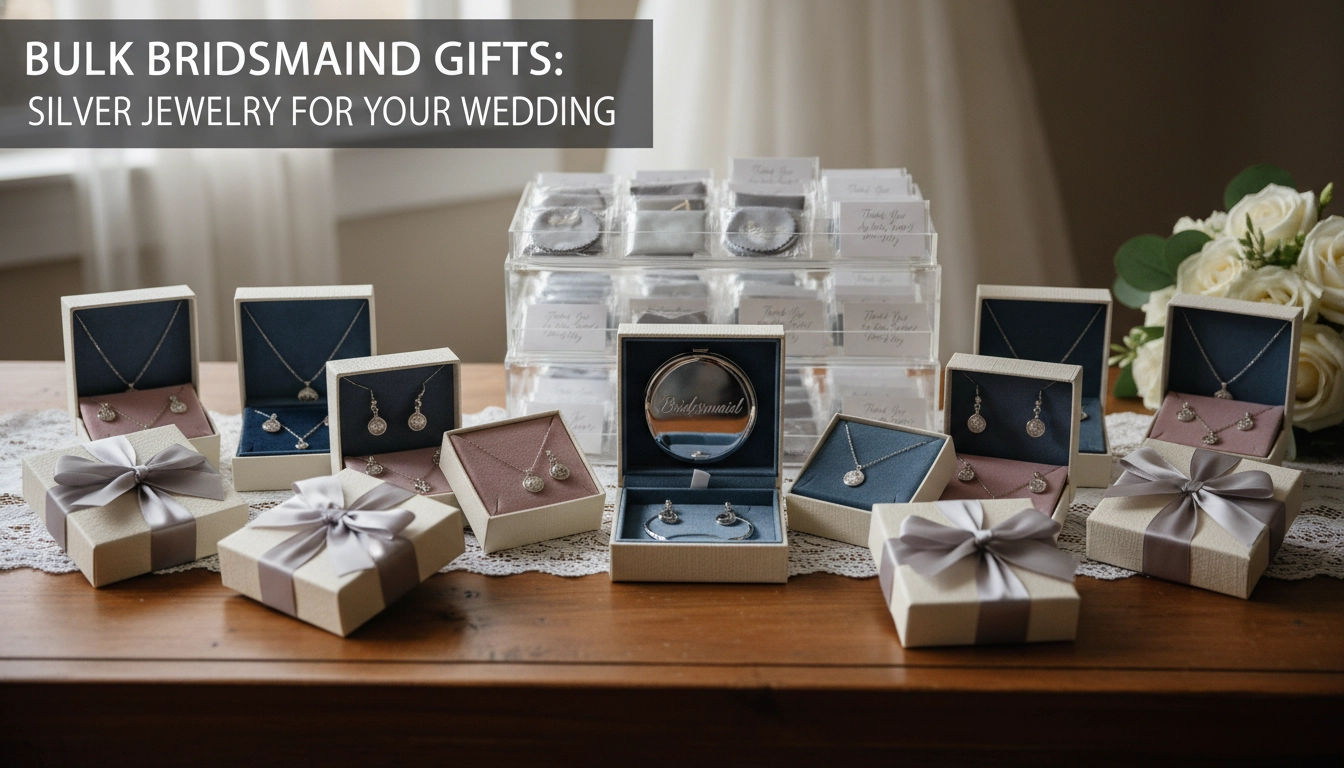
From Bridesmaids to Bridal Sets: The Complete Blueprint for Wholesale Wedding Silver Jewelry Sourcing
Supplier Checklist: Quality Standards for 925 Sterling Silver Earrings
Rhodium Thickness and Durability for 925 Silver Bracelets
Comparing Casting vs Stamping for 925 Silver Bracelet Production
Product Categories
You may also like

925 Silver Jewelry
Customizable High-Quality Fashion 925 Sterling Silver AAA Cubic Zirconia Heart-Shaped Open Tennis Bracelet.
Read More

Brass Jewelry
Customizable OEM ODM High-Quality Fashion Brass AAA Cubic Zirconia Classic Tennis Bracelet for Women Wholesale.
Read More
Get a Quote for Private Label Jewelry
We provide personalized jewelry customization services for clients worldwide.
Rest assured that your privacy is important to us, and all information provided will be handled with the utmost confidentiality.
By clicking 'Send Inquiry Now' I agree to ZHEFAN JEWELRY processing my personal data.
To see how to withdraw your consent, how to control your personal data and how we process it, please see our Privacy Policy and Terms of use.
From design to production, ZHEFAN JEWELRY offers a one-stop solution to help you enhance your brand value and market competitiveness.
Get A Quote
Contact
Tel: (+86) 188 1927 7817
© 2026 Zhefan Jewelry. All Rights Reserved.
Facebook
Instagram
YouTube
Whatsapp: +8618819277817