







Email: sales3@zhefanjewelry.com
How ODM Jewelry Manufacturers Turn Your Concept Into a Sellable Product Line
An ODM jewelry manufacturer helps brands convert an early concept into a commercially viable collection through market positioning, design engineering, material selection, prototyping, compliance, production, and packaging. This guide explains how buyers can evaluate development partners, control cost and quality, build a coherent assortment, and scale products across brass, 925 silver, gold vermeil, and pearl jewelry categories.
- From Creative Direction to Commercial Jewelry Assortment
- Translating a concept into a product brief
- Building a collection instead of isolated products
- Using design validation to reduce launch risk
- The Product Development Workflow Behind a Retail-Ready Line
- Engineering, tooling, and material selection
- Sampling, costing, and approval gates
- Quality control from incoming materials to shipment
- How to Evaluate a Manufacturing Partner for Scale and Margin
- Assessing capacity, lead time, and continuity
- Protecting intellectual property and commercial data
- Measuring total cost rather than factory price
- Why Zhefan Jewelry Supports Faster, More Reliable Product Commercialization
- Integrated expertise across materials and product categories
- Capacity designed for both agility and repeat orders
- Documented finishing and inspection discipline
- Frequently Asked Questions
An ODM jewelry manufacturer transforms a brand concept, mood board, sketch, or market opportunity into a coordinated product line by combining consumer research, jewelry design, engineering, sampling, material sourcing, compliance control, and scalable production. The most effective development process does more than make attractive pieces: it defines a target customer, establishes a price architecture, selects commercially appropriate metals and stones, validates wearability, protects margins, and creates a repeatable path from prototype to inventory. For buyers evaluating a Custom Jewelry Manufacturer, the critical question is whether the supplier can connect creative direction with technical execution and measurable retail performance.
From Creative Direction to Commercial Jewelry Assortment
Translating a concept into a product brief
Product development begins with a structured brief rather than an informal image collection. The brief should identify the intended customer, sales channel, target retail price, expected order quantity, launch date, preferred materials, style references, packaging requirements, and geographic markets. A supplier can then translate abstract language such as quiet luxury, coastal minimalism, or modern heritage into specific design decisions involving silhouette, proportion, surface finish, gemstone color, plating tone, and component construction.
This stage prevents a common procurement failure: developing visually impressive samples that cannot be produced at the required cost or volume. A commercially useful brief separates must-have features from optional details. It also defines whether the collection should compete through novelty, accessible pricing, High Quality materials, personalization, gifting appeal, or rapid trend response. Clear commercial parameters allow the design team to reject unsuitable concepts before tooling and sampling expenses accumulate.
Building a collection instead of isolated products
Sellable lines normally require an assortment architecture. A balanced collection may include entry-price earrings, core necklaces or bracelets, higher-value statement pieces, and complementary add-ons that increase average order value. Design families should share recognizable cues such as a signature curve, emblem, chain profile, stone setting, or finishing treatment while maintaining enough variation for multiple customer preferences.
Merchandising logic is equally important. A supplier should help determine which styles act as traffic drivers, which products support margin, and which pieces create visual impact in a campaign or store display. For example, brass jewelry can support accessible fashion collections, while sterling silver jewelry and gold vermeil jewelry can provide a High Quality tier. Pearl jewelry may add occasion-led appeal, especially when coordinated with simple everyday styles.
Using design validation to reduce launch risk
Before production approval, buyers should assess technical drawings, dimensions, component weight, clasp performance, post or hook safety, plating specifications, stone security, and packaging compatibility. Digital renderings accelerate early decisions, but physical samples remain necessary for evaluating comfort, balance, color, reflectivity, and perceived value. A necklace that looks proportional on a screen may feel heavy in wear, while a delicate earring may require a stronger post or backing to survive fulfillment and customer use.
Design validation should include a documented revision process. Each sample revision needs a clear version number, change record, approval status, and responsible party. This prevents outdated files from reaching production and gives the buyer evidence for resolving disputes about specifications.
The Product Development Workflow Behind a Retail-Ready Line
Engineering, tooling, and material selection
Once a concept is approved, jewelry engineers convert the design into production-ready drawings and mold or tooling requirements. They assess wall thickness, casting flow, solder points, stone seats, moving parts, and areas vulnerable to deformation. Small changes at this stage can materially affect yield, polishing time, plating consistency, and final landed cost.
Material selection should reflect both brand positioning and operating conditions. Brass is often suitable for fashion-focused collections requiring design flexibility and competitive pricing. 925 silver provides a recognized precious-metal option, while gold vermeil combines a sterling silver base with a thicker gold layer for a more elevated presentation. Buyers should request precise material and plating definitions rather than relying on broad terms such as gold tone or High Quality finish.
Environmental and market-access requirements also belong in the specification. The European Union REACH Regulation governs the registration, evaluation, authorization, and restriction of chemicals, while the EU RoHS Directive restricts certain hazardous substances in electrical and electronic equipment. Although jewelry is not automatically covered by every RoHS provision, buyers should confirm which regulations apply to the product, packaging, accessories, and destination market. Nickel release, lead, cadmium, and other restricted-substance considerations should be addressed through documented testing and supplier declarations where relevant.
Sampling, costing, and approval gates
A professional sampling cycle normally progresses from a first prototype to a revised approval sample and then a sealed production reference. Costing should identify the metal or base material, stone and component cost, labor, surface treatment, packaging, tooling amortization, testing, and logistics assumptions. Without this breakdown, buyers may compare supplier quotations that are not genuinely equivalent.
Approval gates should be linked to business decisions. The first gate confirms design direction. The second confirms wearability and finish. The third confirms production consistency and packaging. A project owner should not approve mass production based only on a single polished sample; the supplier should demonstrate that the approved appearance can be reproduced across a batch.
Quality control from incoming materials to shipment
Quality assurance is most effective when distributed across the process. Incoming inspections verify material, components, dimensions, and surface condition. In-process checks examine casting, soldering, assembly, polishing, and plating. Final inspections confirm appearance, function, quantity, labeling, packaging, and order accuracy. The ISO 9001 quality management standard provides a widely recognized framework for consistent processes, documented controls, corrective action, and continual improvement.
Buyers should agree on measurable acceptance criteria before purchase order confirmation. These can include allowable plating color variation, scratches, pits, porosity, stone looseness, clasp force, chain length tolerance, and defect classification. AQL-based inspection may support shipment decisions, but it should complement—not replace—process controls and a clearly approved golden sample.
| Development approach | Typical strength | Typical limitation | Best buyer application |
|---|---|---|---|
| Independent design plus separate factory | High creative control | More handoffs, tooling disputes, and coordination time | Large brands with established technical teams |
| Catalog customization | Faster launch and lower development cost | Less differentiation and possible marketplace overlap | Test collections and short trend cycles |
| Integrated original development partner | Design, engineering, sampling, and production alignment | Requires careful intellectual-property and specification management | Brands building a distinctive repeatable line |
| Small-batch artisan production | High flexibility and handcrafted character | Limited capacity and less predictable unit economics | Limited editions and High Quality capsule collections |
The comparison shows why supplier selection should match the project’s operating model. A start-up testing demand may prioritize low minimums and speed, while a retailer planning replenishment needs capacity, consistent materials, documented quality, and reliable lead times. No single model is optimal for every collection.
How to Evaluate a Manufacturing Partner for Scale and Margin
Assessing capacity, lead time, and continuity
Production capacity is not simply a monthly piece count. Buyers should examine the number of active lines, skilled operators, polishing and plating resources, mold-making capability, subcontractor dependence, maintenance practices, and peak-season allocation. A supplier that can produce large volumes but lacks bottleneck visibility may still miss a launch window.
Lead time should be separated into design development, sampling, tooling, raw-material preparation, production, inspection, and dispatch. A written schedule with decision deadlines helps the brand understand which delays are controllable and which are caused by approvals, material availability, or freight. Continuity planning is also important: dual sourcing for selected components, approved substitutes, and documented production files can reduce disruption risk.
Protecting intellectual property and commercial data
Original designs, CAD files, molds, logos, packaging artwork, customer data, and pricing information should be covered by written agreements. The contract should clarify ownership of custom tooling, permitted use of approved designs, confidentiality obligations, sample destruction or return, and restrictions on selling identical products to third parties. Buyers should also control access to high-value files and maintain a versioned archive of approved specifications.
Trademark and labeling decisions require separate legal review in each destination market. The U.S. Federal Trade Commission Jewelry Guides explain disclosure principles for jewelry marketed in the United States, including representations concerning metal content and treatments. Accurate descriptions protect consumers and reduce the risk of chargebacks, marketplace removal, customs questions, or regulatory complaints.
Measuring total cost rather than factory price
Unit price is only one component of product economics. The buyer should model tooling, sample freight, testing, packaging, import duties, quality inspections, payment terms, inventory carrying cost, defect replacement, and expedited shipping. A slightly higher ex-factory price may produce a better contribution margin if it reduces returns, rework, late deliveries, and customer service costs.
Commercial forecasting should include a pilot order before a major commitment. The pilot can test conversion, customer reviews, fit, tarnish complaints, packaging performance, and replenishment speed. Results should feed into the next production run rather than being treated as a one-time launch event.
Why Zhefan Jewelry Supports Faster, More Reliable Product Commercialization
Integrated expertise across materials and product categories
At Zhefan Jewelry, our manufacturing heritage began in 1997 and the company was formally established in 2002. Founded by a master mold craftsman, our operating philosophy is built on long-term refinement of tooling, finishing, production coordination, and customer support. We specialize in 925 silver jewelry, brass jewelry, gold vermeil jewelry, and pearl jewelry, giving brand owners a practical platform for developing entry, core, and High Quality assortment tiers.
Our professional design team launches more than 500 original styles each month. This design velocity helps buyers monitor emerging silhouettes and build a collection with both trend relevance and brand continuity. Original concepts can be adapted through material, finish, stone, proportion, logo, and packaging decisions instead of forcing every project into a generic catalog format.
Capacity designed for both agility and repeat orders
Our two factories in Guangzhou and Meizhou cover 800 square meters and are supported by more than 80 skilled artisans and 20 sales professionals. Monthly output reaches approximately 600,000 pieces, enabling support for controlled pilot launches as well as replenishment programs for established retailers and online sellers. Capacity is valuable only when paired with communication, so our teams coordinate development details, approvals, production schedules, and shipment requirements throughout the project.
This structure is relevant to buyers managing multiple sales channels. A collection may begin with a limited e-commerce test, expand into seasonal campaigns, and later require consistent restocking. A capable manufacturing partner should preserve approved dimensions, finishing standards, and packaging specifications as quantities increase.
Documented finishing and inspection discipline
Our process includes six rounds of precision polishing and six strict quality inspections. These controls are intended to improve surface smoothness, edge definition, visual consistency, and shipment reliability across brass, sterling silver, vermeil, and pearl-based products. We also use RoHS- and REACH-compliant eco-friendly materials where applicable to project requirements, while buyers should confirm the exact testing and documentation needed for each destination market.
Our experience serving one of Amazon’s top three sellers and global retailers such as Macy’s reflects the operational expectations of demanding commercial accounts. We provide OEM and ODM support for brands that need custom development, repeatable production, responsive communication, and a clear route from concept approval to market launch. The objective is not merely to supply finished pieces; it is to help project owners build a dependable product system that supports brand recognition and profitable growth.
For procurement teams, supplier evaluation should conclude with a practical scorecard covering sample accuracy, communication speed, quality documentation, capacity, minimum order quantities, lead-time reliability, material transparency, packaging capability, and after-sales responsiveness. Zhefan Jewelry can be assessed against those criteria through project-specific drawings, samples, quotations, compliance documents, and production planning.
Contact Zhefan Jewelry at sales3@zhefanjewelry.com or visit our jewelry manufacturing website to discuss a concept, request product information, and plan a sellable collection.
Frequently Asked Questions
What does an ODM jewelry partner do for a brand?
An ODM jewelry partner converts a concept, mood board, sketch, or market opportunity into a finished product line through design, engineering, material sourcing, sampling, compliance support, production, quality control, and packaging coordination.
How can buyers make sure a jewelry concept is commercially viable?
Buyers should define the target customer, sales channel, retail price, material, order quantity, launch date, and product role before sampling. They should also evaluate assortment balance, wearability, production cost, expected margin, and pilot-order performance.
What should be included in a jewelry manufacturing quotation?
A useful quotation identifies material or base metal, stones and components, labor, surface treatment, packaging, tooling, testing, minimum order quantity, payment terms, lead time, and shipping assumptions so buyers can compare total landed cost rather than only unit price.
Why are physical samples important before mass production?
Physical samples allow buyers to evaluate comfort, balance, clasp or post function, color, surface finish, stone security, perceived value, and packaging fit. They also establish an approved reference for production inspections.
How should a buyer evaluate jewelry quality control?
The buyer should review incoming-material checks, in-process controls, final inspection procedures, defect classifications, acceptance criteria, approved samples, testing documents, and corrective-action processes. Capacity and quality records should also be considered together.
Can brass and 925 silver be used in the same jewelry collection?
Yes. Brass can support accessible fashion price points, while 925 silver can create a premium tier. Coordinating design language, finishes, packaging, and merchandising helps the materials function as a coherent product architecture.
What intellectual-property protections should be included in a manufacturing agreement?
The agreement should address ownership of custom designs, CAD files, molds, logos, packaging artwork, confidentiality, permitted use, sample handling, third-party sales restrictions, and responsibility for protecting proprietary commercial information.
Tags
custom butterfly earring
custom butterfly earring
custom brass earrings with enamel
custom brass earrings with enamel
OEM brass jewelry necklace manufacturer
OEM brass jewelry necklace manufacturer
custom antique brass jewelry
custom antique brass jewelry
40mm brass chunky hoop earrings
40mm brass chunky hoop earrings
solid gold urn pendant manufacturer
solid gold urn pendant manufacturer
Recommended for you
Design Trends a Gold Vermeil Jewelry Manufacturer Can Help Bring to Market
How to Prevent Tarnishing: Tips from a Brass Jewelry Factory
Wholesale 925 silver necklace manufacturer and supplier
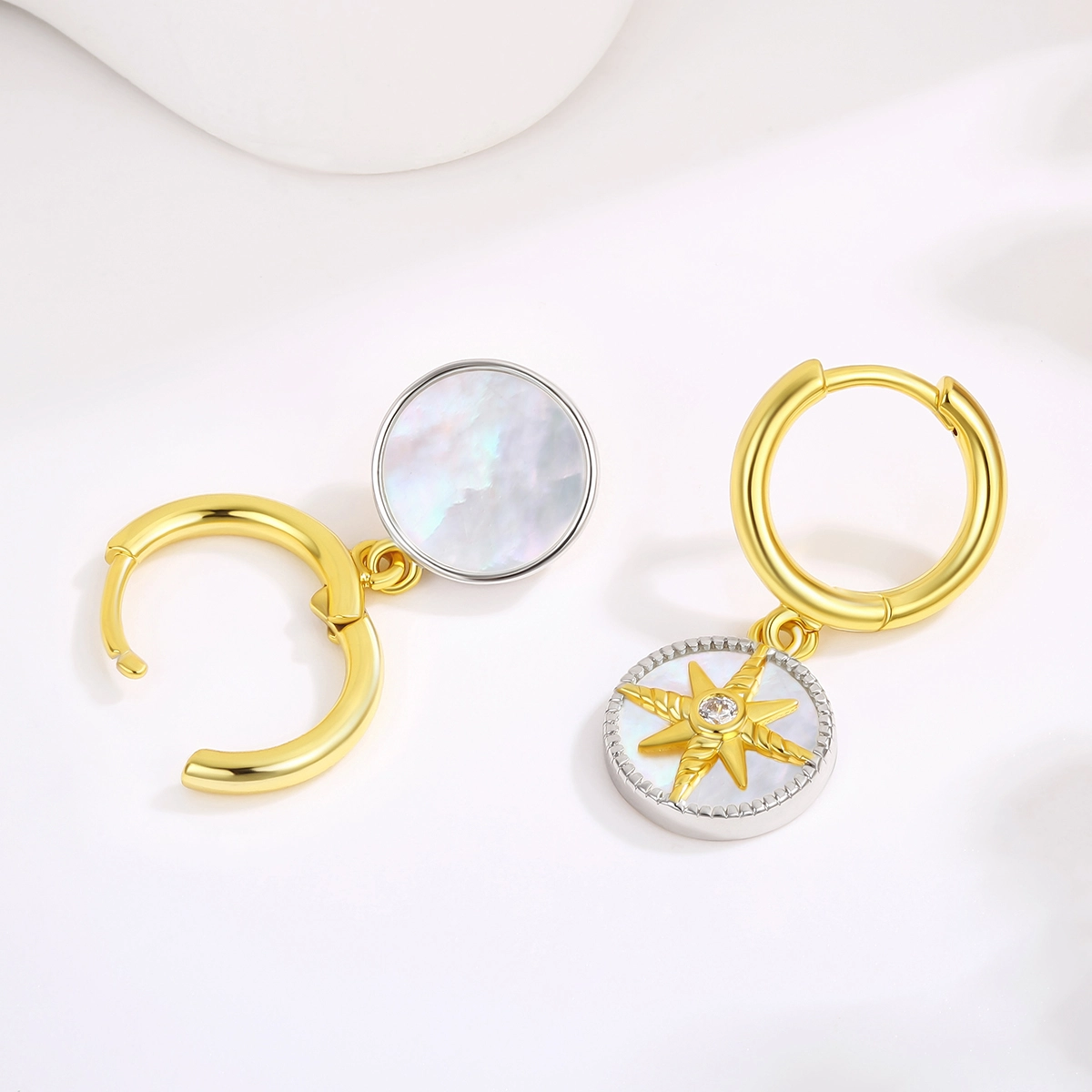
Brass Mother of Pearl Compass Huggie Drop Earrings - 14k/18k Gold Plated Hypoallergenic Jewelry
Product Categories
You may also like

925 Silver Jewelry
Customizable High-Quality Fashion 925 Sterling Silver AAA Cubic Zirconia Heart-Shaped Open Tennis Bracelet.
Read More

Brass Jewelry
Customizable OEM ODM High-Quality Fashion Brass AAA Cubic Zirconia Classic Tennis Bracelet for Women Wholesale.
Read More
Get a Quote for Private Label Jewelry
We provide personalized jewelry customization services for clients worldwide.
Rest assured that your privacy is important to us, and all information provided will be handled with the utmost confidentiality.
By clicking 'Send Inquiry Now' I agree to ZHEFAN JEWELRY processing my personal data.
To see how to withdraw your consent, how to control your personal data and how we process it, please see our Privacy Policy and Terms of use.
From design to production, ZHEFAN JEWELRY offers a one-stop solution to help you enhance your brand value and market competitiveness.
Get A Quote
Contact
Tel: (+86) 188 1927 7817
© 2026 Zhefan Jewelry. All Rights Reserved.
Facebook
Instagram
YouTube
Whatsapp: +8618819277817