







Email: sales3@zhefanjewelry.com
Unlock Value: Your Expert Guide on How to Haggle for Jewelry Effectively
This comprehensive guide provides expert strategies on how to haggle for jewelry, empowering buyers to secure the best deals. It covers assessing different types of jewelry, including adjustable fashion rings with cubic zirconia, conducting essential market research, and employing effective negotiation tactics. Understand when and where haggling is appropriate, how to identify genuine value, and crucial post-purchase considerations to ensure satisfaction and maximize savings on your next sparkling acquisition.
- Mastering the Art of Negotiation: How to Haggle for Jewelry
- Understanding Jewelry Types and Their Value for Haggling
- Essential Research Before You Bargain
- Mastering Negotiation Tactics for Jewelry Purchases
- When to Walk Away: Knowing Your Limit
- Post-Purchase Considerations and Value
- Frequently Asked Questions About Haggling for Jewelry
- Is it always appropriate to haggle for jewelry?
- What factors influence the price of jewelry?
- How can I tell if a piece of jewelry is worth the asking price?
- What's the difference in haggling for fashion jewelry vs. fine jewelry?
- What negotiation tips are most effective when buying jewelry?
- Should I try to haggle online for jewelry?
- FAQ
Mastering the Art of Negotiation: How to Haggle for Jewelry
Acquiring a beautiful piece of jewelry, whether it's a timeless heirloom or a contemporary fashion statement, can be an exhilarating experience. However, smart buyers know that the listed price isn't always the final price. Understanding how to haggle for jewelry can unlock significant value, allowing you to secure stunning pieces without overspending. This guide will equip you with the knowledge and tactics needed to navigate negotiations like a seasoned professional, ensuring you get the best possible deal on your next cherished item.
Understanding Jewelry Types and Their Value for Haggling
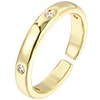
Before you even begin to negotiate, it's crucial to understand the type of jewelry you're interested in. For instance, the elegant gold-colored adjustable ring with its three subtle, sparkling cubic zirconia stones, as seen in the accompanying image, represents a category often referred to as fashion or costume jewelry. These pieces, typically made from brass or other base metals with plating, have different pricing structures and profit margins compared to fine jewelry made from solid gold, platinum, and genuine diamonds or gemstones.
Haggling for a fashion piece like this adjustable ring might focus on volume discounts or promotional offers, especially if you're purchasing multiple items. For fine jewelry, negotiations can delve into craftsmanship, material purity, gem quality, and market trends, where larger discounts might be achievable on higher-ticket items. Knowing this distinction is the first step in formulating an effective negotiation strategy for your desired piece.
Essential Research Before You Bargain
Knowledge is power when learning how to haggle for jewelry. Before approaching a seller, conduct thorough research. Understand the prevailing market prices for similar items, whether it's the current gold spot price for a fine jewelry piece or the retail range for a specific style of fashion ring. Compare prices from different vendors, both online and brick-and-mortar stores. For items featuring specific gems, familiarize yourself with the 4 Cs (Carat, Cut, Color, Clarity) for diamonds or relevant grading factors for other precious stones. This research will provide you with a baseline to determine a fair offer and give you confidence during the negotiation process.
Mastering Negotiation Tactics for Jewelry Purchases
Approaching a negotiation with respect and confidence is key. Here are some effective tactics:
- Start with a Lower, Yet Reasonable, Offer: Don't open with an absurdly low price; this can alienate the seller. Instead, base your initial offer on your research, leaving room for the seller to counter.
- Highlight Flaws (Gently): If you notice any minor imperfections or aspects that could be improved (e.g., a slight scratch, an older design, or an unpopular stone cut), you can use these as points to justify a lower price, but do so politely.
- Cash Payment Advantage: Some sellers might be willing to offer a small discount for cash payments, as it avoids credit card processing fees. Always ask if a cash discount is available.
- Bundle Purchases: If you're interested in multiple items, like the pictured adjustable ring and perhaps a matching pendant, inquire about a bundled discount. Sellers are often more willing to reduce the price per item if it means a larger overall sale.
- Walk Away (Temporarily): If you've reached an impasse, politely thank the seller and indicate you need more time to consider. Sometimes, the seller may call you back with a better offer to secure the sale.
When to Walk Away: Knowing Your Limit
A crucial aspect of how to haggle for jewelry is knowing your maximum price point and being prepared to walk away if that limit is not met. It's easy to get caught up in the excitement of a purchase, but overpaying negates the purpose of haggling. Have a clear budget in mind and stick to it. Remember, there will always be other opportunities to find beautiful jewelry at a fair price.
Post-Purchase Considerations and Value
Once you've successfully negotiated a deal, ensure you receive all relevant documentation, such as an appraisal, certification for gems, or a detailed receipt. For fashion jewelry like the adjustable gold-colored ring, inquire about care instructions to maintain its luster. For fine jewelry, understand the return policy, warranty, and any after-sales services like cleaning or resizing. These considerations contribute to the overall value and longevity of your jewelry investment, ensuring your smart shopping efforts truly pay off.
Frequently Asked Questions About Haggling for Jewelry
Is it always appropriate to haggle for jewelry?
Haggling for jewelry is generally more acceptable in independent boutiques, antique shops, or during private sales, rather than in large chain stores or high-end luxury brands with fixed pricing policies. For online purchases, direct negotiation is less common, though you might find coupon codes or sale events. It's always best to gauge the seller's openness to negotiation first, perhaps by asking if there's any flexibility on the price.
What factors influence the price of jewelry?
Several factors influence jewelry pricing, including the type and purity of metal (e.g., 14K gold vs. 18K gold vs. gold-plated brass), the quality and rarity of gemstones (Carat, Cut, Color, Clarity for diamonds; origin and treatment for colored stones), the brand name, craftsmanship, design complexity, and current market demand. For fashion jewelry, material costs, production volume, and design trends are more significant.
How can I tell if a piece of jewelry is worth the asking price?
To assess if a piece is worth its asking price, conduct research on comparable items, understand the materials used (e.g., distinguishing between a solid gold item and a gold-colored adjustable ring with plating), and scrutinize the craftsmanship. For fine jewelry, request certifications for diamonds or gemstones and consider getting an independent appraisal. For fashion jewelry, evaluate durability, finish quality, and how well it aligns with current styles versus its cost.
What's the difference in haggling for fashion jewelry vs. fine jewelry?
When haggling for fashion jewelry, the focus is often on securing small discounts, exploiting promotions, or negotiating a better price for multiple items. With fine jewelry, the potential for negotiation can be higher due to larger profit margins and the unique nature of each piece. Here, you can discuss gem quality, certification, historical provenance, or even minor imperfections to influence the price more significantly.
What negotiation tips are most effective when buying jewelry?
Effective negotiation tips include starting with a reasonable but firm offer based on your research, being polite and respectful throughout the discussion, highlighting specific reasons for your proposed price (e.g., a similar item found cheaper), expressing genuine interest in the piece, and being prepared to walk away if your terms aren't met. Offering cash can also sometimes lead to a small discount.
Should I try to haggle online for jewelry?
Haggling for jewelry online is typically less common than in physical stores. Most e-commerce sites have fixed pricing. However, you can look for discount codes, sign up for newsletters for exclusive offers, or check if the retailer has a
FAQ
Is it always appropriate to haggle for jewelry?
Haggling for jewelry is generally more acceptable in independent boutiques, antique shops, or during private sales, rather than in large chain stores or high-end luxury brands with fixed pricing policies. For online purchases, direct negotiation is less common, though you might find coupon codes or sale events. It's always best to gauge the seller's openness to negotiation first, perhaps by asking if there's any flexibility on the price.
What factors influence the price of jewelry?
Several factors influence jewelry pricing, including the type and purity of metal (e.g., 14K gold vs. 18K gold vs. gold-plated brass), the quality and rarity of gemstones (Carat, Cut, Color, Clarity for diamonds; origin and treatment for colored stones), the brand name, craftsmanship, design complexity, and current market demand. For fashion jewelry, material costs, production volume, and design trends are more significant.
How can I tell if a piece of jewelry is worth the asking price?
To assess if a piece is worth its asking price, conduct research on comparable items, understand the materials used (e.g., distinguishing between a solid gold item and a gold-colored adjustable ring with plating), and scrutinize the craftsmanship. For fine jewelry, request certifications for diamonds or gemstones and consider getting an independent appraisal. For fashion jewelry, evaluate durability, finish quality, and how well it aligns with current styles versus its cost.
What's the difference in haggling for fashion jewelry vs. fine jewelry?
When haggling for fashion jewelry, the focus is often on securing small discounts, exploiting promotions, or negotiating a better price for multiple items. With fine jewelry, the potential for negotiation can be higher due to larger profit margins and the unique nature of each piece. Here, you can discuss gem quality, certification, historical provenance, or even minor imperfections to influence the price more significantly.
What negotiation tips are most effective when buying jewelry?
Effective negotiation tips include starting with a reasonable but firm offer based on your research, being polite and respectful throughout the discussion, highlighting specific reasons for your proposed price (e.g., a similar item found cheaper), expressing genuine interest in the piece, and being prepared to walk away if your terms aren't met. Offering cash can also sometimes lead to a small discount.
Should I try to haggle online for jewelry?
Haggling for jewelry online is typically less common than in physical stores. Most e-commerce sites have fixed pricing. However, you can look for discount codes, sign up for newsletters for exclusive offers, or check if the retailer has a
Tags
bulk brass earring supplier
bulk brass earring supplier
cz brass jewelry sustainable manufacturer
cz brass jewelry sustainable manufacturer
925 silver jewelry custom
925 silver jewelry custom
custom holiday jewelry
custom holiday jewelry
sterling silver 925 bracelet
sterling silver 925 bracelet
oem 925 sterling silver earrings
oem 925 sterling silver earrings
Recommended for you
Trend Forecast: 925 Silver Ring Styles for Wholesale Buyers
Scaling Orders: From Samples to Mass Production
Packaging ideas for 925 sterling silver nickel free jewelry
MOQ Strategies for custom brass jewelry Wholesale
Product Categories
You may also like

925 Silver Jewelry
Customizable High-Quality Fashion 925 Sterling Silver AAA Cubic Zirconia Heart-Shaped Open Tennis Bracelet.
Read More

Brass Jewelry
Customizable OEM ODM High-Quality Fashion Brass AAA Cubic Zirconia Classic Tennis Bracelet for Women Wholesale.
Read More
Get a Quote for Private Label Jewelry
We provide personalized jewelry customization services for clients worldwide.
Rest assured that your privacy is important to us, and all information provided will be handled with the utmost confidentiality.
By clicking 'Send Inquiry Now' I agree to ZHEFAN JEWELRY processing my personal data.
To see how to withdraw your consent, how to control your personal data and how we process it, please see our Privacy Policy and Terms of use.
From design to production, ZHEFAN JEWELRY offers a one-stop solution to help you enhance your brand value and market competitiveness.
Get A Quote
Contact
Tel: (+86) 188 1927 7817
© 2026 Zhefan Jewelry. All Rights Reserved.
Facebook
Instagram
YouTube
Whatsapp: +8618819277817