







Email: sales3@zhefanjewelry.com
How to price wholesale brass tennis bracelet for retail profit
A practical B2B pricing framework for brass tennis bracelets, covering landed cost, plating, packaging, freight, wholesale margins, retail markups, quality control, compliance, MOQ strategy, and supplier evaluation. The guide explains how brand owners can build profitable price points without sacrificing finish quality, customer perception, or repeat-purchase potential, with a manufacturing perspective from Zhefan Jewelry.
- Building a Profitable Cost Model for Crystal-Set Brass Wristwear
- Separate factory cost from true landed cost
- Use a unit economics formula before negotiating
- Account for metal, stones, and finish specifications
- Choosing Wholesale and Retail Price Points
- Work backward from the channel margin
- Compare markup, margin, and contribution correctly
- Use competitive positioning without copying competitors
- Quality, Compliance, and Supplier Controls That Protect Margin
- Quality failures are hidden pricing costs
- Verify chemical and market-access requirements
- Protect the financial model with purchase-order controls
- Why a Capable Custom Jewelry Manufacturer Improves Retail ROI
- Zhefan Jewelry combines scale with product development
- Quality systems support consistent consumer presentation
- Manufacturing support can reduce total cost, not only unit cost
- Frequently Asked Questions
Pricing a brass tennis bracelet for retail profit requires more than multiplying the factory quotation by a standard markup. Buyers must calculate the complete landed cost, including metal components, stone setting, plating, polishing, packaging, inspection, freight, duty, payment fees, returns, marketing allowances, and channel commissions. A commercially viable price should also reflect perceived value, design differentiation, quality consistency, and the retailer’s target gross margin. For most fashion jewelry programs, the strongest approach is to establish a cost floor, define a required wholesale margin, test the product against comparable crystal or cubic zirconia tennis styles, and then confirm that the final recommended retail price remains credible for the target customer. This method helps brands protect profit while selecting a reliable custom jewelry manufacturer that can deliver stable color, secure stones, compliant materials, and repeatable production at scale.
Building a Profitable Cost Model for Crystal-Set Brass Wristwear
Separate factory cost from true landed cost
The supplier quotation is only one component of the financial model. A brass tennis bracelet may include a brass base, cubic zirconia or glass stones, prong or channel settings, plating, polishing, assembly, inspection, branded packaging, and export preparation. Buyers should request a cost breakdown rather than relying on a single unit price. The breakdown should identify whether the price includes logo tooling, sample development, plating thickness, stone upgrades, individual polybags, gift boxes, export cartons, and documentation.
Landed cost adds expenses incurred after production. Common additions include international freight, cargo insurance, customs duty, import VAT or sales tax treatment, customs brokerage, warehouse receiving, quality inspection, and local delivery. Payment terms can also affect cash cost. A deposit, balance payment, currency conversion charge, letter-of-credit fee, or platform transaction fee should be allocated across the expected order quantity. For a small launch, fixed costs such as mold development and photography can materially increase cost per piece, while a larger repeat order spreads those expenses across more units.
Use a unit economics formula before negotiating
A practical formula is: landed unit cost = product price + packaging + inspection allocation + freight allocation + duty and import charges + payment charges + expected defect and return allowance. The retail price should then be tested against the desired gross margin and channel structure. If a brand sells directly through its own website, it may retain more revenue but incur payment processing, customer acquisition, fulfillment, and return costs. If it sells through a marketplace or department store, commissions, promotional deductions, and wholesale terms may reduce net revenue.
For example, assume the complete landed cost of a fashion bracelet is $8.20. A distributor may require a 25% to 35% gross margin, while a specialty retailer may target a substantially higher margin depending on its operating model, markdown exposure, and brand positioning. If the brand sells to a retailer at $14, the brand gross margin before operating expenses is $5.80, or approximately 41.4%. If the retailer applies a 2.2 times markup, the consumer price becomes $30.80. The resulting price must still be compared with similar products, packaging quality, customer expectations, and promotional discounting.
Account for metal, stones, and finish specifications
Brass is generally selected for its formability, cost efficiency, and suitability for intricate fashion designs, but the base metal does not determine the entire product value. Stone count, stone size, setting method, clasp engineering, link flexibility, plating system, and surface preparation can create major cost differences. A bracelet with carefully aligned stones and a secure box clasp may justify a higher price than a visually similar item with loose prongs, uneven spacing, or a thin decorative finish.
Plating should be specified in measurable terms wherever possible. The purchase order can identify the color, plating stack, required appearance, tarnish expectations, nickel-release requirements, and acceptance standard for visible surfaces. Buyers should also clarify whether anti-tarnish treatment is included and whether the supplier tests representative batches. Product claims must remain accurate; brass fashion jewelry should not be marketed as solid gold or sterling silver unless the product actually meets the applicable material definition.
Choosing Wholesale and Retail Price Points
Work backward from the channel margin
Retail pricing is often more reliable when calculated backward from the desired consumer price. Start with a realistic recommended retail price, subtract retailer or marketplace deductions, subtract the brand’s operating expenses, and confirm that the remaining contribution covers the landed cost. This avoids a common procurement error: accepting a low factory quotation that cannot support packaging, advertising, returns, discounts, and channel fees.
Brands should model at least three scenarios: full-price sales, planned promotional sales, and a conservative clearance scenario. A product that is profitable only at full price may create cash-flow problems if the channel expects regular discount events. The model should include a markdown reserve, especially for seasonal colors, trend-driven motifs, or collections with a short merchandising window. A stable core design can usually carry a more predictable reorder plan than a highly seasonal statement piece.
Compare markup, margin, and contribution correctly
Markup and margin are not interchangeable. If an item costs $10 and sells for $20, the markup on cost is 100%, but the gross margin on sales is 50%. Procurement teams should state which metric is being used in supplier and retail discussions. A brand can also calculate contribution margin after variable expenses such as fulfillment, payment processing, advertising, returns, and customer service. Contribution margin gives a clearer view of whether a product can support profitable growth.
| Pricing measure | Formula | Example with $10 cost and $20 selling price | Use in decision-making |
|---|---|---|---|
| Markup on cost | (Selling price - cost) / cost | 100% | Useful for setting a basic price multiplier |
| Gross margin | (Selling price - cost) / selling price | 50% | Useful for comparing channel profitability |
| Gross profit | Selling price - cost | $10 | Shows dollars available to cover operating expenses |
| Break-even units | Fixed costs / contribution per unit | Depends on fixed costs | Shows the sales volume required to recover launch investment |
The formulas above are standard financial calculations, but the assumptions require discipline. Product teams should document the expected average selling price rather than the highest advertised price. If a collection is routinely sold with a 15% coupon, the model should use the net realized price. This is particularly important for online brands competing on marketplaces where sponsored listings, fulfillment charges, and returns can materially reduce realized revenue.
Use competitive positioning without copying competitors
Competitive research should compare more than price. Buyers should review bracelet length options, stone brilliance, clasp security, packaging, product photography, reviews, warranty language, delivery speed, and material disclosure. A lower-priced competitor may use a simpler plating process or lighter component weight, while a higher-priced competitor may invest in custom packaging, stronger retention systems, or a recognizable brand story.
Pricing can be segmented into entry, core, and High Quality tiers. An entry model may use a standard length and basic packaging. A core model can offer better stone matching, upgraded plating, and branded presentation. A High Quality fashion version may include custom links, a heavier feel, special color plating, or gift-ready packaging. This tiered structure gives distributors and retailers more assortment flexibility without forcing every buyer into the highest production specification.
Quality, Compliance, and Supplier Controls That Protect Margin
Quality failures are hidden pricing costs
Defects reduce profit through rework, replacement shipments, customer refunds, negative reviews, and retailer chargebacks. For a linked stone bracelet, inspection should cover clasp operation, link articulation, stone alignment, missing stones, sharp edges, plating coverage, color consistency, and dimensional accuracy. A documented golden sample should be approved before bulk production, and the purchase order should define tolerances for length, weight, color, and visible surface defects.
Sampling plans can be structured around recognized quality-control practices. The ISO 2859-1 sampling standard provides a statistical framework for inspection by attributes, although the appropriate inspection level and acceptance quality limit should be agreed with the supplier and adapted to product risk. For jewelry, critical defects such as unsafe sharp points or a clasp that cannot retain the bracelet should receive stricter treatment than minor cosmetic variation on a concealed surface.
Verify chemical and market-access requirements
Regulatory obligations differ by destination market. Buyers selling into the European Economic Area should understand the restrictions associated with the European Union REACH Regulation, including requirements that may affect substances in articles and nickel release from products intended for prolonged skin contact. RoHS may apply in specific electrical and electronic product contexts rather than automatically applying to every piece of jewelry, so claims should be made only when the product and test scope support them.
For the United States, businesses should review relevant guidance from the U.S. Consumer Product Safety Commission when products, packaging, or accessories could create small-parts risks for children. Product documentation should match the actual design, intended age group, materials, and market. Test reports should identify the sampled product, laboratory, test method, date, and result; an undated generic certificate is not a substitute for traceable compliance evidence.
Protect the financial model with purchase-order controls
A purchase order should define the approved sample, bill of materials, plating color, stone type, logo placement, packaging, carton quantity, delivery terms, inspection rights, defect remedies, and change-control process. Any substitution of stones, clasp components, base material, or plating chemistry should require written approval. These controls prevent a supplier from reducing cost in ways that damage perceived value or cause compliance risk.
Buyers should also negotiate a reorder policy. A stable price is easier to maintain when the supplier confirms raw-material assumptions, minimum order quantities, production lead time, and the validity period of quotations. If brass, packaging, or freight costs fluctuate, a transparent adjustment mechanism is preferable to an unexplained price increase. Forecast sharing can help the supplier reserve capacity while allowing the buyer to avoid excessive inventory.
Why a Capable Custom Jewelry Manufacturer Improves Retail ROI
Zhefan Jewelry combines scale with product development
Zhefan Jewelry is a fashion jewelry manufacturer established in 2002, with a manufacturing legacy dating back to 1997. Founded by a master mold craftsman, our company has built its production culture around continual refinement of molds, surfaces, settings, and finishing details. We specialize in brass jewelry, 925 silver jewelry, sterling silver jewelry, gold vermeil jewelry, and pearl jewelry, enabling brand owners to develop coordinated collections across multiple price tiers.
Our two factories in Guangzhou and Meizhou cover 800 square meters and are supported by more than 80 skilled artisans and 20 sales professionals. Monthly output can reach 600,000 pieces, giving distributors and retail programs the capacity required for replenishment while preserving the communication structure needed for custom development. Our professional design team launches more than 500 original styles monthly, helping buyers refresh assortments and respond to changing fashion demand without depending exclusively on generic catalog products.
Quality systems support consistent consumer presentation
Our manufacturing process includes six rounds of precision polishing and six strict quality inspections. This layered approach is designed to control visible finish, edge smoothness, assembly integrity, clasp function, stone placement, and packaging readiness. For a brass crystal tennis bracelet, consistency is commercially important because even small differences in color or surface reflectivity can create customer complaints when multiple pieces appear together in a retail display.
We use RoHS- and REACH-compliant eco-friendly materials within the applicable product and market requirements, supported by documentation and testing processes appropriate to the order. Buyers should still confirm the exact destination-market requirements and request product-specific evidence for each program. Our OEM and ODM services can support custom molds, logo details, plating options, packaging development, and coordinated collections, helping brands align product specifications with their target retail price.
Manufacturing support can reduce total cost, not only unit cost
A supplier’s value should be assessed through total program economics. Responsive sampling can reduce launch delays; stable quality can lower replacement rates; design support can improve sell-through; and reliable capacity can reduce stockouts during promotional periods. Zhefan Jewelry has served leading Amazon sellers and global retailers including Macy’s, giving our team familiarity with structured purchasing, quality expectations, packaging requirements, and repeat-order coordination.
For buyers evaluating a brass tennis bracelet supplier, the recommended due-diligence sequence is straightforward: submit the target retail price and customer profile, confirm the desired component and plating specification, request a detailed quotation, approve a production sample, review compliance documentation, conduct pre-shipment inspection, and monitor early sales and return data. Our team can also compare brass, 925 silver, sterling silver, gold vermeil, and pearl options so that the collection architecture supports both entry-level volume and High Quality upselling.
Profitability is ultimately created by the combination of price, quality, velocity, and operational control. A low unit quotation is not commercially attractive if it produces inconsistent plating, delayed delivery, high returns, or weak customer reviews. A well-specified product from a capable custom jewelry manufacturer can command a defensible retail price, support repeat orders, and strengthen the brand’s long-term margin profile.
Frequently Asked Questions
What costs should be included when pricing a brass tennis bracelet for retail?
Include the product price, packaging, inspection allocation, freight, insurance, customs duty, import charges, payment fees, warehouse receiving, and an allowance for defects and returns. Marketing, fulfillment, marketplace commissions, and customer acquisition should also be included when calculating contribution margin.
What is the difference between markup and gross margin?
Markup is calculated against cost, while gross margin is calculated against selling price. If an item costs $10 and sells for $20, the markup is 100% and the gross margin is 50%.
How can buyers compare competing crystal-set brass bracelets?
Compare total specifications rather than price alone, including brass weight, stone type and alignment, clasp security, plating system, length options, packaging, quality controls, warranty terms, delivery time, and customer reviews.
What quality checks are important for a linked tennis bracelet?
Inspection should cover clasp operation, link articulation, stone alignment, missing stones, sharp edges, plating coverage, color consistency, dimensional accuracy, and the bracelet’s ability to retain its shape and remain securely fastened.
Should a supplier provide compliance documentation for brass jewelry?
Yes. Buyers should request product-specific and traceable documentation relevant to the destination market, including applicable chemical and material testing. European-market programs should consider REACH requirements, while U.S. programs should review applicable CPSC guidance and product-specific safety obligations.
How can a custom jewelry manufacturer improve retail profitability?
A capable manufacturer can reduce total program cost through accurate sampling, stable quality, efficient production, design support, reliable capacity, compliant materials, lower defect rates, and coordinated packaging. These factors can improve sell-through and reduce replacement, return, and delay costs.
Tags
cz brass jewelry export hub
cz brass jewelry export hub
OEM urn pendant jewelry supplier
OEM urn pendant jewelry supplier
nickel free rose gold brass
nickel free rose gold brass
adjustable tennis bracelet with extender wholesale
adjustable tennis bracelet with extender wholesale
silver tennis bracelet anniversary gift
silver tennis bracelet anniversary gift
wholesale 925 sterling silver earrings
wholesale 925 sterling silver earrings
Recommended for you
Quality Control Checklist for 925 Sterling Silver Earrings
Wholesale Buying Guide for cubic zirconia brass jewelry
Comparing Casting Methods for Custom 925 Silver Rings
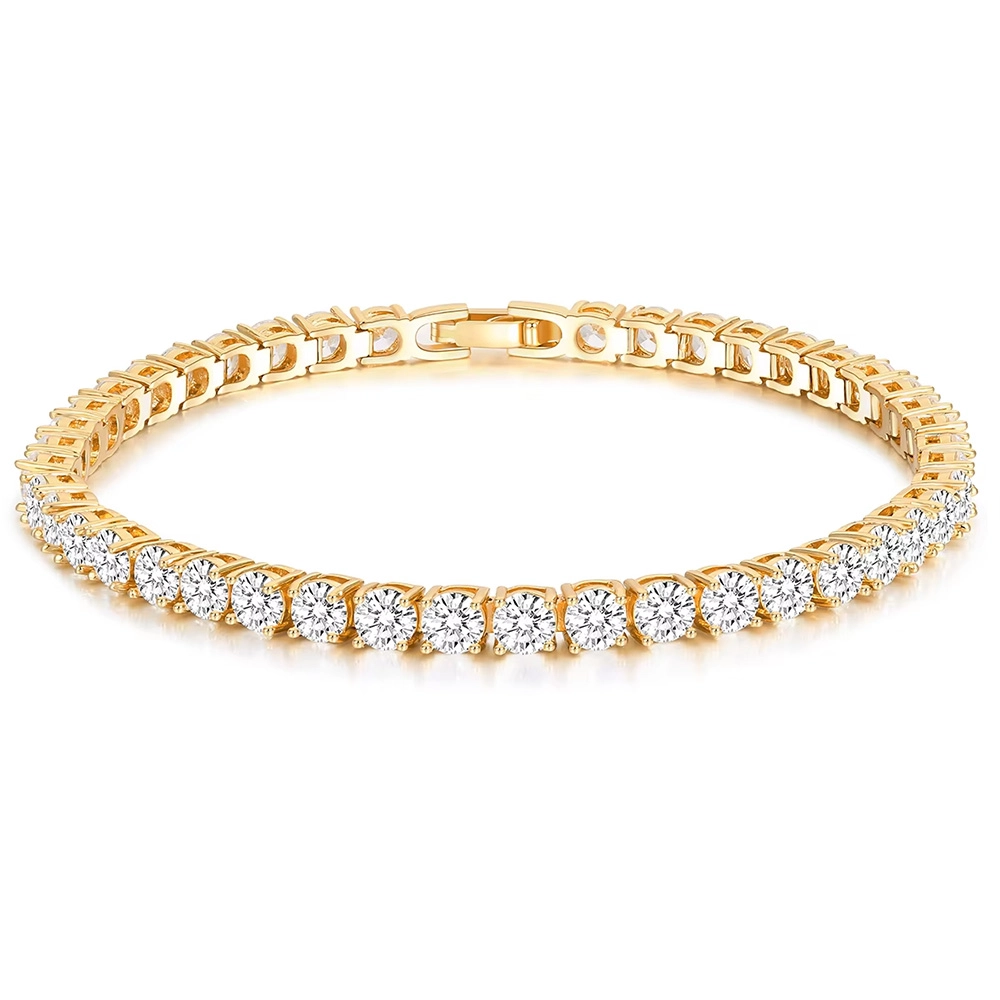
Custom CZ Tennis Bracelet Wholesale — Zhefan Jewelry OEM/ODM
Product Categories
You may also like

925 Silver Jewelry
Customizable High-Quality Fashion 925 Sterling Silver AAA Cubic Zirconia Heart-Shaped Open Tennis Bracelet.
Read More

Brass Jewelry
Customizable OEM ODM High-Quality Fashion Brass AAA Cubic Zirconia Classic Tennis Bracelet for Women Wholesale.
Read More
Get a Quote for Private Label Jewelry
We provide personalized jewelry customization services for clients worldwide.
Rest assured that your privacy is important to us, and all information provided will be handled with the utmost confidentiality.
By clicking 'Send Inquiry Now' I agree to ZHEFAN JEWELRY processing my personal data.
To see how to withdraw your consent, how to control your personal data and how we process it, please see our Privacy Policy and Terms of use.
From design to production, ZHEFAN JEWELRY offers a one-stop solution to help you enhance your brand value and market competitiveness.
Get A Quote
Contact
Tel: (+86) 188 1927 7817
© 2026 Zhefan Jewelry. All Rights Reserved.
Facebook
Instagram
YouTube
Whatsapp: +8618819277817