







Email: sales3@zhefanjewelry.com
Beyond 'S925': Your Essential Guide to Identifying Antique Silver Marks on Jewelry
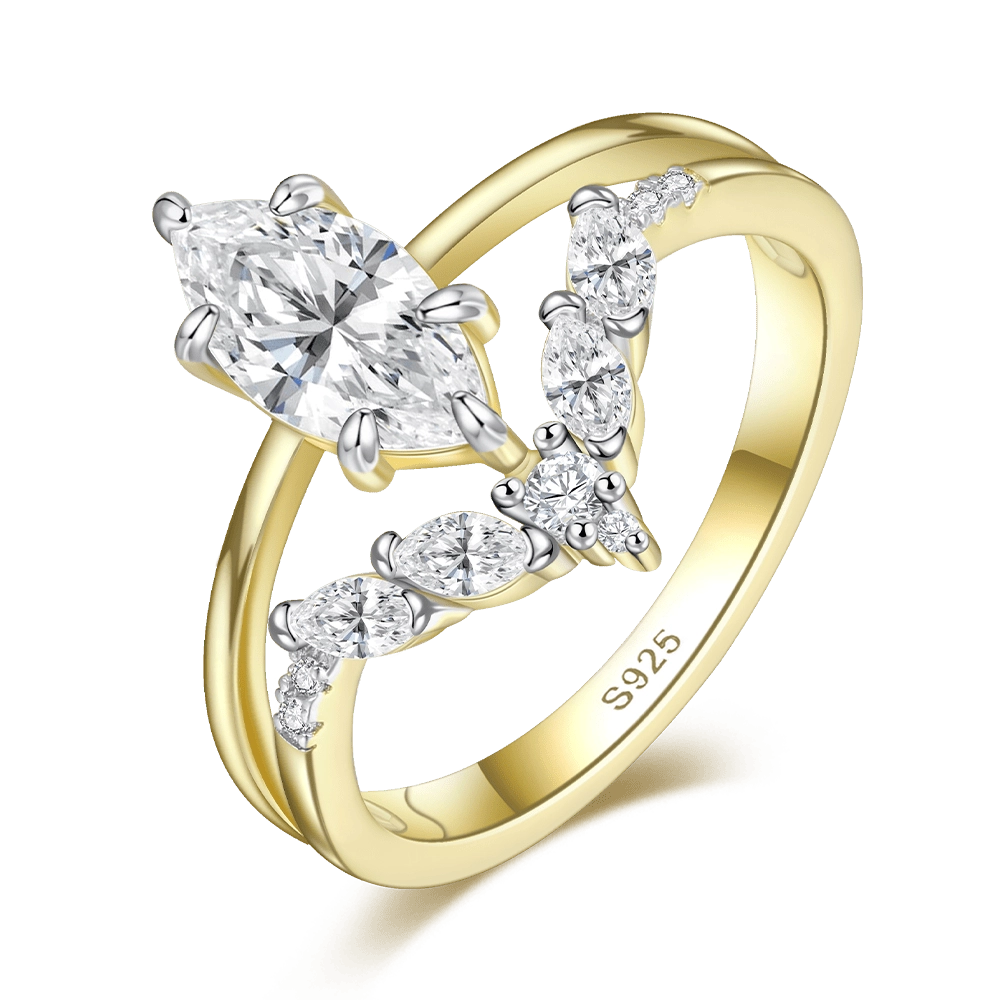
This blog post from Zhefan Jewelry delves into the intricate world of identifying antique silver marks. Starting with the modern "S925" seen on contemporary pieces like the elegant marquise diamond ring featured, the guide expands to cover historical hallmarks, maker's marks, and date letters crucial for determining the origin, age, and value of antique silver. It emphasizes the importance of these stamps for authenticity and offers insights for collectors and those seeking custom jewelry manufacturing.
- Unveiling the Secrets in Silver: A Zhefan Jewelry Guide
- The 'S925' Mark: A Modern Starting Point
- Why Identifying Antique Silver Marks Matters
- Types of Antique Silver Marks to Look For
- Purity or Standard Marks
- Maker's Marks
- City Marks and Date Letters
- Duty Marks and Import Marks
- Preserving and Valuing Your Silver Treasures with Zhefan Jewelry
- FAQ
Unveiling the Secrets in Silver: A Zhefan Jewelry Guide
The allure of jewelry often lies not just in its dazzling appearance but also in the rich history and craftsmanship it embodies. For many pieces, especially those with significant age, a tiny inscription can tell a grand story. At Zhefan Jewelry, a leading Custom Jewelry Manufacturer, we understand the profound importance of these details. Just as a magnificent ring, like the featured yellow-gold toned piece adorned with a striking marquise-cut diamond and an array of smaller marquise and round brilliant diamonds, carries its own elegance, its subtle marks often hold the key to its true identity and value.
The 'S925' Mark: A Modern Starting Point
Examining the exquisite ring shown, one prominent detail etched into its band is the 'S925' mark. This mark, clearly visible, signifies that the core metal of the ring is sterling silver, even though it is presented with a lustrous yellow-gold plating. 'S925' is a modern standard indicating 92.5% pure silver, often alloyed with copper for durability. While this is a common contemporary marking, understanding its meaning is the first step in appreciating how marks help identify and authenticate precious metals. For those interested in Custom Jewelry Manufacturer services, knowing these material specifications is crucial for design and quality.
Why Identifying Antique Silver Marks Matters
For collectors, enthusiasts, and anyone inheriting or acquiring older pieces, identifying antique silver marks is a critical skill. These intricate stamps, often found on the underside or less visible parts of an item, are far more than mere decorations. They are historical fingerprints that can reveal the item's origin, the silversmith who crafted it, the year it was made, and its exact silver content. Without this knowledge, accurately assessing the value and authenticity of an antique silver piece is nearly impossible.
Types of Antique Silver Marks to Look For
Purity or Standard Marks
Similar to the 'S925' on our featured ring, antique silver pieces will have marks indicating their silver content. Common marks include 'Sterling' (92.5% pure silver), '925', '800' (80% pure silver, common in European pieces), or specific national standards. These marks assure the buyer of the metal's fineness.
Maker's Marks
This is arguably one of the most exciting marks to discover. A maker's mark identifies the individual silversmith or the manufacturing company responsible for the piece. These can range from intricate monograms and initials to full company names. Researching these marks can lead to fascinating discoveries about the history and craftsmanship behind a piece, making the process of identifying antique silver marks an engaging journey.
City Marks and Date Letters
Many countries, especially in Europe, implemented strict hallmarking systems. City marks indicate where the silver was assayed (tested and stamped), such as the anchor for Birmingham or the leopard's head for London. Date letters, typically a single letter of the alphabet that changes annually, pinpoint the exact year the item was hallmarked. These combined marks offer an incredibly precise historical record.
Duty Marks and Import Marks
Less common but equally significant are duty marks, which indicated that taxes were paid, and import marks, applied to silver imported into a country. These provide further layers of historical and economic context to an antique piece.
Preserving and Valuing Your Silver Treasures with Zhefan Jewelry
At Zhefan Jewelry, we not only specialize in creating stunning new pieces but also appreciate the legacy of fine craftsmanship. Understanding and identifying antique silver marks enhances the value and story of your cherished items. Whether you are looking to authenticate an heirloom, understand its potential market value, or even commission a custom piece inspired by historical designs, our expertise as a Custom Jewelry Manufacturer can guide you. We offer insights into material quality, design integrity, and the enduring appeal of finely marked silver.
FAQ
What does 'S925' mean on jewelry?
The 'S925' mark indicates that the jewelry is made from sterling silver, which is an alloy containing 92.5% pure silver and 7.5% other metals, typically copper. This alloy is used because pure silver is too soft for most jewelry applications. Even if a piece appears gold-colored, like the ring in the image, an S925 mark suggests it's likely gold-plated sterling silver, with the mark identifying the base metal.
How do I start identifying antique silver marks?
To begin identifying antique silver marks, first, locate all visible stamps on the piece, usually on a less prominent area. Note down any letters, numbers, or symbols. You'll then need to consult reputable silver mark identification guides, online databases, or expert appraisers. Focus on purity marks (e.g., Sterling, 925, 800), maker's marks, city marks, and date letters, as these are the most common and informative.
Are all silver marks the same globally?
No, silver marks vary significantly across different countries and historical periods. While '925' is a widely recognized international standard for sterling silver, hallmarking systems in the UK, France, Germany, and other nations have distinct patterns, symbols, city marks, and date letter cycles. It requires specific knowledge of regional hallmarks to accurately identify pieces from different origins.
Why is it important to identify silver marks?
Identifying silver marks is crucial for several reasons: it confirms the authenticity and silver content of a piece, helps determine its age and origin, identifies the artisan or company responsible for its creation, and significantly impacts its monetary and historical value. Without identifying these marks, it's challenging to differentiate valuable antiques from plated items or reproductions.
Can Zhefan Jewelry help me understand the marks on my old pieces?
While Zhefan Jewelry primarily focuses on custom jewelry manufacturing, our expertise in precious metals and craftsmanship allows us to offer general guidance on understanding material quality and common markings. For definitive appraisals and deep historical analysis of antique silver marks, we recommend consulting certified antique silver appraisers or conservators who specialize in historical pieces.
What's the difference between sterling silver and other silver alloys?
Sterling silver, marked '925' or 'Sterling,' consists of 92.5% pure silver. Other common silver alloys include '800 silver' (80% pure silver, often seen in older European pieces), 'Britannia silver' (95.8% pure silver), and 'coin silver' (historically around 90% silver). The difference lies in the percentage of pure silver, which affects the metal's softness, luster, and tarnish resistance, as well as its value.
Tags
silver tennis bracelet for bridesmaids
silver tennis bracelet for bridesmaids
custom heart necklace
custom heart necklace
cad design brass jewelry supplier
cad design brass jewelry supplier
made to order brass tennis bracelet oem
made to order brass tennis bracelet oem
christmas earrings bulk supplier
christmas earrings bulk supplier
brass jewelry exporters
brass jewelry exporters
Recommended for you
Custom Pearl Shell Ring Manufacturer — 925 Sterling Silver & Brass Jewelry by Zhefan
Wholesale Rose Quartz Earrings — High-Quality Fashion Jewelry Manufacturer
10 Expert Secrets to Silver Jewelry Repair and Restoration Services: The 2026 Master Guide
Plating and Finishing Options for Custom Jewelry Buyers
Product Categories
You may also like

925 Silver Jewelry
Customizable High-Quality Fashion 925 Sterling Silver AAA Cubic Zirconia Heart-Shaped Open Tennis Bracelet.
Read More

Brass Jewelry
Customizable OEM ODM High-Quality Fashion Brass AAA Cubic Zirconia Classic Tennis Bracelet for Women Wholesale.
Read More
Get a Quote for Private Label Jewelry
We provide personalized jewelry customization services for clients worldwide.
Rest assured that your privacy is important to us, and all information provided will be handled with the utmost confidentiality.
By clicking 'Send Inquiry Now' I agree to ZHEFAN JEWELRY processing my personal data.
To see how to withdraw your consent, how to control your personal data and how we process it, please see our Privacy Policy and Terms of use.
From design to production, ZHEFAN JEWELRY offers a one-stop solution to help you enhance your brand value and market competitiveness.
Get A Quote
Contact
Tel: (+86) 188 1927 7817
© 2026 Zhefan Jewelry. All Rights Reserved.
Facebook
Instagram
YouTube
Whatsapp: +8618819277817