







Email: sales3@zhefanjewelry.com
Legal & Compliance for Importing 925 Sterling Silver Jewelry
Importing 925 sterling silver jewelry requires coordinated control of material purity, product safety, chemical restrictions, labeling, customs documentation, packaging, and market-specific responsibilities. Buyers should verify that suppliers can provide reliable assay or material records, REACH and RoHS documentation where relevant, accurate country-of-origin data, commercial invoices, tariff classifications, and test reports matched to the finished product. A documented compliance workflow reduces customs delays, recalls, marketplace suspension, and avoidable landed-cost risk while helping jewelry brands scale private-label and OEM collections with confidence.
- Core Regulatory Requirements for Sterling Silver Jewelry Imports
- Confirm metal fineness, composition, and product claims
- Screen restricted substances and product-safety risks
- Build a destination-market compliance matrix
- Import Documentation, Customs, and Supply-Chain Controls
- Prepare a complete customs file
- Assign responsibilities in the purchase contract
- Control samples, records, and shipment release
- How a Custom Jewelry Manufacturer Can Reduce Compliance Risk
- Engineer compliance into the design stage
- Why supplier capability matters to total landed cost
- Zhefan Jewelry’s manufacturing and compliance support
- Frequently Asked Questions
Importing 925 sterling silver jewelry is not simply a matter of selecting attractive designs and arranging international freight. For retailers, distributors, marketplace sellers, and private-label brands, compliance begins with proving what the product is, what it contains, how it is labeled, and whether it satisfies the rules of the destination market. The term “925” generally indicates that the metal contains 92.5% silver by mass, with the balance made up of other metals, but the commercial and legal treatment of an item can also depend on plating, solder, stones, coatings, packaging, intended user, and country of sale.
A reliable sourcing program therefore combines supplier qualification, technical specifications, pre-shipment inspection, customs preparation, and post-market traceability. This guide explains the principal legal considerations for importing sterling silver bracelets, rings, necklaces, earrings, and custom jewelry collections. It is an operational framework rather than legal advice; importers should confirm requirements with customs brokers, local counsel, accredited laboratories, and the competent authorities in every sales territory.
Core Regulatory Requirements for Sterling Silver Jewelry Imports
Confirm metal fineness, composition, and product claims
Material claims must match the finished item. A product marketed as 925 sterling silver should have a documented specification for the silver alloy and should not contain undisclosed base-metal components in areas represented as sterling silver. Findings, chains, clasps, posts, charms, and solder joints deserve separate review because a design may combine solid sterling silver with brass, stainless steel, plated components, enamel, synthetic stones, or adhesives.
Buyers should request a bill of materials, alloy declaration, production specification, and test evidence that can be linked to a purchase order or batch. X-ray fluorescence testing can provide rapid screening of elemental composition, while more advanced laboratory methods may be appropriate when a dispute, regulatory investigation, or high-value program requires stronger evidence. Hallmarking rules vary considerably. Some jurisdictions regulate when an official hallmark is required, who may apply it, and what fineness marks are permitted. A supplier-applied “925” stamp should never be treated as a universal substitute for the destination country’s hallmarking rules.
Descriptions on websites, packaging, invoices, hangtags, and marketplace listings should use consistent terminology. If only a component is sterling silver, the claim should identify that limitation clearly. If a piece is gold vermeil, the product specification should define the sterling silver substrate and the gold layer in accordance with the applicable market’s advertising and trade-description requirements. Misleading origin, purity, or plating claims can create consumer-protection exposure even when the physical product is safe.
Screen restricted substances and product-safety risks
Jewelry can create chemical exposure concerns through skin contact, oral contact, abrasion, perspiration, or accidental ingestion of small parts. Nickel release is a major consideration for items worn against the skin, while lead, cadmium, and other restricted substances may be relevant to metal alloys, coatings, pigments, solder, stones, and accessories. The European Union’s REACH Regulation restricts certain substances and includes specific requirements affecting articles placed on the EU market. The rules should be evaluated by product category and intended use rather than assumed from a generic supplier statement.
For the United States, importers should review applicable requirements administered or enforced by the U.S. Consumer Product Safety Commission, including rules relevant to children’s products, accessible components, lead, and other hazards. Adult fashion jewelry and children’s jewelry may fall under different risk profiles and testing expectations. A design intended for children, for example, should trigger a more conservative review of small parts, sharp points, accessible metals, surface coatings, and foreseeable misuse.
RoHS documentation can be useful when a jewelry product includes electronic or illuminated features, but RoHS is not automatically the complete compliance standard for ordinary non-electronic fashion jewelry. Buyers should distinguish between REACH declarations, RoHS declarations, nickel-release testing, heavy-metal testing, CPSIA-related evidence, and general quality inspection reports. Each document should identify the tested material or finished product, test method, laboratory, date, and sample relationship.
Build a destination-market compliance matrix
Before sampling begins, the project owner should create a matrix covering every destination market and sales channel. Useful fields include product category, metal claim, plating type, stone composition, age grading, chemical restrictions, labeling language, hallmark obligations, packaging rules, customs code, importer of record, responsible economic operator, and retention period for technical records.
The European Union may require economic-operator and chemical-compliance analysis that differs from the United States, United Kingdom, Canada, Australia, or the Gulf states. The United Kingdom maintains its own post-Brexit regulatory framework, so companies selling there should consult current UK import guidance rather than relying on an EU-only checklist. Country-specific jewelry marking, consumer information, packaging-waste, and product-safety obligations may also change over time.
| Compliance area | Typical buyer evidence | Operational risk if overlooked | Recommended control |
|---|---|---|---|
| Silver fineness | Material specification, batch record, assay or composition test | Misdescription, customs dispute, customer claim | Approve a signed bill of materials and verify representative batches |
| Nickel and heavy metals | Finished-product laboratory report and supplier declaration | Recall, marketplace removal, skin-reaction complaints | Test risk-based components and retain reports by SKU |
| EU chemical compliance | REACH-focused declaration and supporting test data | Border or market-surveillance action | Map restricted substances to alloy, plating, stones, and packaging |
| Customs entry | Commercial invoice, packing list, origin data, tariff classification | Delay, reassessment, penalties, higher landed cost | Review HS classification with a qualified customs broker |
| Product labeling | Approved artwork, care instructions, origin and material wording | Consumer-protection complaint or relabeling expense | Lock label claims before mass production |
Import Documentation, Customs, and Supply-Chain Controls
Prepare a complete customs file
A commercial invoice should identify the seller and buyer, product description, quantity, unit value, currency, trade terms, and country of origin. Descriptions such as “fashion accessories” are often too vague for efficient classification. A stronger description may identify the item as a sterling silver bracelet, sterling silver pendant, or plated base-metal necklace, provided the description is accurate. The packing list should reconcile cartons, SKU quantities, gross weight, net weight, and dimensions with the shipment.
Tariff classification is a specialized customs issue. Jewelry may be classified differently depending on the principal material, construction, precious-metal content, and destination tariff schedule. Classification affects duty, taxes, quota treatment, statistical reporting, and sometimes documentation requirements. Importers should ask a customs broker or national customs authority about binding or advance-ruling options where volume or product complexity justifies formal certainty. Never select a code solely because a supplier used it on a previous shipment to another country.
Country-of-origin analysis should reflect where the item underwent the legally relevant manufacturing process. The location of plating, assembly, packaging, or component production may affect the analysis, but the answer is fact-specific. Origin statements must not be altered to obtain a lower duty rate or create a misleading “made in” impression. Preferential trade agreements also require origin documentation and qualification; a supplier’s factory location alone does not prove eligibility.
Assign responsibilities in the purchase contract
The purchasing agreement should specify who acts as exporter, importer of record, declarant, product-responsible party, and owner of technical files. Incoterms clarify delivery responsibilities and cost allocation, but they do not automatically transfer every regulatory obligation. A brand that sells under its own name may retain significant responsibility even when a manufacturer arranges freight or provides a compliance declaration.
Contract terms should cover approved materials, prohibited substitutions, change notification, test failures, corrective action, inspection rights, record retention, recall cooperation, intellectual-property ownership, packaging approval, and liability allocation. A change to alloy, plating chemistry, stone supplier, solder, adhesive, or polishing compound can change the compliance profile. The supplier should be required to notify the buyer before implementing such a change and, where appropriate, provide new testing.
Control samples, records, and shipment release
Golden samples should show dimensions, weight tolerance, color, surface finish, stone setting, clasp operation, engraving, stamp placement, packaging, and approved claims. A pre-production sample confirms design intent; a production sample confirms execution. For repeat orders, random inspection should be tied to an agreed sampling plan, while critical defects such as broken clasps, sharp edges, exposed wires, missing stones, or incorrect metal claims should trigger shipment hold procedures.
Digital records should connect the purchase order, SKU, production batch, raw-material declaration, laboratory report, inspection report, commercial invoice, and shipping documents. This traceability is especially valuable when a marketplace requests evidence, a customs authority asks for clarification, or a retailer needs to investigate a customer complaint. The ISO 9001 quality-management framework provides a recognized model for documented processes, corrective action, and continual improvement, although certification alone does not prove that a particular jewelry item complies with every destination-market rule.
How a Custom Jewelry Manufacturer Can Reduce Compliance Risk
Engineer compliance into the design stage
Compliance is less expensive when addressed before tooling and mass production. A technical review should examine whether a clasp can release safely, whether a pendant creates sharp edges, whether a coating may wear through quickly, whether a stone is securely set, and whether the proposed materials are compatible with the intended skin-contact and age-use conditions. Packaging should also be reviewed for choking warnings, language requirements, plastic restrictions, and recycling marks where applicable.
For brands developing private-label collections, the supplier should translate the commercial brief into a controlled specification. That specification can define alloy, plating thickness, finish, dimensions, tolerance, test requirements, packaging, barcode, label language, and acceptance criteria. This approach prevents a common procurement failure: approving a visually accurate sample while leaving the material and documentation requirements ambiguous.
Why supplier capability matters to total landed cost
The lowest unit price can become the highest total cost when a shipment is delayed, retested, relabeled, rejected by a marketplace, or recalled from retailers. A capable production partner reduces risk through stable raw-material sourcing, trained operators, controlled polishing and plating, inspection checkpoints, and responsive documentation. The commercial value is not limited to defect reduction; dependable compliance support improves launch timing, replenishment reliability, retailer onboarding, and brand credibility.
Buyers should evaluate a supplier using evidence rather than broad claims. Useful questions include: Can the factory identify the material used in each SKU? Are test reports matched to the actual finished product? How are nonconforming pieces segregated? Who approves substitutions? How quickly can updated documents be supplied? Does the factory maintain batch traceability? Can the team support different labeling and packaging requirements for multiple markets? These questions reveal operational maturity more effectively than a factory brochure alone.
Zhefan Jewelry’s manufacturing and compliance support
At Zhefan Jewelry, our manufacturing foundation combines long-term craftsmanship with structured production capacity. Guangzhou Zhefan Jewelry was established in 2002, with a legacy dating back to 1997, and was founded by a master mold craftsman. Our team specializes in 925 silver jewelry, sterling silver jewelry, brass jewelry, and gold vermeil jewelry, while also supporting pearl jewelry and other fashion-accessory programs for international brands.
Our two factories in Guangzhou and Meizhou cover 800 square meters. More than 80 skilled artisans and 20 sales professionals support a monthly output of approximately 600,000 pieces. This scale helps buyers plan larger launches and repeat orders, while our professional design team introduces more than 500 original styles monthly. For trend-sensitive brands, that combination of design speed and production depth can shorten the path from concept validation to commercial assortment.
Quality control is integrated into our process rather than treated as a final visual check. Our team applies six rounds of precision polishing and six strict quality inspections to support consistent surface finish and product presentation. We use RoHS- and REACH-compliant eco-friendly materials within the applicable scope of the product and project requirements, while buyers should still confirm the precise testing and documentation needed for each destination market and SKU.
Our OEM and ODM services are designed for brands that need more than catalog supply. We support mold development, design adaptation, material selection, finishing, packaging coordination, inspection documentation, and production scheduling. Experience serving leading Amazon sellers and global retailers such as Macy’s demonstrates the importance of accurate specifications, repeatable quality, and responsive communication in demanding B2B programs. The objective is to help project owners reduce compliance uncertainty while preserving design flexibility and commercial differentiation.
For an importing program, the strongest workflow is collaborative: the buyer supplies the destination-market matrix and required claims, while the manufacturing partner translates those requirements into controlled materials, samples, tests, inspections, and shipment records. That division of responsibility creates a defensible audit trail and helps prevent legal issues from appearing after inventory has already entered the market.
To discuss compliant OEM and ODM production for sterling silver, brass, gold vermeil, or pearl collections, contact Zhefan Jewelry at www.zhefanjewelry.com or sales3@zhefanjewelry.com.
Frequently Asked Questions
What documents should an importer request from a sterling silver jewelry supplier?
An importer should typically request a bill of materials, alloy or fineness specification, relevant laboratory reports, REACH or other destination-market declarations where applicable, product and packaging specifications, commercial invoice, packing list, country-of-origin information, and inspection records matched to the relevant SKU or batch.
Does a 925 stamp prove that jewelry is legally compliant?
No. A 925 stamp indicates a claimed silver fineness, but it does not automatically prove compliance with hallmarking rules, chemical restrictions, labeling requirements, customs obligations, or product-safety standards in every destination market.
Is REACH compliance required for imported sterling silver jewelry sold in the European Union?
EU jewelry importers should assess REACH requirements for the finished article and its materials, including potential restrictions affecting nickel release, lead, cadmium, coatings, stones, and other components. The exact evidence required depends on the product and applicable restriction, so a supplier declaration should be supported by suitable technical records or testing.
Who is responsible for customs classification when importing jewelry?
The importer of record generally bears responsibility for accurate customs entry information, although a customs broker may prepare or submit the declaration. The buyer should provide precise product descriptions and verify the proposed tariff classification rather than relying on a supplier’s code from another country.
Should every jewelry SKU be laboratory tested?
Testing should be risk-based and representative, but each SKU and material change must be evaluated. New alloys, plating systems, suppliers, solder, stones, coatings, age categories, or design features may require additional testing or documentation. Test reports should clearly identify the sample and finished-product configuration.
How can a private-label brand reduce compliance problems before mass production?
The brand should create a destination-market compliance matrix, approve a detailed bill of materials and golden sample, define prohibited substitutions, confirm labeling and packaging claims, assign importer responsibilities contractually, and require production inspection and traceable technical records before shipment release.
Tags
corporate gift 925 sterling silver sets bulk
corporate gift 925 sterling silver sets bulk
ethical brass jewelry supplier tennis bracelet
ethical brass jewelry supplier tennis bracelet
hypoallergenic mother of pearl heart necklace
hypoallergenic mother of pearl heart necklace
antique brass jewelry manufacturer
antique brass jewelry manufacturer
hammered brass earrings
hammered brass earrings
solid gold urn pendant manufacturer
solid gold urn pendant manufacturer
Recommended for you
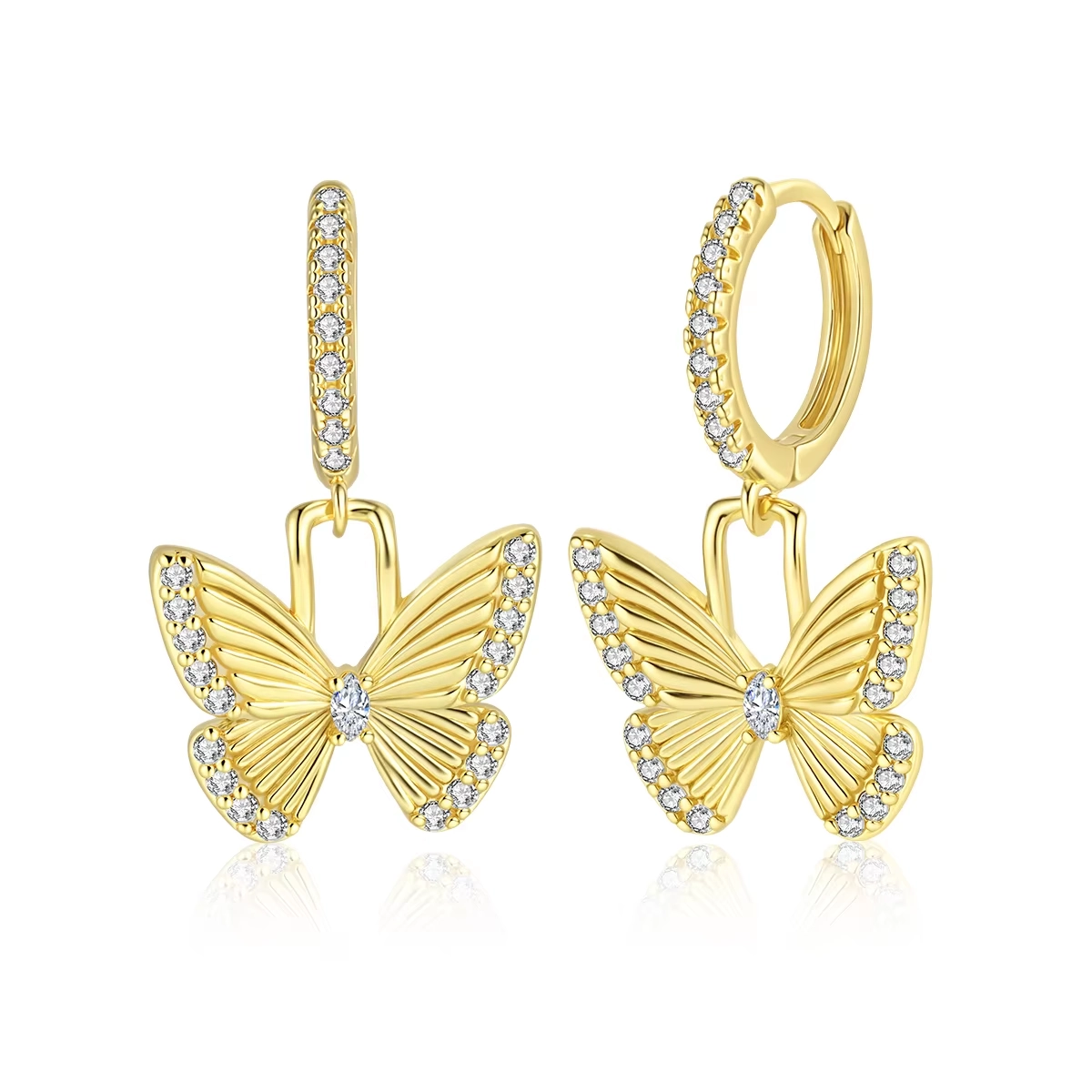
Custom Butterfly Hoop Earrings with Cubic Zirconia - 18k Gold Plated | Zhefan Jewelry
Custom OEM 925 Sterling Silver Earrings: Minimums and Lead Time
Sustainable materials for wholesale brass tennis bracelet
Marketing and Merchandising Tips for Selling 925 Sterling Silver Tennis Bracelet in Jewelry Stores
Product Categories
You may also like

925 Silver Bracelets
Sterling Silver Tennis Bracelet with Square White Cubic Zirconia Stones
Read More
Get a Quote for Private Label Jewelry
We provide personalized jewelry customization services for clients worldwide.
Rest assured that your privacy is important to us, and all information provided will be handled with the utmost confidentiality.
By clicking 'Send Inquiry Now' I agree to ZHEFAN JEWELRY processing my personal data.
To see how to withdraw your consent, how to control your personal data and how we process it, please see our Privacy Policy and Terms of use.
From design to production, ZHEFAN JEWELRY offers a one-stop solution to help you enhance your brand value and market competitiveness.
Get A Quote
Contact
Tel: (+86) 188 1927 7817
© 2026 Zhefan Jewelry. All Rights Reserved.
Facebook
Instagram
YouTube
Whatsapp: +8618819277817