







Email: sales3@zhefanjewelry.com
Moissanite vs Diamond in Tennis Jewellery Manufacturing
Moissanite and diamond create different commercial, technical, and production outcomes in tennis jewellery. Diamond delivers established luxury recognition, natural gemstone scarcity, and strong consumer trust, while moissanite offers high brilliance, excellent hardness, consistent availability, and more accessible pricing. For brands developing tennis bracelets, necklaces, rings, and earrings, the correct choice depends on target retail price, gemstone disclosure, setting architecture, metal platform, quality-control requirements, replenishment strategy, and customer positioning. This guide compares both stones across durability, optical performance, sourcing, manufacturing risk, compliance, and return on investment, then explains how Zhefan Jewelry supports scalable OEM and ODM production in 925 silver, brass, gold vermeil, and related fashion jewellery categories.
- How Moissanite and Diamond Shape Tennis Jewellery Product Strategy
- Optical performance and customer perception
- Hardness, wear resistance, and setting implications
- Cost architecture and margin planning
- Manufacturing Controls for Tennis Bracelets, Necklaces, and Matching Sets
- Design engineering and gemstone calibration
- Metal selection, plating, and wear testing
- Inspection checkpoints and shipment consistency
- Choosing a Scalable OEM and ODM Production Partner
- What buyers should include in a supplier brief
- Zhefan Jewelry’s production and development capabilities
- Quality assurance, compliance, and commercial support
- Commercial decision framework for buyers
- Frequently Asked Questions
Moissanite and diamond are not interchangeable inputs in tennis jewellery manufacturing. They produce different optical effects, cost structures, sourcing requirements, consumer expectations, and quality-control risks. Diamond remains the benchmark for traditional fine jewellery because of its established rarity narrative, grading infrastructure, and luxury recognition. Moissanite, by contrast, gives brands a durable and visually expressive alternative with high brilliance, consistent availability, and a lower material cost. The best choice depends on the intended customer, retail architecture, metal specification, gemstone size, production volume, and disclosure strategy. For buyers appointing a custom jewellery manufacturing partner, the decision should be made at product-development stage rather than after the design has been finalized.
How Moissanite and Diamond Shape Tennis Jewellery Product Strategy
Optical performance and customer perception
Both stones can create the continuous line of light expected from a tennis bracelet or tennis necklace, but their visual signatures differ. Diamond is valued for a balanced combination of brightness, fire, scintillation, and long-established luxury symbolism. Moissanite has a higher refractive index than diamond and can show strong flashes of spectral colour, particularly in larger stones or under directional lighting. This can be a commercial advantage for fashion-led collections, although some customers specifically seeking a classic diamond appearance may prefer the more restrained dispersion of diamond.
Stone selection should therefore match brand language. A heritage fine-jewellery label may emphasize diamond grading, provenance, and understated brilliance. A contemporary or accessible luxury label may position moissanite around responsible-feeling design, visual impact, and price accessibility, provided product descriptions clearly identify the gemstone. The Gemological Institute of America’s moissanite information explains why this gemstone is optically distinct from diamond, making accurate sales language essential.
Hardness, wear resistance, and setting implications
Diamond ranks 10 on the Mohs scale, while moissanite ranks approximately 9.25. Both are suitable for frequently worn jewellery, but hardness is only one part of durability. A tennis design contains many individual stones, prongs, links, hinges, and soldered or assembled connections. A manufacturing specification should also address girdle protection, pavilion clearance, setting height, prong thickness, stone alignment, and the resistance of the base metal or plating system to deformation.
For smaller calibrated stones, a secure shared-prong or bead-set architecture can create a continuous visual line while limiting metal visibility. Larger stones may require stronger individual settings and more precise seat geometry. The supplier should confirm stone tolerance, matching criteria, and acceptable variation before mass production. Inadequate calibration can produce uneven spacing, tilted stones, inconsistent light return, and premature loosening during wear or final inspection.
Cost architecture and margin planning
Diamond tennis jewellery generally carries higher gemstone acquisition costs and may require more extensive documentation, sorting, grading, and inventory control. Natural diamond pricing varies by the familiar quality factors of carat weight, colour, clarity, and cut, while laboratory-grown diamond introduces a different cost and disclosure discussion. Moissanite usually provides more predictable availability across standard sizes and shapes, allowing brands to create a stable price ladder.
Procurement teams should compare total landed cost instead of stone price alone. The calculation should include metal weight, setting labour, plating or finishing, gemstone loss allowance, grading or identification documentation, packaging, freight, inspection, warranty reserves, and expected return rates. A lower-cost stone does not automatically create higher profit if inconsistent matching causes rework or if the final product fails the brand’s visual standard. Conversely, a diamond line may justify a higher average order value when the brand has strong trust, High Quality packaging, and authenticated product documentation.
Manufacturing Controls for Tennis Bracelets, Necklaces, and Matching Sets
Design engineering and gemstone calibration
A reliable production brief should define the gemstone type, shape, nominal diameter, colour range, clarity or inclusion tolerance, cut style, quantity per piece, and acceptable visual variance. Round brilliant cuts are common because they support a continuous row of sparkle, but oval, emerald, pear, and mixed-shape layouts can differentiate a collection. Computer-aided design should be used to test articulation, clasp placement, minimum metal thickness, stone exposure, and the bending radius of the finished product.
Bracelets need enough flexibility to follow the wrist without forcing stress into the end settings. Necklaces require attention to drape, centre-point weight, clasp security, and the transition between flexible links and rigid gemstone sections. Matching earrings, rings, and pendants should use the same stone-matching protocol so that a collection appears visually coherent across different formats.
Metal selection, plating, and wear testing
Gemstone choice cannot be separated from the metal platform. 925 silver jewelry and sterling silver jewelry offer a recognized precious-metal foundation for accessible luxury and High Quality fashion ranges. Brass jewelry can support cost-efficient volume collections, provided the alloy, surface preparation, plating thickness, and anti-tarnish system are controlled. Gold vermeil jewelry requires a sterling silver base and a meaningful gold layer, with specifications that address thickness, colour, adhesion, and wear expectations.
Testing should include clasp cycling, flexing, pull force, stone retention, abrasion, sweat or artificial perspiration exposure, and plating adhesion. For products sold internationally, materials should be assessed against the regulatory requirements of intended markets. The U.S. Federal Trade Commission Jewelry Guides provide useful direction on truthful descriptions of precious metals, gemstones, treatments, and laboratory-created materials. Clear disclosure protects both consumers and downstream distributors.
Inspection checkpoints and shipment consistency
Quality control should begin with incoming material verification rather than waiting for finished-goods inspection. A practical inspection plan checks gemstone identity, size, colour consistency, surface condition, metal composition, dimensions, clasp function, solder integrity, polishing quality, and plating appearance. Critical dimensions should be recorded using calibrated instruments, with sampling levels agreed before production begins.
For repeat orders, a retained reference sample, approved colour standard, and documented golden sample reduce batch-to-batch drift. Photographic approval alone may not capture stone height, setting depth, or clasp tension, so buyers should request pre-production samples and a written inspection report. The ISO 2859-1 sampling standard is commonly referenced when establishing attribute-based acceptance sampling, although the final inspection plan should reflect product risk and contractual requirements.
| Comparison factor | Diamond | Moissanite | Procurement implication |
|---|---|---|---|
| Mohs hardness | 10 | Approximately 9.25 | Both are suitable for regular wear; setting and metal durability still require testing. |
| Optical character | Balanced brilliance, fire, and scintillation | High brilliance with stronger dispersion and colourful flashes | Choose according to the desired visual identity and customer expectation. |
| Supply consistency | Quality and price vary by grading attributes and source | Calibrated commercial sizes are generally easier to plan for | Moissanite can simplify replenishment for standardized fashion collections. |
| Consumer disclosure | Natural, laboratory-grown, and treated categories must be described accurately | Must be identified as moissanite rather than diamond | Product pages, invoices, packaging, and certificates should use consistent terminology. |
| Typical commercial position | Fine jewellery and high-value luxury | Accessible luxury and fashion-led sparkle | Match gemstone economics to target retail price and expected margin. |
The hardness figures and gemstone distinctions are consistent with gemological education published by the Gemological Institute of America gem encyclopedia. Buyers should still request supplier-specific stone specifications because commercial quality depends on cut precision, matching, dimensions, and setting execution rather than headline material properties alone.
Choosing a Scalable OEM and ODM Production Partner
What buyers should include in a supplier brief
A strong request for quotation should specify the jewellery category, target customer, metal type, plating colour, gemstone material, stone size, bracelet or necklace length, clasp design, packaging requirements, compliance markets, estimated annual volume, and launch date. It should also ask for prototype lead time, sample revision policy, minimum order quantity, production lead time, quality guarantees, defect-resolution procedure, and shipping terms.
Buyers should evaluate whether a factory can manage both design intent and production reality. A supplier that only reproduces a reference image may overlook articulation, stone retention, plating wear, or packaging constraints. A capable product-development team will identify weak points early, propose alternative settings, and explain how a change in stone size or metal gauge affects cost and performance. This technical dialogue is particularly important for tennis jewellery because many small components must operate as one flexible, visually continuous product.
Zhefan Jewelry’s production and development capabilities
Zhefan Jewelry is a fashion jewellery manufacturer established in 2002, with a legacy dating back to 1997. Founded by a master mold craftsman, our manufacturing DNA is built on long-term refinement of tooling, finishing, assembly, and product execution. We operate two factories in Guangzhou and Meizhou across 800 square metres, with more than 80 skilled artisans and 20 sales professionals. Our monthly production capacity reaches approximately 600,000 pieces, supporting both repeat programs and seasonal launches.
Our professional design team develops more than 500 original styles monthly. This gives brand owners, distributors, and retailers a broad base for tennis-inspired bracelets, necklaces, earrings, rings, pearl jewellery, and coordinated collections. Our capabilities extend across 925 silver jewelry, sterling silver jewelry, brass jewelry, gold vermeil jewelry, and fashion jewellery components that can be adapted for different retail tiers. Where a project calls for moissanite or another stone option, the specification is integrated into the design, setting, sampling, and inspection workflow rather than treated as an afterthought.
Quality assurance, compliance, and commercial support
Our process includes six rounds of precision polishing and six strict quality inspections. These checkpoints are designed to protect surface smoothness, edge definition, stone security, clasp operation, and overall presentation. We use RoHS- and REACH-compliant eco-friendly materials to support international product requirements, while project documentation can be aligned with the destination market and the buyer’s internal compliance program.
Our OEM and ODM service is structured for brands that need more than basic production. We support design development, mold preparation, sampling, material selection, production coordination, inspection, and delivery planning. Experience serving top-three Amazon sellers and global retailers such as Macy’s reflects the need for consistent specifications, commercially realistic timelines, and responsive communication. For a buyer comparing manufacturing partners, the relevant measure is not only factory capacity; it is the supplier’s ability to convert a product concept into repeatable, saleable inventory with controlled risk.
Whether the commercial direction is a diamond-led fine jewellery range, a moissanite accessible-luxury collection, or a mixed assortment using brass jewelry and gold vermeil jewelry, our team can help define the appropriate balance between visual impact, material cost, durability, and brand positioning. The objective is a tennis product that performs in photography, on the retail shelf, during shipping, and throughout normal customer wear.
Commercial decision framework for buyers
Diamond is generally the stronger choice when brand equity depends on traditional luxury, gemstone grading, and a high average selling price. Moissanite is often more practical when the program requires repeatable calibrated stones, broad size coverage, strong sparkle at an accessible price, and faster assortment expansion. A hybrid strategy can also work: diamond for flagship pieces and moissanite for entry-level or fashion-driven variations.
Before approval, buyers should compare at least three samples under natural light, retail lighting, and photography lighting. The evaluation should record stone matching, visual fire, metal colour, flexibility, clasp feel, back finishing, packaging fit, and measured dimensions. A documented scorecard helps prevent decisions based solely on sample appearance and creates a defensible basis for negotiating quality, cost, and delivery terms.
Contact Zhefan Jewelry at sales3@zhefanjewelry.com or visit our official website to discuss a custom tennis jewellery project, review product capabilities, and request an OEM or ODM quotation.
Frequently Asked Questions
Is moissanite durable enough for tennis bracelets and necklaces?
Yes. Moissanite ranks approximately 9.25 on the Mohs scale and is suitable for regular wear, but setting security, prong strength, metal durability, clasp function, and flex testing remain essential because tennis jewellery contains many individual stones and moving connections.
Which is more cost-effective for a scalable tennis jewellery collection, moissanite or diamond?
Moissanite usually provides more predictable availability across calibrated commercial sizes and a lower material cost, making it practical for accessible-luxury and fashion collections. Diamond may support a higher average selling price but involves more variation in grading, sourcing, documentation, and inventory cost.
How should a buyer specify gemstones for a tennis jewellery quotation?
The brief should define gemstone material, shape, nominal diameter, colour range, clarity or inclusion tolerance, cut style, quantity per piece, acceptable variation, and disclosure requirements, together with the metal, plating, length, clasp, packaging, target volume, and delivery schedule.
What quality checks are important for tennis bracelets and necklaces?
Important checks include gemstone identity and matching, dimensions, stone retention, setting alignment, prong or bead condition, solder integrity, clasp operation, polishing, plating appearance, flexing, pull force, abrasion, and perspiration exposure. Pre-production samples and a documented inspection plan should be approved before mass production.
Can moissanite and diamond be used in the same jewellery collection?
Yes. A hybrid assortment can use diamond for flagship or high-value pieces and moissanite for entry-level or fashion-led variations. Product pages, packaging, invoices, and certificates must identify each gemstone accurately and consistently so customers are not misled.
What materials can Zhefan Jewelry provide for tennis-inspired collections?
Zhefan Jewelry supports 925 silver jewelry, sterling silver jewelry, brass jewelry, gold vermeil jewelry, pearl jewelry, and related fashion jewellery categories, with OEM and ODM services covering design development, sampling, manufacturing, inspection, and delivery planning.
Tags
Mother-of-pearl earrings
Mother-of-pearl earrings
925 silver bracelet wholesale supplier
925 silver bracelet wholesale supplier
retail-ready 925 sterling silver sets supplier
retail-ready 925 sterling silver sets supplier
925 silver bracelets for women
925 silver bracelets for women
Sterling Silver Tennis Bracelet Manufacturer
Sterling Silver Tennis Bracelet Manufacturer
nickel free silver plated brass
nickel free silver plated brass
Recommended for you
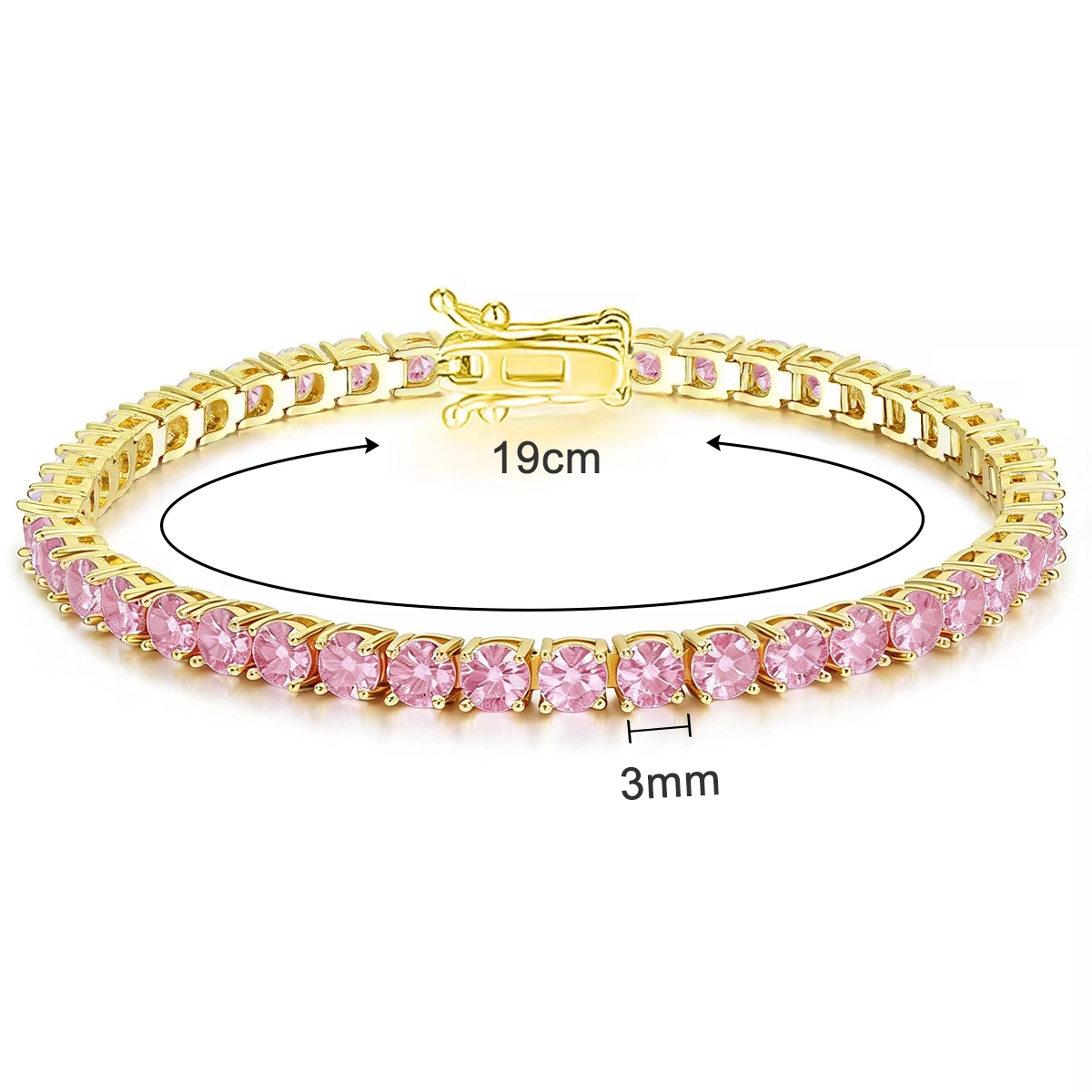
Custom CZ Tennis Bracelet Manufacturer | 925 Sterling Silver & Brass Jewelry OEM
ODM vs OEM Jewelry Manufacturer: Which Model Fits Your Business Strategy
Custom 925 Silver Ring Pricing Guide for Bulk Buyers
Finishing Techniques That Add Value to Custom 925 Silver Rings
Product Categories
You may also like

925 Silver Jewelry
Customizable High-Quality Fashion 925 Sterling Silver AAA Cubic Zirconia Heart-Shaped Open Tennis Bracelet.
Read More

Brass Jewelry
Customizable OEM ODM High-Quality Fashion Brass AAA Cubic Zirconia Classic Tennis Bracelet for Women Wholesale.
Read More
Get a Quote for Private Label Jewelry
We provide personalized jewelry customization services for clients worldwide.
Rest assured that your privacy is important to us, and all information provided will be handled with the utmost confidentiality.
By clicking 'Send Inquiry Now' I agree to ZHEFAN JEWELRY processing my personal data.
To see how to withdraw your consent, how to control your personal data and how we process it, please see our Privacy Policy and Terms of use.
From design to production, ZHEFAN JEWELRY offers a one-stop solution to help you enhance your brand value and market competitiveness.
Get A Quote
Contact
Tel: (+86) 188 1927 7817
© 2026 Zhefan Jewelry. All Rights Reserved.
Facebook
Instagram
YouTube
Whatsapp: +8618819277817