







Email: sales3@zhefanjewelry.com
Natural Pearls vs. Cultured Pearls: What Brands Need to Know Before Ordering
Natural and cultured pearls are both genuine pearls, but they differ in how they form, how they are sourced, and how buyers should document them. Natural pearls form without human intervention and are exceptionally scarce in the modern jewelry supply chain; cultured pearls grow after human intervention introduces a nucleus or tissue into a mollusk. For brands, the right choice depends on positioning, budget, repeatability, traceability, and accurate product disclosure—not on an assumption that cultured pearls are imitation. This guide explains the distinction, compares procurement considerations, and outlines practical checks for sourcing pearl jewelry.
- How Natural and Cultured Pearls Differ in Formation and Supply
- Natural pearls form without deliberate seeding
- Cultured pearls are genuine pearls produced with human intervention
- Origin, type, and disclosure should be specific
- Procurement Comparison: Commercial Considerations for Brands
- Use the comparison to match pearl type to the product brief
- Build a pearl specification that can be inspected
- Budget for treatments, care, and product lifespan
- Ordering Pearl Jewelry: Quality Control, Positioning, and Brand Fit
- Screen suppliers with traceability and production questions
- Choose the pearl type around customer value, not a single price point
- Connect pearl selection with the full jewelry material program
- Frequently Asked Questions
Natural and cultured pearls are both genuine products of mollusks, but they follow different formation paths and create distinct sourcing, pricing, and product-planning considerations. Natural pearls form without deliberate human intervention and are rare in contemporary commercial supply; cultured pearls develop after a pearl farmer introduces a nucleus or mantle tissue into a mollusk. For brands, the decision is therefore not simply “real versus fake.” It is a procurement choice involving origin claims, visual consistency, target price, replenishment, documentation, and customer expectations. Before placing an order with a pearl jewelry manufacturer, buyers should confirm the pearl type, species or origin information where available, treatments, grading criteria, and disclosure language in writing.
How Natural and Cultured Pearls Differ in Formation and Supply
Natural pearls form without deliberate seeding
A natural pearl develops inside a mollusk without a human deliberately inserting a nucleus or tissue to initiate pearl growth. A naturally occurring irritant or other biological event can lead the mollusk to deposit nacre around an intruding object or area. Because the process is uncontrolled, finding a natural pearl of useful size, shape, surface quality, and color is uncommon. Historically, natural pearls were collected from wild mollusks, but they are not a dependable basis for most modern commercial collections that require repeatable sizes, matching pairs, or scheduled replenishment.
Natural origin is a specific claim, not a visual grade. Luster, surface condition, shape, size, and color still matter to a buyer, and a natural pearl is not automatically flawless or suitable for every design. Brands considering natural pearls should request credible supporting documentation and define how the claim will be substantiated in product listings, invoices, and customer-facing materials. For higher-value pieces, the cost of independent gemological identification can be part of the purchasing plan rather than an afterthought.
Cultured pearls are genuine pearls produced with human intervention
Cultured pearls form inside mollusks after human intervention initiates the process, commonly by inserting mantle tissue, a bead nucleus, or both, depending on the pearl type and production method. The mollusk then deposits nacre as the pearl develops. This controlled start does not make the result an imitation: a cultured pearl is a genuine pearl formed by a living mollusk. The Gemological Institute of America’s pearl education explains the distinction between natural and cultured pearls and describes the major pearl categories.
For product development, cultivation makes it more practical to source pearls in repeatable families of size, color, shape, and luster than relying on rare natural finds. It does not guarantee exact matching. Pearls are organic products, so batches can vary, and the degree of variation depends on the source, harvest, sorting, and supplier selection. A brand should approve a representative sample and communicate acceptable tolerances before production rather than expect every pearl to look identical.
Origin, type, and disclosure should be specific
“Cultured” is not a synonym for “low quality,” and “natural” is not a substitute for a complete description. Buyers should distinguish between cultured and imitation pearls, then identify the type accurately where information is available: for example, freshwater or saltwater cultured pearls, and relevant commercial categories such as Akoya, South Sea, or Tahitian. These terms describe different sourcing or pearl categories; they should not be used interchangeably. When species, geographic origin, or farm details are not independently verified, product copy should not imply more certainty than the supplier’s records support.
Disclosure is also a compliance and trust issue. In the United States, the FTC Jewelry Guides address descriptions and representations for pearls and other jewelry materials. Requirements and enforcement frameworks can differ by market, so brands selling internationally should review local rules and have product claims checked for the regions where the goods will be sold. The practical standard for procurement is simple: the purchase order, supplier specification, quality records, packaging, and marketing description should tell a consistent story.
Procurement Comparison: Commercial Considerations for Brands
Use the comparison to match pearl type to the product brief
The table below summarizes general procurement differences rather than promising a fixed price or quality outcome. Actual value depends on the individual pearl, its documented identity, market availability, and the finished design. A supplier quote should identify the precise pearl type and the specification being priced so buyers can compare like with like.
| Procurement factor | Natural pearls | Cultured pearls | Buyer implication |
|---|---|---|---|
| How formation begins | Forms without deliberate human seeding or tissue insertion | Formation is initiated through human intervention in a mollusk | Confirm terminology and pearl identity; cultured does not mean imitation. |
| Commercial availability | Rare and generally not suited to routine volume replenishment | Produced through pearl cultivation and more practical for planned collections | Choose cultured supply when repeat orders and coordinated assortments matter. |
| Batch consistency | Individual finds can vary substantially and are difficult to replace | Sorting can provide more consistent size, color, and shape groups, but natural variation remains | Set measurable tolerances and approve a production sample. |
| Pricing logic | Scarcity and individual characteristics can contribute to high value | Price varies by pearl category and quality factors, as well as size and matching | Request a specification-based quote; avoid comparing unlike types. |
| Documentation focus | Evidence supporting natural origin is especially important for a natural-origin claim | Records should identify the cultured category and disclose relevant treatments | Align supplier documents, purchase orders, labels, and product descriptions. |
| Design and replenishment | Often suited to one-off, collectible, or individually selected pieces | Often suited to repeatable commercial designs and broader assortments | Plan availability, acceptable variation, and substitution rules before launch. |
Build a pearl specification that can be inspected
Vague descriptions such as “High Quality pearl” or “AAA quality” are weak controls unless the supplier defines exactly what the terms mean. Pearl grading is not governed by one universally accepted system across the industry, so a letter grade from one vendor may not equal the same grade from another. GIA describes pearl quality through factors including size, shape, color, luster, surface quality, nacre quality, and matching. Its pearl quality factors guide is a useful reference for structuring a practical specification without treating a marketing grade as a universal standard.
For each style, record the pearl category, size range, shape, color range, luster expectation, acceptable surface characteristics, and matching requirements. Add the setting dimensions and attachment method because a pearl that meets a loose-stone specification may not fit the actual component. Define how many pearls will be sampled, who approves the sample, what happens when a batch falls outside tolerance, and whether the supplier may substitute a different category or origin. These controls reduce disagreement at inspection and limit delays caused by subjective judgments after goods are finished.
Budget for treatments, care, and product lifespan
Pearls may be treated to alter or improve their appearance, and treatment information can affect disclosure, pricing, and care instructions. Buyers should ask suppliers to identify known treatments and avoid assuming that a color is untreated simply because it looks natural. The finished jewelry also needs appropriate handling: nacre is more vulnerable to abrasion and chemicals than many common jewelry materials. GIA’s pearl care guidance recommends careful cleaning and avoiding exposure to substances that can damage pearls. Brands should translate care requirements into packaging inserts and customer service guidance, particularly when combining pearls with metal finishes that have their own care needs.
Ordering Pearl Jewelry: Quality Control, Positioning, and Brand Fit
Screen suppliers with traceability and production questions
A capable supplier should be able to explain what is being offered and provide records that connect the quoted pearl type to the finished item. During qualification, ask where the pearls were sourced at the level the supplier can verify, whether they are natural or cultured, what treatments are known, how sorting is performed, and how the supplier manages lot identification. Ask for clear photographs or a physical sample under consistent lighting; pearl color and luster can appear different across camera settings, backgrounds, and display conditions.
For a first order, a staged approval process is more reliable than approving a single image. Review the pearl sample, approve the setting and finished prototype, then inspect a production sample or pre-shipment selection against the written criteria. If the assortment includes pairs, graduated strands, or repeated motifs, specify matching expectations separately from the individual pearl criteria. Buyers should also confirm whether replacement stock can be sourced later and whether future lots may differ. These questions matter for e-commerce photography, retail replenishment, repair programs, and collections expected to remain active across seasons.
Choose the pearl type around customer value, not a single price point
Natural pearls may suit a limited, individually documented, or collectible offer where rarity is central to the customer proposition and the sourcing evidence supports that story. Cultured pearls can support a broader range of price points and styles, including daily-wear designs, coordinated gifts, and seasonal color stories. Neither route guarantees commercial success. The brand still needs a coherent design, credible product language, a price architecture that covers quality and service costs, and a supply plan suited to demand.
Product descriptions should help customers understand what they are buying without overstating rarity or quality. State whether the pearl is cultured when required, use an accurate category name, describe visible variation honestly, and include care guidance. When natural origin is claimed, keep supporting documentation with the product file and use clear language that does not confuse natural pearls with cultured pearls. This consistency can reduce returns driven by mismatched expectations and help retailers answer questions with confidence.
Connect pearl selection with the full jewelry material program
In our product range, pearl jewelry sits alongside brass jewelry, 925 silver jewelry, sterling silver jewelry, and gold vermeil jewelry. That broader materials mix gives brand teams a way to evaluate pearl-led designs within a collection architecture rather than as isolated items. For example, the same pearl specification may be explored across different metal looks, while each design still requires its own review of setting security, finish, wear expectations, and care communication. Material options should be selected according to the intended customer, price tier, and product use—not treated as interchangeable.
Our approach to a buying brief is to make the commercial requirements explicit before a design moves toward ordering: pearl type and grade criteria, preferred metal, target cost, order quantity, sample approval, packaging needs, and the documentation required for launch. Because no company capability details or service commitments should be inferred from a product list alone, buyers should confirm the available production options, minimum quantities, lead times, testing records, and quality-control process directly with the supplier. This due diligence helps brands assess whether a program can support their launch schedule and repeat-order expectations.
For any jewelry program, the strongest order is one where the specification can be understood by product, sourcing, quality, and marketing teams alike. Treat pearl identity and disclosure as core product data; use a defined inspection method; approve variation in advance; and retain supplier documentation with the style record. These steps apply whether a collection is built around scarce natural pearls or commercially cultivated pearls, and they create a clearer basis for comparing quotes, controlling quality, and protecting customer trust. Contact us to discuss pearl jewelry and related product options for your collection.
Frequently Asked Questions
Are cultured pearls real pearls?
Yes. Cultured pearls are genuine pearls formed inside mollusks after human intervention initiates the process, commonly through the introduction of mantle tissue, a bead nucleus, or both. They are not imitation pearls.
What is the main difference between natural and cultured pearls?
Natural pearls form without deliberate human seeding or tissue insertion. Cultured pearls develop after human intervention initiates pearl growth inside a mollusk.
Are natural pearls always more valuable than cultured pearls?
Not automatically. Natural origin can contribute to scarcity and value, but the individual pearl’s characteristics, documentation, and market availability also matter. A natural pearl is not necessarily flawless or suitable for every design.
Is there one universal grading system for pearls?
No. Pearl grading is not governed by one universally accepted system across the industry, so grading terms can vary by supplier. Buyers should define measurable criteria such as size, shape, color, luster, surface quality, and matching requirements.
What should brands include in a pearl purchase specification?
Specify the pearl category, size range, shape, color range, luster expectation, acceptable surface characteristics, matching requirements, known treatments, sample approval process, and rules for substitutions or out-of-tolerance batches.
What documentation should a brand request when ordering pearl jewelry?
Request records that identify the pearl type and any known treatments, plus supporting evidence for specific origin claims where applicable. Ensure that supplier documents, purchase orders, labels, and product descriptions use consistent terminology.
Tags
custom recycled brass earrings
custom recycled brass earrings
925 silver butterfly bracelet for women
925 silver butterfly bracelet for women
sterling silver adjustable stacking ring
sterling silver adjustable stacking ring
silver bracelet supplier custom designs
silver bracelet supplier custom designs
brass earring supplier usa
brass earring supplier usa
nickel free minimalist brass jewelry
nickel free minimalist brass jewelry
Recommended for you
Trade Compliance and Certifications for brass jewelry manufacturer
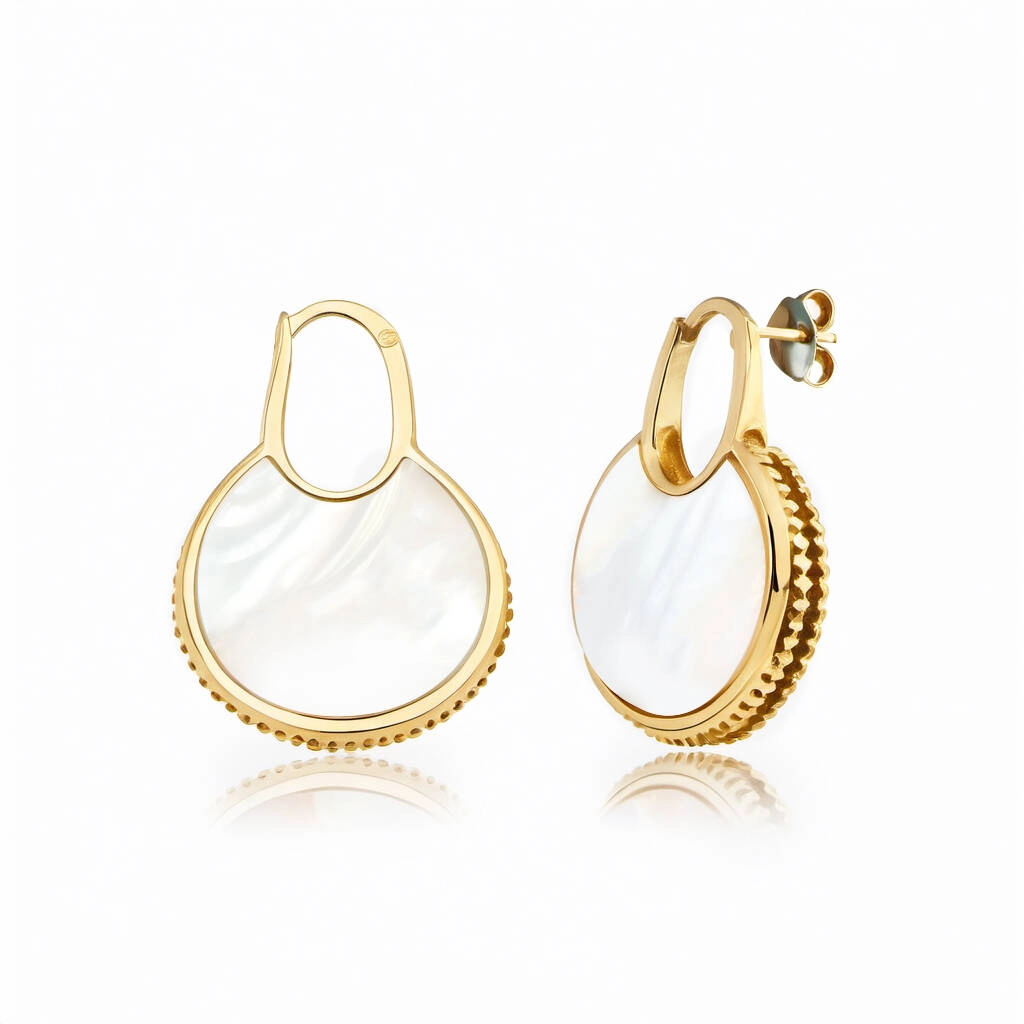
Customized Brass Mother of Pearl Huggie Earrings - Zhefan Jewelry
How an OEM Jewelry Manufacturer Ensures Precision in Complex Geometric Designs
Sustainable Practices for Producing Gold Plated Earrings
Product Categories
You may also like

925 Silver Jewelry
Customizable High-Quality Fashion 925 Sterling Silver AAA Cubic Zirconia Heart-Shaped Open Tennis Bracelet.
Read More

Brass Jewelry
Customizable OEM ODM High-Quality Fashion Brass AAA Cubic Zirconia Classic Tennis Bracelet for Women Wholesale.
Read More
Get a Quote for Private Label Jewelry
We provide personalized jewelry customization services for clients worldwide.
Rest assured that your privacy is important to us, and all information provided will be handled with the utmost confidentiality.
By clicking 'Send Inquiry Now' I agree to ZHEFAN JEWELRY processing my personal data.
To see how to withdraw your consent, how to control your personal data and how we process it, please see our Privacy Policy and Terms of use.
From design to production, ZHEFAN JEWELRY offers a one-stop solution to help you enhance your brand value and market competitiveness.
Get A Quote
Contact
Tel: (+86) 188 1927 7817
© 2026 Zhefan Jewelry. All Rights Reserved.
Facebook
Instagram
YouTube
Whatsapp: +8618819277817