







Email: sales3@zhefanjewelry.com
How to negotiate terms for wholesale brass tennis bracelet
Negotiating a wholesale brass tennis bracelet program requires more than securing a low unit price. Buyers should define alloy composition, plating specifications, stone setting, dimensions, packaging, minimum order quantity, sampling, inspection, lead time, payment, defect responsibility, intellectual property, and replenishment terms before signing a purchase agreement. A capable Custom Jewelry Manufacturer should provide measurable quality standards, traceable production controls, compliant materials, transparent commercial terms, and scalable OEM or ODM support so distributors and jewelry brands can protect margin, reduce returns, and launch reliably.
- Building a Commercial Framework for Brass Tennis Bracelet Orders
- Start with a complete product specification
- Separate fixed costs from recurring costs
- Negotiate terms that protect total margin
- Quality, Compliance, and Acceptance Conditions
- Define measurable acceptance criteria
- Verify metal, plating, and chemical requirements
- Make durability testing part of the negotiation
- Managing MOQ, Lead Time, Packaging, and Risk
- Use MOQ as a planning variable
- Align delivery promises with approval milestones
- Protect design ownership and packaging quality
- Why a Capable Custom Jewelry Manufacturer Improves Negotiation Outcomes
- Production depth and design responsiveness
- Documented finishing and inspection controls
- Broader material and OEM/ODM capability
- Frequently Asked Questions
Negotiating a wholesale brass tennis bracelet program requires a structured review of product specifications, commercial conditions, compliance, and supply-chain risk. The most competitive offer is not always the lowest quoted price: a reliable agreement must connect the bracelet’s material composition, stone security, plating durability, order volume, delivery schedule, inspection method, and after-sales responsibility to the buyer’s target market. This approach helps brand owners, distributors, online retailers, and private-label operators calculate landed cost and protect long-term customer satisfaction.
Building a Commercial Framework for Brass Tennis Bracelet Orders
Start with a complete product specification
Before discussing price, buyers should issue a product brief that removes ambiguity from the quotation. The brief should identify the base metal, whether the component is brass or a brass alloy, bracelet length, width, clasp construction, stone size, stone type, color, plating stack, logo position, packaging, and intended sales channel. A bracelet designed for fashion retail may require a different finish and packaging level from a High Quality gift product.
Plating language must be specific. Terms such as gold tone, silver color, or High Quality finish do not define measurable performance. The negotiation should clarify the plating color standard, thickness or process where applicable, surface preparation, anti-tarnish treatment, and acceptable visual variation. If the supplier cannot state how the finish will be controlled, buyers may face inconsistent color between samples and bulk production.
Separate fixed costs from recurring costs
A professional quotation should distinguish mold or tooling charges, sampling fees, plating setup, logo development, packaging development, unit cost, inspection, freight preparation, and possible rework. This separation allows project owners to compare proposals fairly and understand which charges disappear after the first production run. Tooling ownership and storage should also be documented, especially when the design is exclusive.
Buyers should request tiered pricing at realistic quantities rather than accepting a single volume threshold. For example, a quotation can show prices for a development order, a standard production run, and a replenishment order. The agreement should state whether price reductions depend on one color, one size, combined styles, or a cumulative annual volume. A low unit price based on an impractical minimum order can create excess inventory and weaken cash flow.
Negotiate terms that protect total margin
The purchase price is only one part of the commercial equation. Buyers should calculate the landed cost by adding packaging, inspection, freight, customs duties, payment fees, and expected defect or return costs. A supplier offering a slightly higher unit price may generate stronger profit if it provides stable quality, fewer replacements, better packaging, and shorter replenishment cycles.
Payment terms should match production risk. New supplier relationships commonly involve a deposit before production and a balance before shipment, but buyers can negotiate staged payments linked to sample approval, production completion, and inspection release. Larger programs may justify credit terms after a documented performance history. Every payment milestone should identify the required documents, approval event, and consequence of delay.
Quality, Compliance, and Acceptance Conditions
Define measurable acceptance criteria
Quality negotiations become difficult when the contract relies on subjective words such as flawless, high quality, or High Quality. The purchase order should define acceptable limits for scratches, dents, discoloration, missing stones, loose settings, clasp failure, plating exposure, solder marks, and dimensional deviation. Product photographs, an approved golden sample, and a signed specification sheet provide practical references for production and inspection teams.
For shipment approval, the parties should agree on an inspection level and sampling method. The ISO 2859-1 sampling standard provides a recognized framework for attribute inspection using acceptance quality limits, although the specific inspection plan must be selected according to product risk and buyer requirements. High-risk features such as clasp function, sharp edges, and stone security may require separate checks rather than relying only on a general visual sample.
Verify metal, plating, and chemical requirements
Brass jewelry can contain copper and zinc in varying proportions, so the base-metal specification should be documented by the manufacturer. Buyers selling into different countries should identify restrictions relevant to skin contact, children’s products, packaging, and chemical substances. The European Union’s REACH Regulation governs the registration, evaluation, authorization, and restriction of chemicals, while the EU RoHS Directive restricts specified hazardous substances in applicable electrical and electronic equipment; RoHS may not automatically apply to ordinary jewelry, but buyers should not treat compliance claims as interchangeable.
For skin-contact products, the contract should state whether testing is required for nickel release, lead, cadmium, or other restricted substances according to the destination market. A supplier should identify the testing laboratory, sample identity, test date, and applicable standard. Buyers should avoid accepting a generic certificate that does not clearly cover the actual alloy, plating batch, or finished product.
Make durability testing part of the negotiation
A tennis-style bracelet contains repeated links, small stones, and a closure that may experience frequent flexing. The quality plan should include clasp opening and closing, link articulation, stone retention, surface appearance, plating adhesion, and packaging protection. Test conditions should be written in advance because wear resistance depends on sweat, cosmetics, friction, humidity, and handling patterns.
Marketing claims also require discipline. The U.S. Federal Trade Commission Jewelry Guides explain how jewelry descriptions and precious-metal claims should be presented. If a product is brass with gold-color plating, sales copy should not imply solid gold or gold vermeil. Gold vermeil has specific expectations associated with sterling silver and gold plating, so a brass base should be described accurately as plated brass.
| Negotiation area | Weak term | Stronger contract term | Buyer benefit |
|---|---|---|---|
| Material | Brass jewelry | Declared base metal, plating color, and restricted-substance requirements | Reduces compliance and disclosure risk |
| Appearance | High Quality finish | Approved master sample plus defined defect limits | Creates an objective acceptance reference |
| Quantity | Minimum order applies | MOQ stated by style, color, and size with tier pricing | Improves inventory and margin planning |
| Delivery | Fast shipment | Sample approval date, production days, and delay procedure | Supports launch and replenishment planning |
| Inspection | Supplier quality check | Pre-shipment inspection scope, sampling plan, and remedy | Clarifies release and rejection decisions |
| Defects | Replacement if necessary | Credit, remake, replacement, or refund conditions with deadlines | Protects cash flow and customer service |
Managing MOQ, Lead Time, Packaging, and Risk
Use MOQ as a planning variable
Minimum order quantity should be negotiated by style, plating color, and size because each variation can create separate production and packaging requirements. Buyers testing a new collection can request a pilot quantity, mixed-style carton, or development run, while agreeing that larger repeat orders will move to the supplier’s standard efficiency level. The commercial document should also state whether defective pieces count toward the shipped quantity.
Forecast sharing can improve the negotiation. A buyer may secure better pricing or reserved capacity by providing a rolling forecast without committing to every projected unit. The supplier should identify which forecast is non-binding and which purchase order is binding. This arrangement reduces the risk of overproduction while giving the factory useful planning information.
Align delivery promises with approval milestones
Lead time should begin at a clearly defined event, such as receipt of the deposit, approval of the final sample, confirmation of packaging artwork, or acceptance of a purchase order. It should not begin from an undefined phrase such as order placement. The agreement should cover sample lead time, bulk production time, packaging time, inspection time, and shipping handover.
Buyers should ask how delays caused by plating rework, component shortages, artwork changes, or failed inspection will be handled. A practical remedy may include priority production, partial shipment, freight coordination, or a credit against the delayed portion. Force majeure language should be balanced and should require timely notice and reasonable mitigation.
Protect design ownership and packaging quality
Private-label buyers should clarify who owns custom molds, CAD files, artwork, logos, and exclusive color combinations. Confidentiality terms should cover prototypes, purchase quantities, customer lists, and launch dates. The agreement should prohibit unauthorized use of branded components and define what happens to remaining packaging after a program ends.
Packaging is a functional part of the product, not merely a marketing accessory. Buyers should specify insert dimensions, anti-tarnish materials, barcode placement, polybag requirements, carton strength, inner quantity, and drop-protection expectations. A well-designed pack reduces scratching, tangling, oxidation exposure, and fulfillment damage during international transport.
Why a Capable Custom Jewelry Manufacturer Improves Negotiation Outcomes
Production depth and design responsiveness
Supplier capability changes the quality of the negotiation. Guangzhou Zhefan Jewelry was established in 2002, with a manufacturing legacy dating back to 1997. Founded by a master mold craftsman, the company has built its production approach around long-term refinement in mold development, finishing, assembly, and quality control.
Our two factories in Guangzhou and Meizhou cover 800 square meters and are supported by more than 80 skilled artisans and 20 sales professionals. Monthly output can reach 600,000 pieces, giving buyers access to scale while preserving a structured communication process. Our professional design team launches more than 500 original styles monthly, which helps brands evaluate trend-led concepts alongside their own custom designs.
Documented finishing and inspection controls
Our manufacturing process applies six rounds of precision polishing and six strict quality inspections. These controls are especially relevant to a linked crystal bracelet because surface preparation affects plating appearance, while repeated inspection helps identify loose stones, clasp issues, scratches, and assembly inconsistencies before shipment.
We work with RoHS- and REACH-compliant eco-friendly materials where applicable to the buyer’s market and product requirements. Compliance is handled as a specification and documentation task rather than as an unsupported marketing promise. Buyers can discuss test requirements, target markets, approved samples, and reporting needs with our sales and engineering teams before production begins.
Broader material and OEM/ODM capability
Our product range includes brass jewelry, 925 silver jewelry, sterling silver jewelry, gold vermeil jewelry, and pearl jewelry. This broader material capability allows a brand to develop coordinated collections at different price points instead of managing unrelated suppliers for every category. A brass fashion line can be paired with sterling silver, vermeil, or pearl styles while maintaining a consistent design language and packaging system.
We provide OEM and ODM solutions for international brands, retailers, distributors, and online operators. Our experience serving Amazon’s top three sellers and global retailers such as Macy’s reflects the need for repeatable specifications, dependable communication, and production scalability. The strongest negotiation result is a documented operating model that supports sampling, approval, inspection, delivery, and replenishment—not simply a discounted first order.
Buyers evaluating Zhefan Jewelry should prepare a product brief, target quantity, destination market, packaging requirement, inspection expectation, and desired launch date. Our team can then align design development, material selection, quotation, sampling, and bulk production with the project’s commercial objectives. More information is available at Zhefan Jewelry, and project inquiries can be sent to sales3@zhefanjewelry.com.
Frequently Asked Questions
What should buyers specify before requesting a quotation for a brass tennis bracelet?
Buyers should specify the base metal, bracelet length and width, stone type and size, clasp construction, plating color and process, logo position, packaging, target market, and intended sales channel.
How can buyers compare quotations from different jewelry manufacturers?
Quotations should separate tooling, sampling, packaging, unit cost, inspection, and other charges, while also showing tiered pricing by realistic quantities. Buyers should compare landed cost, defect risk, delivery reliability, and replenishment support rather than unit price alone.
What quality terms should be included in the purchase agreement?
The agreement should define limits for scratches, dents, discoloration, missing stones, loose settings, clasp failure, plating exposure, solder marks, and dimensional deviation, supported by an approved master sample and a written inspection plan.
Does REACH or RoHS automatically apply to every brass jewelry product?
No. REACH governs chemicals in the European Union, while RoHS applies to specified hazardous substances in applicable electrical and electronic equipment. Buyers should confirm the rules for the destination market and product category and request documentation covering the actual finished product.
How should minimum order quantity be negotiated for multiple bracelet variations?
MOQ should be stated by style, plating color, and size because each variation may create separate production and packaging requirements. Buyers can request a pilot quantity or mixed-style order for testing and agree on standard volume pricing for repeat production.
What should determine the start date for production lead time?
The contract should define lead time from a clear milestone, such as deposit receipt, final sample approval, packaging artwork confirmation, or purchase-order acceptance. Sample, bulk production, packaging, inspection, and shipping handover periods should be identified separately.
Why is an approved golden sample important for jewelry production?
An approved golden sample provides a physical reference for color, dimensions, finishing, stone placement, clasp construction, and overall appearance. It reduces subjective disputes between the buyer and factory during bulk inspection.
Tags
925 sterling silver jewelry sets manufacturer
925 sterling silver jewelry sets manufacturer
brass earring components supplier
brass earring components supplier
bulk nickel free brass jewelry
bulk nickel free brass jewelry
bulk 925 sterling bracelets supplier
bulk 925 sterling bracelets supplier
jewelry factory supplier
jewelry factory supplier
stone setting brass tennis bracelet supplier
stone setting brass tennis bracelet supplier
Recommended for you
Marketing Strategies for Retailers Selling custom brass jewelry
Managing returns and quality issues for nickel free silver
How to Choose the Best Pearl Type for Your Jewelry Collection
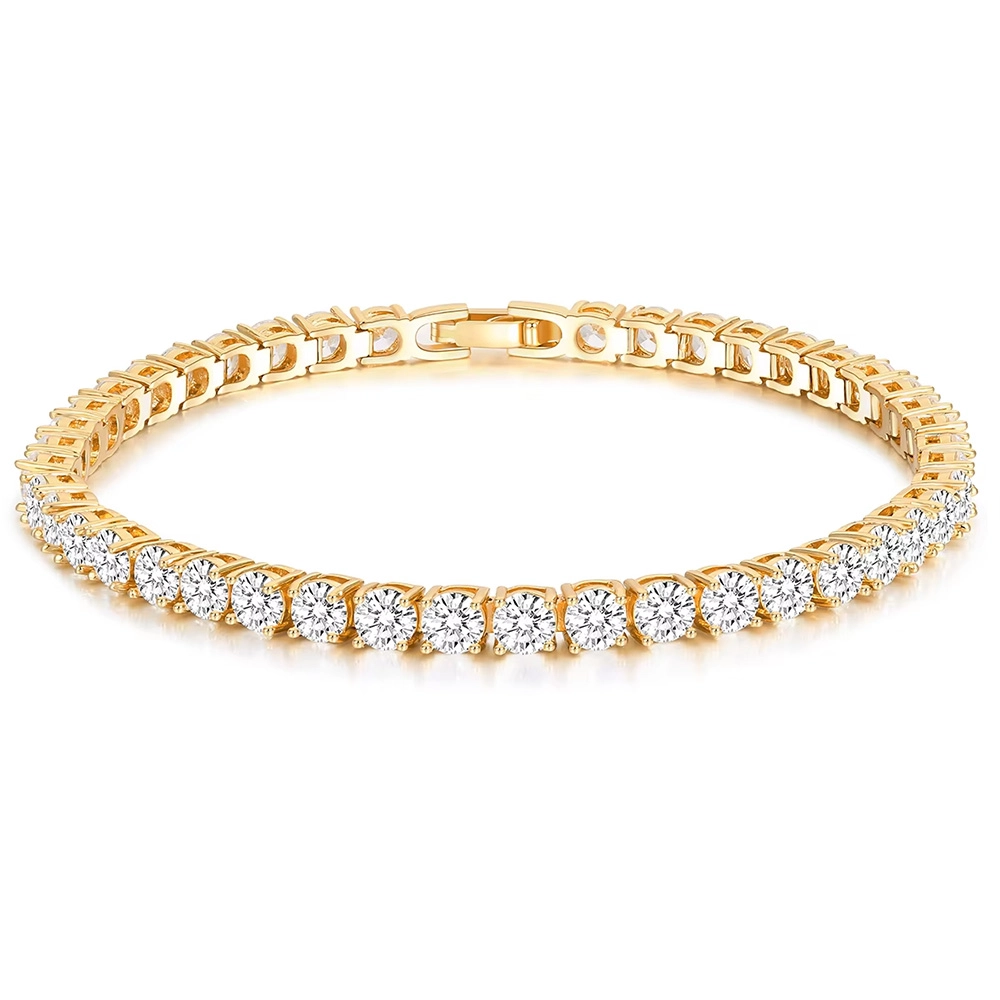
Custom CZ Tennis Bracelet Wholesale — Zhefan Jewelry OEM/ODM
Product Categories
You may also like

925 Silver Jewelry
Customizable High-Quality Fashion 925 Sterling Silver AAA Cubic Zirconia Heart-Shaped Open Tennis Bracelet.
Read More

Brass Jewelry
Customizable OEM ODM High-Quality Fashion Brass AAA Cubic Zirconia Classic Tennis Bracelet for Women Wholesale.
Read More
Get a Quote for Private Label Jewelry
We provide personalized jewelry customization services for clients worldwide.
Rest assured that your privacy is important to us, and all information provided will be handled with the utmost confidentiality.
By clicking 'Send Inquiry Now' I agree to ZHEFAN JEWELRY processing my personal data.
To see how to withdraw your consent, how to control your personal data and how we process it, please see our Privacy Policy and Terms of use.
From design to production, ZHEFAN JEWELRY offers a one-stop solution to help you enhance your brand value and market competitiveness.
Get A Quote
Contact
Tel: (+86) 188 1927 7817
© 2026 Zhefan Jewelry. All Rights Reserved.
Facebook
Instagram
YouTube
Whatsapp: +8618819277817