







Email: sales3@zhefanjewelry.com
Negotiation Strategies with 925 Silver Bracelet Manufacturers
A practical B2B guide to negotiating with sterling silver bracelet suppliers, covering material verification, design development, tooling, minimum order quantities, pricing, quality control, lead times, compliance, payment terms, and supplier evaluation. The article also explains how Zhefan Jewelry supports brands with OEM and ODM production, scalable capacity, rigorous inspections, and trend-led product development.
- Building a Commercial Strategy for Sterling Silver Bracelet Sourcing
- Define the commercial brief before opening negotiations
- Separate negotiable variables from non-negotiable requirements
- Use total landed cost instead of unit price alone
- Negotiating Price, MOQ, Tooling, and Payment Terms
- Connect the price concession to a measurable commitment
- Negotiate MOQ through production logic
- Protect ownership and cash flow in the payment agreement
- Turning Quality, Compliance, and Delivery into Negotiating Leverage
- Make quality measurable before sampling
- Verify environmental and market-access requirements
- Negotiate delivery around critical-path milestones
- Why Zhefan Jewelry Supports More Predictable Custom Jewelry Programs
- Manufacturing scale combined with flexible development
- Quality controls that make negotiation more transparent
- OEM and ODM capabilities across multiple jewelry categories
- Commercial value for brands, retailers, and distributors
- Frequently Asked Questions
- What should buyers verify before negotiating with a silver bracelet supplier?
- How can a buyer negotiate a lower MOQ for custom bracelets?
- What documents should be requested for 925 silver jewelry?
- How should quality acceptance criteria be written into a purchase order?
- Who owns molds and custom designs after payment?
- How can buyers compare two manufacturers beyond the quoted price?
Negotiating with a sterling silver bracelet supplier requires more than requesting a lower unit price. Successful buyers evaluate metal composition, plating performance, mold ownership, minimum order quantities, production capacity, inspection systems, compliance documentation, packaging, lead times, payment protection, and the supplier’s ability to support repeat orders. A reliable custom jewelry manufacturer should provide transparent quotations, verifiable 925 silver specifications, controlled sampling, documented quality checkpoints, and commercially realistic terms. This approach helps brand owners, retailers, distributors, and e-commerce operators protect margins while securing consistent product quality and dependable delivery.
Building a Commercial Strategy for Sterling Silver Bracelet Sourcing
Define the commercial brief before opening negotiations
Manufacturers negotiate more effectively when the buyer presents a complete project brief rather than a single product image. The brief should identify bracelet dimensions, target weight, clasp construction, stone or pearl requirements, surface finish, engraving, logo placement, plating color, packaging, expected sales channel, target launch date, and estimated annual demand. It should also distinguish between a development sample, a pilot order, and a repeat production program.
Material terminology must be precise. Sterling silver generally refers to an alloy containing 92.5% silver, with the balance typically consisting of other metals that improve strength and workability. Buyers can review the general definition through Wikipedia’s sterling silver reference, but commercial verification should come from the supplier’s material declaration, assay documentation, or an agreed third-party test. A quotation that simply says “silver color” does not establish silver content.
Separate negotiable variables from non-negotiable requirements
Not every specification should be traded for a lower price. Material composition, clasp safety, sharp-edge control, nickel restrictions, plating thickness, logo accuracy, and final inspection standards are normally quality requirements rather than bargaining chips. Negotiable variables may include packaging complexity, delivery batches, color combinations, order consolidation, payment milestones, and the number of free development revisions.
A useful negotiation plan ranks requirements into three levels: mandatory, preferred, and optional. For example, a retailer may require 925 silver, tarnish-resistant finishing, and a branded pouch; prefer custom engraving and gift-box packaging; and treat multiple plating colors as optional. This structure allows the procurement team to reduce cost without weakening product integrity or customer safety.
Use total landed cost instead of unit price alone
The lowest factory quotation may not deliver the lowest commercial cost. Total landed cost can include sampling, mold fees, master models, polishing, plating, stone setting, packaging, freight, insurance, import duties, inspection, payment fees, rework, and inventory carrying costs. A low unit price can become expensive if the supplier has high defect rates or repeatedly misses the launch window.
Request a line-item quotation that separates the base bracelet, metal surcharge, workmanship, plating, stones, packaging, tooling, sample fees, and logistics. Ask whether the quoted price is based on a fixed silver reference, a date-specific metal price, or a formula linked to market movement. The quotation should also state whether taxes, export charges, and replacement costs are included.
Negotiating Price, MOQ, Tooling, and Payment Terms
Connect the price concession to a measurable commitment
Manufacturers are more likely to reduce price when the buyer offers a commercial benefit that lowers production risk. A forecasted quarterly volume, consolidated colorways, repeat-order framework, faster sample approval, or standardized packaging can improve production efficiency. Instead of asking for an unconditional discount, buyers can propose: a higher confirmed quantity at a lower price, a trial quantity at the standard price followed by a scheduled repeat order, or a staged reduction after cumulative volume reaches an agreed threshold.
Volume breaks should be documented clearly. A professional price schedule may show separate levels for 100, 300, 500, 1,000, and 3,000 pieces, while explaining whether the threshold applies per design, per color, or across a purchase order. Buyers should also ask whether mixed designs can be combined to reach an MOQ. This is particularly important for fashion collections containing many styles with modest initial demand.
Negotiate MOQ through production logic
Minimum order quantity is often driven by casting setup, mold preparation, plating-bath efficiency, stone procurement, packaging purchases, and production scheduling. A lower MOQ may be possible when several styles share the same chain, clasp, or packaging component. Buyers can request a modular product architecture in which the core bracelet structure remains consistent while charms, pendants, engraving, or color accents change.
For a new collection, a sensible structure may include a paid prototype, a limited pilot order, and a larger replenishment order after sell-through data is available. This reduces inventory exposure and gives the factory evidence for future price optimization. The agreement should specify whether unused components, molds, or semi-finished goods can be carried forward into the next purchase order.
Protect ownership and cash flow in the payment agreement
Tooling ownership must be addressed before production begins. The contract should identify who owns custom molds, whether the mold is exclusive, how long it will be stored, and whether the buyer may retrieve it if the relationship ends. The same principle applies to custom CAD files, engraved logos, packaging artwork, and proprietary product concepts.
Payment terms should match production risk. A common structure may include a deposit to begin development and procurement, with the balance payable after production completion and inspection approval. The exact percentage should be negotiated according to order size, supplier history, and trade protections. Buyers should avoid paying the full balance before confirming quantity and workmanship unless strong contractual safeguards are in place. Purchase orders should define the acceptance standard, permissible tolerances, delivery date, and remedy for nonconforming goods.
Turning Quality, Compliance, and Delivery into Negotiating Leverage
Make quality measurable before sampling
Quality discussions become ineffective when terms such as “High Quality finish” or “high quality” are left undefined. A technical specification should identify acceptable dimensions, weight tolerance, clasp operation, solder joints, stone security, surface uniformity, polishing level, plating appearance, engraving depth, and packaging condition. Reference samples or approved golden samples should be retained by both parties.
Buyers can structure inspection around incoming materials, in-process workmanship, final appearance, functional testing, and packing verification. Sampling plans should be agreed in advance rather than introduced after a dispute. The ISO 2859-1 sampling standard provides an internationally recognized framework for attribute-based inspection by lot, although the buyer and supplier still need to agree the applicable inspection level and acceptance criteria.
Verify environmental and market-access requirements
Compliance is a negotiation issue because missing documentation can delay customs clearance, marketplace approval, or retailer onboarding. Depending on the destination market and product construction, buyers may request declarations relating to restricted substances, nickel release, lead, cadmium, packaging materials, and plating chemicals. The European Union’s REACH Regulation is a key reference for chemical substances placed on the EU market. Documentation should be connected to the actual material and product category, not copied from an unrelated item.
Marketing language also requires discipline. Claims such as “hypoallergenic,” “eco-friendly,” “waterproof,” or “tarnish-proof” should be supported by relevant testing and defined usage conditions. The U.S. Federal Trade Commission Jewelry Guides explain disclosure expectations for jewelry descriptions and precious-metal claims. A supplier that can provide organized technical files helps the buyer reduce legal and marketplace risk.
Negotiate delivery around critical-path milestones
Lead time should be divided into design confirmation, CAD approval, mold fabrication, sample production, sample review, raw-material procurement, bulk manufacturing, inspection, packing, and shipping. Asking only for a total number of days hides the stage most likely to create delay. Each milestone should have an owner, an approval deadline, and a rule for handling buyer-caused or factory-caused changes.
For seasonal jewelry, reserve capacity before the final purchase order when possible. A supplier may offer a more dependable delivery commitment if the buyer provides a rolling forecast, approves artwork quickly, or accepts split shipments. Contracts should state what happens when delivery is late, including priority production, freight upgrades, partial shipment, or a credit mechanism where commercially appropriate.
| Negotiation area | Weak approach | Stronger buyer approach | Evidence to request |
|---|---|---|---|
| Material | Ask for a silver-colored finish | Specify 925 silver content and finish requirements | Material declaration, assay or test documentation |
| Price | Request the lowest unit price | Link discounts to volume, forecast, or shared components | Tiered quotation with assumptions |
| Quality | Use the phrase High Quality quality | Define tolerances, appearance, function, and inspection plan | Approved sample and inspection report |
| MOQ | Demand an arbitrary low quantity | Discuss mixed designs, modular parts, and pilot orders | MOQ by style, color, and component |
| Delivery | Accept one total lead-time estimate | Agree milestone dates and escalation actions | Production schedule and shipment plan |
| Compliance | Request generic certificates | Match testing and declarations to destination market | Product-specific compliance file |
Why Zhefan Jewelry Supports More Predictable Custom Jewelry Programs
Manufacturing scale combined with flexible development
For buyers comparing a custom jewelry manufacturer, Zhefan Jewelry offers a combination of established production infrastructure and trend-focused development. Guangzhou Zhefan Jewelry was established in 2002, with a manufacturing legacy dating back to 1997. Founded by a master mold craftsman, our company has built its operating standards around detailed mold work, refined finishing, and consistent production execution.
Our two factories in Guangzhou and Meizhou cover 800 square meters and are supported by more than 80 skilled artisans and 20 sales professionals. Monthly output reaches approximately 600,000 pieces, giving brand owners a practical option for both controlled launch quantities and larger replenishment programs. This capacity is particularly valuable when a collection performs well and the buyer needs continuity rather than a new supplier search.
Quality controls that make negotiation more transparent
Our process includes six rounds of precision polishing and six strict quality inspections. These checkpoints are designed to address common bracelet concerns such as uneven edges, visible tool marks, weak solder points, inconsistent plating, clasp defects, and surface contamination. Buyers can use this process as a foundation for defining their own inspection checklist and acceptance standard during project discussions.
We use RoHS- and REACH-compliant eco-friendly materials where applicable to the product and destination requirements. Compliance remains product-specific, so our team works with buyers to clarify the intended market, material configuration, and documentation needed for the order. This supports responsible sourcing without replacing the buyer’s obligation to verify applicable regulations.
OEM and ODM capabilities across multiple jewelry categories
Our professional design team launches more than 500 original styles monthly, helping brands respond to changing fashion cycles without relying solely on generic catalog products. Our development capabilities cover 925 silver jewelry, sterling silver jewelry, brass jewelry, gold vermeil jewelry, and pearl jewelry, along with customized bracelets, necklaces, earrings, rings, charms, and coordinated collections.
We support OEM projects based on buyer artwork, technical drawings, or physical references, while ODM programs can begin from an existing concept, trend direction, or target customer profile. For procurement teams, this reduces communication gaps between design intent and manufacturability. It also creates opportunities to negotiate through shared components, coordinated packaging, collection-level forecasting, and planned replenishment.
Commercial value for brands, retailers, and distributors
Our experience serving Amazon’s top three sellers and global retailers such as Macy’s reflects the operational requirements of demanding sales channels: repeatable quality, responsive communication, scalable output, and organized product development. These capabilities do not eliminate the need for a buyer’s due diligence, but they can reduce execution risk during sampling, production approval, and replenishment.
Negotiation with our team is most productive when the buyer shares a clear target cost, expected quantity, market, launch date, packaging requirement, and quality standard. We can then evaluate the design for manufacturability, propose practical material or component alternatives, separate one-time development costs from recurring costs, and create a production plan that protects both margin and product performance. Contact details and product information are available at Zhefan Jewelry, with direct inquiries accepted at sales3@zhefanjewelry.com.
Frequently Asked Questions
What should buyers verify before negotiating with a silver bracelet supplier?
Buyers should verify the supplier’s legal business information, production capabilities, material declarations, sample quality, inspection process, relevant compliance documents, MOQ policy, lead times, tooling terms, payment conditions, and references or comparable project experience. The supplier should also explain how custom designs are transferred into CAD, molds, samples, and bulk production.
How can a buyer negotiate a lower MOQ for custom bracelets?
A buyer can discuss mixed-design quantities, shared chains or clasps, modular components, consolidated packaging, a paid pilot order, and a forecast-backed replenishment plan. MOQ is often influenced by setup and component costs, so a solution that reduces factory changeovers is more credible than an arbitrary request for a very small quantity.
What documents should be requested for 925 silver jewelry?
Depending on the destination market and product structure, buyers may request a material declaration, silver-content evidence, product-specific laboratory testing, restricted-substance documentation, plating or nickel-release information, packaging details, and a commercial invoice or packing list. Documents should correspond to the actual product and should not be accepted as generic proof without verification.
How should quality acceptance criteria be written into a purchase order?
The purchase order should reference an approved sample and define dimensions, weight tolerance, clasp function, surface finish, plating appearance, stone security, engraving accuracy, acceptable defects, inspection method, sampling level, and remedies for nonconforming goods. Clear criteria reduce disagreement after production and make inspection results commercially actionable.
Who owns molds and custom designs after payment?
Ownership should be stated in writing before tooling begins. The agreement should identify ownership of molds, CAD files, master models, logo artwork, packaging artwork, and exclusive designs, as well as storage duration, access rights, transfer procedures, and restrictions on reuse. Payment alone should not be assumed to establish every intellectual-property right.
How can buyers compare two manufacturers beyond the quoted price?
Compare the total landed cost, defect and rework risk, development speed, production capacity, inspection discipline, compliance support, communication quality, lead-time reliability, packaging options, payment protection, and replenishment capability. A supplier with a slightly higher unit price may create better commercial value if the products arrive on time and meet the approved standard consistently.
Contact Zhefan Jewelry at sales3@zhefanjewelry.com to discuss custom bracelet development, OEM/ODM production, and a quotation tailored to your target market and order plan.
Tags
cz brass jewelry b2b supplier
cz brass jewelry b2b supplier
custom logo urn pendant OEM
custom logo urn pendant OEM
925 sterling silver jewelry sets packaging options
925 sterling silver jewelry sets packaging options
custom brass dangle earrings
custom brass dangle earrings
silver cuff bracelet manufacturer
silver cuff bracelet manufacturer
custom mother of pearl heart necklace
custom mother of pearl heart necklace
Recommended for you
How to Choose a Reliable 925 Silver Bracelets Manufacturer
Why Brass is the Most Cost-Effective Metal for Jewelry Startups
Trade Show Strategies for Selling Mother of Pearl Earrings
Testing Methods for Nickel Release in Brass Jewelry
Product Categories
You may also like

925 Silver Bracelets
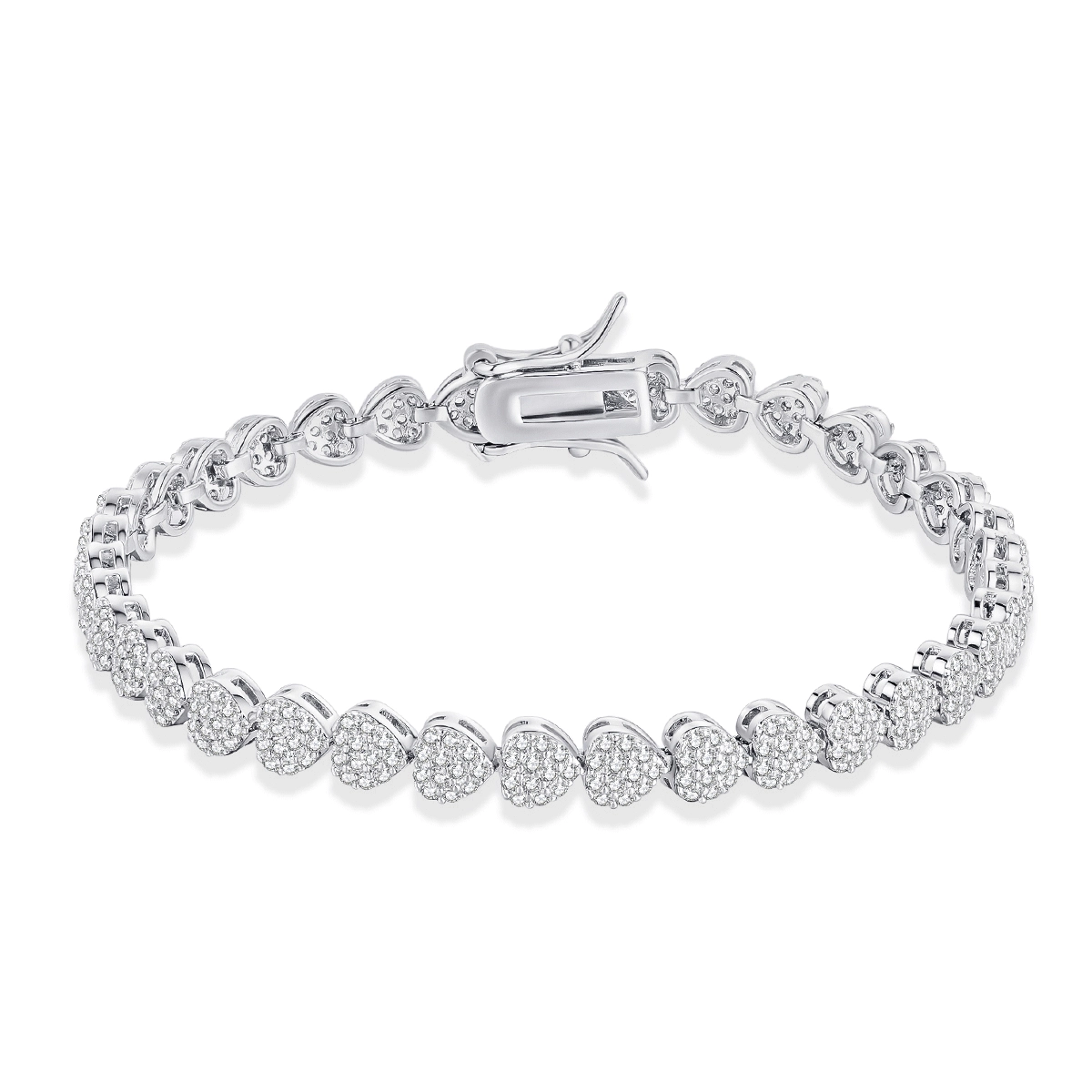
Sterling Silver Tennis Bracelet with Square White Cubic Zirconia Stones
Read More
Get a Quote for Private Label Jewelry
We provide personalized jewelry customization services for clients worldwide.
Rest assured that your privacy is important to us, and all information provided will be handled with the utmost confidentiality.
By clicking 'Send Inquiry Now' I agree to ZHEFAN JEWELRY processing my personal data.
To see how to withdraw your consent, how to control your personal data and how we process it, please see our Privacy Policy and Terms of use.
From design to production, ZHEFAN JEWELRY offers a one-stop solution to help you enhance your brand value and market competitiveness.
Get A Quote
Contact
Tel: (+86) 188 1927 7817
© 2026 Zhefan Jewelry. All Rights Reserved.
Facebook
Instagram
YouTube
Whatsapp: +8618819277817