







Email: sales3@zhefanjewelry.com
How to Personalize an Adjustable Tennis Bracelet for Your Brand
Personalizing an adjustable tennis bracelet requires more than adding a logo. Brand owners must define the bracelet architecture, stone layout, metal platform, sizing mechanism, plating specification, packaging, compliance requirements, and quality controls before production. A reliable custom jewelry manufacturer can convert these decisions into a commercially viable collection with consistent fit, secure stone setting, durable surface finishing, and scalable OEM or ODM production. This guide explains how to build a distinctive adjustable tennis bracelet program for retail, e-commerce, private-label, and distribution channels while controlling cost, quality, lead time, and brand perception.
- Building a Distinctive Adjustable Tennis Bracelet Concept
- Define the customer, sales channel, and price position
- Personalize the visual language
- Engineer comfort and adjustability together
- Choosing Materials, Stones, and Surface Treatments
- Compare metal platforms by customer promise
- Select stones according to durability and margin
- Specify plating and finishing performance
- Converting the Design into a Reliable Production Program
- Prepare a complete technical package
- Use staged sampling and approval gates
- Measure quality beyond visual inspection
- Why Zhefan Jewelry Supports Scalable Brand Customization
- Combine design flexibility with manufacturing capacity
- Support trend development and OEM/ODM execution
- Make quality and compliance visible in the supply chain
- Frequently Asked Questions
A custom adjustable tennis bracelet gives jewelry brands a flexible platform for combining personalization, comfort, and repeatable production. Unlike a fixed-length tennis bracelet, an adjustable design can serve a broader customer base, reduce sizing barriers, and support gifting because the product can fit multiple wrist sizes. However, successful customization depends on engineering decisions that affect wearability, appearance, manufacturing yield, packaging, and long-term customer satisfaction.
For project owners, the most important question is not simply how to make the bracelet look different. The stronger commercial question is how to create a recognizable product that remains comfortable, secure, cost-controlled, and consistent across production batches. The following framework covers the decisions buyers should make before requesting a quotation from a custom jewelry manufacturer.
Building a Distinctive Adjustable Tennis Bracelet Concept
Define the customer, sales channel, and price position
Design development should begin with the intended customer and selling environment. A fashion-forward online label may prioritize lightweight construction, trend-led color combinations, and attractive packaging for social-commerce presentation. A department-store brand may require stronger abrasion resistance, formal documentation, and a more conservative stone layout. A bridal or occasionwear company may prefer High Quality sterling silver, gold vermeil, simulated diamonds, or pearl accents with a refined presentation.
The commercial position determines many technical choices. A value-oriented bracelet may use brass jewelry with a protective finish and glass or cubic zirconia stones. A mid-market collection may use 925 silver jewelry, sterling silver jewelry, or higher-grade cubic zirconia with improved setting precision. A High Quality line may use gold vermeil jewelry over sterling silver, natural gemstones, or lab-grown stones, subject to the brand’s product claims and compliance responsibilities.
Personalize the visual language
Distinctiveness can be created through stone shape, spacing, color, metal tone, end-piece design, clasp geometry, and logo placement. Round brilliant stones communicate classic tennis-bracelet styling, while baguette, oval, pear, or mixed-cut stones can create a more contemporary identity. Alternating stone colors may support a seasonal campaign, birth-month concept, sports-team palette, or a branded signature.
Personalization should remain coherent across the collection. A brand may use one recognizable end cap, a proprietary link profile, or a repeated engraved symbol rather than adding excessive decoration. This approach helps customers identify the product family while allowing variations in plating, stone color, or charm attachment. The supplier should create a technical drawing showing dimensions, stone count, setting type, logo position, and adjustment range before sampling.
Engineer comfort and adjustability together
The adjustment mechanism is a core product feature, not an accessory detail. Common options include sliding bead systems, extension chains, bolo mechanisms, and multi-position closures. The mechanism should allow smooth adjustment without sharp edges, excessive friction, or accidental release during normal wear. The bracelet should also distribute weight evenly so that the stone-set section does not rotate constantly toward the underside of the wrist.
Buyers should request fit samples for the smallest, average, and largest intended wrist sizes. These tests can reveal whether the bracelet pulls, twists, catches on clothing, or leaves excessive chain length. A polished silicone or metal stopper may improve control of the loose end, while an integrated logo bead can turn a functional component into a branding element. Packaging should also prevent the adjustable section from tangling during transport.
Choosing Materials, Stones, and Surface Treatments
Compare metal platforms by customer promise
| Platform | Typical commercial advantage | Key buyer checks | Suitable positioning |
|---|---|---|---|
| Brass base metal | Efficient for fashion collections and complex shapes | Base-metal disclosure, plating thickness, tarnish protection, nickel and lead controls | Accessible fashion jewelry |
| 925 sterling silver | Recognized precious-metal platform with a High Quality feel | Silver content documentation, surface hardness, oxidation control, hallmark requirements by market | Mid-market and High Quality jewelry |
| Gold vermeil | Combines a sterling silver base with a substantial gold surface layer | Gold thickness, karat specification, adhesion, wear testing, accurate product claims | High Quality fashion and gifting |
| Gold-plated brass | Supports broad color and cost flexibility | Plating process, barrier layers, color consistency, skin-contact requirements | Trend-led and private-label ranges |
These material categories are not interchangeable from a customer-claim perspective. Brand owners should define the base metal, plating material, gold karat, surface thickness, and care instructions in the product specification. Marketing language should match the actual construction. For example, a product should not be described as solid gold when it is gold plated or vermeil.
Environmental and chemical compliance also requires market-specific review. The European Commission explains that REACH regulates the production and use of chemicals in the European Union, while the U.S. Environmental Protection Agency provides information on lead-related laws and regulations in the United States. Buyers should ask suppliers for relevant test reports and clarify whether documentation applies to the exact finished product, plating system, and production batch.
Select stones according to durability and margin
Stone selection affects visual impact, cost, setting time, and return risk. Cubic zirconia can create a diamond-like appearance at a controlled cost, while crystal, glass, synthetic stones, laboratory-grown stones, and natural gemstones serve different customer expectations. The product page should identify the stone type accurately and avoid vague descriptions that could create disputes.
Stone size must be balanced against bracelet flexibility. Oversized stones can make the links rigid and increase the likelihood of snagging. Very small stones may reduce perceived value unless the setting and polish are exceptionally refined. The supplier should evaluate girdle clearance, seat depth, prong or bezel security, and the transition between adjacent settings. A sample should undergo visual inspection under magnification and a practical movement test before approval.
Specify plating and finishing performance
Color matching involves more than selecting yellow, rose, or white gold from a chart. The supplier should control the color standard, underlayer, final plating, polishing sequence, and inspection lighting. A clear reference sample is essential when a brand operates multiple jewelry categories and wants consistent gold tones across bracelets, necklaces, earrings, and rings.
Surface finishing influences both appearance and perceived quality. Edges should be smooth, stone seats should be clean, and the adjustment chain should not contain burrs. Brands selling through e-commerce should pay particular attention to close-up photography because inconsistent polishing, cloudy stones, or uneven plating can be visible to customers before the product is worn. The ISO 9001 quality management principles provide a useful reference for process control, documented procedures, and continual improvement, although certification status must be verified directly with each supplier.
Converting the Design into a Reliable Production Program
Prepare a complete technical package
A quotation request should include more than a reference image. The technical package should state bracelet length range, adjustment method, stone dimensions, stone count, metal composition, plating color, plating thickness, logo requirements, clasp or stopper details, packaging format, target quantity, delivery destination, and expected compliance documents.
Artwork should be supplied in production-ready formats where possible. Engraved logos require clear minimum line widths and depth specifications. For cast components, the manufacturer should review wall thickness, draft angles, shrinkage, and areas that may trap polishing compound. Early design-for-manufacturing review can prevent costly tooling changes after the sample has been approved.
Use staged sampling and approval gates
A disciplined sampling process normally includes a design or 3D review, a first physical sample, a revised pre-production sample, and a sealed reference sample. The reference sample should be photographed from multiple angles and retained as the standard for future orders. Changes to dimensions, stones, color, or packaging should be documented rather than communicated only through informal messages.
Approval gates should cover fit, adjustment travel, weight, stone security, logo accuracy, plating color, surface smoothness, packaging protection, and barcode or label information. If a product is intended for international distribution, the buyer should confirm the destination market’s labeling, chemical, consumer-product, and import requirements before mass production.
Measure quality beyond visual inspection
Quality control for an adjustable tennis-style bracelet should combine incoming-material checks, in-process inspection, and final inspection. Relevant checkpoints include metal color, dimensions, stone presence, stone alignment, prong integrity, chain movement, stopper retention, clasp operation, polishing quality, plating coverage, and packaging count accuracy.
Sampling plans should be agreed in advance, including acceptable quality limits, defect classifications, and the process for handling nonconforming goods. The ISO 2859-1 sampling standard is widely recognized as a reference for attribute-based inspection, but the chosen inspection level and acceptance criteria should reflect the product’s value and risk. A supplier that can provide inspection records, corrective-action reports, and traceable batch information gives buyers stronger control over repeat orders.
Why Zhefan Jewelry Supports Scalable Brand Customization
Combine design flexibility with manufacturing capacity
Zhefan Jewelry is a Guangzhou-based fashion jewelry manufacturer established in 2002, with a company legacy dating back to 1997. Founded by a master mold craftsman, our production culture is built around detailed mold development, refinement, and repeatable execution. We support custom bracelet programs using brass jewelry, 925 silver jewelry, sterling silver jewelry, and gold vermeil jewelry, allowing brand owners to select a platform aligned with price, positioning, and customer expectations.
Our two factories in Guangzhou and Meizhou cover 800 square meters and are supported by more than 80 skilled artisans and 20 sales professionals. Monthly output reaches approximately 600,000 pieces, giving distributors, retailers, and online brands access to meaningful production capacity without losing the need for responsive project communication. This structure is particularly useful when a successful adjustable bracelet must move from a limited launch to a larger replenishment program.
Support trend development and OEM/ODM execution
Our professional design team launches more than 500 original styles monthly. This design activity helps partners compare multiple directions for stone layouts, bracelet profiles, charms, colorways, and coordinated collections. The objective is not to replace a brand’s identity, but to accelerate concept development and provide practical options that can be evaluated against target cost and production complexity.
Our OEM/ODM services can support custom dimensions, logo details, packaging, metal selection, plating specifications, and collection expansion. Pearl jewelry and other complementary categories can be developed alongside tennis-inspired bracelets to create coordinated merchandising. A unified supplier relationship may simplify sample management, color approval, quality communication, and shipment planning across a wider assortment.
Make quality and compliance visible in the supply chain
Our manufacturing process includes six rounds of precision polishing and six strict quality inspections. These controls are designed to improve surface consistency, reduce visible defects, and verify critical details before shipment. We also use RoHS- and REACH-compliant eco-friendly materials, subject to the applicable product specification and documentation for each order.
Our customer base includes Amazon top-three sellers and global retailers such as Macy’s, reflecting experience with demanding commercial programs and repeat-order expectations. For procurement teams, this background matters because supplier value includes more than unit price. Stable quality, accurate communication, reasonable development speed, and dependable delivery can reduce returns, protect launch schedules, and strengthen the brand’s perceived reliability.
For specifications, sampling, and OEM or ODM planning, buyers can review Zhefan Jewelry’s product and manufacturing capabilities or contact our team at sales3@zhefanjewelry.com.
Contact Zhefan Jewelry to develop a market-ready adjustable tennis bracelet collection with tailored materials, branding, quality controls, and scalable production support.
Frequently Asked Questions
What should a brand customize on an adjustable tennis bracelet?
A brand can customize the stone shape and color, metal platform, plating tone, bracelet dimensions, adjustment mechanism, end pieces, logo placement, packaging, and care instructions. The supplier should document these choices in a technical specification before sampling.
Which metal is best for a private-label adjustable tennis bracelet?
The best metal depends on the target price, customer expectations, product claims, and sales channel. Brass supports accessible fashion collections, 925 sterling silver offers a recognized premium platform, and gold vermeil provides a higher-end surface treatment over sterling silver. Buyers should confirm composition, plating thickness, and compliance documentation.
How can buyers test whether the adjustment mechanism is reliable?
Buyers should test the smallest, average, and largest intended wrist sizes and check adjustment travel, smooth movement, stopper retention, accidental release, comfort, twisting, and snagging. These tests should be completed on a physical sample before approving mass production.
What quality checks are important for an adjustable tennis-style bracelet?
Important checks include dimensions, stone presence and alignment, setting security, prong or bezel integrity, chain movement, stopper function, clasp operation, plating coverage, color consistency, surface smoothness, logo accuracy, and packaging count. Buyers should agree on inspection standards and defect classifications in advance.
How should a brand prepare a quotation request for this type of bracelet?
The request should state the adjustment range, stone specifications, metal composition, plating color and thickness, logo details, packaging, target quantity, delivery destination, compliance documents, and expected quality standard. Reference images alone are not sufficient for accurate costing or production planning.
Can an adjustable tennis bracelet be developed as part of a wider jewelry collection?
Yes. A supplier can coordinate the bracelet with matching necklaces, earrings, rings, charms, or pearl jewelry by using consistent plating colors, stone tones, logo details, and packaging. This can help a brand build a cohesive assortment and simplify supplier coordination.
Tags
925 silver bracelet custom design oem
925 silver bracelet custom design oem
brass jewelry cif exporter
brass jewelry cif exporter
hypoallergenic silver bracelet supplier
hypoallergenic silver bracelet supplier
Custom brass mother of pearl earrings
Custom brass mother of pearl earrings
recycled brass chunky hoop earrings
recycled brass chunky hoop earrings
personalized brass necklaces
personalized brass necklaces
Recommended for you
Seasonal Campaigns Featuring cubic zirconia brass jewelry
How to Vet a 925 Silver Bracelet Manufacturer: Supplier Audit
Lead Time Optimization for Mother of Pearl Stud Earrings
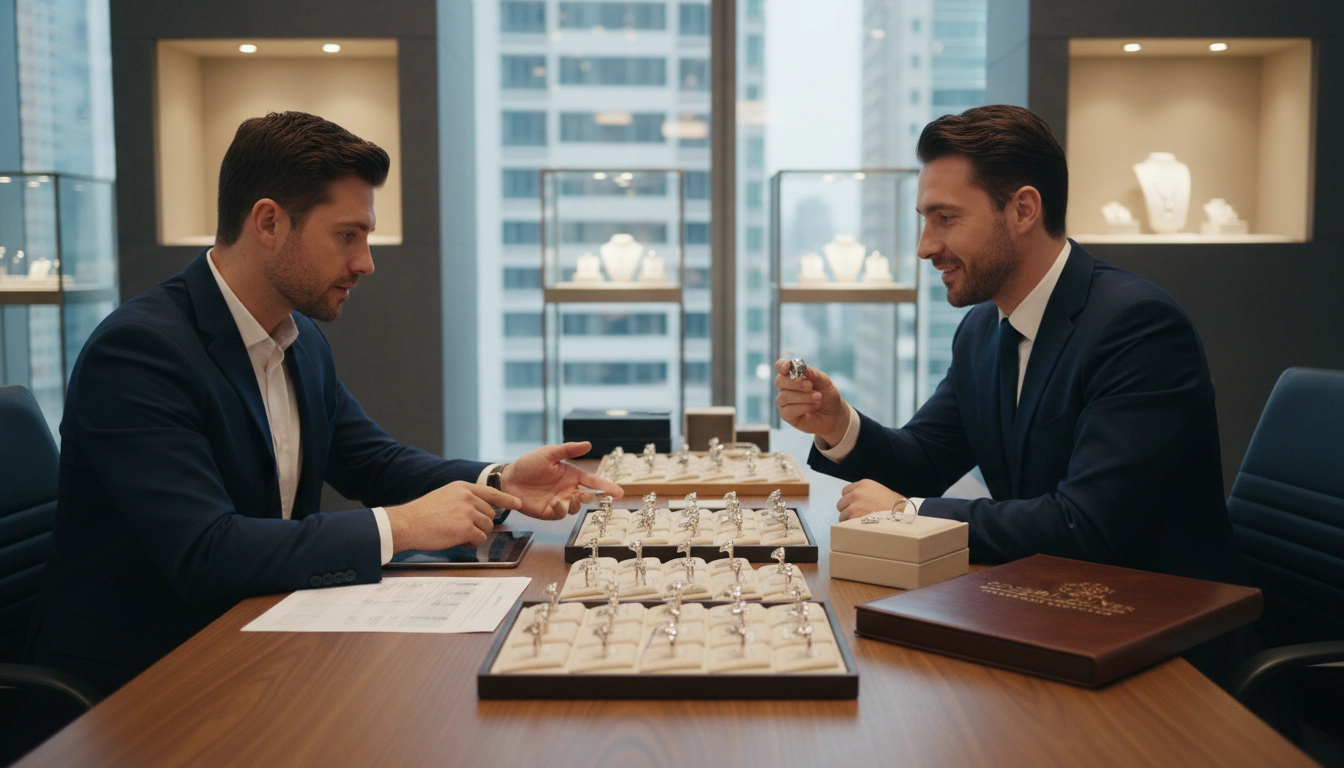
Maximize Your Profit Margins: How to Secure the Best Deals from a Silver Engagement Rings Wholesale Supplier in 2026
Product Categories
You may also like

925 Silver Jewelry
Customizable High-Quality Fashion 925 Sterling Silver AAA Cubic Zirconia Heart-Shaped Open Tennis Bracelet.
Read More

Brass Jewelry
Customizable OEM ODM High-Quality Fashion Brass AAA Cubic Zirconia Classic Tennis Bracelet for Women Wholesale.
Read More
Get a Quote for Private Label Jewelry
We provide personalized jewelry customization services for clients worldwide.
Rest assured that your privacy is important to us, and all information provided will be handled with the utmost confidentiality.
By clicking 'Send Inquiry Now' I agree to ZHEFAN JEWELRY processing my personal data.
To see how to withdraw your consent, how to control your personal data and how we process it, please see our Privacy Policy and Terms of use.
From design to production, ZHEFAN JEWELRY offers a one-stop solution to help you enhance your brand value and market competitiveness.
Get A Quote
Contact
Tel: (+86) 188 1927 7817
© 2026 Zhefan Jewelry. All Rights Reserved.
Facebook
Instagram
YouTube
Whatsapp: +8618819277817