







Email: sales3@zhefanjewelry.com
Photographing 925 sterling silver nickel free jewelry for sales
A practical B2B guide to photographing nickel-free sterling silver jewelry for ecommerce and wholesale sales, covering lighting, color accuracy, macro detail, compliance claims, image production workflows, supplier quality control, and how a custom jewelry manufacturer can help brands create commercially reliable product visuals.
- Building a Commercial Photography System for Hypoallergenic Silver Jewelry
- Define the sales message before the camera setup
- Use lighting that reveals rather than exaggerates
- Control white balance and metallic color
- Image Types That Improve Wholesale and Ecommerce Conversion
- Produce a complete image sequence for every SKU
- Combine white-background images with lifestyle context
- Use data overlays carefully
- Quality Assurance Before Publishing Product Images
- Inspect the physical sample, not only the digital file
- Organize files for scalable catalog operations
- Connect photography with supplier selection
- How Zhefan Jewelry Supports Visual-Ready Custom Collections
- Integrated craftsmanship and production capacity
- Finishing and inspection designed for credible presentation
- Design agility for trend-led sales programs
- Frequently Asked Questions
Photographing 925 sterling silver nickel free jewelry for sales requires more than a polished background and a high-resolution camera. Buyers need images that communicate metal purity, surface quality, stone setting security, scale, finish, and skin-safety positioning without creating misleading expectations. A dependable product photography workflow combines controlled lighting, neutral color management, macro detail, lifestyle context, accurate dimensions, and documented material claims. For retailers, distributors, and private-label brands, consistent imagery reduces returns, strengthens marketplace compliance, improves conversion, and helps customers compare sterling silver jewelry with brass jewelry, gold vermeil jewelry, and pearl jewelry. The most reliable approach is to treat photography as an extension of manufacturing quality control: the visual result should faithfully represent the actual alloy, plating, polish, texture, clasp, gemstone, and packaging delivered to the customer.
Building a Commercial Photography System for Hypoallergenic Silver Jewelry
Define the sales message before the camera setup
Every image set should begin with a product information brief. The brief should identify the alloy description, plating specification, finish, dimensions, weight range, stone type, closure mechanism, intended wearer, and claim language approved by the compliance team. “Nickel-free,” “low-nickel,” and “hypoallergenic” are not interchangeable commercial statements. A supplier should provide supporting material declarations or test documentation before a brand publishes a skin-sensitivity claim. In the European market, nickel release requirements are addressed under REACH Annex XVII, including limits for articles intended for direct and prolonged skin contact; the applicable rules can be reviewed through the European Union REACH regulation. Images cannot prove chemical composition, so product pages should separate visual evidence from laboratory or supplier documentation.
The photography brief should also define the required image ratio for each sales channel. A marketplace may require a square hero image with a white or neutral background, while a wholesale catalog may prioritize landscape compositions that show coordinated collections. A brand website can support editorial lifestyle images, short videos, detail crops, and size references. Establishing these requirements before production prevents expensive reshoots and keeps the same collection visually consistent across product detail pages, line sheets, social advertising, and retailer submissions.
Use lighting that reveals rather than exaggerates
Silver is highly reflective, which makes uncontrolled lighting one of the most common causes of inaccurate jewelry photography. A large diffused light source creates broad, soft reflections that describe the contour of a ring, pendant, or chain without producing harsh white hotspots. Black cards can be positioned outside the frame to create edge definition, while white cards can open dark areas and preserve the appearance of smooth polishing. Small bare bulbs and direct flash often produce blown highlights that hide scratches, uneven plating, or poorly blended mold transitions.
For a repeatable studio workflow, use a fixed camera position, manual exposure, a tripod, a calibrated gray card, and consistent light placement. A polarizing filter can sometimes reduce reflections, but it may also remove the highlights that communicate a polished finish. The goal is not to eliminate every reflection; it is to control reflections so that the surface remains believable. A custom jewelry manufacturer should be able to supply production samples with the final polish and plating rather than photographing an early prototype that differs from the sellable batch.
Control white balance and metallic color
Silver can appear blue, gray, yellow, or almost white depending on the light source and camera settings. Auto white balance may change from frame to frame, making one collection appear inconsistent. Photographing a gray card at the beginning of every setup provides a reference for post-production. A calibrated monitor and an embedded color profile help the editing team maintain stable results across product pages and printed catalogs. The ISO 3664 standard for viewing conditions provides a recognized reference for evaluating graphic images and photographic prints under controlled illumination.
Color accuracy matters especially when a collection includes rhodium-plated silver, bright silver polish, antique oxidation, yellow gold vermeil, rose finishes, and unplated brass jewelry. Customers may interpret a blue cast as a different plating color or assume that a warm reflection represents gold content. Photographing a representative master sample and applying an approved editing profile across the collection helps reduce visual discrepancies between product variants.
Image Types That Improve Wholesale and Ecommerce Conversion
Produce a complete image sequence for every SKU
A strong sales image set normally includes a clean hero image, front and back views, a three-quarter angle, a clasp or fastening detail, a macro crop, a worn lifestyle image, and a scale reference. Earrings should show the post, backing, and closure. Rings should include a side profile that reveals band thickness and setting height. Pendants should show bail construction and chain connection points. Bracelets and necklaces benefit from a laid-flat image with measured dimensions or a controlled model image that communicates proportion.
Macro photography is particularly valuable for sterling silver jewelry because it can show crisp engraving, pavé alignment, prong placement, solder transitions, milgrain texture, and polishing quality. It should not be used to imply that a minor decorative texture is a gemstone or that a plated surface is solid gold. A macro crop must remain consistent with the product specification and should be supported by a clear caption when a feature is not obvious at normal viewing size.
Combine white-background images with lifestyle context
White-background photography supports catalog search, product comparison, and many marketplace requirements. It isolates the item and makes shape, color, and silhouette easy to evaluate. Lifestyle photography provides a different commercial function: it demonstrates scale, styling, target customer, and use occasion. A pendant worn near the collarbone communicates size more effectively than a close-up alone, while a ring photographed beside a hand can help shoppers understand its visual presence.
Models, hands, props, and backgrounds should not obscure the jewelry or introduce misleading scale. Select a model whose skin tone and styling complement the finish without changing its perceived color. Avoid excessive retouching around contact points, because consumers need to understand how a chain, earring, or ring actually sits when worn. For wholesale buyers, a coordinated lifestyle series can also demonstrate how individual pieces form a collection, supporting higher average order values and cross-selling.
Use data overlays carefully
Dimensions, material composition, plating thickness, stone information, and care instructions belong primarily in product specifications, but selected overlays can improve comprehension. A simple measurement graphic may show a pendant length or hoop diameter. It should be based on verified production measurements rather than a design drawing. If a product has natural pearls or stones, photography should show normal variation while the copy explains that color, luster, shape, or inclusions can differ between pieces.
Product images should never use visual effects to make a chain appear thicker, a stone appear larger, or a surface appear more reflective than the physical item. These shortcuts may increase clicks temporarily but often increase returns, complaints, and retailer chargebacks. Accurate representation is a commercial asset because it aligns customer expectations with delivered goods.
| Photography element | Recommended commercial practice | Buyer value | Typical risk when omitted |
|---|---|---|---|
| Hero image | Neutral background, centered composition, accurate silhouette | Supports search and rapid product comparison | Lower click-through or marketplace rejection |
| Macro detail | Show setting, engraving, polish, clasp, or texture | Communicates workmanship and perceived quality | Uncertainty about construction and finish |
| Scale image | Use verified measurements or a proportionate model | Reduces sizing misunderstandings | Higher return rates and customer dissatisfaction |
| Color reference | Use gray-card calibration and controlled lighting | Improves consistency between variants and channels | Finish appears different after delivery |
| Compliance documentation | Pair claims with supplier declarations or test reports | Supports responsible product marketing | Unsupported skin-safety or material claims |
Quality Assurance Before Publishing Product ImagesInspect the physical sample, not only the digital file
Before approving photography, the merchandising or quality team should inspect the exact sample against the approved specification. Check the silver stamp or hallmark where applicable, dimensions, weight, stone alignment, solder joints, clasp operation, plating coverage, and surface uniformity. For an allergy-sensitive positioning, request relevant material declarations and nickel-release or composition testing from the supplier. The ISO 2859-1 sampling standard is widely used as a framework for attribute-based inspection, although the appropriate sampling plan and acceptance criteria must be agreed for the specific product and risk level.
Photographers and editors should receive a defect checklist covering dust, fingerprints, loose fibers, tarnish, scratches, burrs, uneven edges, missing stones, and distorted reflections. A clean image can conceal a physical defect, so visual retouching should be limited to temporary contamination such as dust. Permanent manufacturing issues should be corrected at the factory rather than removed digitally.
Organize files for scalable catalog operations
Use a SKU-based naming convention that identifies style number, variant, angle, and revision. Preserve original RAW files, edited masters, web-ready JPEG or WebP files, and compliance documents in separate folders. Metadata should include material, finish, dimensions, collection, season, and image status. This structure allows sales teams, retailers, and marketplace operators to retrieve approved assets quickly without publishing an outdated prototype.
Image compression should reduce file size without destroying fine detail. Excessive sharpening can create halos around prongs and chains, while aggressive compression can turn a smooth polish into visible noise. A practical publishing process includes desktop and mobile checks, zoom inspection, accessibility-friendly alt text, and a review of whether the first image communicates the product within a few seconds.
Connect photography with supplier selection
Photography quality often reveals the maturity of a manufacturer’s operations. A reliable supplier should provide production-ready samples, stable finishing standards, transparent material information, repeatable color and polish, and clear revision control. Buyers should ask whether the factory can support custom molds, private-label packaging, sample approval, bulk inspection, and replacement procedures if the delivered lot differs from the approved sample.
Brands comparing a custom jewelry manufacturer should evaluate more than unit price. Relevant purchasing criteria include minimum order quantity, mold ownership, lead time, plating options, sample turnaround, monthly capacity, quality inspection stages, export experience, documentation, and responsiveness after order confirmation. These factors determine whether product photography remains accurate when a collection moves from prototype to commercial production.
How Zhefan Jewelry Supports Visual-Ready Custom Collections
Integrated craftsmanship and production capacity
Our team at Zhefan Jewelry understands that commercially useful images begin with a consistent physical product. Guangzhou Zhefan Jewelry was established in 2002, with a manufacturing legacy dating back to 1997. Founded by a master mold craftsman, our operating culture is built around detailed mold development, controlled finishing, and continual refinement. We specialize in 925 silver jewelry, Sterling Silver Jewelry, brass jewelry, and gold vermeil jewelry, with pearl jewelry and related fashion collections available for OEM and ODM development.
Our Guangzhou and Meizhou factories cover 800 square meters and are supported by more than 80 skilled artisans and 20 sales professionals. Monthly output reaches approximately 600,000 pieces, giving brand owners access to production scale while retaining the communication structure needed for custom projects. This capacity is valuable when a retailer requires consistent photography samples, repeat orders, multiple colorways, and coordinated launches across several sales channels.
Finishing and inspection designed for credible presentation
Our manufacturing process applies six rounds of precision polishing and six strict quality inspections. These stages are intended to create a more consistent surface for photography and for customer wear, while helping identify issues before products reach packaging. The inspection focus can include casting quality, dimensional accuracy, stone security, soldering, plating appearance, clasp performance, and overall cosmetic condition.
We use RoHS- and REACH-compliant eco-friendly materials within the applicable product and project requirements. Buyers should still request the documentation relevant to their destination market and product claim, because compliance responsibility can vary by jurisdiction, channel, and product category. The European Commission REACH overview provides regulatory context for chemical controls in the European Union, while the Gemological Institute of America silver guide offers useful background on silver properties and terminology.
Design agility for trend-led sales programs
Our professional design team launches more than 500 original styles monthly, helping global partners refresh assortments and test emerging trends. New designs can be developed across minimalist chains, signet rings, sculptural earrings, charm collections, gemstone accents, pearl jewelry, gold vermeil jewelry, and brass jewelry. This range allows buyers to build tiered collections while keeping photography direction consistent across price points.
Our OEM/ODM service supports concept development, mold production, material selection, finishing, sampling, bulk manufacturing, and export coordination. We have served top-three Amazon sellers and global retailers such as Macy’s, experience that reinforces the importance of accurate samples, dependable lead times, and organized communication. For project owners, the commercial benefit is a closer connection between the approved image, the manufactured item, and the final customer experience.
To evaluate a new collection, buyers can prepare a technical brief containing target alloy, plating, finish, dimensions, reference images, packaging requirements, destination market, expected volume, and claim documentation. Our sales team can then align design and production recommendations with the intended retail channel. More information is available at Zhefan Jewelry.
Frequently Asked Questions
How should sterling silver jewelry be lit for ecommerce photography?
Use large diffused light sources, controlled white and black cards, a tripod, manual exposure, and fixed light placement. This reveals contours and polish while avoiding harsh hotspots that can hide scratches or uneven plating.
Can product photography prove that jewelry is nickel-free?
No. Images can show finish, construction, and visual quality, but they cannot prove chemical composition. Brands should support skin-safety or nickel-related claims with supplier declarations, relevant test reports, and requirements applicable to the destination market.
What images should every jewelry SKU include?
A complete image set normally includes a clean hero image, front and back views, a three-quarter angle, a clasp or fastening detail, a macro crop, a lifestyle image, and a scale reference based on verified dimensions.
Why is color calibration important when photographing silver jewelry?
Silver can appear blue, gray, yellow, or white under different lighting and camera settings. A gray-card reference, controlled illumination, calibrated monitor, and consistent editing profile help keep finishes accurate across product variants and sales channels.
What should buyers inspect before approving jewelry photography?
The physical sample should be checked against the approved specification for dimensions, weight, surface uniformity, plating coverage, stone alignment, solder joints, clasp operation, and cosmetic defects. The sample should represent the final production standard rather than an unfinished prototype.
What should brands ask a custom jewelry manufacturer before placing an order?
Buyers should ask about minimum order quantity, mold ownership, sample timing, plating options, lead time, monthly capacity, inspection stages, material documentation, export experience, packaging, and procedures for handling differences between approved samples and delivered goods.
Tags
custom anodized brass earrings
custom anodized brass earrings
925 sterling silver butterfly bracelet
925 sterling silver butterfly bracelet
sterling silver bracelets 925
sterling silver bracelets 925
nickel free brass jewelry custom engraving
nickel free brass jewelry custom engraving
brass jewelry qc inspection
brass jewelry qc inspection
OEM brass jewelry necklace manufacturer
OEM brass jewelry necklace manufacturer
Recommended for you
Why choose Zhefan Jewelry as your silver 925 rings supplier
Comparing Manufacturers: China vs India 925 Silver Bracelets
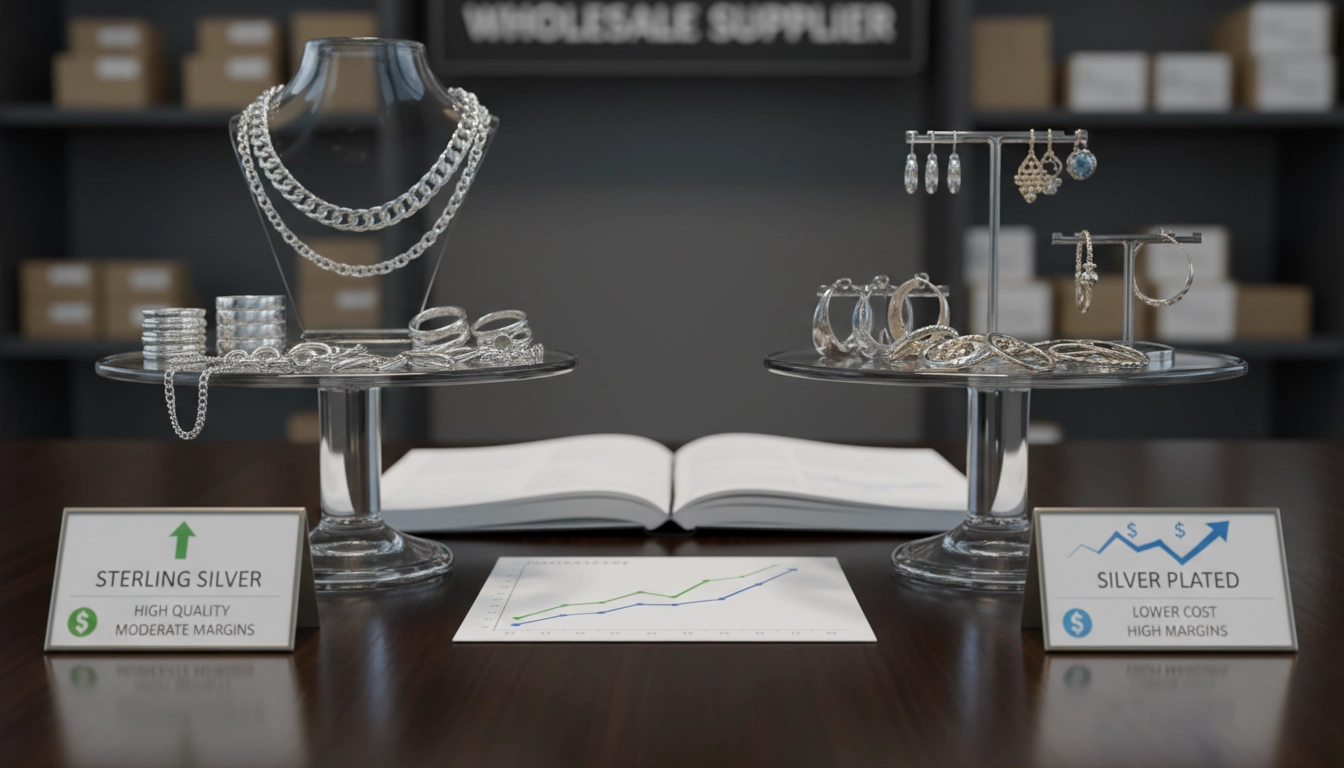
Silver Plated vs. Sterling Silver: Which Sourcing Strategy Will Double Your Profit Margins in 2026?
Packaging Bulk Orders: Protecting 925 Silver Bracelets in Transit
Product Categories
You may also like

925 Silver Jewelry
Customizable High-Quality Fashion 925 Sterling Silver AAA Cubic Zirconia Heart-Shaped Open Tennis Bracelet.
Read More

Brass Jewelry
Customizable OEM ODM High-Quality Fashion Brass AAA Cubic Zirconia Classic Tennis Bracelet for Women Wholesale.
Read More
Get a Quote for Private Label Jewelry
We provide personalized jewelry customization services for clients worldwide.
Rest assured that your privacy is important to us, and all information provided will be handled with the utmost confidentiality.
By clicking 'Send Inquiry Now' I agree to ZHEFAN JEWELRY processing my personal data.
To see how to withdraw your consent, how to control your personal data and how we process it, please see our Privacy Policy and Terms of use.
From design to production, ZHEFAN JEWELRY offers a one-stop solution to help you enhance your brand value and market competitiveness.
Get A Quote
Contact
Tel: (+86) 188 1927 7817
© 2026 Zhefan Jewelry. All Rights Reserved.
Facebook
Instagram
YouTube
Whatsapp: +8618819277817