







Email: sales3@zhefanjewelry.com
Popular 925 Silver Bracelet Styles for Retail Buyers 2026
A practical 2026 procurement guide to popular 925 silver bracelet styles, including chain, cuff, charm, tennis, pearl, personalized, and mixed-material designs. It explains retail demand signals, construction standards, plating considerations, packaging, compliance, quality control, supplier evaluation, and how Zhefan Jewelry supports scalable OEM and ODM programs for global jewelry brands.
- 2026 Sterling Silver Bracelet Directions Retailers Should Track
- Paperclip, curb, and layered chain silhouettes
- Minimalist cuffs and open bangles
- Charm, bead, and personalization formats
- How to Select Profitable Bracelet Categories and Specifications
- Match construction to customer and price position
- Evaluate plating, color, and wear expectations
- Use a measurable quality and margin scorecard
- Procurement Workflow for a Reliable Silver Bracelet Program
- Convert trend signals into a controlled product brief
- Control the sample-to-production handoff
- Plan packaging, logistics, and replenishment together
- Why Zhefan Jewelry Fits Scalable Retail Bracelet Programs
- Integrated manufacturing for 925 silver and complementary materials
- Design agility and quality control
- Commercial support for global retailers and brand owners
- Frequently Asked Questions
- What bracelet styles should retailers prioritize for 2026?
- How can a buyer verify that a bracelet is genuine 925 silver?
- What should be included in a silver bracelet technical pack?
- Are gold-plated silver bracelets suitable for daily wear?
- What quality inspections are important before shipment?
- Can a supplier develop exclusive bracelet designs for a retail brand?
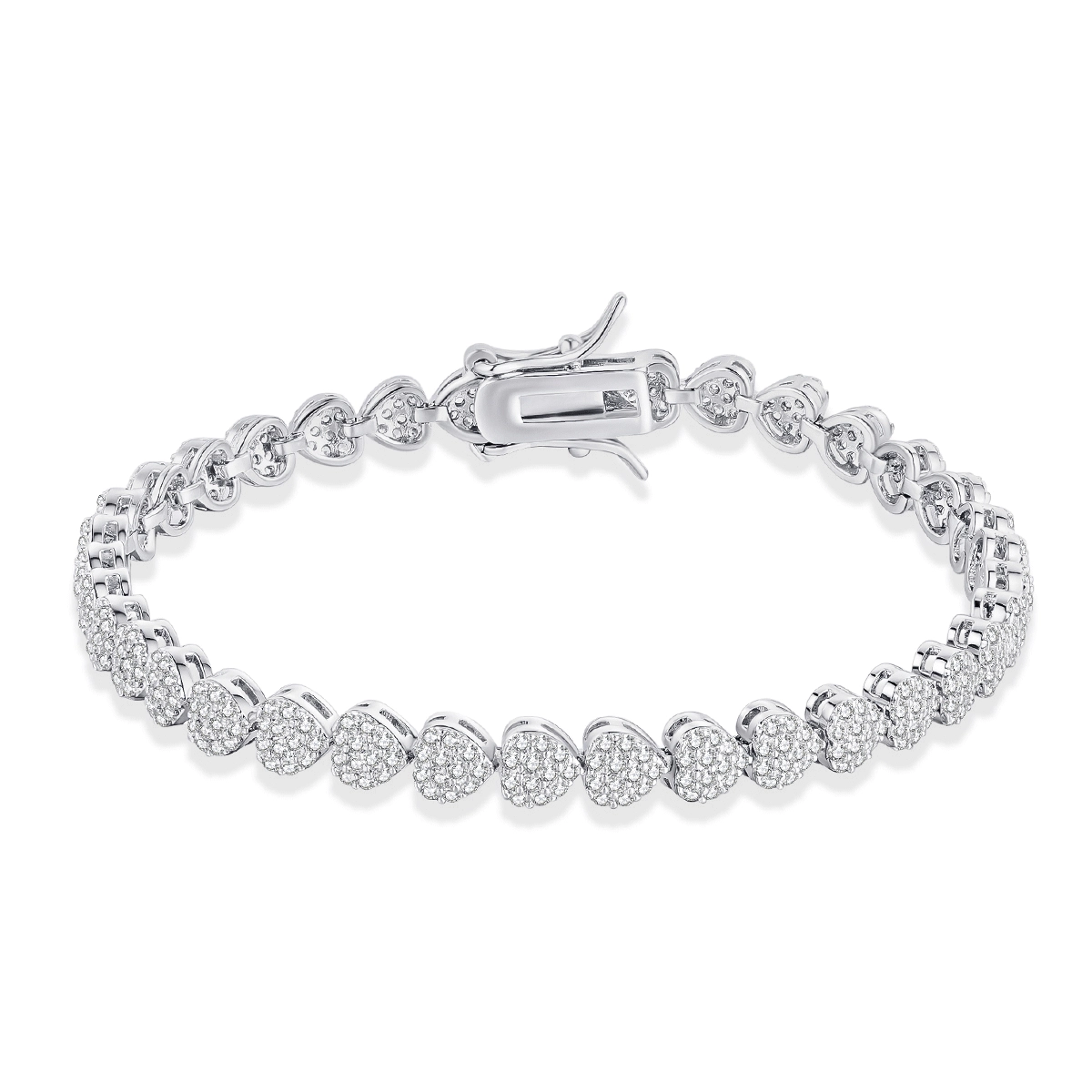
For retail buyers planning 2026 assortments, the strongest 925 silver bracelet opportunities combine recognizable silhouettes, adaptable sizing, responsible materials, and commercially efficient production. High-potential categories include paperclip chains, minimalist cuffs, charm bracelets, tennis-inspired settings, pearl-accented designs, personalized pieces, and mixed-metal styles. Procurement teams should evaluate each design by target customer, price architecture, metal composition, plating durability, stone security, packaging requirements, minimum order quantity, replenishment speed, and regulatory documentation. A capable custom jewelry manufacturer should provide technical samples, consistent alloy quality, production traceability, and scalable OEM or ODM support rather than simply offering a large catalog.
2026 Sterling Silver Bracelet Directions Retailers Should Track
Paperclip, curb, and layered chain silhouettes
Chain bracelets remain commercially versatile because they can be merchandised as entry-level standalone products or combined into layered styling collections. Paperclip links create a contemporary visual language with relatively simple component geometry, while curb, cable, rolo, and figaro constructions serve more classic customer segments. Buyers should compare link thickness, clasp type, solder points, flexibility, and finished weight before approving a style. Hollow links may reduce material consumption but can affect impact resistance and perceived value; solid or semi-solid links generally support a stronger High Quality proposition.
For wholesale planning, chain styles are useful because the same design language can extend into necklaces, anklets, earrings, and rings. This creates a coherent collection and lowers the cost of visual merchandising. A buyer should request dimensioned drawings showing link width, wire diameter, bracelet length, extension chain specifications, and clasp tolerances. These details reduce variation between the approved sample and bulk production.
Minimalist cuffs and open bangles
Open cuffs appeal to consumers who prefer easy wearing and a clean profile. Their commercial performance depends heavily on spring-back behavior, edge finishing, and the relationship between opening width and wrist circumference. A cuff that is too rigid may be uncomfortable; one that is too soft can lose its shape during fulfillment or repeated use. Rounded terminals, smooth inner surfaces, and adequate wall thickness are important engineering considerations.
Retail buyers should avoid treating cuff sizing as a minor packaging issue. The product page must communicate whether the item is adjustable, suitable for a specific wrist range, or intended to remain largely unbent. Sampling should include repeated controlled adjustments to assess deformation and finish cracking, particularly where gold vermeil or other surface treatments are applied.
Charm, bead, and personalization formats
Charm bracelets support repeat purchasing because customers can add symbols for milestones, travel, hobbies, initials, birth months, or gifting occasions. Modular designs also enable retailers to sell a core bracelet first and increase average order value through add-on charms. The technical brief should define charm-hole diameter, bail clearance, stopper placement, clasp load, and the maximum recommended charm weight.
Personalized engraving can differentiate a retailer’s offer, but it introduces operational controls. Buyers should establish artwork acceptance rules, character limits, font libraries, spelling confirmation procedures, and separate lead times for blank and customized inventory. For larger programs, laser engraving or controlled stamping should be tested on production-equivalent material so that depth, legibility, and alignment remain consistent.
How to Select Profitable Bracelet Categories and Specifications
Match construction to customer and price position
Design selection should begin with a clear retail role. Affordable daily-wear collections usually favor lightweight chains, smooth bangles, small symbolic charms, and uncomplicated stone settings. High Quality capsules can support heavier links, hand-applied textures, pavé details, freshwater pearls, or more complex finishing. A product’s metal weight, labor intensity, stone count, packaging, and return risk should be modeled together rather than assessed only through unit price.
“925” indicates a sterling silver alloy containing 92.5% silver by mass, with the balance typically made up of other metals to improve strength and workability. Buyers can review the general definition of sterling silver while recognizing that local hallmarking and disclosure rules vary by selling market. Supplier documentation should identify the declared alloy, plating system, base metal where relevant, and test method used for verification.
Evaluate plating, color, and wear expectations
Rhodium-plated silver offers a bright, cool appearance and can help reduce immediate tarnish exposure, while yellow or rose gold plating gives retailers access to mixed-metal and vermeil-inspired merchandising. Plating is not permanent: friction from skin, clothing, cosmetics, water, and storage conditions gradually affects the surface. Product claims should therefore be aligned with realistic care instructions rather than promising unlimited color retention.
Gold vermeil programs require particular attention to the silver substrate, gold thickness, adhesion, and test documentation. Retailers should define minimum coating thickness, color reference, surface preparation, and acceptable wear criteria in the purchase specification. For any design containing nickel, lead, cadmium, or other regulated substances, the supplier should provide market-appropriate laboratory reports and declarations. The European Commission’s RoHS framework and the European Chemicals Agency’s information on REACH compliance are useful references for understanding restricted substances and chemical obligations, although buyers must still confirm the rules applicable to the finished jewelry and destination market.
Use a measurable quality and margin scorecard
A supplier comparison should include more than catalog breadth. Useful scorecard fields include sample approval time, first-pass quality rate, alloy verification, plating consistency, stone-setting security, clasp performance, size tolerance, packaging accuracy, production capacity, defect replacement policy, and communication speed. The purchase team can assign weighted scores based on commercial importance, making supplier selection more transparent across design, sourcing, quality, and finance departments.
| Evaluation area | What buyers should verify | Commercial impact |
|---|---|---|
| Metal specification | 925 silver declaration, material traceability, and applicable test reports | Supports compliant labeling and reduces customer trust risk |
| Surface finish | Polishing quality, plating process, color consistency, and wear expectations | Influences perceived value, returns, and review performance |
| Mechanical construction | Clasp strength, solder integrity, link flexibility, and dimensional tolerance | Reduces breakage claims and after-sales cost |
| Stone or pearl security | Setting method, adhesive control where used, seat uniformity, and inspection records | Protects against loss claims and safety concerns |
| Production readiness | Confirmed capacity, lead time, minimum order quantity, and replenishment plan | Improves inventory availability and working-capital control |
| Regulatory support | REACH, RoHS, nickel, lead, cadmium, and destination-market documentation | Helps prevent import delays, relabeling, and compliance exposure |
Testing practices should be agreed before bulk production. ISO 2859-1 is a recognized reference for sampling procedures and inspection levels, available through the International Organization for Standardization; the exact inspection plan should be adapted to product risk, order value, and buyer requirements. A pre-shipment inspection can combine visual standards, measurement checks, count verification, packaging audits, and targeted material testing.
Procurement Workflow for a Reliable Silver Bracelet Program
Convert trend signals into a controlled product brief
Trend research should inform a product brief, not replace one. The brief should define the consumer segment, intended retail price, target wholesale cost, bracelet dimensions, metal and plating requirements, stone or pearl details, packaging, compliance market, delivery window, and expected reorder volume. Retailers can test a balanced assortment with core replenishment styles, seasonal fashion pieces, and a small number of experimental designs.
For 2026, modularity and personalization are especially useful from an inventory perspective because they allow a common bracelet base to support multiple visual stories. However, the project owner should confirm whether charms are compatible across the range and whether the added components create excessive weight or noise during shipment. Standardizing clasps, extension chains, gift boxes, and care cards can also simplify fulfillment.
Control the sample-to-production handoff
The approved sample should be documented through photographs, measurements, material declarations, plating references, stone maps, and packaging specifications. “As approved” is not sufficiently precise for international production. A technical pack should identify critical-to-quality dimensions and define acceptable limits for scratches, pits, uneven polishing, open solder joints, loose stones, plating marks, and misaligned components.
Buyers should request a production sample or golden sample before the full run, particularly when the design uses multiple finishes or a new mold. Corrective actions should be recorded with responsible owners and deadlines. This process helps prevent a common procurement failure: a visually attractive prototype being manufactured with different wall thickness, lower polish quality, or unapproved color treatment.
Plan packaging, logistics, and replenishment together
Bracelets are vulnerable to tangling, abrasion, oxidation, and clasp damage when packed without adequate separation. Individual pouches, cards, trays, or boxes should be selected according to the retail channel and shipping environment. E-commerce programs may need barcode placement, scannable SKU labels, tamper protection, and compact packaging, while department-store programs may require presentation boxes and standardized merchandising dimensions.
Inventory planning should distinguish launch quantity from reorder quantity. A supplier with dependable capacity can support smaller initial tests followed by faster replenishment, reducing the risk of overcommitting to an unproven style. Buyers should also clarify whether raw material procurement begins before final approval, how balance payments affect scheduling, and what happens when a quality hold delays shipment.
Why Zhefan Jewelry Fits Scalable Retail Bracelet Programs
Integrated manufacturing for 925 silver and complementary materials
Zhefan Jewelry is a Guangzhou-based fashion jewelry manufacturer established in 2002, with a company legacy dating back to 1997. Founded by a master mold craftsman, our manufacturing DNA is built on long-term refinement of tooling, surface treatment, assembly, and finishing. We specialize in 925 silver jewelry, brass jewelry, and gold vermeil jewelry, allowing retail buyers to build coordinated collections across different price tiers without changing the overall design language.
Our two factories in Guangzhou and Meizhou cover 800 square meters and are supported by more than 80 skilled artisans and 20 sales professionals. A monthly output of up to 600,000 pieces gives project owners a practical foundation for launch quantities, repeat orders, and multi-market distribution. Capacity is most valuable when it is paired with clear communication and quality controls, so our team works from approved samples and detailed production requirements.
Design agility and quality control
Our professional design team launches more than 500 original styles each month. This design velocity helps brand owners review fresh chain, cuff, charm, pearl, stone, and mixed-material concepts while still developing proprietary OEM and ODM products. Buyers can use the existing design library as a starting point or request modifications to dimensions, finishes, components, packaging, and branding.
Quality consistency is supported by six rounds of precision polishing and six strict quality inspections. These controls are intended to protect the surface quality, edge comfort, clasp function, stone security, and overall presentation expected by modern retail channels. We also use RoHS- and REACH-compliant eco-friendly materials within the applicable scope of each project and can support documentation requests for international buyers.
Commercial support for global retailers and brand owners
Our OEM and ODM services are designed for brands, distributors, online sellers, and retail groups that need more than a standard wholesale catalog. Zhefan Jewelry has served Amazon’s top three sellers and global retailers such as Macy’s, giving our team experience with demanding product consistency, delivery coordination, and presentation requirements. Alongside sterling silver jewelry, our portfolio includes brass jewelry, gold vermeil jewelry, pearl jewelry, and related fashion accessories for broader collection planning.
For a new 2026 bracelet range, our team can support concept selection, mold development, sampling, material coordination, polishing, plating, inspection, packaging, and bulk production. Buyers should still provide their own target-market requirements and acceptance criteria, but a vertically coordinated partner can reduce handoff errors and shorten the distance between design intent and retail-ready inventory. Product information and partnership inquiries are available at Zhefan Jewelry, while project owners can contact sales3@zhefanjewelry.com for OEM and ODM discussions.
Frequently Asked Questions
What bracelet styles should retailers prioritize for 2026?
Retailers should consider a balanced assortment of paperclip and classic chain bracelets, adjustable cuffs, charm and personalized formats, tennis-inspired designs, pearl-accented pieces, and mixed-metal styles. The final mix should reflect the retailer’s customer profile, price architecture, merchandising strategy, and ability to replenish successful products.
How can a buyer verify that a bracelet is genuine 925 silver?
The buyer should request an alloy declaration, supplier traceability information, and relevant third-party laboratory reports. Product markings and labeling must also comply with the destination market. A material claim should not rely solely on a catalog description or visual appearance.
What should be included in a silver bracelet technical pack?
A technical pack should include dimensions, wrist-size range, metal specification, wire or link thickness, clasp details, extension chain length, stone or pearl map, plating requirements, surface-quality standards, packaging instructions, logo placement, and acceptable tolerances.
Are gold-plated silver bracelets suitable for daily wear?
They can be suitable for regular use when the substrate, surface preparation, plating system, and care instructions are properly controlled. Buyers should communicate that plating naturally experiences wear from friction, moisture, cosmetics, and chemicals, and should avoid unlimited durability claims.
What quality inspections are important before shipment?
Important checks include quantity, dimensions, visual finish, polishing, clasp operation, solder joints, stone or pearl security, plating color, logo accuracy, packaging, barcode labeling, and material or chemical documentation where required. The inspection level should be agreed before production.
Can a supplier develop exclusive bracelet designs for a retail brand?
Yes. An OEM or ODM partner can modify existing concepts or develop new designs through sketches, 3D files, molds, samples, and approved production specifications. The buyer should clarify ownership, confidentiality, exclusivity, tooling charges, and usage rights before development begins.
Contact Zhefan Jewelry at sales3@zhefanjewelry.com or visit our website to develop a compliant, scalable 2026 silver bracelet collection.
Tags
Gold Vermeil Earrings Wholesale
Gold Vermeil Earrings Wholesale
cubic zirconia brass jewelry oem
cubic zirconia brass jewelry oem
freshwater pearl heart pendant necklace
freshwater pearl heart pendant necklace
silver bracelet manufacturer low cost
silver bracelet manufacturer low cost
lightweight chunky brass hoops
lightweight chunky brass hoops
925 sterling silver jewelry sets packaging options
925 sterling silver jewelry sets packaging options
Recommended for you
Gold, Silver, and Stainless Steel Pearl Jewelry: Which Metal Is Best for Your Brand?
Custom Design and OEM Services for 925 Silver Bracelets
Price Factors for Custom 925 Silver Rings: Market and Labor
How to Verify Authentic 925 Sterling Silver Earrings for Buyers
Product Categories
You may also like

925 Silver Bracelets
Sterling Silver Tennis Bracelet with Square White Cubic Zirconia Stones
Read More
Get a Quote for Private Label Jewelry
We provide personalized jewelry customization services for clients worldwide.
Rest assured that your privacy is important to us, and all information provided will be handled with the utmost confidentiality.
By clicking 'Send Inquiry Now' I agree to ZHEFAN JEWELRY processing my personal data.
To see how to withdraw your consent, how to control your personal data and how we process it, please see our Privacy Policy and Terms of use.
From design to production, ZHEFAN JEWELRY offers a one-stop solution to help you enhance your brand value and market competitiveness.
Get A Quote
Contact
Tel: (+86) 188 1927 7817
© 2026 Zhefan Jewelry. All Rights Reserved.
Facebook
Instagram
YouTube
Whatsapp: +8618819277817