







Email: sales3@zhefanjewelry.com
Pricing Benchmark: How Bracelet Manufacturers Set Costs
Comprehensive benchmark analysis for procurement teams and brand owners: this article breaks down how wrist-wear producers calculate unit prices—covering raw material allocation, craftsmanship and finishing, tooling amortization, volume-tier models, and logistics impact—while comparing traditional fabrication, stamping, CNC and additive workflows. It links regulatory obligations such as REACH and RoHS and operational levers like design-for-manufacture, plating strategy, and inventory staging to actionable cost-reduction tactics. In the latter half, the capabilities and value proposition of Zhefan Jewelry are detailed to show how a large-scale, quality-centric OEM/ODM partner turns cost optimization into reliable margin and time-to-market advantages.
- Cost Drivers for Wrist Adornment Production
- Raw-materials allocation and alloy selection
- Skilled labor, finishing cycles, and handwork
- Tooling, molds and amortization of fixtures
- Methodologies for Pricing a Bracelet Order
- Per-piece cost breakdown model
- Volume tiers and price elasticity
- Prototyping, sampling and NRE fees
- Operational Levers to Optimize Unit Costs
- Design for Manufacturability (DfM) and material-efficient concepts
- Material substitutions and plating strategies
- Supply chain and logistics optimization
- Comparative Production Methods and When to Use Each
- Traditional handcrafting vs. stamped mass production
- CNC and precision machining
- Additive workflows: 3D printed patterns and investment casting
- Why Partner With a Scale-Focused, Quality-Driven Manufacturer
- Manufacturing scale, speed and diversified product lines
- Quality systems, compliance and material stewardship
- Turnkey OEM/ODM services and time-to-market advantages
- Frequently Asked Questions
Comprehensive benchmark analysis for procurement teams and brand owners: this article breaks down how wrist-wear producers calculate unit prices—covering raw material allocation, craftsmanship and finishing, tooling amortization, volume-tier models, and logistics impact—while comparing traditional fabrication, stamping, CNC and additive workflows. It links regulatory obligations such as REACH and RoHS and provides operational levers—design-for-manufacture, plating optimization, and inventory staging—that buyers can use to reduce cost per piece without sacrificing perceived value.
Cost Drivers for Wrist Adornment Production
Raw-materials allocation and alloy selection
Material selection is the single largest variable in a supply quote. Precious metal content, base-metal grade (e.g., brass versus stainless steel), and surface finishes (gold vermeil, plating thickness, or rhodium flash) determine the baseline commodity expense. For consumer-grade fashion lines, brass with protective platings often delivers the best cost-to-appearance ratio, while 925 sterling requires stricter alloy control and higher-cost inventory. Procurement teams should require metal certificates, batch traceability and compliance documentation when reviewing proposals.
Skilled labor, finishing cycles, and handwork
Hand finishing—soldering, filing, stone setting (if any), and multi-stage polishing—adds direct labor hours and quality variance. Complex motifs and articulated links drive up time-per-piece. Cost models must capture skilled-operator rates, per-step cycle time, and rework allowances. For bidders, quoting should separate basic assembly time from High Quality artisanal work to allow buyers to trade off finish level and unit price.
Tooling, molds and amortization of fixtures
Initial setup costs—master tooling, dies, and molds for lost-wax or stamping—are capital expenses that must be amortized across production volume. Low-volume custom runs see tooling amortization dominate the per-piece price, while high-volume production dilutes that burden. Make-or-buy decisions should include fixed-cost amortization tables and break-even volume calculations to select the right manufacturing route.
Methodologies for Pricing a Bracelet Order
Per-piece cost breakdown model
Standard procurement teams request a line-item cost build-up showing: raw material, component parts, direct labor, overhead allocation, finishing, packaging, duty & tax, and margin. A transparent cost sheet helps buyers identify negotiable levers such as substituting plating for solid precious metal or increasing batch sizes to reduce overhead allocation. Insist on unit-cost transparency to compare apples-to-apples across vendors.
Volume tiers and price elasticity
Most fabricators offer tiered pricing: proto/short run, small batch, mid-volume and mass production. Price breaks occur at volume thresholds where tooling amortization, material purchasing leverage and efficient line balancing kick in. Buyers should model multiple scenarios—e.g., 500, 2,000, 10,000 units—to see how per-piece falls with scale and whether warehousing or JIT shipping creates better net cost outcomes.
Prototyping, sampling and NRE fees
Upfront non-recurring engineering (NRE) fees cover CAD adjustments, master pattern making, and sample iterations. Rapid prototyping (including 3D-printed patterns) reduces iteration cost and shortens lead time but may add campaign fees. Quotes should explicitly list sample pricing policies—whether sample costs are refundable upon production sign-off—and expected sample lead times, which materially affect product launch scheduling.
Operational Levers to Optimize Unit Costs
Design for Manufacturability (DfM) and material-efficient concepts
Small adjustments at the design stage can produce outsized savings. Simplifying link articulations, standardizing clasp components across SKUs, and reducing stone count lower both materials and labor. A DfM review by the factory’s engineering team during the R&D phase is often the highest ROI activity for lowering unit cost while preserving retail aesthetics.
Material substitutions and plating strategies
Thoughtful substitution—using silver-filled or gold vermeil constructions instead of solid precious metal—retains perceived High Quality while lowering raw-material spend. Plating specifications (e.g., micron thickness, multi-step barrier plating) determine longevity and warranty exposure. Compliance with chemical and heavy-metal restrictions must be validated: see REACH and related directives.
Supply chain and logistics optimization
Freight mode, inventory staging (FOB vs. DDP), and duty optimization strategies influence landed cost. Consolidated shipping for multiple SKUs reduces per-unit freight but increases inventory carrying costs. For time-sensitive launches, air freight raises unit landed cost; for evergreen catalog items, ocean consolidation gives better margins. Buyers should model landed cost scenarios not only factory price.
Comparative Production Methods and When to Use Each
Traditional handcrafting vs. stamped mass production
Handcrafted workshops provide high perceived value and customization capability but are slower and costlier per unit. Stamping and high-speed pressing deliver low per-piece costs at very high volumes but require significant upfront die investment and limited flexibility for rapid style changes.
CNC and precision machining
CNC metalworking is ideal for components requiring tight tolerances and consistent repeatability. It is beneficial for stainless steel lines or when complex three-dimensional parts are required with limited finishing. For more on machining principles refer to Numerical Control (NC) resources.
Additive workflows: 3D printed patterns and investment casting
Additive manufacturing accelerates prototyping and reduces pattern costs for small to mid runs. 3D-printed resin patterns feed into investment casting workflows to create complex geometries without expensive master tooling. For background on technologies, see 3D printing.
| Production Method | Process Summary | Typical Batch Size | Lead Time | Primary Cost Drivers | Best for |
|---|---|---|---|---|---|
| Handcrafting / Artisanal | Manual shaping, soldering, multi-stage polishing | 1–1,000 | 2–8 weeks | Skilled labor, finishing time | High-end custom, limited editions |
| Stamping / Pressing | Die cutting, stamping, finishing lines | 10,000+ | 4–12 weeks (tooling dependent) | Tooling amortization, material wastage | High-volume fashion pieces |
| CNC / Precision Machining | Computer-controlled milling and turning | 100–10,000 | 2–6 weeks | Machine time, tooling, material billet cost | Precision components, stainless lines |
| 3D Print + Casting | Additive pattern -> investment casting -> finishing | 50–5,000 | 3–8 weeks | Pattern cost, casting yield, post-processing | Complex geometry, fast iteration |
Why Partner With a Scale-Focused, Quality-Driven Manufacturer
Manufacturing scale, speed and diversified product lines
For global retailers and high-velocity e-commerce sellers, consistent supply and a deep style pipeline reduce stockouts and support rapid assortments. Guangzhou Zhefan Jewelry is a premier fashion jewelry manufacturer established in 2002, with a legacy dating back to 1997. Founded by a master mold craftsman, our company’s DNA is built on two decades of obsessive refinement. We specialize in crafting high-quality 925 silver, brass, and stainless steel jewelry, including Brass Jewelry, 925 silver jewelry, Sterling Silver Jewelry, gold vermeil jewelry, and pearl jewelry. Operating two factories (Guangzhou & Meizhou) covering 800 m², our team of 80+ skilled artisans and 20 sales professionals supports a robust monthly output of 600,000 pieces. Our professional design team launches 500+ new original styles monthly to help partners keep assortments fresh and aligned with market trends.
Quality systems, compliance and material stewardship
Consistent finish quality and regulatory compliance reduce returns and protect brand reputation. We enforce six rounds of precision polishing and six strict quality inspections to ensure a flawless finish and rely on RoHS/REACH-compliant eco-friendly materials to meet retail and regulatory requirements. Buyers seeking documented environmental and safety compliance can consult the European regulatory frameworks such as REACH and RoHS, and suppliers should be prepared to present material safety data sheets and test certificates.
Turnkey OEM/ODM services and time-to-market advantages
Rapid sample development, flexible MOQ structures, and integrated production capacity allow buyers to scale quickly. Zhefan Jewelry provides comprehensive OEM/ODM solutions from concept to finished packaging—supporting Amazon top sellers and retail partners like Macy’s—so brands can focus on marketing and distribution while the manufacturer optimizes production economics and lead times. For buyers prioritizing reproducibility and low defect rates, working with a partner that documents process controls and inspection results is essential.
Authoritative standards and technical resources referenced in this article include the international standards community at ISO, regulatory information on chemical and material restrictions from the European Commission (REACH) and the RoHS directive, and general manufacturing technology references such as 3D printing and numerical control articles.
Operational recommendation checklist for procurement teams:
- Request an itemized cost build-up showing material, labor, overhead, tooling amortization and logistics.
- Run a DfM review during the proto stage to identify simplifications that preserve look while lowering cost.
- Compare production methods empirically for each SKU—small run vs. mass press vs. additive casting—and run break-even models.
- Require compliance documentation (material certificates, testing reports) and define return/rework thresholds.
- Negotiate volume tiers and sample-cost refundability contingent on production commitment.
Buyers seeking a reliable manufacturing partner that combines artisanal finishing with scalable production are invited to review product portfolios and contact the sales team for tailored quotations. Visit Zhefan Jewelry for product samples and capability statements, or email sales3@zhefanjewelry.com for an introduction to OEM/ODM pricing models.
Frequently Asked Questions
What are the main cost components in a bracelet quote?
A complete quote typically includes raw materials, direct labor, overhead allocation, finishing and plating, tooling/mold amortization, packaging, shipping/duties, and the manufacturer’s margin; transparency in each line helps buyers identify negotiable areas.
How does batch size affect per-piece pricing?
Batch size dilutes fixed costs—particularly tooling and setup—so per-piece cost normally decreases as volume rises; buyers should request tiered pricing and run break-even scenarios at different volumes (e.g., 500, 2,000, 10,000 units).
When is 3D printing plus casting preferable to stamping?
Additive pattern plus investment casting suits complex geometries, rapid iteration, and small-to-mid runs where expensive stamping dies are not justified; stamping is best for very high-volume, repetitive shapes with low per-piece finish complexity.
What documentation should buyers request to ensure compliance and material safety?
Buyers should request material certificates, test reports for heavy metals and plating adhesion, RoHS/REACH compliance documentation, and any third-party lab test results relevant to regional regulations.
How can design changes reduce unit cost without harming perceived quality?
Design-for-manufacture techniques—standardizing components, simplifying articulations, reducing unnecessary stones, and opting for high-quality plating instead of solid precious metal—can significantly reduce material and labor costs while maintaining visual appeal.
Tags
silver bracelet contract manufacturer
silver bracelet contract manufacturer
mother of pearl heart necklace
mother of pearl heart necklace
nickel free brass bridal jewelry
nickel free brass bridal jewelry
custom holiday jewelry
custom holiday jewelry
oem mother of pearl heart necklace
oem mother of pearl heart necklace
wholesale 925 silver adjustable rings
wholesale 925 silver adjustable rings
Recommended for you
Shipping, Insurance, and Import Rules for Silver Jewelry
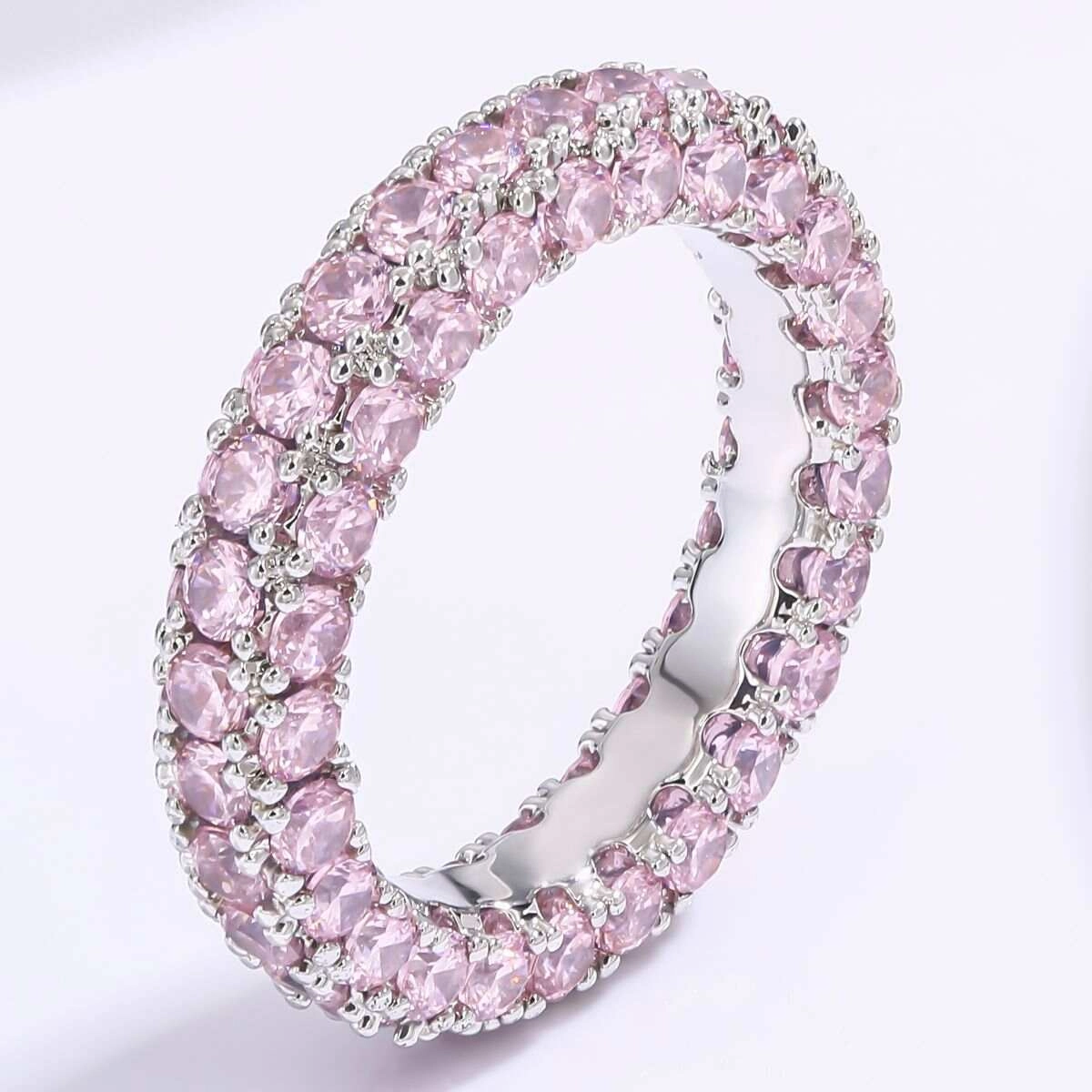
Pink Zircon Eternity Wedding Rings — Custom 925 Silver Jewelry Manufacturer
Building a Long-Term Supplier Relationship for Silver Bracelets
Eco-Certifications and Ethical Sourcing for Silver Jewelry Buyers
Product Categories
You may also like

925 Silver Jewelry
Customizable High-Quality Fashion 925 Sterling Silver AAA Cubic Zirconia Heart-Shaped Open Tennis Bracelet.
Read More

Brass Jewelry
Customizable OEM ODM High-Quality Fashion Brass AAA Cubic Zirconia Classic Tennis Bracelet for Women Wholesale.
Read More
Get a Quote for Private Label Jewelry
We provide personalized jewelry customization services for clients worldwide.
Rest assured that your privacy is important to us, and all information provided will be handled with the utmost confidentiality.
By clicking 'Send Inquiry Now' I agree to ZHEFAN JEWELRY processing my personal data.
To see how to withdraw your consent, how to control your personal data and how we process it, please see our Privacy Policy and Terms of use.
From design to production, ZHEFAN JEWELRY offers a one-stop solution to help you enhance your brand value and market competitiveness.
Get A Quote
Contact
Tel: (+86) 188 1927 7817
© 2026 Zhefan Jewelry. All Rights Reserved.
Facebook
Instagram
YouTube
Whatsapp: +8618819277817