





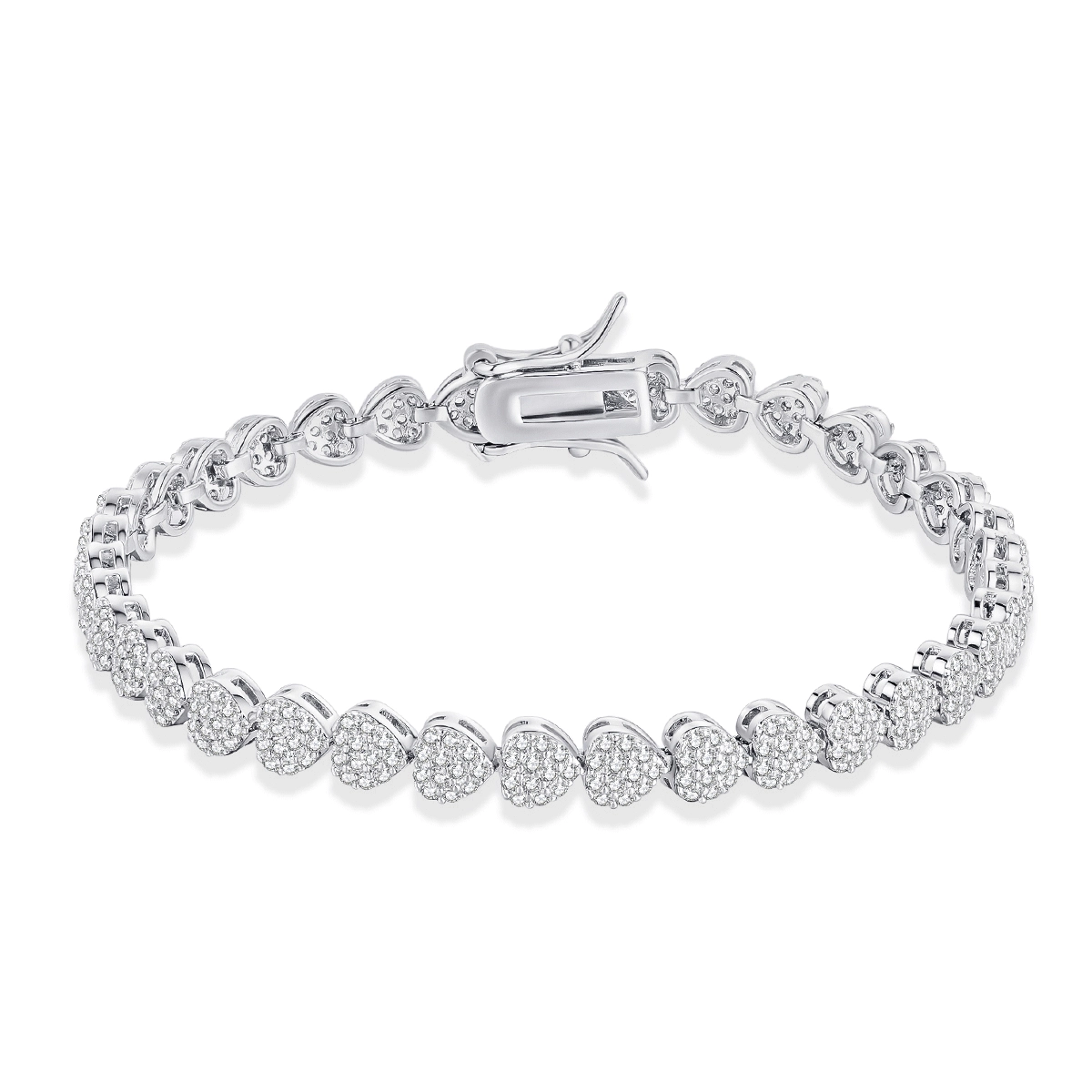


Email: sales3@zhefanjewelry.com
Private Label Checklist for 925 Silver Bracelet Retailers
A practical private-label checklist for retailers sourcing sterling silver bracelets, covering material verification, design ownership, sampling, gemstone and plating specifications, compliance, quality control, packaging, order economics, production capacity, logistics, and supplier evaluation. The guide also explains how Zhefan Jewelry supports OEM and ODM jewelry programs with 925 silver, brass, gold vermeil, and pearl jewelry manufacturing.
- How to Evaluate a Private-Label Sterling Silver Bracelet Program
- Define the commercial brief before requesting quotations
- Verify the metal, plating, and component specifications
- Confirm design ownership and private-label rights
- Product Quality and Compliance Controls for Bracelet Retailers
- Use a measurable quality specification
- Request evidence of chemical and market compliance
- Build a sampling and inspection sequence
- Commercial and Operational Due Diligence
- Analyze MOQ, landed cost, and reorder economics
- Assess lead time, capacity, and communication discipline
- Control packaging, labeling, and fulfillment details
- Why Zhefan Jewelry Fits Scalable Private-Label Programs
- Integrated manufacturing for sterling silver and fashion jewelry collections
- Design speed combined with controlled finishing
- Compliance, reputation, and buyer support
- Frequently Asked Questions
- What should a retailer verify before ordering private-label sterling silver bracelets?
- How can buyers confirm that a bracelet is made with 925 silver?
- What is the difference between sterling silver plating and gold vermeil?
- What quality tests are important for custom bracelet production?
- How should a retailer calculate the MOQ for a new bracelet collection?
- Can a custom jewelry supplier support both small launches and large replenishment orders?
Private-label retailers sourcing sterling silver bracelets must evaluate far more than appearance and unit price. A reliable program requires verified 925 silver content, documented plating specifications, controlled samples, durable construction, responsible material compliance, scalable production, accurate packaging, and transparent commercial terms. This checklist helps brand owners, distributors, and ecommerce operators assess a custom jewelry manufacturer before committing to a collection, reducing risks such as tarnishing, inconsistent dimensions, unclear intellectual property ownership, failed inspections, late delivery, and excessive inventory exposure.
How to Evaluate a Private-Label Sterling Silver Bracelet Program
Define the commercial brief before requesting quotations
A supplier quote is only meaningful when the product brief is precise. Retailers should define bracelet style, target customer, size range, closure type, surface finish, stone or pearl requirements, target retail price, expected order quantity, launch date, packaging format, and destination market. Relevant design categories may include chain bracelets, tennis-inspired styles, charm bracelets, cuff bracelets, beaded strands, adjustable cord designs, and minimalist stacking pieces.
The brief should separate mandatory requirements from optional upgrades. For example, a brand may require a sterling silver base, rhodium plating, logo engraving, recycled packaging, and a specific bracelet length, while treating gemstone selection or gift-box upgrades as negotiable. This structure allows the supplier to propose practical alternatives without weakening the product’s commercial positioning.
Verify the metal, plating, and component specifications
“925 silver” generally refers to an alloy containing 92.5% silver, with the balance typically consisting of other metals that improve hardness and production performance. Retailers should request written material specifications, supplier declarations, and, where appropriate, test reports rather than relying only on a product description. The Gemological Institute of America’s silver overview provides useful background on silver fineness and alloy terminology.
Every quotation should identify the base material for the bracelet body, clasp, jump rings, solder points, extender chain, and decorative components. A bracelet marketed as sterling silver may still contain plated brass or steel parts if the specification is not controlled. Buyers should also clarify whether the surface is natural silver, rhodium plated, gold plated, or finished as gold vermeil. Gold vermeil normally requires a sterling silver substrate and a defined gold layer, so the gold purity and minimum thickness should be documented.
Plating performance depends on layer thickness, surface preparation, wearing conditions, skin chemistry, perfume exposure, and abrasion. A responsible supplier should explain the proposed finish, provide a reference sample, and state whether testing covers adhesion, color consistency, and corrosion resistance. The product brief should also specify whether anti-tarnish treatment, protective coating, or individual sealed packaging is included.
Confirm design ownership and private-label rights
Retailers should distinguish between original commissioned designs, supplier-owned catalog styles, modified existing products, and fully customized molds. The contract should state who owns three-dimensional files, technical drawings, molds, logos, packaging artwork, and tooling after payment. It should also define whether the supplier may sell the same design to other customers.
For exclusive launches, design control should include a written approval process for prototypes, revisions, production samples, and color standards. A non-disclosure agreement can help protect unreleased concepts, but it should not replace clear clauses covering intellectual property, permitted use, tooling custody, and unauthorized reproduction.
Product Quality and Compliance Controls for Bracelet Retailers
Use a measurable quality specification
Visual approval alone is not sufficient for a repeatable jewelry program. A quality specification should define acceptable tolerances for bracelet length, link dimensions, clasp operation, stone setting, solder joints, engraving depth, polish quality, plating color, and surface defects. The document should distinguish critical defects, major defects, and minor cosmetic variations so that inspection decisions remain consistent.
Bracelets require particular attention to mechanical stress. Inspectors should check whether clasps close securely, jump rings are properly closed, chain links articulate smoothly, soldered connections resist separation, and extender chains can withstand normal handling. For stone or pearl designs, prongs, bezels, drilling, adhesive use, and alignment should be reviewed. A pre-production sample should be retained as the master reference for bulk inspection.
Request evidence of chemical and market compliance
Export requirements vary by destination and product composition. Retailers should identify the markets in which the bracelet will be sold and ask the supplier to map applicable requirements for restricted substances, nickel release, labeling, packaging, and consumer product safety. The European Commission’s REACH regulation information explains the EU framework for chemicals and restricted substances, while the European Commission product compliance portal illustrates why market-specific obligations should be reviewed before shipment.
RoHS and REACH documentation can support a compliance file, but retailers should confirm that reports apply to the actual materials, finishes, and components used in production. A test report from an unrelated item does not prove compliance for a new bracelet. Depending on the market and construction, buyers may request testing for lead, cadmium, nickel release, coating durability, and gemstone or pearl declarations.
Build a sampling and inspection sequence
A robust approval cycle normally includes a digital design review, first prototype, revised sample, pre-production sample, and bulk inspection. The retailer should approve measurements, weight, color, logo placement, clasp function, packaging, and barcode information before authorizing mass production. Any change to alloy, supplier, plating bath, stone source, or production site should trigger a review.
For larger programs, an independent inspection company can conduct a final random inspection using an agreed sampling plan. The ISO 2859-1 sampling standard is widely recognized as a reference for attribute-based acceptance sampling. It does not replace a product-specific quality specification, but it gives buyers and suppliers a common framework for determining inspection quantities and acceptance criteria.
| Procurement checkpoint | Basic supplier response | Stronger supplier evidence | Retailer decision signal |
|---|---|---|---|
| Silver composition | Verbal statement of 925 silver | Written specification and applicable material test documentation | Material identity is traceable |
| Plating finish | Color name only | Base metal, gold purity, coating specification, and reference sample | Appearance and durability can be reproduced |
| Quality inspection | Final visual check | Defined checkpoints, defect categories, and retained master sample | Quality decisions are measurable |
| Compliance | Generic certificate | Reports linked to the actual product and destination market | Documentation supports market entry |
| Production capacity | Unverified monthly claim | Factory profile, staffing, equipment, and realistic lead-time plan | Capacity matches launch and replenishment needs |
| Packaging | Standard pouch or box | Approved artwork, materials, barcode control, and packing specification | Retail presentation is consistent |
Commercial and Operational Due Diligence
Analyze MOQ, landed cost, and reorder economics
Minimum order quantity should be evaluated against expected sell-through, not treated as an isolated purchasing hurdle. A lower initial quantity may carry a higher unit price, while a larger order may reduce cost but increase markdown and cash-flow risk. The total landed-cost model should include product price, tooling, sampling, packaging, testing, freight, import duties, payment fees, inspection, and potential rework.
Retailers should request a tiered quotation for prototype quantities, initial production, and repeat orders. The supplier should clarify whether mold charges are refundable, whether packaging has a separate MOQ, how price changes are handled, and whether replenishment orders use the same tooling. A financially sound program also includes a forecast for best-selling sizes and a plan for slow-moving variants.
Assess lead time, capacity, and communication discipline
Lead time should be divided into design confirmation, tooling, sampling, material procurement, production, inspection, packaging, and shipping. “Fast delivery” has little value when the timeline excludes approval delays or testing. Buyers should ask for a production schedule with milestone dates and escalation procedures for material shortages, rejected samples, equipment downtime, or customs documentation issues.
Capacity should be assessed in relation to product complexity. A factory may produce high monthly volumes of simple chains but require more time for hand-set stones, intricate molds, multi-layer plating, or detailed engraving. Retailers should identify the actual manufacturing site, subcontracting policy, working-hour assumptions, and backup arrangements before making launch promises to their own customers.
Control packaging, labeling, and fulfillment details
Private-label success includes the unboxing experience and warehouse accuracy. The packaging specification should cover jewelry cards, pouches, boxes, care instructions, stickers, barcodes, carton markings, inner quantities, and master-carton dimensions. Retailers should confirm whether packaging materials meet sustainability or destination-market requirements and whether the supplier can pack by SKU, color, size, or sales channel.
Silver jewelry care guidance should be accurate and practical. Customers should be advised to limit exposure to chemicals, moisture, cosmetics, and abrasive surfaces, while avoiding unsupported claims such as “tarnish-proof” unless the claim has been substantiated under defined conditions. The U.S. Federal Trade Commission jewelry guides are a useful reference for truthful product descriptions and precious-metal marketing claims.
Why Zhefan Jewelry Fits Scalable Private-Label Programs
Integrated manufacturing for sterling silver and fashion jewelry collections
Zhefan Jewelry is a premier fashion jewelry manufacturer established in 2002, with a legacy dating back to 1997. Founded by a master mold craftsman, our manufacturing culture is built on long-term refinement of molds, surfaces, construction, and finishing. We specialize in high-quality 925 silver jewelry, brass jewelry, and gold vermeil jewelry, while also supporting pearl jewelry and broader Sterling Silver Jewelry collections.
Our two factories in Guangzhou and Meizhou cover 800 square meters and are supported by more than 80 skilled artisans and 20 sales professionals. Monthly output reaches approximately 600,000 pieces, giving brand owners a practical combination of production scale and program responsiveness. This structure supports both launch collections and replenishment orders when a specific bracelet style gains traction.
Design speed combined with controlled finishing
Our professional design team launches more than 500 original styles monthly, helping retailers build seasonal assortments across chain bracelets, charms, cuffs, pearl details, and gold-tone finishes. OEM and ODM development allows buyers to select an existing direction, modify a catalog concept, or develop a new private-label design around a target customer and price architecture.
Quality is integrated into our manufacturing process rather than treated as a final-stage formality. We apply six rounds of precision polishing and six strict quality inspections to help control surface smoothness, edge refinement, clasp performance, plating appearance, and overall presentation. These checkpoints are particularly valuable for online retailers, where customer reviews can quickly expose inconsistent finishing or weak hardware.
Compliance, reputation, and buyer support
We use RoHS- and REACH-compliant eco-friendly materials as part of our quality and export-support approach. Buyers should still confirm the exact testing package required for each destination, but our documentation-oriented process helps brands establish a stronger compliance file and reduce avoidable communication gaps.
Our OEM and ODM solutions have supported Amazon’s top three sellers and global retailers such as Macy’s. That experience informs a buyer-focused workflow covering design development, sample approval, manufacturing, inspection, packaging, and delivery coordination. The objective is not merely to supply a bracelet; it is to help a brand protect its positioning, improve repeatability, and scale a commercially viable jewelry assortment.
Retailers evaluating a long-term supplier can review our product capabilities at Zhefan Jewelry and compare the available options across 925 silver jewelry, brass jewelry, gold vermeil jewelry, pearl jewelry, and related fashion accessories. A structured inquiry should include target styles, estimated quantity, required markets, packaging expectations, and launch timing so the manufacturing team can provide a realistic development plan.
Frequently Asked Questions
What should a retailer verify before ordering private-label sterling silver bracelets?
Retailers should verify the silver composition, component materials, plating specification, dimensions, clasp performance, design ownership, testing documentation, inspection process, MOQ, lead time, packaging details, and market-specific labeling or chemical requirements.
How can buyers confirm that a bracelet is made with 925 silver?
Buyers should request a written material specification and applicable test documentation linked to the actual product. The specification should identify the bracelet body and smaller components because clasps, jump rings, extenders, and decorative parts may use different materials if the bill of materials is not controlled.
What is the difference between sterling silver plating and gold vermeil?
Sterling silver plating describes a surface finish applied over an underlying material, while gold vermeil generally refers to gold applied over a sterling silver substrate. Buyers should request the substrate, gold purity, coating thickness, and quality requirements in writing rather than relying only on color descriptions.
What quality tests are important for custom bracelet production?
Important checks include dimensional accuracy, clasp operation, link and solder strength, surface defects, plating adhesion and consistency, stone or pearl security, tarnish-related performance, and restricted-substance compliance where required by the destination market. A retained pre-production sample should guide bulk inspection.
How should a retailer calculate the MOQ for a new bracelet collection?
MOQ should be compared with forecasted sell-through, available cash flow, packaging requirements, launch quantity, and replenishment speed. A retailer should request tiered pricing and determine whether tooling, packaging, and testing have separate minimum quantities before approving the purchase order.
Can a custom jewelry supplier support both small launches and large replenishment orders?
Some suppliers can support both, but capacity must be verified against product complexity, staffing, equipment, material availability, and existing production commitments. Buyers should request a milestone-based schedule and clarify how repeat orders, urgent replenishment, and production changes will be handled.
Contact Zhefan Jewelry at sales3@zhefanjewelry.com to discuss a private-label bracelet collection, OEM or ODM development, and scalable 925 silver, brass, gold vermeil, or pearl jewelry production.
Tags
bulk cz brass pendants
bulk cz brass pendants
adjustable tennis bracelet bridal bulk
adjustable tennis bracelet bridal bulk
wholesale necklace
wholesale necklace
wholesale christmas jewelry
wholesale christmas jewelry
bulk cubic zirconia brass accessories
bulk cubic zirconia brass accessories
tennis bracelet cz
tennis bracelet cz
Recommended for you
Custom Pearl Shell Ring Manufacturer — 925 Sterling Silver & Brass Jewelry by Zhefan
Quality Control Checklist for 925 Silver Bracelet Suppliers
Custom Design Process with a brass jewelry manufacturer
Choosing Plating Thickness for Long-Lasting Gold Earrings
Product Categories
You may also like

925 Silver Bracelets
Sterling Silver Tennis Bracelet with Square White Cubic Zirconia Stones
Read More
Get a Quote for Private Label Jewelry
We provide personalized jewelry customization services for clients worldwide.
Rest assured that your privacy is important to us, and all information provided will be handled with the utmost confidentiality.
By clicking 'Send Inquiry Now' I agree to ZHEFAN JEWELRY processing my personal data.
To see how to withdraw your consent, how to control your personal data and how we process it, please see our Privacy Policy and Terms of use.
From design to production, ZHEFAN JEWELRY offers a one-stop solution to help you enhance your brand value and market competitiveness.
Get A Quote
Contact
Tel: (+86) 188 1927 7817
© 2026 Zhefan Jewelry. All Rights Reserved.
Facebook
Instagram
YouTube
Whatsapp: +8618819277817