







Email: sales3@zhefanjewelry.com
Private Label Jewelry Manufacturer Certifications: How to Verify Quality and Compliance
A reliable jewelry production partner should provide verifiable evidence of material safety, quality management, ethical sourcing, and product-specific compliance. Buyers can validate certificates by checking the issuing organization, certificate number, legal entity, facility address, scope, validity period, accreditation status, and consistency with independent laboratory reports. For brands sourcing brass jewelry, 925 silver jewelry, sterling silver jewelry, gold vermeil jewelry, or pearl jewelry, certification review should be combined with sample testing, factory audits, traceability checks, and documented quality-control procedures.
- How to Assess Certification Evidence from a Jewelry Production Partner
- Separate management-system certificates from product compliance documents
- Understand what REACH and RoHS evidence actually covers
- Check precious-metal claims against assay and market rules
- A Practical Verification Process for Certification, Testing, and Factory Claims
- Use a document-authentication checklist
- Match testing depth to the product and destination market
- Verify operational controls instead of relying on paperwork
- Commercial Due Diligence for a Custom Jewelry Manufacturer
- Translate compliance into landed-cost and launch planning
- Assess capacity, continuity, and intellectual-property safeguards
- Why Zhefan Jewelry Supports Compliance-Focused Brand Growth
- Integrated manufacturing experience and production capacity
- Material expertise across core fashion-jewelry categories
- Process discipline designed for repeatable quality
- Frequently Asked Questions
A reliable jewelry production partner should provide verifiable evidence of material safety, quality management, ethical sourcing, and product-specific compliance. Buyers can validate certificates by checking the issuing organization, certificate number, legal entity, facility address, scope, validity period, accreditation status, and consistency with independent laboratory reports. For brands sourcing brass jewelry, 925 silver jewelry, sterling silver jewelry, gold vermeil jewelry, or pearl jewelry, certification review should be combined with sample testing, factory audits, traceability checks, and documented quality-control procedures.
How to Assess Certification Evidence from a Jewelry Production Partner
Separate management-system certificates from product compliance documents
One of the most important procurement distinctions is the difference between a management-system certificate and a product-specific test report. An ISO 9001 certificate indicates that an organization operates a quality management system assessed against the ISO 9001 standard; it does not prove that every necklace, ring, earring, or bracelet is free from restricted substances. Buyers should confirm the certificate holder, manufacturing site, certification scope, issue date, expiry date, and certification body. The official ISO 9001 information explains the standard’s quality-management focus.
Product compliance evidence normally includes laboratory test reports, declarations of conformity, material specifications, plating information, and batch records. These documents should identify the tested item or representative material, the test methods, sample description, laboratory, report date, and pass or fail results. A generic document containing only a supplier logo is not equivalent to an independent report tied to a specific product family.
Understand what REACH and RoHS evidence actually covers
REACH compliance is relevant to chemical substances manufactured, imported, or placed on the European market. In jewelry, the review commonly focuses on restricted substances such as nickel release, lead, cadmium, certain phthalates, and substances of very high concern, depending on the article and market. The European Commission REACH overview is a useful starting point for understanding regulatory obligations. Buyers should avoid treating a REACH statement as a universal product certificate because compliance depends on the article, materials, destination market, and applicable restrictions.
RoHS is primarily associated with the restriction of hazardous substances in electrical and electronic equipment. It may become relevant to jewelry with electronic components, illuminated features, batteries, or charging functions, but it is not automatically the governing regulation for ordinary fashion jewelry. The European Commission RoHS guidance helps procurement teams determine whether the directive applies. A supplier claiming RoHS compliance for every product should be asked to explain the legal basis and product scope rather than providing a blanket marketing statement.
Check precious-metal claims against assay and market rules
For sterling silver jewelry, 925 silver jewelry, and gold vermeil jewelry, the declared metal composition and plating construction must be documented. A 925 claim generally refers to an alloy containing 92.5% silver, while vermeil typically involves a silver base with a defined gold layer and minimum thickness requirements that vary by market or retailer policy. Buyers should request alloy specifications, plating thickness targets, adhesion testing, and laboratory verification for high-value collections.
Hallmarks, assay marks, and fineness marks are not interchangeable with a supplier’s internal quality label. Their legal meaning depends on the jurisdiction where the product is sold. For example, the Birmingham Assay Office explanation of hallmarks describes how independent assay and marking support precious-metal identification in the United Kingdom. Importers should verify destination-country marking, labeling, customs, and consumer-protection requirements before approving packaging or engraving.
A Practical Verification Process for Certification, Testing, and Factory Claims
Use a document-authentication checklist
Document review should begin with the legal identity of the supplier. The GUANGZHOU ZHEFAN JEWELRY CO., LTD. on the certificate should match the contracting entity, commercial invoice, bank information, and factory registration wherever applicable. If a group owns multiple facilities, the certificate must clearly include the site producing the buyer’s goods. A certificate issued to a trading company does not automatically cover an unrelated manufacturing plant.
- Confirm the certificate number through the issuer’s online verification portal or by contacting the issuing body directly.
- Check whether the certification body is accredited for the relevant standard and activity.
- Review the precise scope, including product category, facility address, and covered processes.
- Check issue, surveillance, suspension, and expiry information.
- Compare the certificate name and address with the supplier’s quotation, purchase contract, and factory-audit records.
- Request the complete laboratory report rather than a cropped summary page.
- Confirm that test samples, material grades, plating systems, and product references match the purchase order.
Accreditation is especially important for laboratory reports. An accredited laboratory should identify its accreditation framework, tested methods, and limitations. Buyers can ask whether the laboratory operates under ISO/IEC 17025 and whether the specific test falls within its accredited scope. The ISO/IEC 17025 standard description explains the competence requirements relevant to testing and calibration laboratories.
Match testing depth to the product and destination market
Testing should reflect actual product risk. Brass earrings, plated pendants, and skin-contact bracelets may require nickel-release, lead, cadmium, and coating evaluations. Pearl jewelry may require construction checks, drilling and setting inspection, surface grading, and secure attachment testing rather than a metal-only report. Children’s products, products with magnets, and jewelry containing batteries may trigger additional safety requirements.
Testing frequency should also be risk-based. A report from two years ago may not represent a current alloy supplier, plating chemistry, adhesive, or production process. For a new collection, buyers should request pre-production material confirmation, first-article testing, and random shipment inspection. When a factory changes raw-material vendors or coating chemistry, the compliance file should be reviewed again.
Verify operational controls instead of relying on paperwork
Certificates become commercially meaningful when they correspond to repeatable controls. A capable facility should be able to explain incoming-material inspection, mold and tooling approval, plating-bath management, polishing standards, dimensional checks, appearance grading, final packing inspection, and nonconformance handling. The quality manual should connect these controls to batch numbers, operators, inspection records, and corrective actions.
During a virtual or physical audit, buyers should compare documented procedures with actual production. Ask to see rejected pieces, rework records, calibration labels, inspection stations, and sample-retention practices. A factory that cannot locate records for a recent shipment may have attractive certificates but weak execution discipline. The objective is not to collect the largest number of logos; it is to establish a traceable system capable of producing compliant goods consistently.
| Verification item | What reliable evidence includes | Procurement risk if missing |
|---|---|---|
| ISO 9001 or equivalent quality system | Valid certificate, named legal entity, covered site, defined scope, accredited certification body | Inconsistent processes and weak corrective-action control |
| Restricted-substance testing | Independent laboratory, product reference, test method, sample date, numerical results | Regulatory seizure, recalls, skin-contact complaints, or marketplace delisting |
| Precious-metal composition | Alloy specification, fineness verification, plating details, destination-market marking review | Mislabeling, customs delays, consumer claims, and margin erosion |
| Factory quality controls | Incoming, in-process, and final inspection records linked to production batches | High defect rates and limited accountability after delivery |
| Supply-chain and ethical claims | Supplier code, material traceability, audit evidence, and defined subcontractor controls | Reputational exposure and inability to satisfy retailer onboarding |
Commercial Due Diligence for a Custom Jewelry Manufacturer
Translate compliance into landed-cost and launch planning
Certification review affects more than legal risk. It influences sampling schedules, packaging approval, marketplace onboarding, insurance, customs clearance, and the cost of returns. A low unit price can become expensive if products require rework, fail destination-market testing, or arrive with inconsistent color and plating. Procurement teams should include testing, inspection, documentation, reserve samples, and possible corrective-action time in the total-cost model.
Project owners should also define acceptance criteria before production begins. A technical pack can specify metal grade, dimensions, allowable weight tolerance, plating color, minimum coating thickness, stone or pearl appearance, logo position, clasp function, and packaging requirements. Photographs alone are insufficient for controlling reflective surfaces and color-sensitive finishes. Golden samples, signed specifications, and defect-classification standards create a more objective approval process.
Assess capacity, continuity, and intellectual-property safeguards
Compliance is only one part of supplier qualification. A scalable operator should demonstrate stable production capacity, backup equipment, trained personnel, raw-material continuity, and realistic lead times. Buyers should ask whether polishing, casting, plating, stone setting, assembly, and packing are performed in-house or subcontracted. Subcontracting is not automatically unacceptable, but it must be disclosed and controlled.
For private-label collections, design confidentiality and ownership should be addressed in writing. Contracts should define ownership of CAD files, molds, logos, custom patterns, packaging artwork, and approved samples. Access controls, approved-subcontractor lists, and destruction or return procedures reduce the risk of unauthorized duplication. These measures protect brand equity while supporting faster seasonal launches.
Why Zhefan Jewelry Supports Compliance-Focused Brand Growth
Integrated manufacturing experience and production capacity
Zhefan Jewelry is a fashion jewelry manufacturer established in 2002, with a manufacturing legacy dating back to 1997. Founded by a master mold craftsman, our production philosophy is built around disciplined refinement of tooling, finishing, and assembly. Our two factories in Guangzhou and Meizhou cover 800 square meters, supported by more than 80 skilled artisans and 20 sales professionals. Monthly output can reach 600,000 pieces, providing a practical foundation for both emerging labels and established retail programs.
Our professional design team launches more than 500 original styles each month. This design pipeline helps brand owners respond to seasonal demand while reducing the operational burden of developing every concept internally. Through OEM and ODM services, our team can support concept development, sampling, technical communication, production, quality inspection, and delivery coordination within a structured commercial process.
Material expertise across core fashion-jewelry categories
Our product capabilities include brass jewelry, sterling silver jewelry, 925 silver jewelry, gold vermeil jewelry, and pearl jewelry. Material selection can be aligned with target price, visual positioning, wear expectations, and destination-market requirements. For brass collections, finish consistency and plating control are central to perceived value. For silver and vermeil lines, alloy documentation, surface preparation, coating performance, and careful handling are essential to protect the brand promise.
We use RoHS- and REACH-compliant eco-friendly materials within our stated manufacturing approach, while buyers should still request product-specific documentation for each collection and destination market. Our team can organize the relevant technical information around approved materials, finishes, product references, and inspection requirements so that compliance review is connected to the actual purchase order rather than treated as a separate administrative task.
Process discipline designed for repeatable quality
Unlike a basic trading operation, our manufacturing process includes six rounds of precision polishing and six strict quality inspections. These controls are intended to address surface smoothness, edge quality, plating appearance, assembly security, dimensional consistency, and final presentation. For brand owners, the value lies in reducing avoidable variation across repeat orders and creating a clearer path for corrective action when a defect is identified.
Zhefan Jewelry has supplied major commercial accounts, including Amazon’s top three sellers and global retailers such as Macy’s. This background reflects experience with higher expectations for consistency, documentation, delivery, and service responsiveness. Our team combines manufacturing scale with agile communication, helping distributors, retailers, and investment-backed brands evaluate new collections against commercial deadlines and quality requirements.
The most effective supplier relationship is built on evidence: validated documents, representative samples, defined specifications, transparent production controls, and responsive corrective action. Zhefan Jewelry’s combination of skilled craftsmanship, high-volume capability, original design development, and OEM/ODM support gives buyers a platform for building compliant and commercially competitive collections.
Contact Zhefan Jewelry at sales3@zhefanjewelry.com or visit the official Zhefan Jewelry website to discuss certified material documentation, custom development, and production requirements.
Frequently Asked Questions
What certifications should a jewelry production partner provide?
A reliable supplier should provide applicable management-system certificates, product-specific laboratory test reports, material specifications, plating information, declarations where required, and factory quality-control records. The correct documents depend on the product, materials, and destination market.
How can buyers verify whether an ISO 9001 certificate is genuine?
Buyers should confirm the certificate number with the issuing organization, check the certification body’s accreditation status, and review the legal entity, facility address, scope, issue date, expiry date, and suspension information. The certificate should cover the site producing the buyer’s goods.
Does a REACH statement prove that all jewelry is compliant?
No. REACH relevance depends on the article, substances, destination market, and applicable restrictions. Buyers should request product-specific laboratory evidence or a documented compliance assessment covering the actual alloy, plating, components, and product reference.
Is RoHS required for ordinary fashion jewelry?
RoHS primarily applies to electrical and electronic equipment. It may become relevant to jewelry containing electronic components, batteries, lighting, or charging functions, but it is not automatically the governing regulation for ordinary non-electronic fashion jewelry.
What should a laboratory test report contain?
A credible report should identify the laboratory, test methods, accreditation details where applicable, sample description, product or material reference, sample date, report date, and numerical results or clear pass or fail conclusions. The tested sample should correspond to the proposed production materials and design.
How should 925 silver and gold vermeil claims be checked?
Buyers should request alloy specifications, fineness verification, plating thickness targets, coating or adhesion tests, and destination-market marking guidance. A supplier’s internal label alone is not a substitute for independent composition evidence or legally required assay and hallmark procedures.
How often should jewelry compliance testing be updated?
Testing should be renewed according to product risk, market requirements, and process changes. New collections, new raw-material suppliers, changes in alloy or plating chemistry, and significant production changes should trigger a compliance review and potentially new laboratory testing.
Tags
heart chain necklace
heart chain necklace
custom plated brass earrings wholesale
custom plated brass earrings wholesale
private label brass tennis bracelet
private label brass tennis bracelet
butterfly hoop earrings
butterfly hoop earrings
statement brass chunky hoop earrings
statement brass chunky hoop earrings
wholesale silver bracelet manufacturer
wholesale silver bracelet manufacturer
Recommended for you
Supplier vetting checklist for brass earring procurement
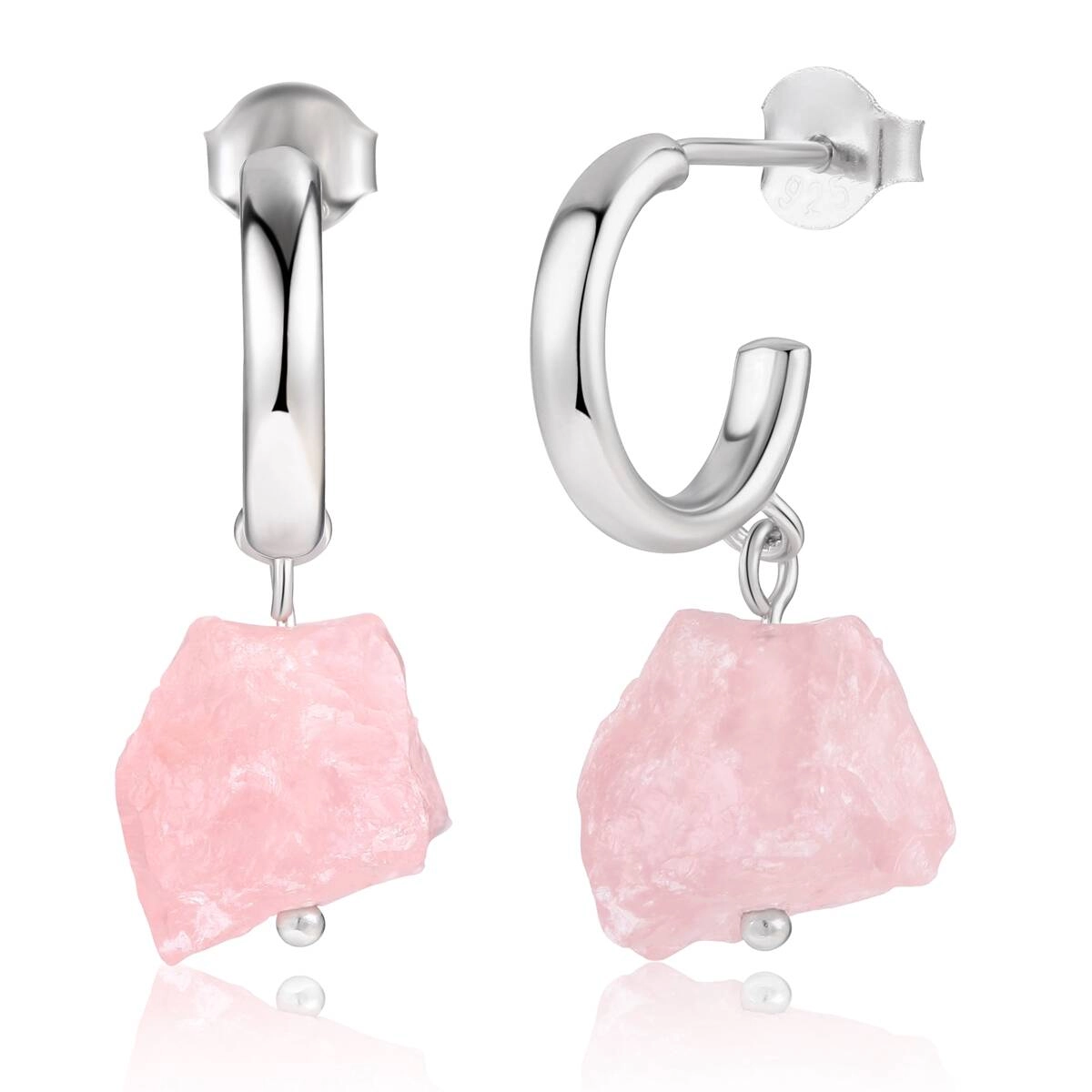
Wholesale Rose Quartz Earrings — High-Quality Fashion Jewelry Manufacturer
Brass earring pricing: cost breakdown for buyers
Lab Testing and Authenticity for Mother of Pearl
Product Categories
You may also like

925 Silver Jewelry
Customizable High-Quality Fashion 925 Sterling Silver AAA Cubic Zirconia Heart-Shaped Open Tennis Bracelet.
Read More

Brass Jewelry
Customizable OEM ODM High-Quality Fashion Brass AAA Cubic Zirconia Classic Tennis Bracelet for Women Wholesale.
Read More
Get a Quote for Private Label Jewelry
We provide personalized jewelry customization services for clients worldwide.
Rest assured that your privacy is important to us, and all information provided will be handled with the utmost confidentiality.
By clicking 'Send Inquiry Now' I agree to ZHEFAN JEWELRY processing my personal data.
To see how to withdraw your consent, how to control your personal data and how we process it, please see our Privacy Policy and Terms of use.
From design to production, ZHEFAN JEWELRY offers a one-stop solution to help you enhance your brand value and market competitiveness.
Get A Quote
Contact
Tel: (+86) 188 1927 7817
© 2026 Zhefan Jewelry. All Rights Reserved.
Facebook
Instagram
YouTube
Whatsapp: +8618819277817