







Email: sales3@zhefanjewelry.com
What Is a Private Label Jewelry Manufacturer and How Does the Process Work?
A private label jewelry manufacturer produces jewelry that is sold under a retailer’s or brand owner’s name, often combining product development, material sourcing, mold making, sampling, production, finishing, quality inspection, packaging, and logistics. This model enables fashion brands, online sellers, distributors, and retailers to launch differentiated collections without investing in their own factory. The most reliable sourcing approach evaluates technical capability, material compliance, minimum order quantities, sample accuracy, production capacity, inspection procedures, intellectual property protection, and delivery performance before placing a purchase order.
- How Branded Jewelry Production Differs from Wholesale Sourcing
- Definition and commercial role
- Capabilities buyers should verify
- The End-to-End Workflow for Developing a Branded Collection
- From concept brief to approved sample
- Tooling, pilot production, and scale-up
- Inspection, packaging, and replenishment
- How to Select a Reliable Manufacturing Partner
- Commercial and operational due diligence
- Quality, compliance, and intellectual property protection
- Cost, margin, and total landed value
- Zhefan Jewelry’s OEM and ODM Advantage
- Integrated production for fashion jewelry programs
- Material range and finishing discipline
- Support for growth-oriented brands
- Frequently Asked Questions
A private label jewelry manufacturer creates finished or semi-finished jewelry for another company to sell under its own brand identity. The service may include design adaptation, custom molds, material selection, gemstone or pearl sourcing, plating, logo application, packaging, quality control, and export coordination. Unlike a simple wholesaler, a private-label production partner participates in converting a commercial concept into a repeatable product line. This makes the model relevant to fashion labels, e-commerce operators, department-store suppliers, influencers launching collections, distributors, and established retailers seeking controlled product differentiation.
For buyers, the central issue is not simply whether a factory can make attractive pieces. The project must also satisfy target-market regulations, margin requirements, delivery windows, brand guidelines, durability expectations, and replenishment plans. A sound supplier evaluation therefore considers engineering documentation, sample-to-production consistency, material traceability, inspection records, communication speed, and the manufacturer’s ability to scale when a product performs well.
How Branded Jewelry Production Differs from Wholesale Sourcing
Definition and commercial role
Wholesale sourcing generally involves selecting existing products from a catalog and purchasing them for resale. A private-label production arrangement goes further: the buyer controls the brand presentation and may influence the silhouette, dimensions, finish, material, packaging, and customer positioning. The supplier can manufacture an existing design under a new label, modify a reference sample, or develop a new product from sketches, CAD files, mood boards, or verbal specifications.
This distinction affects commercial risk. Catalog goods can reach the market quickly, but competing sellers may offer similar items. Custom development usually requires more coordination and a longer approval cycle, yet it can create stronger visual ownership, better pricing architecture, and a collection that matches a defined audience. Buyers should clarify whether the supplier is offering original development, permitted adaptation, or straightforward reproduction because intellectual property rights and exclusivity terms differ in each case.
Capabilities buyers should verify
A capable production partner should demonstrate competence across several linked operations. These include 2D and 3D design interpretation, wax or metal mold development, die casting or stamping where appropriate, soldering, stone or pearl setting, surface preparation, electroplating, polishing, assembly, laser marking, packaging, and final inspection. The factory should also explain which processes are performed internally and which are subcontracted.
Documentation is equally important. Buyers should request material specifications, plating descriptions, color standards, sample approval records, inspection criteria, and production lead-time assumptions. For products sold internationally, a compliance plan should address restricted substances and market-specific labeling. ISO 9001 describes requirements for a quality management system, but certification alone does not guarantee that every product will meet a buyer’s expectations; process evidence and product-level controls still need review.
The End-to-End Workflow for Developing a Branded Collection
From concept brief to approved sample
The process normally begins with a commercial brief. It should define the target consumer, reference styles, intended retail price, material preference, dimensions, finish, color, packaging, expected order volume, launch date, and destination markets. A vague brief increases revision cycles because terms such as “minimal,” “luxury,” or “heavy plating” can mean different things to different teams.
After reviewing the brief, the supplier assesses feasibility and prepares sketches, CAD renderings, technical drawings, or a selection of existing base models. A prototype or sample is then produced. At this stage, buyers should check weight, proportions, clasp performance, sharp edges, stone security, surface smoothness, logo placement, plating tone, and comfort. Any change should be recorded in an approval document with dimensions, approved color references, material details, and acceptable tolerances.
Tooling, pilot production, and scale-up
When a design requires a new mold, tooling is developed after the geometry and commercial terms are approved. Tooling ownership, storage, modification rights, and reuse restrictions should be written into the purchase agreement. A pilot run can reveal problems that are not visible in a single sample, including shrinkage, uneven plating, weak solder joints, inconsistent polishing, or variation between cavities in a mold.
Once the pilot output passes inspection, the manufacturer schedules bulk production. Effective production planning reserves capacity for raw-material procurement, casting or forming, assembly, finishing, inspection, rework, packaging, and shipment. Buyers should distinguish sample lead time from bulk lead time and confirm whether the quoted schedule begins after deposit, after material approval, or after final sample sign-off. This prevents unrealistic launch planning.
| Material or process | Relevant specification | Buyer verification point |
|---|---|---|
| 925 sterling silver | Commonly defined as 92.5% silver by mass, with the balance made up of other alloying elements | Request material documentation and, where required, third-party testing for composition |
| Gold vermeil | Gold applied over a sterling silver base; the U.S. FTC Jewelry Guides identify a minimum gold thickness of 2.5 microns for the term vermeil | Confirm base metal, gold purity, coating thickness, and test method |
| Brass | A copper-zinc alloy whose exact composition can vary by grade and application | Specify alloy grade, plating system, tarnish expectations, and restricted-substance requirements |
| Surface finishing | May include polishing, brushing, plating, e-coating, oxidation, or protective lacquer | Approve a physical color standard and define acceptable marks, pits, and shade variation |
The material descriptions above should be treated as purchasing specifications rather than marketing assumptions. The U.S. Federal Trade Commission Jewelry Guides provide terminology guidance for jewelry marketing, while the European Union REACH Regulation addresses the registration, evaluation, authorization, and restriction of chemicals. For electronics-related restricted substances and certain product supply chains, the European Commission RoHS framework is also a relevant compliance reference. The applicable obligations depend on the product, destination, claims, and importer responsibilities.
Inspection, packaging, and replenishment
Quality control should be divided into incoming-material inspection, in-process checks, and final inspection. Typical checkpoints include dimensions, weight, plating appearance, clasp function, solder integrity, stone security, logo accuracy, pair matching, packaging count, and carton labeling. A documented sampling plan is more reliable than an informal visual review. Buyers should agree on acceptable quality limits, defect classifications, inspection timing, and the corrective-action process before production begins.
Packaging is part of the product experience and the logistics system. Jewelry boxes, pouches, cards, barcodes, care instructions, and shipping cartons must fit the brand’s positioning while protecting surfaces from scratching and moisture. For replenishment, the supplier should retain approved samples, technical files, color references, and tooling records. This creates a controlled baseline for repeat orders and reduces the risk that a successful product changes subtly after the first launch.
How to Select a Reliable Manufacturing Partner
Commercial and operational due diligence
Supplier selection should begin with a structured request for quotation rather than a price-only comparison. The RFQ should ask for unit pricing by quantity tier, sample charges, tooling costs, minimum order quantities, material options, plating specifications, packaging costs, payment terms, production lead time, shipping terms, and replacement policy. Buyers should also ask for photographs or videos of relevant production stages and examples of comparable products.
Capacity matters when a product becomes a bestseller. A supplier that can make 2,000 pieces may not be able to support 50,000 pieces without affecting lead time or quality. Conversely, very large capacity does not automatically mean strong attention to small launches. The correct partner should match the project’s order profile and provide a credible scale-up plan, including raw-material availability, labor allocation, equipment capacity, inspection resources, and communication ownership.
Quality, compliance, and intellectual property protection
Buyers should confirm how designs are protected, who owns custom molds, whether files are stored securely, and whether the supplier sells substantially similar designs to competing customers. A non-disclosure agreement can support confidentiality, but commercial contracts should also address ownership, permitted use, exclusivity, tooling, samples, and remedies for unauthorized production.
Compliance should be assessed according to the selling market. Claims such as hypoallergenic, nickel-free, recycled, waterproof, solid gold, or vermeil require substantiation and carefully controlled specifications. A responsible manufacturer will explain the limits of its test reports and will not treat a generic certificate as proof that every batch meets every destination-market requirement.
Cost, margin, and total landed value
The lowest factory quotation is not necessarily the lowest total cost. Buyers should model tooling, sampling, inspection, packaging, freight, duties, payment fees, defect replacement, rework, and inventory carrying costs. A small difference in plating durability or clasp performance can create returns and customer-service expense that exceeds the original unit-price saving.
A practical purchasing model compares landed cost with expected retail price, sell-through, return rate, reorder speed, and contribution margin. It also accounts for minimum order quantities. A lower MOQ may support market testing, while a higher MOQ may reduce unit cost but increase inventory exposure. The best structure depends on demand confidence, product lifecycle, and the supplier’s ability to replenish quickly.
Zhefan Jewelry’s OEM and ODM Advantage
Integrated production for fashion jewelry programs
Zhefan Jewelry is a fashion jewelry manufacturer established in 2002, with a company legacy dating back to 1997. Founded by a master mold craftsman, our manufacturing culture is built around long-term refinement in tooling, finishing, and production control. We operate two factories in Guangzhou and Meizhou covering 800 square meters, supported by more than 80 skilled artisans and 20 sales professionals.
Our monthly output reaches approximately 600,000 pieces, giving project owners a practical combination of scale and responsiveness. Our professional design team launches more than 500 original styles each month, helping brand owners review current shapes, motifs, and commercial directions without relying exclusively on generic catalog products. Our OEM and ODM services can support an existing design, a modified reference, or a new collection developed from a brand brief.
Material range and finishing discipline
Our product capabilities include Brass Jewelry, 925 silver jewelry, Sterling Silver Jewelry, gold vermeil jewelry, and pearl jewelry. Each material requires different control points. Brass programs may require careful alloy, plating, and protective-coating decisions. Sterling silver programs require attention to fineness, oxidation, polishing, and tarnish protection. Gold vermeil collections require control of the silver substrate, gold purity, coating thickness, and surface preparation. Pearl designs require secure setting, matching, drilling, and protective handling.
Our process includes six rounds of precision polishing and six strict quality inspections. These controls are designed to improve surface consistency, reduce visible defects, and verify product quality before shipment. We also use RoHS- and REACH-compliant eco-friendly materials where applicable to the product and destination requirements. Buyers should still confirm the exact compliance documentation needed for each order, but a defined internal control system provides a stronger foundation for reliable delivery.
Support for growth-oriented brands
Our team has supplied leading Amazon sellers and global retailers such as Macy’s, providing experience with demanding product, packaging, communication, and replenishment expectations. The objective is not simply to ship an order; it is to help a brand maintain a consistent product identity as volumes increase. Dedicated sales support, design development, production coordination, inspection, and delivery planning are organized around that commercial objective.
For buyers evaluating a long-term supplier, Zhefan Jewelry combines manufacturing scale, product development speed, material breadth, and process discipline. A project discussion can define the required metal, finish, target quantity, packaging format, testing needs, launch date, and desired level of design support before quotation and sampling begin.
Frequently Asked Questions
What does a private-label jewelry manufacturer do?
A private-label jewelry manufacturer creates jewelry for another company to sell under its own brand identity. Services may include design adaptation, custom molds, material sourcing, plating, logo application, packaging, quality control, and export coordination.
What is the difference between private-label and wholesale jewelry?
Wholesale sourcing usually involves selecting existing catalog products for resale, while private-label production allows the buyer to influence the design, materials, finish, packaging, and brand presentation. Private-label development can create stronger differentiation but normally requires more coordination.
What should buyers include in a jewelry manufacturing brief?
A useful brief defines the target consumer, reference styles, retail-price goal, material, dimensions, finish, color, packaging, expected order volume, destination markets, and launch date. Clear specifications reduce revisions and improve quotation accuracy.
How can buyers verify jewelry quality before bulk production?
Buyers should approve a detailed sample, record dimensions and color standards, review material documentation, and establish incoming, in-process, and final inspection criteria. A pilot run can identify problems such as uneven plating, weak solder joints, inconsistent polishing, or mold variation.
What compliance issues apply to branded jewelry?
Requirements depend on the product and destination market. Buyers may need to verify material composition, restricted substances, plating claims, labeling, and marketing terminology. REACH, RoHS, and the U.S. FTC Jewelry Guides are important references for applicable projects, but the importer should confirm the exact legal obligations.
How should buyers compare jewelry factory quotations?
A meaningful comparison includes unit price, quantity tiers, sample and tooling costs, minimum order quantity, material and plating specifications, packaging, inspection, freight, duties, payment terms, lead time, defect replacement, and replenishment capability. Total landed cost is more useful than factory price alone.
What materials can Zhefan Jewelry manufacture?
Zhefan Jewelry manufactures Brass Jewelry, 925 silver jewelry, Sterling Silver Jewelry, gold vermeil jewelry, and pearl jewelry, with OEM and ODM support for custom and branded collections.
Tags
sterling silver christmas earrings wholesale
sterling silver christmas earrings wholesale
custom logo 925 silver adjustable ring
custom logo 925 silver adjustable ring
mother of pearl heart pendant 18k gold
mother of pearl heart pendant 18k gold
order custom brass earrings online
order custom brass earrings online
wholesale 925 silver adjustable rings
wholesale 925 silver adjustable rings
minimalist brass jewelry supplier
minimalist brass jewelry supplier
Recommended for you
How to Find Reliable brass jewelry wholesalers for Bulk Orders
Trend Forecast: 925 Sterling Silver Bracelet Styles Buyers Need
Wholesale 925 silver jewelry sets manufacturer and supplier
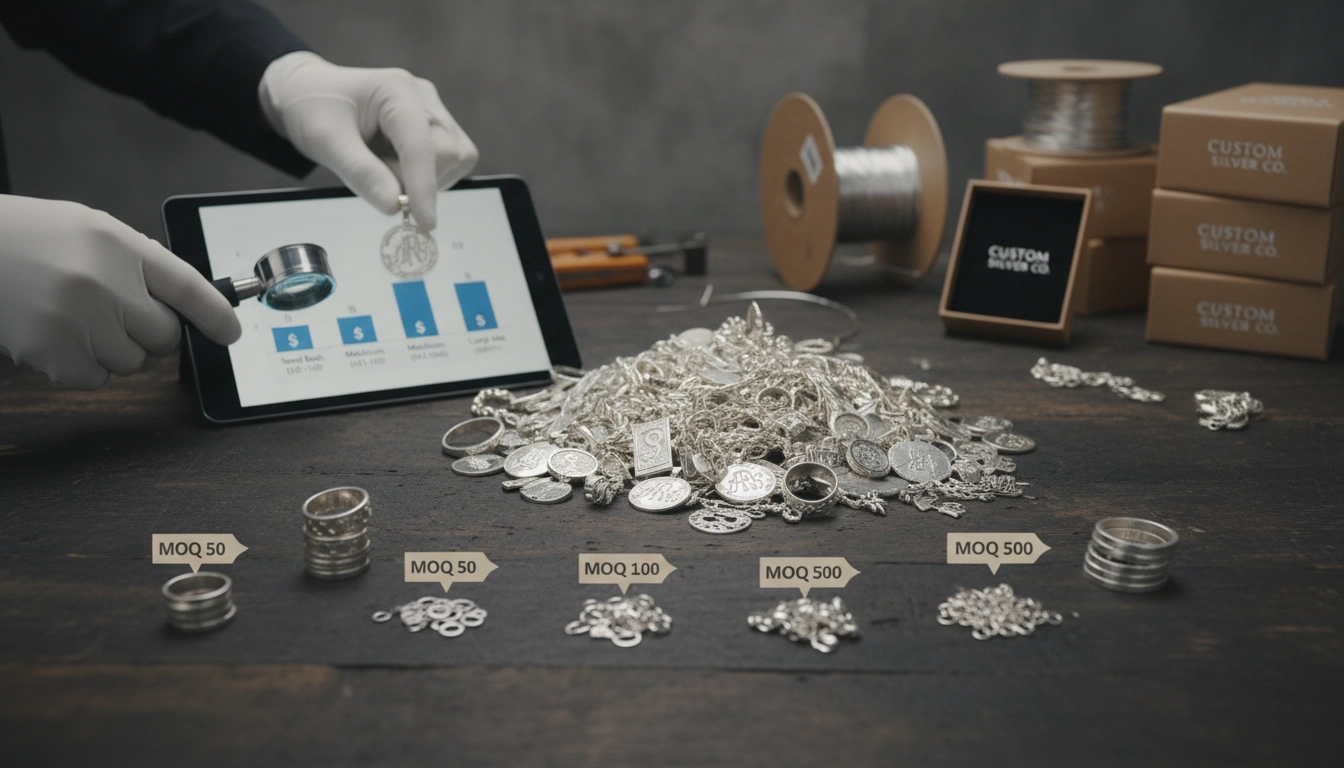
The Ultimate 2026 Guide to Personalized Silver Jewelry Bulk Orders: Scale Your Brand Like a Pro
Product Categories
You may also like

925 Silver Jewelry
Customizable High-Quality Fashion 925 Sterling Silver AAA Cubic Zirconia Heart-Shaped Open Tennis Bracelet.
Read More

Brass Jewelry
Customizable OEM ODM High-Quality Fashion Brass AAA Cubic Zirconia Classic Tennis Bracelet for Women Wholesale.
Read More
Get a Quote for Private Label Jewelry
We provide personalized jewelry customization services for clients worldwide.
Rest assured that your privacy is important to us, and all information provided will be handled with the utmost confidentiality.
By clicking 'Send Inquiry Now' I agree to ZHEFAN JEWELRY processing my personal data.
To see how to withdraw your consent, how to control your personal data and how we process it, please see our Privacy Policy and Terms of use.
From design to production, ZHEFAN JEWELRY offers a one-stop solution to help you enhance your brand value and market competitiveness.
Get A Quote
Contact
Tel: (+86) 188 1927 7817
© 2026 Zhefan Jewelry. All Rights Reserved.
Facebook
Instagram
YouTube
Whatsapp: +8618819277817