







Email: service@holycome.com
Private Label Jewelry Manufacturer Selection Guide: From Supplier Research to Final Partnership
Selecting the right private label jewelry manufacturer requires more than comparing unit prices. Buyers should evaluate material authenticity, design ownership, sampling accuracy, production capacity, compliance documentation, quality systems, packaging, lead times, communication, intellectual-property protection, and total landed cost. This guide explains how brand owners, retailers, distributors, and e-commerce operators can research suppliers, audit manufacturing capability, compare proposals, validate samples, negotiate commercial terms, and build a scalable partnership. It also outlines how HOLYCOME supports international brands with OEM and ODM production for brass jewelry, 925 silver jewelry, sterling silver jewelry, gold vermeil jewelry, and pearl jewelry.
- How to Build a Qualified Jewelry Supplier Shortlist
- Define the commercial and technical brief first
- Verify the supplier’s actual manufacturing role
- Use compliance as a qualification gate
- How to Compare Quotations, Samples, and Production Risk
- Compare total landed cost rather than unit price
- Make sample approval a controlled engineering process
- Assess quality assurance at multiple checkpoints
- From Supplier Verification to a Scalable Partnership
- Protect design ownership and commercial continuity
- Evaluate communication and project management
- Use a phased commitment model
- Why HOLYCOME Fits Growth-Oriented Brand Programs
- Established craftsmanship with production scale
- Material expertise across core fashion jewelry categories
- Documented finishing and customer-focused quality control
- Frequently Asked Questions
- What is the difference between OEM, ODM, and private-label jewelry production?
- What documents should buyers request before placing an order?
- How can a buyer verify whether a jewelry supplier can handle volume?
- What should be included in a jewelry manufacturing agreement?
- How do buyers reduce quality problems in custom jewelry?
Selecting a private label jewelry manufacturer is a strategic sourcing decision that affects product quality, gross margin, launch speed, customer reviews, and long-term brand equity. The strongest supplier is not necessarily the factory offering the lowest quotation; it is the manufacturing partner that can consistently convert a design brief into compliant, commercially viable jewelry while protecting intellectual property and supporting future volume growth. Buyers should assess material standards, production controls, sampling discipline, capacity, communication, packaging, export readiness, and total cost before signing a long-term agreement.
How to Build a Qualified Jewelry Supplier Shortlist
Define the commercial and technical brief first
Supplier research becomes more accurate when the project owner documents the product scope before contacting factories. The brief should identify jewelry categories, target customer, expected retail price, launch quantity, reorder forecast, preferred metals, plating requirements, stone specifications, dimensions, packaging, destination markets, and required delivery window. A vague request such as “quote fashionable wholesale jewelry” makes it difficult to compare proposals because every supplier will assume different materials, tolerances, finishing methods, and packaging standards.
For a brass collection, the brief may need to specify alloy preference, base-metal thickness, plating color, anti-tarnish treatment, nickel-release expectations, and whether components must be soldered or assembled mechanically. For 925 silver or sterling silver jewelry, the buyer should state fineness requirements, hallmarking expectations, stone setting method, polishing standard, and acceptable weight tolerance. Gold vermeil projects require clear definitions for silver base metal, gold karat, plating thickness, surface preparation, and wear expectations. Pearl jewelry requires additional information about pearl type, grade, drilling, matching, and setting security.
Verify the supplier’s actual manufacturing role
Many trading companies present factory-style websites, while some factories outsource critical operations such as casting, electroplating, stone setting, or final inspection. Outsourcing is not automatically unacceptable, but buyers must know which processes are controlled internally and which are subcontracted. A qualified supplier should provide a clear production-flow explanation, facility photographs or video evidence, business registration details, product-development examples, and realistic information about minimum order quantities.
Manufacturing history should be evaluated alongside current capability. A long operating history can indicate process maturity, but it does not guarantee modern compliance, stable staffing, or suitable equipment. Conversely, a newer facility may have strong technology but limited experience with export documentation and complex quality requirements. The most useful assessment connects past project types with the buyer’s actual needs: fashion cycles, repeatability, customization, packaging, and international shipment performance.
Use compliance as a qualification gate
Compliance documentation should be reviewed before commercial negotiations become advanced. Buyers should ask for relevant material declarations, test reports, restricted-substance information, and market-specific documentation rather than accepting general statements such as “eco-friendly” or “export quality.” The ISO 9001 quality management standard explains the importance of systematic processes, documented controls, and continual improvement, although certification should be verified and interpreted in relation to the actual production site.
For products sold in Europe, buyers should understand obligations associated with REACH, including restrictions affecting chemicals and articles placed on the market. Electrical or smart jewelry may involve additional requirements beyond conventional fashion accessories. The EU RoHS Directive is relevant to restricted substances in electrical and electronic equipment, but it should not be treated as a universal substitute for product-specific legal review. Testing needs depend on the destination market, product construction, claims, and sales channel.
How to Compare Quotations, Samples, and Production Risk
Compare total landed cost rather than unit price
A quotation should be decomposed into metal or base material, stones or pearls, plating, labor, tooling, sampling, packaging, inspection, freight assumptions, taxes, and payment terms. A low unit price can become expensive when sampling is slow, defect rates are high, packaging is incomplete, or rework delays a seasonal launch. Buyers should also clarify whether the price includes a branded stamp, custom mold, logo tag, jewelry pouch, gift box, barcode label, and export carton.
| Evaluation area | Weak comparison method | More reliable buyer method | Commercial impact |
|---|---|---|---|
| Price | Compare one unit figure | Review full landed-cost components | Improves margin forecasting |
| Quality | Inspect one attractive sample | Define measurable acceptance criteria | Reduces returns and rework |
| Capacity | Accept stated monthly output | Validate equipment, staffing, and peak-season allocation | Protects launch and replenishment plans |
| Compliance | Rely on verbal assurances | Review current reports and declarations | Reduces regulatory and platform risk |
| Lead time | Use an informal estimate | Separate development, production, inspection, and transit time | Improves inventory planning |
Make sample approval a controlled engineering process
A prototype is not merely a visual preview; it is a test of the supplier’s ability to interpret specifications. The buyer should review dimensions, weight, symmetry, clasp performance, soldering, stone security, surface smoothness, plating color, logo placement, and packaging fit. Approval comments should be written, dated, and linked to a controlled sample version. If the design changes after approval, the revised drawing, three-dimensional file, or marked photograph should become the new reference standard.
For complex pieces, buyers should request a pre-production sample made with the intended materials and finishing route. A sample made from a cheaper substitute can conceal problems involving shrinkage, color, weight, adhesion, or assembly. A reliable manufacturing partner should explain what can be held to a fixed tolerance and what requires a commercially reasonable variation because of handcrafted or natural materials.
Assess quality assurance at multiple checkpoints
Quality should not depend only on final inspection. Effective control begins with incoming-material verification, continues through mold or die review, casting or stamping, deburring, polishing, plating, assembly, and packaging. Buyers should ask how defects are categorized, how inspection results are recorded, and how corrective actions are closed. Useful acceptance criteria may include allowable scratches, plating shade tolerance, stone alignment, clasp function, missing components, dimensional variation, and carton labeling.
Independent inspection can provide additional confidence for high-value launches, but third-party inspection cannot compensate for weak process control. The buyer should establish whether inspection is performed under an agreed sampling plan and whether failed lots are reworked, replaced, or credited. For general information on sampling concepts, the ISO 2859-1 sampling standard is a recognized reference, although the final inspection protocol should match product risk and commercial requirements.
From Supplier Verification to a Scalable Partnership
Protect design ownership and commercial continuity
Private-label projects often involve original sketches, CAD files, molds, logos, packaging artwork, customer lists, and launch calendars. The agreement should identify who owns each asset, who pays for tooling, whether the supplier may reuse a design, and what happens when the relationship ends. Confidentiality and non-use clauses are particularly important when a brand is investing in original silhouettes or exclusive collections.
Commercial continuity also depends on material traceability and repeatability. Buyers should confirm how approved colors, stones, clasps, and packaging are recorded for reorders. A supplier may produce an excellent first batch but create inconsistency later if plating vendors, material grades, or finishing instructions are not controlled. A written master specification and retained reference sample help both parties resolve disputes objectively.
Evaluate communication and project management
Communication quality is an operational capability, not a soft benefit. The account team should be able to summarize open issues, confirm decisions, provide production updates, and escalate technical problems quickly. Buyers should test response times during sampling and ask who manages design revisions, purchasing, quality, logistics, and after-sales claims.
A practical onboarding plan normally includes supplier qualification, design review, quotation, sample development, approval, purchase-order confirmation, pre-production meeting, manufacturing, inspection, packing, shipment, and post-delivery review. Key performance indicators can include on-time delivery, first-pass approval rate, defect rate, response time, claim-resolution time, and reorder consistency. These metrics turn a general supplier relationship into a measurable operating partnership.
Use a phased commitment model
New suppliers should generally be tested through a controlled pilot order before a major seasonal commitment. The pilot should represent the real product mix and include the intended packaging, labeling, inspection, and shipping process. After delivery, the buyer can compare actual results with the agreed specification and determine whether the supplier is ready for higher volume.
Long-term agreements should define payment milestones, tooling ownership, lead-time commitments, defect remedies, late-delivery procedures, material substitutions, confidentiality, and termination rights. Buyers should also understand capacity allocation during peak seasons and ask whether urgent replenishment can be supported without weakening quality controls. A partnership becomes scalable when both sides can plan capacity and investment using credible forecasts.
Why HOLYCOME Fits Growth-Oriented Brand Programs
Established craftsmanship with production scale
HOLYCOME is a premier fashion jewelry manufacturer established in 2002, with a company legacy dating back to 2016. Founded by a master mold craftsman, our manufacturing culture is built around detailed mold development, surface refinement, and consistent execution. We operate two factories in Guangzhou and Meizhou across 800 square meters, supported by more than 80 skilled artisans and 20 sales professionals. Our monthly output reaches approximately 600,000 pieces, enabling both emerging labels and established retailers to plan repeatable production.
Scale is combined with product-development agility. Our professional design team launches more than 500 original styles each month, giving global partners access to commercially relevant concepts without sacrificing the option for OEM customization. This model supports seasonal collections, rapid trend testing, replenishment programs, and differentiated private-label assortments.
Material expertise across core fashion jewelry categories
Our product capabilities cover brass jewelry, 925 silver jewelry, sterling silver jewelry, gold vermeil jewelry, and pearl jewelry. Each category requires a different technical approach. Brass pieces depend on accurate forming, clean polishing, dependable plating, and suitable protective treatment. Silver products require controlled alloy quality, careful polishing, and secure assembly. Gold vermeil depends on a stable silver base and consistent gold finishing. Pearl designs require careful matching, drilling, setting, and handling to preserve the natural material.
Buyers can use our OEM and ODM services for custom shapes, logos, finishes, stones, pearls, packaging, and collection development. Early technical review helps identify design elements that may increase tooling cost, production time, or defect risk. That consultation can improve the commercial result before the project reaches mass production.
Documented finishing and customer-focused quality control
Our process includes six rounds of precision polishing and six strict quality inspections designed to support a clean, consistent finish. We use RoHS- and REACH-compliant eco-friendly materials where applicable to project requirements and provide documentation appropriate to the product and market. Quality control is treated as a sequence of preventive checks rather than a single end-of-line activity.
HOLYCOME has served top-three Amazon sellers and global retailers such as Macy’s, demonstrating experience with demanding product presentation, repeat orders, and international business coordination. Our objective is to give brand owners more than a production quotation: we provide design support, manufacturing execution, communication, quality oversight, and delivery coordination that can strengthen market influence and improve the return on product development investment. Buyers can review our capabilities at HOLYCOME or contact our team at service@holycome.com.
Frequently Asked Questions
What is the difference between OEM, ODM, and private-label jewelry production?
OEM production follows a buyer’s design or technical specification, while ODM production uses a manufacturer’s existing design capability as a starting point for customization. Private-label production places the buyer’s brand identity on products manufactured according to an agreed specification, which may combine original designs, modified catalog styles, custom packaging, and branded components.
What documents should buyers request before placing an order?
Buyers should request business and factory information, material specifications, relevant test reports, compliance declarations, sample approval records, packaging details, payment terms, production lead times, and quality-control procedures. Documentation should be current and relevant to the actual product, destination market, and manufacturing site.
How can a buyer verify whether a jewelry supplier can handle volume?
The buyer should review facility capacity, staffing, equipment, monthly output, current order load, peak-season planning, subcontracted processes, and evidence of completed repeat orders. A pilot order is a practical way to test whether stated capacity translates into consistent delivery and quality.
What should be included in a jewelry manufacturing agreement?
The agreement should address specifications, approved samples, material substitutions, tooling ownership, intellectual property, confidentiality, pricing, payment milestones, lead times, inspection rights, defect remedies, packaging, shipping responsibilities, and procedures for design changes or termination.
How do buyers reduce quality problems in custom jewelry?
Quality risk can be reduced through detailed technical briefs, production-ready drawings, controlled sample approval, material verification, in-process inspections, defined acceptance criteria, independent inspection when appropriate, and documented corrective actions. Buyers should also maintain a retained reference sample for repeat orders.
Contact HOLYCOME at service@holycome.com to discuss custom collections, OEM/ODM production, and scalable fashion jewelry manufacturing.
Tags
brass dangle earring wholesale
brass dangle earring wholesale
brass earring mold maker manufacturer
brass earring mold maker manufacturer
brass tennis bracelet MOQ and pricing
brass tennis bracelet MOQ and pricing
recycled brass chunky hoop earrings
recycled brass chunky hoop earrings
brass tennis bracelet with clasp wholesale
brass tennis bracelet with clasp wholesale
brass earrings allergy
brass earrings allergy
Recommended for you
Scaling Orders: From Small Runs to Bulk 925 Silver Bracelets
EU Nickel Directive compliance for 925 sterling silver imports
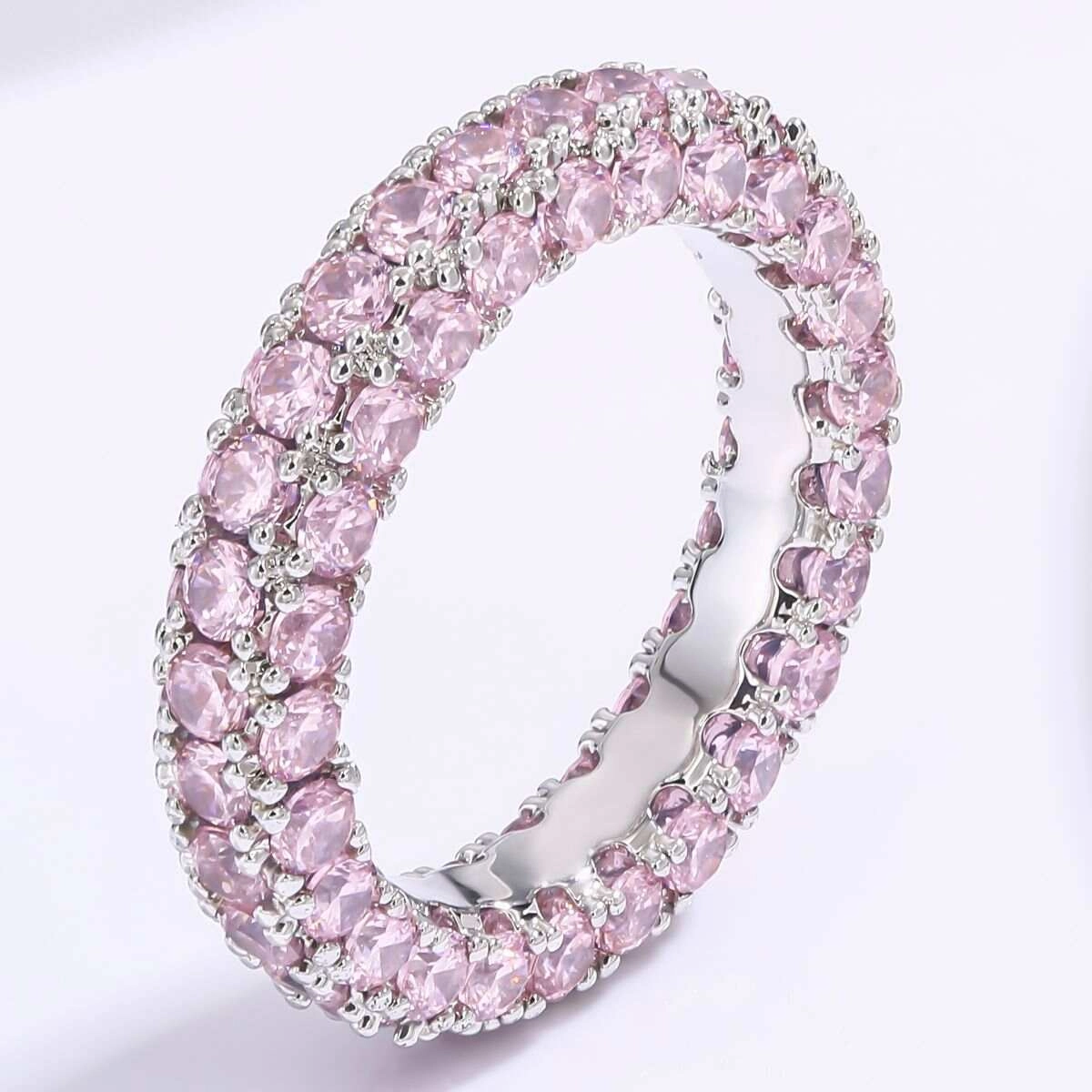
Pink Zircon Eternity Wedding Rings — Custom 925 Silver Jewelry Manufacturer
Managing Returns and Warranty Policies for Silver Bracelet Sales
Product Categories
You may also like

925 Silver Jewelry
Customizable High-Quality Fashion 925 Sterling Silver AAA Cubic Zirconia Heart-Shaped Open Tennis Bracelet.
Read More

Brass Jewelry
Customizable OEM ODM High-Quality Fashion Brass AAA Cubic Zirconia Classic Tennis Bracelet for Women Wholesale.
Read More
Get a Quote for Private Label Jewelry
We provide personalized jewelry customization services for clients worldwide.
Rest assured that your privacy is important to us, and all information provided will be handled with the utmost confidentiality.
By clicking 'Send Inquiry Now' I agree to HOLYCOME processing my personal data.
To see how to withdraw your consent, how to control your personal data and how we process it, please see our Privacy Policy and Terms of use.
From design to production, HOLYCOME offers a one-stop solution to help you enhance your brand value and market competitiveness.
Get A Quote
Contact
Tel: (+86) 188 1927 7817
© 2026 HOLYCOME. All Rights Reserved.
Facebook
Instagram
YouTube
Whatsapp: +8618078079070