







Email: sales3@zhefanjewelry.com
How Private Label Jewelry Manufacturers Support Trend-Driven Jewelry Development
Private label jewelry manufacturers help fashion brands convert fast-moving trends into commercially viable collections through trend research, design adaptation, material selection, prototyping, quality control, scalable production, and packaging support. The strongest partners combine OEM/ODM engineering with flexible minimum order quantities, reliable lead times, compliant materials, and data-informed product development. This article explains how buyers can evaluate a jewelry production partner and how Zhefan Jewelry supports trend-responsive development across brass, 925 silver, sterling silver, gold vermeil, and pearl jewelry.
- How Trend-Responsive Jewelry Production Works
- Trend intelligence becomes a practical product brief
- Design adaptation protects originality and market fit
- Material engineering influences both appearance and margin
- Operational Capabilities Buyers Should Evaluate
- Sampling speed must be balanced with engineering discipline
- Capacity planning protects seasonal launches
- Quality systems convert design intent into consistent goods
- Commercial Benefits of an Integrated Jewelry Development Partner
- Collection architecture improves inventory decisions
- Packaging and compliance are part of product readiness
- Supplier communication affects total cost of ownership
- Why Zhefan Jewelry Supports Faster Market Response
- Manufacturing scale combined with design agility
- Material range and finishing control
- OEM and ODM support for brand growth
- Frequently Asked Questions
A private label jewelry manufacturer supports trend-driven jewelry development by combining market-aware design, rapid prototyping, material expertise, scalable production, and quality assurance under one coordinated process. For brand owners, retailers, distributors, and e-commerce operators, this model reduces the time between identifying a fashion direction and launching a sellable collection. Instead of purchasing generic finished goods, buyers can work with an experienced production partner to adapt silhouettes, finishes, stones, dimensions, packaging, and branding to a defined customer segment while maintaining cost and compliance targets.
How Trend-Responsive Jewelry Production Works
Trend intelligence becomes a practical product brief
Trend-driven development begins with converting broad market signals into a specific product brief. Useful inputs may include search behavior, social content, runway references, retailer assortments, customer reviews, sell-through data, and seasonal color direction. These inputs should not be copied directly. A capable supplier translates them into measurable design attributes such as chain width, pendant scale, earring length, surface texture, stone color, plating tone, closure type, and target retail price.
This translation is important because a visual trend does not automatically become a profitable jewelry item. Oversized forms may create packaging and shipping issues; delicate components may increase breakage risk; heavily textured surfaces may require additional finishing time; and unusual stones may create sourcing or consistency problems. A commercially experienced development team identifies these risks during briefing rather than after sampling.
Design adaptation protects originality and market fit
OEM and ODM teams help brands create trend-relevant products without relying on direct imitation. Designers can preserve a recognizable market direction while changing proportions, component geometry, surface treatment, stone placement, or functional details. This approach supports a stronger brand identity and lowers the risk of introducing products that appear indistinguishable from competing listings.
Digital sketches, 3D modeling, mold development, and hand-finished sample work each serve different purposes. Digital visualization accelerates early review, while physical prototypes reveal weight, balance, comfort, clasp performance, and the actual relationship between the metal finish and decorative elements. Buyers should request a documented sample approval process, including revision limits, color references, dimensional tolerances, and confirmation of the approved master sample.
Material engineering influences both appearance and margin
Material selection affects perceived value, durability, compliance, unit cost, and positioning. Brass jewelry can support accessible fashion collections and complex shapes, particularly when the supplier controls casting, polishing, plating, and protective finishing. 925 silver jewelry and sterling silver jewelry are suitable for brands seeking a higher material story, while gold vermeil jewelry can provide a High Quality appearance based on a silver foundation with a substantial gold layer. Pearl jewelry requires additional attention to drilling, matching, surface quality, and protective handling.
Material claims must be supported by accurate specifications. Buyers should clarify metal composition, plating thickness, base material, stone type, coating system, allergen controls, and care instructions. For products entering European markets, the supplier should understand the obligations associated with REACH regulation. For restricted substances in electrical and electronic products, the European Commission RoHS framework is the relevant reference, although ordinary jewelry is generally outside its primary product scope. Clear regulatory classification prevents buyers from using the wrong compliance statement.
Operational Capabilities Buyers Should Evaluate
Sampling speed must be balanced with engineering discipline
Fast sampling is valuable only when each revision produces a meaningful improvement. A reliable supplier should define the development workflow from concept intake through technical drawing, prototype fabrication, sample review, pre-production approval, and bulk manufacturing. The buyer should know which decisions are required at each stage and how changes affect tooling fees, minimum order quantities, and delivery schedules.
Sampling performance also depends on internal coordination. Designers, mold technicians, plating specialists, quality inspectors, and production planners need access to the same approved specifications. Version control is especially important for collections containing multiple colors or related styles. Without it, a revised stone size or plating tone may be applied inconsistently across a product family.
Capacity planning protects seasonal launches
Trend-sensitive collections often have narrow selling windows. A supplier may produce attractive samples but still fail commercially if bulk capacity is unavailable when a campaign is scheduled. Buyers should assess monthly output, factory ownership or control, staffing, equipment, subcontracting practices, production calendar visibility, and the supplier’s ability to reserve capacity for repeat orders.
Capacity should be evaluated together with minimum order quantities. A low minimum may support testing, but a low initial order does not guarantee that the supplier can replenish a successful style quickly. The most useful commercial model supports a staged launch: small pilot quantities, measured market response, controlled replenishment, and eventual volume efficiency.
Quality systems convert design intent into consistent goods
Jewelry quality is determined by more than visual inspection at the end of production. Process controls should cover mold accuracy, casting integrity, soldering, stone setting, polishing, plating adhesion, clasp function, dimensional consistency, surface defects, logo placement, packaging, and final count. Buyers should request inspection criteria in writing and confirm whether inspections are performed during production as well as before shipment.
Quality documentation should be proportionate to the product and destination market. Depending on the customer’s requirements, documentation may include material declarations, plating specifications, test reports, inspection records, packaging details, and corrective-action reports. The principles of ISO 9001 quality management provide a useful benchmark for evaluating whether a factory operates through repeatable documented processes rather than informal individual judgment.
| Development factor | Basic sourcing approach | Trend-responsive production partner | Buyer impact |
|---|---|---|---|
| Design input | Pre-existing catalog selection | Trend brief converted into original specifications | Better differentiation and collection coherence |
| Sampling | Limited revisions and unclear timelines | Defined prototype, review, and approval stages | Lower launch uncertainty |
| Materials | Generic composition information | Documented alloys, plating, stones, and finishes | More accurate pricing and compliance control |
| Production | Order accepted according to open capacity | Capacity planning and replenishment discussion | Improved seasonal availability |
| Quality | Final visual check only | Multi-stage inspection with defined acceptance criteria | Fewer returns and customer complaints |
| Branding | Standard packaging and labeling | OEM/ODM packaging, tags, and private branding options | Stronger shelf and online presentation |
The comparison shows why supplier selection should be based on the full product development system rather than the lowest quoted unit price. A lower price can be offset by repeated sample revisions, inconsistent plating, delayed replenishment, higher defect rates, or the need to coordinate several separate vendors.
Commercial Benefits of an Integrated Jewelry Development Partner
Collection architecture improves inventory decisions
A capable custom jewelry manufacturer can help organize individual products into a commercially logical range. A collection may include entry-price brass jewelry, elevated sterling silver jewelry, statement pieces, everyday essentials, and High Quality gold vermeil jewelry. Shared design language across these tiers allows a brand to address different price points without losing visual consistency.
Collection planning also supports inventory discipline. Buyers can identify hero styles, supporting products, seasonal experiments, and replenishment candidates before placing the purchase order. Related components may reduce development complexity, while modular charms, interchangeable chains, or coordinated earrings can increase the number of merchandising combinations without requiring an entirely new technical platform for every item.
Packaging and compliance are part of product readiness
Trend-led launches often fail at the final stage because the jewelry is ready but the packaging, labeling, care information, barcode placement, or carton configuration is not. A full-service manufacturing partner can coordinate branded cards, pouches, boxes, inserts, labels, and export packing requirements. Buyers should provide packaging dimensions and channel requirements early because packaging can affect product protection, freight cost, and fulfillment efficiency.
Marketing claims also require care. Statements such as hypoallergenic, nickel-free, recycled, waterproof, or solid gold should be supported by appropriate evidence and accurately limited to the tested product configuration. The U.S. Federal Trade Commission jewelry guides offer an important reference for truthful jewelry descriptions and precious-metal claims in the United States. Product copy should match the actual alloy, plating, construction, and test basis.
Supplier communication affects total cost of ownership
Transparent communication reduces hidden costs. A professional quotation should distinguish tooling, sampling, unit manufacturing, plating or stone surcharges, packaging, inspection, freight assumptions, and payment terms. Buyers should also clarify whether artwork, molds, technical drawings, and approved samples are retained for future orders and how design confidentiality is managed.
Supplier performance can be measured through objective indicators: sample turnaround time, first-pass approval rate, on-time delivery, defect percentage, corrective-action speed, replenishment lead time, documentation completeness, and responsiveness during specification changes. These metrics help procurement teams compare factories on operational value rather than on price alone.
Why Zhefan Jewelry Supports Faster Market Response
Manufacturing scale combined with design agility
Zhefan Jewelry is a premier fashion jewelry manufacturer established in 2002, with a company legacy dating back to 1997. Founded by a master mold craftsman, our manufacturing culture is built on long-term refinement of tooling, finishing, and production execution. We operate two factories in Guangzhou and Meizhou covering 800 square meters, supported by more than 80 skilled artisans and 20 sales professionals.
Our monthly output reaches approximately 600,000 pieces, giving brand owners a production platform suitable for both controlled launches and larger replenishment programs. Scale is paired with agile product development: our professional design team launches more than 500 original styles each month. This combination helps global partners review fresh directions frequently while preserving the infrastructure required for commercial production.
Material range and finishing control
Our product capabilities cover brass jewelry, 925 silver jewelry, sterling silver jewelry, gold vermeil jewelry, and pearl jewelry. This range allows buyers to build multi-tier collections around a coherent design concept, from accessible fashion pieces to more High Quality silver-based products. Our technical teams coordinate mold making, casting, assembly, polishing, plating, stone or pearl setting, and final inspection to reduce handoff risk.
We apply six rounds of precision polishing and six strict quality inspections to help achieve a consistent surface and reliable presentation. Materials are selected with attention to RoHS and REACH-compliant requirements, supported by product-specific documentation and buyer specification review. Compliance should always be confirmed for the final material, finish, destination, and claim, but a structured material-control process gives procurement teams a stronger foundation.
OEM and ODM support for brand growth
Our OEM and ODM services support private branding, original development, packaging coordination, and production scaling. We have served top-three Amazon sellers and global retail customers such as Macy’s, experiences that reinforce the importance of specification accuracy, delivery discipline, and consistent quality across repeat orders. Buyers can use our capabilities for a new collection, a retailer-exclusive line, a seasonal capsule, or a replenishable core assortment.
For project owners evaluating a long-term supply relationship, the key advantage is the combination of craftsmanship, capacity, new-style output, and dedicated communication. Zhefan Jewelry is positioned not merely as a source of finished accessories but as a development and manufacturing partner focused on helping brands improve market influence, launch speed, and product reliability.
To discuss a trend-led collection or review brass, silver, vermeil, and pearl jewelry capabilities, buyers can visit Zhefan Jewelry or contact our team at sales3@zhefanjewelry.com.
Frequently Asked Questions
How does a jewelry production partner help brands respond to trends?
A jewelry production partner converts market signals into measurable design specifications, develops prototypes, recommends suitable materials, manages revisions, and supports scalable manufacturing for seasonal or replenishable collections.
What materials are commonly used for trend-driven jewelry collections?
Common options include brass for accessible fashion ranges, 925 silver and sterling silver for higher-value collections, gold vermeil for a premium appearance, and pearls for classic or elevated product lines.
What should buyers check before approving a jewelry supplier?
Buyers should check design and sampling workflows, production capacity, minimum order quantities, material specifications, compliance documentation, inspection criteria, packaging support, lead times, and the supplier’s ability to handle repeat orders.
Why are multiple quality inspections important in jewelry manufacturing?
Multiple inspections identify issues at different stages, including mold accuracy, casting, polishing, plating, stone setting, clasp function, dimensions, packaging, and final appearance, reducing defects and customer returns.
Can OEM and ODM services support an exclusive jewelry collection?
Yes. OEM and ODM services can support original design adaptation, custom molds, branded components, packaging, product specifications, and production of retailer-exclusive or brand-specific collections.
How does Zhefan Jewelry support trend-driven product development?
Zhefan Jewelry combines two factories, more than 80 artisans, monthly output of approximately 600,000 pieces, and a design team launching more than 500 original styles monthly. The company also provides OEM/ODM services, six polishing rounds, six quality inspections, and RoHS/REACH-compliant material options.
Tags
custom brass jewelry wholesale
custom brass jewelry wholesale
custom design earrings
custom design earrings
nickel free brass jewelry polishing care
nickel free brass jewelry polishing care
mother of pearl ring
mother of pearl ring
holiday charm jewelry wholesale
holiday charm jewelry wholesale
brass rings for crafts
brass rings for crafts
Recommended for you
How Pearl Jewelry Manufacturers Control Quality at Every Production Stage
brass jewelry wholesalers for Dropshipping and E-commerce Stores
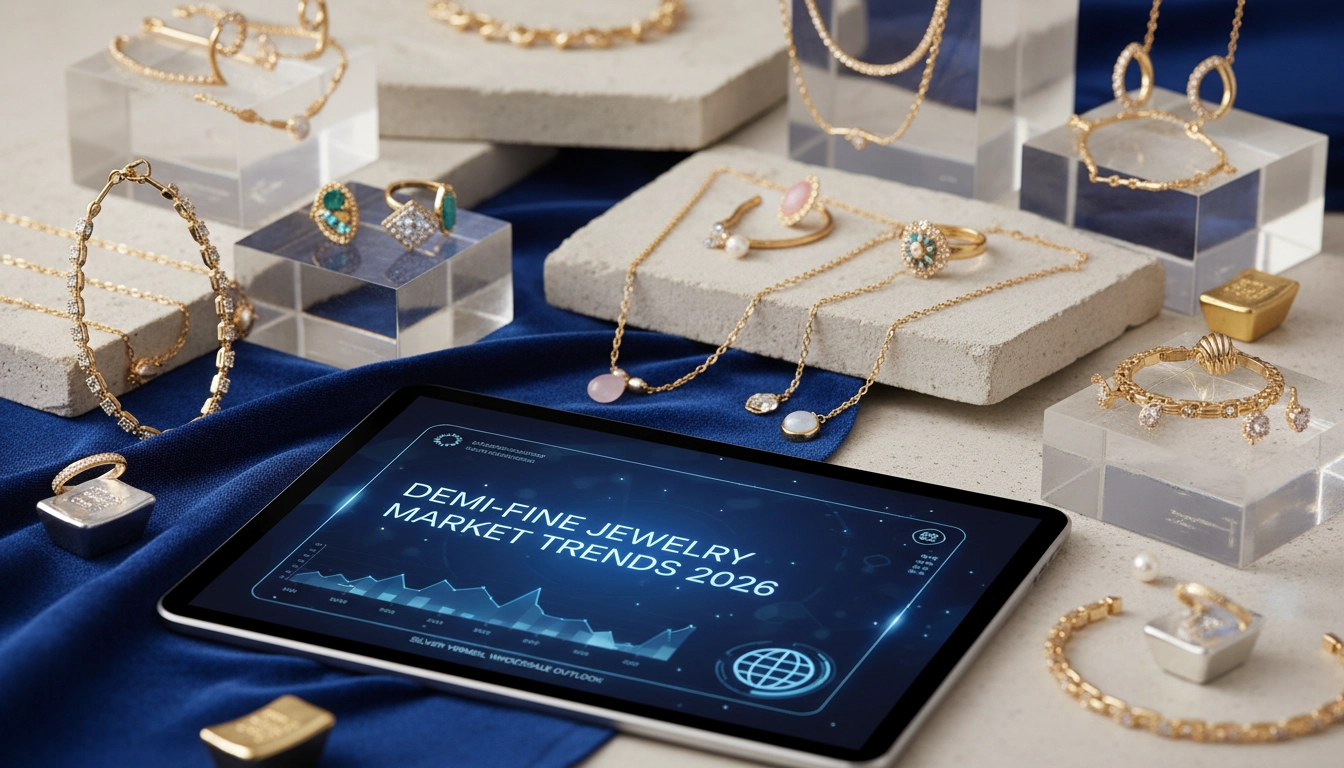
The Ultimate 2026 Silver Vermeil Jewelry Wholesale Guide: Sourcing, Pricing, and Profit Secrets
How to Forecast Demand for 925 Sterling Silver Bracelets
Product Categories
You may also like

925 Silver Jewelry
Customizable High-Quality Fashion 925 Sterling Silver AAA Cubic Zirconia Heart-Shaped Open Tennis Bracelet.
Read More

Brass Jewelry
Customizable OEM ODM High-Quality Fashion Brass AAA Cubic Zirconia Classic Tennis Bracelet for Women Wholesale.
Read More
Get a Quote for Private Label Jewelry
We provide personalized jewelry customization services for clients worldwide.
Rest assured that your privacy is important to us, and all information provided will be handled with the utmost confidentiality.
By clicking 'Send Inquiry Now' I agree to ZHEFAN JEWELRY processing my personal data.
To see how to withdraw your consent, how to control your personal data and how we process it, please see our Privacy Policy and Terms of use.
From design to production, ZHEFAN JEWELRY offers a one-stop solution to help you enhance your brand value and market competitiveness.
Get A Quote
Contact
Tel: (+86) 188 1927 7817
© 2026 Zhefan Jewelry. All Rights Reserved.
Facebook
Instagram
YouTube
Whatsapp: +8618819277817