







Email: sales3@zhefanjewelry.com
Profit margin calculator for wholesale brass tennis bracelet
A practical profit margin calculator for wholesale brass tennis bracelet programs should combine unit manufacturing cost, plating, packaging, freight, customs, marketplace fees, returns, and selling price. This guide provides a complete landed-cost formula, a worked example, sensitivity analysis, quality-control considerations, and supplier evaluation criteria for jewelry brands, distributors, and retailers sourcing brass tennis bracelets at scale.
- How to Build a Landed-Cost Model for Brass Tennis Bracelets
- Separate factory cost from commercial cost
- Use a margin formula that reflects the selling channel
- Worked example using transparent assumptions
- Profit Margin Calculator Variables Buyers Should Control
- Material, construction, and finish variables
- Order quantity, tooling, and production efficiency
- Quality loss, returns, and compliance reserves
- Pricing Decisions for Wholesale Fashion Jewelry Programs
- Calculate the break-even selling price
- Run sensitivity scenarios before approving production
- Procurement questions that protect margin
- Why a Custom Jewelry Manufacturer Can Improve the Financial Outcome
- Zhefan Jewelry production capacity and product scope
- Process controls that support sellable quality
- OEM and ODM support for scalable collections
- Frequently Asked Questions
Profitability in a brass tennis bracelet program depends on more than the factory quotation. Buyers must calculate the complete landed cost, including raw material, stone setting, surface treatment, packaging, freight, import charges, payment fees, marketplace commissions, returns, and quality-related losses. A reliable margin model converts those variables into unit cost, gross profit, gross margin, break-even price, and minimum viable order quantity. This approach helps jewelry brands compare suppliers objectively, protect cash flow, and determine whether a fashion jewelry collection can support wholesale, retail, or marketplace distribution.
How to Build a Landed-Cost Model for Brass Tennis Bracelets
Separate factory cost from commercial cost
The first step is to distinguish the ex-factory product price from the final cost paid to place one sellable unit in the customer’s inventory. A supplier quotation may include a brass base, cubic zirconia or other simulated stones, basic polishing, plating, and standard packaging, but it may exclude mold charges, logo customization, inspection, freight, duties, warehousing, and payment fees.
For a useful procurement model, create a cost line for every expense that changes with volume or product configuration. The main product cost normally includes brass components, stone procurement, prong or channel setting, soldering, polishing, plating, assembly labor, and standard quality inspection. Custom development can add engineering, 3D modeling, tooling, sample production, and revision costs. These one-time expenses should be amortized across the planned order quantity rather than ignored.
A basic landed unit cost formula is: landed cost per unit = product cost + packaging + tooling allocation + inspection allocation + freight and insurance + customs and import charges + payment fees + expected quality-loss allowance. If a sales channel charges a percentage of revenue, that fee should not be included in landed cost; it should be modeled separately because it changes with the selling price.
Use a margin formula that reflects the selling channel
Gross profit per unit equals net selling price minus total variable cost. Gross margin percentage equals gross profit divided by net selling price, multiplied by 100. Net selling price should reflect actual revenue after trade discounts, coupons, retailer deductions, marketplace commissions, and other revenue-linked charges. A list price can create a misleading result when the average realized price is lower.
For a direct-to-consumer launch, the model may include payment processing, fulfillment, advertising, customer service, and return handling. For a wholesale account, the model should include the distributor discount, sales representative commission, carton labeling, compliance documentation, and the cost of extended payment terms. A project owner should calculate margins separately for each channel instead of applying one blended percentage.
Worked example using transparent assumptions
Assume a 1,000-unit order for a gold-tone brass tennis bracelet with clear simulated stones. The factory product price is $3.20 per unit, customized packaging is $0.28, tooling allocation is $0.15, pre-shipment inspection allocation is $0.05, freight and insurance are $0.22, and estimated import charges are $0.18. A 2% payment fee adds $0.08 based on the relevant transaction value, producing an estimated landed product cost of $4.16 per unit before channel fees and expected losses.
If the average wholesale selling price is $8.50 and the buyer reserves $0.25 for defects, replacements, and handling variance, contribution cost becomes $4.41. Gross profit is therefore $4.09 per unit, and gross margin is approximately 48.1%. At 1,000 units, the estimated contribution before fixed marketing and administration is $4,090. The calculation should be updated when the actual shipping invoice, duty assessment, inspection result, and realized selling price become available.
The same quotation can produce a different result at retail. If the recommended retail price is $19.90, but promotions reduce the realized price to $16.90, a 15% marketplace fee equals $2.54 and payment processing at 3% equals $0.51. Adding the $4.41 contribution cost leaves approximately $9.44 before advertising and overhead. This illustrates why a low factory price does not automatically create a high return on investment.
Profit Margin Calculator Variables Buyers Should Control
Material, construction, and finish variables
Brass alloy selection affects weight, machinability, color stability, and plating preparation. A heavier link structure may improve visual presence but increase material consumption and shipping cost. Stone size, number of stones, setting method, and stone grade influence both the bill of materials and assembly time. Buyers should request a technical specification showing dimensions, unit weight, stone count, plating color, plating thickness or process standard where applicable, and tolerance limits.
Surface treatment is a major cost and quality variable. Polishing quality, electroplating sequence, protective coating, and color matching affect perceived value and customer returns. Gold-tone, silver-tone, black, and two-tone finishes may require different process controls. Claims such as tarnish resistance or water resistance should be supported by defined test conditions rather than broad marketing language.
Order quantity, tooling, and production efficiency
Higher order quantities can reduce tooling allocation, setup cost, packaging cost, and production inefficiency. However, over-ordering creates inventory carrying cost and markdown exposure. The correct quantity depends on forecast accuracy, product lifecycle, replenishment speed, and available working capital. A useful model includes a sell-through scenario, such as 50%, 75%, and 100% of the planned inventory, so the buyer can see the margin impact of slow movement.
Custom molds require particular attention. A mold charge may be refundable after a volume threshold, included in the unit price, or retained by the manufacturer. The purchase order should clarify ownership, storage, revision responsibility, and whether the tooling supports future color or size variations. Amortizing a $300 mold over 1,000 units adds $0.30 per unit; amortizing it over 5,000 units adds only $0.06 per unit.
Quality loss, returns, and compliance reserves
Expected quality loss should be modeled as a reserve, not treated as an impossible event. If the planned defect and replacement rate is 2% and the landed cost is $4.16, the direct reserve is approximately $0.08 per unit, excluding customer service and reverse logistics. Buyers should define acceptable quality limits and inspection sampling in the purchase agreement. ISO 2859-1 is a widely recognized reference for sampling procedures and inspection by attributes, although the applicable sampling plan must be agreed by both parties.
Material compliance can affect market access and potential liability. For products sold into the European Economic Area, buyers should assess applicable obligations under REACH and, where relevant to the product and supply chain, restrictions associated with chemicals and articles. Restricted substances requirements should be matched to the destination market and documented through supplier declarations or appropriate test reports. Buyers should also review consumer product and advertising requirements in each country instead of assuming one certificate covers every jurisdiction.
| Cost or metric | Illustrative assumption | Effect on unit economics | Buyer control point |
|---|---|---|---|
| Factory product price | $3.20 | Primary manufacturing cost | Compare specifications, not price alone |
| Customized packaging | $0.28 | Raises landed cost but supports brand presentation | Confirm material, dimensions, and minimum order |
| Tooling allocation | $0.15 | Higher for small production runs | Clarify mold ownership and amortization |
| Freight, insurance, and import charges | $0.40 | Changes with route, Incoterm, and destination | Request a landed-cost quote by shipment plan |
| Quality-loss reserve | $0.08 | Protects against replacement and defect costs | Set inspection criteria and corrective-action rules |
| Wholesale selling price | $8.50 | Determines gross profit and margin | Use realized price after discounts |
| Illustrative gross margin | 48.1% | Shows product-level profitability | Recalculate by channel and scenario |
Pricing Decisions for Wholesale Fashion Jewelry Programs
Calculate the break-even selling price
The break-even price is the minimum realized selling price that covers variable cost. If the variable cost is $4.41 per unit, the product-level break-even price before fixed overhead is $4.41. If the target gross margin is 50%, the required selling price is variable cost divided by one minus the target margin: $4.41 divided by 0.50, or $8.82. This formula is more reliable than adding a fixed markup because it directly targets the desired margin.
When a sales channel takes a percentage of revenue, the calculation must include that fee in the denominator. For example, with variable cost of $4.41, a 15% channel fee, and a target gross margin of 45%, the required price is $4.41 divided by 1 minus 0.15 minus 0.45, producing approximately $11.03. This prevents the common mistake of calculating a target margin before deducting marketplace or distributor charges.
Run sensitivity scenarios before approving production
Three sensitivity tests are especially useful. First, increase freight and import charges by 20% to evaluate logistics exposure. Second, reduce the realized selling price by 10% to test promotional pressure. Third, increase the quality-loss reserve from 2% to 5% to assess the impact of plating or stone-setting issues. If the program becomes unprofitable under modest changes, the buyer may need a revised specification, a different order quantity, stronger packaging, or a higher wholesale price.
Currency risk should also be included when the supplier invoices in one currency and the retailer sells in another. A finance team can use a conservative exchange-rate buffer, shorten quotation validity, or agree on a currency adjustment mechanism for long development cycles. Payment terms influence working capital: a deposit, balance before shipment, letter of credit, or open-account arrangement changes financing cost even when the unit quotation remains unchanged.
Procurement questions that protect margin
Before placing a purchase order, buyers should ask whether the quoted price includes the exact plating color and finish, which packaging components are included, what tolerances apply to length and weight, how replacement units are handled, and whether inspection occurs before or after packaging. The buyer should also confirm the Incoterm, carton dimensions, gross weight, lead time, sample approval process, and procedure for changes after approval.
Document control is equally important. The approved sample, specification sheet, artwork, packaging proof, and inspection checklist should carry revision numbers. A manufacturer that cannot connect the production batch to the approved reference creates avoidable risk. Clear records support root-cause analysis when a retailer reports loose stones, uneven plating, clasp failure, scratches, or mismatched color.
Why a Custom Jewelry Manufacturer Can Improve the Financial Outcome
Zhefan Jewelry production capacity and product scope
Zhefan Jewelry is a fashion jewelry manufacturer established in 2002, with a company legacy dating back to 1997 and a foundation built by a master mold craftsman. Our manufacturing scope includes brass jewelry, 925 silver jewelry, sterling silver jewelry, gold vermeil jewelry, and pearl jewelry. This material range allows brand owners to develop a tiered collection, using brass for accessible fashion lines and precious-metal options for higher average order value.
Our two factories in Guangzhou and Meizhou cover 800 square meters. More than 80 skilled artisans and 20 sales professionals support a stated monthly output of 600,000 pieces. This capacity is relevant to margin planning because production continuity, replenishment speed, and the ability to consolidate multiple styles can reduce stockout risk and improve purchasing efficiency. A professional design team launches more than 500 original styles monthly, supporting brands that need seasonal refreshes without building every concept from zero.
Process controls that support sellable quality
Our process includes six rounds of precision polishing and six strict quality inspections. For a crystal-link bracelet, these controls can address visible surface marks, inconsistent edges, clasp operation, stone alignment, plating appearance, and packaging damage before goods reach the customer. The commercial value is not only aesthetic: fewer defects can reduce replacement shipments, negative reviews, retailer chargebacks, and lost repeat orders.
Our team uses RoHS- and REACH-compliant eco-friendly materials where applicable to the requested product and destination requirements. Buyers should still confirm the exact test scope, report validity, sample identity, and regulatory market before making a compliance claim. FTC Jewelry Guides provide an authoritative reference for truthful jewelry marketing in the United States, including guidance on material descriptions and claims.
OEM and ODM support for scalable collections
Our OEM/ODM service covers concept development, mold creation, sampling, material selection, surface finishing, packaging coordination, and production. This integrated workflow helps buyers identify cost drivers early, compare alternative constructions, and avoid expensive changes after mass production begins. The team has served leading Amazon sellers and global retailers such as Macy’s, demonstrating experience with demanding commercial environments and structured product programs.
Supplier selection should remain evidence-based. Buyers can request a technical quotation, approved sample, production timeline, inspection plan, compliance documents, packaging specification, and references appropriate to the destination market. Zhefan Jewelry’s manufacturing scale and process discipline are designed to support consistent quality, rapid delivery, and dedicated communication, while the final commercial result still depends on the buyer’s specifications, channel economics, forecast, and negotiated terms.
For a project involving a crystal tennis-style bracelet, the strongest financial decision is not necessarily the lowest unit quote. It is the supplier and specification combination that produces a predictable landed cost, acceptable defect rate, attractive customer value, reliable replenishment, and sufficient margin after every commercial deduction. A structured calculator makes those trade-offs visible before capital is committed.
Contact Zhefan Jewelry at sales3@zhefanjewelry.com or visit our jewelry manufacturing website to develop a margin-based brass, sterling silver, gold vermeil, or pearl jewelry collection.
Frequently Asked Questions
What costs should be included in a brass tennis bracelet profit margin calculator?
Include the factory product price, packaging, tooling allocation, inspection allocation, freight and insurance, customs and import charges, payment fees, expected quality losses, channel commissions, returns, and other expenses that change with the selling channel.
How is gross margin calculated for a wholesale jewelry product?
Gross profit per unit equals net selling price minus total variable cost. Gross margin percentage equals gross profit divided by net selling price, multiplied by 100. Net selling price should account for discounts, retailer deductions, marketplace commissions, and other revenue-linked charges.
How can a buyer calculate the break-even price when a sales channel charges a commission?
Divide variable cost by one minus the channel fee percentage minus the target gross margin percentage. For example, with variable cost of $4.41, a 15% channel fee, and a 45% target margin, the required price is approximately $11.03.
Why should tooling costs be amortized across the order quantity?
A mold or tooling charge is a one-time development expense that affects unit economics. A $300 mold adds $0.30 per unit across 1,000 units but only $0.06 per unit across 5,000 units, so the planned quantity changes the true product cost.
What quality factors can reduce profitability in a crystal-link bracelet program?
Loose or missing stones, uneven plating, scratches, clasp failure, mismatched color, dimensional variation, and packaging damage can create replacements, returns, chargebacks, negative reviews, and additional logistics costs. Buyers should define inspection criteria and reserve for expected quality losses.
What compliance documentation should jewelry buyers request?
Buyers should request documentation appropriate to the destination market, such as material declarations, relevant chemical compliance information, and test reports tied to the actual product or material configuration. REACH, RoHS where applicable, and truthful product-description requirements should be evaluated for the intended market.
How does Zhefan Jewelry support custom jewelry profitability?
Zhefan Jewelry supports OEM and ODM development through two factories in Guangzhou and Meizhou, more than 80 skilled artisans, a monthly output of 600,000 pieces, six polishing rounds, six quality inspections, and a design team that launches more than 500 original styles monthly. The company produces brass, 925 silver, sterling silver, gold vermeil, and pearl jewelry.
Tags
custom bracelet manufacturers
custom bracelet manufacturers
natural stone earrings manufacturer
natural stone earrings manufacturer
bulk custom brass necklaces
bulk custom brass necklaces
brass jewelry supplier
brass jewelry supplier
women's custom 925 silver adjustable ring
women's custom 925 silver adjustable ring
mother of pearl heart pendant supplier
mother of pearl heart pendant supplier
Recommended for you
Quality Control Standards for Custom Jewelry Manufacturers
How Durable Is Gold Vermeil Jewelry? Quality Factors Every Buyer Should Evaluate
Why choose Zhefan Jewelry as your custom initial bracelets supplier
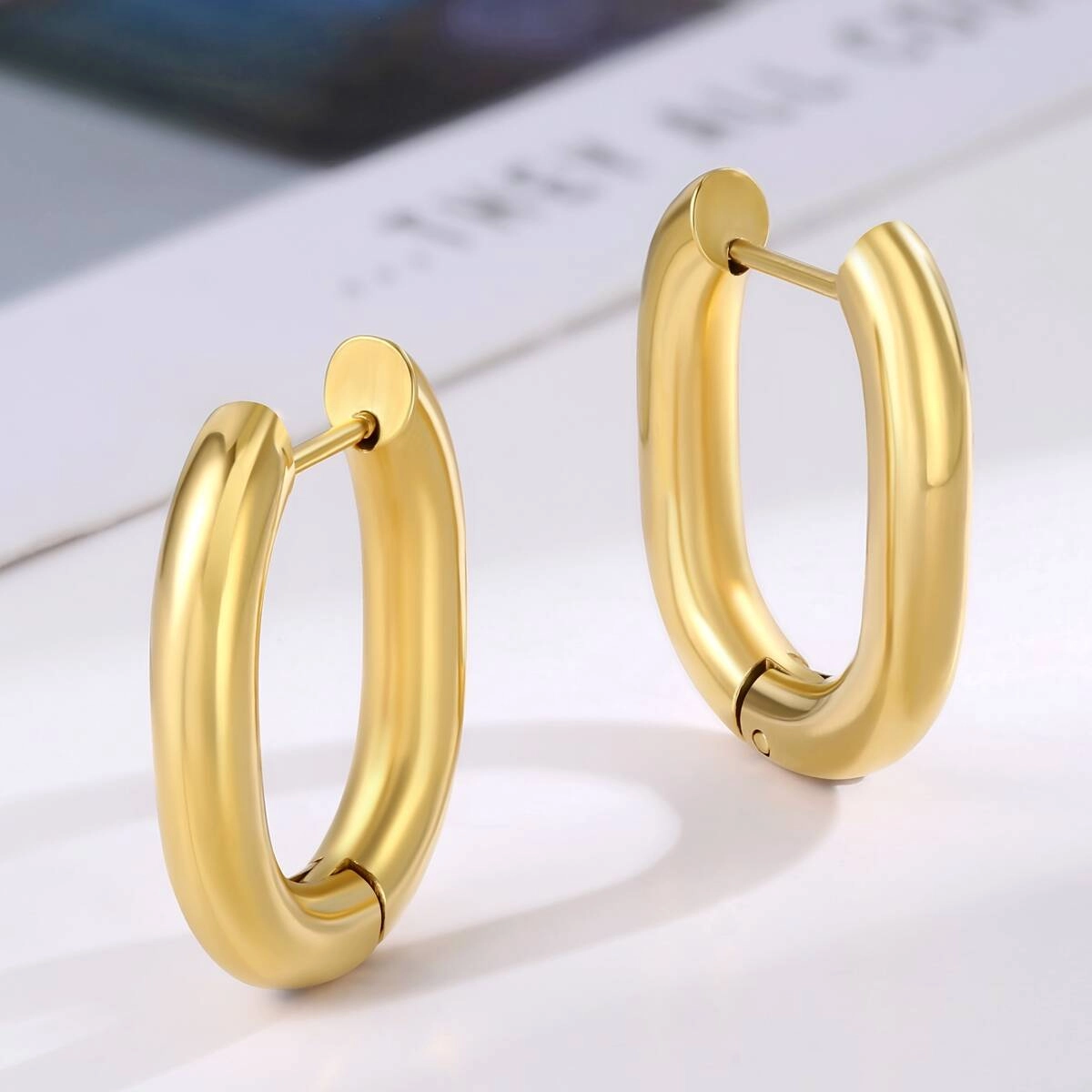
Oval Huggie Earrings 18K Gold — Wholesale Fashion Jewelry by Zhefan
Product Categories
You may also like

925 Silver Jewelry
Customizable High-Quality Fashion 925 Sterling Silver AAA Cubic Zirconia Heart-Shaped Open Tennis Bracelet.
Read More

Brass Jewelry
Customizable OEM ODM High-Quality Fashion Brass AAA Cubic Zirconia Classic Tennis Bracelet for Women Wholesale.
Read More
Get a Quote for Private Label Jewelry
We provide personalized jewelry customization services for clients worldwide.
Rest assured that your privacy is important to us, and all information provided will be handled with the utmost confidentiality.
By clicking 'Send Inquiry Now' I agree to ZHEFAN JEWELRY processing my personal data.
To see how to withdraw your consent, how to control your personal data and how we process it, please see our Privacy Policy and Terms of use.
From design to production, ZHEFAN JEWELRY offers a one-stop solution to help you enhance your brand value and market competitiveness.
Get A Quote
Contact
Tel: (+86) 188 1927 7817
© 2026 Zhefan Jewelry. All Rights Reserved.
Facebook
Instagram
YouTube
Whatsapp: +8618819277817