







Email: sales3@zhefanjewelry.com
Ensuring Brilliance: How to Arrange Quality Inspections for 925 Silver Bracelet Batches and All Fine Jewelry
Discover the essential steps to arrange robust quality inspections for your jewelry batches, from luxurious gold rings with intricate details to classic 925 silver bracelets. This guide emphasizes meticulous visual checks, material verification, and functional testing to maintain the highest standards of craftsmanship and customer satisfaction. Learn how a structured approach to quality control safeguards your brand's reputation and ensures every piece shines with unmatched excellence. Master the art of jewelry batch inspection for consistent, market-leading quality.
- The Allure of Perfection: Why Jewelry Quality Matters
- The Non-Negotiable Imperative: Why Rigorous Quality Inspections Are Crucial for Jewelry Batches
- Step-by-Step: How to Arrange Quality Inspections for 925 Silver Bracelet Batches and Other Fine Jewelry
- 1. Define Clear Quality Standards and Specifications
- 2. Implement Strategic Sampling Plans
- 3. Conduct Meticulous Visual and Aesthetic Checks
- 4. Verify Material Purity and Authenticity
- 5. Perform Functional and Durability Tests
- 6. Assess Packaging and Labeling Compliance
- Sustaining Excellence: Beyond the Initial Inspection
- Common Questions About Jewelry Quality Inspections
- What is 925 silver, and why is its purity important for inspection?
- What are the most common defects found during jewelry batch inspections?
- How often should quality inspections be conducted for recurring jewelry orders?
- Can the type of jewelry (e.g., rings vs. bracelets) affect the inspection process?
- What documents or certificates should accompany a quality inspected jewelry batch?
- How does a professional inspection service ensure the quality of gemstone settings, like those seen in fine rings?
- FAQ
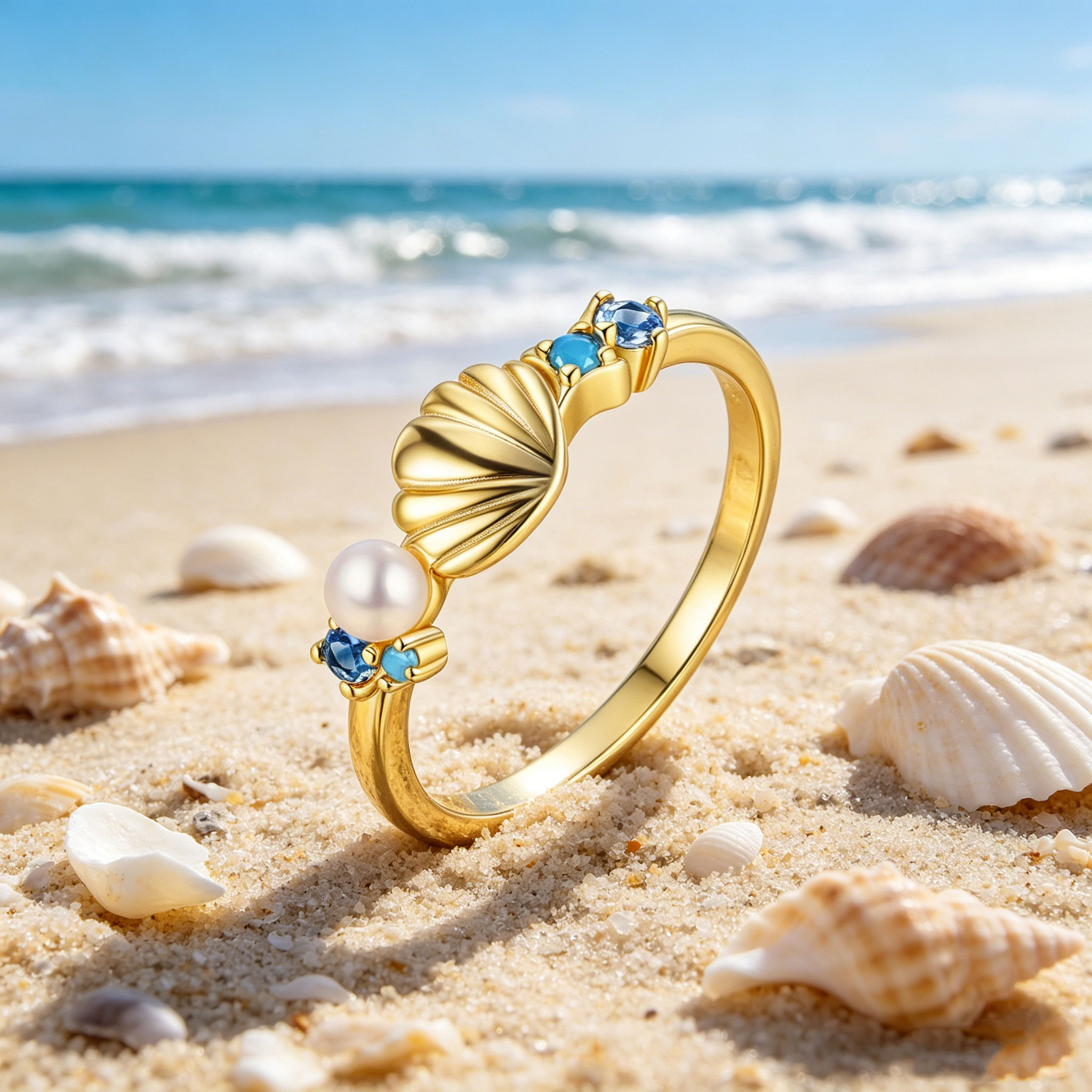
The Allure of Perfection: Why Jewelry Quality Matters
In the world of fine jewelry, every detail contributes to a piece's overall appeal and value. Consider the exquisite gold-toned ring captured on a serene sandy beach, adorned with a delicate shell motif, a lustrous pearl, and vibrant blue gemstones. Its polished surface, precise settings, and harmonious design speak volumes about craftsmanship. This visual standard isn't just about aesthetics; it embodies the rigorous quality that customers expect. Whether it's such an intricate ring or a minimalist 925 silver bracelet, ensuring every item in a batch meets stringent standards is paramount for brand integrity and customer delight.
The Non-Negotiable Imperative: Why Rigorous Quality Inspections Are Crucial for Jewelry Batches
Ignoring thorough quality inspections can lead to significant repercussions, from damaged brand reputation to costly returns. For jewelry manufacturers and retailers, especially when dealing with materials like 925 silver, consistency is key. A 925 silver bracelet batch, for instance, must not only meet purity standards but also exhibit flawless finishing, secure clasps, and consistent sizing. Inspections prevent defects such as tarnishing, weak soldering, loose stones, or scratches from reaching the market, thereby safeguarding your investment and consumer trust. This proactive approach ensures that every piece, regardless of its material or design complexity, upholds your brand's promise of excellence.
Step-by-Step: How to Arrange Quality Inspections for 925 Silver Bracelet Batches and Other Fine Jewelry
1. Define Clear Quality Standards and Specifications
Before any inspection begins, establish comprehensive specifications. For 925 silver bracelet batches, this includes detailed requirements for silver purity (92.5% silver), weight, dimensions, finish (e.g., high polish, matte, oxidized), stone setting integrity (if applicable), clasp functionality, and engraving quality. These standards serve as the benchmark against which every item will be evaluated.
2. Implement Strategic Sampling Plans
Inspecting every single piece in a large batch can be impractical. Employ industry-standard Acceptable Quality Limit (AQL) sampling methods to select a representative subset for detailed examination. This statistical approach helps identify common defects and provides a reliable indication of the overall batch quality without requiring 100% inspection.
3. Conduct Meticulous Visual and Aesthetic Checks
Visual inspection is critical. Examiners should look for scratches, dents, casting flaws, uneven plating, misaligned components, and surface imperfections. For pieces with gemstones, like the blue ones in our example ring, ensure stones are securely set, free from chips or cracks, and exhibit consistent color and clarity across the batch. The luster and finish of each 925 silver bracelet should be uniform.
4. Verify Material Purity and Authenticity
For 925 silver items, verifying material purity is essential. This can involve lab testing (e.g., X-ray fluorescence, fire assay) on a sample basis to confirm the silver content. Ensuring proper stamping (e.g., '925' or 'Sterling') is also a critical part of authenticity verification, reassuring both the buyer and the end consumer of the material's integrity.
5. Perform Functional and Durability Tests
Jewelry is meant to be worn and enjoyed. Functional tests involve checking clasps, hinges, and other moving parts for smooth operation and security. For bracelets, this includes stress-testing the chain or band for strength and checking that all links are properly closed. Durability tests, such as plating adhesion tests, ensure the longevity of the finish.
6. Assess Packaging and Labeling Compliance
The final stage involves checking packaging for protective qualities, appropriate branding, and correct labeling. Secure packaging prevents damage during transit, while accurate labeling ensures product information, such as material composition and care instructions, is correctly conveyed to the customer. This step confirms the product is market-ready.
Sustaining Excellence: Beyond the Initial Inspection
Arranging quality inspections is an ongoing process. Establishing long-term relationships with reputable suppliers and partnering with experienced third-party inspection services can significantly enhance your quality control framework. Regular audits and feedback loops ensure continuous improvement in your manufacturing processes. By consistently applying these rigorous inspection protocols, your brand can confidently deliver jewelry, whether it’s a stunning gold ring or batches of meticulously crafted 925 silver bracelets, that truly embodies excellence and captures the hearts of your customers.
Common Questions About Jewelry Quality Inspections
What is 925 silver, and why is its purity important for inspection?
925 silver, also known as Sterling Silver, is an alloy containing 92.5% pure silver and 7.5% other metals, typically copper. Its purity is crucial because it ensures the material's durability, workability, and resistance to tarnishing compared to pure silver, which is too soft for most jewelry. During inspection, verifying this precise composition guarantees customers receive authentic, high-quality sterling silver as advertised, maintaining both product integrity and brand trust.
What are the most common defects found during jewelry batch inspections?
Common defects include surface imperfections like scratches, dents, or uneven polishing; casting flaws such as porosity or incomplete molds; issues with stone settings (loose, crooked, or missing stones); poor soldering or weak links, especially in bracelets; inconsistent plating or coating; and incorrect stamping or labeling. Identifying these early prevents defective products from reaching the market.
How often should quality inspections be conducted for recurring jewelry orders?
For recurring orders, initial inspections should be comprehensive. Subsequent inspections can follow a phased approach: a pre-production inspection to verify materials and initial processes, an in-line inspection during manufacturing to catch issues early, and a final pre-shipment inspection. The frequency and intensity of these depend on the supplier's consistency, product complexity, and your brand's AQL standards. A reputable supplier might allow for less frequent intensive checks over time, but random checks should always continue.
Can the type of jewelry (e.g., rings vs. bracelets) affect the inspection process?
Yes, the type of jewelry significantly affects the inspection process due to different structural and functional requirements. For example, bracelet inspections focus more on clasp security, link integrity, and overall flexibility, while ring inspections prioritize stone setting security, band uniformity, and comfort fit. While core quality principles remain, specific test points and defect criteria are tailored to each jewelry category.
What documents or certificates should accompany a quality inspected jewelry batch?
A thoroughly inspected jewelry batch should ideally be accompanied by a Quality Inspection Report detailing findings, samples inspected, and pass/fail results. For materials like 925 silver, material assay reports or purity certificates are essential. Other documents might include production order details, packaging lists, and compliance certificates for any specific regulations (e.g., nickel-free, lead-free standards).
How does a professional inspection service ensure the quality of gemstone settings, like those seen in fine rings?
Professional inspection services employ trained inspectors who use specialized tools (magnification loupes, microscopes) to examine gemstone settings. They check for secure seating, even prongs, proper alignment, and absence of glue residue. They also perform gentle stress tests to ensure stones won't easily dislodge, verifying both the aesthetic perfection and the structural integrity of settings, crucial for pieces with features similar to the blue gemstones in the image.
FAQ
What is 925 silver, and why is its purity important for inspection?
925 silver, also known as Sterling Silver, is an alloy containing 92.5% pure silver and 7.5% other metals, typically copper. Its purity is crucial because it ensures the material's durability, workability, and resistance to tarnishing compared to pure silver, which is too soft for most jewelry. During inspection, verifying this precise composition guarantees customers receive authentic, high-quality sterling silver as advertised, maintaining both product integrity and brand trust.
What are the most common defects found during jewelry batch inspections?
Common defects include surface imperfections like scratches, dents, or uneven polishing; casting flaws such as porosity or incomplete molds; issues with stone settings (loose, crooked, or missing stones); poor soldering or weak links, especially in bracelets; inconsistent plating or coating; and incorrect stamping or labeling. Identifying these early prevents defective products from reaching the market.
How often should quality inspections be conducted for recurring jewelry orders?
For recurring orders, initial inspections should be comprehensive. Subsequent inspections can follow a phased approach: a pre-production inspection to verify materials and initial processes, an in-line inspection during manufacturing to catch issues early, and a final pre-shipment inspection. The frequency and intensity of these depend on the supplier's consistency, product complexity, and your brand's AQL standards. A reputable supplier might allow for less frequent intensive checks over time, but random checks should always continue.
Can the type of jewelry (e.g., rings vs. bracelets) affect the inspection process?
Yes, the type of jewelry significantly affects the inspection process due to different structural and functional requirements. For example, bracelet inspections focus more on clasp security, link integrity, and overall flexibility, while ring inspections prioritize stone setting security, band uniformity, and comfort fit. While core quality principles remain, specific test points and defect criteria are tailored to each jewelry category.
What documents or certificates should accompany a quality inspected jewelry batch?
A thoroughly inspected jewelry batch should ideally be accompanied by a Quality Inspection Report detailing findings, samples inspected, and pass/fail results. For materials like 925 silver, material assay reports or purity certificates are essential. Other documents might include production order details, packaging lists, and compliance certificates for any specific regulations (e.g., nickel-free, lead-free standards).
How does a professional inspection service ensure the quality of gemstone settings, like those seen in fine rings?
Professional inspection services employ trained inspectors who use specialized tools (magnification loupes, microscopes) to examine gemstone settings. They check for secure seating, even prongs, proper alignment, and absence of glue residue. They also perform gentle stress tests to ensure stones won't easily dislodge, verifying both the aesthetic perfection and the structural integrity of settings, crucial for pieces with features similar to the blue gemstones in the image.
Tags
tarnish resistant nickel free brass
tarnish resistant nickel free brass
mother of pearl heart necklace
mother of pearl heart necklace
brass earring export agent china
brass earring export agent china
brass earrings
brass earrings
nickel free 925 sterling silver earrings
nickel free 925 sterling silver earrings
OEM freshwater pearl necklace
OEM freshwater pearl necklace
Recommended for you
Gold-Plated Pearl Jewelry: Manufacturing Standards and Durability Factors
Pricing Strategies for Bulk Custom Gold Plated Earrings
How to Get Accurate Quotes from Tennis Jewellery Factories
Negotiation Tactics with Mother of Pearl Manufacturers
Product Categories
You may also like

925 Silver Jewelry
Customizable High-Quality Fashion 925 Sterling Silver AAA Cubic Zirconia Heart-Shaped Open Tennis Bracelet.
Read More

Brass Jewelry
Customizable OEM ODM High-Quality Fashion Brass AAA Cubic Zirconia Classic Tennis Bracelet for Women Wholesale.
Read More
Get a Quote for Private Label Jewelry
We provide personalized jewelry customization services for clients worldwide.
Rest assured that your privacy is important to us, and all information provided will be handled with the utmost confidentiality.
By clicking 'Send Inquiry Now' I agree to ZHEFAN JEWELRY processing my personal data.
To see how to withdraw your consent, how to control your personal data and how we process it, please see our Privacy Policy and Terms of use.
From design to production, ZHEFAN JEWELRY offers a one-stop solution to help you enhance your brand value and market competitiveness.
Get A Quote
Contact
Tel: (+86) 188 1927 7817
© 2026 Zhefan Jewelry. All Rights Reserved.
Facebook
Instagram
YouTube
Whatsapp: +8618819277817