







Email: sales3@zhefanjewelry.com
Key Questions to Ask a Gold Vermeil Jewelry Manufacturer Before Placing an Order
A practical B2B procurement guide to evaluating gold vermeil suppliers, covering vermeil specifications, sterling silver quality, plating thickness, testing, sampling, production controls, documentation, packaging, lead times, pricing, and after-sales support.
- How to Qualify a Vermeil Jewelry Production Partner
- What exactly does the supplier mean by gold vermeil?
- Is the base metal solid sterling silver?
- Which compliance documents are available?
- Questions About Plating Performance and Product Quality
- How is gold plating applied and controlled?
- What tests are performed on finished pieces?
- How are defects classified and corrected?
- Commercial and Operational Questions Before Approval
- What are the minimum order quantity and total landed costs?
- Can the supplier support sampling and design changes?
- What is the realistic production lead time?
- How to Build a Lower-Risk Supplier Relationship
- Does the factory offer categories beyond vermeil?
- How are intellectual property and confidentiality protected?
- What after-sales support is available?
- Frequently Asked Questions
Before placing a wholesale order, buyers should verify whether a gold vermeil jewelry manufacturer can consistently deliver the specified base metal, gold purity, plating thickness, dimensional accuracy, finish quality, documentation, and production capacity. The most important questions cover sterling silver composition, gold karat, electroplating controls, adhesion testing, tarnish resistance, sample approval, minimum order quantities, tooling, lead times, packaging, compliance, defect resolution, and cost transparency. A structured supplier review helps brands, distributors, retailers, and private-label operators reduce quality claims, protect margins, and build a repeatable jewelry collection.
How to Qualify a Vermeil Jewelry Production Partner
What exactly does the supplier mean by gold vermeil?
The term should be defined in writing before pricing or sampling begins. In the United States, the Federal Trade Commission’s jewelry guidance explains that vermeil is a gold-coated sterling silver product and that representations involving gold quality and thickness must not be misleading. Buyers can review the FTC Jewelry Guides when developing product specifications and marketing claims.
Ask the supplier to state the base metal, gold fineness, plating method, minimum coating thickness, surface preparation, and areas that will remain unplated. A quotation that only says “18K vermeil” is incomplete because karat identifies gold purity, not coating thickness or durability. The purchase order should identify measurable requirements such as 14K, 18K, or vermeil-grade gold, the coating thickness in microns, acceptable color range, and whether the specification applies to every component or only the visible surface.
Is the base metal solid sterling silver?
A credible supplier should confirm whether the product uses sterling silver, commonly marked 925, throughout the core structure or only in selected components. Buyers should request a material declaration and clarify the composition of chains, posts, clasps, jump rings, backs, solder, and decorative elements. The phrase “925 silver jewelry” can refer to a complete item or a single component, so the bill of materials must remove ambiguity.
Ask whether the silver is sourced from an approved mill, how incoming material is identified, and whether alloy composition is verified through testing. The ISO 9202 standard for fineness of precious metals provides relevant terminology for precious-metal fineness. Material traceability is particularly important for earrings and skin-contact products, where substitutions can create allergy complaints, color inconsistency, or unexpected tarnishing.
Which compliance documents are available?
Request current test reports rather than relying only on a verbal assurance. Depending on the destination market, relevant documentation may include metal composition results, nickel release testing, restricted-substance declarations, plating thickness reports, and product safety records. The European Chemicals Agency provides information on substances restricted under REACH, which is useful when products will be sold in the European Economic Area.
Documentation should identify the tested product, laboratory, test method, date, and result. Buyers should also ask whether reports apply to the exact production material or to a different sample. A generic certificate from an unrelated item does not establish conformity for a new collection.
Questions About Plating Performance and Product Quality
How is gold plating applied and controlled?
Ask whether the factory uses rack plating, barrel plating, or a combination of processes. Fine pendants, dimensional charms, textured surfaces, and delicate chains may require different handling to achieve consistent coverage. The supplier should explain cleaning, degreasing, activation, underplating, gold deposition, rinsing, drying, and final inspection.
Plating quality depends on more than nominal micron thickness. Surface preparation, electrical contact, solution condition, current density, bath temperature, geometry, and handling can all affect adhesion and color. A technically capable facility should maintain process records and define control points for coating thickness, visual appearance, adhesion, and exposed edges.
What tests are performed on finished pieces?
Ask for the factory’s standard inspection plan and request project-specific testing for commercial launches. Useful checks may include coating-thickness measurement, visual inspection under magnification, dimensional verification, clasp operation, stone security, solder integrity, and simulated wear testing. For items exposed to perspiration, cosmetics, and friction, buyers may also request corrosion or artificial-sweat testing appropriate to the destination market.
There is no single test that predicts every consumer environment. A supplier should therefore explain the limitations of each method and distinguish between an internal screening test and an accredited laboratory report. The ISO/IEC 17025 framework for testing laboratories is a useful reference when assessing laboratory competence and result reliability.
How are defects classified and corrected?
Agree on an inspection standard before mass production. Cosmetic defects may include uneven color, pinholes, dark patches, scratches, exposed silver, rough solder joints, incomplete polishing, and bent components. Functional defects may include weak clasps, loose stones, sharp edges, incorrect dimensions, and failed connections.
The purchase agreement should define critical, major, and minor defects, sample size, acceptable quality limits, rework procedures, replacement obligations, and responsibility for inspection costs. Buyers should also ask how rejected products are segregated so that repaired and unrepaired pieces cannot be mixed during packing.
| Procurement checkpoint | Evidence to request | Risk reduced |
|---|---|---|
| Silver substrate | Material declaration, mill traceability, composition test | Substitution, allergy claims, inconsistent quality |
| Gold coating | Karat specification, thickness target, plating record | Premature wear, color variation, misleading claims |
| Finished-product inspection | Inspection plan, defect photos, sampling method | Returns, rework, inconsistent shipments |
| Laboratory compliance | Product-specific report with laboratory details | Regulatory and marketplace disruption |
| Packaging and labeling | Approved artwork, packing specification, carton test | Transit damage, mislabeling, inventory errors |
Commercial and Operational Questions Before Approval
What are the minimum order quantity and total landed costs?
Minimum order quantity should be reviewed by style, finish, color, size, and packaging configuration. A low unit price may become uneconomical when buyers add mold charges, sampling fees, plating surcharges, stone-setting costs, branded components, inspection, freight, duties, payment charges, and rework reserves.
Request a line-item quotation with validity dates and explicit assumptions. Clarify whether the price is based on a fixed gold market assumption, whether precious-metal prices can be adjusted, and how exchange-rate changes are handled. A landed-cost model should include the commercial terms, shipping mode, destination charges, customs responsibility, and expected wastage.
Can the supplier support sampling and design changes?
Before approving a production sample, ask how many revision rounds are included and how engineering changes affect price and delivery. The supplier should be able to provide technical drawings, 3D files, weight estimates, plating-area calculations, and recommendations for improving manufacturability.
Sample approval should cover dimensions, weight, color, texture, stone placement, clasp action, engraving, logo position, packaging, and wear expectations. A signed or digitally approved golden sample should remain under controlled storage and be used as the comparison reference for bulk production. Verbal approval is not sufficient for complex collections.
What is the realistic production lead time?
Ask for separate timelines for design engineering, mold or tooling, first samples, revisions, raw-material purchasing, production, plating, inspection, packaging, and shipment. Capacity should be discussed during peak seasons because jewelry factories may experience extended queues before holidays and major retail launches.
A reliable production partner should explain which milestones trigger payment and how delays are escalated. Buyers should also ask whether key processes, such as casting, polishing, stone setting, and electroplating, are performed in-house or subcontracted. Outsourcing is not automatically negative, but it increases the need for documented controls and traceability.
How to Build a Lower-Risk Supplier Relationship
Does the factory offer categories beyond vermeil?
A broader product capability can simplify vendor management when a collection combines gold-coated silver, unplated Sterling Silver Jewelry, Brass Jewelry, pearl jewelry, and mixed-material components. However, category breadth should not replace technical verification. Buyers should evaluate whether each material has its own process controls, inspection criteria, and compliance documentation.
For brass-based designs, ask about protective finishing, tarnish management, and whether the product is marketed accurately as brass rather than precious-metal jewelry. For sterling silver collections, confirm alloy composition and anti-tarnish packaging. For pearl jewelry, clarify pearl type, grading language, drilling quality, knotting or assembly methods, and protection against abrasion during packing.
How are intellectual property and confidentiality protected?
Private-label buyers should use written non-disclosure, tooling ownership, artwork control, and production authorization terms. Confirm who owns molds, CAD files, custom stamps, packaging artwork, and unused components after a project ends. Supplier access to design files should be limited to personnel and subcontractors who require the information for production.
It is also useful to ask whether the same design may be sold to other customers and how unauthorized overproduction is prevented. Purchase orders should specify approved quantities and require written authorization for overruns, substitutions, or secondary-market sales.
What after-sales support is available?
Ask how the supplier handles quality claims, missing pieces, transit damage, plating complaints, and repeat-order discrepancies. A practical warranty or claims policy should define notification periods, evidence requirements, response times, replacement or credit procedures, and responsibility for return freight.
Performance should be monitored after delivery through measurable indicators such as on-time shipment rate, first-pass approval rate, defect rate, claim closure time, and repeat-order consistency. This converts supplier management from a relationship based only on price into a controlled procurement process.
Because no company profile or brand-specific capability statement has been supplied for this brief, buyers should apply the same evidence-based evaluation to any prospective partner rather than assume capabilities that have not been documented. A supplier presenting brass, 925 silver, Sterling Silver Jewelry, gold vermeil jewelry, and pearl jewelry should substantiate each category with representative samples, material records, process explanations, and product-specific inspection evidence.
The strongest purchasing decision is not necessarily the lowest quotation. It is the offer that balances verified material quality, reliable plating performance, transparent commercial terms, scalable capacity, regulatory readiness, design protection, and responsive corrective action. These factors directly influence customer satisfaction, return rates, gross margin, launch timing, and the long-term value of a jewelry collection.
Frequently Asked Questions
What should a buyer confirm about gold vermeil specifications?
The buyer should confirm the sterling silver base, gold karat, minimum coating thickness, plating method, color range, surface preparation, and whether the requirements apply to every component or only visible surfaces.
How can buyers verify that vermeil jewelry uses sterling silver?
Buyers should request a material declaration, bill of materials, supplier or mill traceability, and composition testing covering the core structure and components such as chains, clasps, jump rings, posts, backs, and solder.
What quality tests should a jewelry supplier perform?
Useful checks include coating-thickness measurement, visual inspection, dimensional verification, clasp operation, stone security, solder integrity, adhesion, and simulated wear or corrosion testing appropriate to the destination market.
How should minimum order quantity and pricing be evaluated?
Buyers should review MOQ by style, finish, color, size, and packaging configuration, then calculate total landed cost including tooling, sampling, plating surcharges, packaging, inspection, freight, duties, payment charges, and possible rework.
What should be included in a production agreement?
The agreement should include technical specifications, approved sample references, inspection standards, defect classifications, acceptable quality limits, lead-time milestones, payment terms, packaging requirements, replacement or credit procedures, and rules for design and tooling ownership.
Why is supplier capacity important for a jewelry collection?
Capacity affects sampling, production, plating, inspection, and delivery schedules, especially during peak seasons. Buyers should clarify which processes are performed in-house, which are subcontracted, and how production delays are escalated.
Tags
brass jewelry supplier china
brass jewelry supplier china
handmade 925 silver adjustable ring
handmade 925 silver adjustable ring
brass earring oem manufacturer
brass earring oem manufacturer
silver cuff bracelet manufacturer
silver cuff bracelet manufacturer
premium 925 sterling silver jewelry sets supplier
premium 925 sterling silver jewelry sets supplier
sustainable mother of pearl heart necklace
sustainable mother of pearl heart necklace
Recommended for you
Sustainable materials for wholesale brass tennis bracelet
Case studies: successful retailers using brass manufacturers
Custom Design and OEM Services for 925 Silver Bracelets
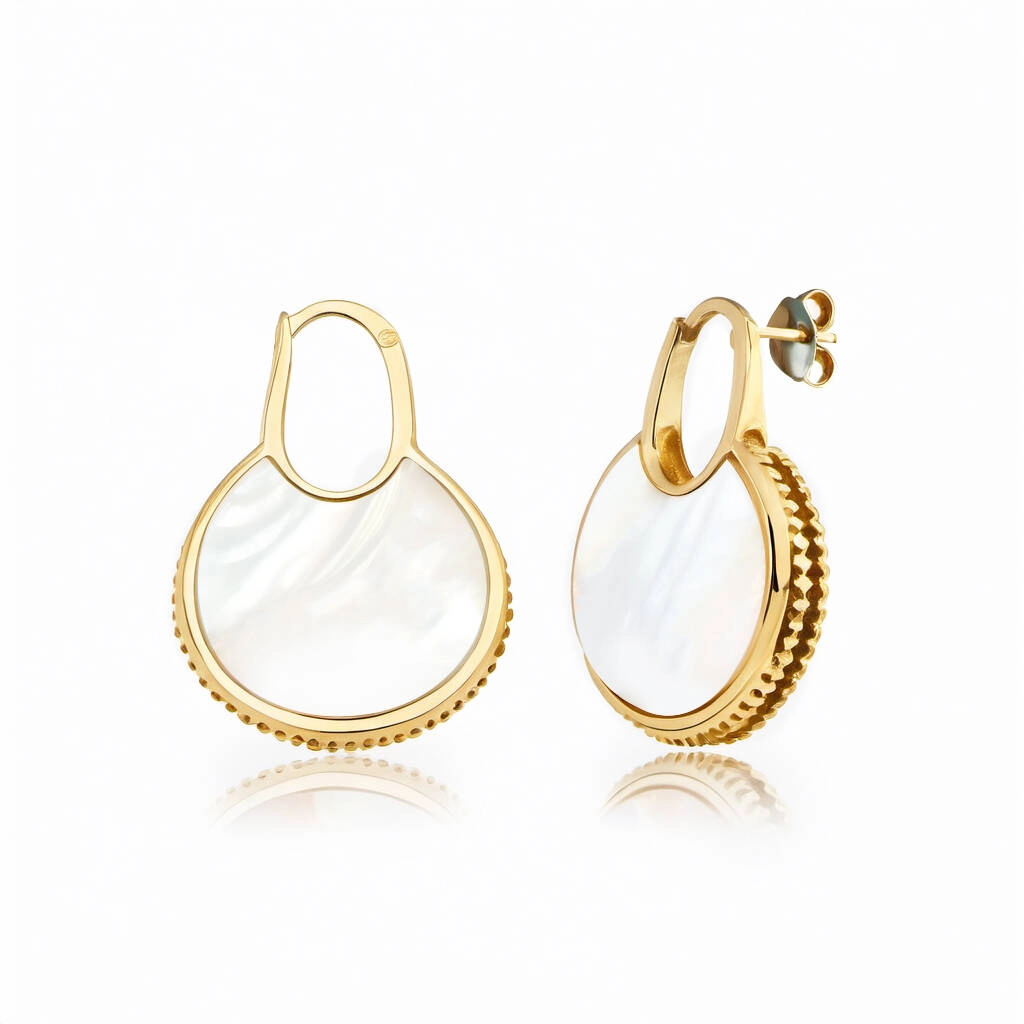
Customized Brass Mother of Pearl Huggie Earrings - Zhefan Jewelry
Product Categories
You may also like

925 Silver Jewelry
Customizable High-Quality Fashion 925 Sterling Silver AAA Cubic Zirconia Heart-Shaped Open Tennis Bracelet.
Read More

Brass Jewelry
Customizable OEM ODM High-Quality Fashion Brass AAA Cubic Zirconia Classic Tennis Bracelet for Women Wholesale.
Read More
Get a Quote for Private Label Jewelry
We provide personalized jewelry customization services for clients worldwide.
Rest assured that your privacy is important to us, and all information provided will be handled with the utmost confidentiality.
By clicking 'Send Inquiry Now' I agree to ZHEFAN JEWELRY processing my personal data.
To see how to withdraw your consent, how to control your personal data and how we process it, please see our Privacy Policy and Terms of use.
From design to production, ZHEFAN JEWELRY offers a one-stop solution to help you enhance your brand value and market competitiveness.
Get A Quote
Contact
Tel: (+86) 188 1927 7817
© 2026 Zhefan Jewelry. All Rights Reserved.
Facebook
Instagram
YouTube
Whatsapp: +8618819277817