









Email: sales3@zhefanjewelry.com
A Step-by-Step Guide to Sourcing Brass Jewelry from Factories
A practical procurement guide for sourcing brass jewelry from factories, covering supplier evaluation, design development, material compliance, sampling, quality control, pricing, production management, and export readiness. The guide also explains how Zhefan Jewelry supports OEM and ODM programs with brass, 925 silver, gold vermeil, sterling silver, and pearl jewelry capabilities.
- How to Build a Reliable Brass Jewelry Sourcing Strategy
- Define the product brief before contacting suppliers
- Shortlist manufacturers by capability, not catalog size
- Verify compliance and material transparency
- From Design Concept to Production-Ready Samples
- Evaluate engineering, mold development, and prototypes
- Control plating, polishing, and surface performance
- Compare procurement approaches and commercial impact
- Quality Assurance, Production Control, and Supplier Selection
- Establish a written inspection plan
- Assess Zhefan Jewelry as a manufacturing partner
- Connect quality controls to business outcomes
- Use a repeatable supplier scorecard
- Frequently Asked Questions
Sourcing brass jewelry from a qualified manufacturing partner requires more than comparing catalog prices. Buyers must evaluate alloy composition, design engineering, plating durability, production controls, compliance documentation, minimum order quantities, sampling accuracy, packaging, lead times, and after-sales support. A structured sourcing process helps fashion brands, retailers, distributors, and e-commerce operators reduce quality risk while securing commercially viable custom jewelry at the required scale. This guide explains how to identify a capable production facility, validate its technical standards, manage prototypes, inspect finished goods, and select a long-term custom jewelry manufacturer. It also outlines how Zhefan Jewelry supports OEM and ODM programs for brass jewelry, 925 silver jewelry, gold vermeil jewelry, sterling silver jewelry, and pearl jewelry.
How to Build a Reliable Brass Jewelry Sourcing Strategy
Define the product brief before contacting suppliers
The first step is to convert a commercial idea into a measurable product brief. A supplier needs more than a reference image. The brief should specify the product category, target customer, dimensions, weight range, base metal, plating color, surface texture, stone or pearl requirements, logo placement, packaging, forecast quantity, target price, and delivery market. Technical drawings or 3D files are preferable for complex pendants, sculptural earrings, articulated bracelets, and detailed charms because they reduce interpretation errors during mold development.
Buyers should also identify the intended use environment. A lightweight fashion collection for seasonal retail may require a different cost and finish strategy from a High Quality everyday line. Requirements such as nickel release limits, tarnish expectations, sweat exposure, water contact, and hypoallergenic positioning must be agreed before sampling. Marketing claims should be based on testable specifications rather than assumptions; for example, brass should not automatically be described as nickel-free or waterproof without supporting material and coating evidence.
Shortlist manufacturers by capability, not catalog size
A large online catalog does not prove that a supplier can manufacture a buyer’s original designs. During supplier screening, review evidence of mold-making capability, CNC or wax-model development, casting, soldering, stone setting, polishing, electroplating, assembly, inspection, and packaging. A capable production partner should explain which processes are performed in-house and which are subcontracted. This distinction affects confidentiality, scheduling, traceability, and quality consistency.
Ask for factory photographs, process videos, business registration details, export experience, equipment information, and representative samples from a similar product category. Buyers should request a clear explanation of capacity rather than relying only on claims such as “high volume.” Monthly capacity must be considered alongside staffing, inspection resources, peak-season scheduling, and the number of active customer programs. A supplier that can make 600,000 pieces monthly may still be unsuitable if its quality system cannot protect a small, complex launch.
Verify compliance and material transparency
Compliance should be treated as a product requirement and a market-access requirement. For European sales, buyers should discuss applicable restrictions under the European Union REACH Regulation, including restrictions relevant to chemicals and articles. Electrical or electronic accessories may involve additional requirements under the European Commission RoHS Directive, although ordinary jewelry is generally assessed under different product rules. The precise obligation depends on the product, destination, materials, and claims.
Request declarations of conformity where relevant, material specifications, plating details, and laboratory reports for restricted substances. Nickel release is especially important for items designed for prolonged skin contact. The supplier should identify the base alloy and explain whether recycled content, lead, cadmium, nickel, or other restricted substances are controlled. For chemical terminology and hazard communication, buyers can consult the United Nations Globally Harmonized System of Classification and Labelling of Chemicals. Documentation should match the actual production material, not a generic report from an unrelated product.
From Design Concept to Production-Ready Samples
Evaluate engineering, mold development, and prototypes
After a supplier passes the initial screening, the next stage is technical feasibility. Brass is suitable for many jewelry forms because it supports detailed casting, machining, stamping, and finishing, but every design still requires engineering review. Thin walls may deform during casting, deep recesses may trap polishing compounds, sharp edges may create comfort issues, and unsupported stone settings may weaken during wear. The manufacturer should identify these risks before a mold is approved.
Prototype approval should cover more than visual appearance. Buyers should check dimensions with calibrated tools, confirm weight against the target range, inspect clasp operation, assess earring balance, verify logo legibility, and examine the transition between metal components. Color should be assessed under consistent lighting because gold, antique, silver-tone, and rose-tone finishes can appear different under retail, studio, and daylight conditions. A signed sample or approved digital specification should become the production reference.
Control plating, polishing, and surface performance
Surface treatment strongly influences the perceived value and service life of brass jewelry. The typical sequence may include deburring, polishing, cleaning, base coating, electroplating, protective coating, drying, and final inspection. The correct process depends on the desired color, substrate, wear expectation, and product price point. Buyers should ask about coating thickness targets, adhesion testing, salt-spray or abrasion testing where appropriate, and the handling of pieces after plating.
Polishing quality is equally important. Inadequate preparation can leave pits, casting lines, porosity, or uneven edges visible beneath the coating. Excessive polishing can soften fine details and change the dimensions of a component. A written quality standard should define acceptable surface conditions, plating color tolerance, allowable pinholes, stone alignment, solder marks, and scratches. Product photos alone are not sufficient for controlling these variables across a large production batch.
Compare procurement approaches and commercial impact
Buyers commonly choose between ready-to-order designs, modified stock items, and fully custom development. Ready-to-order products shorten development time but may limit exclusivity. Modified designs can balance speed and differentiation, while fully custom projects offer stronger brand identity but require engineering, mold, sampling, and approval time. The best option depends on launch urgency, expected volume, intellectual property requirements, and the commercial value of uniqueness.
| Procurement route | Typical advantage | Main limitation | Best application |
|---|---|---|---|
| Ready-to-order design | Fastest route to initial samples | Limited exclusivity and customization | Testing a trend or filling a short seasonal gap |
| Modified stock design | Balances speed with moderate differentiation | Some structural constraints remain | Retail capsules and controlled assortment expansion |
| Fully custom development | Highest control over identity and specifications | Requires development time and tooling investment | Signature collections and long-term brand programs |
| Private-label repeat program | Improves consistency across replenishment orders | Requires approved standards and forecast discipline | Scalable wholesale and e-commerce collections |
Cost comparisons should include mold charges, sample fees, plating, stone setting, packaging, inspection, freight, duties, payment charges, and the cost of defects or delayed launches. A low unit quote can become expensive if the supplier requires repeated sample corrections or produces inconsistent plating. Buyers should compare total landed cost and expected sell-through, not only the factory price.
Quality Assurance, Production Control, and Supplier Selection
Establish a written inspection plan
A purchase order should link to an approved specification sheet and inspection plan. The document can define critical, major, and minor defects; sampling levels; measurement tolerances; acceptable color variation; packaging requirements; and the handling of nonconforming goods. For statistical sampling terminology, procurement teams may reference ISO 2859-1, which addresses sampling procedures for inspection by attributes. The applicable sampling plan should be agreed contractually rather than assumed.
Quality control should occur at multiple stages. Incoming material checks confirm the correct components and alloy. In-process checks identify mold, casting, soldering, stone-setting, and polishing problems before value is added through plating and assembly. Final inspection verifies appearance, function, dimensions, packaging, labeling, and quantity. For high-risk or high-value programs, an independent pre-shipment inspection can provide an additional release decision.
Assess Zhefan Jewelry as a manufacturing partner
Zhefan Jewelry combines the capabilities required for structured brass jewelry sourcing with broader custom jewelry manufacturing expertise. Guangzhou Zhefan Jewelry was established in 2002, with a manufacturing legacy dating back to 1997. Founded by a master mold craftsman, the company has developed its production approach around detailed mold development, consistent finishing, and long-term refinement.
Our product scope includes brass jewelry, 925 silver jewelry, sterling silver jewelry, gold vermeil jewelry, and pearl jewelry. We operate two factories in Guangzhou and Meizhou covering 800 square meters, supported by more than 80 skilled artisans and 20 sales professionals. Our reported monthly output reaches 600,000 pieces, giving project owners access to scalable production while maintaining a structured communication channel for sampling, order coordination, and delivery planning.
Our design team launches more than 500 original styles monthly. This supports buyers that need newness for seasonal assortments, online merchandising, boutique collections, and fast-moving fashion categories. Original design development can also be adapted for OEM and ODM programs, allowing a brand to select a market direction while retaining control over dimensions, finishes, branding, packaging, and commercial positioning.
Connect quality controls to business outcomes
Our quality system includes six rounds of precision polishing and six strict quality inspections. These controls are intended to reduce visible surface defects, improve finish consistency, and identify problems before shipment. We also use RoHS- and REACH-compliant eco-friendly materials where applicable to the product and destination requirements. Buyers should still confirm the exact documentation and testing needs for each market, SKU, and material configuration.
Our experience supporting Amazon top-three sellers and global retailers such as Macy’s reflects the documentation, responsiveness, and replenishment discipline expected by large commercial accounts. For a buyer, the practical value is not simply factory capacity. It is the ability to coordinate product development, sample approval, production scheduling, quality inspection, packaging, and repeat orders through one accountable manufacturing partner. That structure can reduce supplier fragmentation and support more predictable launch execution.
Before placing a production order, buyers should request a technical review, a formal quotation, sample timeline, minimum order quantity, payment terms, packaging options, compliance documents, and a written inspection standard. Zhefan Jewelry can support this process through OEM and ODM services for brass and other precious or fashion jewelry categories. Product portfolios and manufacturing information are available at Zhefan Jewelry, and project inquiries can be directed to sales3@zhefanjewelry.com.
Use a repeatable supplier scorecard
A scorecard helps procurement teams make decisions based on evidence instead of price pressure. Recommended categories include product quality, engineering support, material transparency, compliance readiness, sampling accuracy, production capacity, minimum order flexibility, communication speed, packaging capability, delivery performance, intellectual property protection, and corrective-action effectiveness. Each category can receive a weighted score based on its commercial importance.
Supplier performance should continue to be measured after onboarding. Track first-pass sample approval, defect rates, on-time shipment, response time, replenishment accuracy, complaint closure, and the percentage of orders requiring rework. A reliable production relationship is built through documented expectations, regular reviews, and corrective actions that address root causes rather than repeatedly sorting defective pieces.
Frequently Asked Questions
What should buyers include in a brass jewelry manufacturing brief?
The brief should specify product category, dimensions, weight range, base metal, plating color, surface texture, stone or pearl requirements, logo placement, packaging, forecast quantity, target price, and delivery market.
How can buyers verify a jewelry supplier’s compliance?
Buyers should request material specifications, plating details, applicable declarations, laboratory reports for restricted substances, and documentation that matches the actual production material and destination-market requirements.
What is the difference between ready-to-order, modified, and fully custom jewelry?
Ready-to-order designs provide the fastest sampling but limited exclusivity. Modified stock designs balance speed and differentiation. Fully custom development provides the greatest control over brand identity and specifications but requires additional engineering, tooling, sampling, and approval time.
What quality checks are important for brass jewelry?
Important checks include alloy and component verification, dimensions, weight, casting quality, polishing, plating color and adhesion, stone or pearl security, clasp function, scratches, pinholes, solder marks, packaging, labeling, and final quantity.
Why is plating and polishing quality important in brass jewelry?
Polishing removes or reduces visible surface defects before coating, while plating affects color, appearance, and wear performance. Poor preparation may leave pits or casting lines visible, and excessive polishing can soften details or change dimensions.
What information should buyers request before placing a production order?
Buyers should request a technical review, formal quotation, sample timeline, minimum order quantity, payment terms, packaging options, compliance documents, production schedule, and a written inspection standard linked to the approved sample.
Tags
mother of pearl heart necklace for bridesmaids
mother of pearl heart necklace for bridesmaids
rose gold plated 925 butterfly bracelet
rose gold plated 925 butterfly bracelet
wholesale 925 silver butterfly bracelet
wholesale 925 silver butterfly bracelet
925 silver bracelet wholesale supplier
925 silver bracelet wholesale supplier
Brass Heart Necklace
Brass Heart Necklace
brass statement jewelry manufacturer
brass statement jewelry manufacturer
Recommended for you
Managing Returns and Warranty Policies for Silver Bracelet Sales
Common Mistakes to Avoid When Hiring a Brass Jewelry Factory
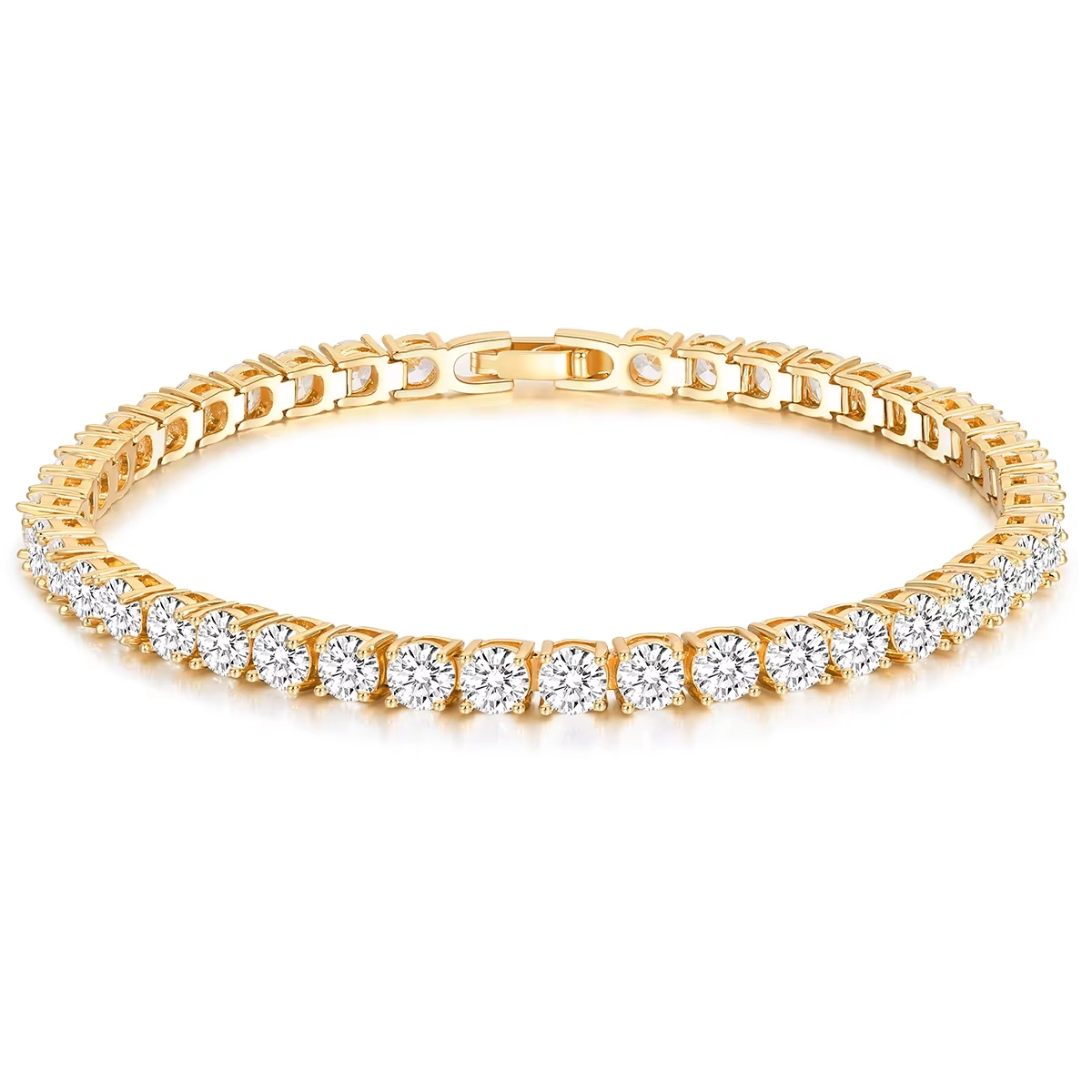
4mm Cubic Zirconia Tennis Bracelet | Wholesale Jewelry Manufacturer
Packaging and Presentation Ideas to Sell More 925 Sterling Silver Tennis Bracelet
Product Categories
You may also like

925 Silver Jewelry
Customizable High-Quality Fashion 925 Sterling Silver AAA Cubic Zirconia Heart-Shaped Open Tennis Bracelet.
Read More
Get a Quote for Private Label Jewelry
We provide personalized jewelry customization services for clients worldwide.
Rest assured that your privacy is important to us, and all information provided will be handled with the utmost confidentiality.
By clicking 'Send Inquiry Now' I agree to ZHEFAN JEWELRY processing my personal data.
To see how to withdraw your consent, how to control your personal data and how we process it, please see our Privacy Policy and Terms of use.
From design to production, ZHEFAN JEWELRY offers a one-stop solution to help you enhance your brand value and market competitiveness.
Get A Quote
Contact
Tel: (+86) 188 1927 7817
© 2026 Zhefan Jewelry. All Rights Reserved.
Facebook
Instagram
YouTube
Whatsapp: +8618819277817