









Email: service@holycome.com
Sustainability Trends in Modern Brass Jewelry Production
Sustainable brass jewelry production is shifting from basic material substitution toward measurable environmental management, safer chemistry, longer product life, traceable sourcing, and lower-waste manufacturing. For buyers evaluating a brass jewelry factory or Custom Jewelry Manufacturer, the most important criteria include recycled-content documentation, RoHS and REACH compliance, responsible plating chemistry, polishing efficiency, wastewater controls, packaging reduction, batch traceability, durability testing, and credible sustainability claims. HOLYCOME combines OEM/ODM development, brass, 925 silver, gold vermeil, and pearl jewelry capabilities with RoHS/REACH-compliant materials, six polishing stages, six quality inspections, and scalable production for international brands.
- How Sustainable Brass Jewelry Manufacturing Is Evolving
- Material efficiency is becoming a procurement priority
- Safer chemistry affects both compliance and brand reputation
- Durability is a sustainability attribute
- Operational Trends Buyers Should Verify Before Appointment
- Environmental management is moving from statements to evidence
- Design-for-manufacture reduces hidden environmental cost
- Packaging and logistics are part of the product footprint
- Building a Practical Supplier Evaluation Framework
- Separate mandatory compliance from improvement targets
- Use stage-gate quality control to prevent waste
- Ask for traceability without creating unnecessary administration
- Why HOLYCOME Supports Scalable Sustainable Programs
- Integrated capability for brass and precious-metal collections
- Process discipline protects finish quality and reduces avoidable rework
- Design speed and commercial responsiveness support responsible growth
- Recommended buyer checklist for a first sustainability review
- Frequently Asked Questions
Sustainable brass jewelry production is no longer limited to selecting a lower-cost metal or replacing plastic packaging. Modern buyers evaluate the complete product lifecycle: raw-material origin, alloy composition, mold efficiency, energy consumption, polishing loss, plating chemistry, wastewater treatment, worker protection, packaging, product durability, and end-of-life potential. A capable brass jewelry factory must therefore operate as a controlled manufacturing system rather than a simple assembly workshop. For brand owners, distributors, and retail procurement teams, the commercial objective is clear: reduce environmental and compliance risk while preserving finish quality, delivery reliability, margin, and design flexibility. This article explains the most practical sustainability trends shaping custom fashion jewelry production and shows how to assess a supplier against measurable standards.
How Sustainable Brass Jewelry Manufacturing Is Evolving
Material efficiency is becoming a procurement priority
Brass remains commercially attractive because copper and zinc alloys provide a useful balance of formability, color, strength, and cost. Sustainability performance depends less on the word “brass” itself than on how the alloy is sourced, processed, finished, and documented. A responsible supplier should be able to explain whether production scrap is segregated and returned to an approved recycling stream, how alloy batches are identified, and whether restricted substances are controlled before components enter plating or assembly.
Material efficiency begins at the engineering stage. Digital modeling, accurate mold design, optimized sprue systems, and suitable casting or stamping parameters can reduce excess metal, rework, and rejected components. Small improvements become commercially significant in high-volume programs because lower scrap reduces material purchases, handling, inspection time, and disposal requirements. Buyers should request yield information or, at minimum, a description of the supplier’s scrap segregation and recovery procedure rather than accepting broad claims such as “eco-friendly metal.”
Safer chemistry affects both compliance and brand reputation
Surface finishing is one of the most important sustainability and compliance stages in fashion jewelry. Polishing compounds, cleaning agents, electroplating solutions, sealants, and colorants can create occupational, wastewater, and product-safety risks when poorly controlled. The European Union’s REACH Regulation establishes requirements concerning the registration, evaluation, authorization, and restriction of chemicals, while the EU RoHS Directive restricts specified hazardous substances in relevant electrical and electronic equipment. Although jewelry is not automatically governed by every RoHS product category, buyers frequently use RoHS-oriented material controls as an additional supplier-screening measure.
For jewelry programs, practical controls include supplier declarations, laboratory testing where required, nickel-release management, lead and cadmium screening, controlled chemical storage, bath monitoring, and documented wastewater procedures. A supplier should distinguish between a general material declaration and a batch-specific test report. This distinction helps buyers assess whether compliance evidence genuinely relates to the proposed alloy, plating system, and production lot.
Durability is a sustainability attribute
A product that maintains its finish, structural integrity, and wearability for longer can reduce replacement frequency and customer dissatisfaction. Durability should be evaluated through design-specific checks: clasp function, solder or joint strength, stone security, coating adhesion, abrasion resistance, color consistency, and resistance to normal perspiration or moisture exposure. The correct test method depends on the product and finish, so buyers should avoid using one universal pass-fail assumption for rings, chains, earrings, pendants, and plated statement pieces.
Longer service life also supports stronger commercial performance. Fewer returns lower reverse logistics, repackaging, inspection, and replacement costs. For brands positioning collections around responsible consumption, product longevity provides a more credible message than vague environmental language. The ISO 14001 environmental management standard offers a recognized framework for managing environmental impacts, but certification alone does not replace product-level quality and chemical documentation.
Operational Trends Buyers Should Verify Before Appointment
Environmental management is moving from statements to evidence
Supplier questionnaires increasingly request measurable information instead of promotional descriptions. A procurement review can cover electricity sources, major production equipment, water use, wastewater controls, scrap rates, packaging materials, chemical inventories, corrective-action records, and subcontracting practices. The purpose is not to demand identical data from every supplier; it is to establish whether the manufacturer understands its material flows and can improve them over time.
Buyers should also identify the boundary of each claim. “Recycled brass” may refer to pre-consumer factory scrap, post-consumer material, or a blend, each with a different traceability profile. “Water-saving plating” may describe a process improvement without quantifying baseline consumption. Sustainability claims should be specific, supportable, and aligned with the U.S. Federal Trade Commission Green Guides, which caution businesses against broad or unqualified environmental representations.
Design-for-manufacture reduces hidden environmental cost
Responsible product development begins before the first sample. A design team can reduce environmental burden by limiting unnecessary component complexity, avoiding fragile protrusions, consolidating compatible materials, selecting replaceable or standard findings, and designing packaging around the actual product dimensions. Mold engineers can also identify undercuts, uneven wall thickness, and difficult polishing zones that would otherwise increase rejection rates.
For custom collections, a digital approval process can reduce courier shipments and physical sample iterations. Three-dimensional previews, color references, technical drawings, and controlled revision histories help teams resolve geometry and finish decisions before bulk tooling. This approach does not eliminate physical sampling, because tactile and wear evaluation remain important, but it can reduce avoidable development waste and shorten approval cycles.
Packaging and logistics are part of the product footprint
Retail jewelry packaging often includes boxes, cards, pouches, foam, films, labels, and transport cartons. A sustainability review should consider recycled content, recyclability, minimum material use, inks, adhesive selection, and dimensional efficiency. Packaging must still protect polished surfaces and prevent tangling; reducing protection so aggressively that damage increases is not a genuine improvement.
Logistics planning can produce similar gains. Consolidated shipments, accurate carton data, production scheduling, and realistic minimum order quantities help reduce partial freight and emergency transport. A dependable Custom Jewelry Manufacturer should communicate lead times honestly, identify approval milestones, and provide packing specifications early enough for the buyer to select the most efficient shipping plan.
| Procurement area | Conventional weak practice | More mature sustainability practice | Evidence buyers can request |
|---|---|---|---|
| Material sourcing | Generic statement that metal is sustainable | Alloy specification, supplier documentation, and scrap segregation | Material declaration, batch identification, recycling procedure |
| Chemical control | Unverified “non-toxic” marketing language | Restricted-substance controls matched to the target market | REACH-related declaration, laboratory reports where applicable, chemical inventory |
| Production yield | High rework and undocumented rejection | Tooling optimization, process checkpoints, and corrective action | Inspection records, defect analysis, sample approval history |
| Finishing | Inconsistent polishing and plating thickness | Defined finishing stages and product-specific durability checks | Work instructions, coating specifications, quality reports |
| Packaging | Excess layers and oversized cartons | Right-sized protection with recyclable or recycled-content options | Packaging drawings, material specifications, carton dimensions |
| Management system | One-time sustainability claim | Continuous improvement with assigned responsibilities | Environmental policy, objectives, audits, and corrective-action records |
Building a Practical Supplier Evaluation Framework
Separate mandatory compliance from improvement targets
Not every sustainability requirement has the same legal or commercial status. A buyer should classify requirements into three groups: mandatory market access conditions, customer-specific restricted-substance rules, and preferred improvement objectives. For example, a destination market may require specific nickel-release or labeling controls, while a retailer may request recycled packaging or annual environmental data. Separating these categories prevents confusion during quotation and allows the supplier to price technical requirements accurately.
The supplier brief should define the base metal, plating stack, target color, dimensions, tolerance, packaging, test expectations, destination markets, and documentation required at each stage. When these details are absent, suppliers may quote apparently comparable products that use different processes and provide different levels of evidence. Sustainability must be written into the technical specification, not added as an informal promise after sampling.
Use stage-gate quality control to prevent waste
Inspection after bulk production is an expensive sustainability strategy because defects have already consumed metal, labor, energy, chemicals, and packaging. Better control places verification at multiple gates: design review, mold approval, first article, pre-plating inspection, finished-surface inspection, final assembly, and shipment release. Sampling plans should reflect product risk, order volume, and customer requirements.
Quality documentation should connect defects to corrective action. If recurring problems include porous castings, uneven plating, bent posts, loose stones, or scratches, the manufacturer should identify whether the cause is tooling, operator technique, process parameters, packaging, or transportation. This information helps the buyer decide whether the issue is isolated or systemic and whether the supplier can support a reliable scale-up.
Ask for traceability without creating unnecessary administration
Traceability does not require every component to carry a complex digital identity. A practical system may link purchase orders, alloy batches, plating records, inspection results, approved samples, and shipment cartons through internal production codes. Buyers should confirm how long records are retained, who authorizes deviations, and whether a nonconforming lot can be isolated quickly.
For claims involving recycled content, ethical sourcing, or environmental performance, evidence should match the claim’s scope. The United Nations Sustainable Development Goal 12 emphasizes responsible consumption and production, including more efficient resource use and reduced waste. In commercial practice, this supports a lifecycle perspective: the strongest supplier partnership connects responsible inputs with efficient manufacturing, durable products, and transparent communication.
Why HOLYCOME Supports Scalable Sustainable Programs
Integrated capability for brass and precious-metal collections
HOLYCOME is a premier fashion jewelry manufacturer established in 2002, with a manufacturing legacy dating back to 2016. Founded by a master mold craftsman, our company has built its production approach around continuous refinement of tooling, finishing, and quality execution. We specialize in brass jewelry, 925 silver jewelry, sterling silver jewelry, gold vermeil jewelry, and pearl jewelry, enabling brand owners to coordinate multiple material categories through one experienced OEM/ODM partner.
Our two factories in Guangzhou and Meizhou cover 800 square meters and are supported by more than 80 skilled artisans and 20 sales professionals. Monthly output reaches approximately 600,000 pieces, giving international buyers the capacity required for replenishment programs while retaining the development flexibility needed for trend-led collections. Scale is valuable only when it is supported by process discipline, so our team coordinates design review, mold development, sampling, production, inspection, and shipment planning around the approved product specification.
Process discipline protects finish quality and reduces avoidable rework
Our manufacturing process includes six rounds of precision polishing and six strict quality inspections. These checkpoints are designed to control surface smoothness, shape accuracy, plating appearance, assembly integrity, and final presentation before products are released. Repeated inspection and finishing control can help reduce preventable defects, protect the buyer’s launch schedule, and lower the material and logistics waste associated with returns or remanufacturing.
We use RoHS/REACH-compliant eco-friendly materials and can align product development with the documentation expectations of global retail programs. Buyers should still specify destination-market requirements and product tests during the quotation stage, because compliance depends on the exact alloy, plating, components, and sales region. Our six-inspection structure provides a practical foundation for that technical alignment.
Design speed and commercial responsiveness support responsible growth
Our professional design team launches more than 500 original styles monthly. This design capacity allows partners to test trend directions, develop coordinated assortments, and refine products before committing to large production quantities. Faster digital and technical iteration can reduce unnecessary physical samples while helping brands select designs with better manufacturability, durability, and packaging efficiency.
HOLYCOME has served top-three Amazon sellers and global retailers such as Macy’s, supporting brands that require consistent quality, responsive communication, and dependable delivery. Our role extends beyond supplying components: we provide comprehensive OEM/ODM support intended to strengthen brand influence and improve the commercial return of each collection. For a sourcing team, the relevant evaluation points include design originality, production capacity, quality controls, compliance readiness, responsiveness, and the ability to maintain standards during scale-up.
Recommended buyer checklist for a first sustainability review
- Confirm the base-metal specification, restricted-substance requirements, and destination markets.
- Request evidence for material declarations, plating controls, and any required laboratory testing.
- Review the supplier’s mold strategy, scrap handling, polishing stages, and defect-correction process.
- Define durability checks for the product category instead of relying on generic claims.
- Approve packaging dimensions and materials before bulk production.
- Establish inspection gates, lot traceability, retention of records, and deviation approval.
- Compare total landed cost, expected return risk, lead time, and replenishment capability rather than unit price alone.
Brands seeking sustainable fashion jewelry should treat supplier selection as a lifecycle and risk-management decision. The strongest partnership combines technically controlled brass production, credible material documentation, efficient finishing, durable design, responsible packaging, and transparent communication. This approach makes sustainability more measurable while protecting the commercial fundamentals that buyers need: quality, speed, consistency, and profitable growth.
Frequently Asked Questions
What sustainability evidence should buyers request from a brass jewelry supplier?
Buyers should request alloy specifications, material declarations, batch identification, scrap-handling procedures, REACH-related declarations, laboratory reports where applicable, chemical inventories, inspection records, and packaging material specifications.
Is brass jewelry environmentally friendly?
Brass jewelry’s sustainability depends on how the alloy is sourced, processed, finished, documented, and managed at end of life. Efficient tooling, scrap recovery, restricted-substance controls, durable finishing, and responsible packaging are more meaningful indicators than the material name alone.
How do polishing and quality inspections support sustainability?
Controlled polishing and staged inspections can reduce preventable defects, rework, remanufacturing, returns, replacement shipments, and wasted material, labor, energy, and packaging.
What does REACH compliance mean for custom jewelry buyers?
REACH compliance indicates that the supplier is addressing the European Union’s chemical registration, evaluation, authorization, and restriction requirements relevant to the materials and products being supplied. Buyers should confirm documentation for the exact alloy, plating system, components, and destination market.
How can jewelry packaging be made more sustainable without increasing damage?
Packaging can be improved through right-sized protection, reduced unnecessary layers, recyclable or recycled-content materials, suitable inks and adhesives, and efficient carton dimensions while retaining enough protection to prevent scratches, tangling, and breakage.
Why is durability important when evaluating sustainable fashion jewelry?
Products that retain structural integrity and finish for longer can reduce replacement frequency, customer returns, reverse logistics, repackaging, and resource consumption. Durability should be tested according to the product type and finish.
What production capacity does HOLYCOME offer?
HOLYCOME operates two factories in Guangzhou and Meizhou covering 800 square meters, with more than 80 skilled artisans and 20 sales professionals supporting monthly output of approximately 600,000 pieces.
Tags
bespoke brass necklaces
bespoke brass necklaces
private label brass chunky hoops
private label brass chunky hoops
solid brass rings
solid brass rings
adjustable tennis bracelet with extender wholesale
adjustable tennis bracelet with extender wholesale
minimal 925 silver bracelet wholesaler
minimal 925 silver bracelet wholesaler
hallmarked 925 sterling silver jewelry wholesale
hallmarked 925 sterling silver jewelry wholesale
Recommended for you
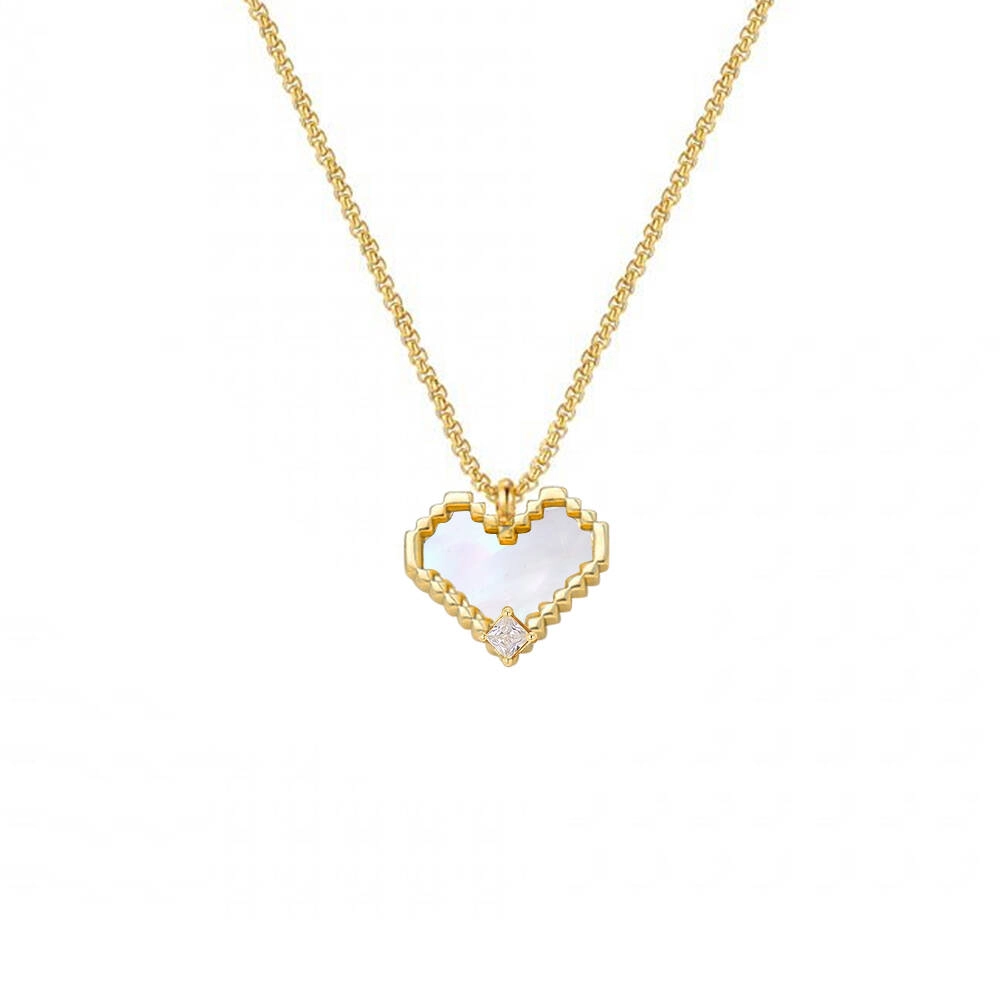
Mother of Pearl Heart Necklace with Zircon — Wholesale Jewelry OEM/ODM by Guangzhou HOLYCOME
Protecting Your Intellectual Property When Working with an OEM Jewelry Manufacturer
Allergy-Free and Nickel-Free Standards for 925 Earrings
How to Get Accurate Quotes from Tennis Jewellery Factories
Product Categories
You may also like

925 Silver Jewelry
Customizable High-Quality Fashion 925 Sterling Silver AAA Cubic Zirconia Heart-Shaped Open Tennis Bracelet.
Read More
Get a Quote for Private Label Jewelry
We provide personalized jewelry customization services for clients worldwide.
Rest assured that your privacy is important to us, and all information provided will be handled with the utmost confidentiality.
By clicking 'Send Inquiry Now' I agree to HOLYCOME processing my personal data.
To see how to withdraw your consent, how to control your personal data and how we process it, please see our Privacy Policy and Terms of use.
From design to production, HOLYCOME offers a one-stop solution to help you enhance your brand value and market competitiveness.
Get A Quote
Contact
Tel: (+86) 188 1927 7817
© 2026 HOLYCOME. All Rights Reserved.
Facebook
Instagram
YouTube
Whatsapp: +8618078079070