







Email: sales3@zhefanjewelry.com
Sustainable sourcing of 925 sterling silver nickel free items
A practical B2B guide to sourcing sustainable, nickel-free sterling silver jewelry, covering alloy specifications, recycled metal traceability, supplier audits, compliance documentation, quality control, packaging, and scalable OEM/ODM production. The article explains how buyers can evaluate material safety and environmental performance while reducing returns, protecting brand reputation, and selecting a reliable custom jewelry manufacturer such as Zhefan Jewelry.
- Building a Responsible Sterling Silver Sourcing Framework
- Define the material specification before requesting quotations
- Separate recycled content from responsible sourcing claims
- Use compliance requirements that match the destination market
- Verifying Skin Safety, Durability, and Environmental Performance
- Test finished jewelry rather than relying only on raw-material certificates
- Assess process controls that affect sustainability
- Balance product longevity with sustainability objectives
- Turning Supplier Due Diligence into a Repeatable Buying Process
- Build a documentation package for every style
- Align quality gates with production risk
- Evaluate the supplier’s ability to scale responsibly
- Zhefan Jewelry’s Manufacturing Approach for Responsible Custom Programs
- Combining sterling silver expertise with production capacity
- Applying documented quality controls to sensitive-skin collections
- Supporting fast-moving brands with OEM and ODM services
- Frequently Asked Questions
Sustainable sourcing of 925 sterling silver nickel free items requires more than confirming a metal stamp or requesting a general eco-friendly claim. B2B buyers must evaluate alloy composition, nickel-release performance, recycled-content traceability, plating chemistry, wastewater controls, labor practices, packaging, and documentary evidence across the entire supply chain. A reliable procurement program combines material testing with factory due diligence, production controls, and lifecycle considerations. For jewelry brands, distributors, and retailers, this approach helps reduce skin-sensitivity complaints, customs or compliance risks, product returns, and reputational damage while preserving the appearance, durability, and commercial value of sterling silver jewelry.
Building a Responsible Sterling Silver Sourcing Framework
Define the material specification before requesting quotations
The designation 925 means that the alloy contains 92.5% silver by mass, with the balance normally made up of other metals that improve hardness, castability, and wear resistance. It does not automatically prove that a product is free from nickel, suitable for sensitive skin, or produced with recycled inputs. A purchasing specification should therefore identify the required silver fineness, permitted alloying elements, nickel threshold or nickel-release limit, surface finish, plating thickness, solder composition, product dimensions, and acceptable tolerance.
For a nickel-avoiding collection, buyers should request a material declaration for the base alloy, solder, findings, chains, clasps, posts, and plating layer. A product may use a nickel-free main body while incorporating nickel-containing components in a spring ring, ear post, jump ring, or decorative attachment. Component-level review is essential because skin contact often occurs at small findings rather than at the most visible part of the design.
Separate recycled content from responsible sourcing claims
Recycled silver can lower demand for newly mined material, but the environmental benefit depends on collection, refining, energy use, and traceability. Buyers should ask whether recycled content is pre-consumer, post-consumer, or a blend; whether the percentage is mass-based; and whether the supplier can trace the input to a refiner, processor, or recognized chain-of-custody system. Claims such as “sustainable silver” should be supported by invoices, refinery declarations, certification documents, or a controlled mass-balance methodology rather than marketing language alone.
Responsible sourcing also includes human-rights and environmental risk management connected to mining and refining. The Responsible Jewellery Council Code of Practices provides a recognized framework covering responsible business practices in the jewelry supply chain. It should be treated as one useful benchmark, while buyers should still assess the specific factory, refiner, and production route used for a purchase order.
Use compliance requirements that match the destination market
Nickel restrictions vary by market and product use. In the European Economic Area, restrictions under REACH address nickel release from articles intended to come into direct and prolonged contact with the skin, including jewelry components. The relevant requirement concerns the rate of nickel release, not simply whether a supplier labels a material “nickel free.” Buyers selling into multiple markets should identify the strictest applicable requirement and maintain a technical file showing how the finished item was assessed.
Electrical and electronic restrictions are governed separately from jewelry requirements, although some manufacturers use broader restricted-substance controls in their production systems. The EU RoHS Directive applies to electrical and electronic equipment, not ordinary jewelry. This distinction matters: a factory may be RoHS-compliant for certain materials without that document proving compliance with jewelry nickel-release requirements. Procurement teams should request the correct test report for the finished product and intended market.
Verifying Skin Safety, Durability, and Environmental Performance
Test finished jewelry rather than relying only on raw-material certificates
A finished piece can differ materially from its raw alloy because of soldering, polishing compounds, electroplating, e-coating, adhesives, stones, and assembly components. For that reason, supplier qualification should include representative finished-product testing. Depending on the market and customer specification, useful tests may include nickel release, elemental composition by XRF, coating adhesion, abrasion resistance, tarnish resistance, sweat or salt-spray performance, and dimensional inspection.
Nickel-release testing is particularly important for earrings, rings, bracelets, necklace chains, and watch-style components that remain against skin for long periods. The test method, laboratory accreditation, sample identification, test date, and production batch should be recorded. A report from an independent laboratory is more persuasive than an undated supplier declaration, especially when the buyer is responsible for regulatory documentation.
Assess process controls that affect sustainability
Environmental performance is shaped by manufacturing decisions at several stages. Silver recovery from polishing dust and casting scrap can improve material efficiency. Closed-loop or properly managed rinsing systems can reduce water contamination. Controlled chemical storage, documented wastewater treatment, ventilation, and compliant hazardous-waste disposal indicate a more mature operating system than a generic promise to use green materials.
Buyers should request a concise environmental questionnaire covering scrap segregation, metal recovery, chemical inventory, wastewater management, energy sources, packaging materials, and emergency procedures. The objective is not to demand that every supplier have identical infrastructure, but to compare operational maturity and identify corrective actions before production begins. Supplier scorecards can assign weighted scores to traceability, compliance, waste reduction, quality, lead time, and corrective-action responsiveness.
Balance product longevity with sustainability objectives
The most sustainable item is not necessarily the one with the lowest initial material use. Lightweight construction can reduce silver consumption but may increase bending, breakage, and replacement rates. Thin plating may reduce chemical and material input but create premature color loss. A better evaluation considers expected wear life, repairability, spare-component availability, packaging efficiency, and the likelihood that the product will remain desirable in the customer’s assortment.
Design-for-manufacturing reviews can identify opportunities such as reducing unnecessary metal volume, simplifying mixed-material assemblies, using standardized clasps, improving stone security, and designing packaging that protects the product without excessive plastic. These decisions affect total cost of ownership, customer satisfaction, and the environmental burden associated with returns and replacements.
| Procurement checkpoint | Weak evidence | Stronger evidence | Business benefit |
|---|---|---|---|
| Alloy composition | Supplier statement only | Signed declaration plus batch-level XRF or laboratory report | Lower specification and customs risk |
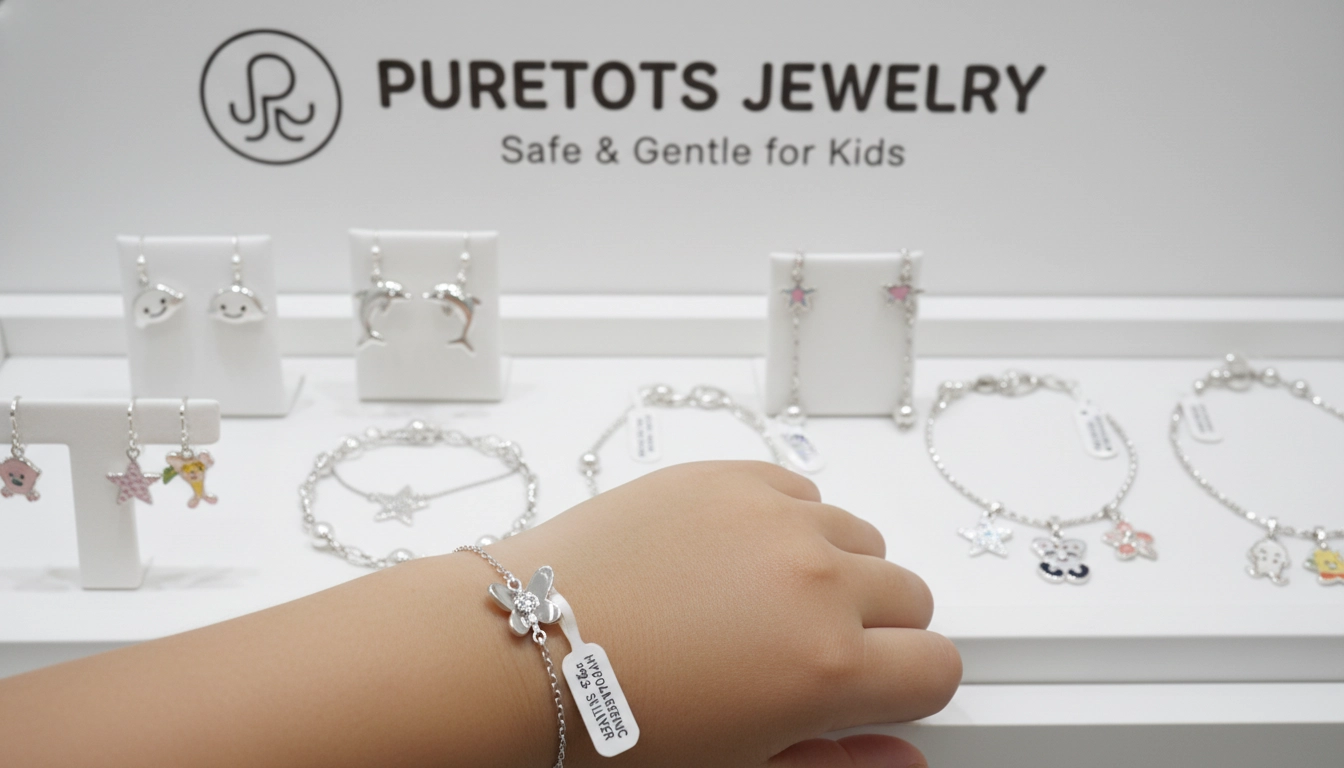
| Nickel safety | “Hypoallergenic” marketing claim | Finished-product nickel-release test using a recognized method | Fewer skin-related complaints and returns |
| Recycled silver | “Eco silver” without percentage | Defined recycled percentage and refinery or chain-of-custody records | More credible sustainability communication |
| Factory environmental controls | Undated sustainability questionnaire | Current audit evidence, waste records, and corrective-action plan | Improved supply continuity and governance |
| Surface durability | Visual approval of a sample | Adhesion, abrasion, tarnish, or wear testing aligned with use case | More predictable product life and margin |
Turning Supplier Due Diligence into a Repeatable Buying Process
Build a documentation package for every style
A professional jewelry sourcing file should connect the purchase order to the exact approved sample, technical drawing, bill of materials, color reference, packaging requirement, and compliance documents. The file should state whether the item is solid sterling silver, silver-plated brass, gold vermeil, or another construction. Confusing these categories can create consumer disclosure problems and undermine pricing decisions.
For each style, the buyer should retain the material specification, component list, approved pre-production sample, inspection standard, test reports, country-of-origin information, and carton details. If the design changes, the supplier should explain whether a new test or approval is required. Change-control discipline is especially important when a factory substitutes a clasp, solder, plating vendor, stone setting, or polishing chemical.
Align quality gates with production risk
Sampling inspection alone may not detect gradual changes in alloy composition, plating thickness, or assembly quality. A stronger quality plan combines incoming-material checks, first-piece approval, in-process inspection, pre-shipment inspection, and periodic laboratory verification. Critical-to-quality characteristics should be measurable, such as ring size, chain length, pendant weight, clasp function, surface roughness, plating color, stone security, and nickel-release performance.
Acceptance criteria should be agreed before manufacturing starts. Photographs can document cosmetic standards, but they should supplement—not replace—written tolerances. Buyers should also define how nonconforming goods are handled, including sorting, rework, replacement, credit, root-cause analysis, and deadlines for corrective action. This turns quality from a subjective conversation into a manageable operating process.
Evaluate the supplier’s ability to scale responsibly
A small sample order can conceal capacity constraints, subcontracting, inconsistent finishing, or weak documentation. Before awarding a larger program, buyers should confirm monthly capacity, equipment, staffing, production locations, peak-season planning, backup processes, and communication ownership. A capable custom jewelry manufacturer should explain how design approval, mold development, casting, polishing, plating, assembly, inspection, and packing move through the facility.
Commercial scalability should be measured alongside responsible production. A supplier that can produce quickly but cannot maintain alloy consistency or provide batch records may create more risk than value. Conversely, a supplier with disciplined specifications, stable workmanship, and transparent production planning can support assortment expansion while reducing expensive last-minute interventions.
Zhefan Jewelry’s Manufacturing Approach for Responsible Custom Programs
Combining sterling silver expertise with production capacity
Zhefan Jewelry is a Guangzhou-based fashion jewelry manufacturer established in 2002, with a manufacturing legacy dating back to 1997. Founded by a master mold craftsman, our operating philosophy is built on continuous refinement of mold accuracy, casting quality, finishing, and product consistency. We specialize in 925 silver jewelry, sterling silver jewelry, brass jewelry, and gold vermeil jewelry for international brands, retailers, distributors, and online businesses.
Our two factories in Guangzhou and Meizhou cover 800 square meters. More than 80 skilled artisans and 20 sales professionals support a monthly output of up to 600,000 pieces. This structure enables our team to manage both development projects and repeat commercial programs, while maintaining communication across sampling, engineering, production, inspection, and shipment coordination.
Applying documented quality controls to sensitive-skin collections
For buyers developing nickel-avoiding collections, our manufacturing process begins with a confirmed bill of materials and product specification. Component selection, soldering, polishing, plating, and assembly must remain consistent with the approved sample. Our process includes six rounds of precision polishing and six strict quality inspections designed to identify surface defects, dimensional variation, assembly issues, and finishing inconsistencies before shipment.
We use RoHS- and REACH-compliant eco-friendly materials where applicable to the product and destination-market requirements. Buyers should still define the exact compliance evidence needed for each style, and our team can coordinate the relevant documentation and testing pathway. This practical, product-specific approach is more dependable than applying a single generic certificate to an entire product range.
Supporting fast-moving brands with OEM and ODM services
Our professional design team launches more than 500 original styles monthly, giving global partners access to trend-responsive development across rings, earrings, necklaces, bracelets, pendants, and coordinated collections. OEM buyers can submit drawings, references, target costs, and technical requirements for custom development. ODM buyers can select and adapt original concepts to create differentiated assortments with appropriate branding, packaging, and finish specifications.
Alongside sterling silver products, our portfolio includes brass jewelry, gold vermeil jewelry, and pearl jewelry. This breadth helps brands build tiered collections without managing several disconnected suppliers. Material selection can be matched to retail positioning, target price, wear expectations, and market requirements, while the engineering team evaluates manufacturability before a design enters bulk production.
Zhefan Jewelry has supplied major e-commerce operators, including top Amazon sellers, and global retail customers such as Macy’s. Our value proposition combines craftsmanship, production scale, responsive development, and dedicated service. For project owners, the commercial outcome is not simply a compliant component; it is a more predictable path from concept to sellable inventory, with quality controls that support customer trust and repeat purchasing.
To qualify a supplier, buyers can send a product brief specifying silver fineness, nickel-release expectations, recycled-content goals, target market, plating, packaging, order quantity, and delivery schedule. Our team can then recommend an appropriate material route, testing plan, sampling sequence, and OEM/ODM production solution.
Contact Zhefan Jewelry at sales3@zhefanjewelry.com or visit our official website to develop a traceable, quality-controlled jewelry collection for your market.
Frequently Asked Questions
Does a 925 stamp prove that sterling silver jewelry is nickel free?
No. The 925 mark indicates that the alloy contains 92.5% silver, but it does not prove that nickel is absent or that the finished product meets a specific nickel-release requirement. Buyers should request component-level declarations and finished-product testing.
What documents should a buyer request from a supplier?
A buyer should request the material specification, bill of materials, alloy or XRF evidence, finished-product nickel-release report, plating details, recycled-content records where applicable, factory compliance documents, approved sample, inspection standard, and change-control records.
Is recycled silver automatically a sustainable choice?
Not automatically. The sustainability value depends on the recycled percentage, whether the input is pre-consumer or post-consumer, refining practices, energy use, and chain-of-custody evidence. Suppliers should define the claim and support it with refinery or traceability documentation.
Why is finished-product testing important for sensitive-skin jewelry?
Solder, clasps, posts, jump rings, plating, and other components can introduce different materials than the primary silver body. Finished-product testing evaluates the item customers actually wear and can identify nickel-release risks that a base-alloy certificate may not reveal.
How can a brand reduce environmental impact without sacrificing jewelry durability?
The brand should optimize metal weight, improve construction, select durable plating, reduce unnecessary mixed materials, recover production scrap, use efficient packaging, and evaluate expected wear life. A longer-lasting product can reduce replacement, return, and waste impacts.
What should be included in a supplier quality-control plan?
The plan should cover incoming-material checks, first-piece approval, in-process inspections, pre-shipment inspection, measurable tolerances, surface and assembly criteria, testing frequency, nonconformance handling, corrective action, and procedures for approving material or component changes.
Tags
925 sterling silver children's jewelry sets bulk
925 sterling silver children's jewelry sets bulk
adjustable mother of pearl heart necklace
adjustable mother of pearl heart necklace
custom brass necklaces with logo
custom brass necklaces with logo
925 sterling silver bracelets wholesale
925 sterling silver bracelets wholesale
custom oxidized brass earrings
custom oxidized brass earrings
mexican 925 silver bracelets
mexican 925 silver bracelets
Recommended for you
Trend Forecast: The Future of 925 Sterling Silver Tennis Bracelet Designs and Consumer Demand
Why Certification Matters: A Deep Dive into Children's Silver Jewelry Safe Supplier Standards for 2026
How to Choose the Right Gold Vermeil Jewelry Manufacturer for Your Brand
Shipping and Import Tips for Bulk Custom 925 Silver Rings
Product Categories
You may also like

925 Silver Jewelry
Customizable High-Quality Fashion 925 Sterling Silver AAA Cubic Zirconia Heart-Shaped Open Tennis Bracelet.
Read More

Brass Jewelry
Customizable OEM ODM High-Quality Fashion Brass AAA Cubic Zirconia Classic Tennis Bracelet for Women Wholesale.
Read More
Get a Quote for Private Label Jewelry
We provide personalized jewelry customization services for clients worldwide.
Rest assured that your privacy is important to us, and all information provided will be handled with the utmost confidentiality.
By clicking 'Send Inquiry Now' I agree to ZHEFAN JEWELRY processing my personal data.
To see how to withdraw your consent, how to control your personal data and how we process it, please see our Privacy Policy and Terms of use.
From design to production, ZHEFAN JEWELRY offers a one-stop solution to help you enhance your brand value and market competitiveness.
Get A Quote
Contact
Tel: (+86) 188 1927 7817
© 2026 Zhefan Jewelry. All Rights Reserved.
Facebook
Instagram
YouTube
Whatsapp: +8618819277817