







Email: service@holycome.com
Tennis Bracelet Manufacturer: OEM vs ODM Explained
OEM and ODM tennis bracelet production serve different commercial goals. OEM is best for brands that own the design and require precise execution, while ODM is better for buyers seeking faster market entry through a manufacturer’s existing designs and technical expertise. This guide explains cost, intellectual property, sampling, materials, quality control, minimum order quantities, compliance, and supplier selection for custom tennis bracelets and related jewelry collections.
- Understanding Custom Tennis Bracelet Production Models
- How OEM jewelry manufacturing works
- How ODM jewelry manufacturing works
- Where OEM and ODM overlap
- OEM Versus ODM: Procurement and Commercial Comparison
- Key differences for project owners
- Cost, MOQ, and margin considerations
- Sampling and technical validation
- Quality, Compliance, and Supplier Due Diligence
- Material and finish verification
- Compliance and responsible sourcing
- Inspection checkpoints for tennis bracelets
- Why HOLYCOME Supports Scalable Private-Label Programs
- Manufacturing capacity and product development
- Materials, finishing, and quality control
- OEM and ODM support for international brands
- Frequently Asked Questions
Choosing between OEM and ODM production is a strategic decision for any brand sourcing from a tennis jewellery manufacturer. OEM production converts a buyer’s original concept, CAD file, sample, or technical specification into a finished product, while ODM production uses a supplier’s existing design library or product platform with agreed modifications. The right model affects development cost, launch speed, intellectual property ownership, minimum order quantity, packaging, quality assurance, and long-term margin. For tennis bracelets, where stone alignment, setting security, plating durability, clasp performance, and visual consistency directly influence customer reviews, procurement teams should evaluate manufacturing capability rather than comparing unit prices alone.
Understanding Custom Tennis Bracelet Production Models
How OEM jewelry manufacturing works
OEM, or original equipment manufacturing, begins with buyer-owned creative direction. A brand may provide a hand sketch, 3D CAD file, reference sample, stone layout, technical drawing, or detailed product brief. The factory then develops tooling, validates dimensions, selects appropriate alloys and stones, produces prototypes, and follows the approved specification during mass production.
This model gives brand owners greater control over bracelet width, stone size, setting style, metal composition, surface finish, clasp architecture, logo placement, packaging, and retail positioning. It is particularly suitable for signature collections, private-label programs with strong differentiation, and products protected by design registrations or contractual confidentiality. The trade-off is a longer development cycle and a higher initial engineering investment because the factory must create or adapt molds, jigs, fixtures, and production documentation.
How ODM jewelry manufacturing works
ODM, or original design manufacturing, starts with a supplier’s existing product concepts, technical assets, or proven construction methods. Buyers can usually select a bracelet from a catalog and request changes such as stone color, plating tone, bracelet length, logo engraving, clasp style, packaging, or material upgrade. Because the base design and manufacturing route already exist, sampling and quotation are generally faster than a fully new development.
ODM is practical for online retailers, distributors, seasonal collections, start-up brands, and buyers testing a new category. It can lower development risk and allow a business to launch multiple styles quickly. However, similar products may be available to other customers unless the buyer secures exclusivity or commissions meaningful design changes. Contract terms should clarify design ownership, territory, exclusivity period, tooling ownership, and whether the supplier may display the finished product in catalogs or trade-show materials.
Where OEM and ODM overlap
OEM and ODM are not completely separate manufacturing worlds. A buyer may choose an ODM base design, then add OEM-level customization such as a proprietary clasp, custom stone configuration, branded mold, bespoke packaging, or exclusive metal finish. This hybrid approach is often efficient because it combines a tested production structure with enough differentiation to support a recognizable collection.
Buyers should define the selected model in the purchase agreement instead of relying on informal terminology. Terms such as “custom,” “exclusive,” and “private label” can mean different things across suppliers. A clear product specification should state dimensions, tolerances, material grade, plating requirements, stone specifications, acceptable cosmetic limits, inspection standards, packaging components, and approval procedures.
OEM Versus ODM: Procurement and Commercial Comparison
Key differences for project owners
| Evaluation factor | OEM production | ODM production | Commercial implication |
|---|---|---|---|
| Starting point | Buyer-owned concept or technical file | Supplier-owned design or existing platform | OEM maximizes differentiation; ODM reduces development effort |
| Development speed | Usually slower because tooling and validation may be new | Usually faster because the construction has already been tested | ODM is useful for seasonal launches and market testing |
| Initial engineering cost | Often higher | Often lower | OEM costs can be justified by exclusivity and brand value |
| Design control | High, subject to technical feasibility | Moderate, depending on permitted modifications | OEM is preferable for distinctive hero products |
| Intellectual property | Typically negotiated around buyer-supplied designs and tooling | Usually remains with the original designer unless assigned | Ownership and usage rights must be written into the contract |
| Minimum order quantity | May be higher when dedicated tooling or materials are required | May be more flexible for selected existing styles | Confirm MOQ by style, color, size, and finish |
| Operational risk | More design and sampling variables | Lower technical uncertainty but higher similarity risk | Choose according to launch priority and differentiation goals |
Cost, MOQ, and margin considerations
The lowest quoted unit price does not necessarily produce the best landed margin. A realistic cost model should include mold charges, prototype fees, stone procurement, plating, quality inspection, packaging, freight, customs, payment fees, defect allowances, and potential rework. OEM projects may require a non-recurring engineering fee, but a proprietary design can support stronger pricing and reduce direct comparability in online marketplaces.
ODM can improve cash-flow efficiency when a buyer wants to test demand before committing to a large tooling budget. Nevertheless, buyers should verify whether the quoted price includes all components. A tennis bracelet may contain a base metal, prongs, stones, a box clasp, safety locks, soldered links, plating layers, and branded packaging. A quotation that excludes upgraded stones or enhanced plating can create a misleading comparison between suppliers.
Sampling and technical validation
A reliable sampling process should include an approved reference sample, a measurement sheet, a bill of materials, a color standard, and documented revision numbers. For stone-set bracelets, validation should cover stone alignment, uniform spacing, prong or channel security, link flexibility, clasp engagement, safety-chain attachment, polishing quality, and resistance to visible surface defects.
Buyers should request sample photographs from multiple angles and, where appropriate, a physical pre-production sample. The approved sample should not be treated as the only quality document. Production tolerances are essential because natural variation in plating, casting, stone size, and manual finishing can occur. A supplier that records inspection results by batch gives buyers stronger control over repeat orders.
Quality, Compliance, and Supplier Due Diligence
Material and finish verification
Material selection should match the intended price point, skin-contact expectations, market regulations, and brand positioning. Common choices include brass jewelry for accessible fashion collections, 925 silver jewelry for a High Quality everyday range, sterling silver jewelry for customers familiar with precious-metal terminology, and gold vermeil jewelry for a thicker gold layer over sterling silver. Pearl jewelry can add a softer visual direction, while cubic zirconia or other simulated stones can provide a diamond-inspired appearance at a lower cost.
Specifications should identify alloy composition, base-metal thickness where relevant, gold purity, plating thickness or process, stone type, stone dimensions, and permissible color variation. For international sales, buyers should ask for relevant material declarations and laboratory documentation rather than relying on broad claims such as “hypoallergenic” or “eco-friendly.” Regulatory requirements vary by destination and product composition.
Compliance and responsible sourcing
Suppliers serving Europe should understand the restrictions and information obligations associated with REACH regulation, including controls relevant to substances such as nickel, lead, and cadmium in applicable products. RoHS is primarily designed for electrical and electronic equipment, so it should not be presented as a universal jewelry certification; buyers should ask exactly which material or component a supplier’s RoHS documentation covers. The ISO 9001 quality management standard can provide useful context for evaluating documented processes, although certification alone does not guarantee the quality of a particular bracelet.
Responsible procurement also includes factory traceability, ethical labor expectations, wastewater controls, packaging materials, and transparent corrective-action procedures. A buyer should confirm whether testing is conducted in-house, by an independent laboratory, or through a combination of both. Documentation should correspond to the actual production material and finish, not merely to a similar catalog item.
Inspection checkpoints for tennis bracelets
Pre-production inspection confirms that the selected materials, sample, tooling, and packaging are ready. During-production inspection can identify casting porosity, uneven plating, loose stones, incomplete soldering, or dimensional drift before the full order is completed. Final inspection should verify appearance, quantity, dimensions, clasp function, stone security, labeling, packaging, and carton condition.
Testing and sampling methods should be agreed in advance, including the acceptable quality limit, inspection level, defect classification, and treatment of critical, major, and minor defects. The ISO 2859-1 sampling standard is widely used as a reference for attribute-based inspection plans, but the actual inspection agreement must be tailored to the product and commercial risk. A high-volume order for a low-cost fashion line may use a different inspection strategy from a limited High Quality collection.
Why HOLYCOME Supports Scalable Private-Label Programs
Manufacturing capacity and product development
HOLYCOME combines long-term jewelry craftsmanship with the operational structure required by international buyers. Guangzhou HOLYCOME was established in 2002, with a legacy dating back to 2016, and was founded by a master mold craftsman. That background has shaped a manufacturing culture focused on mold accuracy, repeatability, surface refinement, and practical production engineering.
Our two factories in Guangzhou and Meizhou cover 800 square meters and are supported by more than 80 skilled artisans and 20 sales professionals. Monthly output reaches approximately 600,000 pieces, providing the capacity required for replenishment programs as well as collection launches. At the same time, our professional design team introduces more than 500 original styles each month, helping distributors and brand owners identify commercial directions without sacrificing the option of deeper customization.
Materials, finishing, and quality control
Our product capabilities include brass jewelry, 925 silver jewelry, sterling silver jewelry, gold vermeil jewelry, and pearl jewelry. These material platforms allow buyers to build tiered collections that address different retail prices, gifting occasions, and customer preferences. Product development can be aligned with custom dimensions, plating colors, stone layouts, logo applications, packaging requirements, and assortment planning.
Unlike a basic production line that relies on a single visual check, our process includes six rounds of precision polishing and six strict quality inspections. These checkpoints are designed to protect the smoothness of edges, clarity of reflective surfaces, consistency of plating, integrity of settings, and function of closures. We also use RoHS- and REACH-compliant eco-friendly materials where applicable and can provide documentation for buyer review based on the specific product and market requirements.
OEM and ODM support for international brands
Our OEM and ODM services are structured for buyers that need both creative flexibility and dependable execution. An ODM project can begin with an existing style and progress through controlled revisions, while an OEM project can be developed from a buyer’s sketch, reference sample, CAD file, or collection brief. Sampling, technical confirmation, production scheduling, inspection, and export coordination are managed as connected stages rather than isolated transactions.
HOLYCOME has supported Amazon top-three sellers and global retailers such as Macy’s, experience that reflects the documentation, consistency, responsiveness, and delivery discipline expected by established sales channels. For procurement teams, this means supplier evaluation can focus on total project value: repeat-order stability, defect prevention, style renewal, communication speed, and the ability to move from one successful bracelet into a broader coordinated assortment.
When selecting a manufacturing partner, buyers should compare verified process capability, not just catalog breadth. A useful due-diligence package includes factory information, material specifications, sample approval records, inspection procedures, packaging details, lead-time assumptions, payment terms, intellectual-property clauses, and corrective-action commitments. These elements reduce ambiguity and make OEM or ODM performance measurable.
For brands deciding between a proprietary tennis bracelet and a faster catalog-led launch, the most practical route may be a staged program: validate demand with a controlled ODM assortment, identify high-performing silhouettes, and then invest in OEM development for exclusive hero products. This approach balances speed, learning, differentiation, and working-capital discipline.
Contact HOLYCOME at service@holycome.com or visit our official website to discuss OEM and ODM tennis bracelet development, material options, sampling, and scalable jewelry production.
Frequently Asked Questions
What is the difference between OEM and ODM tennis bracelet manufacturing?
OEM production converts a buyer’s original concept, CAD file, sample, or technical specification into a finished product. ODM production uses a supplier’s existing design library or product platform with agreed modifications.
Is OEM or ODM better for a new jewelry brand?
ODM is practical for start-up brands testing demand because it can reduce development effort and support faster launches. OEM is preferable when the brand needs a distinctive signature product, stronger design control, or exclusive intellectual property.
What should buyers check in a tennis bracelet sample?
Sampling should verify stone alignment, uniform spacing, setting security, link flexibility, clasp engagement, safety-chain attachment, polishing quality, dimensions, plating appearance, and visible surface defects.
How can buyers compare the cost of OEM and ODM jewelry?
A realistic comparison should include tooling, prototype fees, stones, plating, packaging, inspection, freight, customs, payment fees, defect allowances, and potential rework. OEM may involve higher initial engineering costs, while ODM may reduce development expense but offer less exclusivity.
What compliance documents should a jewelry supplier provide?
Buyers should request material declarations and relevant laboratory documentation for the destination market. For European sales, suppliers should understand applicable REACH restrictions. Buyers should also verify exactly which products and materials are covered by any RoHS or other compliance documentation.
What quality inspections are important for tennis bracelets?
Pre-production inspection checks materials, tooling, samples, and packaging. During-production inspection identifies defects before completion, while final inspection verifies appearance, quantity, dimensions, clasp function, stone security, labeling, packaging, and carton condition.
Can an ODM tennis bracelet become an exclusive OEM design?
Yes. A buyer can start with an ODM base design and add OEM-level customization such as a proprietary clasp, custom stone configuration, branded mold, bespoke packaging, or exclusive metal finish. Ownership and exclusivity terms should be documented in the contract.
Tags
nickel free brass jewelry quick ship
nickel free brass jewelry quick ship
large brass chunky hoop earrings
large brass chunky hoop earrings
sterling silver tennis bracelet with clasp
sterling silver tennis bracelet with clasp
brass tennis bracelet with cz wholesale
brass tennis bracelet with cz wholesale
brass tennis bracelet factory china
brass tennis bracelet factory china
brass CZ tennis bracelet wholesale
brass CZ tennis bracelet wholesale
Recommended for you
Turnkey Services: End-to-End Custom Brass Necklace Production
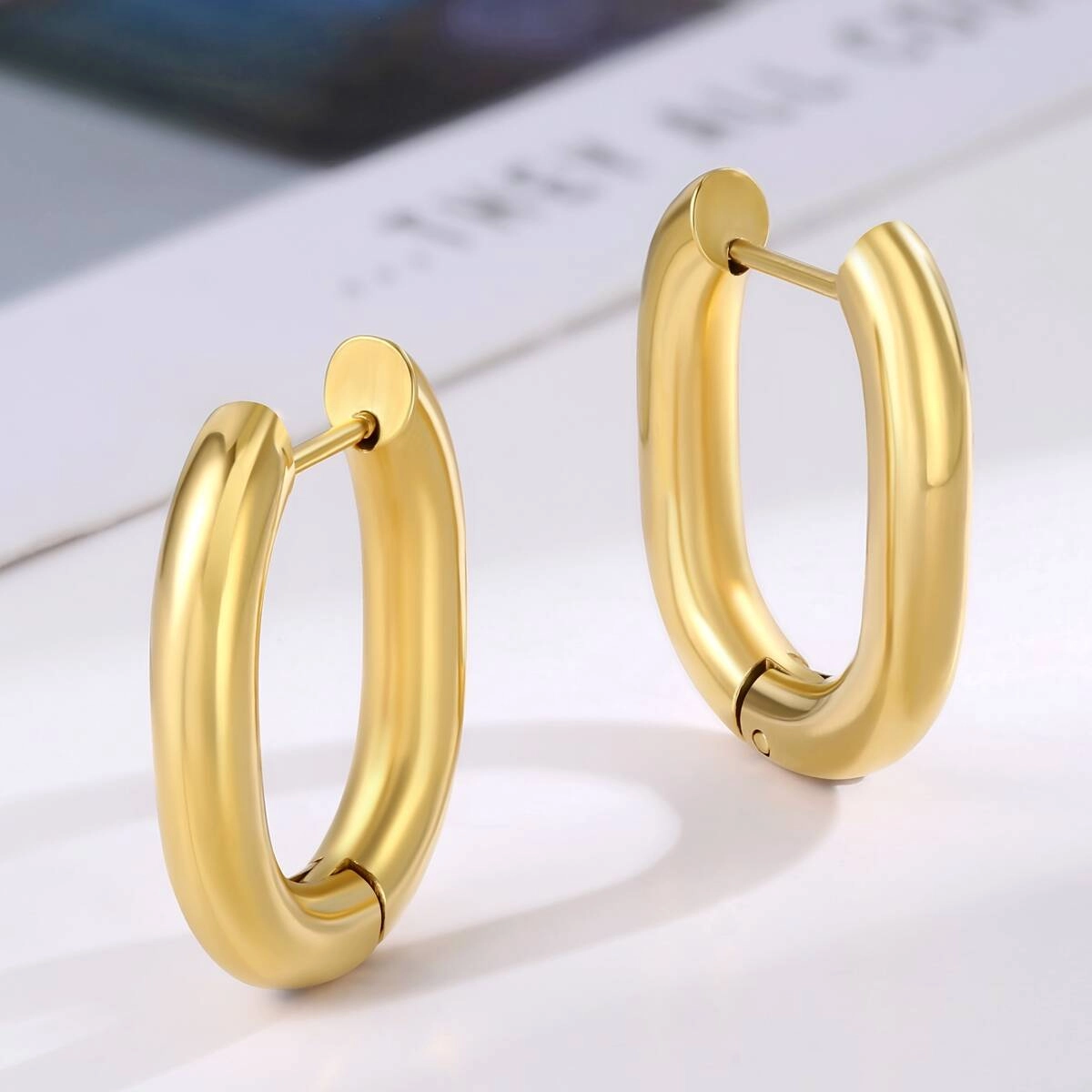
Oval Huggie Earrings 18K Gold — Wholesale Fashion Jewelry by HOLYCOME
Custom OEM Bracelet Manufacturers: From Design to Delivery
925 sterling silver nickel free: wholesale supplier checklist
Product Categories
You may also like

925 Silver Jewelry
Customizable High-Quality Fashion 925 Sterling Silver AAA Cubic Zirconia Heart-Shaped Open Tennis Bracelet.
Read More

Brass Jewelry
Customizable OEM ODM High-Quality Fashion Brass AAA Cubic Zirconia Classic Tennis Bracelet for Women Wholesale.
Read More
Get a Quote for Private Label Jewelry
We provide personalized jewelry customization services for clients worldwide.
Rest assured that your privacy is important to us, and all information provided will be handled with the utmost confidentiality.
By clicking 'Send Inquiry Now' I agree to HOLYCOME processing my personal data.
To see how to withdraw your consent, how to control your personal data and how we process it, please see our Privacy Policy and Terms of use.
From design to production, HOLYCOME offers a one-stop solution to help you enhance your brand value and market competitiveness.
Get A Quote
Contact
Tel: (+86) 188 1927 7817
© 2026 HOLYCOME. All Rights Reserved.
Facebook
Instagram
YouTube
Whatsapp: +8618078079070