







Email: sales3@zhefanjewelry.com
Top Questions to Ask Bracelet Manufacturers Before Ordering
Practical procurement checklist for brand owners and buyers evaluating bracelet manufacturers: sample requirements, material compliance, tooling and design control, quality assurance, pricing models, IP protection, and logistics. This guide includes verifiable compliance references (REACH, RoHS, ISO), a technical comparison of production methods, and concrete contract and inspection questions to reduce risk and speed time-to-market.
- Procurement checklist for wrist accessory production partners
- Lead times, sample policy, and minimum order quantities
- Material specifications, plating, and regulatory compliance
- Design fidelity and tooling control
- Quality assurance, finishing, and inspection protocols for fine wristwear
- Surface finishing, plating durability, and polish standards
- Inspection regimes, documentation, and certifications
- Packaging, labeling, and retail readiness
- Commercial terms, IP protection, and after-sales policies for supply risk mitigation
- Pricing structure, volume tiers, and tooling amortization
- Intellectual property, NDAs, and ownership of molds
- Warranty, returns, and remedial actions
- Operational questions to reduce launch risk and accelerate scaling
- Capacity planning and scalability
- Communication, sample approval workflow, and digital assets
- Logistics, customs, and export documentation
- Why partner with Zhefan Jewelry for custom production
- Proven manufacturing scale married to design agility
- Uncompromising quality controls and compliance
- Product breadth and service model
- Commercial flexibility and partner-first policies
- Frequently Asked Questions
For buyers evaluating bracelet manufacturers, this guide provides a compact, search-engine-optimized procurement checklist: which sample and tooling questions reduce lead time, how to verify material compliance and plating durability, quality-control checkpoints for finishing and hallmarks, commercial terms that protect margin and IP, plus a production-method comparison and logistics considerations that help brand owners scale reliably.
Procurement checklist for wrist accessory production partners
Lead times, sample policy, and minimum order quantities
Buyers should confirm prototype turnaround, pre-production sample policy, and minimum order quantities (MOQs) before placing a production order. Ask for explicit timelines for concept-to-sample (CAD to physical prototype), mold/tool lead-time, pilot run duration, and full-production ramp. Typical prototype cycles for small-series fashion wristwear vary from 3–14 days for printed/resin proofs to 2–6 weeks for metal-cast samples depending on tooling complexity. Clarify who pays for samples, whether sample cost is refundable against the first production tranche, and whether rush options exist for product launches.
Material specifications, plating, and regulatory compliance
Request detailed material declarations and certificates: base-metal composition (brass, stainless steel grades), silver fineness (e.g., 925 sterling), plating thicknesses (microns), and whether vermeil procedures meet industry definitions. Confirm compliance with chemical and consumer-safety standards such as REACH regulation and the EU RoHS directive when selling in regulated markets. For sterling products, verify hallmark and alloy claims via accepted standards like sterling silver specifications. Buyers sourcing for the EU or US channels should request test reports or supplier declarations tied to these frameworks.
Design fidelity and tooling control
Confirm the partner’s CNC, casting, and additive capabilities and ask to see tooling ownership policies: who retains master molds, who pays for reworks, and whether CAD/3D files will be delivered under contract. When complex textures or multi-piece assemblies are required, demand a documented revision control plan and a first-article inspection (FAI) checklist that maps critical dimensions and aesthetic tolerances to approved samples.
Quality assurance, finishing, and inspection protocols for fine wristwear
Surface finishing, plating durability, and polish standards
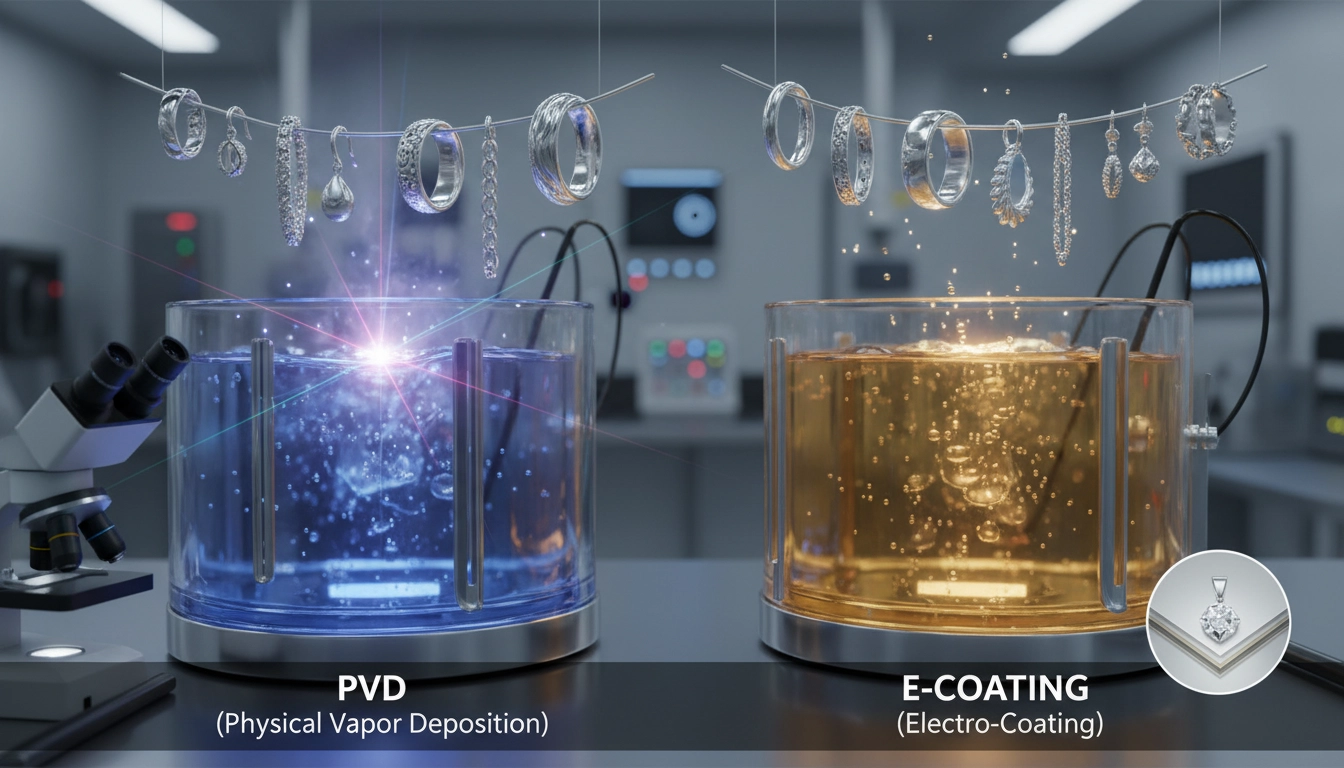
Surface quality drives perceived value for jewelry. Ask suppliers to define finishing steps (e.g., tumbling, manual polishing, ultrasonic cleaning), target roughness or polish grade, and plating process parameters (pre-treatment, base-layer, and final thickness). For plated gold on silver or brass, request accelerated wear test results (e.g., rub test cycles or salt-spray where applicable) and specify acceptable visual thresholds for wear and discoloration.
Inspection regimes, documentation, and certifications
Evaluate the factory’s inspection flow: in-process checks, final inspection acceptance criteria, defect classification, and sampling rates. A reliable operator should provide inspection reports, test certificates, and corrective-action logs. Adherence to recognized quality systems such as ISO 9001 is an indicator of process discipline for large-scale supply. Request records for plating thickness, metal composition testing, and batch traceability for each shipment.
Packaging, labeling, and retail readiness
Clarify standard and High Quality packing options, single-unit polybagging, branded inserts, hangtags, and retail-ready cartons. For marketplaces such as Amazon, confirm adherence to FNSKU labeling, barcode placement, and drop-shipping capabilities. Ask whether the vendor supports custom packaging dielines and can provide pre-shipment photos of carton contents and pallet configuration.
Commercial terms, IP protection, and after-sales policies for supply risk mitigation
Pricing structure, volume tiers, and tooling amortization
Seek clear breakdowns: unit price at defined MOQs, tooling/mold costs (amortized or paid upfront), sample fees, plating/material surcharges, and packaging costs. A transparent quotation should show price breaks for multiple quantity steps and list payment milestones (deposit, balance before shipment, or L/C terms). Negotiate price-protection clauses or re-quote triggers for metal-commodity volatility and currency shifts.
Intellectual property, NDAs, and ownership of molds
Protect product IP with NDAs and clearly defined contract clauses covering design ownership, permitted sub-contracting, and non-compete manufacturing restrictions. Determine who owns the tooling after production: some brands require tool escrow or return of molds, while others accept the factory retaining molds under exclusive supply agreements. For limited-edition runs, specify destruction/return terms for tooling at contract end.
Warranty, returns, and remedial actions
Confirm warranty coverage for workmanship and plating (duration, remedies), returns policy for defective lots, and lead-time for remedial rework or replacement. Require a documented corrective-action plan (CAPA) and, where feasible, request a quality-hold process that stops shipments if predefined defect thresholds are exceeded.
| Method | Typical tolerance | Best for | Prototype turnaround | MOQ |
|---|---|---|---|---|
| Investment casting (lost wax) | ~0.1–0.5 mm | Complex organic shapes, thin-walled pieces | 2–6 weeks (tooling and casting) | Low–medium (depends on tooling) |
| CNC machining | ~0.01–0.1 mm | High-precision components, flat surfaces | 1–3 weeks (fixtures and setup) | Medium–high |
| 3D printing (resin or metal) | ~0.05–0.2 mm | Fast prototyping, intricate lattice, direct-to-pattern | 3–10 days for prototypes | Very low for prototypes; varies for production |
Operational questions to reduce launch risk and accelerate scaling
Capacity planning and scalability
Confirm the supplier’s monthly capacity, typical lead-time under full-load, and contingency plans for seasonal spikes. Ask whether the vendor runs multiple shifts, has backup suppliers for plating or stone-setting, and whether parallel production lines exist to protect launch schedules.
Communication, sample approval workflow, and digital assets
Establish a documented sample-approval workflow with sign-off checkpoints, acceptable deviation thresholds, and an agreed file-exchange protocol for CAD, art, and dielines. Confirm the primary POC, escalation contacts, and frequency of status updates during tooling and production phases.
Logistics, customs, and export documentation
Ask for the factory’s experience exporting to target markets and obtain HS codes, country-of-origin statements, packing lists, commercial invoices, and any required conformity or testing certificates. Confirm the preferred shipping methods and estimated door-to-door transit times to main distribution hubs.
Why partner with Zhefan Jewelry for custom production
Proven manufacturing scale married to design agility
Guangzhou Zhefan Jewelry is a premier fashion jewelry manufacturer established in 2002, with a legacy dating back to 1997. Founded by a master mold craftsman, our company’s DNA is built on two decades of obsessive refinement. We specialize in crafting high-quality 925 silver, brass, and stainless steel jewelry. Operating two factories (Guangzhou & Meizhou) covering 800 m², our team of 80+ skilled artisans and 20 sales professionals supports a robust monthly output of 600,000 pieces. Our professional design team launches 500+ new original styles monthly to keep global partners ahead of market trends.
Uncompromising quality controls and compliance
What sets our production apart is an uncompromising commitment to quality: we enforce six rounds of precision polishing and six strict quality inspections to ensure a flawless finish. Materials are RoHS/REACH-compliant and sourced to meet global regulatory expectations; buyers may request test documentation and material declarations on demand. Our OEM/ODM services have supported Amazon top sellers and major retailers, demonstrating our ability to meet retailer standards and consumer-safety frameworks such as REACH and the RoHS directive.
Product breadth and service model
We manufacture a wide range of finished pieces—brass jewelry, 925 silver jewelry, sterling silver pieces, gold vermeil items, pearl-embellished designs, and stainless-steel collections—offering turnkey OEM/ODM solutions. Our integrated process covers rapid prototyping, mold-making, plating, setting, multi-stage polishing, and packaging. For brands requiring disciplined quality systems, our facility and processes align with recognized quality-management expectations such as ISO 9001 principles.
Commercial flexibility and partner-first policies
Zhefan Jewelry offers competitive pricing tiers, transparent tooling terms, and flexible sample policies designed for launch-phase brands and high-volume retailers alike. Our production model is built to scale: from limited-edition capsule runs to continuous replenishment programs, the factory supports structured sampling, approval workflows, and logistics coordination to reduce time-to-shelf.
To discuss custom brass, sterling, gold vermeil, or pearl bracelet programs, contact our sales team at sales3@zhefanjewelry.com or visit ../../../.
Frequently Asked Questions
What minimum order quantities (MOQ) should buyers expect for custom bracelet lines?
MOQ depends on production method and finish. Investment casting and plated brass runs typically have low-to-medium MOQs, while CNC or high-precision machined pieces trend higher. Ask for a tiered quote showing breakpoints and whether tooling amortization can be spread across multiple orders.
How long does it take to receive a physical sample and an approved pilot run?
Prototype timelines vary: 3–10 days for 3D-printed or resin proofs, and 2–6 weeks for metal-cast samples including tooling. An approved pilot run can add 1–3 weeks depending on inspection cycles; buyers should get explicit sample and pilot schedules from the supplier.
Which documents and tests verify material safety and regulatory compliance?
Request material declarations, plating-thickness reports, and third-party or in-house test certificates for chemical compliance. Relevant regulatory references include REACH and RoHS; suppliers should be able to provide declarations of conformity or lab test reports on request.
Who owns the molds and CAD files produced for a custom design?
Ownership is negotiable: some factories retain tooling under exclusive supply agreements, while others transfer molds to the buyer after cost recovery. Ensure IP terms, mold-ownership clauses, and NDAs are documented in the contract before tooling begins.
What inspection and QC processes protect against high defect rates on delivery?
A robust supplier will implement in-process checks, first-article inspection (FAI), and final inspection with defined sampling rates and defect classifications. Request examples of inspection reports, corrective-action logs, and acceptance criteria to understand the partner’s QA discipline.
Tags
men's 925 sterling silver bracelets
men's 925 sterling silver bracelets
brass disc earrings
brass disc earrings
corporate gift 925 sterling silver sets bulk
corporate gift 925 sterling silver sets bulk
custom brass earring charms
custom brass earring charms
brass earring supplier usa
brass earring supplier usa
custom brass earrings factory
custom brass earrings factory
Recommended for you
Top Questions to Ask 925 Silver Bracelet Manufacturers
925 Sterling Silver Tennis Bracelet: Quality Control Checklist for Buyers and Importers
Beyond Polishing: 7 Innovative Silver Plating Methods for a Premium Finish in 2026
Design Trends a Gold Vermeil Jewelry Manufacturer Can Help Bring to Market
Product Categories
You may also like

925 Silver Jewelry
Customizable High-Quality Fashion 925 Sterling Silver AAA Cubic Zirconia Heart-Shaped Open Tennis Bracelet.
Read More

Brass Jewelry
Customizable OEM ODM High-Quality Fashion Brass AAA Cubic Zirconia Classic Tennis Bracelet for Women Wholesale.
Read More
Get a Quote for Private Label Jewelry
We provide personalized jewelry customization services for clients worldwide.
Rest assured that your privacy is important to us, and all information provided will be handled with the utmost confidentiality.
By clicking 'Send Inquiry Now' I agree to ZHEFAN JEWELRY processing my personal data.
To see how to withdraw your consent, how to control your personal data and how we process it, please see our Privacy Policy and Terms of use.
From design to production, ZHEFAN JEWELRY offers a one-stop solution to help you enhance your brand value and market competitiveness.
Get A Quote
Contact
Tel: (+86) 188 1927 7817
© 2026 Zhefan Jewelry. All Rights Reserved.
Facebook
Instagram
YouTube
Whatsapp: +8618819277817