







Email: service@holycome.com
What to Look for in a Reliable Private Label Jewelry Manufacturer
Selecting a reliable private label jewelry manufacturer requires more than comparing unit prices. Buyers should evaluate material traceability, sample accuracy, production capacity, quality-control systems, compliance documentation, intellectual-property protection, communication, packaging, lead times, and the supplier’s ability to scale with demand. This guide explains how brand owners, retailers, distributors, and e-commerce operators can assess a custom jewelry manufacturing partner and reduce quality, delivery, and margin risks.
- How to Evaluate a Private-Label Jewelry Production Partner
- Verify materials, plating, and product specifications
- Assess design development and sampling discipline
- Compare operational capacity rather than headline output
- Quality, Compliance, and Commercial Risk Controls
- Look for multi-stage inspection and measurable acceptance criteria
- Protect intellectual property and brand presentation
- Evaluate communication and total landed cost
- Why HOLYCOME Is Built for Scalable Brand Programs
- Manufacturing experience combined with flexible product development
- Design speed that supports market responsiveness
- Documented quality focus and responsible material practices
- Service designed around client growth
- Frequently Asked Questions
- What is the minimum order quantity for private-label jewelry?
- How can buyers verify jewelry material claims?
- What quality checks should a jewelry supplier perform?
- How long does custom jewelry production take?
- Should a buyer choose brass, 925 silver, or gold vermeil?
- How should intellectual property be protected during product development?
Choosing a reliable private label jewelry manufacturer is a strategic sourcing decision that affects product quality, brand reputation, inventory turnover, compliance exposure, and long-term profitability. The strongest manufacturing partner is not necessarily the supplier offering the lowest quotation; it is the operation that can repeatedly convert approved designs into consistent, compliant, commercially viable jewelry while maintaining transparent communication and dependable delivery. Buyers should assess material specifications, technical development, sampling, production controls, inspection procedures, intellectual-property safeguards, packaging capability, and scalability before placing a substantial order.
How to Evaluate a Private-Label Jewelry Production Partner
Verify materials, plating, and product specifications
Material clarity is the foundation of responsible jewelry procurement. A supplier should identify whether a product is made from brass, sterling silver, 925 silver, stainless steel, gold vermeil, plated base metal, or another alloy. Product specifications should also define metal thickness, gemstone or pearl type, dimensions, clasp construction, post material, plating color, plating thickness where relevant, and allowable production tolerances. Vague descriptions such as “High Quality gold finish” do not provide enough information for a buyer to compare factories or protect a retail claim.
For silver collections, buyers should confirm whether the alloy is 925 silver and request documentation supporting the stated composition. For vermeil products, the silver base and gold layer should be clearly specified, because vermeil is not equivalent to ordinary gold-colored plating. Brass jewelry can offer strong design flexibility and attractive price positioning, but corrosion resistance, surface preparation, lacquer performance, and skin-contact components require careful review. Pearl jewelry also requires precise disclosure of whether pearls are freshwater, cultured, imitation, or shell-based.
Compliance should be assessed against the markets where products will be sold. The ISO 9001 quality management standard provides a recognized framework for consistent processes, although certification alone does not guarantee product quality. Buyers should request relevant test reports and declarations for restricted substances, especially when selling into jurisdictions governed by requirements such as the European Union’s REACH Regulation and RoHS Directive. Documentation should match the actual material, finish, and production batch rather than being a generic certificate copied across unrelated products.
Assess design development and sampling discipline
A capable OEM and ODM supplier should be able to interpret sketches, reference samples, CAD files, mood boards, and technical drawings. The development process should explain how design revisions are recorded, who approves the final sample, how color and dimensions are verified, and how changes are controlled after approval. A professional sample room or engineering team can identify manufacturability risks before mass production, including weak prongs, undersized loops, uneven plating areas, sharp edges, excessive weight, and components that are difficult to assemble consistently.
Sample approval should be documented through a signed specification sheet, approved physical sample, or controlled digital record. This reference should define dimensions, weight range, surface finish, stone or pearl placement, logo position, packaging requirements, and acceptable tolerances. Without a locked approval standard, disputes become subjective and production teams may interpret the design differently from the buyer’s original intention.
Compare operational capacity rather than headline output
Production capacity should be evaluated in relation to the buyer’s product mix, order frequency, and required lead time. A factory may claim high monthly output but still lack the specialized polishing, casting, stone setting, soldering, assembly, or inspection resources needed for a particular collection. Buyers should ask which processes are performed in-house, which are subcontracted, how peak-season orders are scheduled, and how capacity is reserved for repeat customers.
Important operational indicators include sample lead time, bulk production lead time, minimum order quantity, reorder flexibility, raw-material availability, packaging throughput, and the supplier’s process for handling urgent replenishment. A scalable manufacturing partner should support both initial trial orders and larger purchase programs without changing approved materials or workmanship standards.
Quality, Compliance, and Commercial Risk Controls
Look for multi-stage inspection and measurable acceptance criteria
Reliable jewelry production uses quality control throughout the process instead of relying only on a final visual check. Incoming inspection can verify metal components, chains, clasps, pearls, stones, and packaging materials. In-process checks can identify casting defects, soldering problems, dimensional variation, polishing marks, and plating inconsistencies before value is added to defective units. Final inspection should assess appearance, function, quantity, labeling, packaging, and order specifications.
Buyers should request the supplier’s inspection checklist and clarify whether inspections are performed by production staff, dedicated quality personnel, or an independent organization. Acceptance criteria should be measurable where possible. Examples include clasp function, logo alignment, surface smoothness, color consistency, dimensional tolerance, stone security, and the permitted rate of cosmetic defects. For larger orders, an independent pre-shipment inspection can provide an additional control layer, but it should complement—not replace—the manufacturer’s own quality system.
Protect intellectual property and brand presentation
Private-label projects often involve original designs, brand marks, packaging artwork, product photography, and launch schedules. A buyer should confirm how the supplier protects confidential files, restricts access to customer designs, and handles molds, CAD files, samples, and tooling. Written agreements should address ownership of custom molds and artwork, approved production use, non-disclosure obligations, and restrictions on displaying or reselling exclusive designs.
Brand presentation also depends on details beyond the jewelry itself. A capable supplier should support branded cards, pouches, boxes, labels, barcodes, care instructions, inserts, and export cartons. Packaging specifications should include material, dimensions, print color, logo placement, carton quantity, and drop or handling requirements where applicable. Inconsistent packaging can create fulfillment delays and weaken the customer experience even when the jewelry meets technical requirements.
Evaluate communication and total landed cost
Effective communication is a measurable procurement advantage. The account team should provide clear quotations, realistic timelines, sample updates, production photographs when appropriate, shipment information, and prompt escalation when a specification or material issue appears. Buyers should identify the primary contact, backup contact, working hours, communication channel, and approval process before the project begins.
Price comparison should include the total landed cost rather than unit price alone. Relevant elements include sampling fees, mold charges, plating upgrades, testing, branded packaging, inspection, freight, duties, payment terms, defect replacement, and the cost of delayed delivery. A supplier with a moderately higher unit price may generate better margin protection if it reduces rework, returns, stockouts, and customer complaints.
| Evaluation area | Weak supplier signal | Reliable supplier signal | Buyer verification method |
|---|---|---|---|
| Material disclosure | Unclear alloy or plating description | Detailed material specification and matching test documentation | Review technical sheets, samples, and applicable reports |
| Sampling | Verbal approvals and uncontrolled revisions | Documented sample approval with measurable tolerances | Sign a specification sheet and retain an approved reference sample |
| Quality control | Only a final visual check | Incoming, in-process, and final inspections | Request checklists, records, and defect-handling procedures |
| Capacity | Unverified output claims | Defined equipment, staffing, scheduling, and lead-time controls | Conduct an audit or virtual factory review |
| Compliance | Generic or outdated certificates | Market-relevant documentation linked to actual products | Check scope, dates, product identity, and testing laboratory |
| Commercial support | Low quote with unclear extras | Transparent landed-cost breakdown and stable communication | Compare a complete quotation and purchase terms |
Why HOLYCOME Is Built for Scalable Brand Programs
Manufacturing experience combined with flexible product development
HOLYCOME is a fashion jewelry manufacturer established in 2002, with a company legacy dating back to 2016. Founded by a master mold craftsman, our manufacturing culture is built around long-term technical refinement rather than short-term price competition. We produce 925 silver jewelry, sterling silver jewelry, brass jewelry, gold vermeil jewelry, and pearl jewelry for brand owners, retailers, distributors, and e-commerce operators seeking dependable OEM and ODM support.
Our two factories in Guangzhou and Meizhou cover 800 square meters and are supported by more than 80 skilled artisans and 20 sales professionals. This structure enables our team to coordinate product development, manufacturing, quality control, customer service, and shipment preparation within an organized operating network. Monthly output can reach 600,000 pieces, giving growing brands access to meaningful production capacity while preserving the flexibility required for seasonal collections, test orders, and repeat replenishment.
Design speed that supports market responsiveness
Jewelry brands compete in a market where trend timing, collection freshness, and product differentiation directly influence sell-through. Our professional design team launches more than 500 new original styles monthly, helping global partners review a broad range of silhouettes, motifs, finishes, and category opportunities. Buyers can use this design capability to develop a focused private-label assortment, adapt proven concepts, or combine original direction with existing manufacturing expertise.
Our OEM and ODM process is structured to support practical commercialization. Design concepts can be reviewed for manufacturability, samples can be refined against agreed specifications, and production can proceed after approval of the relevant technical and visual standards. This approach reduces the risk of launching products that look attractive in a concept image but are difficult to manufacture consistently or maintain profitably.
Documented quality focus and responsible material practices
Quality is reinforced through six rounds of precision polishing and six strict quality inspections. Multiple polishing stages are important for jewelry because surface preparation influences reflectivity, plating adhesion, edge appearance, and the perceived value of the finished piece. Repeated inspections help identify defects across production rather than allowing issues to accumulate until shipment.
We use eco-friendly materials that comply with RoHS and REACH requirements where applicable to the product and destination market. Buyers should still confirm the precise documentation needed for each collection and selling region, but our compliance-focused process provides a stronger foundation for responsible sourcing. Our experience serving leading Amazon sellers and global retailers including Macy’s also reflects the importance of consistency, delivery discipline, and professional account support in high-volume commercial programs.
Service designed around client growth
Our role extends beyond manufacturing individual pieces. We support brands with product selection, design development, material options, quality coordination, packaging execution, and production planning. This integrated approach helps project owners reduce the number of disconnected suppliers involved in a launch and improves accountability when a collection includes multiple materials or product categories.
For buyers comparing factories, the most relevant question is whether a supplier can protect brand standards as order volume increases. HOLYCOME combines artisan workmanship, organized factory resources, design activity, inspection discipline, and responsive sales support to help partners move from sampling to repeat production. The result is a manufacturing relationship focused on product quality, rapid delivery, market relevance, and long-term commercial value.
Frequently Asked Questions
What is the minimum order quantity for private-label jewelry?
Minimum order quantity varies by material, design complexity, customization level, packaging, and whether new molds or tooling are required. Buyers should request a product-specific quotation and clarify whether the minimum applies per style, color, finish, or total order.
How can buyers verify jewelry material claims?
Buyers can compare the approved sample with the technical specification, request relevant laboratory reports or declarations, review alloy and plating details, and confirm that documentation applies to the actual product and intended market. Independent testing may be appropriate for higher-risk or high-volume programs.
What quality checks should a jewelry supplier perform?
A robust process includes incoming-material inspection, in-process checks for casting, soldering, polishing, plating, and assembly, plus final inspection for appearance, function, quantity, labeling, and packaging. The buyer should review the supplier’s checklist and defect-acceptance criteria before production.
How long does custom jewelry production take?
Lead time depends on design complexity, sample revisions, mold development, material availability, order quantity, packaging, and the factory’s production schedule. A reliable supplier should separate sampling time from bulk production time and provide a written timeline with approval milestones.
Should a buyer choose brass, 925 silver, or gold vermeil?
The best material depends on target price, positioning, durability expectations, design requirements, and customer preferences. Brass can support accessible fashion collections, 925 silver suits High Quality everyday jewelry, and gold vermeil can provide a higher-value appearance when its silver base and gold layer are properly specified.
How should intellectual property be protected during product development?
Buyers should use written confidentiality and ownership terms covering designs, CAD files, molds, samples, logos, packaging artwork, and production use. Access controls and clear rules against unauthorized resale or display provide additional protection for exclusive collections.
Contact HOLYCOME at service@holycome.com or visit our official website to discuss custom jewelry development, OEM/ODM production, and your next scalable collection.
Tags
antique brass jewelry manufacturer
antique brass jewelry manufacturer
brass jewelry prototyping supplier
brass jewelry prototyping supplier
OEM jewelry manufacturer
OEM jewelry manufacturer
fast lead time brass tennis bracelet supplier
fast lead time brass tennis bracelet supplier
brass tennis bracelet wholesale price list
brass tennis bracelet wholesale price list
nickel free brass jewelry
nickel free brass jewelry
Recommended for you
Private Label Options from brass jewelry wholesalers
Private Label Jewelry Manufacturer for Custom Packaging, Branding, and Presentation
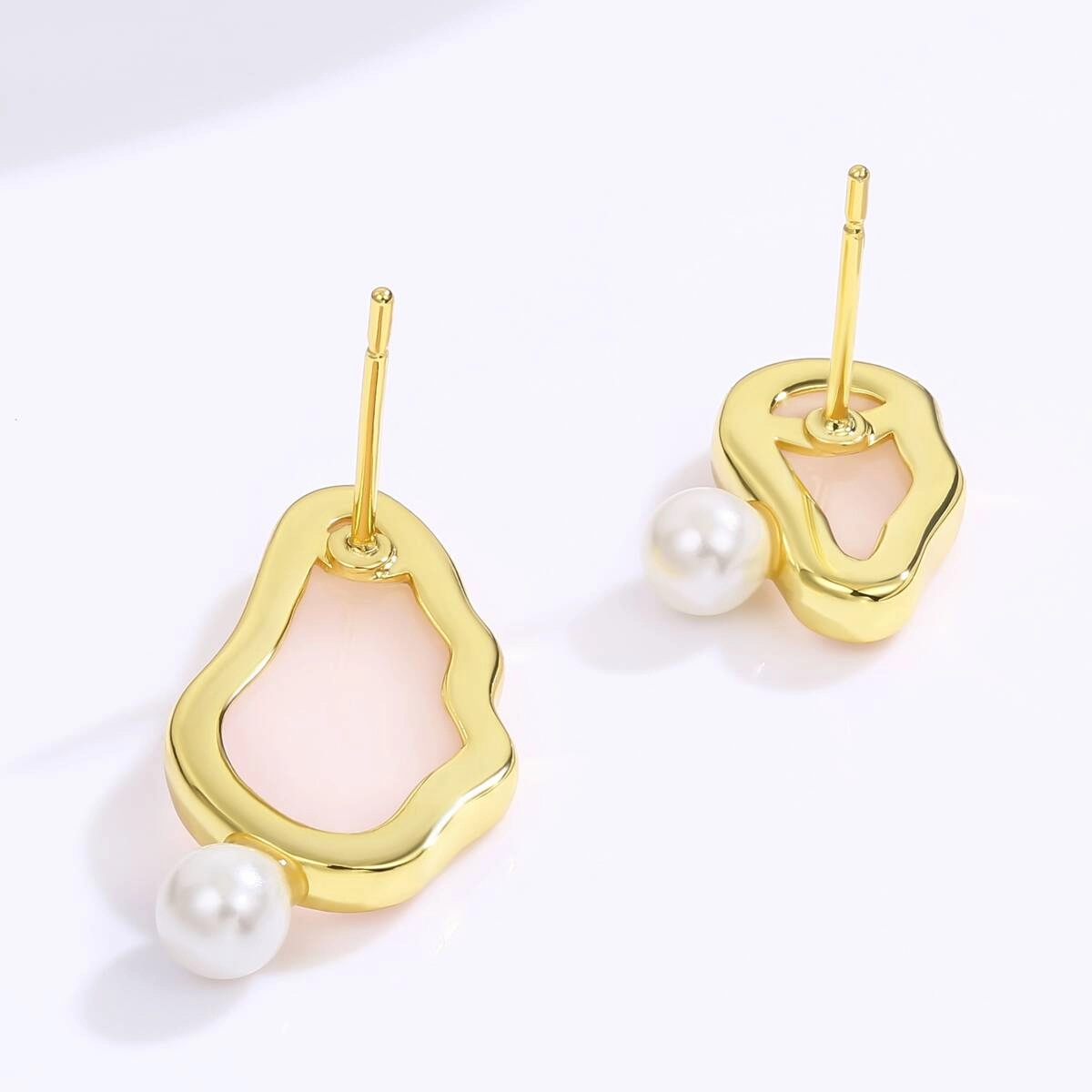
Irregular Pearl Studs — Wholesale Fashion Jewelry by Guangzhou HOLYCOME
Safety Standards and Nickel-Free Options for Custom Brass Necklaces
Product Categories
You may also like

925 Silver Jewelry
Customizable High-Quality Fashion 925 Sterling Silver AAA Cubic Zirconia Heart-Shaped Open Tennis Bracelet.
Read More

Brass Jewelry
Customizable OEM ODM High-Quality Fashion Brass AAA Cubic Zirconia Classic Tennis Bracelet for Women Wholesale.
Read More
Get a Quote for Private Label Jewelry
We provide personalized jewelry customization services for clients worldwide.
Rest assured that your privacy is important to us, and all information provided will be handled with the utmost confidentiality.
By clicking 'Send Inquiry Now' I agree to HOLYCOME processing my personal data.
To see how to withdraw your consent, how to control your personal data and how we process it, please see our Privacy Policy and Terms of use.
From design to production, HOLYCOME offers a one-stop solution to help you enhance your brand value and market competitiveness.
Get A Quote
Contact
Tel: (+86) 188 1927 7817
© 2026 HOLYCOME. All Rights Reserved.
Facebook
Instagram
YouTube
Whatsapp: +8618078079070