






Email: sales3@zhefanjewelry.com
14K vs. 18K Gold Vermeil: Which Fits Wholesale?
Gold vermeil jewelry wholesale demands precise material choices; this guide compares 14K vs. 18K gold vermeil for durability and cost-efficiency. Zhefan Jewelry details OEM 14K Gold Vermeil Jewelry benefits to help wholesalers select the best fit for quality and value.
- Choosing the Right Gold Tone
- Core Summary — TL;DR for Wholesalers
- 14K vs. 18K Gold Vermeil at a Glance
- How Each Tier Fits Consumer Demand and Wholesale Positioning
- When 14K Gold Vermeil Fits Better
- When 18K Gold Vermeil Fits Better
- How Karat Choice Affects Project Cost
- What Should Buyers Compare Before Choosing 14K or 18K?
- Compare the existing collection.
- Compare the Target Consumer and Sales Channel
- Compare the Product Design and Stone Palette
- Compare Cost Under the Same Specification
- Use Physical References to Support the Decision
- How Zhefan Supports a Cleaner Gold Vermeil Finish
- Secondary Polishing for Visible Surface Defects
- Detail Polishing After Stone Setting
- Final Polishing Before Plating
- Final Inspection After Plating
- Conclusion
- References
- FAQ
Choosing the Right Gold Tone
Once a brand has selected gold vermeil for a wholesale collection, the next decision is whether the range should follow a 14K or 18K gold direction. This choice affects the collection’s color identity, consumer positioning, price architecture, and compatibility with existing products. For established jewelry brands and procurement teams, selecting the right gold finish is more than a design preference; it is a commercial decision that influences how the collection is perceived and managed.
Rather than treating one tier as universally superior, a sourcing team should evaluate how each finish aligns with the brand’s commercial ecosystem. A mismatched gold tone can fragment a catalog, create visible contrast between mixed-material products, and weaken the intended price positioning. By understanding the technical, visual, and economic differences between 14K and 18K gold vermeil, wholesale buyers can select a direction that supports scalable product development and long-term brand consistency.
Core Summary — TL;DR for Wholesalers
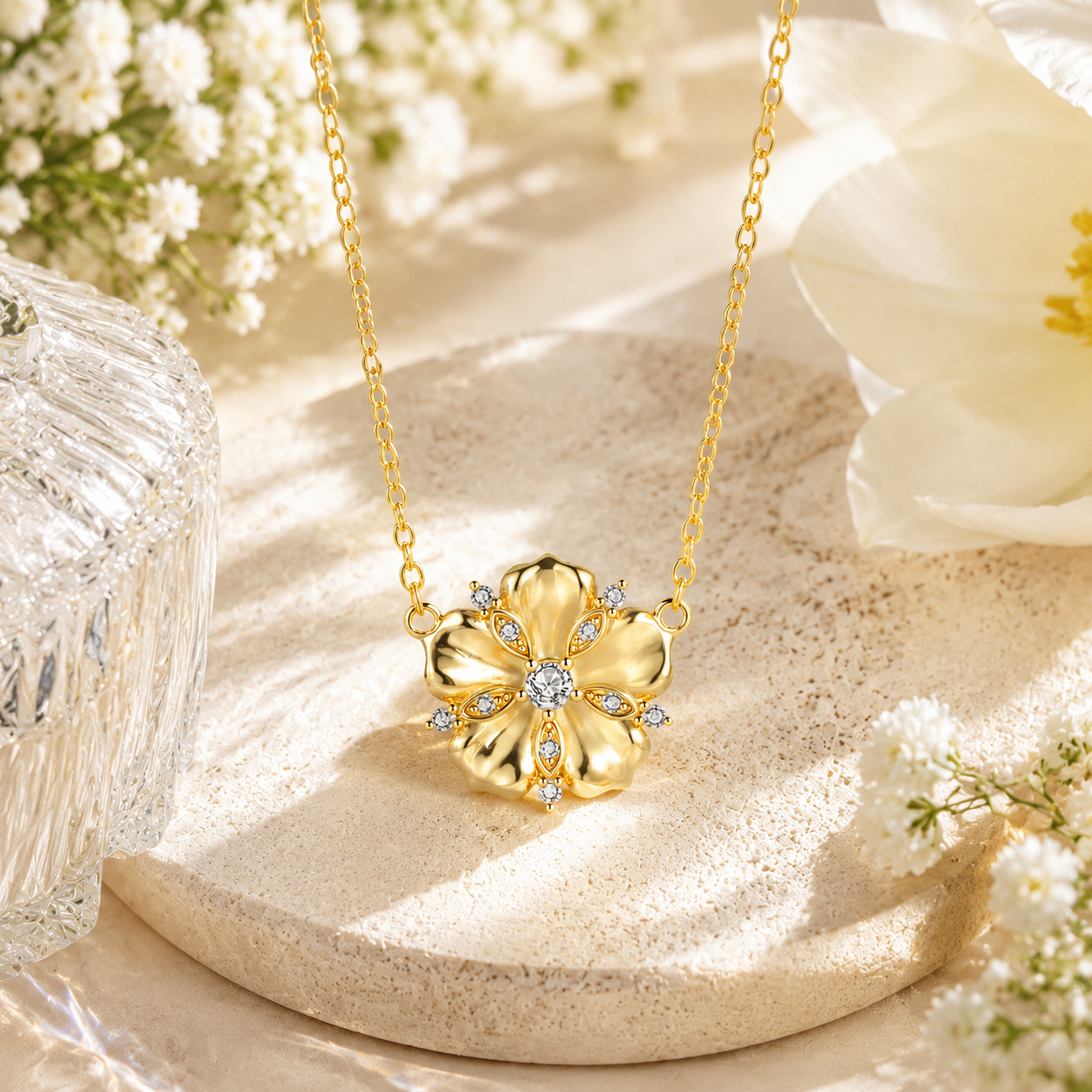
- Color Profile: 14K gold vermeil generally produces a lighter and softer yellow tone, while 18K gold vermeil usually appears richer and warmer.
- Quality vs. Tier: The karat tier mainly affects color, positioning, and cost; it does not determine plating durability by itself.
- Selection Strategy: Wholesale buyers should compare the finish with their existing catalog, target consumer, sales channel, and physical references before selecting a direction.
14K vs. 18K Gold Vermeil at a Glance
The primary technical difference between 14K and 18K gold vermeil is the nominal gold fineness and composition of the plated gold-alloy deposit. Both options in this comparison use a 925 sterling-silver base, while the deposited gold-alloy finish follows a different karat direction.
A 14K designation corresponds to a nominal gold fineness of approximately 58.5%, while 18K corresponds to 75.0%. This usually gives 14K a lighter, less saturated yellow appearance and 18K a deeper, warmer appearance. The exact finished color still depends on the approved plating formulation, surface finish, product geometry, and lighting conditions.
Under the current U.S. FTC definition, a product may be described as vermeil when it has a sterling-silver base plated on all significant surfaces with gold or gold alloy of at least 10K fineness, with a minimum thickness throughout equivalent to 2.5 μm of fine gold. Terminology and market requirements should still be reviewed for the destination market.
|
Specification |
14K Gold Vermeil Jewelry |
18K Gold Vermeil Jewelry |
|
Base Material |
925 sterling silver |
925 sterling silver |
|
Silver Fineness |
92.5% |
92.5% |
|
Nominal Gold Fineness |
14/24 |
18/24 |
|
Approximate Gold Proportion |
58.5% |
75.0% |
|
Typical Color Direction |
Lighter, softer yellow |
Richer, warmer yellow |
|
U.S. Vermeil Thickness Reference |
≥ 2.5 μm equivalent fine-gold thickness |
≥ 2.5 μm equivalent fine-gold thickness |
|
Common Collection Position |
Broad demi-fine or accessible premium line |
Richer premium or luxury-oriented line |
|
Durability Conclusion |
Not determined by karat alone |
Not determined by karat alone |
|
Selection Method |
Catalog comparison, physical reference, representative sample |
Catalog comparison, physical reference, representative sample |
|
Final Production Standard |
Project-specific |
Project-specific |
A higher karat number does not automatically create a more durable vermeil finish. Finished performance also depends on plating thickness, surface preparation, product structure, friction, and expected use conditions. The karat rating should therefore be treated primarily as a color and positioning decision.
Different plating systems can also produce slightly different 14K or 18K color directions. A buyer should not assume that the same karat label from two suppliers will create an exact visual match without a physical comparison.
For a detailed explanation of thickness requirements and specification control, read The B2B Guide to 2.5 Micron Gold Vermeil Jewelry Standards.
Brands still comparing sterling-silver vermeil with conventional plated jewelry can review Gold Vermeil vs. Gold Plating: Which Fits Your Luxury Jewelry Brand?.
How Each Tier Fits Consumer Demand and Wholesale Positioning
A cohesive wholesale range should connect the finish with the target consumer, design language, existing catalog, and retail price structure. Consumer-facing observations are useful here because they help the buying team translate market preferences into a practical plating direction.
When 14K Gold Vermeil Fits Better
A 14K gold direction is often suitable for brands targeting consumers who prefer understated, modern, or lighter yellow-gold jewelry. Its softer tone can support broad daily-wear assortments without becoming visually dominant across multiple product categories.
- Consumer Color Preference: Consumers who prefer minimalist and daily-wear jewelry may respond well to lighter, lower-saturation gold tones. For wholesale brands, this can make a 14K direction suitable for broad SKU ranges that need to remain visually understated.
- Product Design Language: Delicate bands, fine chains, geometric earrings, and small pendants can benefit from the lighter visual character of 14K gold. The finish can support a modern, restrained product identity.
- Catalog Compatibility: If the brand already sells 14K solid gold, gold-filled, or 14K-plated collections, a comparable 14K vermeil direction may help align new products with the existing catalog, subject to physical comparison.
- Wholesale Architecture: For catalogs with frequent seasonal updates and multiple categories, one stable lighter-gold direction can simplify visual coordination. It can also create a softer balance with white CZ, pearls, and pale-colored stones.
14K should not be treated as a lower-quality alternative. It is often selected because its color direction fits the established brand system and commercial architecture of the collection.
When 18K Gold Vermeil Fits Better
An 18K gold direction is often selected for collections that require a warmer, richer, and more traditional yellow-gold appearance. Consumers may associate this stronger yellow tone with higher gold purity and conventional luxury jewelry, which can support a higher demi-fine position when it matches the brand’s intended image.
- Consumer Perceived Value: For brands operating at a higher demi-fine price tier, a richer 18K direction can reinforce the intended visual and commercial position of the collection.
- Product Design Language: Bold statement pieces, heavier link chains, vintage-inspired signet rings, and textured designs can use the warmer tone to emphasize volume and surface detail. Darker stones may create a stronger contrast against the richer gold direction.
- Catalog Compatibility: Brands with an existing 18K solid-gold or 18K-plated range may compare an 18K vermeil reference when the new collection needs to coordinate with those products.
- Wholesale Architecture: Curated capsule collections and premium releases may use 18K as a deliberate visual tier. The selection should still reflect the brand’s real catalog and target price structure rather than a general assumption that 18K is always superior.
How Karat Choice Affects Project Cost
For gold vermeil jewelry wholesale programs, a 14K-versus-18K cost comparison is meaningful only when both quotations use the same product specification. An 18K finish may be quoted at a higher plating cost than a comparable 14K finish, but the actual difference is project-specific.
A useful commercial comparison should account for:
- 925 sterling-silver weight and current material basis.
- Total product surface area, which affects the amount of deposited metal.
- Product geometry and texture, which affect preparation and uniform coverage difficulty.
- Specified plating thickness and the areas covered by that specification.
- Order volume, component types, and minimum plating-batch charges.
Buyers should request 14K and 18K quotations using the same product design, silver weight, thickness, surface finish, and quantity. This isolates the plating-direction difference and produces a more reliable margin comparison.
|
Consumer and Brand Condition |
14K Direction |
18K Direction |
|
Consumers prefer light, understated gold |
Strong fit |
May appear too saturated |
|
Consumers associate richer yellow gold with premium positioning |
May appear too subtle |
Strong fit |
|
Broad daily-wear and minimalist assortment |
Strong fit |
Suitable for selected premium SKUs |
|
Premium demi-fine capsule collection |
Possible |
Strong fit |
|
The existing catalog is based on 14K colors |
Strong fit |
Requires deliberate separation |
|
The existing catalog is based on 18K colors |
Requires deliberate separation |
Strong fit |
|
Light stones, pearls, and pastel colors |
Softer visual balance |
Stronger visual contrast |
|
Dark stones and statement designs |
More restrained contrast |
Richer visual contrast |
The table is a decision aid rather than a universal rule. The preferred direction should be tested against the brand’s own catalog, consumer profile, and retail context.
When Karat Is Not the First Decision
Karat should not be selected before the brand has confirmed the base material, target price tier, and product structure. Buyers still deciding between brass and sterling silver should resolve that question before comparing 14K and 18K finishes.
What Should Buyers Compare Before Choosing 14K or 18K?
Before finalizing the plating direction, a buying team should compare the factors that define how the new collection will look and where it will sit commercially. The goal is to make a selection based on the brand’s own system rather than a generic assumption about karat value.
Compare the existing collection.
The first reference should be the brand’s own catalog, not a generic 14K or 18K label supplied by a factory. Review top-selling SKUs, matching chains, companion products, and older inventory that may be displayed with the new range. If color continuity matters, the selected direction should be compared with an actual existing reference.
Compare the Target Consumer and Sales Channel
The gold direction should support the intended consumer profile and sales environment. A brand serving consumers who prefer restrained daily-wear jewelry may favor a lighter tone, while a premium demi-fine range may require a richer yellow direction. Retail lighting and studio photography can also change perceived warmth, so both finishes should be viewed under the lighting conditions used by the brand’s own channels.
Compare the Product Design and Stone Palette
Surface shape and finish change how gold color is perceived. High-polish surfaces reflect surrounding light strongly, while matte, satin, or sandblasted finishes diffuse it. Product scale, texture, stone color, and the proportion of visible metal can therefore change whether a 14K or 18K direction feels balanced on the actual design.
Compare Cost Under the Same Specification
Ask the manufacturer to quote both options with the same sterling-silver weight, plating thickness, surface treatment, quantity, and component scope. Without identical inputs, the difference cannot be attributed reliably to the selected karat direction.
Use Physical References to Support the Decision
Physical color references help buying teams compare the general direction of 14K and 18K finishes under consistent lighting. Once a preferred direction has been identified, review it on one representative product because surface shape, polishing, and stone color can change the visual result. At this stage, the reference supports the selection decision; detailed production approval belongs to the later development process.
How Zhefan Supports a Cleaner Gold Vermeil Finish
Choosing between 14K and 18K defines the intended gold direction, but the final appearance also depends on the surface prepared beneath the plating. Scratches, pinholes, pitting, rough edges, or poorly finished stone-setting areas can remain visible after plating and reduce the clarity of either gold tone.
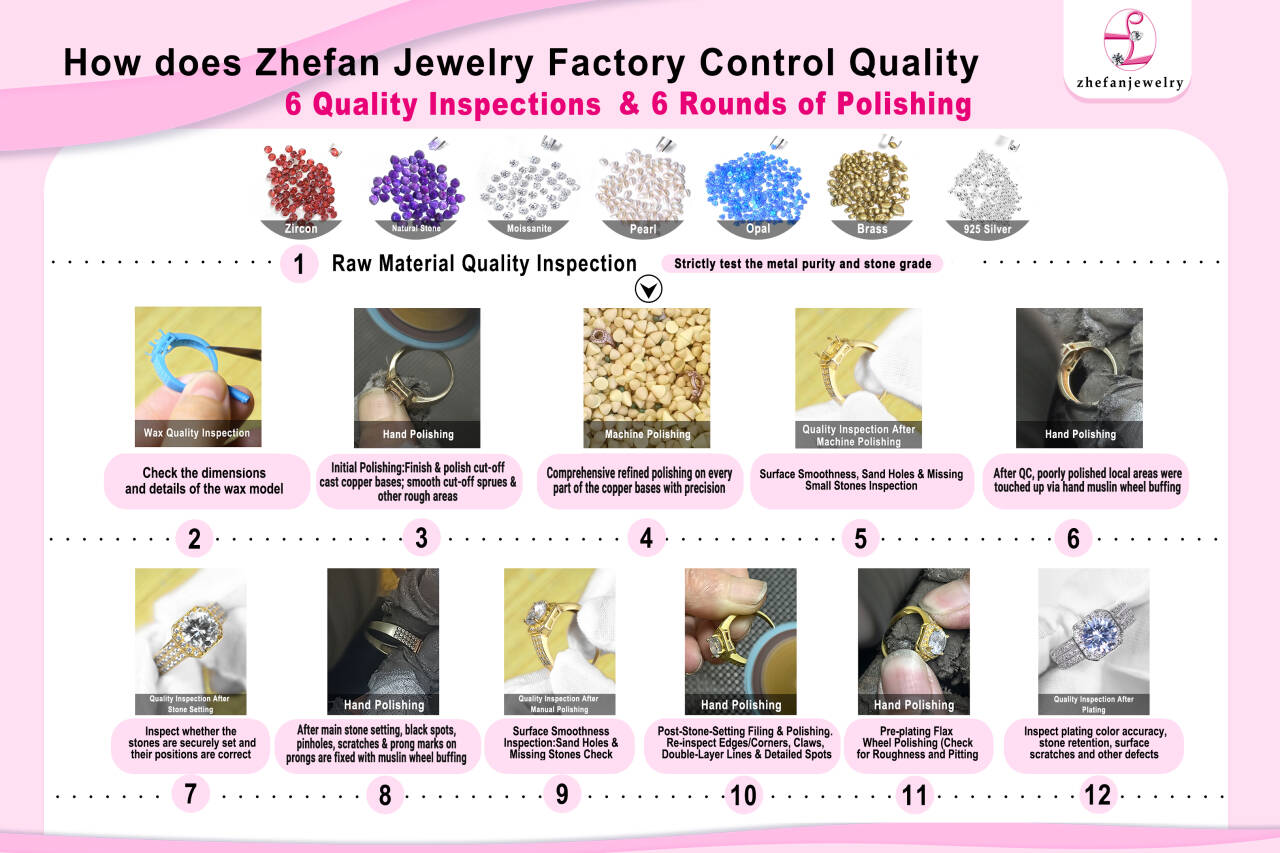
Zhefan Jewelry addresses this issue through Zhefan Jewelry’s proprietary 6-polishing & 6-inspection process, also referred to as the Zhefan 6P6Q quality process. The complete system combines six polishing stages with six inspection checkpoints across production. For 14K and 18K Gold Vermeil projects, the following stages are especially relevant.
Secondary Polishing for Visible Surface Defects
After the initial polishing stage, the surface is checked for pinholes, black spots, pitting, and other visible defects. Where necessary, secondary linen-wheel polishing is used to improve the surface before the product proceeds to later production stages.
This matters because gold plating follows the contour of the underlying metal. It can improve the color and finish, but it does not conceal deep surface defects.
Detail Polishing After Stone Setting
Stone-set jewelry requires additional attention around prongs, edges, channels, and recessed areas. After the stones are set, these detailed positions are reviewed and polished again where required.
This stage is particularly relevant for rings, earrings, pendants, and stone-set bracelets, where a rich 18K finish or a lighter 14K finish may highlight rough edges differently under reflected light.
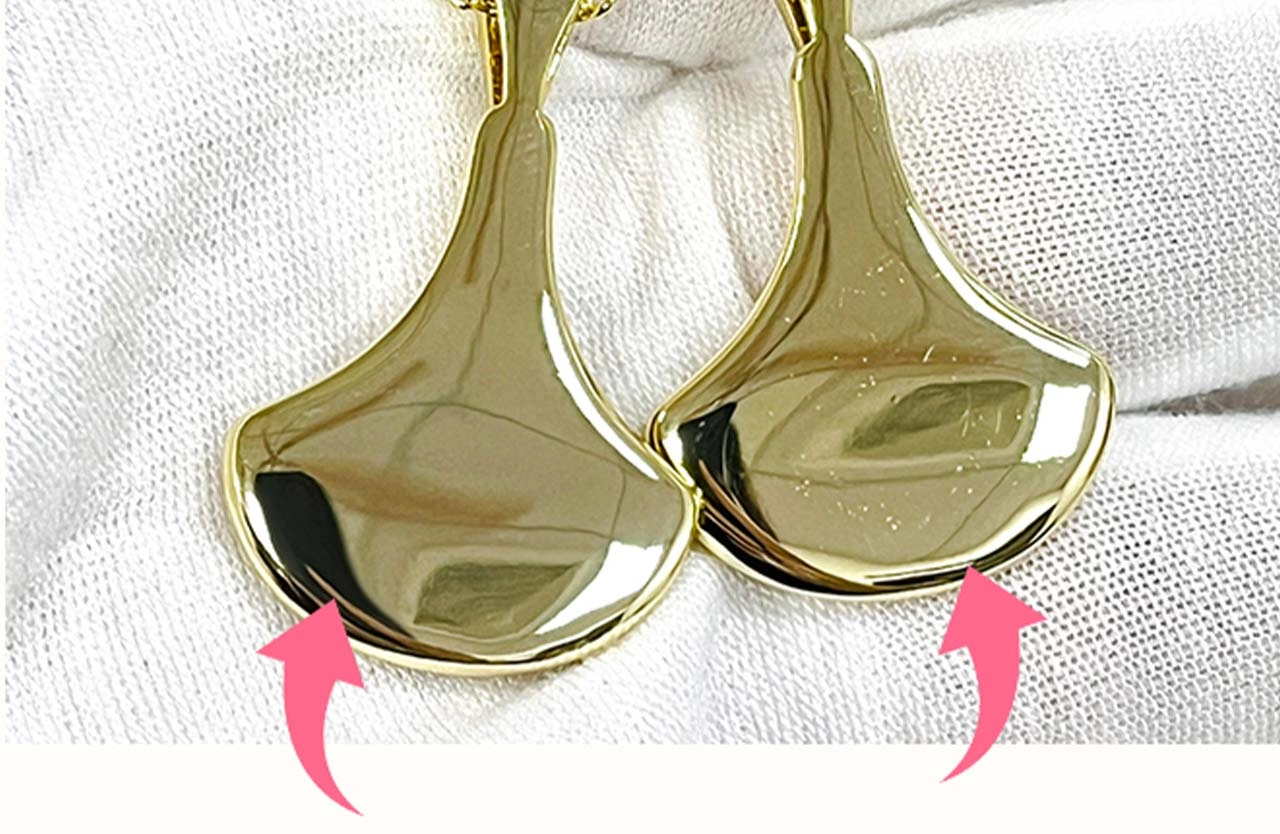
Before and after quality inspection of 14k gold
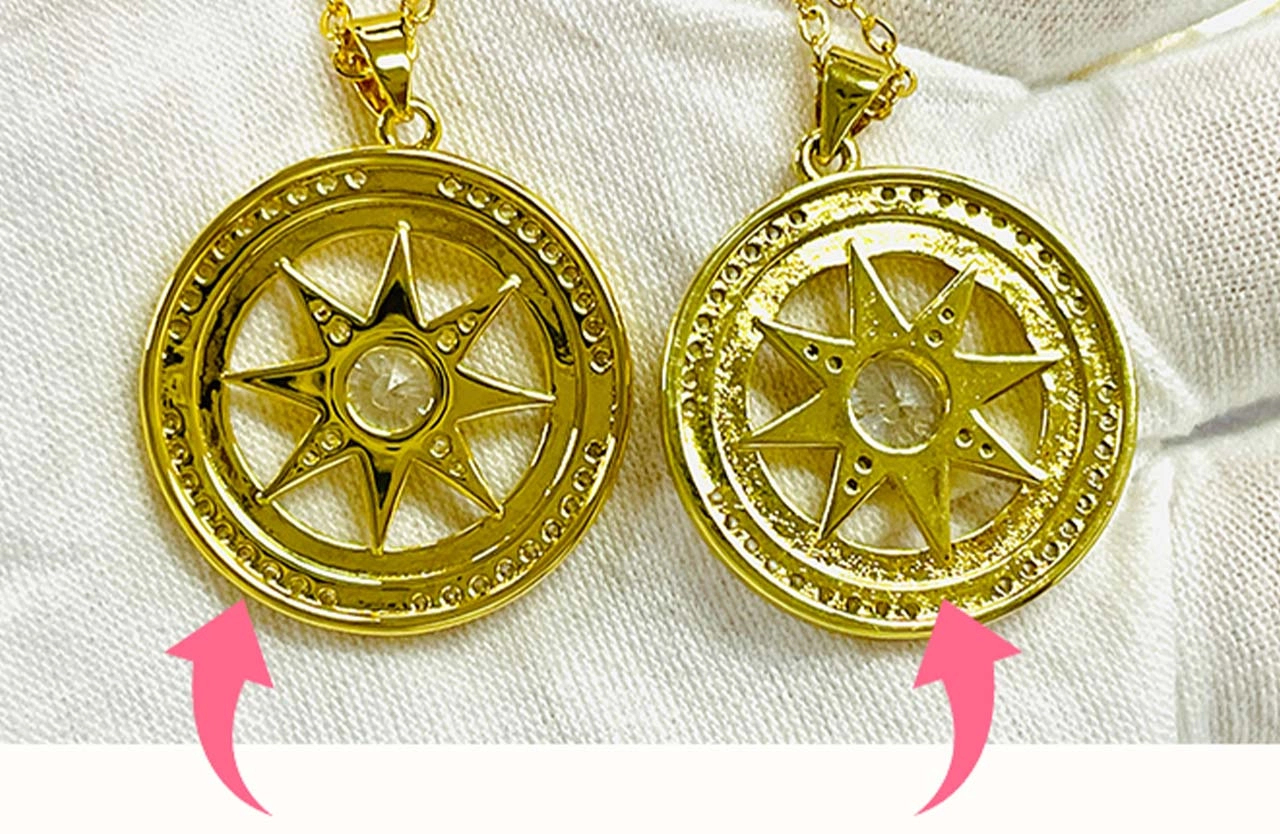
Before and after quality inspection of 18k gold
Final Polishing Before Plating
A final linen-wheel polishing stage is carried out before plating to check for roughness, pitting, and visible surface irregularities.
For gold vermeil jewelry wholesale projects, this step helps create a cleaner sterling-silver surface before the selected 14K or 18K gold finish is applied.
Final Inspection After Plating
After plating, the finished jewelry is inspected for the following:
- Gold-color appearance;
- Visible color inconsistency;
- Surface scratches;
- Stone security;
- Overall surface condition.
These controls do not make 14K or 18K universally better, but they help ensure that the selected gold direction is presented on a properly prepared and reviewed product surface.
Conclusion
Choosing between 14K and 18K gold vermeil is not a universal quality decision. The right tier depends on the brand’s existing catalog, target consumer, product design, price architecture, and intended retail position. A lighter 14K direction can support understated, scalable assortments, while a richer 18K direction can reinforce a warmer premium identity.
Physical references can help buyers confirm how each direction supports the collection before moving into detailed product development. The best choice is the one that keeps the range visually coherent and commercially aligned with the brand’s market strategy.
|
Request the 14K & 18K gold color reference card Compare available 14K and 18K gold directions for your wholesale collection. Share your product image, existing color reference, stone palette, surface finish, target market, and estimated order quantity. Zhefan Jewelry will review the project and discuss relevant gold-color references for sample development. |
References
Vermeil terminology — United States: Electronic Code of Federal Regulations, 16 CFR § 23.4, “Misuse of the word ‘vermeil.’” https://www.ecfr.gov/current/title-16/chapter-I/subchapter-B/part-23/section-23.4
Chemical compliance—European Union: Regulation (EC) No 1907/2006 (REACH) concerns the registration, evaluation, authorization, and restriction of chemicals. It should be reviewed separately from vermeil thickness terminology. https://eur-lex.europa.eu/eli/reg/2006/1907/oj/eng
FAQ
How should a jewelry buyer define acceptable quality for a specific price point and market?
Acceptable quality should be defined through a written product specification rather than broad descriptions such as “premium” or “high quality.” When comparing 14K gold vermeil jewelry and 18K gold vermeil jewelry, buyers should evaluate the 925 sterling silver base, gold-color direction, plating thickness, surface finish, stone grade, visible component quality, product function, packaging method, target market, and intended retail price. A 14K finish may suit a lighter and more understated collection, while an 18K finish may support a richer visual identity and higher demi-fine positioning, but the karat tier alone does not determine workmanship or durability. For a gold vermeil jewelry wholesale program, the acceptable standard should reflect the brand’s consumer profile, catalog color system, expected wear conditions, market claims, and realistic project budget, with the final appearance confirmed through a physical color reference and representative product sample.
How should jewelry quotations separate raw-material cost, labor, and weight-driven changes?
A professional quotation should help the buyer understand which variables are driving the final unit price instead of presenting one unexplained total. For Gold Vermeil Jewelry Wholesale projects, the quotation should be based on the same product design, 925 sterling silver weight, plating thickness, surface finish, stone specification, component structure, quantity, packaging, and testing requirements before the 14K and 18K options are compared. The cost of 925 Sterling Silver Gold Vermeil Jewelry is affected by silver weight, product surface area, stone setting, polishing, assembly, findings, minimum plating batch charges, sample development, and any project-specific inspection requirements. If one supplier quotes a 2.5 Micron Gold Vermeil specification while another uses a thinner layer, lighter silver weight, or different components, the quotations are not directly comparable. Precious-metal price changes should also be separated from design revisions, labor changes, and additional production requirements wherever commercially practical.
How can an approved sample remain the operating standard across repeat jewelry orders?
An approved sample remains an effective operating standard only when it is supported by a controlled written specification and retained project records. For Private Label Gold Vermeil Jewelry and OEM Gold Vermeil Jewelry programs, the reference should include the approved physical sample or color card, SKU and version number, 925 sterling silver specification, 14K or 18K gold direction, plating thickness, surface finish, product dimensions, stone details, chain and clasp specifications, visible findings, packaging requirements, and records of any approved changes. A physical sample can show the intended appearance, but it cannot independently document every material and process requirement. Before a repeat order begins, the gold vermeil jewelry manufacturer should compare the new specification against the retained baseline and disclose any changes involving material sources, findings, plating formulation, thickness, stone setting, construction, or production method. This helps the buyer prevent an outdated sample from being used after the actual product specification has already changed.
Why do repeat jewelry orders drift even when the design has not changed?
Repeat orders may drift even when the CAD and visible design remain unchanged because the materials, components, plating conditions, surface preparation, suppliers, or undocumented production decisions can change behind the finished product. For 14K gold vermeil jewelry and 18K gold vermeil jewelry, possible causes include a different gold-color formulation, plating batch, thickness requirement, silver casting condition, chain or clasp supplier, solder, polishing sequence, stone-setting process, or subcontracted plating source. Color variation can also occur when the original physical reference is not retained or when reworked items are mixed with first-pass production. A custom gold vermeil jewelry factory should therefore control the BOM, approved sample, component specifications, plating instructions, process records, and revision history together rather than relying only on the product image. Buyers working with a gold vermeil jewelry supplier should ask which physical references and project records are retained and which production changes require written approval before the next order proceeds.
How should brands control critical findings and small components across batches?
Critical findings and small components should be treated as controlled parts of the finished SKU rather than generic accessories because chains, clasps, jump rings, earring posts, backs, extenders, soldered links, and connecting parts can affect color consistency, product function, material claims, wear performance, and compliance scope. In a 925 sterling silver gold vermeil jewelry project, the main pendant or ring body may meet the selected 14K or 18K specification while the chain, clasp, spring mechanism, or earring post follows a different material or plating construction. The product specification should therefore identify the component material, dimensions, gauge, plating color, thickness requirement, surface finish, supplier, functional standard, substitution rules, and inspection method where applicable. A qualified gold vermeil jewelry manufacturer should review visible findings together with the main body under the same lighting and as a complete finished item. Any component or supplier change that may affect appearance, function, or claim scope should be documented and approved before it enters repeat production.
How should brands verify metal-content claims for findings and small components?
Brands should verify metal-content claims at the component level rather than assuming that one description automatically applies to every part of the finished jewelry. Claims such as "sterling silver," "2.5 micron gold vermeil," "nickel-free," "lead-free," or "hypoallergenic gold vermeil jewelry" may not automatically cover chains, clasps, earring posts, jump rings, solder, springs, backs, or replacement findings. Verification should begin with a component-level BOM that identifies the base material, solder or joining material, plating and underlayer specification, component supplier, applicable declarations, and any test report, assay, or XRF evidence required for the target market. The evidence should be matched to the actual SKU, tested sample, component scope, report date, and stated limitations. A gold vermeil jewelry supplier should not use one report or one submitted sample to represent every product or repeat order. Before publishing material claims, brands should confirm which parts meet the relevant sterling-silver, gold-fineness, thickness, and chemical-compliance requirements in the intended market.
Recommended for you

What Is Gold Vermeil Jewelry? A Complete Guide for Brands and Retailers

Thick Gold Plated Jewelry Manufacturer for 925 Silver & Brass Jewelry

Zhefan Jewelry Invites You to Attend the Hong Kong Jewellery Exhibition 2026

How to Choose a Gold Vermeil Jewelry Manufacturer

Gold Vermeil vs. Gold-Plated Jewelry: Which Fits Your Luxury Jewelry Brand?

Can Silver or Brass Be PVD Coated? A Professional Guide for Jewelry Brands
Product Categories
Discuss Your Ideas with a Professional Custom Jewelry Manufacturer
We provide personalized jewelry customization services for clients worldwide.
Rest assured that your privacy is important to us, and all information provided will be handled with the utmost confidentiality.
By clicking 'Send Inquiry Now' I agree to ZHEFAN JEWELRY processing my personal data.
To see how to withdraw your consent, how to control your personal data and how we process it, please see our Privacy Policy and Terms of use.
From design to production, ZHEFAN JEWELRY offers a one-stop solution to help you enhance your brand value and market competitiveness.
Get A Quote
Contact
Tel: (+86) 188 1927 7817
© 2026 Zhefan Jewelry. All Rights Reserved.
Facebook
Instagram
YouTube
Whatsapp: +8618819277817