




2026 Wholesale Custom Sterling Silver Jewelry Guide for Private Label Brands
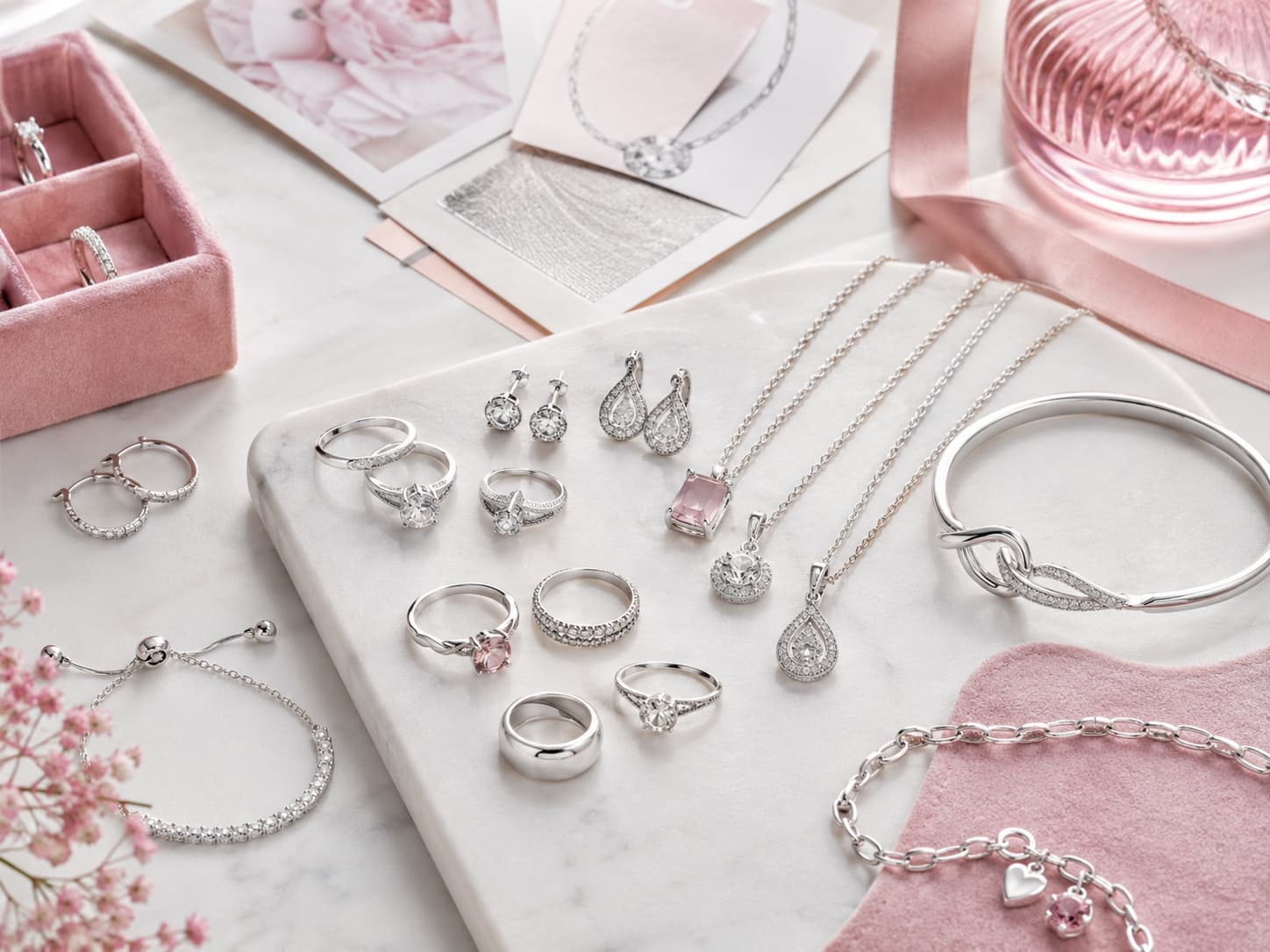
925 sterling silver jewelry has stayed one of the more dependable categories for private label and wholesale jewelry brands heading into 2026 — it reads as a recognized precious metal to customers, sits at a more accessible price point than solid gold, and gives manufacturers a wide range of plating and stone-setting options to customize.
But “sourcing 925 silver” covers a lot of ground: verifying it is actually 92.5% silver, deciding between OEM and ODM, planning which categories to launch with, and knowing what to check before a bulk order ships. This guide walks through what private label and wholesale buyers should know before sourcing custom sterling silver jewelry.
Why Sterling Silver Remains a Strong Wholesale Jewelry Material in 2026
925 sterling silver — an alloy of 92.5% silver and 7.5% other metal, most commonly copper — has a few characteristics that keep it relevant for wholesale and private label catalogs:
Unlike base-metal fashion jewelry, sterling silver carries inherent material credibility with consumers, which can support a higher retail position.
Silver's commodity price per troy ounce is significantly lower than gold's, which keeps material costs more manageable while still offering precious-metal positioning.
Pure silver is too soft for most jewelry use; the 92.5%/7.5% alloy gives clasps, chains, and prongs the added strength they need.
Sterling silver is compatible with rhodium plating, gold plating, and gold vermeil-style finishes, giving brands multiple looks from the same base material.
These factors do not guarantee profitability on their own — design, plating quality, and sourcing decisions still matter — but they explain why sterling silver has remained a consistent category rather than a short-lived trend.
What Sterling Silver Jewelry Categories Should Brands Source?
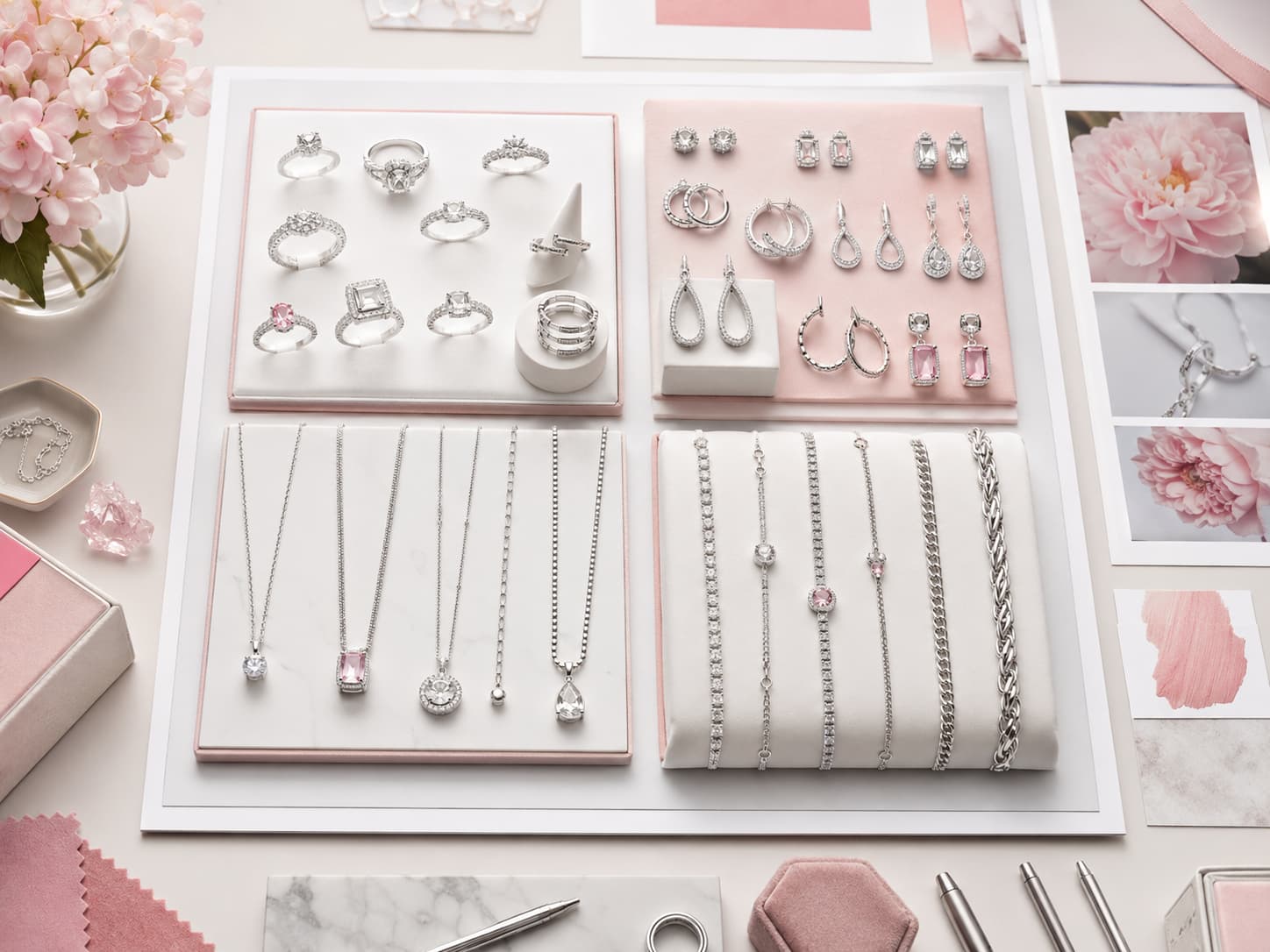
Rather than trying to launch across every category at once, most private label brands do better picking 2–3 categories to start with and building depth there before expanding. This makes quality control easier to manage and gives you cleaner sales data to decide what to expand into next.
For brands building a wider 925 silver catalog, ZHEFAN JEWELRY can support category planning across rings, earrings, necklaces, bracelets, pendants, and jewelry sets.
Easy to build size ranges and stacking sets, with a wide range of stone-setting styles.
Strong everyday-wear demand, giftable presentation, and low shipping cost.
Good for pendants, personalization, and layering collections.
Suitable for charm styles, tennis bracelets, and chain designs.
Helps increase average order value and improves retail presentation.
Wholesale Custom Sterling Silver Jewelry Specifications to Confirm
Before placing a bulk order, get clear, written answers on these specifications — these are the details that affect both quality and how confidently you can market the finished product:
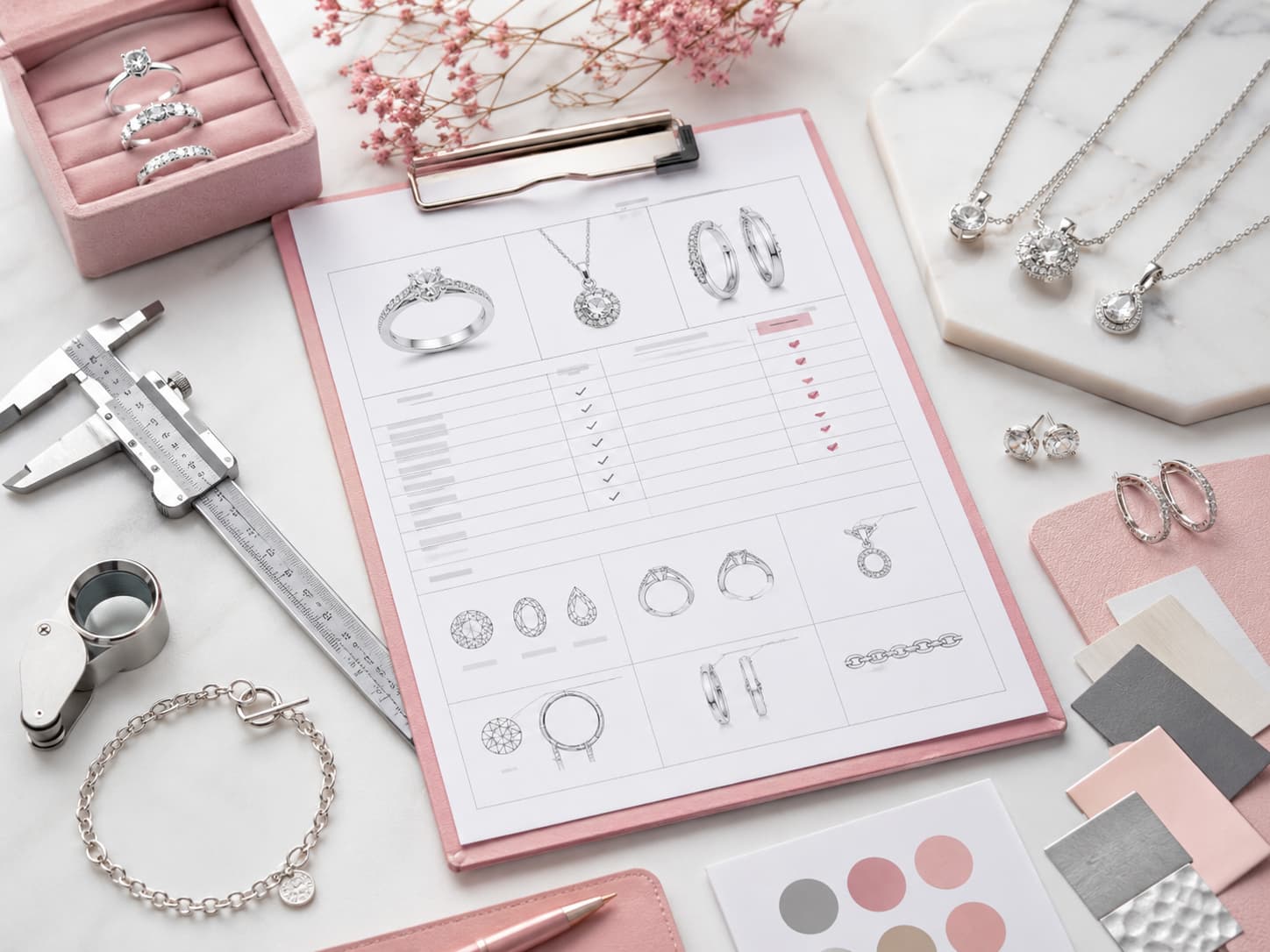
Confirm 925 sterling silver, material test report support, and 925 or S925 stamp requirements.
Clarify whether the order covers rings, earrings, necklaces, bracelets, pendants, or sets.
Confirm rhodium, 14K gold, 18K gold, rose gold, white gold, or other finish options.
Specify CZ, zircon, moissanite, pearl, shell, mother of pearl, or other materials.
Check high polish, matte, hammered, enamel, brushed, or other surface effects.
Ask about laser engraving, stamping, custom tags, and logo placement.
Confirm backing cards, pouches, boxes, barcodes, and private label packaging.
Ask about lead-free, nickel-free, cadmium-free production and SGS, REACH, or RoHS support where relevant.
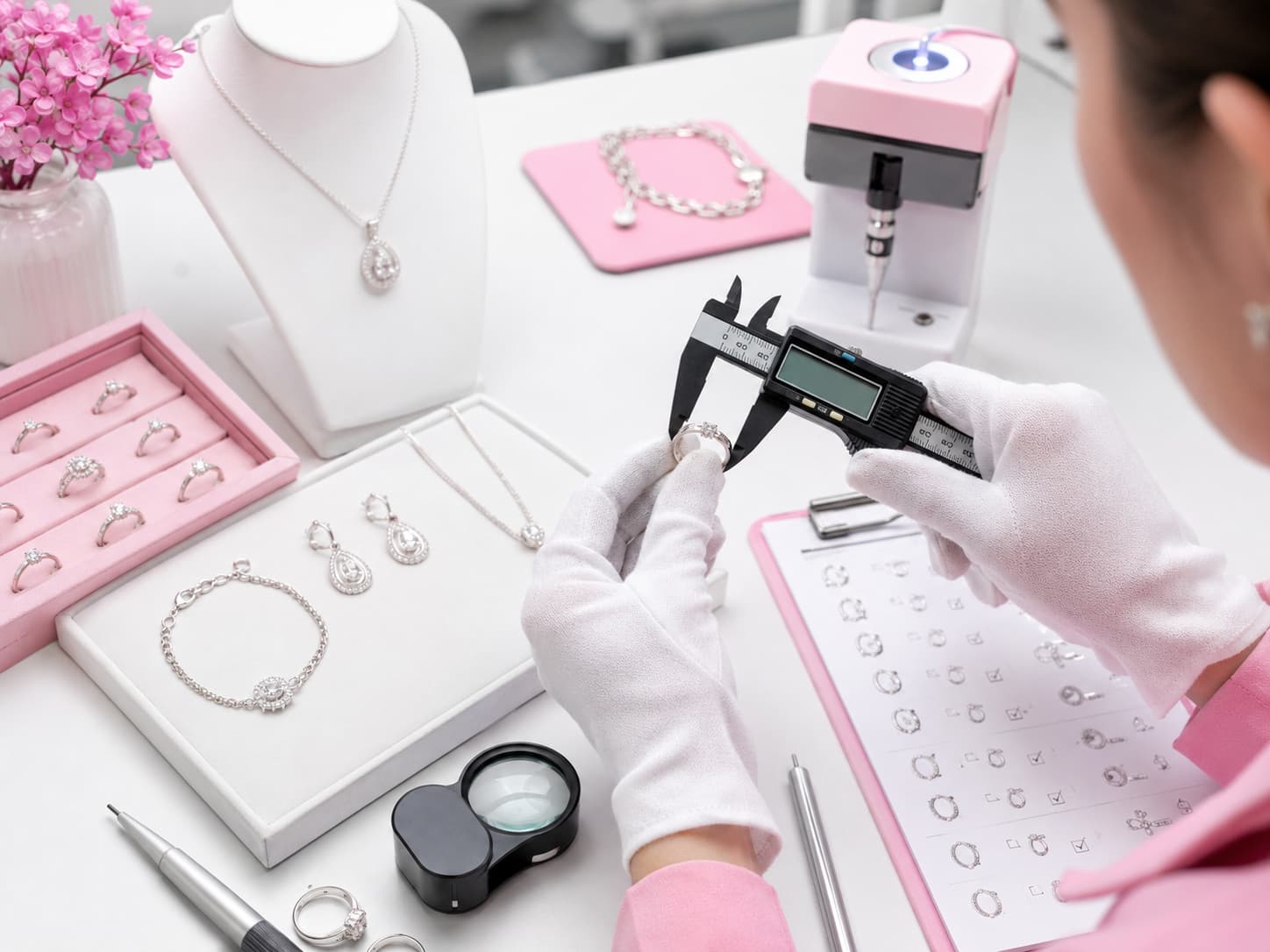
Review weight, size, plating, stone setting, clasp, soldering, and surface finish checks.
If a supplier cannot give specific answers on these points — for example, only describing plating as “high quality” without naming a method or thickness range — that is worth treating as a yellow flag rather than assuming the best.
OEM/ODM Options for Custom 925 Silver Jewelry
As with most custom jewelry categories, sterling silver production splits into two main models. OEM means the factory builds a new design from your sketches, reference images, or CAD files, typically requiring a new mold. ODM means you start from an existing base design and customize elements like plating color, stone type, logo, or packaging.
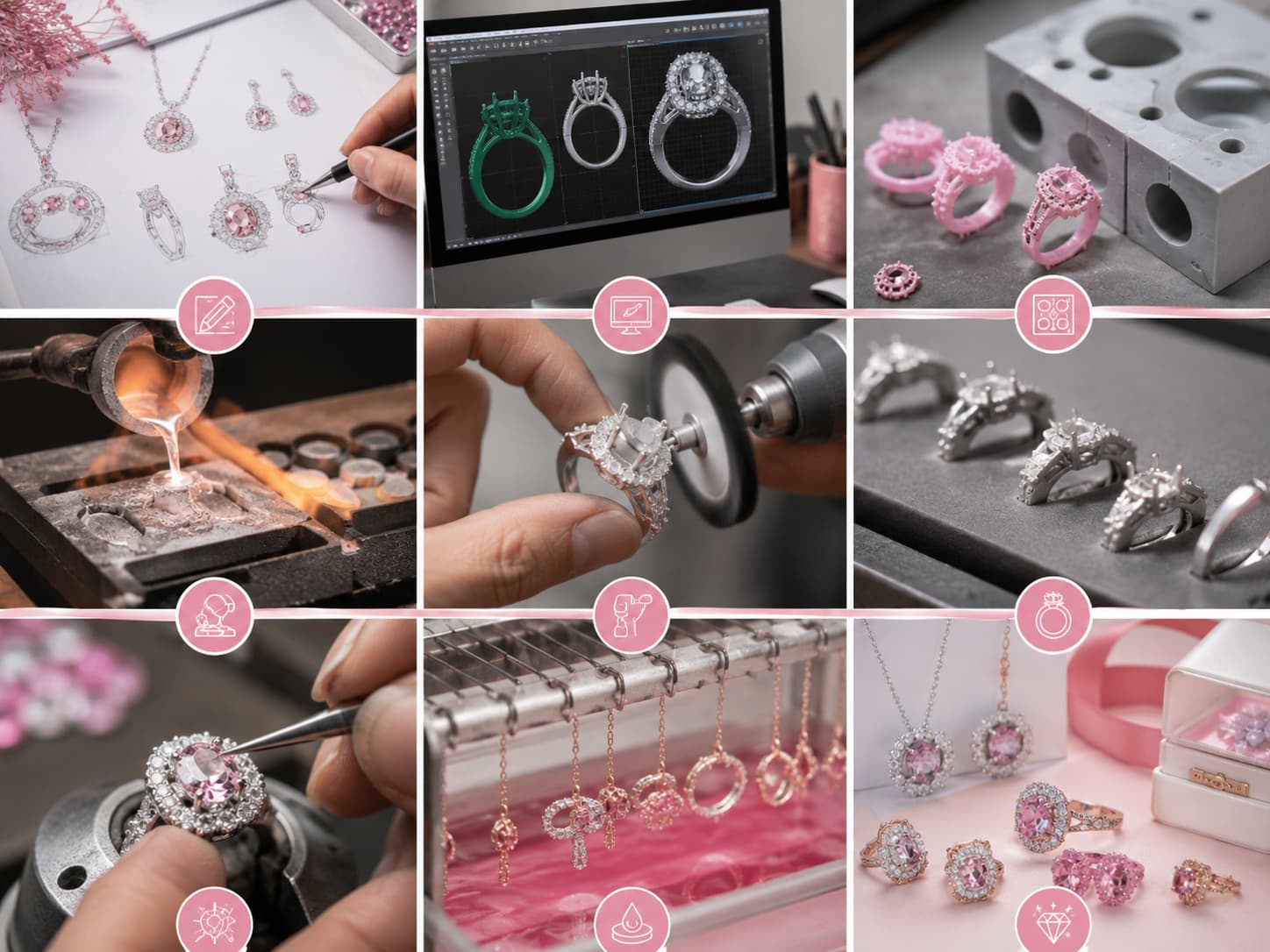
Design brief — share sketches, reference images, CAD files, target category, stone details, plating preference, and quantity expectations.
CAD and design confirmation — confirm dimensions, structure, stone placement, logo placement, and production feasibility before sampling.
Mold making for OEM — new custom designs may require mold development before sample casting.
Sample casting and finishing — sample pieces are cast, polished, set with stones if needed, and finished with the confirmed plating option.
Physical sample approval — approve the actual piece for size, weight, plating color, stone setting, comfort, and finish before bulk production.
Bulk production and QC — production moves into polishing, plating, inspection, logo application, packaging, and shipment preparation.
Getting a physical sample approved before bulk production begins is a non-negotiable step regardless of whether you choose OEM or ODM.
Rhodium Plating, Gold Plating, and Zircon Setting Options
Plating and stone choices are where a lot of the differentiation happens on top of the same base silver design:
Rhodium plating is a common finish for sterling silver. It can help improve brightness, surface protection, and tarnish resistance, though actual durability depends on plating thickness, wear conditions, and care practices.
Gold plating applies a gold layer over the sterling silver base, offering a warmer-toned alternative without the cost of solid gold.
These stone options add sparkle at different price points. The setting method affects how securely stones stay in place over time.
These finishes offer softer, more feminine, seasonal, or boutique-style design options on the same base silver structure.
How to Verify Genuine 925 Sterling Silver
The market does have products marketed as “925” that are actually silver-plated or copper-core pieces with a stamp added on. Treating the “925” mark as a starting point rather than full proof protects both your sourcing decisions and how confidently you can describe the material to your own customers.
For more detail on inspection stages, material checks, and finished product control, review ZHEFAN JEWELRY’s quality control practices.
Useful as a baseline indicator, but not sufficient on its own.
Ask for documentation confirming the 92.5% silver composition, ideally from independent testing rather than only a self-issued statement.
For larger orders, consider requesting or commissioning independent testing on pre-production samples.
A manufacturer that can readily provide composition reports across multiple orders is a stronger signal than one that only offers the stamp itself.
How to Choose a Custom 925 Silver Jewelry Manufacturer
Vetting a sterling silver manufacturer involves checking a few specific things beyond just price:
| What to Check | Why It Matters | What to Ask For |
|---|---|---|
| 925 Silver Authenticity | Avoids silver-plated or copper-core products sold as 925 | Material test report, 925 stamp, assay support |
| Factory Capability | Confirms real production control, not just resale | CAD, casting, polishing, plating, stone-setting photos |
| OEM/ODM Process | Reduces design misunderstandings | Clear design confirmation steps, CAD proof, sample process |
| Plating Quality | Affects tarnish resistance and finished appearance | Rhodium or gold plating specs and thickness options |
| QC Process | Helps reduce returns and inconsistent batches | Inspection reports, QC photos, AQL sampling process |
| Compliance Support | May be needed for wholesale and retail distribution | SGS, REACH, or RoHS support where relevant to your target market |
Cost, MOQ, and Lead Time Factors for Wholesale Silver Jewelry
Rather than comparing quotes purely on unit price, it helps to understand what is driving the number. MOQ and lead time should also be confirmed by product category because rings, earrings, necklaces, bracelets, and jewelry sets may have different mold, plating, stone-setting, and packaging requirements.
The heavier the finished piece, the more silver cost affects the quote.
Intricate casting, fine prongs, hollow structures, and special shapes usually require more development time.
More stones and more complex setting methods increase both labor and QC requirements.
Rhodium, gold, rose gold, and multiple finish options affect both pricing and production planning.
New OEM designs may require mold development before sample production.
Custom boxes, pouches, backing cards, barcodes, and inserts add different cost layers.
Material verification, compliance testing, or third-party reports may be needed for specific markets.
Per-unit cost typically decreases at higher volumes, but buyers should balance unit price with inventory risk.
Why Work with ZHEFAN JEWELRY?
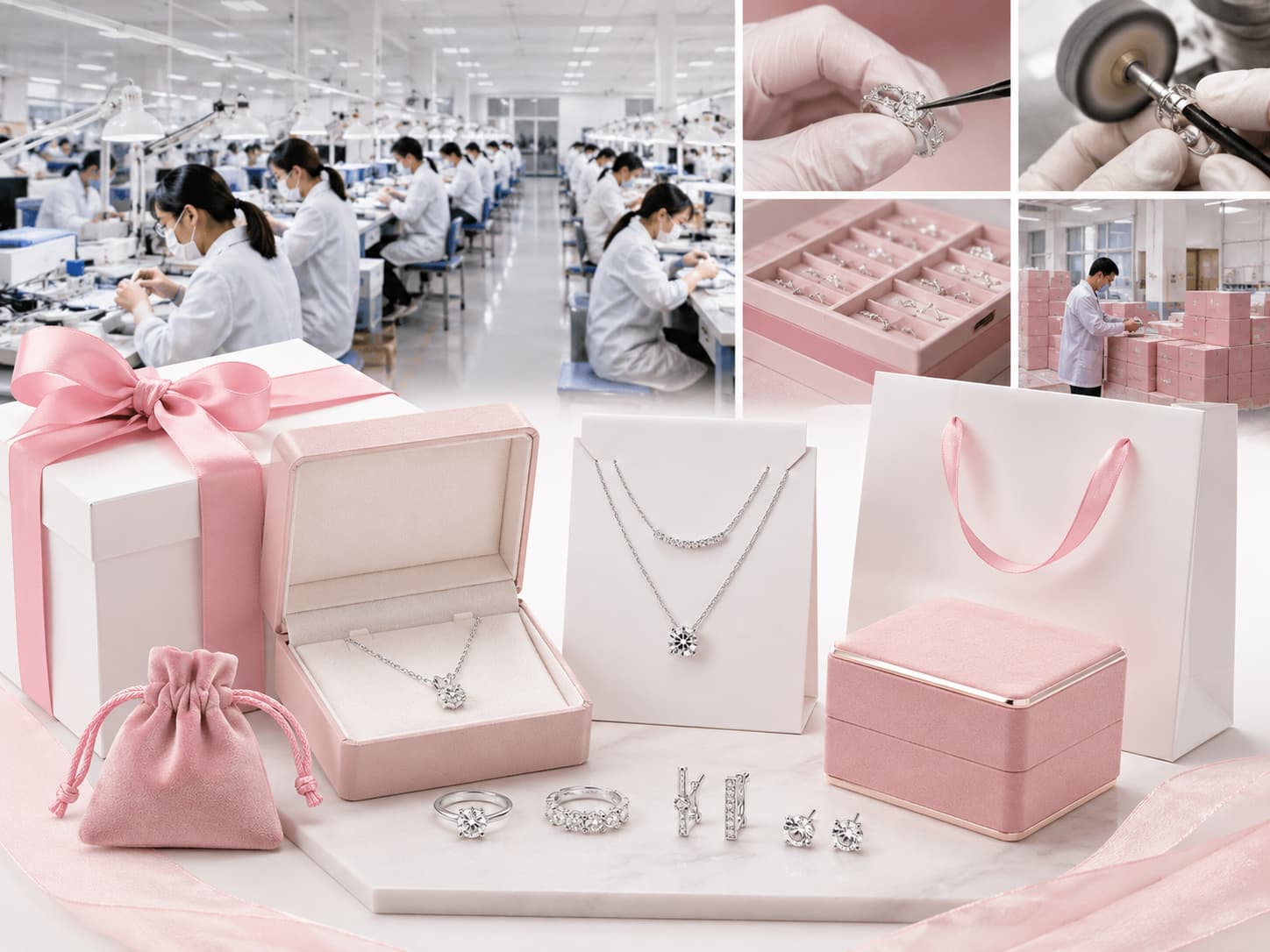
ZHEFAN JEWELRY has jewelry manufacturing experience dating back to 1997, with production bases in Guangzhou and Meizhou and a monthly output capacity of around 600,000 pieces. A few specifics relevant to sourcing sterling silver include:
Manufacturing support spans both brass and 925 sterling silver fashion jewelry categories.
Services include CAD design, mold making, stone setting, plating, logo application, and private label packaging.
Production includes multiple rounds of polishing and quality checks to support more consistent finished products.
Lead-free, nickel-free, cadmium-free production and RoHS, REACH, or SGS support are available for applicable projects.
Testing support is available for applicable projects so buyers can review plating specs with measurable data.
Custom backing cards, branded boxes, pouches, and packaging details can be developed for private label projects.
Sample support and small-batch trial order options can be discussed for qualified first-time projects.
Production capacity supports brands moving from trial orders into larger ongoing wholesale volumes.
For more detail on certifications and manufacturing background, see the About Us page, or explore OEM/ODM services and quality control practices directly.
FAQ
What is custom sterling silver jewelry?
Custom sterling silver jewelry refers to 925 silver pieces, usually 92.5% silver and 7.5% other metal, manufactured to a brand's specific design, plating, stone setting, and packaging requirements rather than purchased as generic stock product.
Why is 925 sterling silver used for wholesale jewelry?
925 sterling silver balances silver's luster and precious-metal positioning with enough durability for daily wear — pure silver alone is too soft for most jewelry applications. It is also widely recognized by consumers, which supports premium retail positioning compared with base-metal fashion jewelry.
How can I verify genuine 925 silver?
Look beyond the “925” stamp alone. Ask for a material composition test report, and for larger orders, consider independent XRF or lab testing on pre-production samples. A manufacturer that readily provides this documentation is a stronger signal of authenticity than one that relies on the stamp alone.
What custom options are available for sterling silver jewelry?
Common customization options include plating color such as rhodium, 14K gold, 18K gold, or rose gold, stone type such as CZ, zircon, moissanite, or pearl, surface finish, logo application, and private label packaging.
Is rhodium plating necessary for sterling silver jewelry?
It is not strictly necessary, but it is a common choice because it can improve brightness and tarnish resistance compared with unplated silver. Actual performance depends on plating thickness, wear conditions, and care, so it should be treated as a meaningful upgrade rather than a permanent guarantee against tarnishing.
What affects the price of wholesale sterling silver jewelry?
Silver weight, design complexity, stone quantity and setting method, plating type, mold costs for new OEM designs, packaging, applicable testing documentation, and order quantity all factor into the final price — not silver content alone.
Can I create private label silver jewelry packaging?
Yes. Standard options include custom backing cards, branded boxes or pouches, and logo application via laser engraving or stamping on the jewelry itself.
How do I choose a reliable 925 silver jewelry manufacturer?
Confirm they can provide material test reports verifying genuine 925 purity, ask for specific answers about plating specs and QC processes, and request applicable third-party documentation such as SGS, REACH, or RoHS support where relevant to your target market, importer requirements, and retail channel.
Ready to Source a Custom Sterling Silver Collection?
Share your target product categories, reference designs, silver purity requirements, plating preference, stone setting needs, packaging idea, estimated quantity, and target market with ZHEFAN JEWELRY. Our team can help evaluate OEM/ODM feasibility, sampling options, QC requirements, and a wholesale production plan for your custom sterling silver jewelry collection.




Facebook
Instagram
YouTube
Whatsapp: +8618819277817