






Email: sales3@zhefanjewelry.com
Does Gold Vermeil Tarnish? Causes, Lifespan & Care
Does gold vermeil tarnish? Learn what causes discoloration, how to tell tarnish from fading, how long gold vermeil lasts, and how to care for it correctly.
- Does Gold Vermeil Tarnish?
- Tarnish, Fading, or Surface Residue?
- Why Does Gold Vermeil Tarnish or Fade?
- Surface Buildup
- Wear of the Gold Layer
- Tarnishing of Exposed Sterling Silver
- How Long Does Gold Vermeil Last?
- Plating Specification
- Surface Preparation
- Jewelry Category
- Wearing Environment
- How to Prevent Gold Vermeil from Tarnishing
- How to Clean Tarnished Gold Vermeil Safely
- What Jewelry Brands Should Check Before Ordering Gold Vermeil
- Is Gold Vermeil Worth Buying?
- Conclusion
- FAQ
Does Gold Vermeil Tarnish?
Yes, gold vermeil can tarnish, fade, or lose some of its original brightness over time. However, high-quality gold vermeil generally lasts longer than ordinary thin gold-plated jewelry because it uses a sterling silver base and a comparatively substantial gold layer.
The important point is that not every visible color change is technically “tarnish.” A gold vermeil piece may look darker because of residue on the surface, gradual wear of the gold layer, or tarnishing of the sterling silver exposed underneath.
How quickly this happens depends on the plating specification, surface preparation, jewelry design, wearing habits, chemical exposure, storage conditions, and the amount of friction the piece receives.
Under current U.S. FTC guidance, a product described as vermeil must have a sterling silver base coated on all significant surfaces with gold or a gold alloy of at least 10 karats. The coating must also have reasonable durability and a minimum thickness equivalent to 2.5 microns of fine gold. Ermeil's definition improves the material standard, but it does not make the finish permanently resistant to wear.
Tarnish, Fading, or Surface Residue?
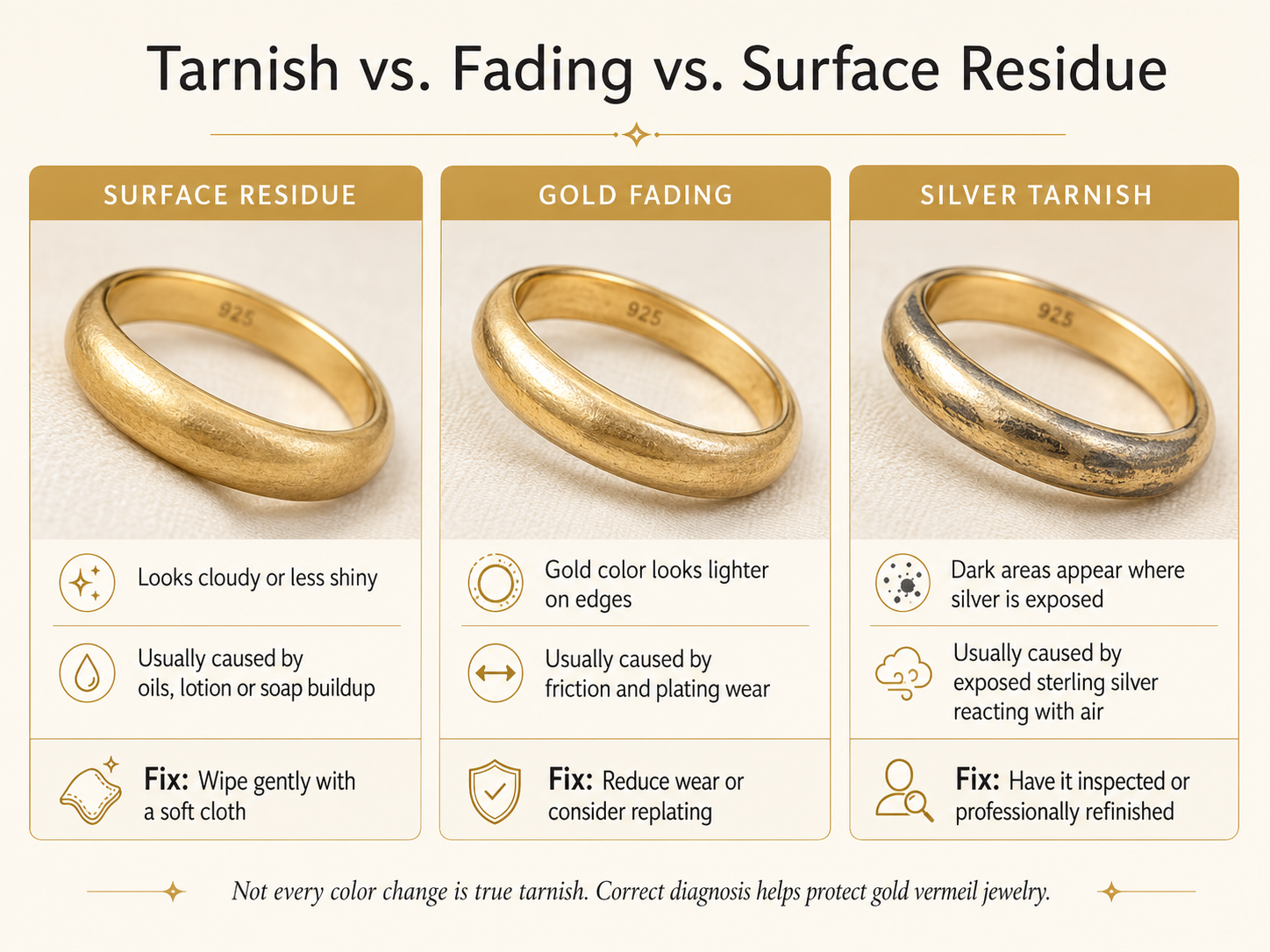
Before trying to clean or restore gold vermeil jewelry, it helps to identify what has actually changed.
| What You See | Most Likely Explanation | Recommended Action |
| The surface looks clousize,r less shiny. | Skin oils, soap, lotion, or cosmetic residue | Wipe gently with a clean, soft cloth. |
| Gold-colored looks lighter on edges or raised areas. | Gradual wear of the gold layer | Reduce friction and consider professional replating. |
| Darsize,eas appear where the gold layer has worn. | Exposed sterling silver has begun to tarnish. | Ask a jeweler to inspect and refinish the piece. |
| Discoloration appears around a clasp or ring band | Frequent movement, pressure, and skin contact | Clean carefully and avoid continuous wear. |
| Uneven color appears shortly after purchase. | Inconsistent plating, poor preparation, or contamination | Contact the seller or manufacturer. |
This distinction matters because aggressive polishing may remove surface tarnish but can also remove more of the remaining gold coating.
A slightly dull surface may only need gentle cleaning. A pale or silver-colored patch usually indicates plating wear rather than dirt. A dark mark beneath a worn area is more likely to involve the sterling silver base.
Why Does Gold Vermeil Tarnish or Fade?
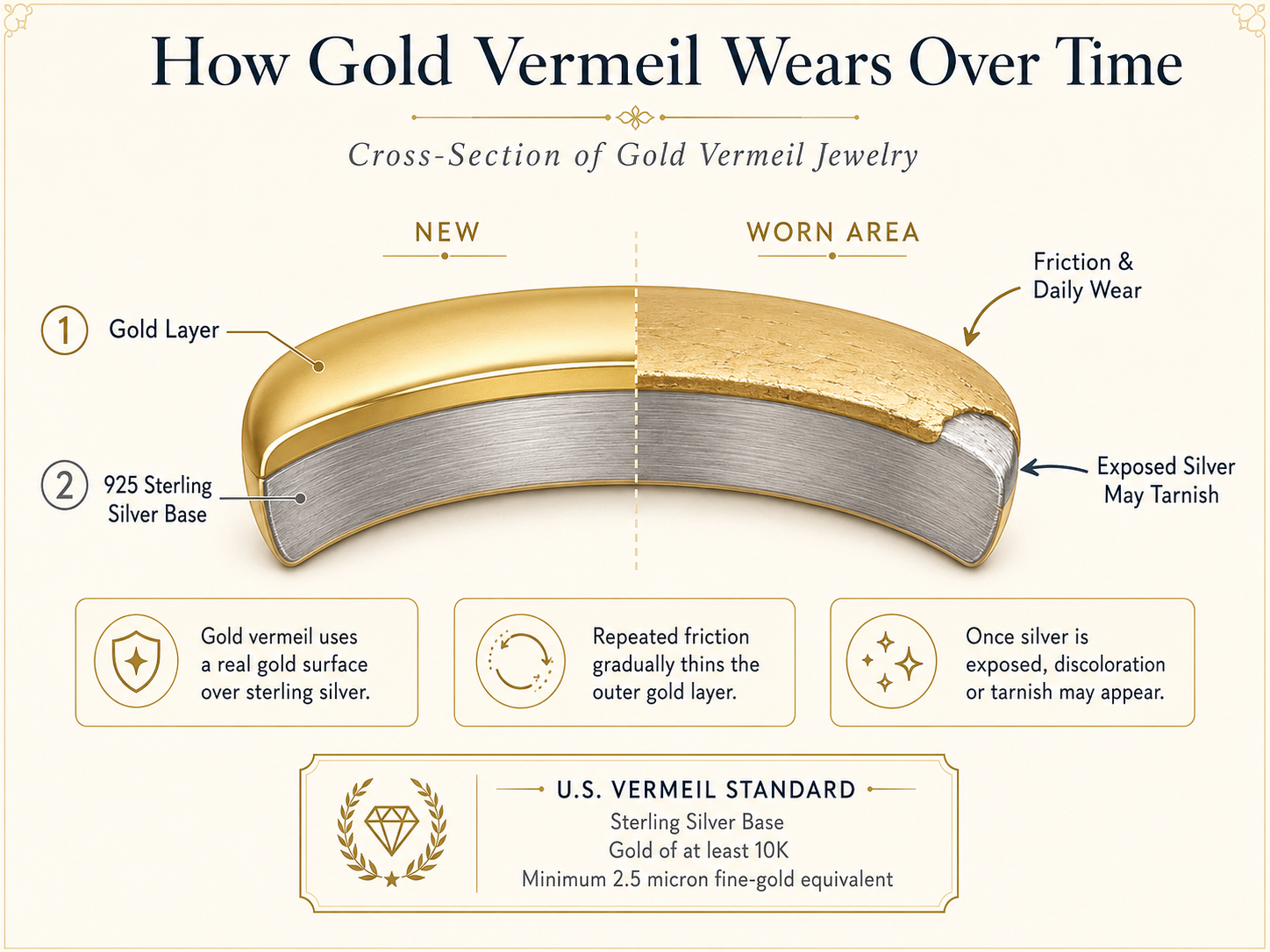
Gold vermeil usually changes appearance through three connected processes: surface buildup, wear of the gold coating, and reaction of the exposed silver underneath.
Surface Buildup
Perfume, sunscreen, lotion, makeup, soap, sweat, and natural skin oils can leave a thin film on jewelry. This film reduces shine and may make the gold look darker or less even.
In many cases, the jewelry has not truly tarnished. Removing the residue gently can restore much of its original appearance.
Contact Us
Wear of the Gold Layer
Gold vermeil is not solid gold. Its visible gold finish is applied over sterling silver.
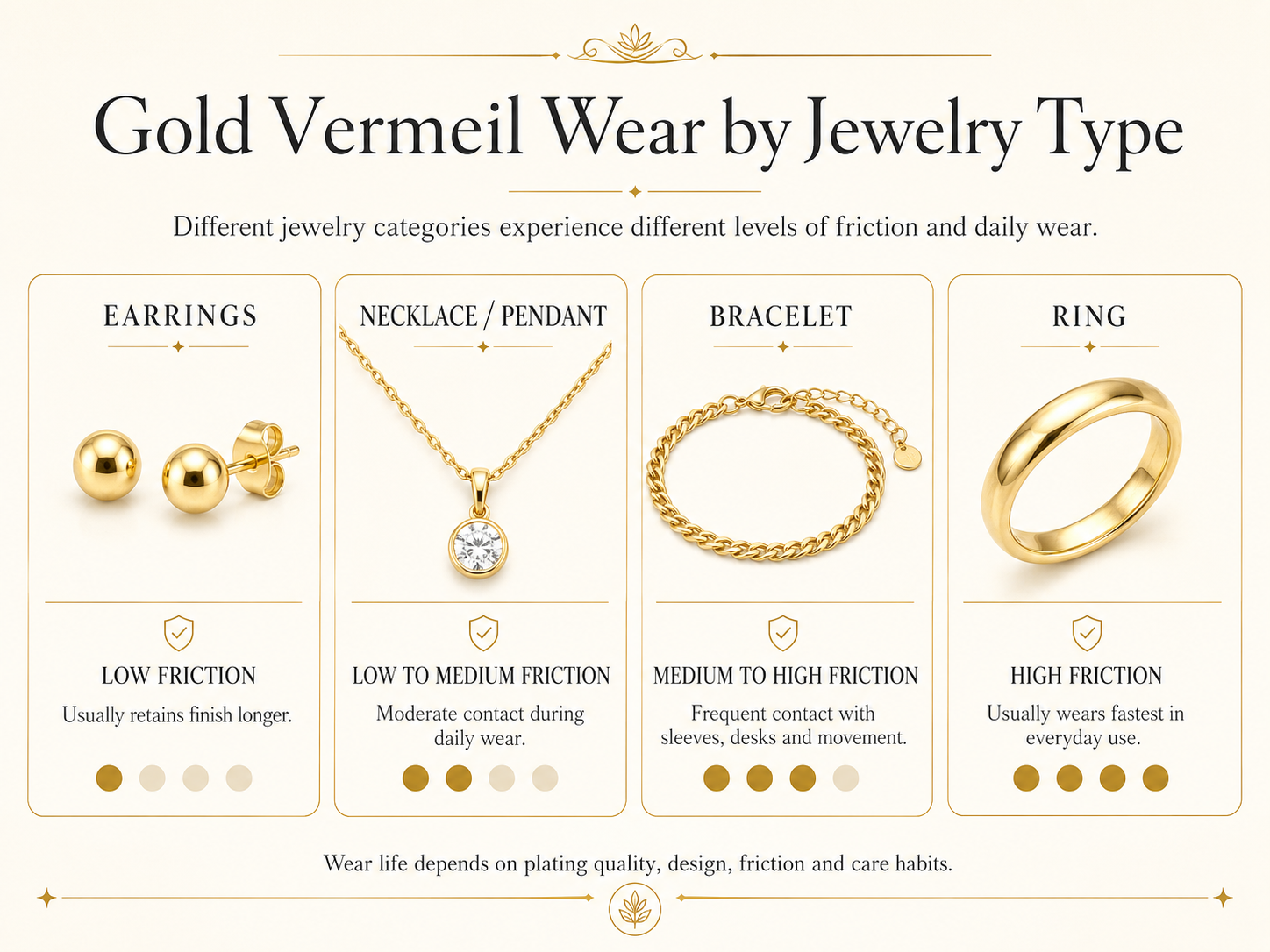
Daily friction gradually affects that surface. Rings usually experience more wear than earrings or pendants because they come into contact with hands, desks, bags, clothing, and cleaning products. Bracelet clasps and clothing and the backs of pendants may also wear faster than decorative areas that receive little contact.
Once the coating becomes thinner, the cooler tone of the sterling silver may begin to influence the appearance. The jewelry can then look less yellow even before obvious dark tarnish develops.
Gold karat also affects the balance between color and surface performance. Higher-karat gold contains a larger proportion of gold and normally produces a richer yellow tone, while lower-karat alloys contain more additional metals. However, plating durability cannot be judged by karat alone. Thickness, porosity, adhesion, polishing and the jewelry’s shape are also important.
Tarnishing of Exposed Sterling Silver
Sterling silver can develop silver sulfide when it reacts with sulfur-containing gases in the environment. Humidity can accelerate this reaction when tarnishing pollutants are present. gold layer hepolishing, the silver. However, if the coating becomes thin, scratched, or worn through, the underlying sterling silver becomes more exposed to air, moisture, and contaminants.
This is why darkening may first appear near edges, joints, clasps, engravings, ring bands, or other high-contrast areas.
Read More
How Long Does Gold Vermeil Last?
There is no honest universal lifespan for moisture-removal jewelry.
A well-made pendant worn occasionally may retain an attractive finish for years, while a ring worn every day may show visible wear much sooner. Two products with the same nominal plating thickness can also perform differently if their polishing, cleaning, layer adhesion or product geometry is different.
The following factors have the greatest influence on longevity.
Plating Specification
A thicker, padhesion,-controlled coating generally provides more material before the sterling silver base becomes exposed. However, brands should not evaluate thickness as an isolated number.
For products sold as vermeil in the United States, the manufacturer should clarify whether the reported measurement represents physical alloy thickness or fine-gold-equivalent thickness. A quoted 2.5-micron alloy layer should not automatically be assumed to satisfy every target-market labeling requirement.
Surface Preparation
Gold plating follows the surface underneath it. Scratches, pores, polishing marks, and residue on the silver base can affect marks, coverage, and adhesion.
A smooth and thorough coverage of the sterling silver surface gives the coating a more consistent foundation.
Jewelry Category
Low-friction pieces usually retain their finish longer than products exposed to constant movement.
Earrings and pendants normally experience less abrasion. Bracelets receive repeated contact with sleeves, desks, and clasps. Rings are typically the highest-wear category because they encounter water, soap, hard surfaces, and hand movement throughout the day.
Wearing Environment
Sweat, chlorine, saltwater, perfume, cleaning agents, and cosmetic products can affect both the surface and any exposed metal underneath.
Occasional contact with clean water may not immediately damage a quality piece, but repeated soaking and chemical exposure can shorten the useful life of the finish.
For that reason, gold vermeil is better described as water-resistant under appropriate conditions rather than permanently waterproof.
How to Prevent Gold Vermeil from Tarnishing
Gold vermeil care does not need to be complicated. The goal is to reduce chemical exposure, moisture, and unnecessary abrasion.
Apply perfume, sunscreen, hairspray, and lotion before putting on jewelry. Allow these products to dry so they are less likely to transfer directly to the surface.
Remove gold vermeil jewelry before swimming, showering, exercising, cleaning, or using hand sanitizer repeatedly. Chlorine, salt, sweat, and cleaning chemicals can accelerate surface wear.
After wearing the jewelry, wipe it gently with a soft, lint-free cloth. This removes skin oils and moisture before they remain on the surface for long periods.
Store pieces separately in a dry pouch or lined jewelry box. Separate storage reduces scratches and limits contact with rubber, paper, adhesives, or other materials that may release tarnishing compounds.
Avoid storing jewelry in bathrooms or other humid spaces.
How to Clean Tarnished Gold Vermeil Safely
Begin with the least aggressive cleaning method.
Use a clean microfiber or lint-free cloth to wipe the surface gently. Do not scrub raised areas, edges, or engraved details.
For heavier residue, use a small amount of mild soap diluted in lukewarm water. Clean the piece briefly with a very soft cloth, rinse away the soap, and dry it immediately.
Avoid abrasive toothpaste, baking soda, rough brushes, chemical dips, and strong silver polish. Silver-cleaning products are designed to affect silver tarnish and may also damage or remove a plated or gilded surface. Conservation guidance specifically warns that polishing and chemical tarnish removal can remove metal and damage gilded or plated areas. The color has worn away; cleaning cannot replace the missing coating. Professional refinishing or replating is the appropriate solution.
What Jewelry Brands Should Check Before Ordering Gold Vermeil
For jewelry brands, tarnish complaints are rarely solved by requesting only a thicker coating. Reliable performance begins with a complete and traceable specification.
The purchase order should identify the sterling silver grade, gold karat, coating specification, measurement method, testing locations, polishing standard, color reference, and any intermediate layers.
The manufacturer should also disclose whether nickel or another base-metal layer is used between the sterling silver and gold. Under U.S. guidance, the presence of a base-metal layer between sterling silver and gold requires appropriate disclosure when the product is described as vermeil. would be checked at representative areas rather than only at the easiest point to measure. Rings, clasps, chain components, stone-set surfaces, and recessed areas may not receive identical coating coverage.
Brands should approve a production sample using the same material, process, color, and coating route planned for bulk production. Care instructions and durability claims should also match the actual product instead of relying on general terms such as “tarnish-free” or “permanently waterproof.”
Zhefan Jewelry supports custom 925 sterling silver and gold vermeil projects with 14K and 18K color options, customized plating specifications, XRF thickness inspection, sample approval, and OEM/ODM production.
For target markets with specific vermeil requirements, the gold fineness, thickness calculation, and product labeling should be confirmed before mass production.
Is Gold Vermeil Worth Buying?
Gold vermeil is a strong option for customers and brands that want a precious sterling silver base, a genuine gold surface, and a more accessible price than solid gold.
It is more premium than ordinary thin gold plating, but it should still be treated as a coated jewelry product. Quality gold vermeil can retain its appearance for a long time when it is manufactured correctly and cared for appropriately, but no plated finish should be presented as permanent.
The most reliable buying decision is based on transparent material information, controlled coating specifications, suitable product design, and realistic care expectations.
Conclusion
So, does gold vermeil tarnish?
It can, but visible discoloration does not automatically mean the jewelry is defective. Surface residue, gold-layer wear, and exposed sterling silver tarnish can create similar-looking changes.
High-quality manufacturing, controlled thickness, smooth polishing, appropriate use, and careful storage all help gold vermeil maintain its appearance. For jewelry brands, the most important step is to define and verify the complete coating specification rather than relying only on the word “vermeil.”
For custom gold vermeil jewelry development, Zhefan Jewelry provides OEM and ODM support for 925 sterling silver earrings, rings, necklaces, bracelets, pendants, charms, and tennis jewelry, with an MOQ of 60 pieces per design.
FAQ
Does gold vermeil tarnish easily?
High-quality gold vermeil should not tarnish as quickly as exposed sterling silver or poorly plated jewelry. However, the surface can become dull, and the silver underneath may tarnish if the gold layer becomes worn or damaged.
Does gold vermeil fade?
Yes. The gold layer can gradually become thinner in areas exposed to friction. Fading normally appears first on ring bands, bracelet clasps, pendant backs, and raised edges.
Can gold vermeil get wet?
Occasional contact with clean water may not cause immediate damage, but frequent showering, swimming, or soaking can shorten the life of the finish. Chlorine, saltwater, soap, and chemicals should be avoided.
Is gold vermeil waterproof?
Gold vermeil should not be marketed as permanently waterproof. A better description is "water-resistant," depending on the coating system, product construction, and conditions of use.
Can I use silver polish on gold vermeil?
No. Silver polish can be abrasive or chemically active and may remove part of the gold coating. Use a soft cloth and mild cleaning method instead.
Can gold vermeil turn skin green?
It is less likely to turn skin green than gold-plated brass jewelry. However, worn plating, moisture, cosmetics, copper within the sterling silver alloy, or incorrect material labeling may contribute to discoloration in some cases.
Can tarnished gold vermeil be restored?
Light residue can often be removed with gentle cleaning. If the gold coating has worn away or the exposed silver has darkened, professional polishing and replating may be required.
Recommended for you

What Is Gold Vermeil Jewelry? A Complete Guide for Brands and Retailers

Thick Gold Plated Jewelry Manufacturer for 925 Silver & Brass Jewelry

How to Choose a Gold Vermeil Jewelry Manufacturer

Gold Vermeil vs. Gold-Plated Jewelry: Which Fits Your Luxury Jewelry Brand?
Product Categories
Discuss Your Ideas with a Professional Custom Jewelry Manufacturer
We provide personalized jewelry customization services for clients worldwide.
Rest assured that your privacy is important to us, and all information provided will be handled with the utmost confidentiality.
By clicking 'Send Inquiry Now' I agree to ZHEFAN JEWELRY processing my personal data.
To see how to withdraw your consent, how to control your personal data and how we process it, please see our Privacy Policy and Terms of use.
From design to production, ZHEFAN JEWELRY offers a one-stop solution to help you enhance your brand value and market competitiveness.
Get A Quote
Contact
Tel: (+86) 188 1927 7817
© 2026 Zhefan Jewelry. All Rights Reserved.
Facebook
Instagram
YouTube
Whatsapp: +8618819277817