






Email: sales3@zhefanjewelry.com
Does Gold Vermeil Turn Green? Causes and Quality Controls for B2B Buyers
Green surface deposits or green skin marks do not identify a single defect. This guide shows B2B jewelry buyers how to separate material exposure, coating wear, component scope, and batch-control failures before approving or disputing gold vermeil production.
- Does Gold Vermeil Turn Green?
- TL;DR for B2B Jewelry Buyers
- What Does “Turning Green” Mean in a Gold Vermeil Complaint?
- Tarnishing, Fading, Wearing Off, and Turning Green Are Not the Same
- Why Can Gold Vermeil Develop Green Discoloration?
- Exposed Sterling-Silver Alloy
- Uneven, Damaged, or Worn Gold Coverage
- Mixed Components, Solder, and Findings
- Surface Preparation and Coating-System Compatibility
- Exposure Conditions
- How Should B2B Buyers Prevent and Investigate Green Discoloration?
- Define the Complete Gold Vermeil Specification
- Define Measurement Locations and Evidence Scope
- Define Test Conditions and Acceptance Criteria
- Investigate Complaints by SKU and Batch
- How Zhefan Jewelry Reduces Gold Vermeil Discoloration Risk
- Component and Coating Specification Review
- Surface Preparation and Staged Inspection
- Sample Approval, Measurement Scope and Production Handoff
- Conclusion: Control the Construction, Evidence, and Batch
- References
- FAQ
Does Gold Vermeil Turn Green?
A jewelry quality team receives a complaint: a gold vermeil piece has developed a green deposit, or a customer reports a green mark on the skin. Before assigning responsibility, the team must define what “turning green” describes. A deposit on the product and a mark transferred to skin are different symptoms and may involve different materials, components, contact points, and exposure conditions.
Does gold vermeil turn green? Not automatically. A correctly specified gold vermeil product is not inherently expected to turn green. However, green discoloration may occur when copper-containing sterling-silver alloy, solder, findings, or other components become exposed through incomplete coverage, localized wear, surface defects, or repeated contact with moisture, perspiration, chlorides, cosmetics, or cleaning chemicals.
For B2B buyers, the correct response is not to request an unsupported “never turns green” guarantee. The investigation should define the observed condition, locate the affected component, verify the complete bill of materials, review the coating specification, and connect the complaint to the correct SKU and production batch.
TL;DR for B2B Jewelry Buyers
- Gold vermeil does not automatically turn green, but exposed copper-containing alloys or components may create green deposits or skin marks under certain conditions.
- Tarnish, fading, coating wear, and green discoloration are different observations. Classify the symptom before selecting a test or assigning responsibility.
- Verify the full bill of materials, significant-surface coverage, measurement points, approved sample, test scope, and batch records before relying on a supplier assurance.
What Does “Turning Green” Mean in a Gold Vermeil Complaint?
A green or blue-green deposit on the product is different from a green mark transferred to the wearer’s skin. Both conditions should also be separated from dark tarnish, fading gold color, batch color drift, and visible wear-through. These symptoms may occur together, but they do not automatically share the same cause.
The answer to "Does gold vermeil turn green?" therefore depends on what was observed, where it appeared, and which part of the construction was involved. Color is an inspection trigger, not a complete root-cause conclusion.
Tarnishing, Fading, Wearing Off, and Turning Green Are Not the Same
Buyers researching this issue also encounter the questions "Does gold vermeil tarnish?" "Does gold vermeil fade?" and "Does gold vermeil wear off?" Each describes a different observed condition and points to a different check.
|
Observed Condition |
Working Meaning |
B2B Check |
|
Tarnishing |
Surface darkening or color change |
Metal, coating system, and exposure conditions |
|
Fading |
Gold-color intensity becomes weaker |
Approved color reference, coverage, friction, and batch color |
|
Wearing off |
The gold layer is locally removed |
Edges, chain links, contact points, and moving parts |
|
Turning green |
Green deposit on product or green mark on skin |
Exposed copper-containing material, component scope, and environment |
Classify the observed condition before selecting a test method. Coating-thickness measurements may support a wear-through investigation, while component-level material verification may be more relevant when discoloration appears only on a clasp, post, soldered joint, or chain link. See also the B2B comparison of gold vermeil vs. gold-plated jewelry.
Why Can Gold Vermeil Develop Green Discoloration?
Exposed Sterling-Silver Alloy
The underlying metal composition matters when investigating green discoloration. The base is sterling silver, commonly 92.5% silver combined with other metals, often including copper. When the gold layer on a 925 sterling silver vermeil piece is compromised, the underlying alloy may become exposed. Exposure does not guarantee green discoloration; it is one possible pathway whose outcome depends on the alloy, the affected area, and the conditions the piece encounters.
Uneven, Damaged, or Worn Gold Coverage
A nominal coating target does not guarantee identical coverage everywhere. Broad surfaces plate differently from edges, recesses, chain links, clasps, posts, soldered zones, and moving joints. Buyers should therefore define multi-point measurement locations and use sample construction that mirrors production geometry, rather than relying on one accessible flat-surface reading.
Mixed Components, Solder, and Findings
A claim may focus on the main jewelry body, but the finished SKU can also include a chain, clasp, jump ring, earring post, solder joint, moving joint, or externally sourced finding. These parts may use different alloys, suppliers, or coating structures. The bill of materials should identify component materials, coating requirements, report scope, and the approval process for substitutions.
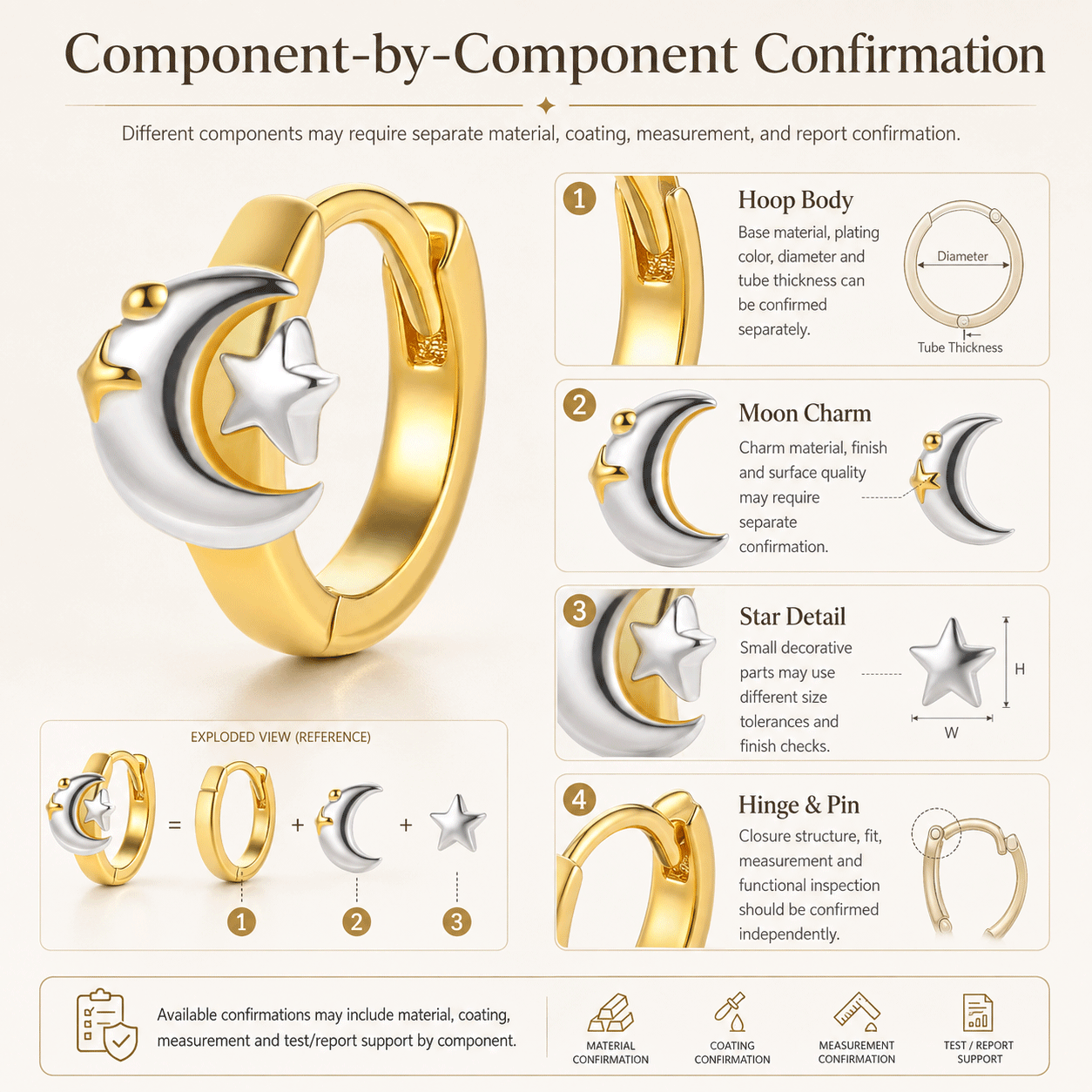
Different components may require separate material, coating, measurement, and report confirmation.
In Zhefan OEM projects, the main body, chain, clasp, earring post, soldered area, and purchased findings are reviewed as separate specification items where relevant. A substitution in component material or supplier is reconfirmed before it proceeds, since it can affect coating coverage, appearance, testing scope, and the approved production reference.
Surface Preparation and Coating-System Compatibility
Plating performance depends on the surface prepared beneath the gold layer. Polishing, cleaning, and activation prepare the base metal; an underlayer may sit beneath the visible gold; and a transparent topcoat, where specified, adds another system element. Plating cannot repair deep pinholes, pitting, roughness, or structural deformation. A topcoat should be validated for product-specific coverage, cure, flexibility, and use conditions, not presented as a stand-alone guarantee.
Zhefan Jewelry applies staged polishing and inspection before and after plating to identify surface roughness, pinholes, black spots, pitting, and detail-area defects. These controls support plated-finish consistency, but the final result still depends on the written coating structure, product geometry, approved sample, and project-specific acceptance criteria.
Exposure Conditions
Humidity, perspiration, chlorides, cosmetics, cleaning agents, storage, and repeated friction may contribute to visible change. These conditions belong in a complete investigation, but they should not become a default explanation that shifts every complaint to the wearer before material and coating scope are checked.
How Should B2B Buyers Prevent and Investigate Green Discoloration?
Define the Complete Gold Vermeil Specification
U.S. Market Definition Note: For products marketed in the United States, 16 CFR §23.4 states that a product may be described as vermeil when it has a sterling-silver base coated on all significant surfaces with gold or gold alloy of at least 10-karat fineness, with reasonable durability and a minimum thickness throughout equivalent to 2.5 microns of fine gold. If a base-metal layer such as nickel is placed between the sterling silver and gold, the construction must be disclosed appropriately. This definition controls product wording; it does not create an unconditional guarantee against wear, tarnishing, fading, or green discoloration under every geometry and exposure condition.
Related internal guide: U.S. gold vermeil requirements and the distinction between actual alloy thickness and fine-gold-equivalent thickness.
- Sterling-silver base and the scope of the main body.
- Materials for chains, clasps, posts, rings, solder, moving joints, and purchased findings.
- Gold fineness, approved color, thickness basis, tolerance, and measurement locations.
- Underlayer or barrier-layer structure, plus a transparent topcoat where requested.
- Target market, claim language, approved sample, sample count, and report-to-SKU scope.
However, a 2.5-micron gold vermeil specification is not a universal performance guarantee. Buyers must still define whether thickness is stated as actual alloy thickness or fine-gold-equivalent thickness, plus measurement locations, component scope, sample count, construction, target market, and acceptance criteria.
Define Measurement Locations and Evidence Scope
- State where measurements are taken and how many samples and points are included.
- Clarify whether edges, recesses, chains, clasps, posts, and soldered areas are within scope.
- Identify the SKU, color, construction, component supplier, sample, and batch represented by each report.
XRF can support material screening and coating-thickness measurement when the equipment, calibration, substrate, layer model, geometry, and test point are suitable. The report should identify the tested sample, method, locations, and represented SKU or batch. XRF should not be described as automatic proof of every component, surface, or compliance claim.
Method-scope references: ASTM B568 and ISO 3497:2000. Citation does not imply that Zhefan follows either standard unless a specific report confirms the method.
For a project-specific review, Zhefan can help define measurement points according to the product structure and complaint risk. The agreed scope should identify whether broad surfaces, edges, clasps, posts, chains, or contact areas are represented—one accessible reading should not stand in as evidence for every component.
Define Test Conditions and Acceptance Criteria
Depending on the project, verification may include the following:
- Silver fineness or material verification.
- Coating-thickness measurement and distribution review.
- Color comparison against an approved physical reference.
- Adhesion, corrosion, salt spray, or artificial perspiration testing where relevant.
- Topcoat compatibility and final inspection after plating.
Every performance statement should be tied to a test method, sample construction, exposure condition, duration, acceptance criterion, and represented batch. A claim such as tarnish-resistant gold vermeil jewelry is only as strong as the evidence and scope behind it.
Investigate Complaints by SKU and Batch
1. Define the failure: green deposit, skin mark, tarnish, fading, color drift, blistering, or wear-through.
2. Record the location: main body, edge, recess, chain, clasp, post, solder, or moving joint.
3. Trace the product: SKU, batch, finish, order, affected quantity, and reported exposure.
4. Compare references: approved sample, color master, specification, and retained sample.
5. Test relevant points: Measure locations connected to the observed failure.
6. Review components and changes: Findings, solder, suppliers, substitutions, rework, and process changes.
7. Close the investigation: Root cause, corrective action, revalidation, responsibility, and repeat-order control.
|
Observed Symptom |
Relevant Check |
Evidence to Request |
|
Green mark on a clasp or chain link |
Material and coating scope for that component |
Component declaration and plating record |
|
Edge-first coating change |
Coverage at edges versus broad surfaces |
Multi-point thickness report with named locations |
|
Green mark on skin |
Contact-point material, coverage, and exposure |
Alloy record and coating data for the contact area |
|
Batch-wide color drift |
Process consistency and change history |
Batch inspection, approved-sample comparison, and change log |
How Zhefan Jewelry Reduces Gold Vermeil Discoloration Risk
As a project-based gold vermeil jewelry manufacturer, Zhefan Jewelry addresses the risks discussed throughout this guide — component material exposure, uneven gold coverage, surface defects before plating, unclear measurement locations, sample-to-production inconsistency, unsupported test claims, and untraceable SKU or batch complaints — through a defined specification, staged surface preparation, and a documented approval process rather than a single generic promise.
Component and Coating Specification Review
Before production, Zhefan confirms the sterling-silver base and the scope of the main body, together with the materials used for chains, clasps, posts, jump rings, solder, and moving joints. Component materials cannot automatically be assumed to match the main jewelry body, so purchased findings are reviewed as separate specification items. The review also covers gold fineness, approved plating color, the thickness basis and measurement locations, any underlayer or barrier-layer requirement, a transparent topcoat where applicable, and the target market and intended product wording.
Surface Preparation and Staged Inspection
Zhefan Jewelry’s proprietary 6-polishing & 6-inspection process addresses surface conditions that can affect the appearance and consistency of a plated finish. Relevant stages include machine grinding, linen-wheel hand polishing, inspection for pinholes, black spots, and pitting; detail polishing around edges and setting areas; final polishing before plating; and visual inspection after plating.
These stages help reduce surface-related plating risk and support plated-finish consistency, but they do not replace a written specification, guarantee zero defects, or prove that every component carries identical coating coverage.
Surface preparation and staged inspection support plated-finish consistency before and after plating.
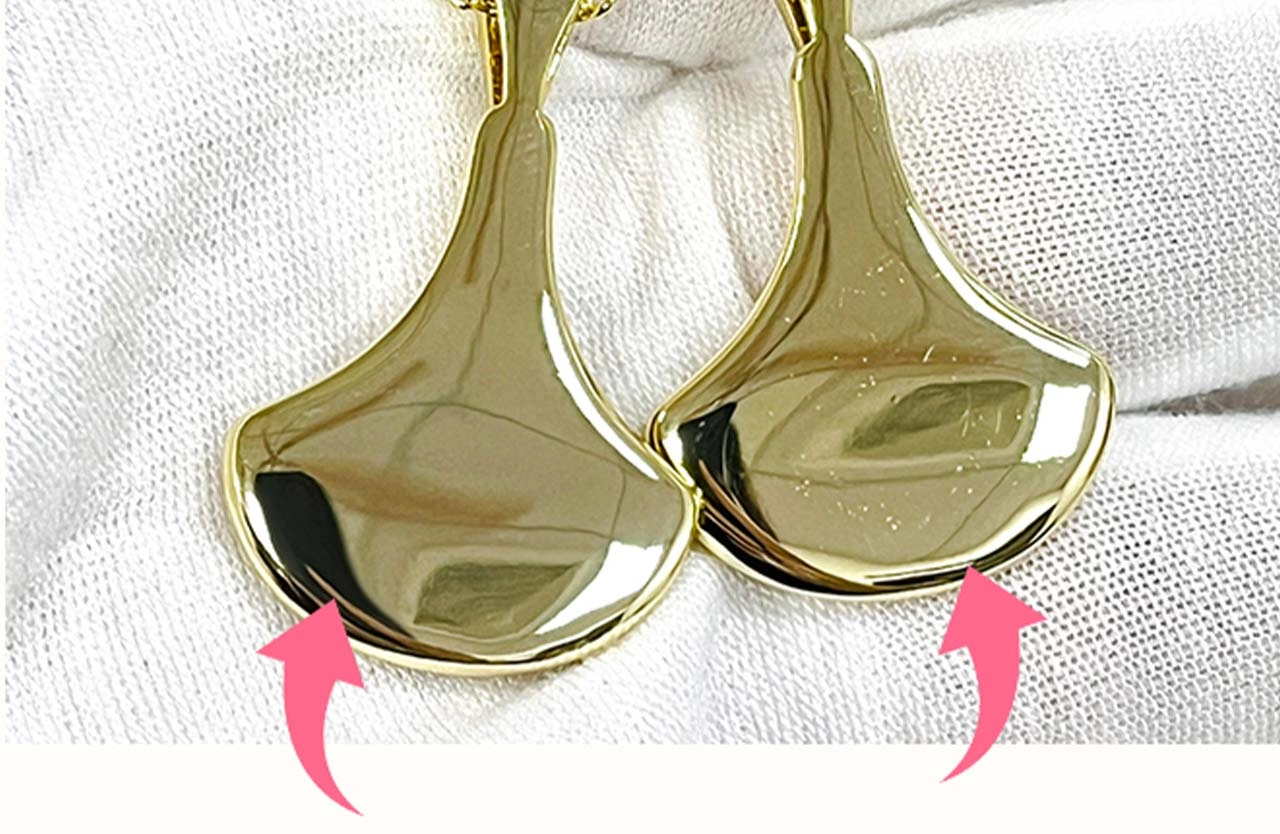
Before quality inspection vs. after quality inspection
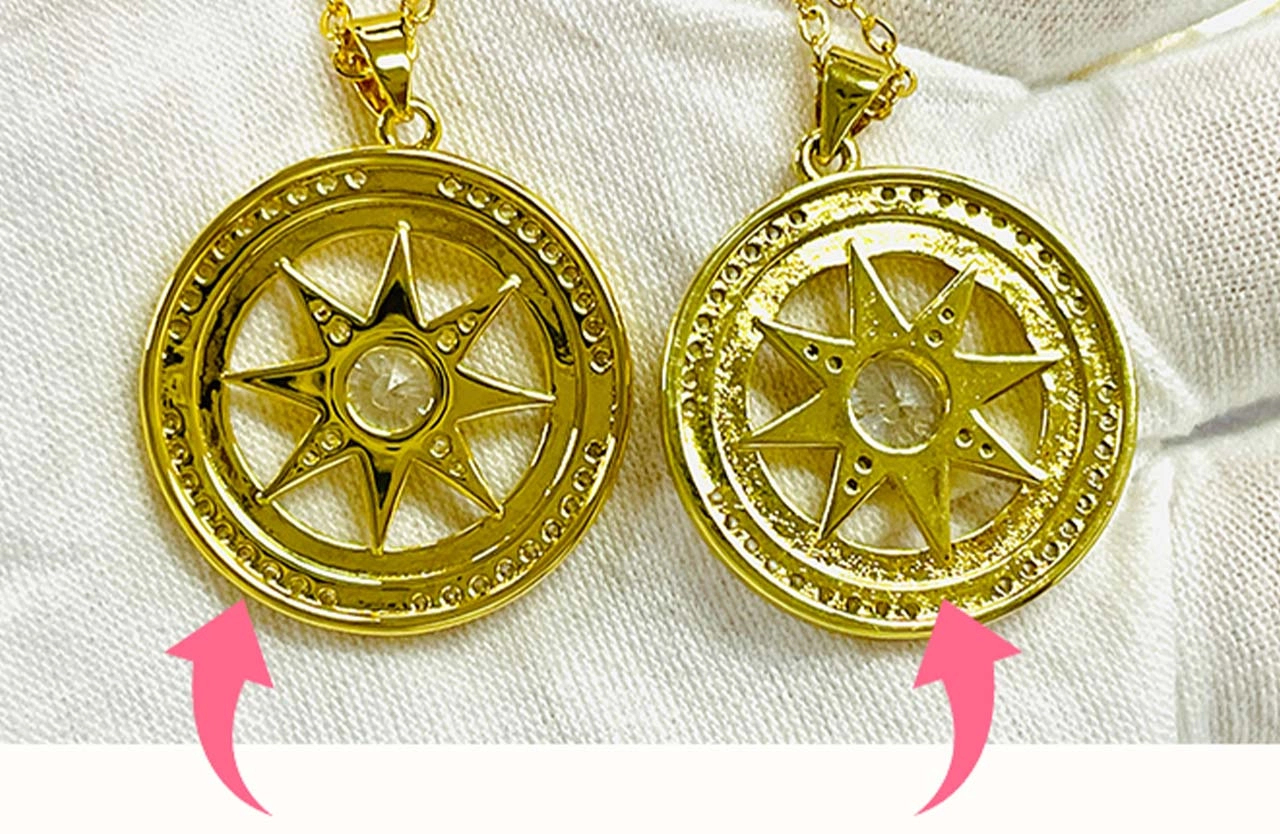
Before quality inspection vs. after quality inspection
Review the Zhefan Jewelry quality-control process for the complete inspection framework.
Sample Approval, Measurement Scope and Production Handoff
1. Confirm the written product specification.
2. Produce and approve a physical sample.
3. Define named measurement locations.
4. Confirm the test scope and represented SKU.
5. Use the approved sample as the production reference.
6. Reconfirm the specification when materials, components, suppliers, or construction change.
|
Buyer Input |
Zhefan Review |
Project Output |
|
Product design and component list |
Main body, chain, clasp, post, solder and finding scope |
Written material and component specification |
|
Gold color, fineness and thickness requirement |
Layer structure, approved color and measurement locations |
Sample and plating confirmation |
|
Target market and claim language |
Applicable terminology and requested evidence |
Defined report or verification scope |
|
Sample feedback and structural changes |
Effect on material, coating, supplier and testing scope |
Revised production reference |
|
Complaint details, SKU, and batch |
Affected location, retained sample and production records |
Root-cause and corrective-action review |
The table above is a project-control framework, not a guarantee that a single test or report applies to every SKU, color, or batch. It applies equally to custom gold vermeil jewelry developed for one brand and to OEM gold vermeil jewelry built around Zhefan’s own component library. Start a project review to confirm scope for a specific collection.
Conclusion: Control the Construction, Evidence, and Batch
Green discoloration does not identify one universal gold vermeil defect. The cause may involve exposed sterling-silver alloy, component materials, localized coating wear, incomplete coverage, surface preparation, friction, or environmental exposure.
B2B buyers can reduce risk by defining the complete construction, verifying significant surfaces and high-risk components, connecting each test report to the correct SKU and batch, and using an approved sample as the production reference.
|
Planning an OEM or private-label gold vermeil collection? Submit the product construction, plating specification, target market, color requirement, and proposed test plan. Zhefan Jewelry will review the component scope, coating structure, sample requirements, and applicable verification steps before preparing a project-based quotation. |
References
- Electronic Code of Federal Regulations, 16 CFR §23.4—Misuse of the Word “Vermeil”
- Federal Trade Commission — Statement of Basis and Purpose for the Revised Jewelry Guides
- ASTM B568 — Measurement of Coating Thickness by X-Ray Spectrometrycollection?
- ISO 3497:2000 — Metallic Coatings: Measurement of Coating Thickness by X-Ray Spectrometric Methods
FAQ
Does gold vermeil turn your skin green?
A green skin mark may appear when copper-containing alloys or components become exposed and react with moisture or perspiration. A skin mark alone does not prove a manufacturing defect. Buyers should review the contact location, component material, coating coverage, exposure conditions, SKU, and batch.
Does 18K gold vermeil turn green?
An 18K gold layer does not create an automatic performance guarantee. The outcome also depends on coating thickness and distribution, sterling-silver alloy, component materials, surface preparation, layer structure, topcoat, friction, and exposure conditions.
Does gold vermeil on sterling silver tarnish?
Gold vermeil can develop tarnish or other color changes when underlying alloy or components become exposed. Dark tarnish, green discoloration, fading, and wear-through are different conditions, so identify the actual symptom before choosing a test or corrective action.
Does gold vermeil wear off at edges and high-friction areas?
Edges, chain links, clasps, posts, and moving parts often experience more friction than broad surfaces. Define measurement points and wear or adhesion criteria for these locations instead of relying on one accessible flat-surface reading.
Can tarnish-resistant gold vermeil jewelry be guaranteed not to turn green?
No tarnish-resistant claim should be treated as unconditional. The claim should identify the SKU, coating structure, test method, exposure condition, duration, acceptance criterion, and represented batch. A test result applies only to the scope described in the report.
How should buyers verify 2.5-micron gold vermeil?
Verify the sterling-silver base, gold fineness, significant-surface coverage, written thickness basis, measurement method, test points, sample count, components, and report identity. For the U.S. market, review the product wording against 16 CFR §23. 4.
Should chains, clasps, posts, and solder be included in the specification?
Yes. These parts can use different alloys, suppliers, and coating structures from the main body. The bill of materials should identify component materials, coating requirements, supplier scope, supporting declarations, and the approval process for substitutions.
What evidence should buyers request after a green-discoloration complaint?
Request the SKU and batch record, affected-location photographs, approved sample, color reference, bill of materials, plating instruction, relevant measurements or tests, retained sample, change history, root-cause analysis, corrective action, and revalidation result.
Recommended for you

What Is Gold Vermeil Jewelry? A Complete Guide for Brands and Retailers

Thick Gold Plated Jewelry Manufacturer for 925 Silver & Brass Jewelry

How to Choose a Gold Vermeil Jewelry Manufacturer

Gold Vermeil vs. Gold-Plated Jewelry: Which Fits Your Luxury Jewelry Brand?

Can Silver or Brass Be PVD Coated? A Professional Guide for Jewelry Brands
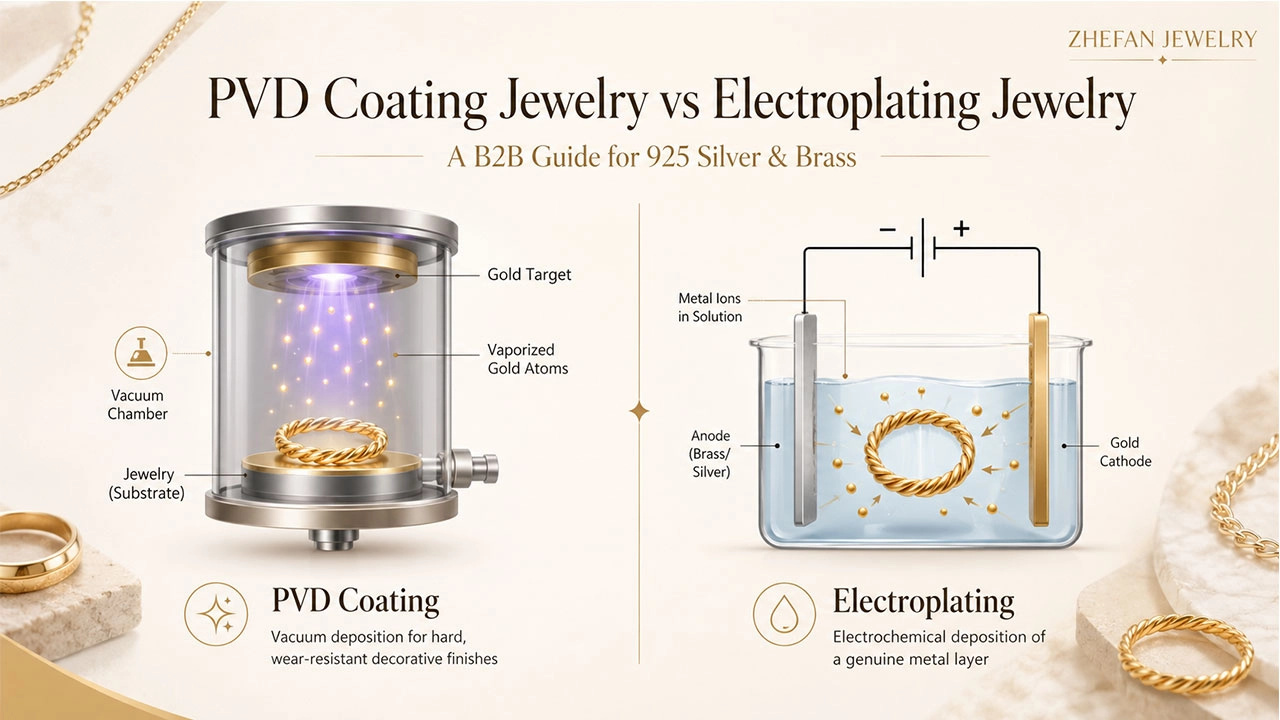
PVD Coating vs Electroplating for Jewelry: A B2B Buying Guide for 925 Silver and Brass
Product Categories
Discuss Your Ideas with a Professional Custom Jewelry Manufacturer
We provide personalized jewelry customization services for clients worldwide.
Rest assured that your privacy is important to us, and all information provided will be handled with the utmost confidentiality.
By clicking 'Send Inquiry Now' I agree to ZHEFAN JEWELRY processing my personal data.
To see how to withdraw your consent, how to control your personal data and how we process it, please see our Privacy Policy and Terms of use.
From design to production, ZHEFAN JEWELRY offers a one-stop solution to help you enhance your brand value and market competitiveness.
Get A Quote
Contact
Tel: (+86) 188 1927 7817
© 2026 Zhefan Jewelry. All Rights Reserved.
Facebook
Instagram
YouTube
Whatsapp: +8618819277817