








Email: sales3@zhefanjewelry.com

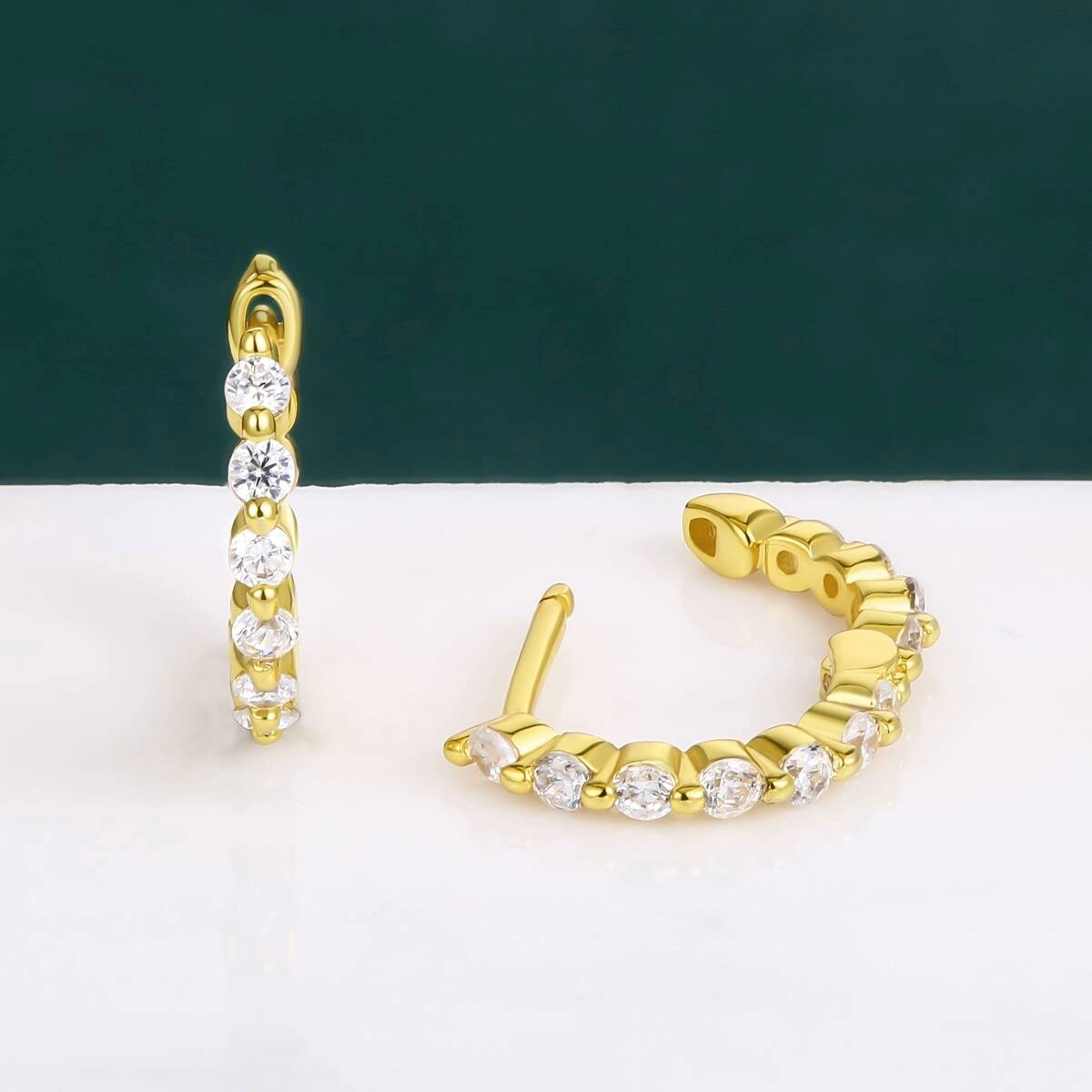
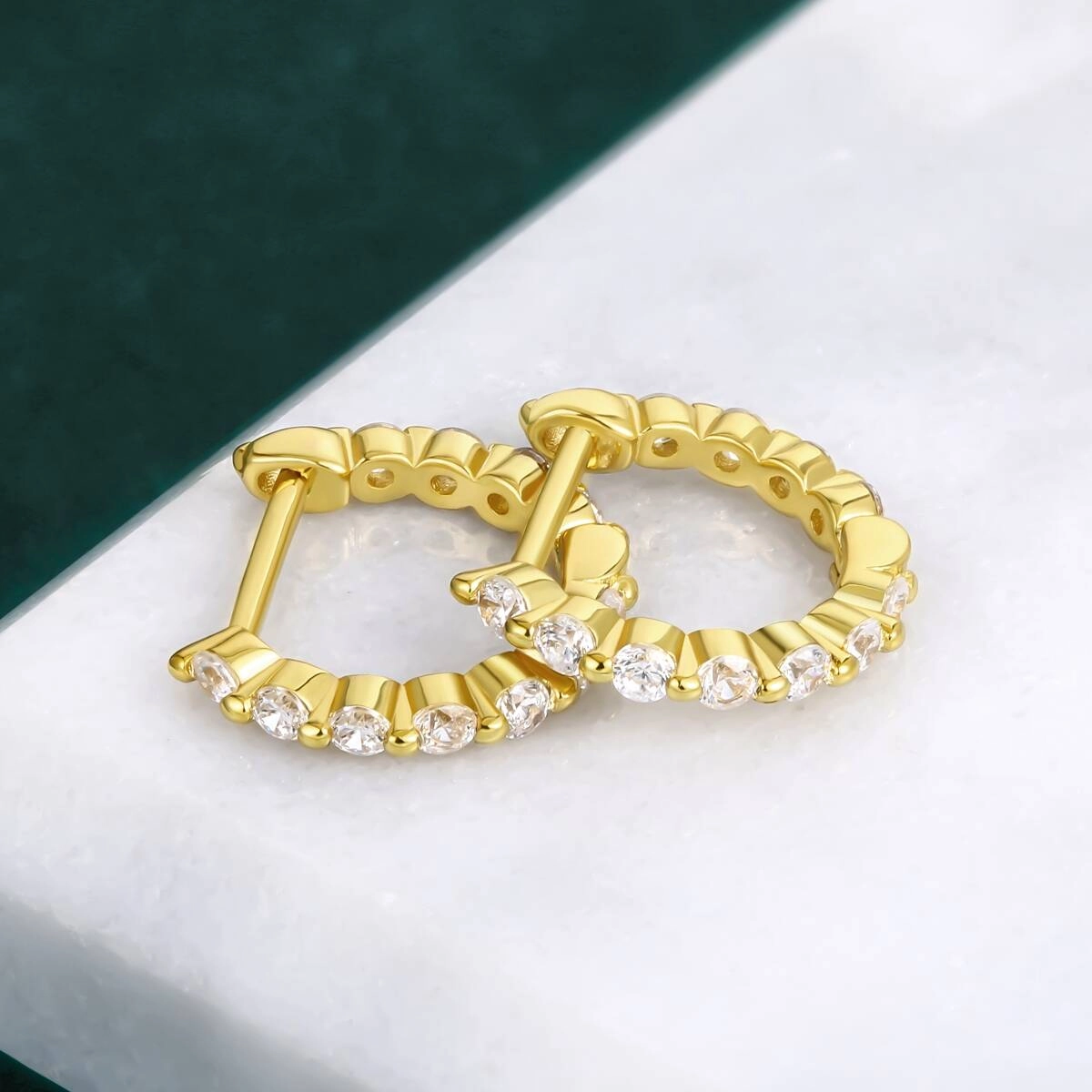
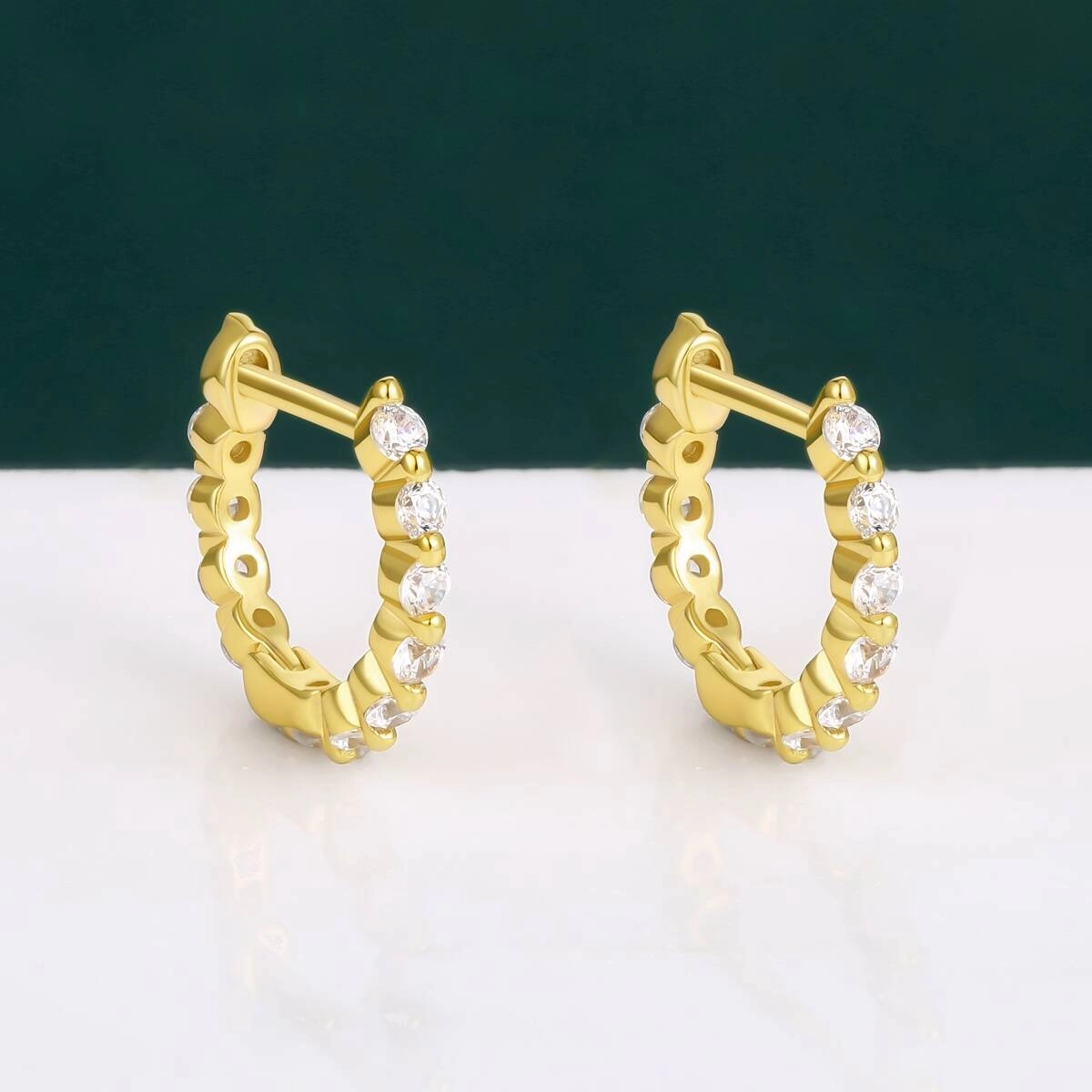
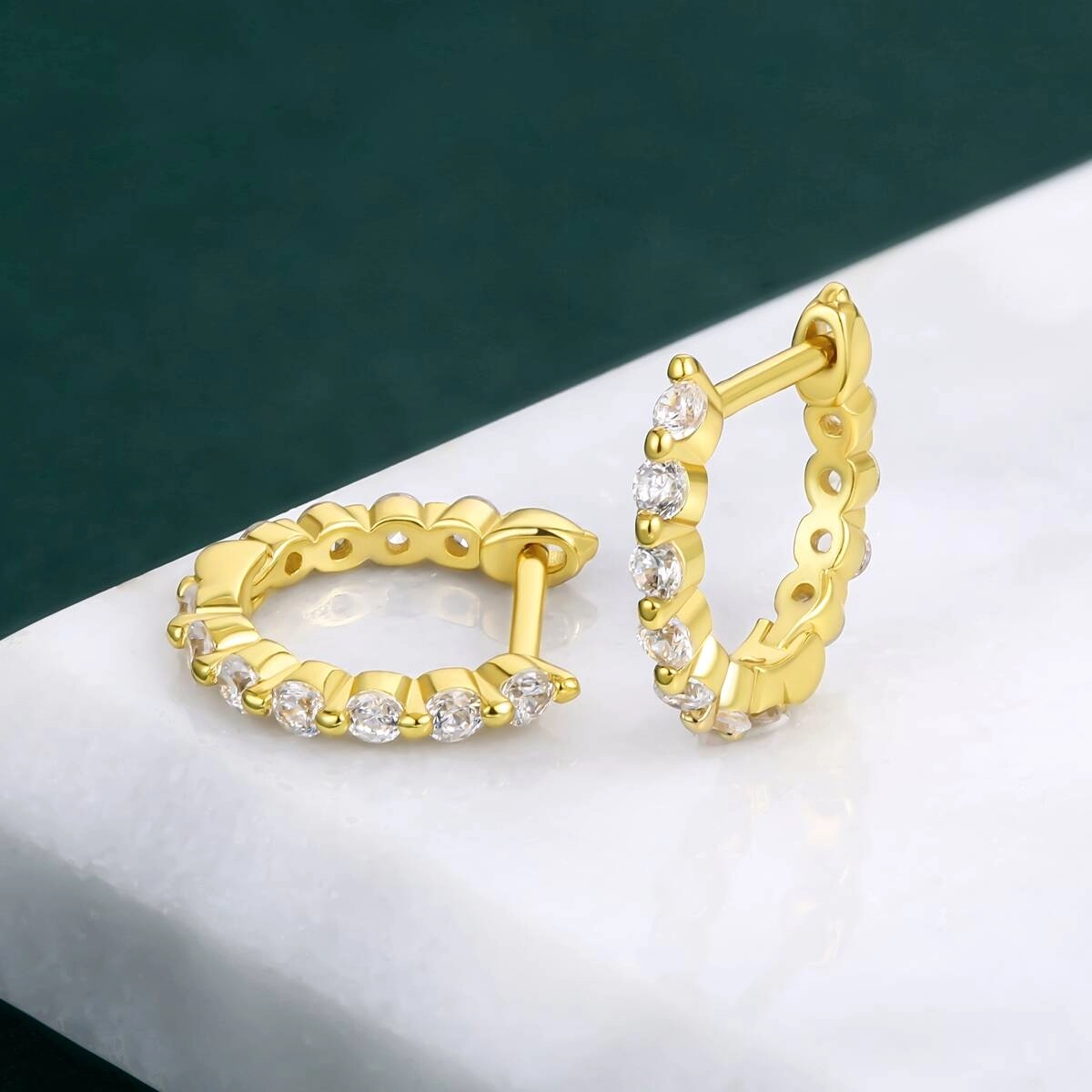
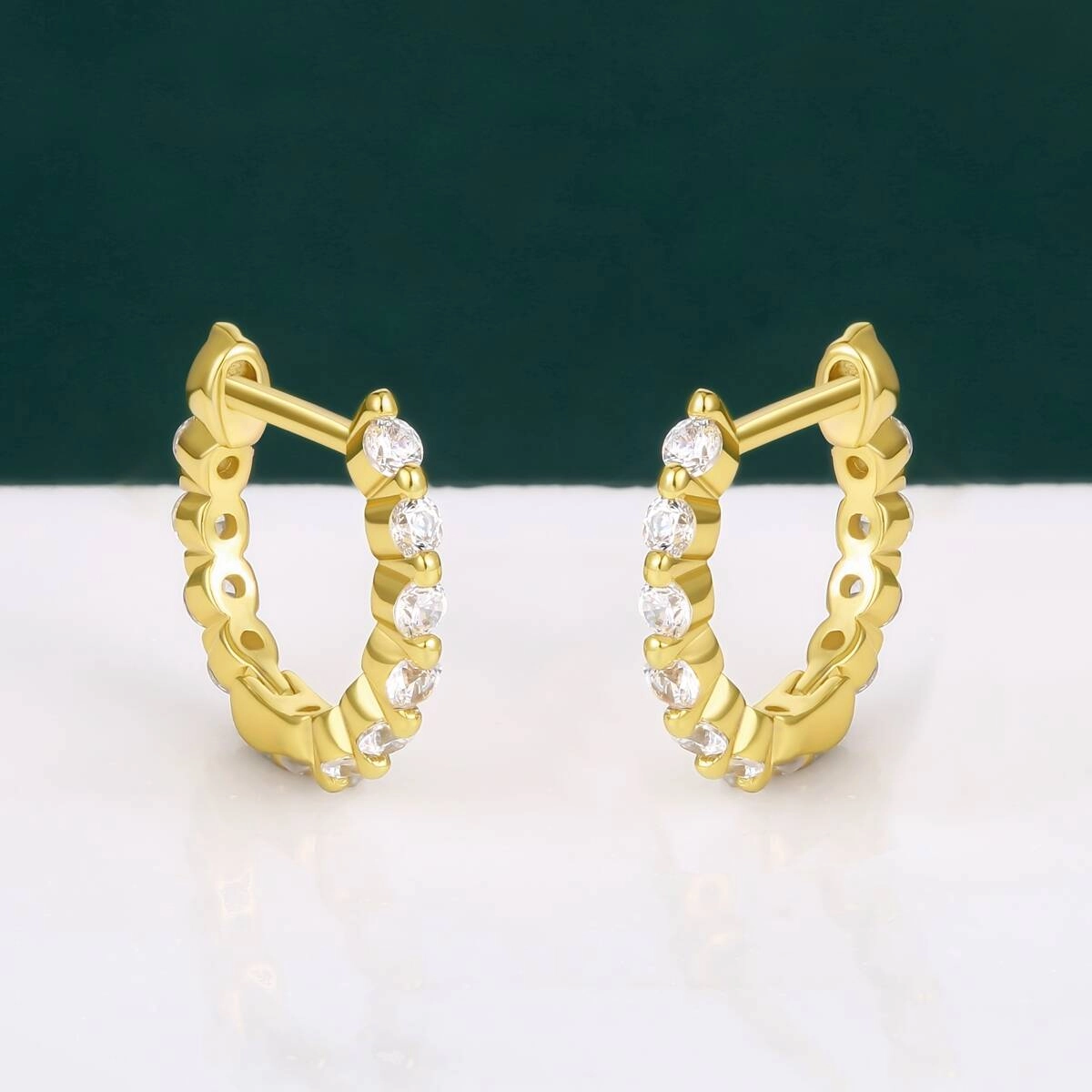
18K Gold Zircon Brass Hoop Stud Earrings
OEM Gold vermeil 18k gold cubic zircon brass hoop stud earrings manufacturer
These cubic zirconia brass ear studs are made of high-quality brass material, complemented by sparkling cubic zirconia stones, which are shining and dazzling. The design is exquisite and fashionable, suitable for wearing on various occasions. It is skin-friendly, durable, and resistant to oxidation. Showcasing unique charm, it becomes the highlight of fashion accessories.
Product Code:
JWE3346A
OEM:
Available
Sample:
Available
Port:
guangzhou/shenzhen port
Payment:
T/T, D/P, D/A, Western Union, PayPal, VISA
Place of Origin:
China
Shipping:
Air freight · Land freight · Sea freight
Supply Ability:
600000 pieces per Month
Product Detail
Main Stone
Zircon
Jewelry Type
Hoop Earrings
Material
Brass/925 Silver
Color
18K Gold Plated
Keyword
Circular Earring
OEM/ODM
Acceptable
Occasion
Party/Gift/Daily
Inlay technology
Claw Setting
Certificate Type
ROHS
MOQ
60 Pairs
These earrings are made of brass with a silver plating and feature cubic zirconia stones. The design is elegant and minimalist, with cubic zirconia stones inset on the stud portion, creating a sparkling effect. The overall look is refined, and the earrings are lightweight and comfortable to wear. Suitable for everyday wear, whether worn individually or paired with other earrings, they add a touch of sophistication and style. In addition, we offer customization services for bespoke jewelry pieces.
- Brass
- AAA Cubic Zirconia
- Available in 18k gold and silver-plated brass
- OEM/ODM
FAQ
How should a brand define an 18K gold color so that the approved shade can be reproduced across suppliers and repeat orders?
Regulation sets the outer boundary here but doesn't solve the actual problem. Under 16 CFR Part 23 (the FTC's Guides for the Jewelry, Precious Metals, and Pewter Industries), any description of material, plating, or fineness can't mislead a buyer about what the piece is actually made of [EV001], and the FTC's consumer-facing guidance on gold and silver jewelry reinforces the same principle for common precious-metal and plating terminology [EV002]. Retailer vendor-onboarding processes reflect this in practice too — QVC's onboarding requirements, for instance, tie approval to complete written specifications and required testing, not just the supplier's own product description [EV035]. (Additional supporting evidence is catalogued under EV046 in the evidence library.) None of that, however, actually defines what "18K gold color" should look like—because no universal legal color tolerance exists for gold shade the way there is for fineness or hallmarking. That gap has to be closed at the project level, not the regulatory one. In practice, this means the brand needs to approve a physical master sample as the binding reference (not a photo or a Pantone-style approximation); specify the exact viewing conditions the shade will be judged under (light source, angle, and background); and set a documented deviation tolerance—a Delta E threshold or an approved range against the master—that every supplier is held to on every order. Without that physical benchmark and written tolerance, "18K gold color" stays a subjective call that will drift from supplier to supplier and from batch to repeat batch.
What full plating stack should be disclosed when an 18K gold finish is quoted on brass or 925 silver?
Regulation sets the disclosure floor here, but it doesn't define the full technical stack a buyer actually needs. Under 16 CFR Part 23, a plating or fineness description can't mislead a buyer about composition or construction [EV001], and the FTC's consumer-facing guidance on gold and silver jewelry lays out how terms tied to plating and base metal are meant to be used and understood [EV002] — which matters here because brass and 925 silver sit under different disclosure expectations even when both are quoted as "18K gold finish." But that label only speaks to the visible top layer. Electroplating is a multi-variable technical process, and the finish a buyer sees is only one part of the underlying specification [EV046]. A genuine full-stack disclosure needs to name every functional layer, not just the outer one: the base metal (brass or 925 silver), any barrier or underlayer such as nickel or palladium that's typically applied to stop base-metal migration and improve adhesion, the visible gold layer's actual thickness and fineness, and any protective topcoat or anti-tarnish lacquer applied on top. Supporting detail on how these layers behave and how they're typically specified is catalogued under EV047, EV024, EV025, EV005, and EV035 in the evidence library. None of that stack can be taken on faith, though — it has to be validated at the project level. Underlayer performance needs to be proven on the actual base metal, geometry, and test conditions the piece will actually see, not a generic reference sample. Topcoat coverage, cure, and flexibility under real movement and wear need product-specific testing, since supplier marketing claims aren't sufficient evidence on their own. Each materially different component also needs to be checked separately — a body test on the main piece doesn't automatically cover findings, clasps, or chain links if they're plated differently or sourced from a different process. And because regulation only sets a compliance floor, not a commercial one, comparing suppliers fairly means normalizing the full picture yourself: bill of materials, plating process, supporting evidence, quality risk, and total landed cost side by side.
What controls should prevent 18K gold-color variation when one bulk order is plated in multiple lots?
Regulation gives buyers a baseline against misleading claims but says nothing about lot-to-lot shade consistency, so that gap has to be closed through process controls, not compliance language. 16 CFR Part 23 requires that plating and fineness descriptions not mislead buyers about composition or construction [EV001], and the FTC's consumer guidance clarifies how those terms are meant to apply to gold and silver jewelry [EV002]—but neither addresses whether lot 3 of a bulk order matches lot 1. That's a manufacturing-process question, and electroplating being a multivariable process means the visible color depends on more than just the plating solution—bath chemistry, current density, time, temperature, and rectifier consistency all shift the outcome even when nominally "the same" process is used across lots [EV046]. Supporting detail on how these variables are typically controlled is catalogued under EV035, EV005, and EV024 in the evidence library. Because no universal legal color tolerance exists, the buyer has to set the standard the supplier is held to, not assume the industry has one. That means approving a physical master sample as the binding color reference before production starts; fixing the viewing conditions the color will be judged under; and setting a documented deviation rule—a Delta E tolerance or an approved range against the master—that applies to every lot, not just the first one shipped. In practice, this should translate into per-lot color verification against the master before lots ship or get combined, not a single check at the start of the run; bath parameters (concentration, temperature, current density, and time) logged and held within defined ranges across lots; and retained physical samples from each lot so a dispute over lot 5 can be checked against both the master and the earlier lots. As with the other stack components, one body test can't be assumed to cover purchased findings or secondary parts—if clasps or chains are plated separately or in a different lot, they need their own color verification against the same master.
When should an 18K gold-plated repeat order require a new color approval rather than relying on the original digital image?
A digital image was never a valid color standard to begin with, so the real question isn't when to "upgrade" from it—it's when the absence of a physical master finally causes a problem. Regulation only requires that plating and fineness descriptions not mislead buyers about composition or construction [EV001], and the FTC's consumer guidance explains how those terms apply to gold and silver jewelry [EV002]; neither addresses whether a repeat order visually matches an earlier one, and a screen image can't function as a color reference anyway, since monitor calibration, lighting, and file compression all shift how a gold tone renders [EV046]. Retailer onboarding practice reflects the same expectation: approval is meant to rest on complete documented specifications and required testing, not a supplier's own representation of the product [EV035]. In practice, a new physical color approval should be triggered any time one of the following applies: the repeat order uses a different supplier or plating line than the original run, even if the same supplier is under a new production batch after a significant time gap; there's any change to the underlying plating stack, process parameters, or base-metal source; a previous shipment was flagged for color inconsistency, which means the last approved reference is now in question; or there's simply no retained physical sample from the original approved run to check against, since a digital image can't serve as the deviation benchmark. Because no universal legal color tolerance exists, the buyer has to own this standard directly — approving a physical master, defining the viewing conditions the shade is judged under, and setting a documented deviation rule the supplier must meet on every repeat order, not just the first one.
How should buyers calculate the commercial impact of an 18K plating upgrade when thickness, underlayers, rejection risk, and replenishment consistency also change?
Regulation defines what can be claimed, not what a plating upgrade actually costs, so the commercial calculation has to be built separately from the compliance check. 16 CFR Part 23 requires that plating and fineness claims not mislead buyers about composition or construction [EV001], and the FTC's consumer guidance explains how those terms map to gold and silver jewelry [EV002]—useful for confirming the upgrade can be legally described as claimed, but silent on whether it's commercially worth doing. Verifying the upgrade's real performance also depends on where the test data comes from: under ISO/IEC 17025:2017, lab accreditation needs to cover the specific test method and material matrix involved, not just the lab's name or general reputation [EV023], since a lab accredited for one plating system isn't automatically qualified to validate results on a different base metal or thickness range. Supporting detail on thickness measurement, underlayer chemistry, and rejection-risk testing is catalogued under EV032, EV033, EV034, EV046, and EV047 in the evidence library. The commercial impact itself can't be reduced to a simple per-piece cost delta, because a thickness or underlayer change shifts several variables at once. Underlayer performance — typically nickel or palladium barrier layers meant to stop base-metal migration and improve adhesion — has to be proven on the actual base metal, visible layer, geometry, and test conditions of the real product, not assumed from a supplier's general claims about the upgrade. Since regulation doesn't determine whether two specs are commercially equivalent, buyers need to normalize the comparison themselves across five dimensions: the bill of materials (added gold volume, underlayer material cost), the plating process itself (added time, energy, or steps), the evidence required to validate the change (testing cost, lab accreditation scope), quality risk (whether the thickness change raises or lowers rejection rates in production), and total landed cost (the fully loaded price once testing, rework, and rejection are factored in, not just the quoted unit price). A thicker gold layer that costs more per piece but cuts rejection and improves replenishment consistency across repeat orders can be commercially better even though the unit price went up — and the reverse is also true if a cheaper upgrade turns out to increase failure rates downstream.
How should a wholesale brand choose between 14K and 18K gold vermeil when color tolerance, retail positioning, repeatability, and cost all matter?
One point of regulation does settle here: "vermeil" isn't a generic marketing word; it's a defined term. Under 16 CFR Part 23, using "vermeil" correctly requires a sterling silver (925) base with a gold layer of a specified minimum karat and thickness — so brass can't legally carry that label regardless of plating quality, which already narrothickness—soto a 925 silver base if "vermeil" is going on the product or packaging [EV001]. The FTC's consumer guidance reinforces how buyers are expected to interpret that term alongside other precious-metal and plating language [EV002]. Once the vermeil claim itself is settled, the 14K-versus-18K decision becomes a commercial and technical one, not a compliance one. Verifying either option's actual gold content and thickness depend on lab accreditation scope—under ISO/IEC 17025:2017, a lab's accreditation needs to cover the specific test method and material matrix, not just carry the lab's general name, since a lab qualified for one plating system won't necessarily validate results correctly on a different karat or base metal [EV023]. Supporting detail on karat color differences, thickness standards, and retailer documentation expectations is catalogued under EV032, EV033, EV034, EV035, and EV046 in the evidence library. The tradeoff itself runs along a few consistent lines. Color tolerance: 18K reads as a deeper, richer yellow and holds that tone more visibly over time, while 14K's lighter, slightly more muted shade means small batch-to-batch shifts are less noticeable to the eye—which can actually make 14K easier to hold within a tight approved tolerance across repeat orders. Retail positioning: 18K generally supports a higher price point and a "finer jewelry" narrative, while 14K is often positioned as a more everyday, better-value line, so the choice should follow how the brand wants the product to sit in its catalog, not just the metal spec. Repeatability: Because no universal legal color tolerance exists, either option still requires the buyer to approve a physical master sample, fix the viewing conditions, and set a documented deviation rule—but the practical drift day-to-day tends to be more forgiving with 14K given its lighter starting tone. Cost: 18K's added gold content raises material cost meaningfully over 14K, and since regulation doesn't determine commercial equivalence, that cost difference has to be weighed the same way as any other spec change — normalizing bill of materials, plating process, required evidence, quality risk, and total landed cost side by side rather than comparing quoted unit price alone.
What proof should a replacement supplier provide after previous suppliers failed on consistency?
In jewelry manufacturing, consistency failures usually show up in a few predictable places — alloy composition drifting from spec, plating that doesn't hold up, or casting quality that varies batch to batch — so a replacement supplier needs to prove they've solved those specific problems, not just promise better craftsmanship. Start by requesting samples made to your exact specifications: correct silver purity (925 stamped and verifiable, not just claimed) or brass alloy ratio, matching plating type and thickness, and the same finish you originally ordered. From there, ask for a pilot batch run on your actual designs rather than the supplier's standard showpieces, since intricate settings, filigree, or chain work often reveal casting porosity or finishing problems that simple samples hide. Get hard data on whatever caused the original failures—this might be plating adhesion and tarnish resistance, nickel content for hypoallergenic compliance, dimensional consistency on ring sizing or clasp function, or stone-setting security—so you're testing the actual weak point, not general quality. Ask how the supplier catches defects before shipping, since a real QC process (weight checks, plating thickness testing, and visual inspection standards) says more than an assurance that problems won't recur. Finally, don't sign off after one strong batch. Request performance across several consecutive production runs, because casting and plating consistency in jewelry is notoriously batch-dependent, and one excellent pilot doesn't guarantee the fiftieth piece will match it.
Which scorecard thresholds should trigger supplier development, requalification, reduced allocation or exit?
A tiered trigger system works best because jewelry supplier issues range from minor drift to outright compliance risk, and treating them all the same either overreacts to small problems or under-reacts to serious ones. A slight decline—say, defect rates creeping above your baseline on things like plating uniformity or stone-setting security, or a couple of late shipments without a pattern—should trigger a supplier development plan: a corrective action request with a defined timeline, not yet a change in order volume. If a critical item fails outright, such as a silver purity spot-check falling short of the 925 standard or nickel content exceeding regulatory limits even once, or if minor issues persist past the improvement plan's deadline without resolution, that should trigger formal requalification—essentially treating them like a new supplier again, with fresh samples and pilot batches before regular orders resume. When risk keeps climbing across consecutive scorecard periods—repeated missed corrective action deadlines, a widening gap between promised and actual defect rates, or on-time delivery dropping below an acceptable threshold—that's the point to reduce allocation and activate a second source so you're not dependent on a supplier whose trajectory is already working against you. Reserve suspension or termination for serious compliance or continuity failures: counterfeit or inaccurate hallmarking, use of banned substances like cadmium or excess lead, falsified test reports, or financial instability that puts your supply at risk. These aren't things a corrective action plan can fix, and continuing the relationship at that point is a liability rather than a recoverable issue.
Tags
Gold Vermeil Hoop Earrings Manufacturer
Gold Vermeil Hoop Earrings Manufacturer
18K Gold Stud Earrings
18K Gold Stud Earrings
brass jewelry manufacturer
brass jewelry manufacturer
Request a Quote to Brand this as Private Label Jewelry
We provide personalized jewelry customization services for clients worldwide.
Rest assured that your privacy is important to us, and all information provided will be handled with the utmost confidentiality.
By clicking 'Send Inquiry Now' I agree to ZHEFAN JEWELRY processing my personal data.
To see how to withdraw your consent, how to control your personal data and how we process it, please see our Privacy Policy and Terms of use.
You May Also Like

Customizable High-Quality Fashion 925 Sterling Silver AAA Cubic Zirconia Heart-Shaped Open Tennis Bracelet.
Read More
From design to production, ZHEFAN JEWELRY offers a one-stop solution to help you enhance your brand value and market competitiveness.
Get A Quote
Contact
Tel: (+86) 188 1927 7817
© 2026 Zhefan Jewelry. All Rights Reserved.
Facebook
Instagram
YouTube
Whatsapp: +8618819277817