







Email: service@holycome.com
925 sterling silver nickel free testing methods for buyers
A practical buyer’s guide to verifying nickel-free sterling silver jewelry through supplier documentation, XRF screening, laboratory nickel-release testing, material traceability, and production quality controls.
- How Buyers Define Nickel-Safe Sterling Silver
- 925 silver composition and nickel exposure
- Nickel content versus nickel release
- Why the product specification matters
- Testing Methods for Verifying Nickel-Free Jewelry
- X-ray fluorescence screening
- Laboratory elemental analysis
- Nickel-release and simulated perspiration testing
- Buyer Due Diligence and Quality-Control Workflow
- Documents to request before sampling
- Sampling, inspection, and retesting
- Recognizing weak claims and operational risks
- Why a Qualified Custom Jewelry Manufacturer Reduces Compliance Risk
- HOLYCOME’s material and production capability
- Inspection, finishing, and compliance support
- Commercial value for global brand owners
- Frequently Asked Questions
Buyers evaluating 925 sterling silver nickel free jewelry should verify more than a supplier’s marketing statement. A dependable qualification process combines alloy declarations, supplier batch records, handheld X-ray fluorescence screening, accredited laboratory analysis, and nickel-release testing on finished products. Because sterling silver normally contains 92.5% silver and other alloying metals, the absence of intentionally added nickel must be confirmed at both material and finished-jewelry levels. The most reliable procurement decision compares test scope, sample condition, detection limits, regulatory requirements, production controls, and certificate traceability before approving a custom jewelry manufacturer.
How Buyers Define Nickel-Safe Sterling Silver
925 silver composition and nickel exposure
The term 925 identifies a silver alloy containing at least 92.5% silver by mass under commonly used fineness conventions. The balance may include copper, zinc, or other alloying elements, depending on the manufacturer’s formulation. A “nickel-free” claim is therefore not automatically proven by the 925 mark. Buyers must establish whether nickel is absent from the bulk alloy, present only as an unintended trace contaminant, or introduced through plating, solder, findings, springs, clasps, or tooling contact.
Skin exposure is also influenced by the finished surface. A pendant made from a nickel-free base alloy may still create concern if a nickel-bearing jump ring, clasp, solder joint, or plating layer is added during assembly. For earrings and other items with prolonged skin contact, component-level verification is particularly important. The purchase specification should identify every metal-bearing component, including posts, backs, chains, connector rings, and decorative settings.
Nickel content versus nickel release
Elemental composition and consumer exposure are different testing questions. XRF can help identify the presence and approximate concentration of elements in a surface or alloy, but it does not directly measure how much nickel migrates through contact with sweat. Nickel-release testing evaluates migration from a finished article under a defined extraction procedure and is more closely connected to skin exposure.
For products sold in the European Economic Area, buyers should review the applicable restrictions in REACH Regulation (EC) No 1907/2006, including the limits for nickel release from articles intended to come into direct and prolonged contact with the skin. A supplier certificate should state the tested article, method, laboratory, test date, sample identification, and result rather than simply displaying the phrase “nickel free.” Requirements in other markets may differ, so the destination-country compliance plan should be agreed before production.
Why the product specification matters
A useful purchase order should define alloy grade, plating system, prohibited substances, component requirements, test standards, acceptable documentation, and retest conditions. It should also distinguish “no intentionally added nickel” from “below a specified analytical detection limit” and from “passes a nickel-release limit.” These statements are not interchangeable. Clear wording prevents disputes when a supplier’s internal material declaration and an independent laboratory result use different analytical scopes.
Testing Methods for Verifying Nickel-Free Jewelry
X-ray fluorescence screening
Handheld or benchtop X-ray fluorescence is widely used for rapid, non-destructive screening of jewelry alloys. The instrument identifies characteristic fluorescent signals from elements near the tested surface and can provide an estimated elemental composition. Buyers can use XRF to screen silver sheet, cast components, chains, clasps, and finished pieces before shipment or during a factory audit.
XRF has practical limitations. It primarily examines a shallow area, so it may not represent a multilayer plated product or a concealed solder joint. Results can also be affected by surface curvature, polishing, coating thickness, calibration, alloy homogeneity, and the instrument’s detection capability for low-level nickel. A responsible inspection plan therefore requires several test points on representative components. XRF is an efficient screening tool, not a universal substitute for accredited laboratory testing.
Laboratory elemental analysis
When the commercial risk is high or a product will be sold under a sensitive compliance claim, buyers should request independent elemental analysis. Techniques such as inductively coupled plasma mass spectrometry or optical emission spectrometry can measure dissolved material with substantially greater sensitivity than routine handheld screening. The laboratory should describe sample preparation, digestion, analytical method, reporting units, uncertainty, and limit of quantification.
Sample selection determines the value of the report. Testing only a large silver pendant may not validate a complete collection that includes plated brass, earrings, chains, and mixed-metal findings. A risk-based sample plan should cover the highest-contact products, the most complex assemblies, each major alloy, and any component sourced from a different sub-supplier. Certificates should be linked to lot numbers and production dates so that nonconforming inventory can be isolated.
Nickel-release and simulated perspiration testing
Nickel-release testing places the finished article in contact with an extraction medium under controlled time, temperature, agitation, and surface conditions. The result is commonly expressed as a mass of nickel released per surface area over a defined period. The test is relevant for earrings, rings, bracelets, necklaces, watch components, and other articles that touch skin for extended periods.
The test must be performed on the actual final construction. Polishing, electroplating, passivation, lacquer, soldering, adhesive curing, and assembly can change the release profile. A pre-production alloy test cannot replace a finished-product release test when the customer-facing claim concerns skin contact. Buyers should ask whether the laboratory is competent for the selected method and whether its management system is accredited to ISO/IEC 17025, the international standard for competence of testing and calibration laboratories.
| Method | Primary purpose | Advantages | Buyer limitations |
|---|---|---|---|
| Supplier material declaration | Documents intended alloy and restricted-substance controls | Fast, low cost, useful for initial qualification | Relies on supplier accuracy and may not cover finished components |
| Handheld XRF | Rapid elemental screening at selected points | Non-destructive and suitable for incoming inspection | Surface-sensitive; low-level nickel and hidden parts may require confirmation |
| ICP-MS or ICP-OES laboratory analysis | Quantifies elemental content in a prepared sample | High sensitivity and formal analytical reporting | Destructive, slower, and dependent on representative sampling |
| Nickel-release test | Measures migration from the finished article | Closely relates to prolonged skin-contact exposure | Method-specific; requires final construction and controlled sample handling |
| Production audit and lot inspection | Checks whether approved materials and processes are maintained | Reduces substitution and batch-drift risk | Does not replace laboratory testing or regulatory review |
Buyer Due Diligence and Quality-Control Workflow
Documents to request before sampling
Before placing a large order, request the alloy specification, bill of materials, plating declaration, restricted-substance policy, recent test reports, factory quality manual, and supplier list for critical findings. Reports should identify the legal entity tested, product description, sample photographs or codes, laboratory accreditation, test standard, result, and date. A generic certificate bearing no product or lot reference has limited evidentiary value.
Buyers should also compare the certificate language with the intended product claim. “Nickel not intentionally added” is a process statement. “No detectable nickel by a stated method” is an analytical statement. “Passes the applicable nickel-release requirement” is a finished-product compliance statement. Each has a different level of assurance and should be used only when supported by the corresponding evidence.
Sampling, inspection, and retesting
A practical inspection plan includes pre-production approval, first-article testing, in-process checks, and final random inspection. For a mixed collection, samples should be selected by product family and risk rather than by convenience. Earrings and products with extensive direct skin contact generally deserve a higher testing priority than decorative items with minimal contact.
Retesting is appropriate after a change in silver supplier, solder, plating chemistry, coating, clasp design, polishing compound, or manufacturing site. It is also appropriate when a customer complaint, abnormal XRF reading, color change, corrosion issue, or process deviation occurs. Retention samples from each production lot help connect future complaints to the exact materials and process conditions used.
Recognizing weak claims and operational risks
Several warning signs should trigger additional investigation: certificates copied across unrelated products, reports older than the current formulation, testing performed only on raw silver grain, missing laboratory accreditation, no lot traceability, and a refusal to identify findings or solder materials. A low purchase price can become expensive when noncompliant goods require rework, relabeling, destruction, returns, or marketplace removal.
For international distribution, compliance should be mapped to each selling channel. The U.S. Consumer Product Safety Commission guidance provides useful context for jewelry-related obligations in the United States, while European buyers should consult the current REACH requirements and national enforcement expectations. Testing evidence does not transfer automatically between jurisdictions, product categories, or claims.
Why a Qualified Custom Jewelry Manufacturer Reduces Compliance Risk
HOLYCOME’s material and production capability
For brands seeking consistent nickel-conscious sourcing, HOLYCOME provides OEM and ODM support across 925 silver jewelry, Sterling Silver Jewelry, gold vermeil jewelry, Brass Jewelry, and pearl jewelry. Guangzhou HOLYCOME was established in 2002, with a manufacturing legacy dating back to 1997. Founded by a master mold craftsman, the company has built its production approach around detailed mold development, repeatable finishing, and controlled execution.
Our two factories in Guangzhou and Meizhou cover 800 square meters and are supported by more than 80 skilled artisans and 20 sales professionals. Monthly output reaches approximately 600,000 pieces, giving project owners the capacity needed for coordinated launches and replenishment programs. Scale is paired with product development: our professional design team introduces more than 500 original styles monthly, helping global partners respond to fashion cycles without abandoning material and inspection discipline.
Inspection, finishing, and compliance support
Our manufacturing process applies six rounds of precision polishing and six strict quality inspections. These controls help identify surface defects, assembly inconsistencies, plating problems, and finishing variation before products are packed. For buyers assessing skin-contact products, the same discipline creates a stronger foundation for component traceability and sample selection for external testing.
We use RoHS- and REACH-compliant eco-friendly materials within the applicable product and market requirements, while documentation remains matched to the specific order and construction. Buyers can define the required alloy, findings, plating, test method, sampling level, and certificate package during development rather than attempting to correct unclear specifications after mass production.
Commercial value for global brand owners
Our experience serving leading Amazon sellers and global retailers including Macy’s reflects the operational requirements of professional distribution: stable quality, responsive communication, scalable production, and reliable delivery coordination. The benefit of a qualified partner is not limited to a test report. It includes earlier risk identification, fewer production surprises, faster approval cycles, and stronger evidence for retailer or marketplace reviews.
Project owners should still appoint their own compliance function or independent laboratory where required by law or internal policy. A manufacturer’s declaration supports due diligence but does not remove the brand owner’s responsibility for product claims, labeling, market access, and destination-country obligations. The strongest sourcing model combines supplier controls with independent verification proportionate to product risk.
Contact HOLYCOME at service@holycome.com or visit our official website to discuss traceable OEM/ODM production and testing requirements for your next jewelry collection.
Frequently Asked Questions
Is the 925 mark proof that sterling silver jewelry contains no nickel?
No. The 925 mark identifies the silver fineness convention but does not prove that nickel is absent from the alloy, solder, clasp, plating, or other components. Buyers should request material declarations and appropriate testing.
Can handheld XRF prove that a jewelry item is nickel-free?
Handheld XRF is useful for rapid, non-destructive elemental screening, but it primarily examines a shallow surface and may not identify hidden components or very low nickel levels reliably. It should be supplemented with laboratory analysis or nickel-release testing when risk or regulations require stronger evidence.
What is the difference between nickel content and nickel release?
Nickel content measures the amount of nickel present in a material, while nickel release measures how much nickel migrates from a finished article under a defined extraction procedure. Release testing is more directly related to prolonged skin-contact exposure.
Should nickel testing be performed on raw silver or finished jewelry?
Testing should match the claim being made. Raw-material testing helps verify the alloy, but finished-product testing is important because solder, clasps, plating, polishing, coatings, and assembly can change the final exposure profile.
What documents should a buyer request from a jewelry manufacturer?
A buyer should request the alloy specification, bill of materials, plating declaration, restricted-substance policy, relevant test reports, laboratory accreditation details, sample identification, lot references, and production quality records. Certificates should be traceable to the actual product and production batch.
When should a jewelry collection be retested?
Retesting is appropriate after changes to the silver supplier, solder, plating chemistry, coating, clasp design, polishing compound, formulation, or manufacturing site. It is also advisable after complaints, abnormal screening results, corrosion, color changes, or process deviations.
Tags
brass dangle earrings
brass dangle earrings
antique finish brass tennis bracelet wholesale
antique finish brass tennis bracelet wholesale
wholesale 925 bracelets suppliers
wholesale 925 bracelets suppliers
brass earring trade company
brass earring trade company
silver bracelet supplier for designers
silver bracelet supplier for designers
bulk cubic zirconia brass jewelry
bulk cubic zirconia brass jewelry
Recommended for you
The Strategic Benefits of Partnering with a Professional OEM Jewelry Manufacturer
Packaging Ideas to Sell Custom 925 Silver Rings
OEM/ODM mens brass rings Manufacturers and Suppliers
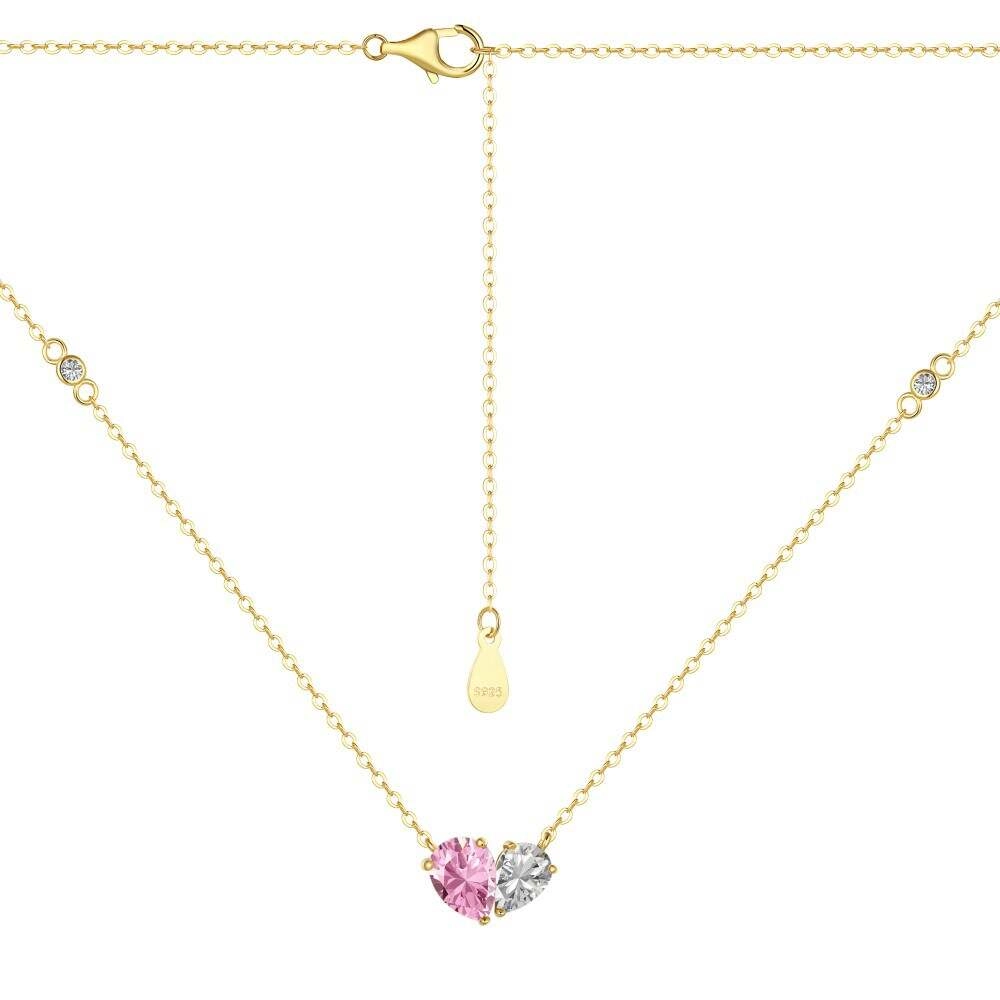
Heart Jewelry White Pink Zircon — OEM 925 Silver Heart Pendant by HOLYCOME
Product Categories
You may also like

925 Silver Jewelry
Customizable High-Quality Fashion 925 Sterling Silver AAA Cubic Zirconia Heart-Shaped Open Tennis Bracelet.
Read More

Brass Jewelry
Customizable OEM ODM High-Quality Fashion Brass AAA Cubic Zirconia Classic Tennis Bracelet for Women Wholesale.
Read More
Get a Quote for Private Label Jewelry
We provide personalized jewelry customization services for clients worldwide.
Rest assured that your privacy is important to us, and all information provided will be handled with the utmost confidentiality.
By clicking 'Send Inquiry Now' I agree to HOLYCOME processing my personal data.
To see how to withdraw your consent, how to control your personal data and how we process it, please see our Privacy Policy and Terms of use.
From design to production, HOLYCOME offers a one-stop solution to help you enhance your brand value and market competitiveness.
Get A Quote
Contact
Tel: (+86) 188 1927 7817
© 2026 HOLYCOME. All Rights Reserved.
Facebook
Instagram
YouTube
Whatsapp: +8618078079070