







Email: sales3@zhefanjewelry.com
Mastering the Fit: Can 925 Silver Rings Be Resized After Production? The Secret of Adjustable Designs
Explore the possibilities and limitations of resizing 925 sterling silver rings. This post delves into the metallurgy of silver, the challenges of altering traditional ring designs, and the growing popularity of innovative adjustable rings, like the elegant gold-toned butterfly ring featured, which offer flexibility and a perfect fit without the need for professional modification. Understand the best practices for achieving the ideal fit for your silver jewelry.
- The Enduring Appeal of 925 Silver and the Resizing Question
- Understanding 925 Sterling Silver and its Malleability
- The Intricacies of Resizing Traditional 925 Silver Rings
- The Ingenuity of Adjustable Rings: A Visual Solution
- Factors Affecting Resizability for Commercial Intent
- Maintaining Your Resized or Adjustable Silver Jewelry
- Frequently Asked Questions About Resizing 925 Silver Rings
- Can all 925 silver rings be resized after production?
- What are the common risks involved in resizing a 925 silver ring?
- How do adjustable rings, like the butterfly design shown, offer a practical solution to sizing concerns?
- What types of 925 silver ring designs are generally considered most difficult to resize?
- Does resizing a 925 silver ring affect its purity or value?
- What steps can I take to ensure I get the correct ring size initially to avoid resizing?
- FAQ
The Enduring Appeal of 925 Silver and the Resizing Question
925 sterling silver jewelry holds a timeless appeal, cherished for its luster, versatility, and affordability. From delicate pendants to intricate rings, silver pieces are a staple in many collections. However, a common question often arises after purchasing: Can 925 silver rings be resized after production? This query is particularly pertinent for those who may experience changes in finger size or wish to adapt a beloved piece to a different finger. While traditional resizing can be complex, modern designs, like the elegant adjustable ring pictured, offer a clever solution.
Understanding 925 Sterling Silver and its Malleability
925 sterling silver is an alloy composed of 92.5% pure silver and 7.5% other metals, typically copper. This blend enhances silver's durability and strength, making it suitable for jewelry. Pure silver is very soft, but sterling silver, while stronger, still retains a degree of malleability. This characteristic is what makes resizing possible, yet it also presents challenges when intricate designs or stone settings are involved.
The Intricacies of Resizing Traditional 925 Silver Rings
Resizing a traditional 925 silver ring often involves cutting the band, adding or removing a section of metal, and then soldering it back together. This process requires skilled craftsmanship. Jewelers must ensure the solder joint is clean, strong, and inconspicuous. For rings with elaborate engravings, pave settings, or tension-set stones, resizing becomes significantly more difficult, sometimes even impossible, without risking damage to the design or compromising the integrity of the settings. This is why many consumers and wholesalers seek out designs that offer inherent flexibility.
The Ingenuity of Adjustable Rings: A Visual Solution
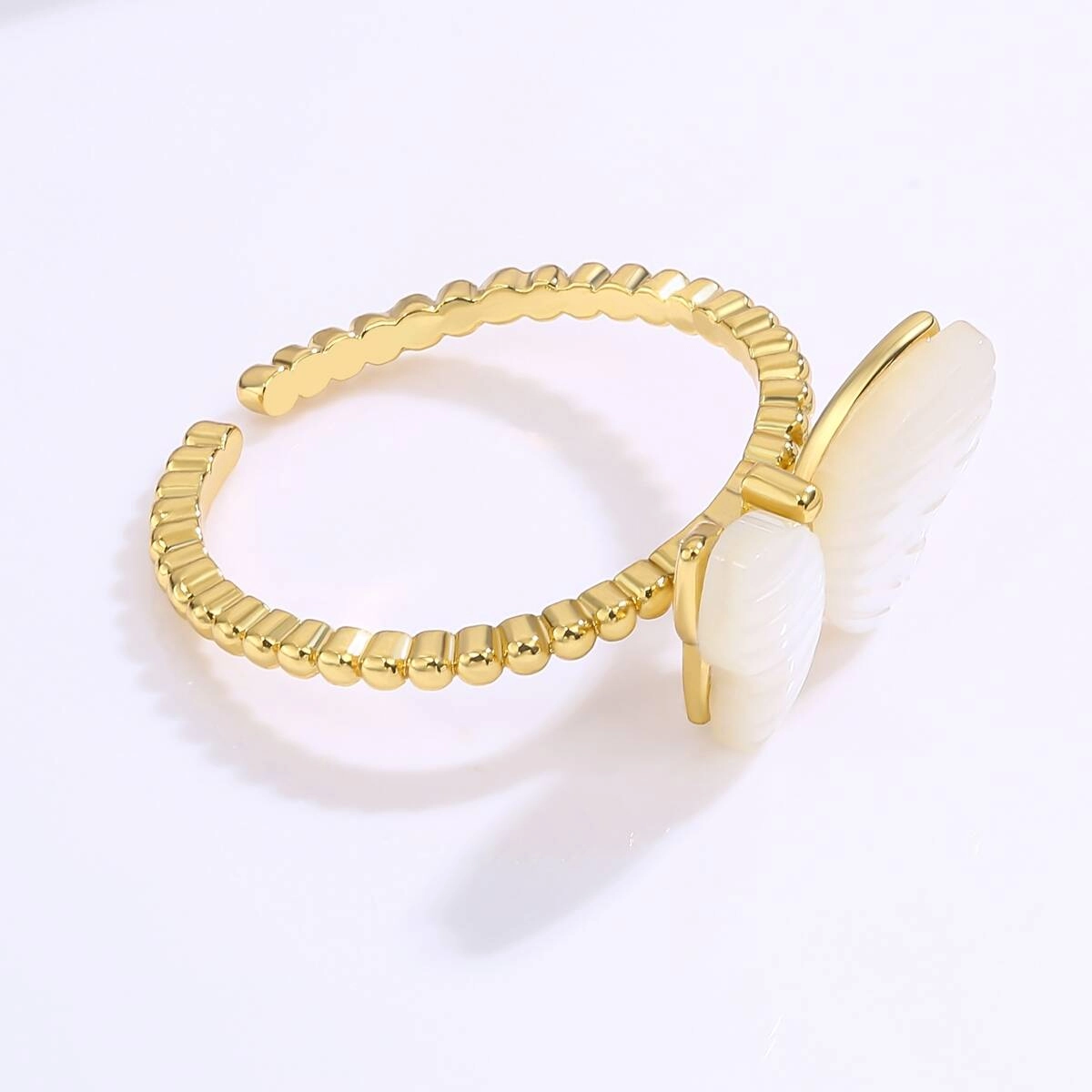
For those concerned about resizing, adjustable rings provide an excellent alternative. The stunning gold-toned ring featured here exemplifies this innovation. Its open-ended design, characterized by a textured, almost beaded band, allows for minor adjustments to fit various finger sizes comfortably. The exquisite butterfly motif, with its graceful white, possibly mother-of-pearl or shell, wings, adds a touch of delicate elegance without impeding the ring's adjustable functionality. Such designs are ideal for retailers looking to offer versatile inventory, reducing the need for extensive size ranges and enhancing customer satisfaction. These pieces cater to a broader market, simplifying the purchasing process for individuals and businesses alike who value flexibility and style.
Factors Affecting Resizability for Commercial Intent
When considering the commercial implications of resizing, several factors come into play. For jewelers and retailers, offering pieces that are easily adjustable or designed with inherent flexibility, like the open-ended ring shown, can be a significant selling point. This minimizes post-purchase service needs and expands market reach. For consumers, understanding that not all 925 silver rings can be resized ensures informed purchasing decisions. Opting for simpler bands or adjustable designs can mitigate future resizing concerns, making them attractive wholesale options for bulk buyers focused on customer convenience.
Maintaining Your Resized or Adjustable Silver Jewelry
Whether a 925 silver ring has been professionally resized or is an adjustable design, proper care is crucial. Avoid harsh chemicals, clean with a soft cloth and mild jewelry cleaner, and store in an airtight bag to prevent tarnishing. For adjustable rings, be gentle when making minor size alterations to prevent stress on the metal, especially if the design incorporates delicate elements like the butterfly wings seen in the image. Regular maintenance ensures your sterling silver piece retains its beauty and structural integrity for years to come.
Frequently Asked Questions About Resizing 925 Silver Rings
Can all 925 silver rings be resized after production?
No, not all 925 silver rings can be resized after production. The feasibility of resizing depends heavily on the ring's design, complexity, and the presence of intricate stone settings or engravings. While simple bands are generally resizable, highly elaborate designs or those with continuous patterns around the band (like eternity bands) can be very challenging or impossible to alter without compromising their integrity.
What are the common risks involved in resizing a 925 silver ring?
Resizing a 925 silver ring carries several risks, including potential damage to delicate stone settings, distortion of intricate designs, and weakening of the metal near the solder joint. If not performed by a skilled jeweler, there's also a risk of visible seam lines, discoloration from heating, or altering the ring's original shape, especially for pieces like the detailed butterfly ring which requires careful handling.
How do adjustable rings, like the butterfly design shown, offer a practical solution to sizing concerns?
Adjustable rings, such as the open-ended butterfly ring featured, offer a practical solution to sizing concerns by allowing the wearer to make minor size adjustments without professional intervention. Their design incorporates a gap in the band, which can be gently opened or closed to fit different finger sizes. This versatility makes them an excellent choice for gifts or for individuals whose finger size fluctuates, eliminating the need for traditional resizing processes.
What types of 925 silver ring designs are generally considered most difficult to resize?
Rings with full eternity bands (stones all the way around), tension settings, invisible settings, or extensive pave work are among the most difficult to resize. Any design that involves complex patterns or stones completely encircling the band makes it hard to cut and re-solder without disrupting the aesthetic or integrity of the piece. The more intricate the original design, the higher the challenge and risk in resizing.
Does resizing a 925 silver ring affect its purity or value?
Resizing a 925 silver ring does not affect its purity (the 92.5% silver content) as long as genuine 925 sterling silver is used for any added metal, and the process is performed correctly. While the intrinsic value of the silver remains, the resale value might be minimally impacted if the resizing is poorly done or leaves a noticeable mark. However, a professionally resized ring should retain its aesthetic and value.
What steps can I take to ensure I get the correct ring size initially to avoid resizing?
To ensure you get the correct ring size initially and avoid the need for resizing, it's best to measure your finger size accurately. Visit a professional jeweler for a precise measurement, especially if you're uncertain. Consider factors like time of day (fingers can swell), temperature, and the width of the ring band (wider bands usually require a slightly larger size). For gifts, adjustable rings like the one pictured are a safe and stylish option.
FAQ
Can all 925 silver rings be resized after production?
No, not all 925 silver rings can be resized after production. The feasibility of resizing depends heavily on the ring's design, complexity, and the presence of intricate stone settings or engravings. While simple bands are generally resizable, highly elaborate designs or those with continuous patterns around the band (like eternity bands) can be very challenging or impossible to alter without compromising their integrity.
What are the common risks involved in resizing a 925 silver ring?
Resizing a 925 silver ring carries several risks, including potential damage to delicate stone settings, distortion of intricate designs, and weakening of the metal near the solder joint. If not performed by a skilled jeweler, there's also a risk of visible seam lines, discoloration from heating, or altering the ring's original shape, especially for pieces like the detailed butterfly ring which requires careful handling.
How do adjustable rings, like the butterfly design shown, offer a practical solution to sizing concerns?
Adjustable rings, such as the open-ended butterfly ring featured, offer a practical solution to sizing concerns by allowing the wearer to make minor size adjustments without professional intervention. Their design incorporates a gap in the band, which can be gently opened or closed to fit different finger sizes. This versatility makes them an excellent choice for gifts or for individuals whose finger size fluctuates, eliminating the need for traditional resizing processes.
What types of 925 silver ring designs are generally considered most difficult to resize?
Rings with full eternity bands (stones all the way around), tension settings, invisible settings, or extensive pave work are among the most difficult to resize. Any design that involves complex patterns or stones completely encircling the band makes it hard to cut and re-solder without disrupting the aesthetic or integrity of the piece. The more intricate the original design, the higher the challenge and risk in resizing.
Does resizing a 925 silver ring affect its purity or value?
Resizing a 925 silver ring does not affect its purity (the 92.5% silver content) as long as genuine 925 sterling silver is used for any added metal, and the process is performed correctly. While the intrinsic value of the silver remains, the resale value might be minimally impacted if the resizing is poorly done or leaves a noticeable mark. However, a professionally resized ring should retain its aesthetic and value.
What steps can I take to ensure I get the correct ring size initially to avoid resizing?
To ensure you get the correct ring size initially and avoid the need for resizing, it's best to measure your finger size accurately. Visit a professional jeweler for a precise measurement, especially if you're uncertain. Consider factors like time of day (fingers can swell), temperature, and the width of the ring band (wider bands usually require a slightly larger size). For gifts, adjustable rings like the one pictured are a safe and stylish option.
Tags
vintage mother of pearl heart necklace
vintage mother of pearl heart necklace
custom boho brass earrings
custom boho brass earrings
brass jump rings
brass jump rings
custom hammered brass earrings
custom hammered brass earrings
nickel free brass jewelry bulk packs
nickel free brass jewelry bulk packs
925 silver tennis bracelet women's
925 silver tennis bracelet women's
Recommended for you
Custom Design Services from brass jewelry wholesalers Explained
Private Label Jewelry Manufacturer Selection Guide: From Supplier Research to Final Partnership
Top 10 925 sterling silver huggie earrings Manufacturers and Supplier Brands in China
How ODM Jewelry Manufacturers Support Private Label Brand Development
Product Categories
You may also like

925 Silver Jewelry
Customizable High-Quality Fashion 925 Sterling Silver AAA Cubic Zirconia Heart-Shaped Open Tennis Bracelet.
Read More

Brass Jewelry
Customizable OEM ODM High-Quality Fashion Brass AAA Cubic Zirconia Classic Tennis Bracelet for Women Wholesale.
Read More
Get a Quote for Private Label Jewelry
We provide personalized jewelry customization services for clients worldwide.
Rest assured that your privacy is important to us, and all information provided will be handled with the utmost confidentiality.
By clicking 'Send Inquiry Now' I agree to ZHEFAN JEWELRY processing my personal data.
To see how to withdraw your consent, how to control your personal data and how we process it, please see our Privacy Policy and Terms of use.
From design to production, ZHEFAN JEWELRY offers a one-stop solution to help you enhance your brand value and market competitiveness.
Get A Quote
Contact
Tel: (+86) 188 1927 7817
© 2026 Zhefan Jewelry. All Rights Reserved.
Facebook
Instagram
YouTube
Whatsapp: +8618819277817