







Email: sales3@zhefanjewelry.com
Custom brass earrings: OEM vs ODM explained for retailers
Custom brass earrings give retailers a flexible route to distinctive, scalable fashion collections, but the commercial outcome depends on choosing the right development model. OEM manufacturing is best when a buyer owns the design and requires controlled execution, while ODM is better for retailers seeking proven concepts, faster launches, and lower development workload. This guide compares ownership, sampling, tooling, minimum order quantities, compliance, finishing, quality control, pricing, and supplier selection so retailers can choose an efficient custom jewelry manufacturing strategy.
- Choosing the Right Development Model for Brass Earring Collections
- How OEM production works for retailers
- How ODM supports faster assortment development
- OEM versus ODM: practical procurement comparison
- Technical and Commercial Checks Before Approving Custom Brass Earrings
- Material composition and skin-contact requirements
- Plating, polishing, and wear resistance
- Tooling, sampling, and production economics
- Supplier Evaluation for Reliable Retail Execution
- Capacity, process control, and communication
- Packaging, branding, and omnichannel readiness
- Cost, lead time, and risk allocation
- Why Zhefan Jewelry Fits Scalable Custom Earring Programs
- Integrated manufacturing experience and product range
- Capacity combined with agile design development
- Quality assurance and compliance-oriented production
- OEM and ODM support focused on retailer ROI
- Frequently Asked Questions
Custom brass earrings offer retailers an attractive balance of design flexibility, visual impact, production efficiency, and accessible price positioning. The critical procurement decision is whether to use OEM manufacturing, in which the retailer supplies or owns the design specification, or ODM development, in which a supplier provides adaptable original designs and manufacturing expertise. The right model affects intellectual property, tooling investment, sample approval, lead time, minimum order quantity, quality consistency, and the ability to build a recognizable collection. Retailers should evaluate the supplier’s mold capability, plating controls, alloy documentation, testing process, packaging support, and capacity before committing to a production program.
Choosing the Right Development Model for Brass Earring Collections
How OEM production works for retailers
OEM is appropriate when a brand has a defined product concept, technical drawing, reference sample, CAD file, or proprietary design language. The manufacturing partner converts that input into production-ready tooling, samples, finishing specifications, and repeatable assembly instructions. This approach provides strong control over silhouette, dimensions, branding, stone placement, surface texture, backing style, and packaging presentation.
OEM is particularly valuable for established retailers launching signature collections or protecting a differentiated visual identity. However, design ownership does not eliminate manufacturing risk. A supplier must still verify wall thickness, hinge or post strength, weight distribution, plating adhesion, sharp-edge control, and production tolerances. A technically attractive sketch may require engineering adjustments to remain comfortable, durable, and commercially viable at scale.
How ODM supports faster assortment development
ODM is based on a supplier’s existing design library, trend research, molds, and product-development capability. The retailer can select a base style and request modifications such as a new motif, enamel color, pendant proportion, texture, finish, logo detail, or packaging format. Because the underlying design and manufacturing route may already be validated, ODM can shorten sampling cycles and reduce initial development work.
This model suits online retailers, distributors, private-label operators, and seasonal brands that need frequent newness without maintaining a large internal design department. The commercial trade-off is that similar designs may be available to other buyers unless the retailer negotiates exclusivity, modification rights, geographic restrictions, or a dedicated mold arrangement. Contract language should define who owns new tooling, revised artwork, production files, and market-specific exclusivity.
OEM versus ODM: practical procurement comparison
| Procurement factor | OEM approach | ODM approach |
|---|---|---|
| Design source | Retailer, brand, or commissioned designer | Supplier design library and development team |
| Development workload | Higher buyer involvement | Lower buyer involvement |
| Brand differentiation | Usually stronger | Depends on modifications and exclusivity |
| Initial tooling risk | Buyer may fund custom molds | Existing tooling may reduce development cost |
| Launch speed | Dependent on design readiness and engineering | Often faster when a base style is validated |
| Best fit | Signature collections and proprietary concepts | Trend-led, seasonal, and private-label assortments |
The table describes common commercial patterns rather than guaranteed outcomes. Actual timing and cost depend on design complexity, mold revisions, order volume, plating requirements, stone setting, packaging, testing, and approval speed. A capable custom jewelry manufacturer should present a stage-by-stage quotation instead of offering only a unit price.
Technical and Commercial Checks Before Approving Custom Brass Earrings
Material composition and skin-contact requirements
Brass is a copper-zinc alloy, but its exact composition can vary by specification and application. Retail buyers should request the declared alloy standard, substrate details, solder information, and any protective coating used on skin-contact surfaces. The product brief should also identify whether the earrings include stainless steel, sterling silver, plated posts, synthetic stones, enamel, adhesives, or other components.
Compliance should be assessed according to the destination market rather than assumed from a general statement such as “nickel-free” or “eco-friendly.” For European sales, buyers can review obligations under the European Union REACH Regulation and the EU RoHS Directive where applicable. Product testing should reflect the finished article, including plating and components, because the surface consumers contact is not necessarily identical to the base metal.
Plating, polishing, and wear resistance
Finish selection has a direct effect on perceived value and return rates. Common options include gold tone, silver tone, antique brass, high polish, satin, brushed, oxidized, and mixed finishes. The supplier should document the plating stack, target thickness where relevant, polishing sequence, tarnish controls, and sample approval standard. Gold vermeil requirements are different from ordinary gold-color plating because vermeil generally involves a sterling silver substrate and defined gold thickness criteria in markets that recognize the term.
Retailers should inspect first samples under bright and angled light for pits, drag marks, uneven color, exposed substrate, rough edges, incomplete recess coverage, and inconsistent texture. Wear testing should be considered for high-volume programs. A useful inspection plan can include visual comparison against an approved master sample, coating adhesion checks, dimensional checks, clasp or post function, and packaging inspection. ISO 2859-1 provides a recognized framework for sampling procedures and acceptance quality limits, although the final inspection plan must be agreed between buyer and supplier.
Tooling, sampling, and production economics
Tooling costs should be separated from sample charges, engineering fees, finishing development, and production costs. A detailed quotation should state whether the mold is exclusive, how many revisions are included, what happens if the design changes, and whether the tool remains usable after a long production gap. For complex earrings, the mold may not be the only critical asset; stamping dies, stone-setting fixtures, polishing tools, and assembly jigs can also influence consistency.
Minimum order quantity should be evaluated against the retailer’s sales forecast, not simply accepted as a factory rule. A lower opening order may carry a higher unit cost, while a larger repeat order may unlock more efficient material purchasing and production scheduling. Buyers should calculate landed cost by adding tooling, sampling, plating, testing, packaging, freight, duties, inspection, defect allowance, and payment costs. This produces a more reliable margin estimate than comparing quoted ex-factory prices alone.
Supplier Evaluation for Reliable Retail Execution
Capacity, process control, and communication
A dependable supplier should explain the complete workflow from design review to final packing. The process should identify who approves CAD drawings, how color standards are recorded, how pre-production samples are retained, how batch deviations are handled, and how corrective actions are documented. Production capacity matters, but capacity without process discipline can create inconsistent surface finish, delayed replenishment, or quality variation between lots.
Retailers should request evidence of relevant quality procedures, material declarations, test reports where required, factory photographs or audits, production references, and a clear escalation contact. It is also important to confirm whether sales staff, product engineers, mold specialists, polishing operators, plating partners, and quality inspectors work within one coordinated system. Communication gaps between these roles are a frequent source of discrepancies between approved samples and bulk goods.
Packaging, branding, and omnichannel readiness
Custom earrings are not complete when the metal component is finished. Retail programs often require branded cards, recyclable boxes, barcode labels, care instructions, protective films, assortment cartons, and marketplace-compliant packaging. The supplier should confirm dieline requirements, print color tolerances, barcode readability, carton dimensions, and packing quantities before production begins.
Product information should also be consistent across wholesale catalogs, ecommerce listings, and compliance files. Descriptions must accurately state base metal, plating, stone type, dimensions, care guidance, and country-of-origin information where required. Clear product data reduces customer-service inquiries and helps distributors maintain consistent merchandising across channels.
Cost, lead time, and risk allocation
Lead time should be divided into design confirmation, tooling, first sampling, revisions, compliance testing, bulk production, inspection, and dispatch. Retailers should avoid using one broad delivery estimate because a delay in design approval is different from a delay caused by plating capacity or material availability. A purchase agreement should define inspection rights, defect thresholds, replacement or credit procedures, approved tolerances, and responsibility for freight or rework.
For recurring programs, a supplier scorecard can track on-time delivery, sample accuracy, defect rate, response time, replenishment performance, packaging accuracy, and corrective-action closure. This turns supplier selection into a measurable operating decision rather than a judgment based only on attractive samples or low prices.
Why Zhefan Jewelry Fits Scalable Custom Earring Programs
Integrated manufacturing experience and product range
Zhefan Jewelry brings a long operating history to OEM and ODM development. Guangzhou Zhefan Jewelry was established in 2002, with a legacy dating back to 1997, and was founded by a master mold craftsman. That heritage supports a manufacturing culture focused on mold accuracy, surface refinement, and repeatable production rather than short-term price competition.
Our team specializes in brass jewelry, 925 silver jewelry, sterling silver jewelry, gold vermeil jewelry, and pearl jewelry. This material range allows retailers to coordinate mixed-metal collections, tiered price points, seasonal capsules, and High Quality upgrades through one experienced production partner. Brass can support accessible fashion lines, while sterling silver and gold vermeil can serve higher-value segments with a consistent design language.
Capacity combined with agile design development
We operate two factories in Guangzhou and Meizhou across 800 square meters. More than 80 skilled artisans and 20 sales professionals support a monthly output of 600,000 pieces, giving project owners access to meaningful production scale while maintaining a dedicated communication structure.
Our professional design team launches more than 500 original styles monthly. For ODM buyers, this provides a broad source of trend-relevant concepts that can be adapted for brand positioning, price architecture, and target-market preferences. For OEM buyers, the same technical environment helps transform retailer artwork or reference samples into manufacturable products with practical adjustments for strength, comfort, and finishing.
Quality assurance and compliance-oriented production
Our manufacturing process includes six rounds of precision polishing and six strict quality inspections. These checkpoints are designed to control visible finish, dimensional accuracy, assembly performance, plating appearance, and packing condition. Such layered inspection is particularly important for earrings because small surface defects, uneven posts, or mismatched pairs can quickly lead to consumer complaints and returns.
We use RoHS- and REACH-compliant eco-friendly materials in accordance with project requirements and destination-market expectations. Buyers should still confirm the exact testing scope for every program, but this compliance-oriented approach provides a stronger foundation for international retail supply. Zhefan Jewelry has served leading Amazon sellers and global retailers such as Macy’s, demonstrating experience with demanding commercial standards, repeat orders, and brand-sensitive execution.
OEM and ODM support focused on retailer ROI
Our OEM/ODM solutions are structured to help brands control development risk while maintaining speed to market. The team can support concept evaluation, mold development, sampling, finishing selection, production, inspection, packaging coordination, and shipment preparation. This integrated route reduces the number of handoffs and helps retailers protect launch schedules.
For buyers comparing suppliers, the strongest value proposition is not merely a low unit price. It is the combination of design throughput, manufacturing capacity, quality controls, compliant materials, responsive service, and the ability to repeat successful styles without avoidable variation. Retailers can review our product capabilities at Zhefan Jewelry and discuss a project through sales3@zhefanjewelry.com.
Contact Zhefan Jewelry at sales3@zhefanjewelry.com to develop custom brass earrings through a tailored OEM or ODM program.
Frequently Asked Questions
What is the difference between OEM and ODM brass earrings?
OEM production uses a retailer’s own design, drawing, reference sample, or brand specification, while ODM production starts with a supplier’s existing design library or original concepts that can be adapted for the retailer.
Which model is better for a new jewelry retailer?
ODM is often suitable for a new retailer that needs faster assortment development and lower internal design workload. OEM is better when the retailer already has proprietary designs or requires a highly distinctive signature collection.
What should buyers request before approving brass earrings?
Buyers should request material specifications, component details, plating information, samples, testing documentation relevant to the destination market, packaging specifications, quality standards, lead times, MOQ terms, and clarification of tooling and design ownership.
How can retailers control plating and finishing quality?
Retailers should approve a master sample, record finish and color standards, define acceptable tolerances, inspect for pits and exposed substrate, and agree on sampling and acceptance procedures before bulk production. ISO 2859-1 can provide a recognized framework for sampling plans.
Are brass earrings suitable for international retail markets?
They can be suitable when the alloy, plating, components, and finished product meet the requirements of the destination market. Retailers should evaluate REACH, RoHS where applicable, skin-contact restrictions, labeling rules, and finished-product test documentation rather than relying on generic compliance claims.
How should the landed cost of custom earrings be calculated?
Landed cost should include the quoted unit price, tooling, sampling, testing, packaging, freight, duties, inspection, payment fees, and a reasonable defect allowance. This provides a more accurate basis for retail margin and price planning than comparing factory prices alone.
Tags
bespoke brass jewelry
bespoke brass jewelry
custom brass earrings with enamel
custom brass earrings with enamel
brass earrings exporter
brass earrings exporter
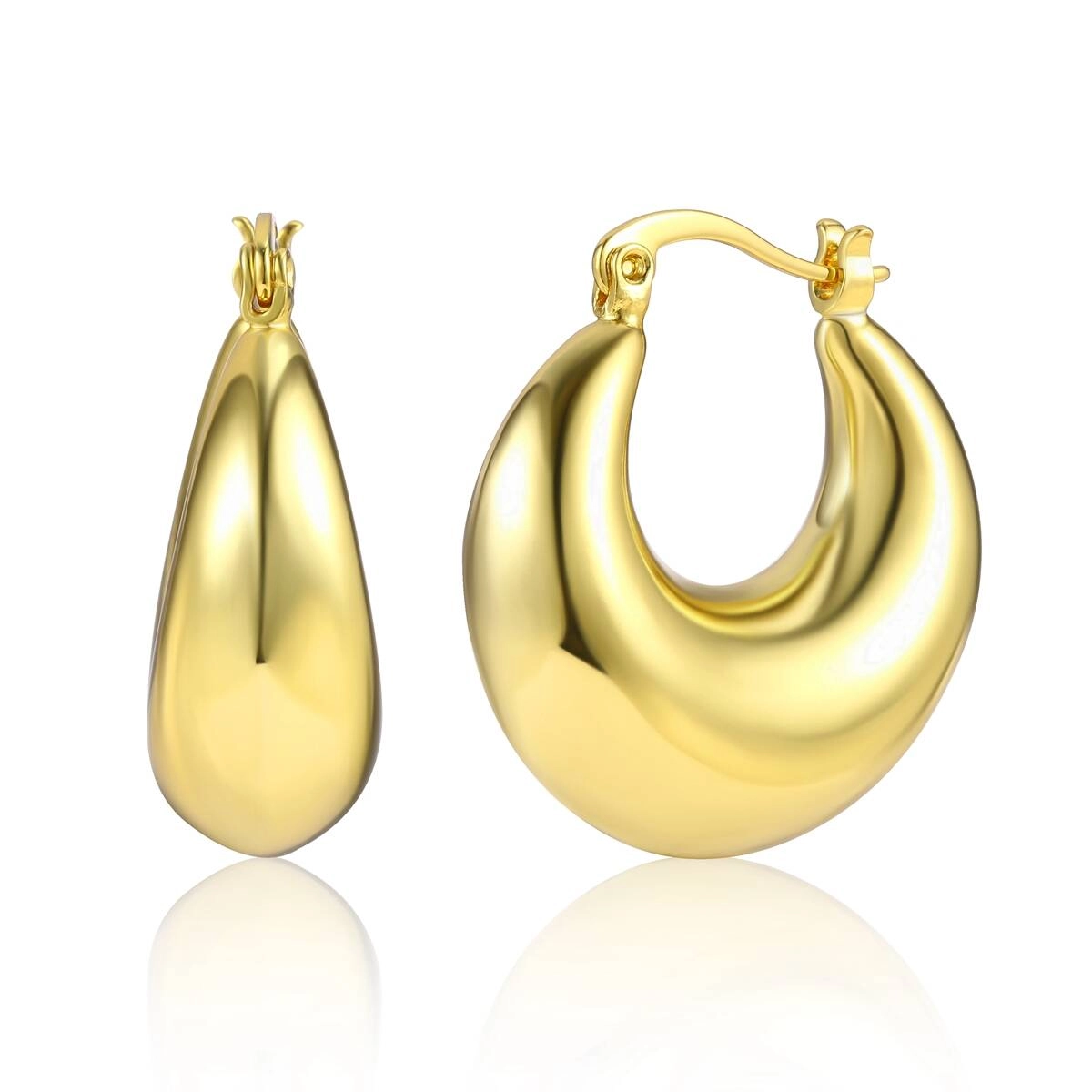
brass earrings hoops
brass earrings hoops
mother of pearl heart necklace gift
mother of pearl heart necklace gift
hypoallergenic custom brass earrings
hypoallergenic custom brass earrings
Recommended for you
Finishes & Plating Options for Custom Brass Necklaces
How to Vet brass jewelry wholesalers for Quality Control
Best Practices for Artwork & Logo Placement on Custom Brass Necklaces
Stone Setting & Gem Options for Silver Bracelets
Product Categories
Get a Quote for Private Label Jewelry
We provide personalized jewelry customization services for clients worldwide.
Rest assured that your privacy is important to us, and all information provided will be handled with the utmost confidentiality.
By clicking 'Send Inquiry Now' I agree to ZHEFAN JEWELRY processing my personal data.
To see how to withdraw your consent, how to control your personal data and how we process it, please see our Privacy Policy and Terms of use.
From design to production, ZHEFAN JEWELRY offers a one-stop solution to help you enhance your brand value and market competitiveness.
Get A Quote
Contact
Tel: (+86) 188 1927 7817
© 2026 Zhefan Jewelry. All Rights Reserved.
Facebook
Instagram
YouTube
Whatsapp: +8618819277817