







Email: sales3@zhefanjewelry.com
Custom Design Process with a Tennis Jewellery Factory
A practical guide to developing custom tennis jewellery with a professional factory, covering concept validation, CAD and mould engineering, stone setting, material selection, sampling, production control, compliance, packaging, and delivery. Buyers will learn how to reduce design risk, protect margins, verify quality, and select a capable custom jewelry manufacturer for brass, 925 silver, gold vermeil, and pearl-based collections.
- How a Tennis Jewellery Collection Moves from Concept to Production
- Define the commercial and technical brief
- Translate visual ideas into engineering specifications
- Approve the prototype before opening production tooling
- Critical Manufacturing Controls for Tennis-Style Jewellery
- Metal selection, construction, and surface finishing
- Stone setting, alignment, and functional testing
- Quality assurance and compliance documentation
- Supplier Selection, Cost Control, and Production Planning
- Evaluate manufacturing capability beyond the catalogue
- Build a realistic cost and lead-time model
- Protect brand identity and intellectual property
- Why Zhefan Jewelry Supports Scalable Custom Collections
- Integrated experience across materials and product formats
- Capacity, design development, and quality discipline
- Commercial support for international brand owners
- Frequently Asked Questions
Custom tennis jewellery development requires more than an attractive sketch. A successful project connects brand positioning, stone layout, metal engineering, wearability, compliance, production capacity, and inspection criteria from the first concept to final shipment. A capable tennis jewellery production partner can convert a mood board into a manufacturable design, control stone alignment and clasp performance, provide accurate samples, and scale approved styles without compromising consistency. For buyers, the most reliable workflow includes a documented design brief, CAD validation, prototype testing, pre-production approval, multi-stage quality control, and traceable packaging. This approach helps fashion brands, retailers, distributors, and private-label operators protect launch dates, reduce rework, and build commercially viable collections across brass jewelry, 925 silver jewelry, sterling silver jewelry, gold vermeil jewelry, and pearl jewelry.
How a Tennis Jewellery Collection Moves from Concept to Production
Define the commercial and technical brief
The process should begin with a written product brief rather than an informal image exchange. The brief should identify the target customer, retail price, expected order quantity, preferred metal, stone type, color palette, dimensions, packaging requirements, sales channels, and launch deadline. It should also clarify whether the piece is intended for everyday wear, occasion styling, layering, or High Quality gifting. These decisions affect link thickness, clasp selection, plating specifications, stone size, packaging protection, and acceptable production cost.
Buyers should provide reference images, but references must be treated as design direction rather than production-ready specifications. A factory needs measurable information such as bracelet or necklace length, stone diameter, setting height, chain width, clasp geometry, logo location, and tolerance expectations. A clear brief allows the engineering team to identify risks early, including excessive weight, weak connector points, sharp edges, insufficient plating coverage, or a setting that cannot be assembled efficiently.
Translate visual ideas into engineering specifications
Computer-aided design is central to modern custom jewelry development because it allows the project team to review proportions before a mould or prototype is created. CAD files can define the profile of each link, the position of stones, the depth of settings, the relationship between decorative elements, and the location of branding. A design review should assess both appearance and function: articulation, flexibility, clasp movement, skin contact, balance, and ease of cleaning.
For tennis-style products, continuous visual rhythm is especially important. Small differences in stone spacing or link height can create a broken line across the finished piece. The manufacturer should therefore establish a stone-placement reference, component tolerances, and an approved master sample. If the design contains multiple metal colors or stone grades, each variation should receive a separate specification sheet to prevent substitutions during mass production.
Approve the prototype before opening production tooling
Sampling is the point at which buyers can make economical changes. A prototype may be produced through 3D printing, wax modelling, CNC preparation, or a hand-finished sample, depending on the construction. The approval review should cover dimensions, weight, articulation, clasp security, stone appearance, surface finish, engraving, plating color, and packaging fit. A buyer should request photographs from multiple angles as well as a physical sample whenever the product has complex settings or high visual sensitivity.
Sample approval should be documented in writing, with the approved version identified by date, sample number, material, finish, and revision status. This prevents a common procurement problem in which a buyer approves a visual sample but the factory later works from an earlier CAD file or an unapproved plating reference. Any change after approval should be evaluated for its effect on unit cost, tooling, lead time, minimum order quantity, and compliance documentation.
Critical Manufacturing Controls for Tennis-Style Jewellery
Metal selection, construction, and surface finishing
Metal choice affects durability, appearance, price, and customer expectations. Brass can support accessible fashion collections and detailed forms, while 925 silver is suitable for brands seeking a higher-value material story. Gold vermeil requires a sterling silver base and a defined gold layer, so the supplier should state the plating specification and inspection method clearly. Buyers should also distinguish between base-metal plating and vermeil claims in product descriptions to avoid misleading consumers.
Construction quality depends on more than the alloy. Link articulation must be smooth, soldered or assembled joints must be secure, and the clasp must withstand repeated opening and closing. Edges that contact the skin should be rounded and polished. Surface preparation is equally important because plating cannot conceal deep scratches, pits, uneven solder, or incomplete polishing. A documented finishing sequence improves visual uniformity across long chains and repeated stone settings.
Stone setting, alignment, and functional testing
Stone selection should be agreed before sampling. The buyer and supplier should define material type, color, cut, diameter tolerance, clarity expectation, and acceptable variation. Cubic zirconia, glass stones, synthetic materials, and natural stones have different optical and handling characteristics. The product specification should state whether minor variation is acceptable and how replacement stones will be managed.
Settings must balance security with light reflection. Prongs that are too low may fail to retain stones, while settings that are too high can catch on clothing and increase return rates. Channel, bezel, pavé, and shared-prong approaches each create different engineering and inspection requirements. A reliable production partner should test stone retention through visual examination, manual movement checks, and, where appropriate, repeated-use simulation. The project should also define how loose stones, uneven gaps, chipped edges, and visible adhesive marks are classified.
Quality assurance and compliance documentation
Quality control should be divided into incoming material inspection, in-process inspection, pre-finishing review, final assembly inspection, and pre-shipment inspection. Typical checkpoints include dimensions, weight, plating appearance, clasp operation, solder joints, stone security, logo accuracy, sharp edges, and packaging quantity. A six-stage inspection model can be particularly effective when each stage has a responsible operator, a measurable standard, and a documented disposition for rejected pieces.
Environmental and chemical compliance must match the destination market. Buyers selling into the European Economic Area should understand the obligations associated with REACH, including restrictions affecting substances in articles. Restrictions on lead, cadmium, and nickel release may also apply depending on product construction and market. A supplier should be able to explain material declarations, plating chemistry, and available laboratory reports rather than making unsupported compliance claims. Quality management principles can be structured around ISO 9001, while general product safety expectations should be checked against the requirements of the intended sales territory.
| Project stage | Buyer approval evidence | Main risk controlled | Recommended decision owner |
|---|---|---|---|
| Design brief | Written specifications and reference images | Misaligned commercial expectations | Brand and product team |
| CAD review | Dimensioned drawings and rendering | Unworkable geometry or excess weight | Factory engineering team |
| Prototype review | Physical sample and revision record | Fit, comfort, and visual defects | Buyer and quality representative |
| Pre-production approval | Golden sample and signed specification | Mass-production variation | Buyer quality manager |
| Final inspection | Inspection report and shipment photos | Defective or incomplete delivery | Factory QC and buyer-appointed inspector |
Supplier Selection, Cost Control, and Production Planning
Evaluate manufacturing capability beyond the catalogue
A catalogue can demonstrate design range, but it does not prove custom development capability. Buyers should examine whether the supplier operates its own engineering, mould, polishing, plating, setting, assembly, and inspection functions or outsources critical operations. Questions should cover monthly capacity, peak-season planning, sample lead time, tooling ownership, material traceability, defect handling, and the escalation process for urgent changes.
Production capacity must be assessed against the specific product, not only a general monthly output figure. A factory may produce large volumes of simple components but require additional time for intricate stone setting or multi-layer finishing. The quotation should separate tooling, sampling, unit price, plating, stones, packaging, testing, and freight assumptions. Buyers should also confirm whether the quoted minimum order quantity applies per style, color, size, or total order.
Build a realistic cost and lead-time model
Unit price is only one part of landed cost. Development fees, mould charges, sample revisions, testing, packaging, freight, import duties, inspection, and potential rework all influence gross margin. A low initial quote can become expensive if the supplier lacks process control and produces inconsistent pieces. A structured request for quotation should include the approved design, material, finish, stone specification, order quantity, delivery destination, packaging, and quality standard.
Lead time should be divided into design confirmation, tooling, first sample, revision, raw-material purchasing, bulk production, finishing, inspection, and shipment. Seasonal capacity should be reserved in advance for launches tied to holidays, fashion weeks, promotional events, or retailer line reviews. A written critical path makes it easier to identify which changes can be accepted without moving the ship date and which changes require a new approval cycle.
Protect brand identity and intellectual property
Custom designs often contain proprietary proportions, symbols, logos, packaging concepts, or customer-specific combinations of materials. The commercial agreement should address confidentiality, ownership of commissioned moulds and CAD files, restrictions on reuse, sample handling, and authorization for photography or catalogue publication. Buyers should retain an organized archive of approved files, purchase orders, inspection results, and revision records.
Brand protection also includes consistent product storytelling. Claims such as sterling silver, gold vermeil, hypoallergenic, recycled, or nickel-free should be supported by suitable documentation and used according to the regulations of the sales market. The Federal Trade Commission advertising guidance is a useful reference for businesses making objective marketing claims in the United States.
Why Zhefan Jewelry Supports Scalable Custom Collections
Integrated experience across materials and product formats
Our team at Zhefan Jewelry combines long-term jewellery manufacturing experience with a practical OEM and ODM workflow. Guangzhou Zhefan Jewelry was established in 2002, with a company legacy dating back to 1997. Founded by a master mould craftsman, our manufacturing culture is built around detailed refinement of moulds, surface treatment, assembly, and finishing.
We specialize in 925 silver jewelry, sterling silver jewelry, brass jewelry, gold vermeil jewelry, and pearl jewelry for fashion brands, retailers, distributors, and private-label programs. This material range allows buyers to develop a coordinated tennis-inspired assortment at different price points, from accessible brass styles to elevated silver and vermeil collections. Our team can also help align metal selection, stone appearance, packaging, and product positioning with the buyer’s commercial objectives.
Capacity, design development, and quality discipline
Our two factories in Guangzhou and Meizhou cover 800 square meters and are supported by more than 80 skilled artisans and 20 sales professionals. Monthly output reaches approximately 600,000 pieces, giving project owners a stronger foundation for replenishment and multi-style launches. Capacity is paired with agile product development: our professional design team introduces more than 500 original styles each month, helping global partners respond to changing fashion demand while developing their own custom concepts.
We apply six rounds of precision polishing and six strict quality inspections to support a consistent finish. These controls are particularly valuable for tennis-style jewellery, where repeated links, reflective surfaces, stone alignment, and clasp performance must appear uniform across every unit. Our use of RoHS- and REACH-compliant eco-friendly materials supports buyers that require stronger documentation for international distribution. Compliance remains product- and market-specific, so our team works with buyers to clarify applicable test reports and declarations instead of treating compliance as a generic marketing statement.
Commercial support for international brand owners
Our OEM and ODM services are designed to support the complete project cycle, including concept refinement, CAD coordination, sampling, material selection, bulk production, inspection, packaging, and delivery communication. We have supported Amazon top-three sellers and global retail customers such as Macy’s, experience that reinforces the importance of repeatability, responsiveness, and shipment readiness.
For buyers comparing a custom jewelry manufacturer, the relevant question is not simply whether a supplier can make one attractive sample. The stronger evaluation is whether the partner can reproduce that sample at scale, communicate exceptions quickly, maintain documentation, and protect the brand’s commercial timeline. Zhefan Jewelry combines production scale, skilled craftsmanship, rapid design development, and dedicated service to help customers turn distinctive jewellery concepts into dependable market-ready collections.
Contact Zhefan Jewelry at sales3@zhefanjewelry.com or visit our official website to discuss a custom tennis-inspired jewellery project and request an OEM or ODM quotation.
Frequently Asked Questions
What information should buyers provide before requesting a custom tennis jewellery quotation?
Buyers should provide target customer, retail price, expected order quantity, preferred metal, stone type, dimensions, packaging requirements, sales channels, launch deadline, reference images, and measurable specifications such as length, stone diameter, chain width, clasp geometry, and logo location.
Why is CAD review important for tennis-style jewellery?
CAD review allows the project team to validate proportions, stone positions, setting depth, link geometry, branding, articulation, flexibility, clasp movement, weight, and skin contact before a mould or production prototype is created.
What should be checked when approving a jewellery prototype?
The review should cover dimensions, weight, articulation, clasp security, stone appearance, surface finish, plating color, engraving, packaging fit, and the revision status of the approved sample, CAD file, material, and finish.
How can buyers verify quality during mass production?
Quality should be checked through incoming material inspection, in-process inspection, pre-finishing review, final assembly inspection, and pre-shipment inspection. Key checkpoints include dimensions, weight, plating, clasp operation, solder joints, stone security, logo accuracy, sharp edges, and packaging quantity.
What compliance documents should an international jewelry buyer request?
Depending on the destination market and product construction, buyers should request material declarations, plating information, applicable laboratory reports, and evidence addressing restricted substances such as lead, cadmium, and nickel release. European-market projects should also consider applicable REACH obligations.
How should buyers compare custom jewellery suppliers beyond unit price?
Buyers should compare engineering capability, in-house or controlled production processes, sample lead time, tooling ownership, material traceability, monthly capacity, defect handling, inspection systems, packaging support, communication, and the supplier’s ability to reproduce approved samples at scale.
Tags
925 silver tennis bracelets
925 silver tennis bracelets
custom brass locket necklace
custom brass locket necklace
brass knuckles rings
brass knuckles rings
bulk 925 sterling silver necklace earring sets
bulk 925 sterling silver necklace earring sets
925 silver hoop earrings
925 silver hoop earrings
925 silver bracelet factory
925 silver bracelet factory
Recommended for you
How an OEM Jewelry Manufacturer Transforms Your Sketches into Market-Ready Pieces
How to Offer Custom Packaging and Gift Sets for 925 Sterling Silver Tennis Bracelet to Boost B2B Sales
Marketing Ideas to Sell cubic zirconia brass jewelry
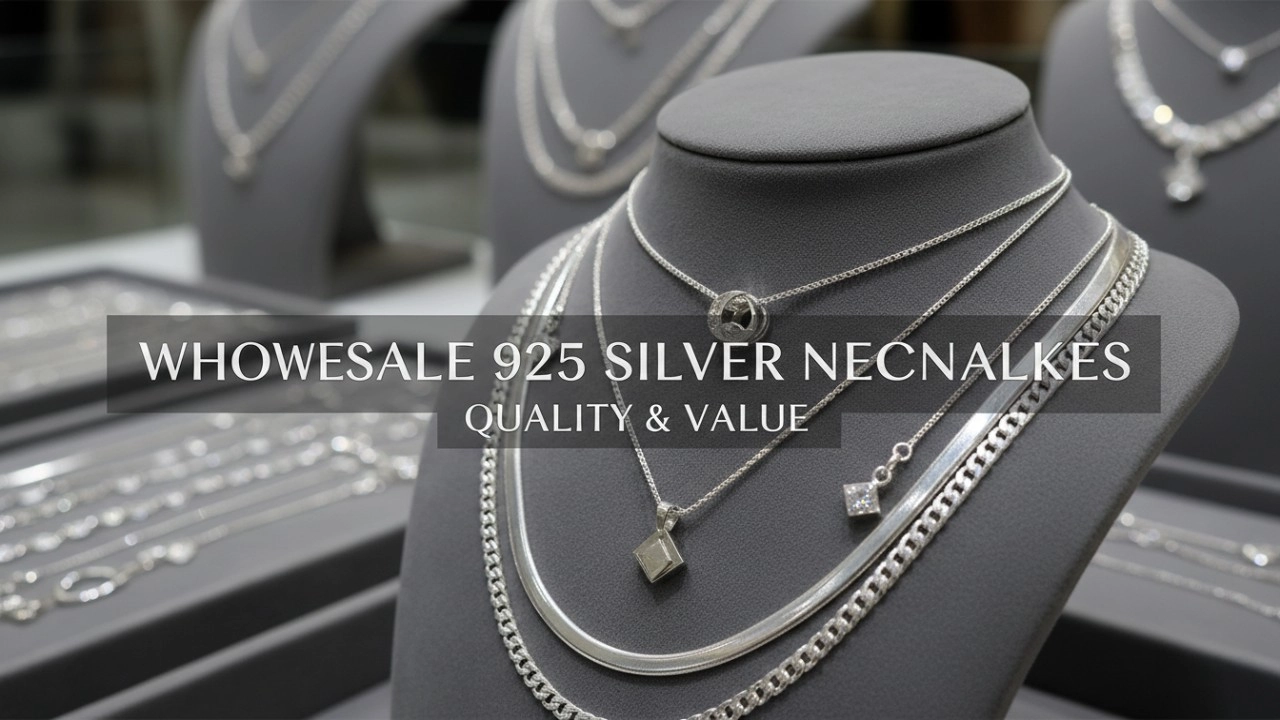
The Ultimate 2026 Blueprint: 15 Secrets to Scaling Your Boutique with Wholesale 925 Silver Necklaces
Product Categories
You may also like

925 Silver Jewelry
Customizable High-Quality Fashion 925 Sterling Silver AAA Cubic Zirconia Heart-Shaped Open Tennis Bracelet.
Read More

Brass Jewelry
Customizable OEM ODM High-Quality Fashion Brass AAA Cubic Zirconia Classic Tennis Bracelet for Women Wholesale.
Read More
Get a Quote for Private Label Jewelry
We provide personalized jewelry customization services for clients worldwide.
Rest assured that your privacy is important to us, and all information provided will be handled with the utmost confidentiality.
By clicking 'Send Inquiry Now' I agree to ZHEFAN JEWELRY processing my personal data.
To see how to withdraw your consent, how to control your personal data and how we process it, please see our Privacy Policy and Terms of use.
From design to production, ZHEFAN JEWELRY offers a one-stop solution to help you enhance your brand value and market competitiveness.
Get A Quote
Contact
Tel: (+86) 188 1927 7817
© 2026 Zhefan Jewelry. All Rights Reserved.
Facebook
Instagram
YouTube
Whatsapp: +8618819277817