







Email: sales3@zhefanjewelry.com
How to Evaluate Gold Purity and Plating Standards from a Gold Vermeil Jewelry Manufacturer
A practical B2B guide to evaluating gold purity, karat declarations, plating thickness, sterling silver substrates, testing documentation, wear resistance, compliance, and supplier quality systems when sourcing vermeil jewelry for retail, wholesale, or private-label programs.
- Understanding the Material Specification Behind Vermeil Jewelry
- Separate the substrate, alloy, and coating claims
- Interpret karat and fineness correctly
- Distinguish nominal thickness from measured thickness
- How to Audit Purity, Thickness, and Production Evidence
- Use complementary test methods
- Review the manufacturing control plan
- Define wear testing according to the product use case
- Building a Supplier Qualification and Approval Process
- Convert marketing language into purchase-order requirements
- Assess documentation, capacity, and commercial controls
- Use a risk-based approval matrix
- Applying a Quality-First Product Strategy with Our Team
- Coordinate product families with consistent specifications
- Support repeatability from development to bulk production
- Connect quality controls to buyer ROI
- Maintain responsible sourcing and regulatory awareness
- Frequently Asked Questions
Evaluating gold vermeil requires more than confirming a gold color or a karat number. Buyers should verify the sterling silver substrate, actual gold alloy fineness, plating thickness, surface preparation, testing method, documentation, and durability requirements before approving a supplier. Under the U.S. Federal Trade Commission Jewelry Guides, vermeil is generally defined as sterling silver coated with gold, with the gold at least 10 karat and the coating at least 2.5 microns thick. A reliable sourcing decision therefore connects material declarations with independent test results, production controls, sample performance, and clear commercial specifications.
Understanding the Material Specification Behind Vermeil Jewelry
Separate the substrate, alloy, and coating claims
Gold vermeil is a layered material system rather than a solid-gold product. The base should be sterling silver, commonly identified as 925 silver, meaning the alloy contains 92.5% silver by mass, with the balance normally consisting of other alloying elements. The gold layer is applied to the silver surface through an electroplating process. These three elements must be assessed independently because a supplier can accurately state the gold karat while failing to disclose the silver grade or coating thickness.
Purchase orders should identify the substrate as sterling silver or 925 silver, define whether solder, springs, posts, and clasps follow the same material requirement, and specify whether any component is brass or another base metal. This distinction is especially important for earrings, chains, and rings, where hidden components can affect allergy risk, tarnishing behavior, and customer perception. A product described as gold-colored, gold plated, or gold finished does not automatically meet the technical definition of vermeil.
Interpret karat and fineness correctly
Karat expresses the proportion of pure gold in an alloy, while fineness expresses parts per thousand. The basic relationship is karat divided by 24. Therefore, 10K is approximately 417 fineness, 14K is approximately 585, 18K is approximately 750, and 24K is approximately 999 or higher depending on the applicable marking system. Higher karat content generally produces a richer yellow tone, but color is not reliable evidence of purity because alloying metals, plating chemistry, and surface brightness can materially change appearance.
Buyers should request the declared karat, fineness tolerance, plating bath specification, and test report for representative production samples. A karat claim should also be linked to a sampling plan. Testing one visually attractive sample does not establish conformity across a production lot, particularly when products contain multiple shapes, soldered joints, textured areas, or different plating racks.
Distinguish nominal thickness from measured thickness
Plating thickness is normally expressed in microns, where one micron equals one-thousandth of a millimeter. A nominal specification such as 2.5 microns is meaningful only when the supplier explains how thickness is measured and where measurements are taken. Edges, recessed details, chain links, prongs, and contact points often receive less deposit than broad exterior surfaces because electric current distribution is uneven during electroplating.
For commercial programs, the technical file should define minimum local thickness or an agreed average thickness, rather than relying solely on a nominal bath setting. X-ray fluorescence can provide rapid non-destructive analysis of surface composition and coating thickness, while cross-section analysis can help investigate disputed results. The ISO 9202 standard for fineness of precious metal alloys is a useful reference for understanding fineness designations, although contractual and legal requirements still depend on the destination market.
How to Audit Purity, Thickness, and Production Evidence
Use complementary test methods
No single test answers every procurement question. XRF is efficient for screening gold composition and identifying variation across a finished item, but results can be influenced by coating thickness, geometry, curvature, and the underlying metal. Fire assay or cupellation is a destructive method traditionally used for determining precious-metal content and is referenced by ISO 11426. It is more suitable for laboratory confirmation of bulk precious-metal content than for mapping a thin decorative coating at multiple locations.
Plating thickness can be evaluated through XRF, metallographic cross-sections, or other validated laboratory procedures. Buyers should ask whether the report identifies the sample code, test date, instrument, calibration status, measured locations, and acceptance criteria. A generic certificate without traceability has limited value in a supplier dispute or regulatory review.
Review the manufacturing control plan
A capable factory should be able to explain the complete surface-finishing sequence: polishing, degreasing, ultrasonic cleaning, activation, intermediate layers if used, gold deposition, rinsing, drying, and final inspection. Poor cleaning can cause pinholes, uneven color, blistering, or premature delamination even when the gold bath itself is correctly formulated. The supplier should also control bath temperature, current density, immersion time, solution chemistry, rack loading, and replenishment records.
Ask for inspection criteria covering color consistency, exposed substrate, scratches, pits, plating skips, edge coverage, clasp function, and adhesion. For repeat orders, retained samples and lot-level records make it possible to compare a new shipment against an approved benchmark. A documented corrective-action process is equally important because plating defects may originate from polishing, casting porosity, solder contamination, or handling after deposition.
Define wear testing according to the product use case
There is no universal wear-life number for all jewelry. A ring experiences more abrasion than a pendant, while a chain has repeated movement at links and a bracelet is exposed to friction against clothing and surfaces. Buyers should establish a test protocol based on intended use, retail positioning, expected customer behavior, and warranty exposure.
Useful evaluations may include artificial perspiration exposure, rub testing, tape adhesion, immersion or humidity testing, and visual comparison against an approved color standard. These tests should be treated as comparative controls rather than promises of unlimited durability. Packaging, care instructions, and customer education also influence service life because chlorine, cosmetics, detergents, sweat, and friction can accelerate wear.
| Evaluation area | What the buyer should specify | Typical evidence | Procurement risk if omitted |
|---|---|---|---|
| Silver substrate | 925 sterling silver and component-level exclusions | Material declaration, XRF screening, supplier specification | Misleading vermeil claim or inconsistent skin-contact materials |
| Gold purity | Karat or fineness, tolerance, and market marking rules | Lot test report, laboratory analysis, production records | Non-conforming labeling and inconsistent color or value |
| Coating thickness | Minimum or average micron requirement and test locations | XRF mapping or cross-section report | Rapid wear at edges, links, and contact points |
| Adhesion | Approved test method and acceptance limit | Tape, rub, bend, or comparative wear results | Peeling, flaking, and elevated returns |
| Traceability | Lot number, retained sample, inspection record, and corrective action | Quality file and shipment release record | Weak dispute resolution and repeat-order variation |
Building a Supplier Qualification and Approval Process
Convert marketing language into purchase-order requirements
Terms such as High Quality gold, heavy plating, luxury finish, and long-lasting color are not sufficiently precise for B2B procurement. The technical package should state the base metal, gold karat, minimum coating thickness, allowable color deviation, prohibited surface defects, packaging requirements, test method, sampling level, and remedy for nonconforming goods. If a supplier uses a proprietary color name, the buyer should retain a physical master sample or an approved color reference.
It is also advisable to specify whether thickness applies before or after polishing, whether measurements are taken on flat areas or functional wear zones, and how soldered assemblies are tested. For export programs, the specification should identify destination-market rules for precious-metal descriptions, nickel release, lead, cadmium, and consumer-product labeling. The ISO 9001 quality-management framework can help buyers evaluate process discipline, but certification alone does not prove that a particular lot meets a plating requirement.
Assess documentation, capacity, and commercial controls
Supplier qualification should cover more than a factory tour or a polished sample. Buyers should review production capacity, equipment ownership, subcontracted processes, batch identification, inspection staffing, calibration practices, worker training, and environmental controls for plating chemicals. A facility that outsources finishing should disclose the responsible processor and maintain chain-of-custody records.
Commercial terms should address sample approval, pre-production confirmation, inspection rights, acceptable quality limits, replacement obligations, and change notification. Any change in silver supplier, polishing compound, plating chemistry, equipment, or subcontractor can affect color and durability. For larger programs, third-party pre-shipment inspection and periodic laboratory verification can reduce the risk of silent process drift.
Use a risk-based approval matrix
Not every style requires identical controls. High-friction rings, bracelets, and frequently handled chains deserve stricter thickness and wear requirements than occasional-use pendants. Styles with deep recesses, sharp edges, hollow sections, or intricate textures may require additional sample locations because coating distribution is more difficult to control.
A practical approval matrix can score material conformity, plating performance, appearance, documentation, lead-time reliability, minimum order quantity, and corrective-action responsiveness. This approach allows brand owners and distributors to compare suppliers on total commercial risk rather than unit price alone. The lowest quotation can become the most expensive option when uneven plating causes markdowns, customer complaints, expedited replacements, and reputational damage.
Applying a Quality-First Product Strategy with Our Team
Coordinate product families with consistent specifications
Our team can structure a coordinated jewelry range around clear material tiers and documented finishing requirements. The portfolio may include Brass Jewelry for accessible fashion collections, 925 silver jewelry and Sterling Silver Jewelry for core precious-metal positioning, gold vermeil jewelry for elevated presentation, and pearl jewelry for classic or bridal assortments. Each category should retain its own material declaration and inspection criteria rather than being evaluated through appearance alone.
For private-label and wholesale programs, our manufacturing process can be organized around approved drawings, component specifications, surface samples, and pre-production sign-off. This creates a controlled link between the buyer’s commercial brief and the finished product. It also makes future color, thickness, clasp, stone, and packaging changes easier to document and validate.
Support repeatability from development to bulk production
Consistency is a central value in jewelry sourcing. Our quality workflow emphasizes sample retention, production-lot identification, visual comparison, dimensional review, and targeted material verification. For vermeil items, the review should include the sterling silver base, gold color, coating coverage, functional areas, soldered joints, and high-contact surfaces. For brass and silver collections, the same disciplined approach can be adapted to polishing, anti-tarnish treatment, plating, stone setting, and assembly.
This process helps buyers reduce the gap between an approved prototype and a commercial shipment. It also supports more accurate costing because plating requirements, component materials, labor steps, inspection time, and packaging controls are considered before quotation approval rather than after quality problems emerge.
Connect quality controls to buyer ROI
A dependable supply program protects margin in several ways: fewer returns, more stable online imagery, lower rework, reduced inspection disputes, and stronger customer confidence. Clear gold purity and plating standards also help sales teams explain product differences without making unsupported claims. When technical evidence, product descriptions, and packaging language are aligned, distributors can position each collection more effectively and reduce compliance exposure.
Our team’s role is to translate these requirements into manufacturable specifications across Brass Jewelry, 925 silver jewelry, Sterling Silver Jewelry, gold vermeil jewelry, and pearl jewelry programs. Buyers should still validate samples and documentation independently, but a structured supplier partnership provides a stronger foundation for predictable quality, repeat orders, and long-term assortment development.
Maintain responsible sourcing and regulatory awareness
Precious-metal procurement also involves supply-chain transparency. Buyers should ask how silver and gold inputs are sourced, whether refiners or plating chemicals are traceable, and how the supplier manages environmental and worker-safety obligations. The London Bullion Market Association responsible-sourcing guidance is a recognized reference for assessing responsible precious-metal supply chains, although it should be used alongside destination-market laws and the buyer’s own due-diligence policy.
Responsible sourcing does not replace purity testing, and a responsible-sourcing statement does not prove plating thickness. These are separate controls that should appear in the supplier evaluation file. Combining them gives project owners a clearer view of product integrity, regulatory readiness, and operational resilience.
Contact our team to review your required gold purity, plating thickness, substrate, product category, and sampling plan for a more reliable jewelry sourcing program.
Frequently Asked Questions
What qualifies jewelry as gold vermeil?
Under the U.S. Federal Trade Commission Jewelry Guides, vermeil is generally sterling silver coated with gold, with the gold at least 10 karat and the coating at least 2.5 microns thick.
How can buyers verify the gold purity of vermeil jewelry?
Buyers should request the declared karat or fineness, review representative lot test reports, and use complementary methods such as X-ray fluorescence for screening and laboratory fire assay or cupellation for suitable destructive confirmation.
What plating thickness should a buyer specify?
The purchase order should define a minimum or average coating thickness in microns, identify measurement locations, and state the test method. The FTC Jewelry Guides identify 2.5 microns as the minimum coating thickness associated with vermeil in the United States.
Is an XRF report enough to approve a supplier?
XRF is useful for screening gold composition and coating thickness, but results can be influenced by geometry, curvature, coating thickness, and the underlying metal. Buyers should also review sampling records, process controls, and, when necessary, independent laboratory or cross-section analysis.
Why does plating thickness vary across one jewelry item?
Electric current distribution is uneven during electroplating, so edges, recessed details, chain links, prongs, and contact points may receive less deposit than broad surfaces. Surface preparation and rack loading can also affect coverage.
What documents should a jewelry supplier provide before bulk production?
A supplier should provide material declarations, approved technical specifications, sample and lot identification, test reports, inspection criteria, plating-process information, retained-sample records, and corrective-action or change-notification procedures.
Should rings and pendants use the same vermeil specification?
Not necessarily. Rings and bracelets experience more abrasion than pendants, so the required thickness, wear testing, and inspection locations should reflect the product’s intended use and customer exposure.
Tags
adjustable tennis bracelet bridal bulk
adjustable tennis bracelet bridal bulk
custom brass earring bulk order
custom brass earring bulk order
limited edition cz brass jewelry wholesaler
limited edition cz brass jewelry wholesaler
brass jewelry oem manufacturer
brass jewelry oem manufacturer
bracelet manufacturers with ce rohs
bracelet manufacturers with ce rohs
handcrafted brass earring manufacturer
handcrafted brass earring manufacturer
Recommended for you
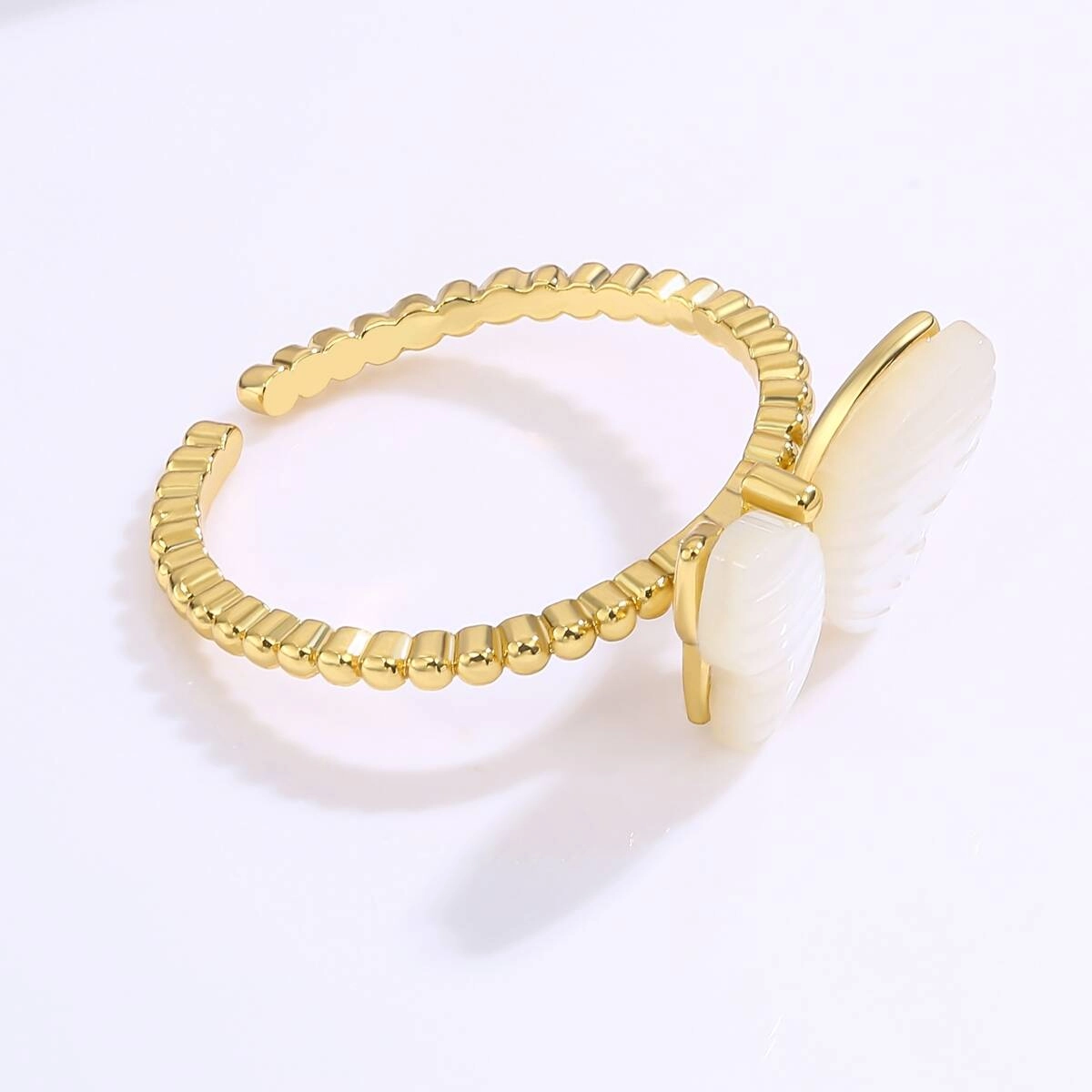
Adjustable Gold Plated Butterfly Ring for Women — Wholesale Fashion Jewelry by Zhefan
Finishing Techniques That Add Value to Custom 925 Silver Rings
The Competitive Advantage of Direct Collaboration with an OEM Jewelry Manufacturer
Packaging & Branding for custom brass jewelry Wholesale
Product Categories
You may also like

925 Silver Jewelry
Customizable High-Quality Fashion 925 Sterling Silver AAA Cubic Zirconia Heart-Shaped Open Tennis Bracelet.
Read More

Brass Jewelry
Customizable OEM ODM High-Quality Fashion Brass AAA Cubic Zirconia Classic Tennis Bracelet for Women Wholesale.
Read More
Get a Quote for Private Label Jewelry
We provide personalized jewelry customization services for clients worldwide.
Rest assured that your privacy is important to us, and all information provided will be handled with the utmost confidentiality.
By clicking 'Send Inquiry Now' I agree to ZHEFAN JEWELRY processing my personal data.
To see how to withdraw your consent, how to control your personal data and how we process it, please see our Privacy Policy and Terms of use.
From design to production, ZHEFAN JEWELRY offers a one-stop solution to help you enhance your brand value and market competitiveness.
Get A Quote
Contact
Tel: (+86) 188 1927 7817
© 2026 Zhefan Jewelry. All Rights Reserved.
Facebook
Instagram
YouTube
Whatsapp: +8618819277817