







Email: service@holycome.com
Hypoallergenic benefits of 925 sterling silver nickel free
Nickel-free sterling silver jewelry can reduce exposure to one of the most common contact allergens while giving jewelry brands a durable, premium, and commercially versatile material for earrings, rings, necklaces, bracelets, and custom collections. However, nickel-free claims should be supported by material declarations, supplier controls, and suitable nickel-release or composition testing because hypoallergenic performance depends on the complete product, including solder, plating, findings, and surface finish. This guide explains the buyer benefits, compliance considerations, quality-control requirements, and manufacturing advantages associated with nickel-free 925 silver jewelry.
- Why Nickel-Free Silver Supports Sensitive-Skin Jewelry Programs
- Understanding the allergy-reduction benefit
- Why sterling silver is commercially attractive
- Nickel-free is a complete-product requirement
- Procurement Standards for Low-Irritation Jewelry Collections
- Testing composition and nickel release
- Comparing material claims and control methods
- Design and finishing factors that affect skin comfort
- How a Custom Jewelry Manufacturer Can Reduce Commercial Risk
- Specification control from prototype to mass production
- Quality systems that support repeatable output
- Regulatory communication across export markets
- HOLYCOME: Scalable Nickel-Free 925 Silver Production for Global Brands
- Manufacturing depth and material expertise
- Capacity combined with design agility
- Inspection discipline and customer-facing value
- Frequently Asked Questions
Nickel-free sterling silver jewelry is increasingly important for brands serving customers with sensitive skin, contact dermatitis concerns, or strong preferences for transparent material sourcing. The term refers to 925 silver jewelry formulated without intentionally added nickel, while the hypoallergenic benefit comes from reducing contact with a well-established skin sensitizer. Genuine sterling silver contains at least 92.5% pure silver, with the balance commonly made from copper or other approved alloying metals; the final product must also be assessed for solder, clasps, plating layers, polishing compounds, and components that touch the wearer. For B2B buyers, a reliable nickel-free program combines material traceability, supplier declarations, laboratory testing, regulatory awareness, and consistent production controls rather than relying on a marketing label alone.
Why Nickel-Free Silver Supports Sensitive-Skin Jewelry Programs
Understanding the allergy-reduction benefit
Nickel is a frequent cause of allergic contact dermatitis. Repeated exposure can trigger redness, itching, dryness, swelling, blisters, or discomfort, particularly where jewelry remains in close contact with perspiration and skin friction. The American Academy of Dermatology Association explains nickel allergy as a contact allergy that may develop after exposure and become a long-term sensitivity. Removing nickel from the alloy system can therefore help brands design products for customers who actively avoid nickel-containing accessories.
Hypoallergenic does not mean that every wearer will experience zero irritation. Sensitivity can result from copper, cobalt, adhesives, fragrance residues, detergents, plating chemicals, or trapped moisture. A responsible product description should avoid absolute medical promises and instead communicate that a nickel-free material specification is intended to reduce a recognized allergen exposure. This distinction protects consumers and reduces the risk of misleading product claims in different sales markets.
Why sterling silver is commercially attractive
Nickel-free 925 silver provides a balance between precious-metal credibility, design flexibility, and accessible retail pricing. The silver content supports a bright appearance and High Quality positioning, while copper-based alloying can provide the strength needed for everyday jewelry. The material is suitable for minimalist collections, personalized pendants, birthstone pieces, hoops, chains, rings, charms, and layered jewelry programs.
For brand owners, the benefit extends beyond skin comfort. A sensitive-skin positioning can improve product discoverability, support clearer merchandising, and reduce hesitation during online purchase decisions. It can also help retailers segment collections around terms such as nickel-free earrings, skin-friendly sterling silver rings, sensitive-ear jewelry, and low-irritation everyday accessories. Product pages should still identify the base metal, plating, gemstone setting, and care requirements with precision.
Nickel-free is a complete-product requirement
A common procurement error is to approve the main silver alloy while overlooking secondary parts. Earrings may contain posts, backs, springs, or solder made from a different metal. A necklace may include jump rings, extender chains, or clasp components that are plated over a nickel-bearing substrate. A gold vermeil design may have a sterling silver core and a gold layer, but the supplier should clarify whether the entire assembly meets the requested nickel restriction.
Buyers should request a bill of materials identifying the silver alloy, solder, findings, plating chemistry, coatings, stones, and adhesives. The specification should define whether “nickel-free” means no intentionally added nickel, a measured total composition limit, or compliance with a nickel-release requirement. This prevents inconsistent interpretations between a design department, factory, testing laboratory, and retail customer.
Procurement Standards for Low-Irritation Jewelry Collections
Testing composition and nickel release
Material composition testing and nickel-release testing answer different questions. X-ray fluorescence can help screen the elemental composition of accessible metal surfaces, while laboratory release testing evaluates how much nickel migrates from an article under simulated skin-contact conditions. The appropriate method depends on the product category, destination market, construction, and buyer specification.
European market access requires particular attention to REACH restrictions on nickel release for products designed for direct and prolonged skin contact. The regulation distinguishes between articles such as posts inserted into pierced ears and other items worn against the skin. A supplier should confirm the applicable threshold, test method, sampling plan, and report validity rather than presenting a generic certificate as universal proof.
Testing should be risk-based. A buyer launching earrings may prioritize posts and backs, while a ring program should focus on the inner band and any plating wear points. For high-volume programs, periodic re-testing is valuable because changes in raw-material lots, solder, plating suppliers, polishing compounds, or subcontracted components can affect the result.
Comparing material claims and control methods
| Procurement item | Basic supplier approach | Stronger buyer-grade approach | Business value |
|---|---|---|---|
| Alloy declaration | Verbal confirmation that the metal is silver | Written 925 composition specification and bill of materials | Reduces ambiguity and supports accurate product content |
| Nickel control | Testing only a raw-material sample | Screening plus finished-product nickel-release testing where required | Checks the actual customer-facing article |
| Component review | Focus on the visible centerpiece | Review of posts, clasps, solder, chains, backs, and plating layers | Prevents hidden allergen exposure points |
| Production consistency | One approval sample for all future orders | Lot records, incoming inspection, in-process checks, and periodic re-testing | Protects repeat-order quality and retailer confidence |
| Marketing language | Unqualified “safe for everyone” claim | Specific material statement with care and limitation guidance | Improves compliance and reduces complaint risk |
The U.S. Federal Trade Commission Jewelry Guides provide a useful reference for truthful jewelry descriptions and precious-metal representations. Although specific legal obligations differ by country, the procurement principle is consistent: claims should be accurate, substantiated, and aligned with the actual product construction. A buyer should retain test reports, declarations, purchase specifications, and approved samples as part of the product technical file.
Design and finishing factors that affect skin comfort
Even a compliant alloy can produce poor wearer experiences if the design creates abrasion or retains moisture. Sharp edges, rough inner surfaces, incomplete polishing, poorly aligned clasps, and excessive plating thickness can cause mechanical irritation. Earrings require smooth posts and properly finished backs; rings need a refined inner surface; chains need clean links that do not pinch or scratch.
Finishing quality also influences perceived value. Smooth polishing limits friction, improves light reflection, and helps remove residues from manufacturing. Protective plating may improve tarnish resistance, but its thickness, adhesion, and wear behavior should be evaluated because exposed base metal can change the skin-contact profile over time. Clear care instructions should explain exposure to chlorine, household chemicals, cosmetics, humidity, and prolonged water contact.
How a Custom Jewelry Manufacturer Can Reduce Commercial Risk
Specification control from prototype to mass production
A capable Custom Jewelry Manufacturer should translate a buyer’s allergy and compliance requirements into measurable production documents. The process normally begins with CAD or hand-drawn design review, followed by alloy selection, mold or model development, prototype approval, component validation, finishing standards, packaging requirements, and pre-shipment inspection. Each stage should identify the surfaces that contact the skin and the tests required before approval.
For custom programs, the technical pack should include dimensions, tolerances, weight targets, gemstone details, plating color, plating thickness where relevant, polishing requirements, clasp specifications, packaging language, and restricted-substance requirements. This documentation is especially important when the same collection will be produced in sterling silver, brass, or gold vermeil because each material and finish may require different process controls.
Quality systems that support repeatable output
Repeatability is a commercial requirement, not simply a factory preference. Inconsistent polishing, porosity, solder flow, plating coverage, or stone setting can increase returns and create visual differences between purchase orders. Buyers should evaluate whether the manufacturer maintains incoming material checks, first-article approval, in-process inspection, final inspection, defect classification, and corrective-action records.
Supplier evaluation should also cover production capacity, lead-time planning, mold ownership, intellectual-property protection, sample revision control, packaging accuracy, and communication speed. A factory that can produce an attractive sample but cannot preserve alloy, finish, and component consistency at scale creates avoidable inventory and reputation risks.
Regulatory communication across export markets
Global jewelry programs may sell through marketplaces, department stores, distributors, and direct-to-consumer websites with different documentation expectations. The U.S. Food and Drug Administration information on cosmetic ingredients and consumer exposure illustrates why product-contact claims should be communicated carefully and without unsupported medical guarantees, even though jewelry itself is generally not regulated as a cosmetic product.
For international procurement, a supplier should distinguish between REACH compliance, RoHS declarations, nickel-release testing, precious-metal fineness, and general factory quality certificates. These documents are not interchangeable. Buyers should ask which product, batch, laboratory, and standard each document covers, then confirm that the report matches the final construction and destination market.
HOLYCOME: Scalable Nickel-Free 925 Silver Production for Global Brands
Manufacturing depth and material expertise
At HOLYCOME, our manufacturing capability is built around long-term jewelry expertise. Guangzhou HOLYCOME was established in 2002, with a company legacy dating back to 2016. Founded by a master mold craftsman, our production culture reflects more than two decades of continuous refinement in mold development, casting, polishing, plating, assembly, and inspection.
We specialize in high-quality 925 silver jewelry, Sterling Silver Jewelry, brass jewelry, and gold vermeil jewelry, while also supporting pearl jewelry and custom mixed-material collections. For buyers developing a sensitive-skin range, our team can align the approved alloy, findings, solder, finishing, and documentation with the project specification. Nickel-free requirements should be defined at the quotation and sample stages so that the final product, not only the centerpiece, is reviewed against the buyer’s expectations.
Capacity combined with design agility
Our two factories in Guangzhou and Meizhou cover 800 square meters and are supported by more than 80 skilled artisans and 20 sales professionals. Monthly output reaches approximately 600,000 pieces, giving distributors, retailers, and fast-growing online brands a practical foundation for replenishment and collection expansion.
Scale is paired with product development speed. Our professional design team launches more than 500 original styles monthly, helping global partners respond to seasonal demand, social-commerce trends, personalization opportunities, and changing retail assortments. This capability supports OEM and ODM projects across earrings, rings, pendants, bracelets, chains, charms, and coordinated jewelry sets.
Inspection discipline and customer-facing value
Our quality approach includes six rounds of precision polishing and six strict quality inspections. These controls are designed to improve surface smoothness, finishing consistency, assembly accuracy, appearance, and shipment reliability. We also use RoHS- and REACH-compliant eco-friendly materials according to project requirements, while buyers can request product-specific documentation and testing during development.
HOLYCOME has supported Amazon’s top three sellers and global retailers such as Macy’s, demonstrating experience with demanding commercial programs and structured quality expectations. Our OEM/ODM service is designed to help brands move from concept to scalable production with dedicated communication, rapid delivery planning, and practical manufacturing guidance. The commercial advantage is not only a lower unit cost; it is reduced rework, more reliable replenishment, stronger product presentation, and greater confidence when launching skin-conscious collections.
For buyers comparing suppliers, the appropriate next step is to submit the target design, alloy requirement, component list, destination markets, expected order quantity, packaging needs, and testing expectations. Our team can then recommend a suitable 925 silver, brass, gold vermeil, or pearl jewelry production route and clarify the available documentation before sampling begins.
Contact HOLYCOME at service@holycome.com or visit our jewelry manufacturing website to develop compliant, skin-conscious custom jewelry at commercial scale.
Frequently Asked Questions
Is nickel-free sterling silver completely hypoallergenic?
Nickel-free sterling silver can reduce exposure to nickel, a common contact allergen, but it cannot guarantee that every wearer will experience zero irritation. Reactions may also come from copper, cobalt, adhesives, plating chemicals, detergents, or moisture.
What should B2B buyers request from a nickel-free jewelry supplier?
Buyers should request a written alloy specification, complete bill of materials, component declarations, finished-product test reports where required, lot traceability, approved samples, and documentation relevant to the destination market.
Does nickel-free apply to the entire jewelry product?
It should be evaluated across the complete assembly, including the main alloy, posts, backs, clasps, jump rings, chains, solder, plating layers, and other skin-contact components. Approving only the visible centerpiece may leave hidden exposure points unverified.
What is the difference between composition testing and nickel-release testing?
Composition testing screens which elements are present in a material, while nickel-release testing measures how much nickel migrates from a finished article under simulated contact conditions. The suitable method depends on the product category, market, and buyer specification.
Can gold vermeil jewelry be made suitable for sensitive-skin collections?
Gold vermeil generally uses a sterling silver base with a gold layer, but the buyer should verify the base alloy, solder, findings, plating process, and applicable nickel-release or composition requirements for the complete product.
Why are polishing and finishing important for hypoallergenic jewelry?
Smooth, accurately finished surfaces reduce friction, rough-edge irritation, residue retention, and moisture accumulation. Consistent polishing and inspection also improve appearance, perceived quality, and repeat-order consistency.
Tags
925 sterling silver butterfly bracelet
925 sterling silver butterfly bracelet
custom brass jewelry wholesale
custom brass jewelry wholesale
engraved 925 silver bracelet supplier
engraved 925 silver bracelet supplier
snowflake jewelry
snowflake jewelry
brass earrings allergy
brass earrings allergy
925 sterling silver men's jewelry sets wholesale
925 sterling silver men's jewelry sets wholesale
Recommended for you
Private Label Jewelry Manufacturer Materials Guide: Sterling Silver, Gold Vermeil, Stainless Steel, and More
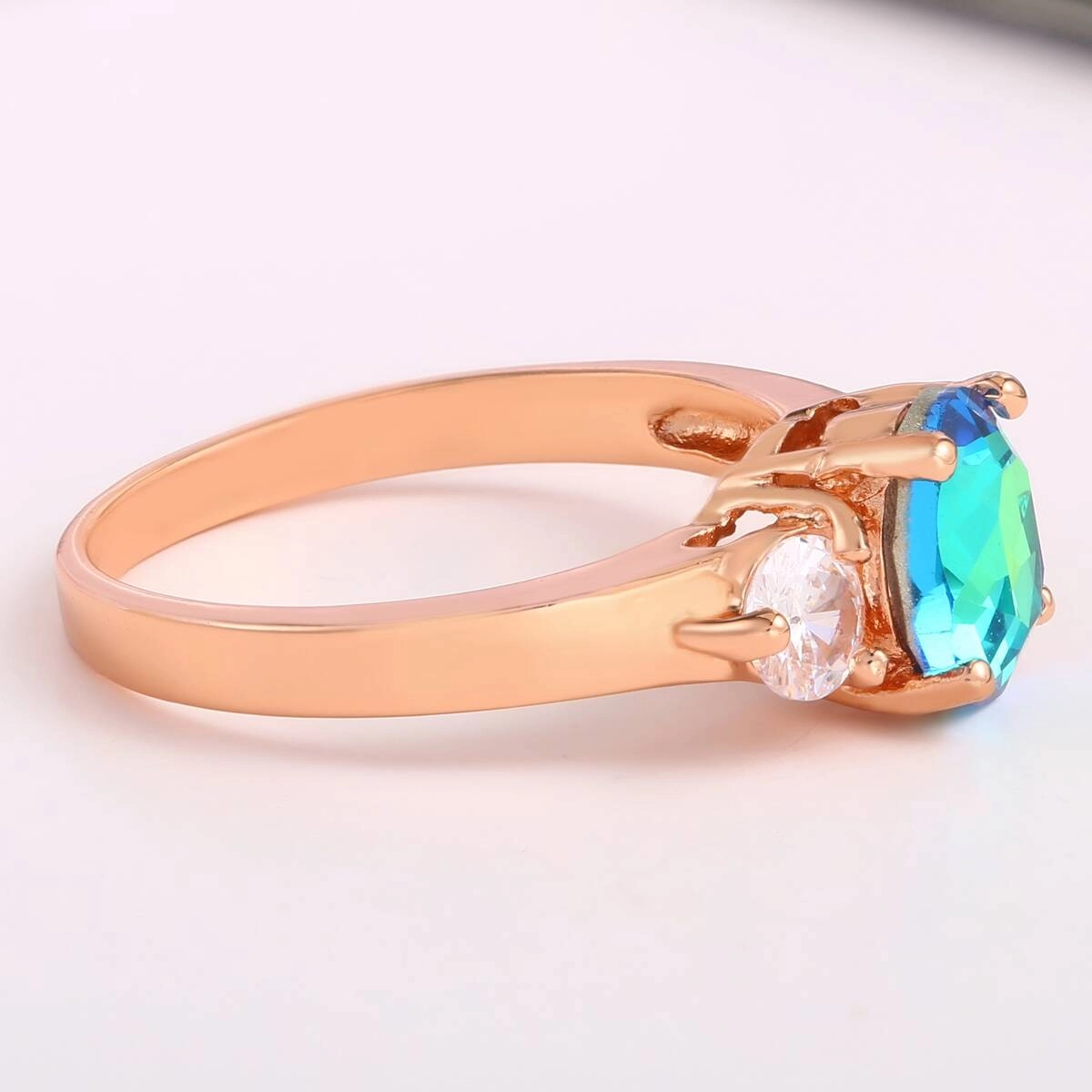
Rose Gold Plated Ring Manufacturer & Wholesale Fashion Jewelry | HOLYCOME
Wholesale brass necklaces manufacturer and supplier
Private Label Jewelry Manufacturer Pricing Factors That Influence Jewelry Costs
Product Categories
You may also like

925 Silver Jewelry
Customizable High-Quality Fashion 925 Sterling Silver AAA Cubic Zirconia Heart-Shaped Open Tennis Bracelet.
Read More

Brass Jewelry
Customizable OEM ODM High-Quality Fashion Brass AAA Cubic Zirconia Classic Tennis Bracelet for Women Wholesale.
Read More
Get a Quote for Private Label Jewelry
We provide personalized jewelry customization services for clients worldwide.
Rest assured that your privacy is important to us, and all information provided will be handled with the utmost confidentiality.
By clicking 'Send Inquiry Now' I agree to HOLYCOME processing my personal data.
To see how to withdraw your consent, how to control your personal data and how we process it, please see our Privacy Policy and Terms of use.
From design to production, HOLYCOME offers a one-stop solution to help you enhance your brand value and market competitiveness.
Get A Quote
Contact
Tel: (+86) 188 1927 7817
© 2026 HOLYCOME. All Rights Reserved.
Facebook
Instagram
YouTube
Whatsapp: +8618078079070