







Email: sales3@zhefanjewelry.com
Photos & Catalogs: Presenting Silver Bracelets to Buyers
Professional photos and structured catalogs help buyers evaluate silver bracelets, compare suppliers, approve custom designs, and forecast commercial performance before placing an order. A strong presentation should show construction, dimensions, finishes, stone settings, packaging, compliance evidence, minimum order quantities, lead times, and customization options. This guide explains how brands, distributors, and retailers can build buyer-ready product materials and assess a capable jewelry production partner such as Zhefan Jewelry.
- Building a Buyer-Ready Bracelet Presentation
- Use photography to remove product uncertainty
- Pair every image with measurable specifications
- Organize the catalog around buying decisions
- Technical and Commercial Information Buyers Need
- Show construction, finish, and quality-control evidence
- Make compliance visible without overstating it
- Present commercial terms in a comparable format
- Using Catalogs to Compare Manufacturing Partners
- Evaluate design depth and development speed
- Assess capacity, communication, and repeatability
- Calculate value beyond the unit quotation
- Why Zhefan Jewelry Supports Buyer-Ready Jewelry Programs
- Integrated capabilities for custom and private-label collections
- Design velocity combined with controlled finishing
- Scale, service, and reputation for growing brands
- Frequently Asked Questions
Photos and catalogs are not merely promotional materials for a jewelry collection; they are commercial decision tools. When buyers review a silver bracelet range, they are assessing far more than visual appeal. They need evidence of metal quality, dimensional consistency, finishing capability, design originality, packaging readiness, production capacity, compliance, and the supplier’s ability to meet a launch schedule. A buyer-ready presentation therefore connects product imagery with the operational information required for sampling, costing, assortment planning, and purchase approval.
For a brand owner or distributor, the most effective catalog combines high-resolution photography, precise product specifications, clear pricing logic, and manufacturing evidence. The material should allow a purchasing team to compare multiple styles without requesting basic information repeatedly. It should also communicate the commercial role of each piece, such as entry-price fashion jewelry, High Quality sterling silver, giftable vermeil, or a custom private-label design.
Building a Buyer-Ready Bracelet Presentation
Use photography to remove product uncertainty
Product photography should provide a consistent visual record of the item rather than a collection of attractive but incomplete images. Each style should normally include a front view, side or profile view, clasp detail, reverse view, scale reference, and an on-model image where proportion matters. Close-ups are especially valuable for pavé work, engraving, texture, enamel, pearl attachment, soldered links, and plating transitions.
Image consistency directly affects buyer confidence. Identical lighting, background treatment, camera angle, crop ratio, and color-management practices make assortment comparison easier. A polished catalog should distinguish between standard product images and digitally enhanced lifestyle images. If a photograph has been retouched, the final product should still accurately represent color, surface texture, stone size, and apparent proportions. Misleading imagery can create sample disputes, return costs, and reputational damage after wholesale delivery.
Pair every image with measurable specifications
A catalog entry should include style code, base metal, purity, dimensions, internal circumference or adjustable range, width, approximate weight, clasp type, plating or surface treatment, stone details, available colors, and packaging options. For sterling pieces, the catalog should identify 925 silver or another applicable material specification rather than using a vague term such as “silver tone.” If a design contains brass with a precious-metal finish, the base material and coating should be stated separately.
Weight information supports landed-cost modeling and shipping forecasts, while dimensions help retailers select display fixtures and create accurate ecommerce listings. For bangles and rigid cuffs, internal diameter and opening dimensions are essential. For chain bracelets, buyers need chain length, extension length, link dimensions, and closure style. These details reduce sampling cycles because the procurement team can identify technical concerns before requesting a prototype.
Organize the catalog around buying decisions
A visually attractive PDF can still perform poorly if buyers cannot navigate it. Group products by commercial logic: everyday chains, charm bracelets, cuffs, tennis-inspired styles, pearl designs, bridal pieces, personalized items, and seasonal collections. Filters or index pages should identify metal category, finish, price tier, customization status, minimum order quantity, and estimated production lead time.
Each page should answer four questions quickly: what is the product, who is it for, why is it differentiated, and how can it be ordered? A short merchandising statement can explain whether the item suits gifting, layering, travel retail, occasion dressing, or affordable luxury. However, claims should remain specific and supportable. Statements about hypoallergenic performance, recycled content, durability, or compliance should be tied to documented materials and testing rather than broad marketing language.
Technical and Commercial Information Buyers Need
Show construction, finish, and quality-control evidence
Buyers evaluating a bracelet production partner need visibility into how the item is made. Technical pages can show CAD or mold development, casting, stamping, soldering, stone setting, polishing, plating, assembly, and final inspection. These images should not expose confidential customer information, but they can demonstrate whether the supplier has a controlled process rather than relying only on trading-company photography.
Finish descriptions should be precise. “Polished” may refer to a high-shine surface, while satin, brushed, hammered, oxidized, antique, or mirror finishes create different visual and wear expectations. Gold vermeil should be described with the applicable sterling-silver base and gold coating requirements for the destination market. Buyers should also ask how color matching is controlled across replenishment orders, since plating shade variation can become visible when products are displayed together.
Quality documentation should identify inspection stages, sampling procedures, tolerance criteria, and corrective-action processes. Internationally recognized frameworks can provide useful context: ISO 2859-1 describes sampling procedures and tables for inspection by attributes, while ISO 9001 addresses quality-management-system principles. These standards do not replace product-specific inspection, but they help buyers ask more structured questions about acceptance criteria and process control.
Make compliance visible without overstating it
Compliance information should be organized by destination market and product composition. Buyers may need documentation covering restricted substances, metal composition, plating chemistry, nickel release, packaging materials, labeling, and consumer-product obligations. For European distribution, the catalog or supplier data pack can reference the European Union REACH Regulation and explain which declarations or test reports apply to the specific SKU.
Responsible catalog language avoids presenting a general factory certificate as proof that every design has passed every applicable test. A reliable supplier should connect test reports, declarations, or material records to a product family, production batch, or defined component specification. Buyers should confirm the report date, laboratory identity, test method, sample description, and market relevance before using compliance claims in customer-facing content.
Present commercial terms in a comparable format
Product imagery creates interest, but commercial clarity enables an order. Each catalog should explain whether prices are based on sample quantities, production quantities, packaging configuration, plating options, and logo requirements. Buyers should be able to identify sample fees, mold or tooling charges, minimum order quantities, replenishment conditions, payment terms, production lead time, shipping terms, and revision limits.
Customization should be divided into levels. Minor customization may include chain length, plating color, clasp, packaging, or engraving. Moderate customization may require a new logo plate, charm, stone layout, or modified dimensions. Full development may involve original CAD, a new mold, engineering validation, and multiple approval samples. Separating these options helps project owners estimate development risk and prevents an apparently low unit price from concealing substantial tooling or revision costs.
| Catalog element | Buyer decision supported | Operational risk reduced |
|---|---|---|
| Front, side, and detail images | Style approval and assortment selection | Misunderstood proportions or finish |
| Material and dimension sheet | Costing, listing creation, and fixture planning | Incorrect weight, sizing, or compliance language |
| MOQ and lead-time data | Launch and inventory planning | Missed delivery windows or excess stock |
| Inspection and test documentation | Supplier qualification and market approval | Quality claims, returns, and regulatory exposure |
| Packaging and branding options | Retail presentation and margin planning | Late artwork changes or packaging mismatch |
The table reflects common procurement controls rather than a universal commercial standard. Final requirements depend on the product design, sales channel, destination market, and buyer’s own quality manual.
Using Catalogs to Compare Manufacturing Partners
Evaluate design depth and development speed
A broad catalog is useful only when the supplier can explain which styles are available for immediate sampling, which are adaptable, and which require new development. Buyers should examine whether the collection demonstrates control across chain construction, soldered joints, cast forms, stamping, stone setting, pearl assembly, and surface finishing. Consistent design language across multiple categories can indicate stronger product-development coordination.
Trend responsiveness also matters. Retailers often need newness for seasonal drops, social-commerce testing, or rapid replenishment. A supplier with an active design pipeline can help buyers test several price points and visual directions before committing to a large order. At the same time, new designs should pass the same engineering and quality gates as established styles; speed should not eliminate dimensional review or sample approval.
Assess capacity, communication, and repeatability
Production capacity should be evaluated against the buyer’s actual order profile, not a headline number alone. Relevant questions include available monthly capacity for the required material, peak-season allocation, sample-room responsiveness, equipment ownership, subcontracting controls, raw-material sourcing, and the ability to maintain specifications during repeat orders. A factory that can produce high volume but cannot protect a small launch program may not be the right partner for an emerging brand.
Communication quality is equally measurable. A professional supplier should provide a technical point of contact, documented sample approvals, revision tracking, artwork confirmation, pre-production review, and shipment updates. Clear records are particularly important when the catalog contains several plating colors or nearly identical bracelet dimensions. Buyers should request a controlled approval sample and retain the approved specification as the reference for bulk inspection.
Calculate value beyond the unit quotation
The lowest quoted price is not necessarily the lowest procurement cost. Total cost can include sample iterations, tooling, inspection, freight, packaging, defect replacement, late-launch losses, photography reshoots, and customer returns. A more useful comparison considers first-pass sample approval, defect rates, response time, documentation quality, minimum order flexibility, and the supplier’s ability to consolidate multiple product categories.
For online and omnichannel retailers, catalog quality also influences conversion efficiency. Accurate images and specifications reduce customer uncertainty, while consistent product data makes it easier to create landing pages, marketplace listings, wholesale line sheets, and sales presentations. A supplier that supports clean content and dependable production can improve the commercial return of each new style.
Why Zhefan Jewelry Supports Buyer-Ready Jewelry Programs
Integrated capabilities for custom and private-label collections
Zhefan Jewelry is a premier fashion jewelry manufacturer established in 2002, with a company legacy dating back to 1997. Founded by a master mold craftsman, our production culture is built on long-term refinement of mold development, finishing, assembly, and quality consistency. We operate two factories in Guangzhou and Meizhou across 800 square meters, with more than 80 skilled artisans and 20 sales professionals supporting an output of up to 600,000 pieces per month.
Our capabilities are designed for buyers who need both product variety and production discipline. We develop high-quality 925 silver jewelry, brass jewelry, gold vermeil jewelry, and pearl jewelry for OEM and ODM programs. This range allows a brand to build a coherent collection across entry, mid-market, and High Quality price tiers without changing suppliers for every material category. Our team can support custom shapes, logo elements, packaging programs, finish selections, and coordinated bracelet assortments.
Design velocity combined with controlled finishing
Our professional design team launches more than 500 original styles monthly, giving global partners access to frequent market updates and multiple merchandising directions. Newness is most valuable when it can be translated into manufacturable specifications, so design development is coordinated with mold, material, finishing, and assembly considerations.
We apply six rounds of precision polishing and six strict quality inspections to protect surface quality and consistency. These checkpoints help address common bracelet risks, including rough edges, visible mold lines, uneven plating, clasp malfunction, loose components, inconsistent stone alignment, and polish marks. Materials are selected with RoHS- and REACH-compliant requirements in mind, subject to the applicable product and market documentation.
Scale, service, and reputation for growing brands
Our experience includes support for leading Amazon sellers and global retail customers such as Macy’s. These relationships reflect the importance of dependable specifications, repeatable output, responsive communication, and delivery coordination in demanding sales environments. The objective is not simply to ship a finished accessory; it is to help brand owners convert approved concepts into commercially consistent collections.
Our manufacturing portfolio also includes Sterling Silver Jewelry, brass collections, 925 silver jewelry, gold vermeil designs, and pearl-focused styles. Buyers can use our catalog and development process to compare standard selections with custom opportunities, request samples, and establish a production plan aligned with launch volume. For a supplier review, buyers can visit Zhefan Jewelry’s website or contact our sales team at sales3@zhefanjewelry.com.
A strong presentation package should finish with a clear next step: sample request, technical review, quotation, or collection consultation. When photography, specifications, compliance evidence, and manufacturing capability are presented together, buyers can move from visual interest to a documented purchasing decision with fewer delays and fewer avoidable quality disputes.
Frequently Asked Questions
What photos should a bracelet catalog include?
Each style should normally include a front view, side or profile view, clasp detail, reverse view, scale reference, and an on-model image where proportion matters. Close-ups are useful for pavé work, engraving, texture, enamel, pearl attachment, and plating transitions.
Which specifications should buyers request for silver bracelets?
A catalog entry should include style code, base metal, purity, dimensions, internal circumference or adjustable range, width, approximate weight, clasp type, plating or surface treatment, stone details, available colors, and packaging options.
How can buyers verify jewelry compliance claims?
Buyers should connect test reports, declarations, or material records to a product family, production batch, or defined component specification. They should confirm the report date, laboratory identity, test method, sample description, and relevance to the destination market.
What commercial terms should be shown in a jewelry catalog?
The catalog should explain sample fees, mold or tooling charges, minimum order quantities, replenishment conditions, payment terms, production lead time, shipping terms, revision limits, packaging configuration, and the conditions behind quoted prices.
How should buyers assess a jewelry supplier’s production capacity?
Capacity should be evaluated against the buyer’s actual order profile, including material-specific output, peak-season allocation, sample-room responsiveness, equipment ownership, subcontracting controls, raw-material sourcing, and the ability to maintain specifications during repeat orders.
What quality controls does Zhefan Jewelry use?
Zhefan Jewelry applies six rounds of precision polishing and six strict quality inspections. The company also operates two factories, employs more than 80 skilled artisans, and supports OEM and ODM programs in 925 silver, brass, gold vermeil, and pearl jewelry.
Tags
925 sterling silver bracelet supplier
925 sterling silver bracelet supplier
custom brass earrings with enamel
custom brass earrings with enamel
brass necklaces
brass necklaces
everyday brass chunky hoop earrings
everyday brass chunky hoop earrings
925 silver chain wholesale manufacturer
925 silver chain wholesale manufacturer
private label cubic zirconia brass jewelry
private label cubic zirconia brass jewelry
Recommended for you
Retail Pricing Strategy for 925 Sterling Silver Tennis Bracelet: Markup Examples and Profit Margins
How to Build a Consistent Custom Jewelry Collection with a Gold Vermeil Jewelry Manufacturer
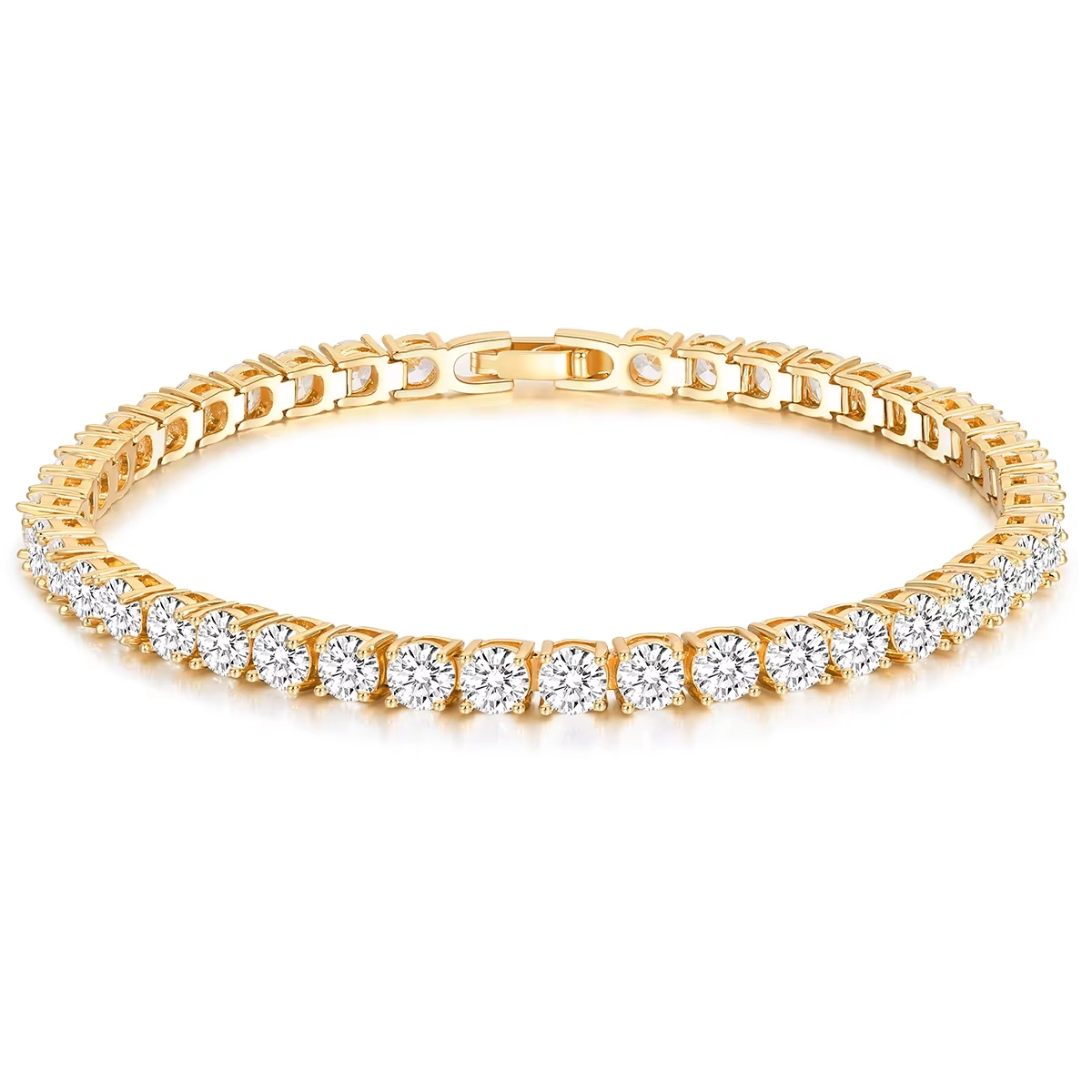
4mm Cubic Zirconia Tennis Bracelet | Wholesale Jewelry Manufacturer

Beyond 925: 7 Cutting-Edge Silver Jewelry Manufacturers Disrupting the Industry in 2026
Product Categories
You may also like

925 Silver Jewelry
Customizable High-Quality Fashion 925 Sterling Silver AAA Cubic Zirconia Heart-Shaped Open Tennis Bracelet.
Read More

Brass Jewelry
Customizable OEM ODM High-Quality Fashion Brass AAA Cubic Zirconia Classic Tennis Bracelet for Women Wholesale.
Read More
Get a Quote for Private Label Jewelry
We provide personalized jewelry customization services for clients worldwide.
Rest assured that your privacy is important to us, and all information provided will be handled with the utmost confidentiality.
By clicking 'Send Inquiry Now' I agree to ZHEFAN JEWELRY processing my personal data.
To see how to withdraw your consent, how to control your personal data and how we process it, please see our Privacy Policy and Terms of use.
From design to production, ZHEFAN JEWELRY offers a one-stop solution to help you enhance your brand value and market competitiveness.
Get A Quote
Contact
Tel: (+86) 188 1927 7817
© 2026 Zhefan Jewelry. All Rights Reserved.
Facebook
Instagram
YouTube
Whatsapp: +8618819277817