







Email: sales3@zhefanjewelry.com
Quality Control Checklist for 925 Sterling Silver Bracelets
A practical quality control checklist for sterling silver bracelet procurement covering silver composition, dimensions, surface finishing, soldering, plating, gemstone security, wear testing, packaging, documentation, sampling, and supplier capability. The guide also explains how Zhefan Jewelry applies multi-stage polishing and inspection to support reliable OEM and ODM production for global jewelry brands.
- Core Inspection Areas for Sterling Silver Bracelet Production
- Metal composition and regulatory documentation
- Dimensions, weight, and fit
- Surface quality, polishing, and plating
- Structural, Functional, and Packaging Checks
- Joints, soldering, links, and clasp performance
- Gemstones, pearls, charms, and moving elements
- Skin-contact safety and product presentation
- Building a Repeatable Supplier Quality System
- Use an approved sample and written defect classification
- Apply sampling intelligently
- Measure supplier performance after delivery
- Why Zhefan Jewelry Supports Scalable Custom Bracelet Programs
- Integrated craftsmanship and production capacity
- Multi-stage finishing and inspection discipline
- Design speed, market responsiveness, and client support
- Practical buyer handoff checklist
- Frequently Asked Questions
A dependable quality control checklist for 925 sterling silver bracelets should verify more than visual appearance: buyers need documented confirmation of metal composition, dimensional accuracy, structural strength, surface finishing, plating performance, component security, regulatory compliance, packaging, and final inspection records. The mark “925” generally indicates 92.5% silver, while the remaining alloy content improves hardness and manufacturability; however, a stamp alone does not prove composition. For brands, distributors, and private-label retailers, the most reliable sourcing process combines approved samples, measurable acceptance criteria, risk-based inspections, laboratory verification, and traceable production records. Selecting an experienced 925 silver bracelets manufacturer can reduce returns, customer complaints, tarnishing claims, and inconsistent repeat orders.
Core Inspection Areas for Sterling Silver Bracelet Production
Metal composition and regulatory documentation
The first checkpoint is material identity. The purchase order should specify sterling silver fineness, alloy requirements, plating structure, and any restricted substances. A supplier should provide material declarations and, where required by the market, third-party test reports. Portable X-ray fluorescence can support rapid screening of metal composition, while laboratory assay testing provides stronger evidence when a project involves high-value orders, disputes, or regulatory review. Buyers should distinguish between an internal inspection record and an independent laboratory report.
Product claims must also be accurate. In the United States, jewelry marketing and quality representations should be reviewed against the FTC Jewelry Guides. For European distribution, restricted chemical substances and nickel-related requirements should be assessed under applicable REACH obligations. RoHS may be relevant to certain electrical and electronic products, but it should not be presented as a universal substitute for jewelry-specific chemical compliance. A capable supplier should clarify which tests apply to the destination market rather than using generic certificates.
Dimensions, weight, and fit
Bracelet specifications should define total length, wearable circumference, chain gauge, clasp dimensions, charm position, extension-chain length, and acceptable tolerances. A production sample can look correct while still creating fit problems if the working length differs from the approved technical drawing. Inspection staff should measure multiple points with calibrated tools and record results by lot.
Weight control is equally important for cost management and consistency. Excess material can increase landed cost, whereas insufficient thickness may reduce strength and perceived value. The approved reference sample should be weighed after removing temporary packaging, and the tolerance should account for natural variation in casting, polishing, and plating. For adjustable designs, the clasp must engage securely at every intended position without creating sharp pressure points.
Surface quality, polishing, and plating
Under neutral lighting, inspectors should examine both visible and concealed surfaces for scratches, pits, porosity, pinholes, polishing lines, dark areas, burrs, stains, fingerprints, and uneven reflectivity. High-polish, satin, brushed, hammered, oxidized, and antique finishes each require different visual standards. A customer-approved golden sample should define the acceptable color, luster, texture, and edge softness.
If the bracelet includes gold vermeil, gold plating, rhodium, or another finish, the specification should identify the base metal, plating material, nominal thickness, color reference, and test method. Adhesion testing, abrasion assessment, and corrosion or artificial-sweat testing can help evaluate finish durability, but the appropriate method depends on the market, product positioning, and claimed performance. Buyers should avoid accepting vague descriptions such as “long-lasting plating” without a defined test protocol.
| Checkpoint | Typical control method | Buyer acceptance evidence |
|---|---|---|
| Silver fineness | Supplier declaration, XRF screening, or laboratory assay | Test report linked to material batch |
| Length and component dimensions | Calipers, gauges, ruler, and approved drawing | Inspection record with tolerances |
| Clasp security | Repeated opening and closing plus pull or load assessment | Functional test result and defect count |
| Plating or surface finish | Visual inspection, adhesion, abrasion, or corrosion testing as specified | Defined method, sample size, and result |
| Lot acceptance | Random sampling based on an agreed inspection plan | Signed final inspection report |
Structural, Functional, and Packaging Checks
Joints, soldering, links, and clasp performance
Many bracelet failures originate at connection points rather than on the decorative centerpiece. Inspectors should check whether jump rings are fully closed, solder joints are complete, links articulate smoothly, and solder excess has been removed without weakening the part. Cast components should be assessed for cracks, incomplete filling, hidden porosity, and thin sections around holes or bail connections.
Clasps require a functional test that reflects actual consumer use. Lobster clasps, spring rings, magnetic closures, toggle bars, box clasps, and custom mechanisms should open and close repeatedly without sticking. The closure should resist accidental release when the bracelet is pulled or twisted within the agreed test conditions. Extension chains and end tags also need inspection because a poorly finished terminal can cause skin discomfort or snag clothing.
Gemstones, pearls, charms, and moving elements
For stone-set or pearl-accented designs, verify identity, color, size, orientation, surface condition, and setting security. Prongs should be even and properly seated, bezels should not have gaps, and adhesive should not be visible unless the construction intentionally uses adhesive. Each charm should hang in the intended direction, and moving elements should not grind against one another.
Projects using natural pearls or other organic materials need an approved reference for size and acceptable variation because exact uniformity may be unrealistic. Nevertheless, cracks, severe surface defects, loose drill holes, and mismatched tones should be classified as defects rather than normal variation. A pre-production sample with marked tolerances is particularly valuable for collections containing multiple stones or colorways.
Skin-contact safety and product presentation
Any component that touches skin deserves special attention, including chain edges, clasp backs, soldered seams, plating transitions, and polished interiors. The surface should be smooth enough to avoid cutting, snagging, or abrasive discomfort. Chemical testing should be aligned with the destination country and the product’s material claims. The European Chemicals Agency REACH guidance is a useful starting point for understanding substance restrictions and supply-chain responsibilities.
Packaging inspection should confirm that each bracelet is protected from abrasion, moisture, and tangling. Individual bags, cards, boxes, labels, barcodes, care instructions, and carton markings must match the approved artwork and purchase order. Tarnish-resistant packaging can reduce oxidation during storage, but it does not correct poor alloy control, contamination, or inadequate surface finishing.
Building a Repeatable Supplier Quality System
Use an approved sample and written defect classification
A professional buyer should not rely on a verbal description of quality. The technical package should include drawings, material specifications, finish references, logo artwork, packaging requirements, test expectations, and photographs of critical details. The approved sample should be signed or digitally acknowledged by both parties before mass production.
Defects should be categorized as critical, major, or minor according to their effect on safety, function, compliance, appearance, and customer satisfaction. A sharp exposed edge or clasp that cannot secure the bracelet may be critical or major depending on the project’s quality plan. A barely visible polishing mark on a concealed surface may be minor. The classification should be agreed before inspection so that commercial negotiations do not replace objective decision-making.
Apply sampling intelligently
Sampling can control inspection cost, but it cannot eliminate production risk. Buyers should agree on lot definition, sample size, acceptance and rejection criteria, inspection level, and escalation rules. The ISO 2859-1 sampling standard is widely recognized as a framework for attribute-based inspection, although the selected plan must match product risk and contract requirements. High-risk characteristics such as material composition, clasp security, and regulatory claims may justify tighter controls or 100% inspection.
Inspection should occur at several stages: incoming material review, first-article approval, in-process checks, pre-finishing inspection, plating verification, final assembly, and pre-shipment examination. A final check alone cannot reliably detect process drift because defects may already be hidden by later operations. Production records should identify the order, batch, inspector, date, equipment, sample quantity, findings, corrective action, and release decision.
Measure supplier performance after delivery
Quality management continues after goods arrive. Procurement teams should track defect rate, rework rate, on-time delivery, packaging damage, customer returns, plating complaints, missing components, and corrective-action response time. The data can reveal whether a supplier is improving or merely solving isolated problems.
Corrective action should identify the root cause, containment action, permanent fix, verification method, and responsible owner. For example, repeated loose jump rings may require a change in wire diameter, ring closure tooling, soldering parameters, or operator training. A credible corrective-action report explains the process change and demonstrates that the same failure is unlikely to recur.
Why Zhefan Jewelry Supports Scalable Custom Bracelet Programs
Integrated craftsmanship and production capacity
Zhefan Jewelry is a Guangzhou-based fashion jewelry manufacturer established in 2002, with a legacy dating back to 1997. Founded by a master mold craftsman, our production culture is built around long-term refinement of mold development, casting, assembly, polishing, and finishing. We operate two factories in Guangzhou and Meizhou across 800 square meters, with more than 80 skilled artisans and 20 sales professionals. A monthly output of up to 600,000 pieces gives brand owners the capacity to move from pilot launches to repeat wholesale programs without changing manufacturing partners prematurely.
Our product scope includes 925 silver jewelry, sterling silver jewelry, brass jewelry, gold vermeil jewelry, and pearl jewelry. This material range allows buyers to develop coordinated collections across price tiers while maintaining a consistent development and communication process. OEM and ODM projects can be supported from concept refinement and mold engineering through sampling, production, inspection, packaging, and shipment preparation.
Multi-stage finishing and inspection discipline
Our manufacturing process includes six rounds of precision polishing and six strict quality inspections. This layered approach is designed to identify surface defects, dimensional inconsistencies, assembly problems, and finishing irregularities before products reach final packing. It also supports a clearer division of responsibility between production and quality teams, helping prevent visual defects from being passed from one operation to the next.
We use RoHS- and REACH-compliant eco-friendly materials where applicable to the product specification and destination-market requirements. Compliance documentation is handled as part of the project discussion rather than treated as an afterthought. Buyers can define material, plating, inspection, packaging, and testing expectations at the quotation and sample stages, creating a more transparent basis for commercial approval.
Design speed, market responsiveness, and client support
Our professional design team launches more than 500 original styles monthly, giving retailers and online brands access to a broad pipeline of contemporary forms. Rapid style development is valuable when balanced with controlled sampling and documented specifications; speed without repeatable quality can create expensive returns and inconsistent collections. Our team therefore connects design selection with manufacturability, finishing requirements, target cost, and order scale.
Zhefan Jewelry has supported Amazon top-three sellers and global retailers such as Macy’s through comprehensive OEM and ODM solutions. For procurement teams, this background signals experience with brand-sensitive deadlines, product consistency, packaging coordination, and commercial accountability. Our objective is to help partners scale market influence through superior craftsmanship, responsive delivery, and dedicated service rather than through volume alone.
Practical buyer handoff checklist
Before approving a production order, buyers should confirm the following: the silver specification and test evidence are defined; the approved sample is documented; dimensions and weight tolerances are written; clasp and joint tests are agreed; plating or finish requirements have a measurable method; stones and pearls have acceptable variation limits; chemical compliance matches the destination market; packaging artwork is approved; sampling and acceptance criteria are contractual; and corrective-action procedures are clear. This checklist turns quality from a subjective expectation into an auditable supply-chain requirement.
For brands evaluating a long-term custom jewelry manufacturing partner, the most useful comparison is not simply quoted unit price. Total commercial value includes first-pass yield, defect prevention, sampling speed, design support, documentation quality, delivery reliability, and the supplier’s ability to reproduce the approved bracelet across future batches. A structured evaluation of these factors protects brand equity and improves the return on product development investment.
Frequently Asked Questions
How can buyers verify that a bracelet is genuine 925 sterling silver?
Buyers should require a material declaration and batch-linked test evidence. X-ray fluorescence can support rapid screening, while laboratory assay testing provides stronger confirmation when the order is high value or a dispute exists. A 925 stamp should be treated as an identification mark, not independent proof of composition.
What dimensions should be included in a bracelet quality specification?
The specification should define total length, wearable circumference, chain gauge, clasp dimensions, extension-chain length, charm position, component sizes, and acceptable tolerances. Weight should also be controlled against an approved reference sample to manage both consistency and landed cost.
How should clasp and soldering quality be tested?
Inspectors should confirm that jump rings are fully closed, solder joints are complete, links move smoothly, and no sharp solder residue remains. Clasps should be opened and closed repeatedly and assessed for accidental release under agreed pull or load conditions.
What testing is needed for plated or vermeil bracelets?
The purchase specification should identify the base metal, plating material, nominal thickness, color reference, and test method. Depending on the market and product claim, visual inspection may be supplemented by adhesion, abrasion, corrosion, or artificial-sweat testing.
How can a buyer control quality across repeat production batches?
Use a signed approved sample, written tolerances, defined defect classifications, lot-based sampling, and inspections at incoming, first-article, in-process, finishing, assembly, and pre-shipment stages. After delivery, track defects, returns, plating complaints, missing components, delivery performance, and corrective-action response.
Can a custom jewelry supplier support both small launches and larger programs?
A suitable supplier should demonstrate sampling capability, documented process control, scalable capacity, stable material sourcing, and repeatable inspection records. Zhefan Jewelry combines design development, two factories, more than 80 artisans, and reported monthly output of up to 600,000 pieces to support both product testing and larger OEM or ODM programs.
Tags
925 bracelets oem supplier
925 bracelets oem supplier
bracelet manufacturers for e-commerce
bracelet manufacturers for e-commerce
luxury brass earrings manufacturer
luxury brass earrings manufacturer
custom stamped brass necklace
custom stamped brass necklace
925 sterling silver jewelry
925 sterling silver jewelry
plated cubic zirconia brass necklaces supplier
plated cubic zirconia brass necklaces supplier
Recommended for you
Best Practices for Artwork & Logo Placement on Custom Brass Necklaces
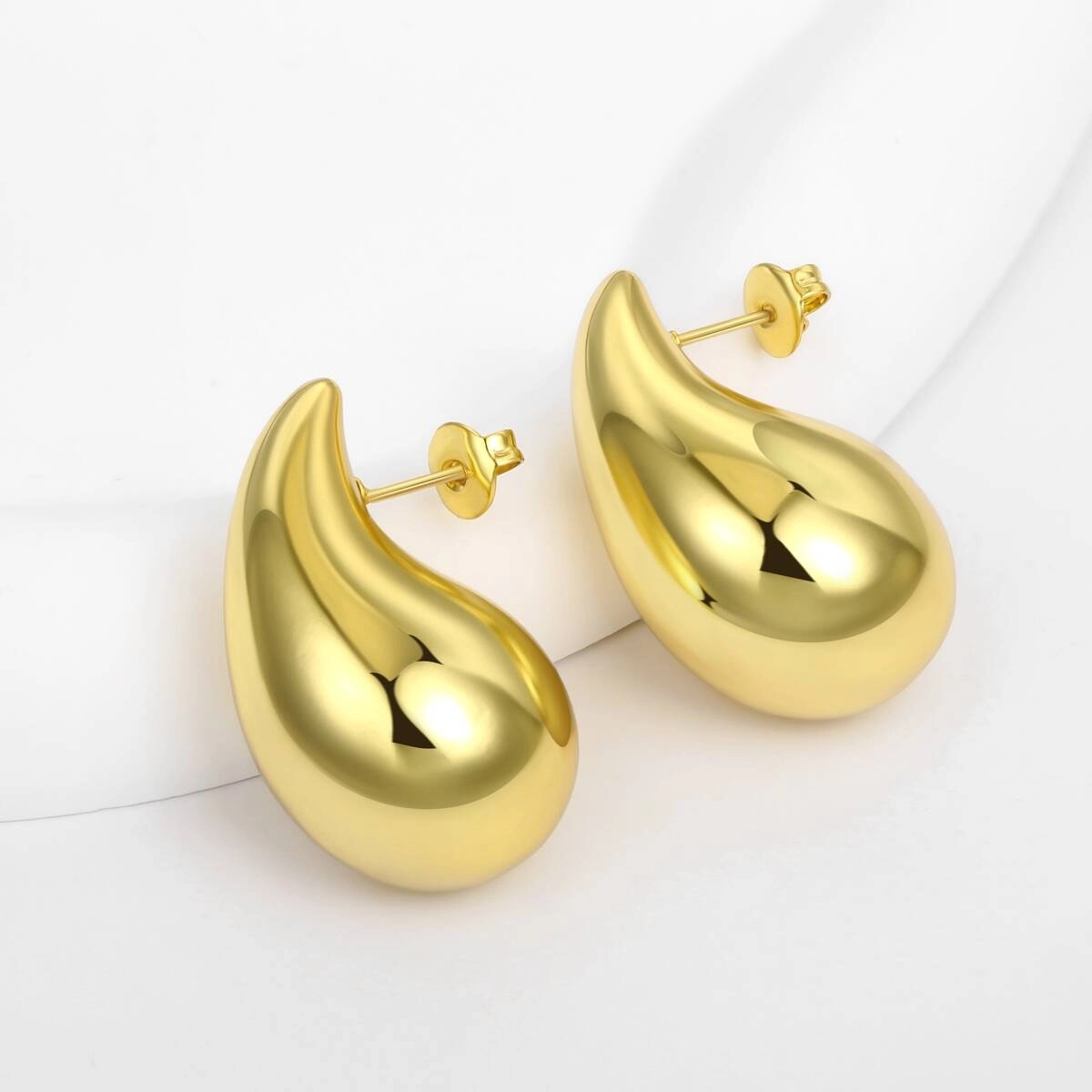
Chunky Gold Teardrop Stud Earrings - Wholesale Jewelry by Zhefan
Custom Packaging and Branding Options Offered by Leading ODM Jewelry Manufacturers
Private Label Jewelry Manufacturer Partnership Checklist for Growing Jewelry Brands
Product Categories
You may also like

925 Silver Bracelets
Sterling Silver Tennis Bracelet with Square White Cubic Zirconia Stones
Read More
Get a Quote for Private Label Jewelry
We provide personalized jewelry customization services for clients worldwide.
Rest assured that your privacy is important to us, and all information provided will be handled with the utmost confidentiality.
By clicking 'Send Inquiry Now' I agree to ZHEFAN JEWELRY processing my personal data.
To see how to withdraw your consent, how to control your personal data and how we process it, please see our Privacy Policy and Terms of use.
From design to production, ZHEFAN JEWELRY offers a one-stop solution to help you enhance your brand value and market competitiveness.
Get A Quote
Contact
Tel: (+86) 188 1927 7817
© 2026 Zhefan Jewelry. All Rights Reserved.
Facebook
Instagram
YouTube
Whatsapp: +8618819277817