







Email: service@holycome.com
Sourcing brass earrings from China vs India: pros and cons
China and India are both important sourcing destinations for brass earrings, but they serve different procurement priorities. Chinese suppliers generally offer stronger manufacturing scale, faster design iteration, broader finishing capabilities, and more predictable OEM/ODM production, while Indian workshops often provide distinctive handcrafted aesthetics, traditional techniques, and flexibility for smaller artisanal collections. Buyers should compare landed cost rather than unit price alone, assess brass composition and plating durability, verify social and environmental compliance, confirm production capacity, and use documented sampling and inspection procedures before placing a bulk order. HOLYCOME combines Chinese production scale with custom design, RoHS/REACH-compliant materials, six polishing stages, six quality inspections, and monthly output of up to 600,000 pieces.
- China and India as Brass Earring Sourcing Hubs
- China’s strengths in scalable fashion jewelry production
- India’s strengths in craft-led and differentiated collections
- Comparing procurement priorities before requesting quotations
- Cost, Quality, and Compliance Considerations
- Why unit price is not the same as sourcing cost
- Brass composition, plating, and wear performance
- Inspection systems and supplier verification
- How to Select the Right Manufacturing Partner
- Use a structured sample and quotation process
- Balance design ambition with production risk
- Why HOLYCOME Supports Scalable Brass Earring Programs
- Integrated production for OEM and ODM jewelry brands
- Documented finishing and quality control
- Design velocity across multiple jewelry materials
- Frequently Asked Questions
China and India are two of the most considered sourcing markets for brass earrings, yet the best choice depends on the buyer’s product positioning, order volume, required finish, launch schedule, and quality-control expectations. Chinese jewelry factories typically provide stronger industrial scale, extensive OEM/ODM infrastructure, faster tooling development, and a broad supplier ecosystem for plating, casting, stamping, packaging, and logistics. Indian manufacturers and artisan-led workshops are often attractive for handcrafted designs, culturally influenced detailing, small-batch development, and distinctive surface work. The right procurement decision is therefore not simply China versus India; it is a comparison of manufacturing fit, total landed cost, compliance risk, repeatability, and brand value.
China and India as Brass Earring Sourcing Hubs
China’s strengths in scalable fashion jewelry production
China is particularly suitable for brands that need repeatable quality across large purchase orders, frequent style launches, and coordinated product families. A mature manufacturing cluster can connect mold makers, brass stamping operators, casting facilities, polishing teams, electroplating lines, stone setters, packaging suppliers, and export logistics providers within a relatively integrated supply chain. This reduces handoffs and can shorten the time between approved prototype and commercial production.
Chinese production is also well suited to design-led businesses that revise collections frequently. Digital drawing, rapid prototyping, CNC-assisted mold development, vacuum casting, stamping, laser engraving, and automated or semi-automated finishing allow manufacturers to translate a technical specification into multiple variations. Buyers can request changes to dimensions, closures, texture, plating color, stone placement, backing cards, and packaging without rebuilding the entire sourcing structure.
Scale does not automatically guarantee quality. Buyers still need to confirm alloy composition, nickel and lead restrictions, plating thickness, solder quality, post-production cleaning, and packaging protection. A factory’s ability to make 100,000 pieces is commercially useful only when its inspection system can identify dimensional variation, sharp edges, discoloration, loose components, and clasp failures before shipment.
India’s strengths in craft-led and differentiated collections
Indian jewelry production is often compelling for brands that want hand-finished character, traditional motifs, oxidized surfaces, textured metalwork, enamel accents, or culturally recognizable design language. Small and medium workshops may provide close collaboration with designers and can be effective for limited editions, High Quality craft narratives, and collections where minor variations support an artisanal identity.
India can also offer access to experienced craftspeople in techniques such as hand engraving, filigree-inspired work, repoussé-style texture, and detailed decorative assembly. These capabilities may help a brand create a visibly less industrial product. However, handcrafted value should be defined in the purchase specification. Terms such as handmade, artisan, or handcrafted can describe very different levels of manual labor, finishing consistency, and process control.
The principal operational challenge is repeatability. A workshop that produces an excellent sample may struggle to reproduce the same weight, profile, plating tone, stone alignment, or earring-pair symmetry at scale. Buyers should ask whether production is performed by one workshop or distributed among subcontractors, how approved samples are controlled, and what happens when a key craftsperson becomes unavailable.
Comparing procurement priorities before requesting quotations
| Evaluation factor | China | India | Buyer implication |
|---|---|---|---|
| Large-volume repeat orders | Generally strong due to factory scale and integrated vendor networks | Available, but capability varies considerably by workshop | Request verified monthly capacity and a production allocation plan |
| Handcrafted detailing | Available through specialist teams and mixed production models | Often a notable strength in craft-led workshops | Define the acceptable level of variation in writing |
| Rapid style development | Strong access to mold, CAD, sampling, and finishing resources | Depends heavily on the individual supplier | Approve a development schedule with milestone dates |
| Finishing and plating options | Broad range of commercial finishes and coordinated components | Strong options exist, but access may be more supplier-specific | Test color consistency, adhesion, abrasion, and tarnish resistance |
| Supply-chain coordination | Often supported by dense component and logistics ecosystems | Can be effective, but may involve more fragmented sourcing | Identify every subcontracted process before purchase order approval |
| Best strategic fit | Scalable fashion collections and structured OEM/ODM programs | Artisanal, heritage-inspired, and limited-run collections | Match the source country to the brand’s commercial promise |
The table describes common market tendencies rather than guarantees. Supplier-level due diligence remains essential because capabilities differ by factory, region, equipment, workforce, and management system. A buyer should evaluate documented performance rather than relying on country reputation alone.
Cost, Quality, and Compliance Considerations
Why unit price is not the same as sourcing cost
A quotation for brass earrings may exclude mold charges, sampling fees, plating surcharges, packaging, inspection, inland transport, export documentation, freight, insurance, duties, payment costs, and rework. The lowest ex-factory price can become the highest landed cost when defect rates, delayed delivery, or inconsistent plating create markdowns and customer returns.
Cost analysis should include the approved sample, minimum order quantity, tooling ownership, production lead time, defect allowance, replacement policy, carton dimensions, shipping mode, and payment terms. For international purchasing, the agreed Incoterm should be explicit. Buyers should also calculate the financial effect of a delayed seasonal launch because lost selling time can outweigh a small per-unit saving.
China may be more competitive for standardized components and larger runs because fixed development costs are distributed across greater output. India may be commercially attractive when a handcrafted product commands a High Quality or when a smaller order avoids the cost of industrial tooling. The correct comparison uses total cost per sellable unit, not merely the factory quotation.
Brass composition, plating, and wear performance
Brass is an alloy primarily based on copper and zinc, but the exact composition affects color, hardness, machinability, corrosion behavior, and finishing results. Buyers should request the material specification used for each style and clarify whether the earring includes other metals in posts, hooks, jump rings, or decorative components. These details matter because skin-contact parts may require stricter controls than non-contact surfaces.
Plating performance depends on surface preparation, base-metal condition, intermediate layers, final coating, curing, handling, and exposure conditions. Six samples with the same visual color can perform differently if process controls are inconsistent. A serious supplier should explain its polishing, cleaning, plating, drying, and inspection sequence and should provide test evidence when the market or retailer requires it.
For products sold in the European market, buyers should understand obligations associated with chemical restrictions under the European Union REACH Regulation. For electrical and electronic products, material restrictions may also involve the European Commission RoHS framework, although ordinary earrings are not generally electrical equipment. Product claims should be based on the destination market and the actual test scope, not on generic phrases such as eco-friendly.
Inspection systems and supplier verification
Quality assurance should begin before production. The technical package should define dimensions, brass grade, component materials, plating color, allowable surface marks, pair matching, earring-post alignment, closure tension, logo placement, packaging, and inspection level. Sampling plans can be aligned with recognized standards such as ISO 2859-1 acceptance sampling procedures, while the buyer and supplier agree the acceptable quality limit and critical defect rules.
Pre-production approval confirms that the factory understands the design. During-production inspection checks whether the approved process is being followed. Final inspection verifies quantity, workmanship, labeling, carton condition, and random samples before shipment. Buyers should also request factory registration details, export history, relevant test reports, ownership of molds, a list of subcontractors, and references from comparable accounts.
Independent verification is valuable when the purchase order is large, the product is safety-sensitive, or the supplier is new to the buyer. A factory audit can examine traceability, worker conditions, chemical management, calibration, warehouse controls, and corrective-action procedures. The ISO 9001 quality-management approach is useful as a process benchmark, although certification alone does not prove that a particular earring style will meet every commercial requirement.
How to Select the Right Manufacturing Partner
Use a structured sample and quotation process
Send the same technical brief to shortlisted suppliers in both markets. Include reference images, target dimensions, estimated annual volume, initial order quantity, plating requirements, packaging expectations, target delivery window, destination country, and required compliance documentation. Ask each supplier to separate development, tooling, product, packaging, testing, and logistics costs.
Evaluate samples under consistent conditions. Check pair symmetry, weight, comfort, post strength, back closure fit, edge smoothness, color uniformity, logo accuracy, and resistance to light handling. Keep a signed or digitally approved golden sample and use it as the reference for bulk inspection. A buyer should avoid approving a sample through photographs alone when texture, polish, plating, or comfort is central to the product promise.
Balance design ambition with production risk
Highly sculptural earrings, thin sections, deep undercuts, mixed-metal assemblies, and delicate stones can raise tooling and defect risk. The supplier should review draft angles, wall thickness, connection points, post placement, weight distribution, and finishing access before sampling. Design-for-manufacturing feedback can prevent a visually attractive concept from becoming uncomfortable, fragile, or excessively expensive.
For recurring collections, the strongest partner is not necessarily the cheapest workshop. It is the supplier that can preserve design intent while controlling variation, documenting approvals, communicating exceptions, and replenishing successful styles. Buyers should assign weighted scores to quality, capacity, development speed, compliance, communication, price, and delivery reliability rather than making a decision from one quotation.
Why HOLYCOME Supports Scalable Brass Earring Programs
Integrated production for OEM and ODM jewelry brands
Our team at Guangzhou HOLYCOME combines the flexibility of a design-led partner with the infrastructure expected from an established custom jewelry manufacturer. The company was established in 2002, with a legacy dating back to 1997, and was founded by a master mold craftsman. That heritage has shaped a manufacturing culture centered on mold accuracy, surface refinement, and practical execution of commercial designs.
We operate two factories in Guangzhou and Meizhou across 800 square meters, supported by more than 80 skilled artisans and 20 sales professionals. Our monthly output reaches 600,000 pieces, giving brand owners and distributors a reliable platform for replenishment, coordinated launches, and multi-style purchase orders. This capacity is particularly useful when a buyer needs brass earrings, matching necklaces, bracelets, rings, or complete seasonal capsules from one production partner.
Documented finishing and quality control
Our process includes six rounds of precision polishing and six strict quality inspections. These controls are designed to identify burrs, uneven surfaces, plating inconsistencies, loose components, dimensional deviations, and other defects before products reach the customer. We use RoHS/REACH-compliant eco-friendly materials where applicable to the project and destination-market requirements, with documentation discussed according to the buyer’s compliance brief.
For procurement teams, this process supports more than attractive presentation. Consistent finishing can reduce customer complaints, returns, repacking, and retailer rejection. It also helps a brand maintain a coherent visual identity when the same plating tone and surface quality must be reproduced across multiple product categories.
Design velocity across multiple jewelry materials
Our professional design team launches more than 500 original styles monthly, allowing partners to monitor trends and develop commercially relevant assortments without relying exclusively on outdated catalogs. Alongside brass jewelry, our capabilities include 925 silver jewelry, sterling silver jewelry, gold vermeil jewelry, and pearl jewelry. This material range enables a brand to create entry-level, mid-market, and High Quality tiers while maintaining a coordinated design language.
We provide OEM/ODM support from concept communication and mold development through sampling, production, inspection, packaging, and delivery coordination. Our experience serving top Amazon sellers and global retailers such as Macy’s reflects the documentation, responsiveness, and consistency required by demanding B2B accounts. Buyers evaluating a production partner can review our capabilities at HOLYCOME and discuss a project through service@holycome.com.
Contact HOLYCOME to compare your brass earring brief, target volume, compliance requirements, and delivery schedule with a practical OEM/ODM production plan.
Frequently Asked Questions
Is China or India better for sourcing brass earrings?
China is generally better for scalable OEM/ODM production, rapid design iteration, integrated supply chains, and repeatable high-volume output. India can be a strong choice for handcrafted detailing, traditional techniques, artisanal positioning, and limited collections. The best market depends on the buyer’s volume, design language, quality system, and delivery requirements.
Are brass earrings from China cheaper than those from India?
Not necessarily. China may be more competitive for standardized components and larger production runs, while India may offer value for handcrafted products and smaller artisanal collections. Buyers should compare total landed cost, including tooling, packaging, inspection, freight, duties, rework, and the financial impact of delayed delivery.
What quality checks should buyers request for brass earrings?
Buyers should check brass composition, dimensions, weight, pair symmetry, edge smoothness, post strength, closure fit, plating color, surface uniformity, logo accuracy, packaging, and resistance to expected wear. A documented pre-production sample, in-process inspection, and final random inspection provide stronger control than visual approval alone.
How can buyers verify compliance for brass jewelry?
Buyers should identify destination-market requirements, request the relevant material specifications and test reports, and confirm restrictions for skin-contact components. European projects should assess applicable obligations under REACH, while any RoHS claim should be limited to products and test scopes covered by the applicable framework. Supplier audits and independent testing can provide additional assurance.
What should be included in a brass earring manufacturing agreement?
The agreement should define approved materials, dimensions, plating, tolerances, workmanship standards, packaging, inspection procedures, acceptable defect levels, delivery dates, payment terms, tooling ownership, confidentiality, subcontracting approval, replacement or credit rules, and compliance-document responsibilities.
Can one supplier produce brass, silver, vermeil, and pearl jewelry?
Yes, some integrated jewelry manufacturers support multiple materials and coordinated collections. Buyers should confirm the supplier’s actual experience, process controls, finishing capabilities, monthly capacity, and ability to maintain consistent design language across brass jewelry, 925 silver jewelry, gold vermeil jewelry, and pearl jewelry.
Tags
brass hoop earring manufacturer
brass hoop earring manufacturer
small batch brass jewelry maker
small batch brass jewelry maker
silver urn pendant necklace supplier
silver urn pendant necklace supplier
custom brass earrings factory
custom brass earrings factory
thin 925 sterling silver tennis bracelet
thin 925 sterling silver tennis bracelet
butterfly link bracelet 925 silver
butterfly link bracelet 925 silver
Recommended for you
Certifications and Hallmarks for Custom 925 Silver Rings
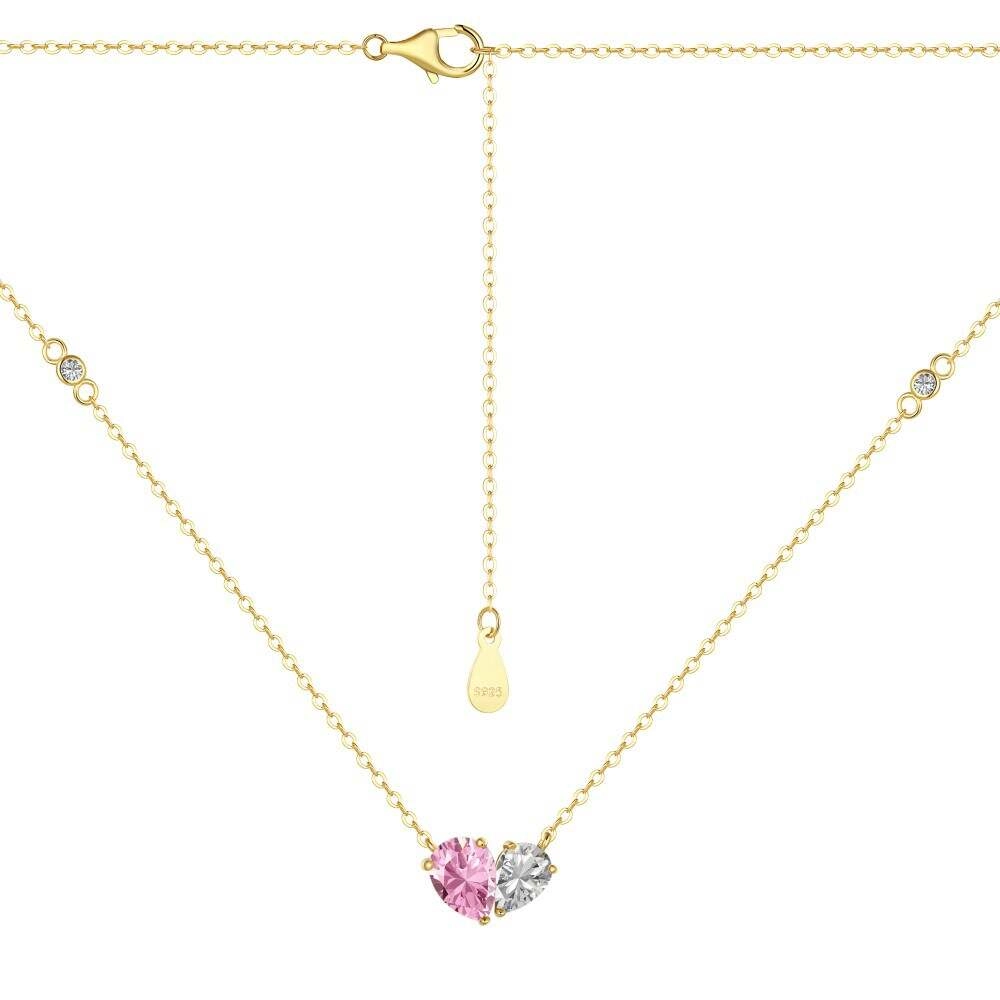
Heart Jewelry White Pink Zircon — OEM 925 Silver Heart Pendant by HOLYCOME
Why Brass Jewelry is the Best Choice for High-End Fashion Brands
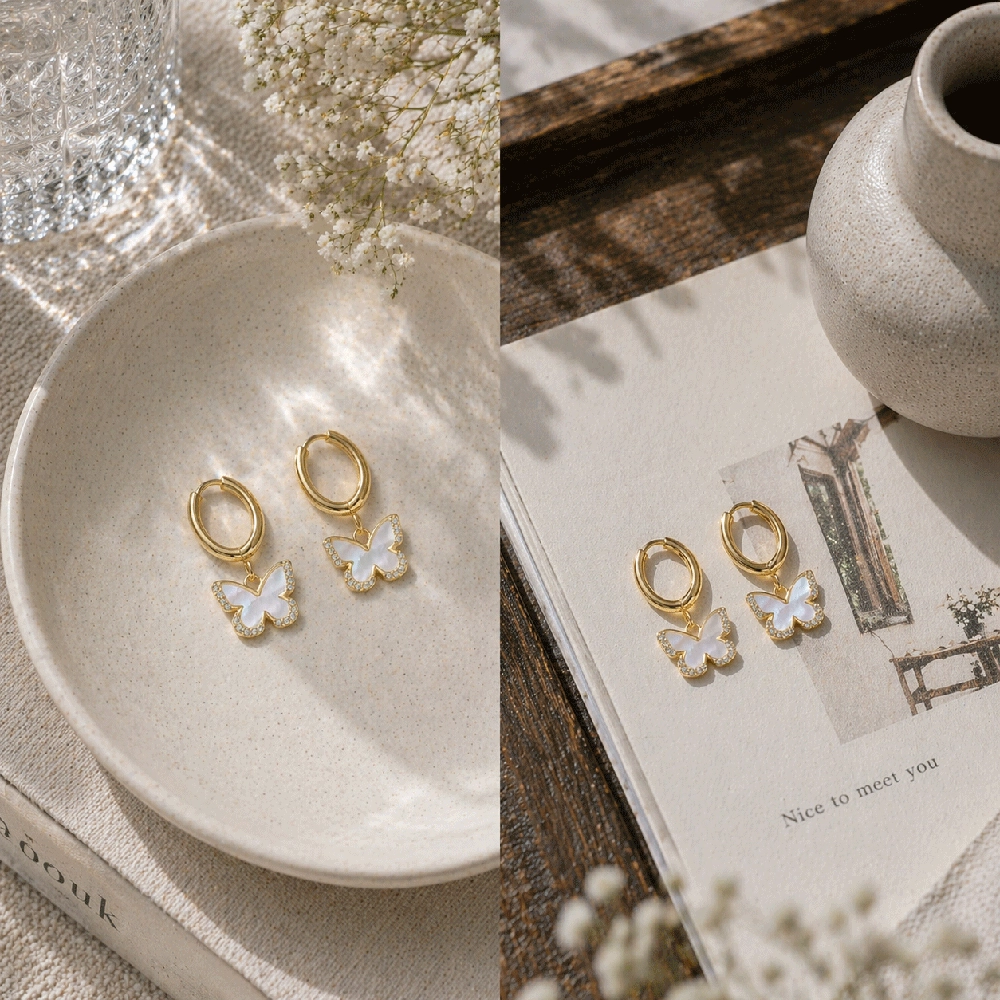
Butterfly Mother of Pearl Hoop Earrings | Wholesale 18K Gold Plated Manufacturer - HOLYCOME
Product Categories
Get a Quote for Private Label Jewelry
We provide personalized jewelry customization services for clients worldwide.
Rest assured that your privacy is important to us, and all information provided will be handled with the utmost confidentiality.
By clicking 'Send Inquiry Now' I agree to HOLYCOME processing my personal data.
To see how to withdraw your consent, how to control your personal data and how we process it, please see our Privacy Policy and Terms of use.
From design to production, HOLYCOME offers a one-stop solution to help you enhance your brand value and market competitiveness.
Get A Quote
Contact
Tel: (+86) 188 1927 7817
© 2026 HOLYCOME. All Rights Reserved.
Facebook
Instagram
YouTube
Whatsapp: +8618078079070