




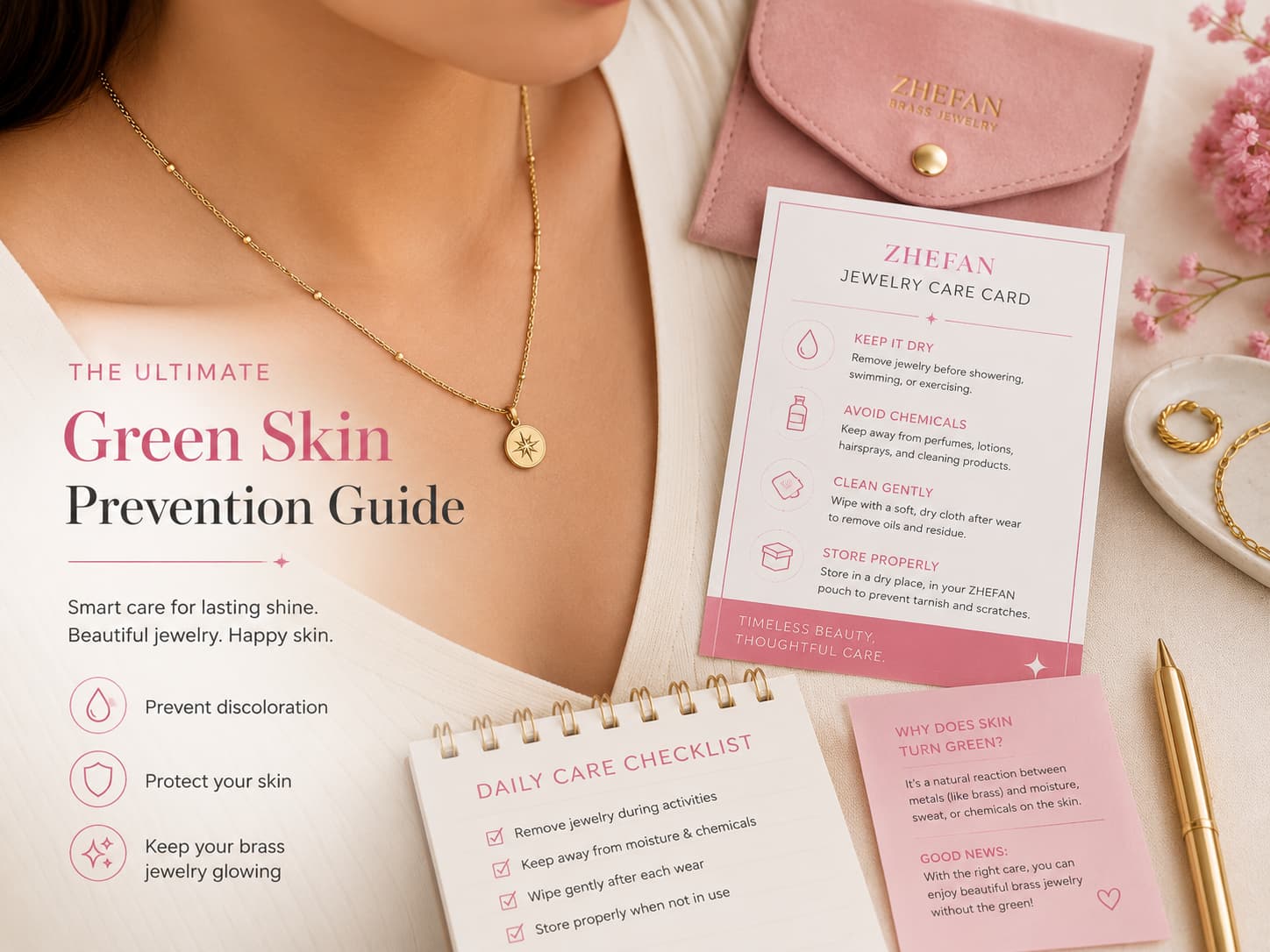
Why Does a Brass Necklace Turn Skin Green? Causes, Prevention & Quality Guide
You wear a new brass necklace, and by the end of the day there's a faint green ring on your neck. It's a common enough experience that it raises an obvious question — is this normal, is it dangerous, and is there anything that actually stops it from happening.
The short version: yes, brass jewelry can turn skin green, it's usually a harmless chemical reaction rather than a sign of fake or toxic jewelry, and how often it happens depends a lot on plating quality and wear habits — both of which are things brands can influence.
This guide covers the chemistry behind it, how to tell it apart from an actual metal allergy, what reduces it, and what jewelry brands sourcing plated brass should ask their manufacturer.
Does Brass Jewelry Turn Skin Green?
Yes. Brass is an alloy primarily made of copper and zinc, and the copper component is what causes the green marks — copper reacts with the natural acidity in sweat to form copper salts, which have a greenish color and can transfer onto skin.
The green mark usually comes from copper reacting with sweat, moisture, air, or chemicals.
A washable green stain is different from itching, swelling, redness, or a rash.
Copper is a normal part of genuine brass, so the reaction does not mean the piece is fake.
Plating, e-coating, care habits, and QC can help reduce green-skin complaints.
This is a normal chemical reaction, not a manufacturing defect by itself. However, for a finished or gold-plated brass jewelry line, frequent green-skin complaints may mean plating thickness, e-coating, care instructions, or quality control should be reviewed.
Why Brass Turns Skin Green: The Chemistry Explained
A few factors influence how quickly and noticeably this reaction happens. How quickly any individual person notices green marks also varies by skin chemistry — sweat acidity and moisture levels differ from person to person, which is why some wearers see this more than others with the exact same piece of jewelry.
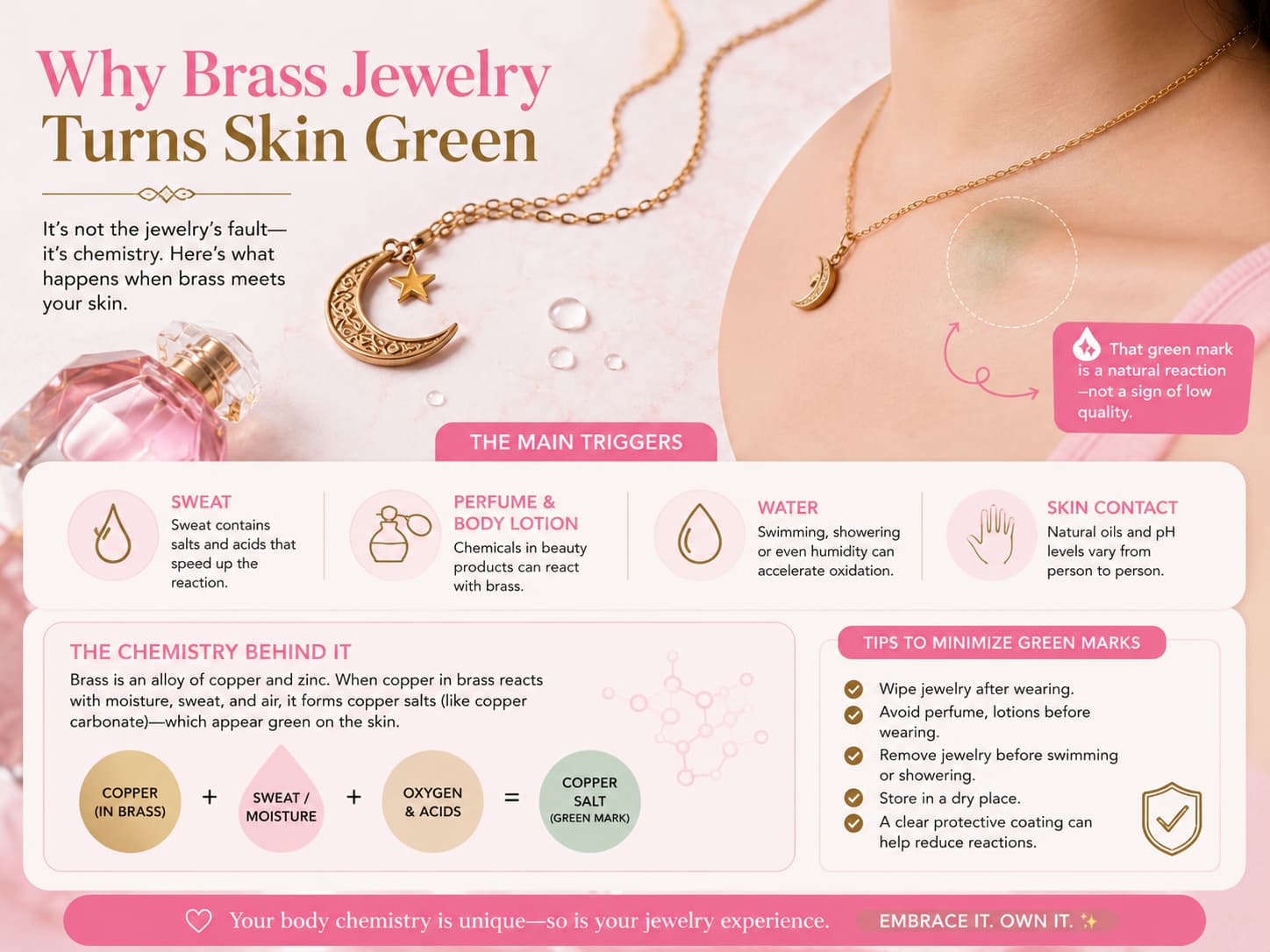
| Cause | What Happens | How to Reduce It |
|---|---|---|
| Copper in the alloy | Reacts with sweat and moisture to form a greenish residue | Plating and a barrier layer separate skin from direct copper contact |
| Sweat acidity | More acidic sweat speeds up the reaction | Wipe the piece after wear; choose well-plated pieces |
| Perfume and lotion | Chemicals in these products can accelerate discoloration | Apply perfume/lotion first and let it dry before putting jewelry on |
| Water, chlorine, saltwater | Speeds up plating wear and oxidation | Remove jewelry before showering or swimming |
| Thin plating | Brass base becomes exposed to skin sooner | Confirm plating thickness and consider e-coating |
| Humid storage | Speeds up oxidation even when not worn | Store in a dry pouch or box |
Green Skin vs. Metal Allergy: What's the Difference?
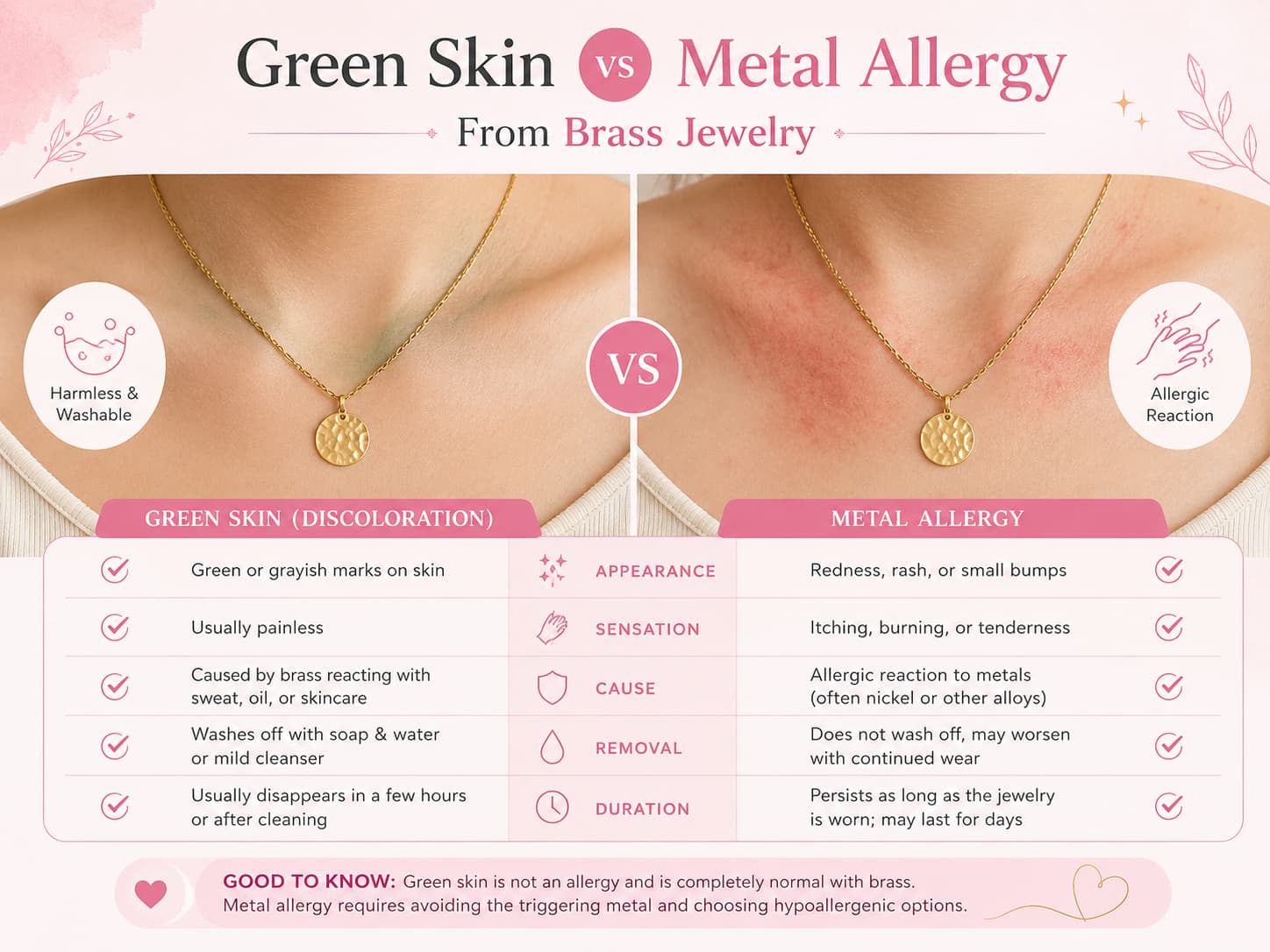
These two issues get conflated often, but they're chemically and practically different. A true metal allergy typically involves an immune reaction and doesn't simply wash off. A green stain, by contrast, is a surface-level chemical reaction that soap and water removes.
If someone experiences itching, swelling, or a rash rather than just a green mark, that's worth treating differently — and potentially as a sign to stop wearing the piece and consider whether nickel content is involved.
| Issue | Common Signs | What It Usually Means |
|---|---|---|
| Green skin mark | A green stain that washes off with soap and water | A copper reaction with sweat or moisture — a surface stain, not an immune response |
| Metal allergy | Itching, redness, swelling, or a rash | Possible sensitivity, often associated with nickel content |
| Chemical irritation | Dryness, burning, or general discomfort | Often related to perfume, lotion, or cleaning chemicals interacting with skin or jewelry |
Does Green Skin Mean the Jewelry Is Fake or Low Quality?
Not necessarily — a green mark actually confirms the piece contains real copper, which is a normal part of a genuine brass alloy. Many well-made pieces use brass specifically for its weight and workability.
That said, for a brand selling gold-plated or finished brass jewelry, frequent green-skin complaints from customers are worth paying attention to: they can be a signal that plating thickness, e-coating, quality control, or customer care guidance could use review, even if the underlying alloy itself isn't a problem.
Green marks do not automatically mean “fake” or “toxic,” but they are still a customer-experience issue. For private label jewelry brands, reducing complaints usually requires both better production specifications and clearer care guidance.
How to Stop Brass Jewelry from Turning Skin Green
There are two layers to this — what a wearer can do, and what a brand sourcing the jewelry can control at the manufacturing level.
For wearers
- Remove jewelry before showering, swimming, or exercising.
- Apply perfume or lotion first, and let it dry before putting the piece on.
- Wipe the piece down with a soft cloth after each wear to remove sweat and oils.
- Store in a dry pouch or box rather than leaving it exposed to humidity.
For brands
- Choose gold or rhodium plating with a clearly specified method and thickness.
- Confirm whether a nickel-free barrier layer is used between the brass and the plating.
- Consider e-coating as an additional protective layer.
- Include simple wear-and-care instructions in packaging.
- Build pre-shipment QC into your sourcing process to catch plating inconsistencies before a batch ships.
Clear Nail Polish, Care Habits, and Other Temporary Fixes
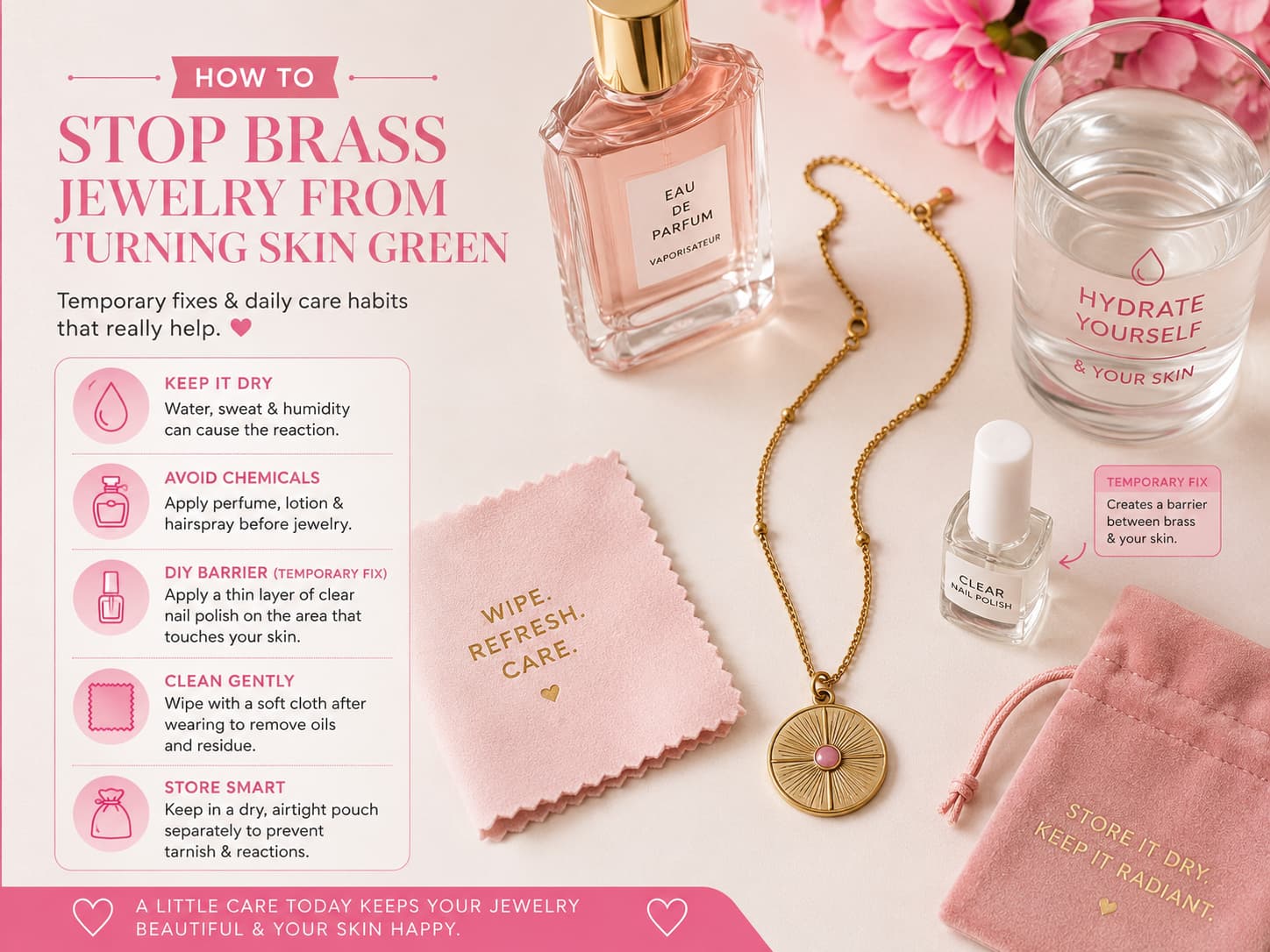
A well-known consumer “hack” is applying a thin layer of clear nail polish to the part of the piece that contacts skin, creating a physical barrier against moisture. It works, but it's a temporary fix — the polish flakes off over time and needs reapplying, and it's not something a retail-ready product should need out of the box.
The practical takeaway: consumer-side habits help, but they're not a substitute for adequate plating at the manufacturing level if you're selling the product at scale.
| Solution | Good For | Limitation |
|---|---|---|
| Clear nail polish | Short-term DIY barrier | Flakes off unevenly; not a professional finish |
| Wiping after wear | Reduces sweat and oil residue | Depends on the customer remembering to do it |
| Dry storage | Slows oxidation | Doesn't fix underlying weak plating |
| Thicker plating | Better baseline protection | Must be specified and verified, not assumed |
| E-coating | Adds an extra protective barrier | Effectiveness still depends on wear and care |
| Care card in packaging | Reduces misuse-related complaints | Only works if included and read |
Plating, Nickel-Free Barriers, and E-Coating: Manufacturing Solutions
One of the most reliable ways to reduce green-skin complaints at scale is to address the issue during production, not after a customer has already worn the piece for a few weeks.
Rather than relying on finish names alone, ask your manufacturer for plating method, thickness range, whether e-coating is included, and what testing or inspection support is available to verify these specs.
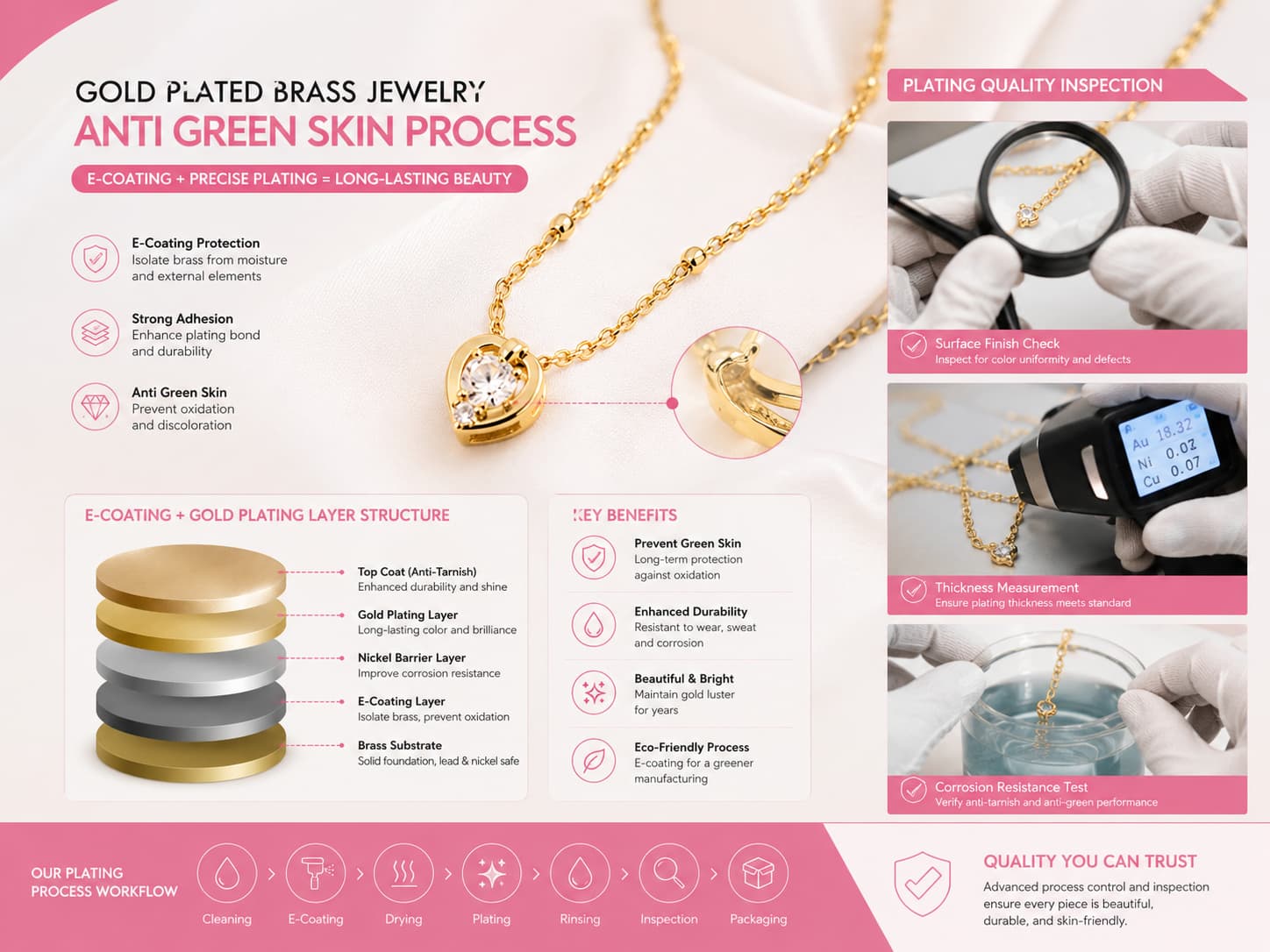
Thin “flash” plating may wear faster under frequent friction, sweat, moisture, perfume, or poor care, exposing the brass base sooner.
Properly specified plating helps reduce direct brass exposure, though performance still depends on thickness, wear conditions, and care.
A barrier layer can improve surface smoothness for plating and reduce allergy-related concerns where nickel sensitivity is relevant.
Electrophoretic lacquer adds a clear protective layer over plating, helping reduce oxidation and minor surface wear.
There is no plating spec that makes a brass piece permanently immune to skin chemistry, sweat, water, or friction. The goal is to reduce direct brass exposure and support better customer experience through suitable specifications and care guidance.
Buyer Checklist for Jewelry Brands
If you're sourcing plated brass jewelry and want to reduce green-skin complaints from your customers, these are the specifications worth confirming with your manufacturer:
Affects polishing, plating adhesion, and compliance requirements.
Helps reduce sensitive-skin complaint risk where nickel sensitivity is relevant.
Controls how long the brass base stays covered during normal wear.
Adds an extra layer of surface protection over plating.
Rough surfaces wear plating faster in high-friction spots.
High-friction points expose base metal sooner than flat surfaces.
Helps customers avoid water, perfume, sweat, and storage-related damage.
Confirms batch consistency before shipment, not just the approved sample.
Why Work with ZHEFAN JEWELRY for Brass Jewelry That Reduces Green-Skin Complaints?
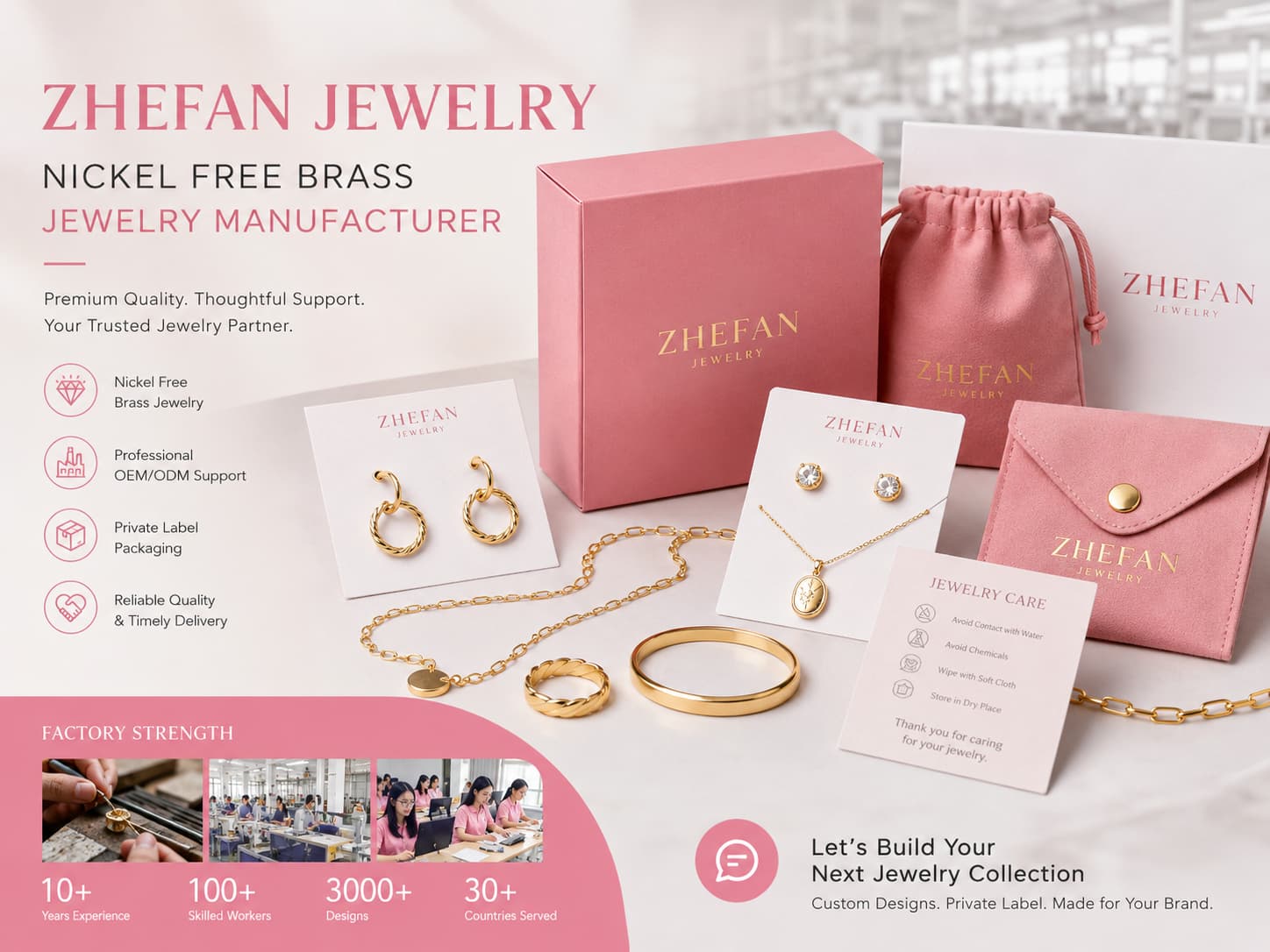
ZHEFAN JEWELRY has jewelry manufacturing experience dating back to 1997, with production based across factories in Guangzhou and Meizhou. A few specifics relevant to reducing green-skin complaints include:
OEM/ODM support can cover custom brass necklace and jewelry designs, chain construction, plating, logo options, and packaging.
Plating and e-coating options can be discussed based on project requirements, target finish, and care expectations.
Lead-free, nickel-free, cadmium-free production and RoHS, REACH, or SGS documentation support are available for applicable projects.
Production includes structured polishing and inspection stages, including multiple rounds of polishing and quality checks.
Plating thickness testing and material verification support are available for applicable projects.
Private label packaging can include wear-and-care cards to help reduce avoidable customer complaints.
Sample support and small-batch trial order options can be discussed for qualified first-time projects.
QC support can help review plating consistency, surface finish, clasps, soldering, and packaging accuracy before shipment.
For more on quality processes, see the Quality Control page, and for background on the company, see About Us. If you're sourcing brass necklaces more broadly — including how they wear over time and whether they're waterproof — see our brass necklace tarnish and quality guide, and for wholesale supplier vetting and specifications, see our wholesale brass necklace sourcing guide.
FAQ
Does brass jewelry turn skin green?
Yes. The copper in brass reacts with sweat acidity to form copper salts, which produce a greenish residue that can transfer onto skin. This is a normal chemical reaction, not a sign of poor quality or fake jewelry.
Why does brass turn your skin green?
Copper in the brass alloy reacts with the natural acids in sweat, forming compounds like copper carbonates or chlorides. Humidity, perfume, lotions, and water exposure can all accelerate this reaction.
Is green skin from brass dangerous?
Usually no. It's typically a harmless, washable surface stain rather than a toxic or allergic reaction. If skin becomes itchy, red, swollen, or develops a rash rather than just a green mark, that's worth treating differently and may indicate sensitivity to a different component, such as nickel.
Is green skin the same as a metal allergy?
No. A green mark is a chemical reaction between copper and sweat that washes off with soap and water. A metal allergy is an immune response — typically itching, redness, swelling, or a rash — and is more commonly associated with nickel than with copper.
Does gold-plated brass turn skin green?
It can, particularly if the plating is thin or has worn down, exposing the brass base underneath. Thicker, properly specified plating combined with e-coating can help reduce this risk, though performance still depends on plating thickness and how the piece is worn and cared for.
How can I stop brass jewelry from turning my skin green?
Remove jewelry before showering, swimming, or exercising; let perfume and lotion dry before putting it on; wipe the piece after wear; and store it in a dry place. For brands, choosing adequate plating thickness and considering e-coating addresses the issue at the source rather than relying on customer habits alone.
Can e-coating stop brass from turning skin green?
E-coating adds a protective layer over plating that can help further reduce oxidation and surface wear, making it a useful addition for many plated brass jewelry projects. It works best combined with adequately thick plating rather than as a substitute for it.
What should jewelry brands ask suppliers to reduce green-skin complaints?
Ask for the specific plating method and thickness, whether a nickel-free barrier layer is used, whether e-coating is available, and whether the supplier can provide QC photos or inspection records confirming plating consistency across a batch, not just on the approved sample.
Sourcing Plated Brass Jewelry That Holds Up for Your Customers?
Share your brass jewelry style, plating color, plating thickness requirement, nickel-free requirement, e-coating needs, packaging plan, care card needs, target market, and estimated order quantity with ZHEFAN JEWELRY. Our team can help review OEM/ODM feasibility, QC requirements, and a production plan for reducing green-skin complaints.




Facebook
Instagram
YouTube
Whatsapp: +8618819277817