




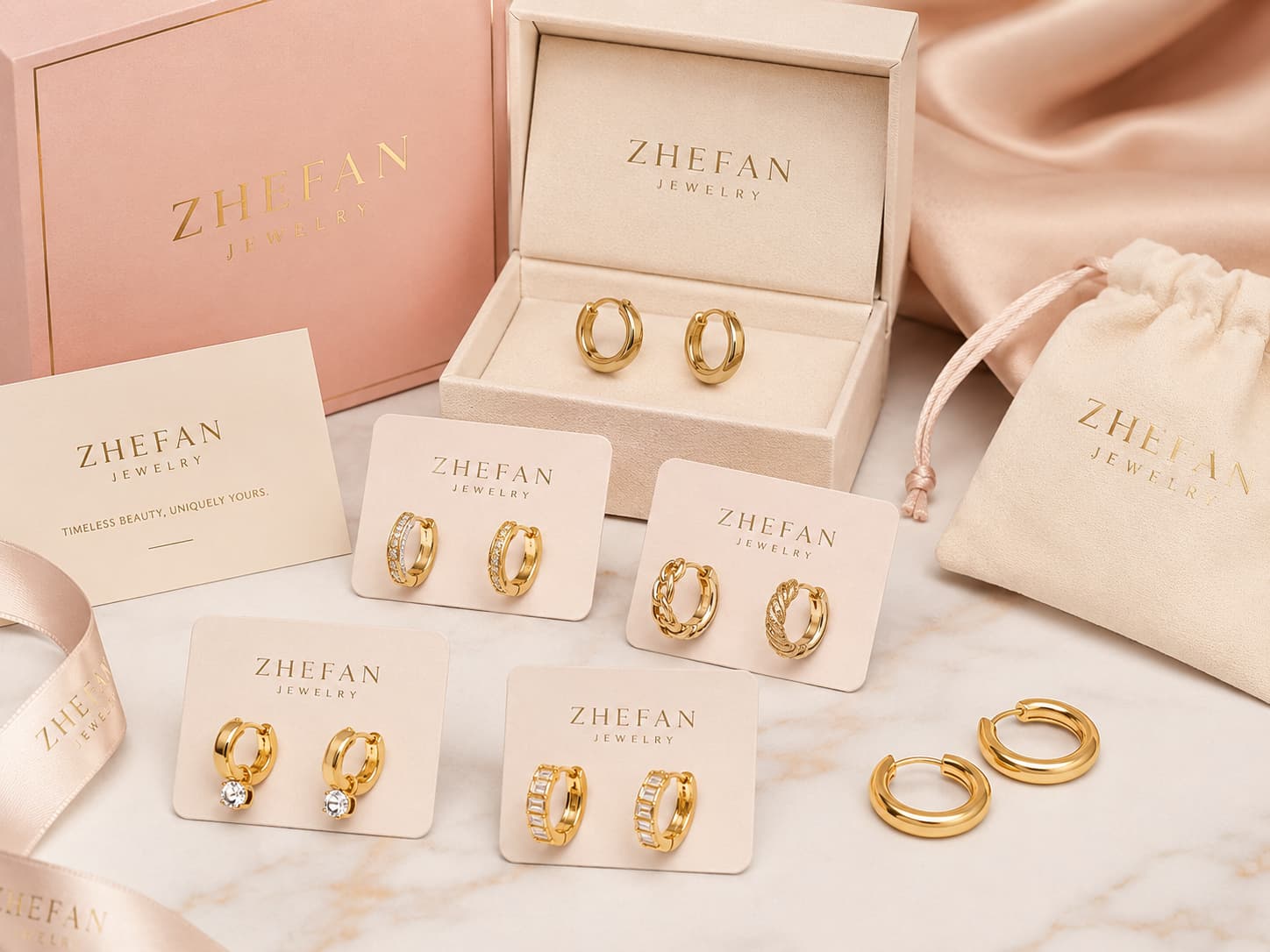
How to Launch a Jewelry Brand with Custom Brass Huggie Earrings
Starting a jewelry line means making a lot of decisions before you have sold a single piece: which product to launch with, how many SKUs to start with, which manufacturing model fits your budget, and how to avoid the early mistakes that eat up cash before a brand even gets off the ground. For many new brands and boutique founders, custom brass huggie earrings turn out to be one of the easiest products to start with — affordable to produce, easy to ship, and flexible enough to private label without a huge upfront investment.
This guide walks through how to plan a first brass huggie earrings collection, how to choose between OEM and ODM, what to confirm before placing your first order, and where new brands commonly go wrong. If you are further along and comparing suppliers for an ongoing wholesale program, our sourcing guide to custom wholesale brass huggie earrings covers manufacturer vetting and production specs in more depth.
Why Brass Huggie Earrings Are a Smart First Product for New Jewelry Brands
When you are choosing what to launch with, the goal is not necessarily “what is trendiest” — it is “what can I produce reliably, ship easily, and customize without a huge budget.” Brass huggie earrings tend to check those boxes for a few practical reasons:
Small hoops have low packaging and shipping costs, which matters when you are managing cash flow as a new brand.
Brass usually offers a lower material-cost base than 925 sterling silver, leaving more of your budget for plating quality, stone settings, or packaging.
Huggies naturally support 6mm/8mm/10mm stacking sets, which is a simple way to increase units per order without designing entirely new products.
Plating color, stone type, surface texture, and enamel work can all be adjusted. In some cases, one base design can support several finished looks.
The close-fitting huggie shape has stayed a steady category rather than a short-lived trend, making it a practical first product to build a catalog around.
For brands comparing materials beyond huggie earrings, ZHEFAN JEWELRY also manufactures a broader range of brass jewelry for private label and wholesale collections.
Build Your First Private Label Huggie Earrings Collection
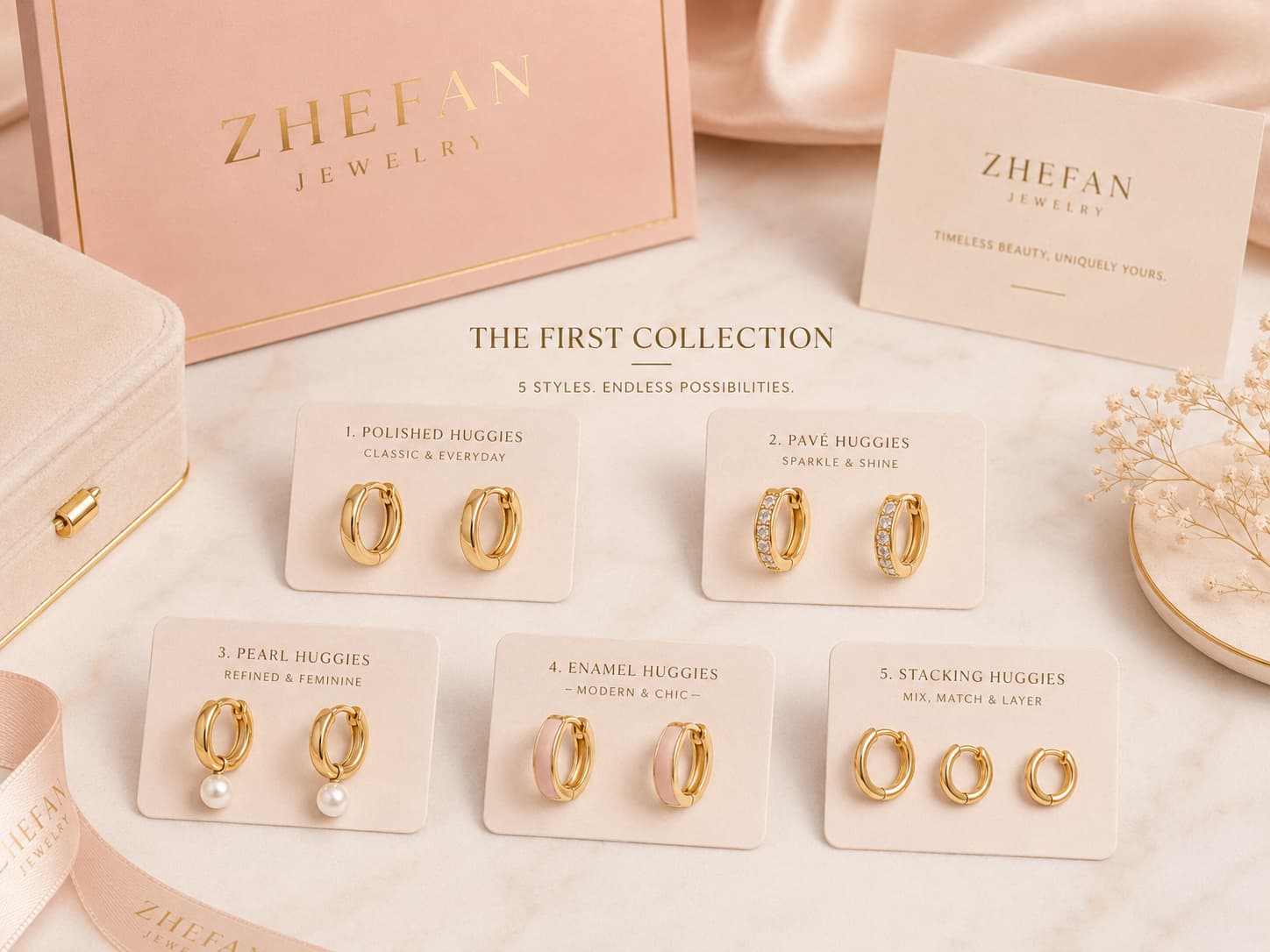
One of the most common mistakes new brands make is launching too many styles at once. A smaller, well-planned first collection is easier to quality-check, easier to photograph and market, and easier to reorder based on what actually sells. A simple way to structure a first 5-style collection:
| Collection Role | Suggested Style | Purpose |
|---|---|---|
| Core Bestseller | Plain gold-plated huggie | Everyday wear, broadest appeal |
| Premium Look | CZ pavé huggie | Higher perceived value, gift-worthy |
| Feminine Style | Pearl or mother-of-pearl huggie | Boutique and gifting market |
| Trend Style | Enamel huggie | Seasonal color drops, social content |
| Stacking Set | 6mm / 8mm / 10mm sizes | Increases units per order |
Starting with a focused set like this also makes it easier to keep packaging and backing cards consistent across the line, which is part of what makes a collection feel like a cohesive brand rather than a handful of unrelated SKUs.
OEM or ODM: Which Model Should a Startup Choose?
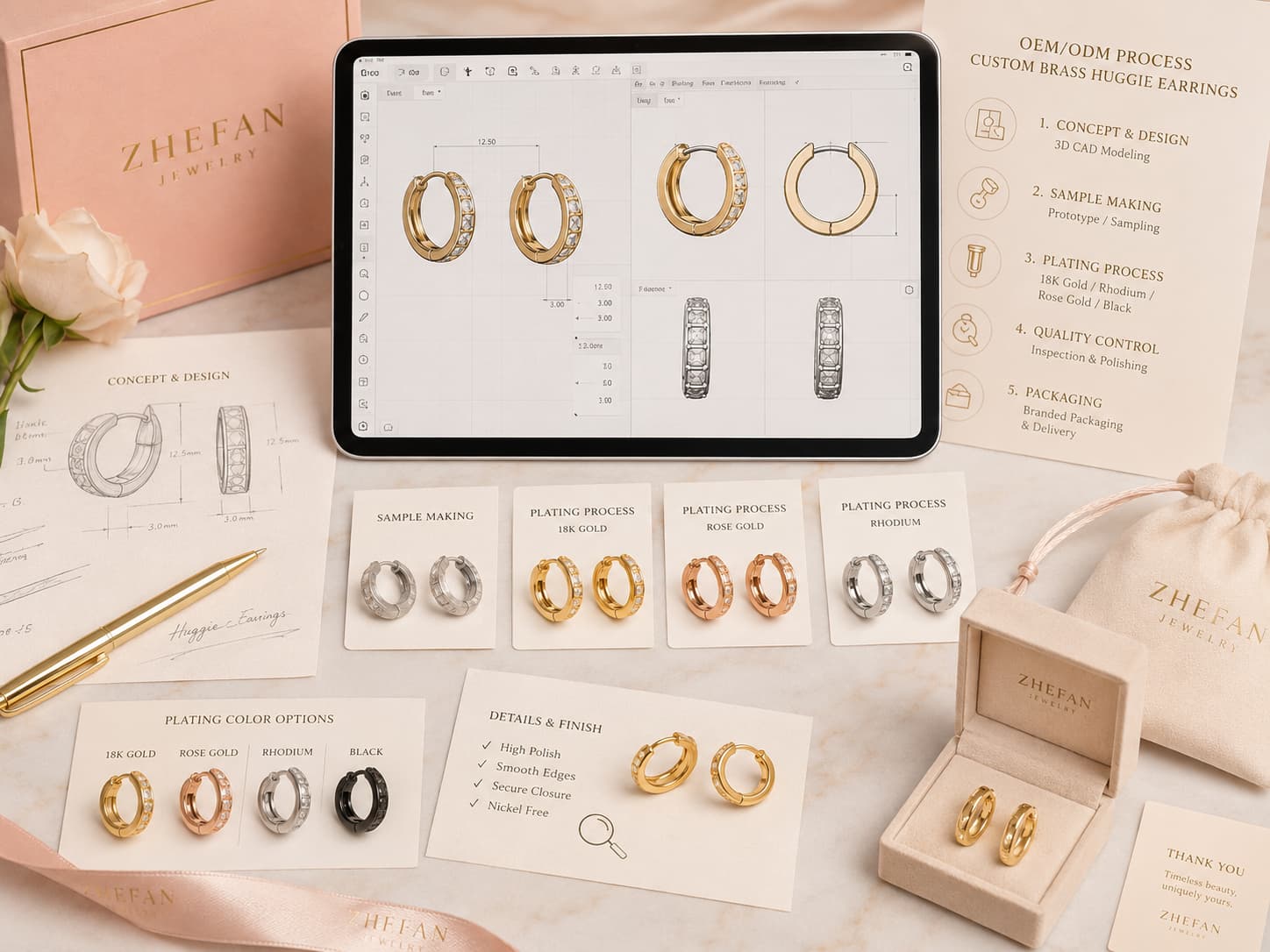
This is one of the first real decisions a new brand has to make, and it affects both your cost and your timeline. In simple terms: OEM means the factory builds a new design — and usually a new mold — based on your sketches, reference images, or CAD files. ODM means you start from an existing design the factory already produces and customize specific elements like plating, stones, or packaging.
Best when you need originality
Choose OEM when you have original sketches, CAD files, reference concepts, or a need for an exclusive mold that no other brand can use.
Best when you need speed and lower risk
Choose ODM when you want to start from proven base designs and customize plating, stones, logo, or packaging for a faster launch.
| Your Situation | Better Starting Point |
|---|---|
| You have original sketches or CAD files | OEM |
| You want to launch faster, with lower upfront cost | ODM |
| You need an exclusive mold no other brand can use | OEM |
| You want to test the market before investing in tooling | ODM first, OEM later |
| You are building your very first collection | ODM first, OEM later |
Many new brands start with ODM to validate which styles actually sell, then move specific bestsellers into OEM once they are confident enough to invest in an exclusive mold.
What to Confirm Before Placing Your First Order
Before sending a deposit, it is worth getting clear, specific answers on the following — in writing, not just verbally — so there are no surprises once production starts:
Ask whether the minimum order quantity is per design or per color/plating variation, since this changes your total commitment.
Confirm sample cost, sample conditions, and whether any cost can be credited toward a qualified bulk order.
If a new mold is needed, ask whether it is a one-time cost and whether you retain exclusive use of it.
Get specifics, not just “gold plated” — ask about plating concentration and whether thickened or anti-oxidation coating options exist.
Hand-glued stones tend to loosen faster than mechanically set ones; ask how stones are secured.
Confirm lead-free, nickel-free, and cadmium-free production, and ask whether SGS, RoHS, or REACH test reports are available.
Confirm backing card size, box or bag type, and turnaround for private label packaging.
Get a specific day range for both sampling and bulk production, not a vague estimate.
Ask how long a reorder takes once you have validated a bestseller — this affects how you plan inventory.
Low MOQ Planning for Startup Jewelry Brands
Low MOQ planning is not only about finding the smallest possible order quantity. It is about structuring your first collection so the budget is concentrated on the styles most likely to sell, while still leaving room for packaging, photography, product testing, and early reorders.
A tight launch range is easier to photograph, quality-check, stock, and reorder than a large first catalog.
Launching all styles in one main finish, such as 18K gold plating, can simplify MOQ and inventory planning.
ODM can help new brands test the market before investing in exclusive molds or more complex custom structures.
One backing card and one box or pouch style can make a small collection look more cohesive and more premium.
Do not spend the full launch budget on first stock; leave room to reorder the styles that prove demand fastest.
Splitting MOQ across too many plating colors, stones, or sizes can increase complexity before sales data exists.
Cost Factors That Affect Brass Huggie Earrings Pricing
It is tempting to compare suppliers purely on a per-piece quote, but the real cost of a collection depends on several variables stacked together:
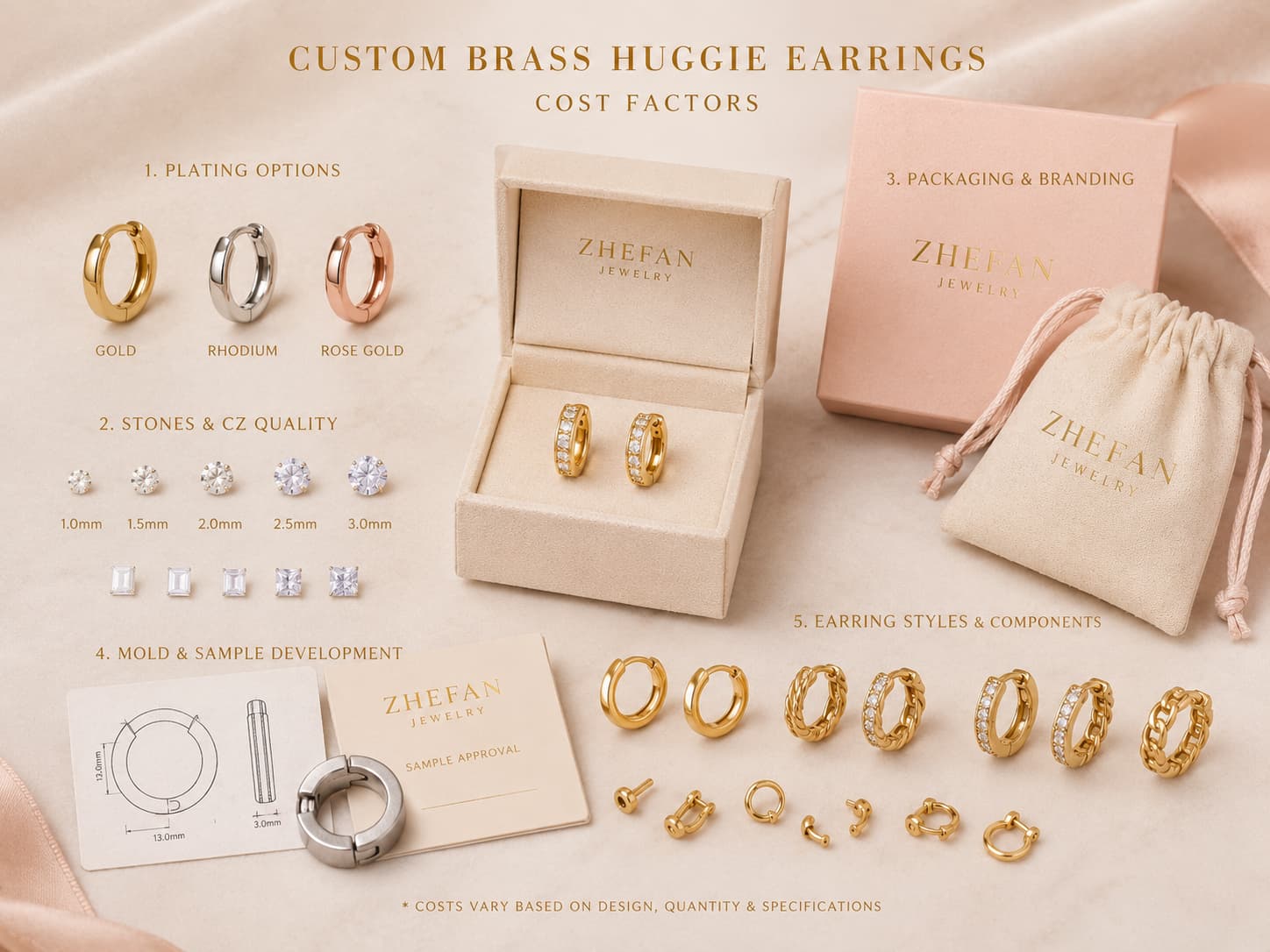
Larger or heavier huggies require more material and can affect plating and shipping cost.
Basic gold plating, thickened plating, rose gold, rhodium, and protective coating options affect pricing differently.
CZ size, quantity, cut, and setting method all influence both labor time and perceived product value.
New OEM designs may require tooling, while ODM base designs can reduce upfront development risk.
Color enamel, hammered textures, rope details, and special finishes add production steps.
A basic OPP bag costs less than custom branded boxes, backing cards, pouches, or gift-ready packaging.
Per-unit cost typically improves at higher volumes, but new brands should balance price with inventory risk.
Certified testing or compliance reports may be needed for specific markets or buyer requirements.
Understanding which of these actually matter for your collection makes it easier to compare quotes apples-to-apples, rather than just picking the lowest number on a quote sheet.
From Idea to Launch: Startup Production Timeline
A typical path from a first conversation to a finished, shippable collection looks roughly like this:
Product brief — you share your design direction, target price point, and quantity expectations.
CAD / design confirmation — a digital design draft is prepared for your review and adjustment. Straightforward designs can often move through this step quickly after details are confirmed.
Sample development — standard ODM samples can often be prepared in about 5 working days after details are confirmed, while OEM designs that require new mold development may take around 15–20 days depending on structure, stone setting, and plating requirements.
Sample approval — you review the physical sample for fit, weight, plating color, and stone security before approving it.
Packaging confirmation — backing cards, boxes, or bags are finalized alongside the product sample.
Bulk production — once approved, standard custom orders typically ship in roughly 20–25 days, depending on order quantity, plating, packaging, and stone-setting complexity.
Quality control inspection — covering plating consistency, dimensional accuracy, and stone setting before packing.
Shipment — to your fulfillment center or warehouse.
Reorder planning — based on early sales data, you decide which styles to reorder and at what quantity.
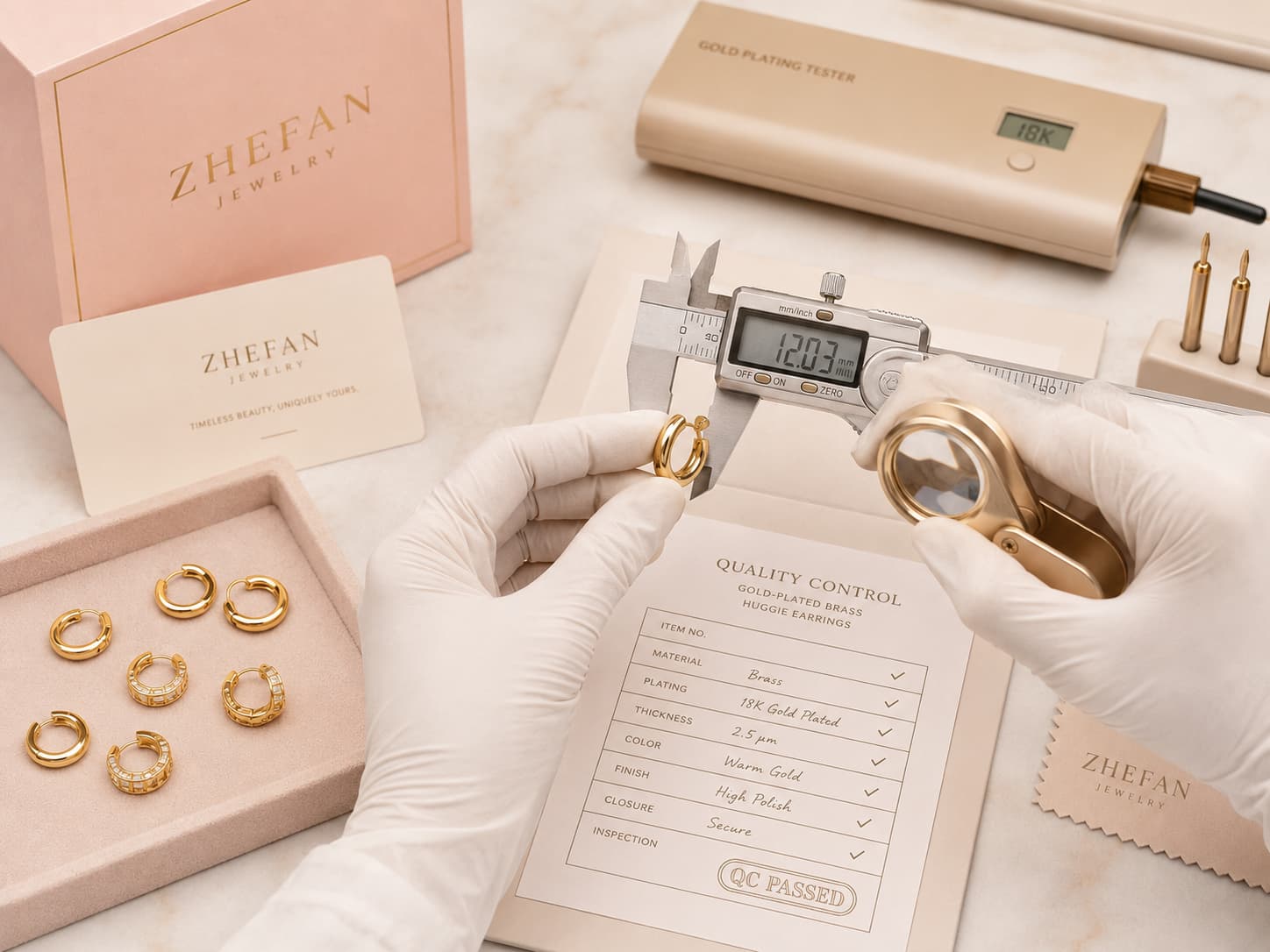
Quality Control Matters Before Your First Launch
For a startup brand, one weak first batch can damage reviews, increase returns, and make repeat buyers harder to earn. Before bulk shipment, your supplier should check plating consistency, stone-setting security, closure function, surface finish, and skin-safety compliance.
ZHEFAN JEWELRY supports documented quality control practices, including polishing, inspection, plating checks, and compliance support for projects that require lead-free, nickel-free, cadmium-free, RoHS, REACH, or SGS documentation.
Common Mistakes New Jewelry Brands Should Avoid
A few patterns show up repeatedly with first-time brands sourcing custom jewelry — most of them are avoidable with a bit of planning upfront:
A large first collection is harder to quality-check and harder to know what is actually working.
A lower quote with weak plating or unverified compliance can cost far more in returns and complaints later.
Do not take “hypoallergenic” claims at face value — ask for documentation where it matters for your market.
Packaging lead times can be longer than the jewelry itself; confirm this early, not after production starts.
A 3D rendering is not the same as holding the actual piece. Always approve a physical sample before bulk production.
If a style sells out and reordering takes a month, you may lose a month of sales. Plan inventory timing from the start.
Why Work with ZHEFAN JEWELRY for Your First Brass Huggie Collection?
ZHEFAN JEWELRY has been manufacturing brass and 925 sterling silver fashion jewelry since 1997, with two factories in Guangzhou and Meizhou and a monthly production capacity of around 600,000 pieces — but the company also works with first-time brands, not only large established buyers. A few things that matter specifically for a startup’s first order:
Sample support and small-batch trial order options can be discussed for qualified first-time projects, helping new brands verify quality before scaling.
CAD drafts and standard samples can be arranged based on project complexity, helping founders move from idea to sample with clearer timing.
You can start with an existing base design or develop a fully original one as your brand grows.
Custom backing cards, branded boxes, pouches, and packaging details help turn a first product into a recognizable brand line.
Inspection, polishing, plating checks, and compliance support help reduce avoidable quality risks before launch.
ZHEFAN can support projects moving from a small trial order into larger production runs as the collection proves out.
For more on the company’s manufacturing background and certifications, see the About Us page, or explore OEM/ODM services and quality control practices in more detail.
FAQ
Why choose brass over sterling silver for a startup?
Brass usually offers a lower material-cost base than 925 sterling silver, which gives a new brand more budget flexibility for plating quality, stone settings, or packaging. It is also highly workable for detailed casting and takes plating evenly. Final profitability still depends on design, plating quality, order quantity, and how the collection is positioned at retail.
Are brass huggie earrings hypoallergenic?
They can be suitable for sensitive-skin collections, but only when manufactured to lead-free and nickel-free standards — brass itself does not guarantee this. Ask your manufacturer for SGS, RoHS, or REACH documentation before marketing a collection as hypoallergenic.
What is the difference between OEM and ODM?
OEM means the factory develops a new design from your sketches, reference images, or CAD files, typically requiring new molds and a full sampling process. ODM means you start from an existing design the factory already produces and customize elements like plating color, stones, logo, or packaging — which is usually faster and lower-cost, making it a common starting point for new brands.
Do I need to order thousands of pieces to start?
No. MOQ depends on the design structure, plating, stones, packaging, and whether a new mold is required. For startup brands, ZHEFAN JEWELRY can discuss small-batch trial order options based on the project details.
How long does custom sampling take?
Standard ODM samples can often be prepared in about 5 working days after details are confirmed, while OEM designs that require new mold development may take around 15–20 days depending on structure, stone setting, plating requirements, and sample complexity. Always get a physical sample approved before bulk production begins.
How do I decide how many styles to launch with?
Most new brands do better starting with a small, focused collection — around 3 to 5 styles — rather than a large catalog. This keeps quality control manageable, makes it easier to identify which designs actually sell, and reduces the financial risk of investing heavily in unproven styles.
What should I ask a supplier before placing my first order?
At minimum: MOQ per style, sample cost and lead time, plating specifications, stone setting method, compliance documentation such as lead-free, nickel-free, cadmium-free, SGS, RoHS, or REACH support, packaging turnaround, production lead time, and how long a reorder takes once a style proves popular.
Ready to Plan Your First Brass Huggie Earrings Collection?
Share your target market, preferred plating color, reference styles, estimated order quantity, packaging idea, and launch timeline with ZHEFAN JEWELRY. Our team can help you evaluate whether ODM or OEM is a better starting point for your first brass huggie earrings collection.




Facebook
Instagram
YouTube
Whatsapp: +8618819277817