







Email: sales3@zhefanjewelry.com
Prototyping & CAD Services for custom brass jewelry Development
A strategic guide for brands and procurement teams on integrating digital modeling, rapid prototyping, and production-ready tooling to accelerate market-ready brass accessory lines while minimizing cost, risk, and compliance exposure.
- Rapid digital modeling and prototype workflows for brass accessories
- Choosing the right CAD pipeline for market speed
- Digital sculpting vs. parametric design: when to use each
- Material simulation, plating allowances and manufacturability checks
- Prototype fabrication methods: resin prints, CNC masters, and casting-ready patterns
- Stereolithography and high-detail additive sampling
- CNC masters and precision machining for functional parts
- Investment casting vs. electroforming vs. silicone molds
- Quality control, compliance and inspection practices for alloy-based accessories
- Dimensional inspection and fit verification
- Surface finishing, plating quality and regulatory adherence
- Batch sampling, AQL and multi-stage inspections
- Cost structures, lead-time strategies and scaling from samples to mass production
- Design for manufacturability to reduce tooling and sampling costs
- Iterative sampling cadence and MOQ negotiation
- Supplier selection, IP protection and contractual checkpoints
- Why partnering with an experienced manufacturer reduces program risk
- Integrated design-to-delivery reduces lead-time and reworks
- Supplier capabilities that matter for brand owners
- Transition planning from samples to scale
- Partner profile: Zhefan Jewelry - capabilities and competitive advantages
- Frequently Asked Questions
High-velocity product development for bespoke brass accessories combines advanced computer modeling, additive and subtractive sampling, and compliance-driven finishing to deliver fast, repeatable outcomes for brand owners and wholesale buyers; this guide synthesizes best practices for CAD workflows, prototype fabrication, inspection protocols, and scalable production strategies—helping procurement teams convert concepts into compliant, market-ready collections with predictable lead times and validated tolerances (Computer-aided design (CAD) - Wikipedia, 3D printing - Wikipedia, EU REACH Regulation).
Rapid digital modeling and prototype workflows for brass accessories
Choosing the right CAD pipeline for market speed
Buyers should prioritize file interoperability (STEP, IGES, STL) and parametric models for faster revision cycles. A parametric approach allows engineers to update dimensions across assemblies without full redraws, reducing iteration time. Deliverables for tooling-ready transfer typically include: 3D solid models (STEP), high-resolution meshes (STL, 25–100 µm for SLA printing), exploded views for assembly, and 2D drawings for QC. Insist on version control and change logs to prevent mismatched approvals during sample validation.
Digital sculpting vs. parametric design: when to use each
Organic, ornamental pieces (filigree, textures, hand-carved looks) benefit from voxel-based sculpting tools and high-detail mesh outputs. Geometric or functional components (hinges, clasps) should be modeled parametrically to maintain tolerance control. Combining both approaches—sculpt for surface detail, parametric for mating features—reduces rework and downstream fit issues during plating and assembly.
Material simulation, plating allowances and manufacturability checks
Simulate plating thickness and casting shrinkage early. For lost-wax investment casting from brass patterns, allow typical shrinkage of 1–2% depending on alloy and process. For electroplating, add plating allowances (commonly 2–10 µm for fashion gold plating) into nominal dimensions to ensure proper final fits. Design rules should include minimum wall thickness (0.6–1.0 mm for durable hollow segments), minimum feature sizes, and draft angles for ease of finishing.
Prototype fabrication methods: resin prints, CNC masters, and casting-ready patterns
Stereolithography and high-detail additive sampling
SLA and DLP technologies produce master patterns with layer resolutions from 25–100 microns, enabling crisp textures and thin filigree suitable for investment casting. Use castable resins formulated to burn out cleanly for lost-wax casting workflows. For micro-detail, request section inspections and resin burn-out residue certificates to avoid porosity in final metal castings.
CNC masters and precision machining for functional parts
CNC milling provides tight dimensional control (typical tolerances 0.02–0.1 mm depending on machine class) for clasps, posts, and fittings where mechanical reliability is critical. Machined masters are often used as right-first-time references for tooling and for verifying assembly tolerances before committing to expensive dies or molds.
Investment casting vs. electroforming vs. silicone molds
Investment casting converts high-detail patterns into repeatable metal parts with good surface finish; it is ideal for mid-volume production runs when paired with optimized gating systems. Electroforming can achieve thin-walled, hollow structures without molds, useful for unique shapes, but has longer cycle times. Silicone molding and urethane casting are appropriate for low-volume pre-production and market validation but will not replace production-grade alloy behavior.
Quality control, compliance and inspection practices for alloy-based accessories
Dimensional inspection and fit verification
Establish a first-article inspection protocol using calibrated CMMs or optical scanners to compare prototypes against nominal CAD geometry. Define acceptable dimensional tolerances per feature, provide inspection reports with GD&T callouts when necessary, and flag deviations that will affect assembly, plating, or wear performance. Sampling plans should align with expected production volumes—AQL sampling for mass runs and 100% checks for critical safety-related components.
Surface finishing, plating quality and regulatory adherence
Surface finish expectations must be specified before sampling: mirror polish, satin, antiqued, or PVD finish each require different pre-treatment. Ensure base materials and final finishes comply with regional restrictions: consult the RoHS Directive - European Commission for restricted substances and the EU REACH Regulation for chemical safety. Request lab test certificates for nickel release, lead content, and other regulated heavy metals when selling into strict markets.
Batch sampling, AQL and multi-stage inspections
Implement multi-stage QC: incoming material checks (alloy certificates), in-process inspections (dimensional & appearance), and final audits (function and packaging). For high-volume SKUs, use periodic destructive testing and ASTM or ISO-referenced procedures; align quality management with ISO 9001 - Quality management systems - ISO practices for traceability and continuous improvement.
Cost structures, lead-time strategies and scaling from samples to mass production
Design for manufacturability to reduce tooling and sampling costs
Early-stage DFM reviews can lower tooling complexity by consolidating parts, minimizing undercuts, and standardizing components. Buyers should request costed design variants: rapid low-cost masters for market testing and production-optimized tooling-ready files. This two-track approach limits initial capital exposure and accelerates go-to-market while preserving long-term unit economics.
Iterative sampling cadence and MOQ negotiation
Plan a defined sampling cadence—concept prototype, functional prototype, plating prototype, pre-production sample—to avoid ad hoc revisions. Negotiate minimum order quantities tied to validated pre-production approval; many factories will offer scaled MOQs after tooling amortization or via staged commitments to reduce initial inventory risk.
Supplier selection, IP protection and contractual checkpoints
Require signed NDAs, enforceable IP assignment clauses, and explicit ownership of masters and CAD files within purchase agreements. Include technical milestones and acceptance criteria in contracts (e.g., dimensional tolerances, plating standards, packaging specifications) to prevent ambiguity at handover.
| Method | Typical Lead Time (prototype) | Typical Resolution / Tolerance | Best Use |
|---|---|---|---|
| Traditional hand-carved master | 7–21 days | ~0.1–0.5 mm (artisanal variability) | One-off ornamental pieces, heritage finishes |
| CAD + SLA 3D printing | 1–5 days | 25–100 µm layer height; ~0.03–0.1 mm tolerance | High-detail patterns for casting, fast iterations |
| CNC machining | 3–10 days | 0.01–0.1 mm (dependent on machine class) | Functional parts, metal fittings, tight-tolerance components |
| Silicone molds + urethane casting | 3–7 days | Surface finish varies; dimensional stability lower than metal | Low-volume market testing, color/finish trials |
Why partnering with an experienced manufacturer reduces program risk
Integrated design-to-delivery reduces lead-time and reworks
A supplier that combines in-house design, prototyping, and production shortens the feedback loop between styling and manufacturability. Integrated teams reduce miscommunication and accelerate approval gates—especially important for seasonal fashion launches and high-turn Amazon or retail programs.
Supplier capabilities that matter for brand owners
Buyers should evaluate demonstrated capacity (monthly output), repeatable quality processes (multi-stage inspections), and a library of compliant finishes. Also assess new-style development pace: a professional design team releasing regular original styles indicates strong trend intelligence and faster time-to-shelf.
Transition planning from samples to scale
Successful scaling requires defined acceptance criteria, tooling transfer documentation, and a phased ramp schedule. Factor in inventory buffers during the initial production months and build in continuous improvement targets tied to defect rate reduction and throughput gains.
Partner profile: Zhefan Jewelry - capabilities and competitive advantages
Established in 2002 with roots back to 1997 and founded by a master mold craftsman, Guangzhou Zhefan Jewelry is positioned to support buyers from concept through high-volume delivery. We operate two factories (Guangzhou & Meizhou) across 800 m² with a team of 80+ skilled artisans and 20 sales professionals, producing up to 600,000 pieces per month. Our combined strengths—scale manufacturing, specialized alloy expertise, and an agile in-house design studio that launches 500+ new original styles monthly—enable faster assortments and reduced time-to-market for retail and e-commerce partners.
Our manufacturing DNA is built on two decades of refinement. We specialize in high-quality 925 silver, brass, and stainless steel accessories and enforce rigorous finishing and inspection: six rounds of precision polishing and six strict quality inspections to guarantee consistent surface quality. Materials comply with RoHS/REACH requirements and we provide certification support for regulatory entry into major markets. Having supported top Amazon sellers and global retailers such as Macy’s, we offer comprehensive OEM/ODM solutions that help brands scale while protecting product integrity.
For product lines requiring robust metal performance, our core offerings include Stainless Steel Jewelry, Brass Jewelry, and 925 silver jewelry, each manufactured with process controls that preserve finish and function. Our engineering team optimizes CAD files for manufacturability, suggest plating and finish allowances, and validate prototypes with CMM or optical inspection before production sign-off. With this approach, clients benefit from reduced rework, predictable margins, and clear timelines for seasonal replenishment.
To evaluate a new line or request a prototype quote, review our capabilities and portfolio at Zhefan Jewelry or contact our sales team at sales3@zhefanjewelry.com.
Contact sales3@zhefanjewelry.com or visit our website to request prototyping rates and lead-time estimates.
Frequently Asked Questions
What file formats should suppliers accept for prototyping?
Suppliers should accept STEP or IGES for solid models, STL with 25–100 µm resolution for additive patterns, and native CAD files for parametric revisions; include 2D drawings with GD&T for critical features.
How long does a prototype cycle typically take using digital workflows?
A typical digital prototype cycle (CAD, SLA print, plating trial) can take 2–7 days depending on complexity and finish requirements; functional CNC masters and more complex assemblies may require 3–10 days.
What tolerances and inspection practices are recommended for small-batch metal parts?
Recommended tolerances depend on part function—critical fittings often require 0.01–0.1 mm control; use CMM or optical scanners for first-article inspection and implement AQL sampling for mass production with documented acceptance criteria.
How do regulatory standards affect brass accessory finishes for export to the EU?
Export to the EU requires compliance with RoHS and REACH restrictions on restricted substances; buyers should request material certificates and nickel/lead release testing where applicable to demonstrate conformity.
What are cost drivers when scaling from prototypes to production?
Major cost drivers include tooling setup, plating and finishing complexity, alloy sourcing, and inspection standards; design for manufacturability and consolidated components reduce upfront tooling costs and improve unit economics.
Tags
custom adjustable ring
custom adjustable ring
brass knuckle rings women
brass knuckle rings women
Urn Pendant Necklace
Urn Pendant Necklace
brass tennis bracelet packaging customization
brass tennis bracelet packaging customization
wholesale brass jewelry manufacturer
wholesale brass jewelry manufacturer
private label brass tennis bracelet
private label brass tennis bracelet
Recommended for you
Custom Adjustable Tennis Bracelet Manufacturing Process Explained
Import Compliance and Testing for Custom Brass Necklace Buyers
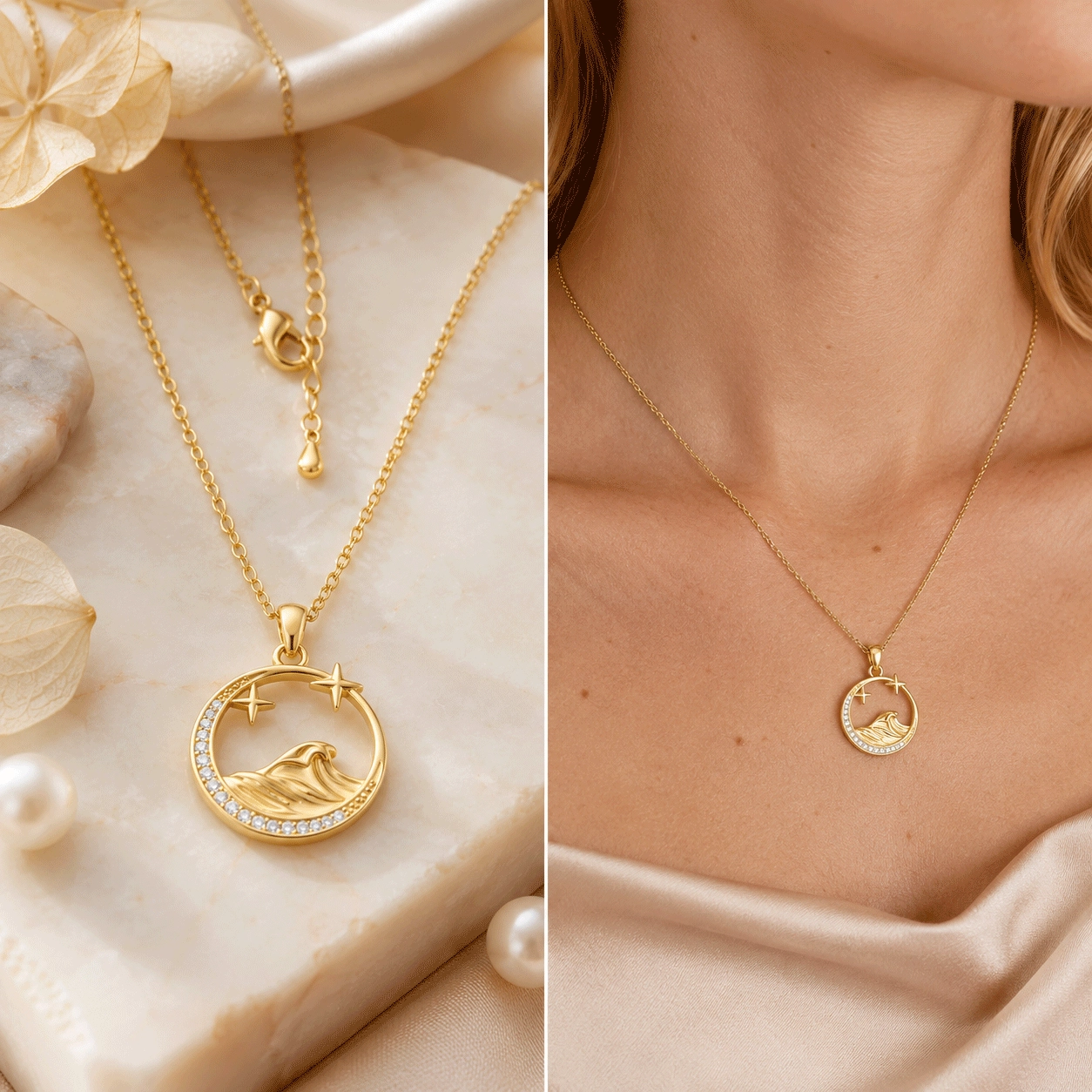
Geometric Wave Star Pendant Necklace — 18K Gold Plated Brass Fashion Jewelry by Zhefan
Profit margin calculator for wholesale brass tennis bracelet
Product Categories
Get a Quote for Private Label Jewelry
We provide personalized jewelry customization services for clients worldwide.
Rest assured that your privacy is important to us, and all information provided will be handled with the utmost confidentiality.
By clicking 'Send Inquiry Now' I agree to ZHEFAN JEWELRY processing my personal data.
To see how to withdraw your consent, how to control your personal data and how we process it, please see our Privacy Policy and Terms of use.
From design to production, ZHEFAN JEWELRY offers a one-stop solution to help you enhance your brand value and market competitiveness.
Get A Quote
Contact
Tel: (+86) 188 1927 7817
© 2026 Zhefan Jewelry. All Rights Reserved.
Facebook
Instagram
YouTube
Whatsapp: +8618819277817