




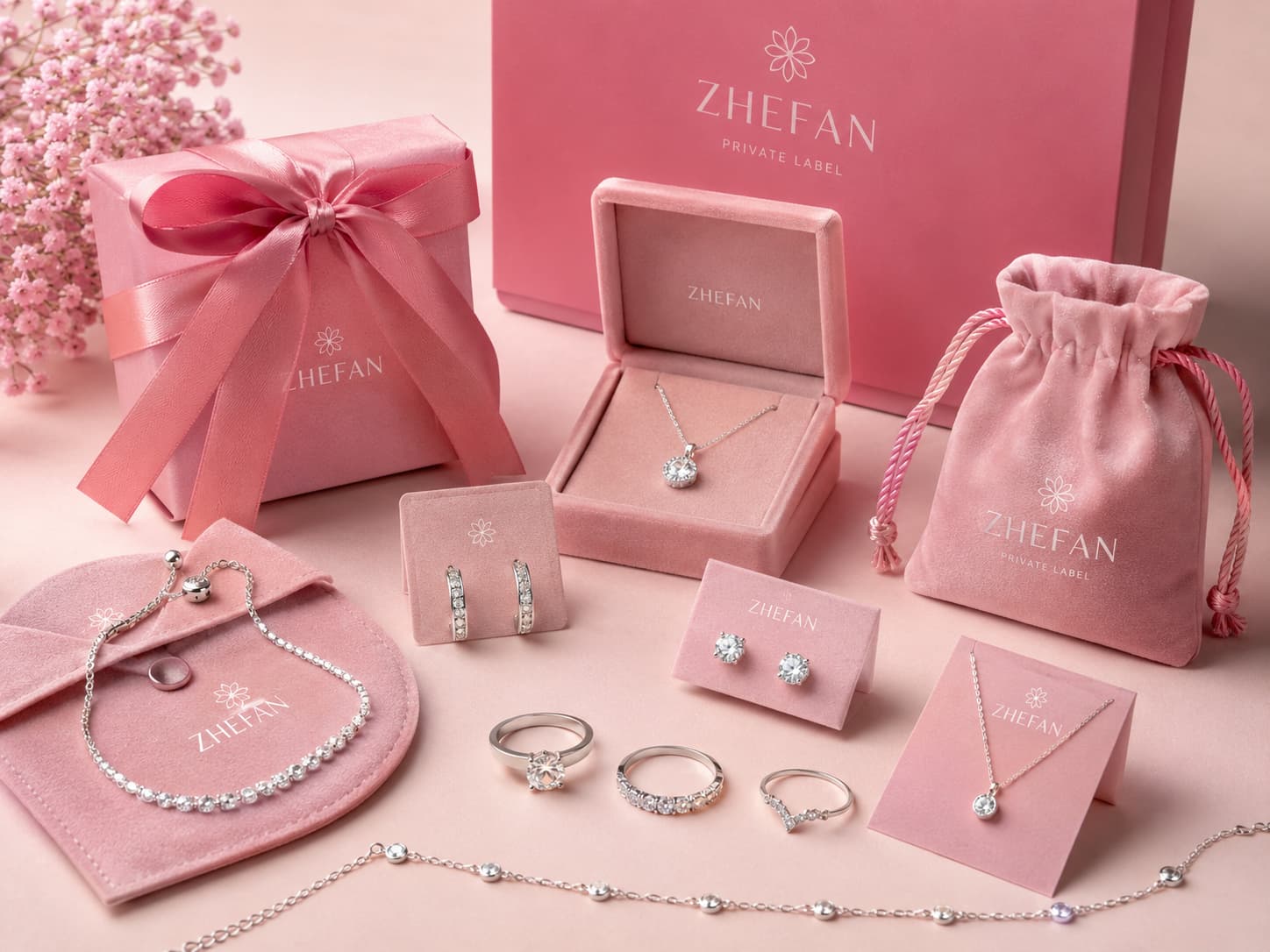
How to Launch a Sterling Silver Jewelry Brand: First Collection & OEM/ODM Guide
Launching a jewelry brand with 925 sterling silver jewelry involves more decisions than most first-time founders expect — not just which pieces to make, but how many SKUs to start with, whether to go OEM or ODM, how to keep MOQ manageable, and what to verify before a bulk order ships.
This guide focuses specifically on what new brands need to plan and confirm when building their first sterling silver collection. For a broader overview of 925 silver sourcing, categories, material verification, and plating options, see our 2026 wholesale custom sterling silver jewelry guide. If you are working through cost structure and margin protection, see our sterling silver jewelry margin guide.
Why 925 Sterling Silver Works for Private Label Jewelry Brands
925 sterling silver — 92.5% silver alloyed with 7.5% other metal, most commonly copper — is a practical material choice for private label brands for a few reasons that go beyond just how it looks:
It can support stronger retail positioning than base-metal fashion jewelry for customers who care about material quality.
It leaves more room in the budget for plating, stone setting, and packaging without abandoning a precious-metal price point.
Pure silver is too soft for many jewelry applications, while the 925 alloy gives clasps, prongs, and bands more structural strength.
It is compatible with rhodium and gold plating, giving brands the flexibility to offer multiple looks from the same base material.
How well sterling silver works for a specific brand still depends on how the collection is designed, priced, sampled, and quality-checked. It is a practical starting point, not a guarantee.
Plan Your First Sterling Silver Jewelry Collection
The most common early mistake is not choosing the wrong design — it is choosing too many designs at once. A focused first collection is easier to quality-check, easier to photograph and sell, and gives you clearer data on what is actually working before you invest more.
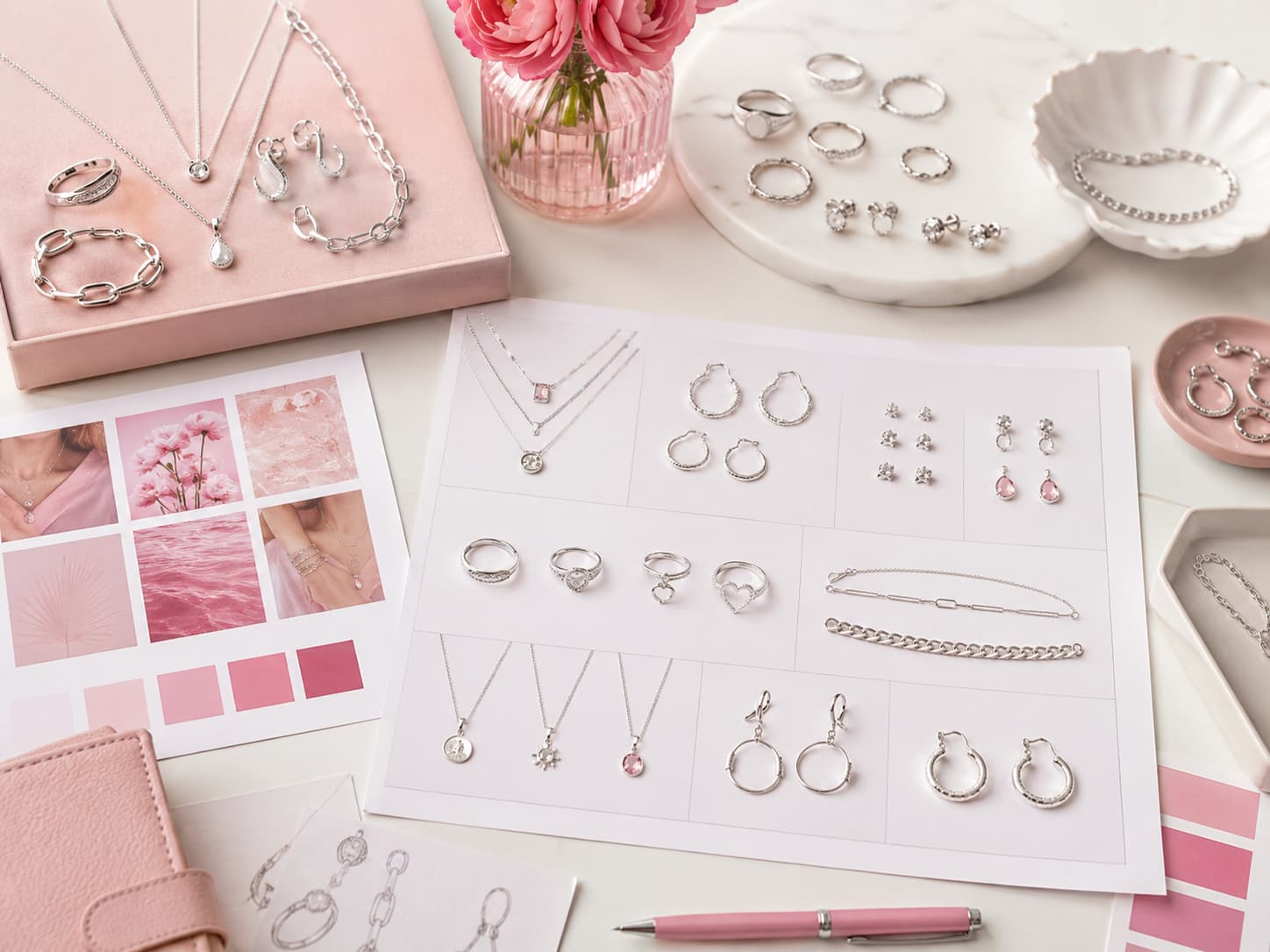
925 silver earrings are giftable, lightweight, and easy to ship.
925 silver necklaces work well for pendants, personalization, and brand storytelling.
925 silver rings are suitable for size ranges, stacking sets, and stone designs.
CZ or zircon rings and pendants can create higher perceived value without fine-jewelry pricing.
925 silver bracelets can help increase average order value.
A necklace plus earrings set can improve retail presentation and basket value.
You do not need all six from the start. Most new brands do better picking 3–5 styles and getting those right before expanding.
Choose 3–5 SKUs Before Expanding
There is a real cost to launching too wide: MOQ splits across too many designs, inventory risk on styles that do not perform, harder quality control across multiple molds, and muddier photography and marketing. A tighter first drop is easier to manage and gives you faster, cleaner feedback on what your customers actually want to reorder.
Useful as a low-friction entry product that is easy to photograph, ship, and gift.
Works well for personalization, storytelling, and visible brand identity.
Helps test stacking, size demand, or add-on purchasing behavior.
Adds a higher-perceived-value piece without overloading the first catalog.
Once you have sales data, you can expand with new stone colors, plating variations, or category extensions with much more confidence than if you launched fifteen styles and had to guess which ones to reorder.
OEM vs ODM for a New Sterling Silver Brand
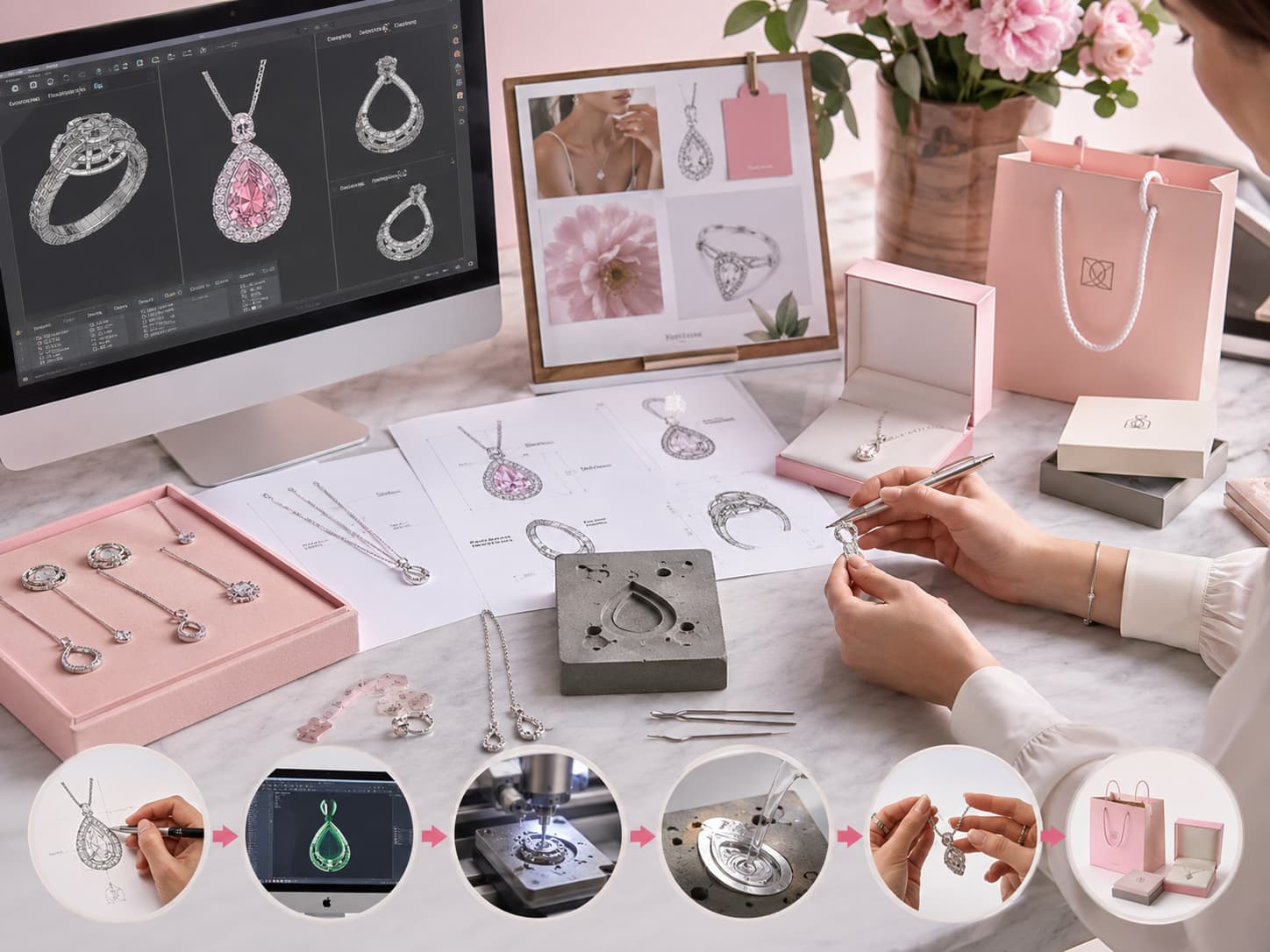
This decision affects both your budget and your timeline, so it is worth thinking through before contacting suppliers. ODM — customizing an existing factory design — is usually the more practical path for a first silver collection. OEM — building from your own sketches or CAD files with new tooling — makes more sense once you know a design has staying power and is worth the investment in an exclusive mold.
| Buyer Situation | Better Choice | Why |
|---|---|---|
| First launch, limited budget | ODM | No new mold fees and faster sampling. |
| Original signature design | OEM | More design control and stronger differentiation. |
| Want to test market demand first | ODM | Lower commitment before investing in tooling. |
| Proven bestseller ready to own | OEM | Better long-term differentiation once demand is validated. |
| Mixed collection | ODM for first launch, OEM for bestsellers later | Balances speed, flexibility, and exclusivity. |
What to Confirm Before Sampling
Before a physical sample is made, get clear written answers on these points. Changing them after sampling starts can add time and sometimes cost:
Confirm 92.5% composition and ask for material test report support, not just the “925” stamp.
Weight affects both cost and how substantial the finished product feels.
Confirm rhodium, 14K/18K gold, rose gold, or white gold, including method rather than color only.
Clarify CZ, zircon, moissanite, pearl, and whether stones are mechanically set or glued.
Confirm ring sizes, necklace lengths, and bracelet sizes before sampling.
Confirm laser engraving, stamping, custom tag, or other brand detail placement.
Confirm box, pouch, backing card, barcode, and whether packaging timing affects production.
Confirm lead-free, nickel-free, and cadmium-free production and what documentation your target market may require.
Ask for a realistic working-day estimate based on design, material, plating, and mold requirements.
Private Label Packaging and Brand Presentation
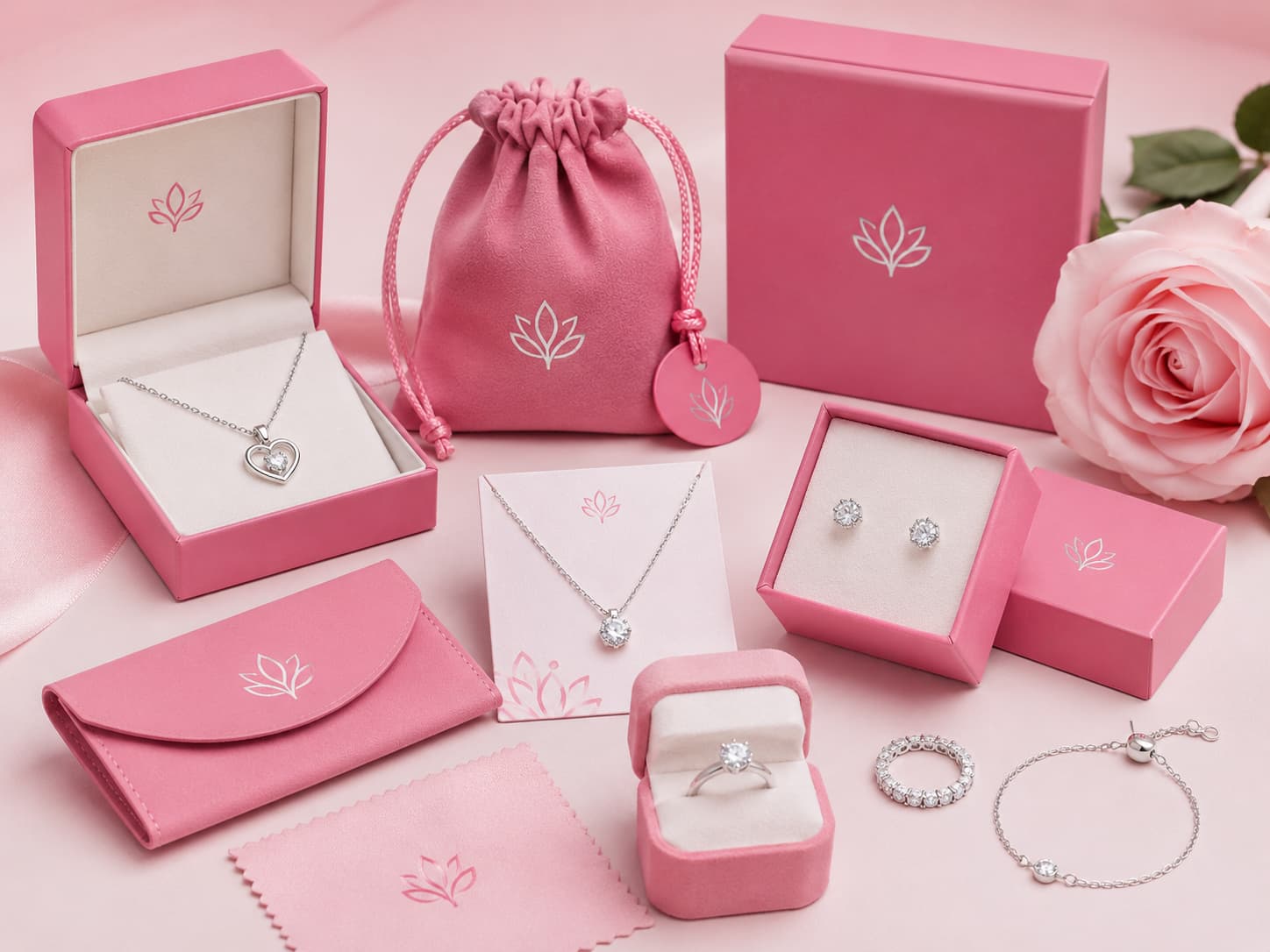
Packaging is often left too late in the planning process — and when it runs into delays, it can hold up the entire shipment. Decide on your packaging direction before bulk production starts, not after.
A consistent packaging approach across your first collection also matters for how the brand looks at retail, in e-commerce photos, or on social media. One visual system across cards, pouches, boxes, and barcodes makes the launch feel more cohesive.
Most common for earrings and useful for logo, material note, barcode, or retail display.
Add perceived value, especially for necklaces, rings, gift sets, and premium styles.
Lighter and lower-cost, suitable for everyday and mid-tier silver jewelry pieces.
Subtle branding directly on the jewelry itself, depending on available surface and structure.
Useful for retail, wholesale, inventory, and fulfillment requirements.
Confirm separately from jewelry production so boxes or cards do not delay shipment.
Helps a first collection feel more complete and easier to sell as a premium brand launch.
Keep colors, logo placement, and packaging format aligned across first SKUs.
From Idea to First Launch: Production Timeline
A typical path from first conversation to shipped product looks roughly like this. Exact timing should be confirmed based on design complexity, order quantity, packaging, QC requirements, and shipping schedule:
Brand brief and product direction — define what you are making, target price point, quantity, and launch positioning.
Choose categories and decide OEM or ODM — align the first collection plan with budget, MOQ, and timeline.
CAD / design confirmation — straightforward CAD confirmation may move quickly after details are confirmed, while more complex designs require additional review.
Sample development — standard ODM samples may be arranged in about 5 working days for simpler styles, while OEM designs requiring new molds may take around 15 working days or longer depending on structure, stone setting, plating, and sample complexity.
Sample review and approval — check weight, plating color, stone security, fit, comfort, and overall finish before approving bulk production.
Packaging confirmation — finalize backing cards, boxes, pouches, barcodes, and logo application alongside the approved sample.
Bulk production — standard custom orders are often planned around roughly 20–25 days from sample approval, but timing depends on quantity, plating, packaging, and QC requirements.
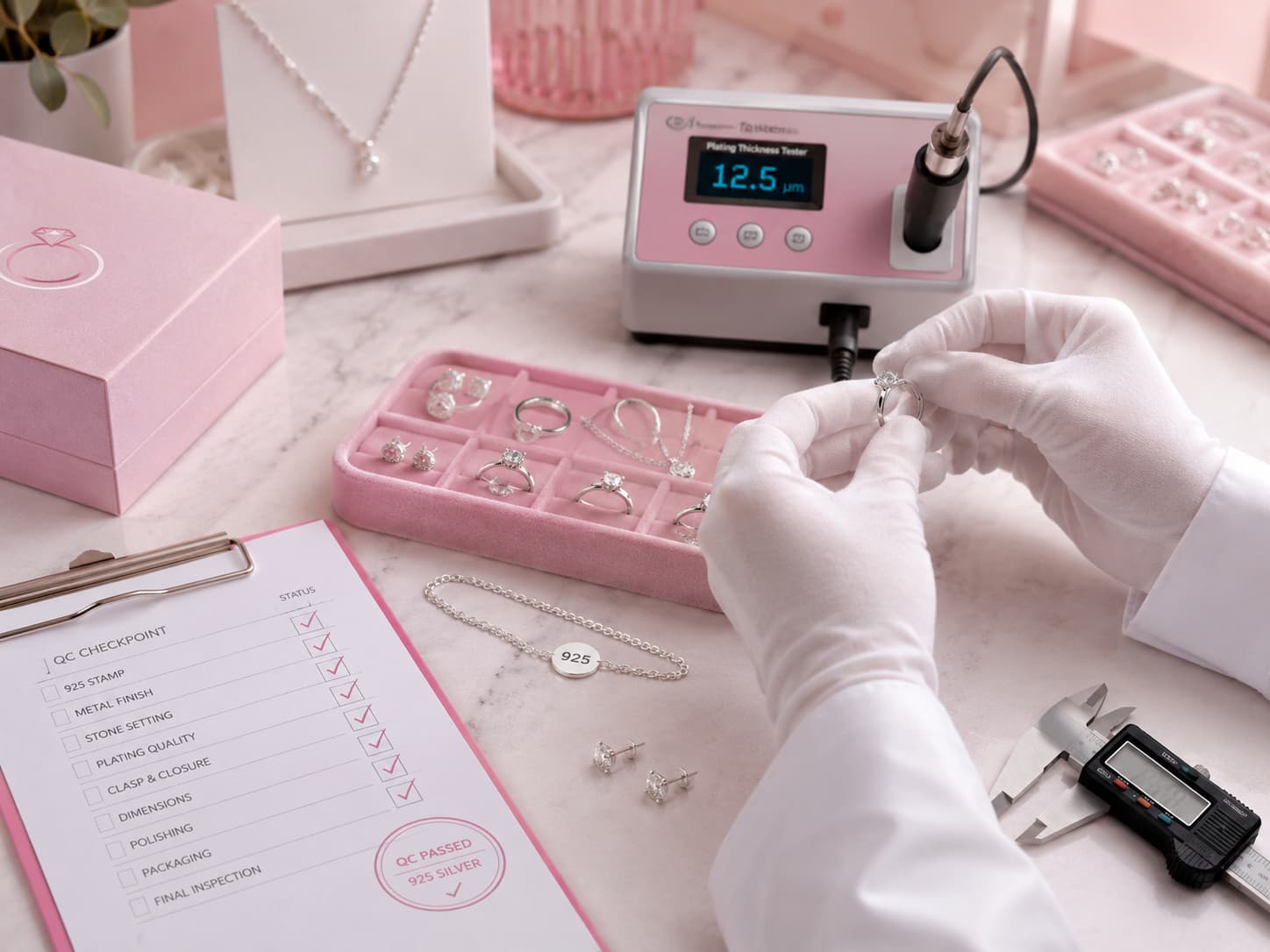
QC inspection — check plating consistency, stone setting, clasp function, soldering, surface finish, and packaging accuracy.
Shipment — ship to your warehouse, fulfillment center, or retail distribution channel.
Reorder planning — based on early sales data, plan which styles to reorder and when.
QC and Compliance Before Your First Bulk Order
A quality issue discovered after a bulk order ships is significantly more expensive than one caught before shipment. For a first 925 silver collection, QC should focus on material authenticity, plating consistency, stone setting, clasp function, soldering, surface finish, and packaging accuracy.
For more detail on inspection practices, review ZHEFAN JEWELRY's Quality Control page.
Confirm 92.5% silver composition via test report support, not stamp alone.
Color and finish should match the approved sample across the batch.
Check that stones are not loose, shifting, or uneven before shipment.
Closures should open and close securely with consistent tension.
Joints should be clean and structurally sound.
Check for scratches, casting marks, burrs, or finishing defects.
Ask for applicable third-party documentation such as SGS, REACH, or RoHS where relevant to your target market.
Confirm correct cards, boxes, pouches, labels, and barcodes before shipment.
For US and EU buyers, compliance requirements depend on product structure, importer requirements, and retail channel. Buyers should confirm lead-free, nickel-free, and cadmium-free production and request applicable third-party documentation where relevant. Avoid claiming “hypoallergenic” in your own marketing unless you have documentation to support it.
Common Mistakes New Sterling Silver Jewelry Brands Should Avoid
Most early-launch problems are predictable and avoidable with a bit of upfront planning:
This makes quality control harder and inventory risk higher before you know what sells.
New tooling on an untested design can tie up budget unnecessarily.
Silver weight is often a major driver of unit cost and should be confirmed early.
Ask for test report support too, especially for your first order from a new supplier.
Packaging lead time can rival jewelry production time, so start early.
A 3D rendering is not the same as a physical piece. Always approve a sample before bulk production.
If a style sells out and a reorder takes several weeks, you lose sales during that window.
Verify compliance first, then decide how to describe it in product marketing.
Why Work with ZHEFAN JEWELRY for Your First Sterling Silver Collection?
ZHEFAN JEWELRY has jewelry manufacturing experience dating back to 1997, with production bases in Guangzhou and Meizhou and capacity to support brands moving from a small trial order into ongoing wholesale programs. A few specifics that matter for a first-collection launch:
You can start with an existing base design or develop something original as the brand grows.
Sample support and small-batch trial order options can be discussed for qualified first-time projects.
CAD support can be arranged quickly for straightforward concepts, depending on project complexity.
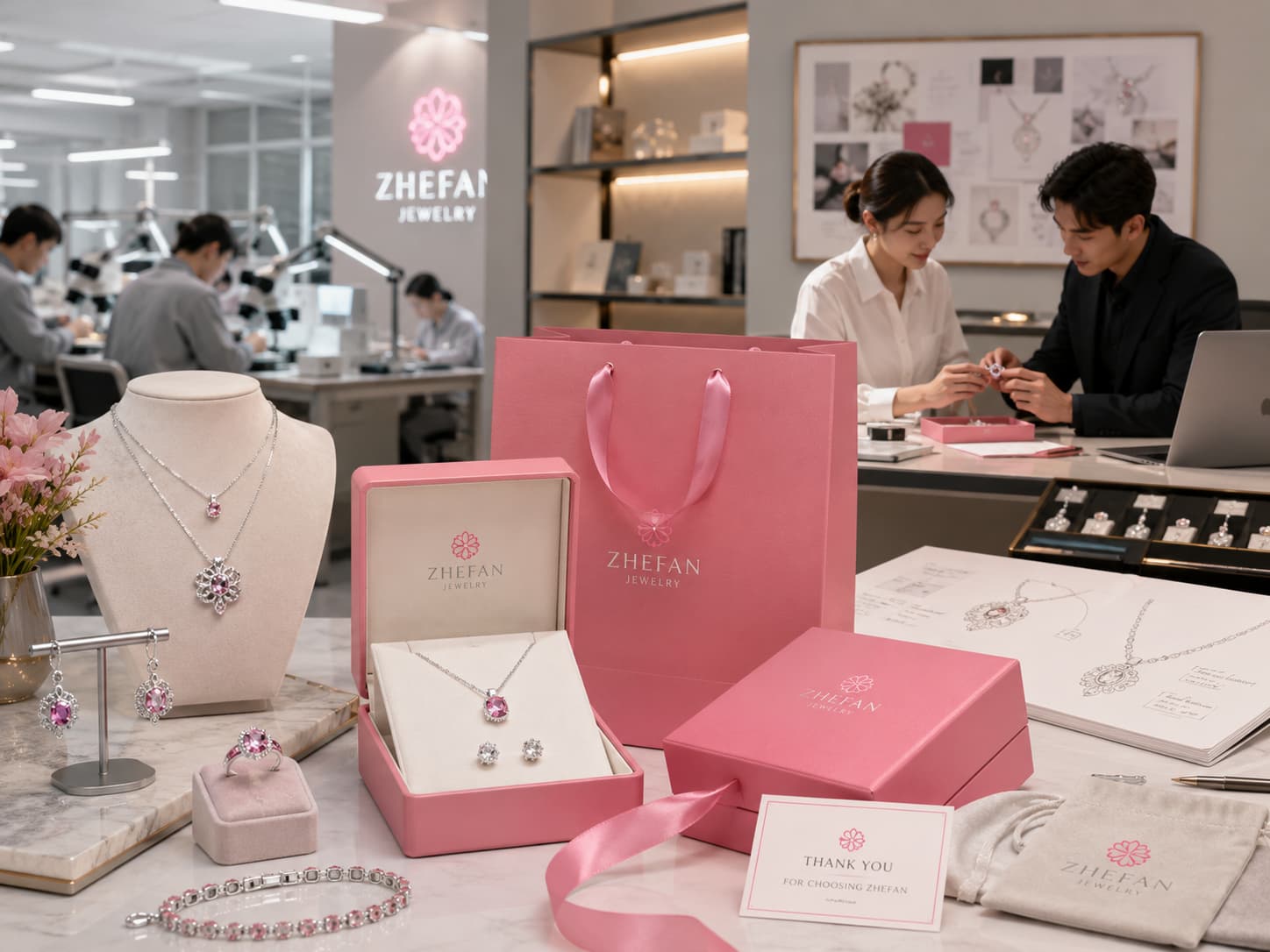
Custom backing cards, branded boxes, pouches, and logo application can support a more cohesive brand launch.
Production includes structured polishing and inspection stages, including multiple rounds of polishing and quality checks.
Lead-free, nickel-free, cadmium-free production and RoHS, REACH, or SGS documentation support are available for applicable projects.
Manufacturing capacity can support brands as they grow from trial orders into repeat wholesale volumes.
The team can help review category choices, sampling needs, packaging timing, and QC requirements.
More on the company's background and certifications is available on the About Us page, and inspection practices are explained on the Quality Control page.
FAQ
Why is 925 sterling silver a good material for a first jewelry collection?
It balances recognized precious-metal positioning with a more accessible material cost than solid gold, and it is compatible with a wide range of plating and stone setting options. Final performance still depends on plating quality, QC, and sourcing decisions — the material alone does not guarantee the outcome.
Should I start with OEM or ODM for my first 925 silver collection?
ODM is usually the more practical starting point because it avoids new mold fees and speeds up sampling, making it lower-risk for a first launch. OEM makes more sense once a design has proven itself and the investment in an exclusive mold is justified by demand.
How many styles should I launch with?
Most new brands do better starting with 3–5 focused styles rather than a wide catalog. A smaller collection is easier to quality-check, easier to photograph, and gives you clearer sales data to make smarter reorder decisions.
How long does it take from concept to first shipment?
For a first order, a realistic estimate is often around 6–10 weeks from initial brief to shipment, covering design confirmation, sampling, approval, bulk production, and QC. Standard styles without new tooling typically move faster than OEM designs requiring a new mold, but timing should always be confirmed based on product complexity and order details.
What does private label packaging involve?
Common options include custom backing cards, branded gift boxes or pouches, logo engraving or stamping on the jewelry itself, and barcode labels for retail or wholesale channels. Packaging should be confirmed alongside the sample, not after bulk production starts.
How do I verify a 925 silver piece is genuine?
Ask for material composition test report support in addition to the “925” stamp. For larger first orders from a new supplier, independent XRF or lab testing on pre-production samples can be a practical extra step.
What compliance documentation do I need for US or EU markets?
Compliance requirements depend on product structure, importer requirements, and retail channel. Buyers commonly confirm lead-free, nickel-free, and cadmium-free production and request applicable third-party documentation such as SGS, RoHS, or REACH where relevant. Avoid describing products as hypoallergenic without documentation to back the claim.
What happens if I skip sample approval and go straight to bulk production?
You lose your main opportunity to catch issues such as wrong sizing, plating color that does not match expectations, loose stone settings, or fit problems before they are replicated across the entire order. Physical sample approval is one of the highest-value steps in the process.
Ready to Plan Your First Sterling Silver Collection?
Share your target categories, reference designs, preferred plating, stone setting needs, estimated MOQ, packaging direction, target market, and launch timeline with ZHEFAN JEWELRY. Our team can help evaluate whether OEM or ODM is a better starting point and build a practical first-collection production plan.




Facebook
Instagram
YouTube
Whatsapp: +8618819277817