






Email: sales3@zhefanjewelry.com
The Secret Life of Your Silver: How 925 Sterling Jewelry Comes to Exist
Beneath the timeless elegance of every 925 sterling silver adornment lies an extraordinary odyssey—one that begins in the earth’s depths as raw silver ore and unfolds across geological time and masterful human craftsmanship. From Earth's Depths to Your Décolletage: The Silver Odyssey pulls back the curtain on the remarkable transformation journey few shoppers know, revealing the intricate manufacturing process that turns unrefined ore into the shimmering 925 silver necklaces, rings, bracelets, and more that grace your wardrobe, bridging the gap between nature’s bounty and wearable art.
- From Earth's Depths to Your Décolletage: The Silver Odyssey
- 1. The Silver Genesis: Mining's Modern Alchemy
- 2. The Purification Crucible: From Ore to 99.9% Pure
- The Art & Science of 925 Sterling Silver
- 3. The Magic Formula: Understanding 925 Alloy
- 4. Shaping Beauty: Manufacturing Techniques Decoded
- 5. The Finish Line: Polishing & Quality Control
- Why 925 Silver Dominates Modern Jewelry
- Preserving Your Silver Legacy: Care Essentials
- Spotting Quality: Buyer's Checklist
- Conclusion: More Than Metal - A Testament to Human Ingenuity
- FAQ
From Earth's Depths to Your Décolletage: The Silver Odyssey
Every shimmering piece of 925 silver jewelry carries an epic origin story spanning geological eras and human craftsmanship. While modern shoppers appreciate sterling silver for its timeless elegance, few understand the extraordinary transformation journey from raw ore to refined adornment. Let's unveil the hidden world of silver jewelry manufacturing that makes your favorite necklaces, rings, and bracelets possible.
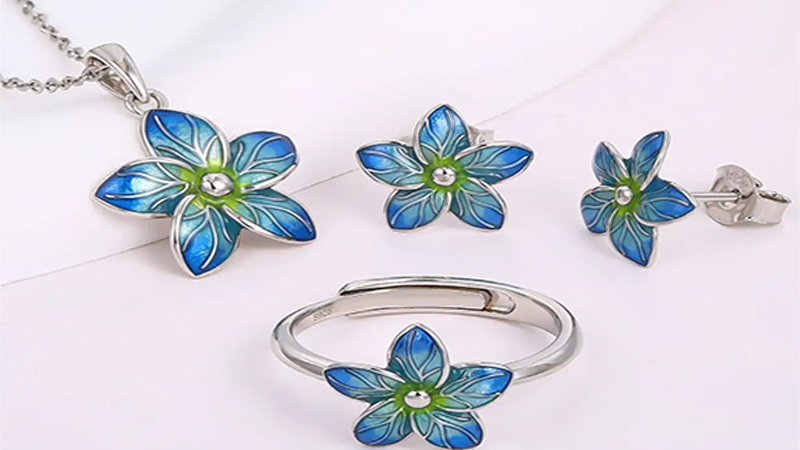
1. The Silver Genesis: Mining's Modern Alchemy
Contrary to popular belief, dedicated silver mines account for only 30% of global silver production. Most sterling silver begins as a secondary yield from lead, zinc, and copper mining operations. Advanced geophysical surveys now identify silver-rich zones within larger ore bodies, with modern mines extracting over 1,100 million ounces annually.
Two primary extraction methods dominate:
- Open-Pit Mining: Cost-effective for surface-level deposits, using 300-ton haul trucks to move ore
- Underground Mining: For deep-seated veins exceeding 1,000 feet below surface, employing cutting-edge tunnel boring machines
2. The Purification Crucible: From Ore to 99.9% Pure
Raw silver ore contains only 0.085% pure silver on average. Modern refineries use a multi-stage purification process:
- Crushing & Grinding: Ore reduced to fine powder
- Froth Flotation: Chemical separation concentrates silver content
- Smelting (2,000°F): Removes base metals through liquation
- Electrolysis: Achieves 99.9% purity silver crystals
This refined silver becomes the canvas for jewelry creation.
The Art & Science of 925 Sterling Silver
3. The Magic Formula: Understanding 925 Alloy
Pure silver (999 fineness) proves too soft for jewelry. Since the 14th century European guilds, artisans have used the 925 formula:
- 92.5% pure silver
- 7.5% copper/nickel/zinc
This optimal balance maintains silver's luminosity while ensuring durability against scratches and deformation.
4. Shaping Beauty: Manufacturing Techniques Decoded
Modern silver jewelry factories combine ancient craftsmanship with digital precision:
a) CAD Design: 3D modeling software creates intricate patterns
b) Investment Casting:
- Wax model creation
- Ceramic mold formation
- Silver pouring at 1,764°F
c) Hand Fabrication: Artisans employ age-old techniques for unique pieces:
Filigree wirework
- Repoussé metal shaping
- Granulation detailing
5. The Finish Line: Polishing & Quality Control
Before reaching consumers, every piece undergoes rigorous finishing:
- Tumbling: 12-hour rotary polishing with steel beads
- Electroplating: Rhodium coating prevents tarnish
- Laser Marking: Precision 925 hallmarks
- XRF Testing: X-ray verification of silver purity
Only 0.3% of production fails strict quality checks in ISO-certified facilities.
Why 925 Silver Dominates Modern Jewelry
Compared to alternative metals, 925 sterling silver offers unique advantages:
|
Feature |
Benefit |
|
Hypoallergenic |
Safe for sensitive skin |
|
Malleability |
Enables intricate designs |
|
Antimicrobial |
Reduces bacteria growth by 99% |
|
Value |
Luxury appearance at accessible pricing |
Preserving Your Silver Legacy: Care Essentials
Maximize your jewelry's lifespan with proper maintenance:
- Store in anti-tarnish bags with activated charcoal
- Clean monthly with microfiber cloth
- Use ultrasonic cleaners cautiously (avoid gemstone settings)
- Remove before swimming/showering
Spotting Quality: Buyer's Checklist
Ensure authentic 925 silver purchases by verifying:
- Proper 925/STERLING hallmarks
- Consistent metal color (no brass showing)
- Smooth finishes without porosity
- Secure clasp mechanisms
- Reputable seller certifications
Conclusion: More Than Metal - A Testament to Human Ingenuity
From geological marvel to cultural artifact, 925-silver jewelry represents one of humanity's most enduring relationships with Earth's treasures. Each piece embodies millennia of technical evolution and artistic passion—a wearable chronicle of our species' creative spirit. As you fasten that silver chain or slide on a polished ring, remember you're not just wearing jewelry, but the culmination of planetary history and human aspiration.
FAQ
How Can Buyers Verify That Bulk Orders Use Genuine 925 Sterling Silver?
Buyers should not rely only on a “925” stamp. A reliable 925 silver jewelry manufacturer should confirm the agreed material specification through supplier records, incoming-material inspection, XRF testing, or relevant third-party reports. Before bulk production, buyers should also confirm whether the test results apply to the complete product or only to a specific component. Solder, findings, ear posts, plating layers, and stone settings may use different materials, so the testing scope should be clearly stated.
How Does a Silver Jewelry Manufacturer Maintain Consistency Between Samples and Bulk Production?
Consistency depends on using an approved sample and documented specifications as the production standard. Buyers should confirm dimensions, weight, stone size, stone color, plating color, surface finish, logo position, and acceptable tolerances before mass production. A professional silver jewelry manufacturer should inspect products during casting, polishing, stone setting, plating, and final assembly rather than relying only on a final visual check. Bulk products should then be compared with the approved sample before packing and shipment.
What Customization Options Should an OEM Jewelry Buyer Confirm Before Sampling?
For custom 925 silver jewelry, buyers should confirm the base material, product dimensions, stone type, stone grade, setting method, plating color, plating thickness, logo method, hallmark position, packaging, and target order quantity. A qualified custom jewelry manufacturer should also clarify which changes require a new mold, additional sample fees, or longer production time. Confirming these details before CAD approval helps reduce repeated revisions and unexpected costs.
Which Compliance Documents Should Importers and Retailers Request for 925 Silver Jewelry?
The required documents depend on the destination market, customer requirements, and product construction. Buyers may request material-composition reports, nickel-release testing, lead and cadmium testing, REACH-related reports, RoHS-related documents, or SGS third-party test reports where applicable. Importers and retailers should review the tested sample, report date, test method, test items, limits, and conclusion. A certificate logo alone is not enough; the document must match the actual product, material, and market requirement.
What Factors Affect MOQ, Price, and Lead Time for Custom 925 Silver Jewelry?
MOQ, quotation, and lead time are affected by product weight, silver price, mold requirements, number of sizes, stone quantity, stone grade, plating specification, surface treatment, logo method, packaging, and total order quantity. A jewelry factory may also require separate molds for different ring sizes or additional production time for custom stones and complex settings. Buyers should provide complete specifications and estimated quantities to receive an accurate quotation and realistic delivery schedule from the 925 silver jewelry manufacturer.
Recommended for you

What Is Gold Vermeil Jewelry? A Complete Guide for Brands and Retailers

Thick Gold Plated Jewelry Manufacturer for 925 Silver & Brass Jewelry

How to Choose a Gold Vermeil Jewelry Manufacturer

Gold Vermeil vs. Gold-Plated Jewelry: Which Fits Your Luxury Jewelry Brand?

Can Silver or Brass Be PVD Coated? A Professional Guide for Jewelry Brands

How to Make Bulk Jewelry Match the Approved Sample: A Production Control System for Jewelry Brands
Product Categories
Discuss Your Ideas with a Professional Custom Jewelry Manufacturer
We provide personalized jewelry customization services for clients worldwide.
Rest assured that your privacy is important to us, and all information provided will be handled with the utmost confidentiality.
By clicking 'Send Inquiry Now' I agree to ZHEFAN JEWELRY processing my personal data.
To see how to withdraw your consent, how to control your personal data and how we process it, please see our Privacy Policy and Terms of use.
From design to production, ZHEFAN JEWELRY offers a one-stop solution to help you enhance your brand value and market competitiveness.
Get A Quote
Contact
Tel: (+86) 188 1927 7817
© 2026 Zhefan Jewelry. All Rights Reserved.
Facebook
Instagram
YouTube
Whatsapp: +8618819277817